Manzini
🇸🇿 Eswatini
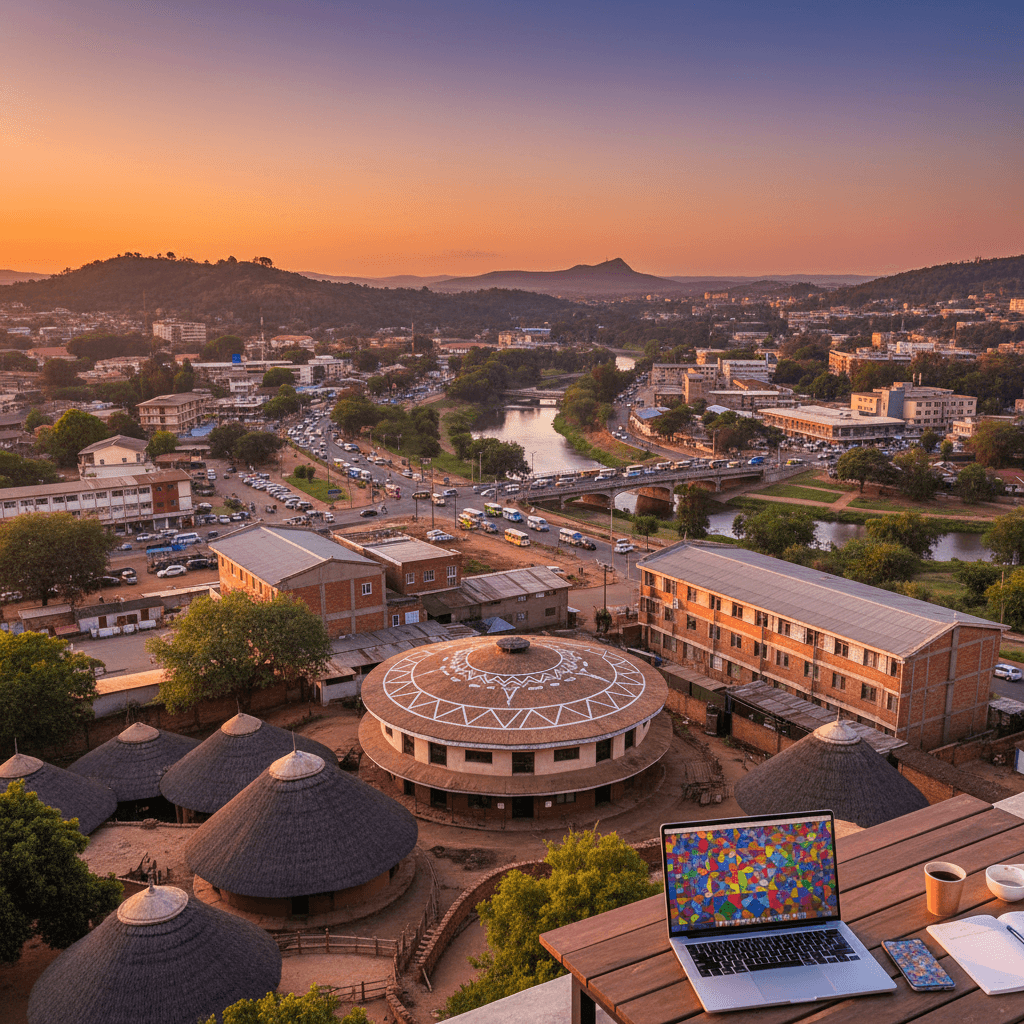
Manzini is Eswatini’s working heart, loud in the daytime and strangely calm once the shops shut. You hear minibuses braying at the rank, vendors calling out prices and the smell of grilled meat drifting through traffic, then the whole place softens into a slower, more local rhythm.
It’s not polished. The city center feels practical and a bit rough around the edges, with petty theft a real annoyance, but that’s the trade-off for cheap living, easy transport and daily life that still feels properly Swazi rather than packaged for visitors.
Most nomads come here for work-first living and low costs, not for nightlife, because the scene is thin and a little repetitive, frankly. A solo budget can sit around $400 a month if you keep housing basic, eat street food and use buses, while a more comfortable setup with a city apartment, taxi rides and coworking can push closer to $900.
- City center: Best for markets, buses and cheap stays, but it’s noisy and you need to watch your pockets.
- Ngwane Park: Better for shisanyama spots, lounges and meeting expats, though weekends get crowded and a bit messy.
- Matsapha: Quieter and handy for the airport, good if you want less chaos, but there’s less to do after work.
Internet is decent enough for normal remote work, with mobile speeds around 19 Mbps and fixed plans starting near $29 a month, which, surprisingly, is one of the nicer parts of being here. ALCON Business Centre is the main coworking option people mention and cafes can work too, though power cuts and noisy rooms still happen.
Food and social life are simple, cheap and a little addictive. Street meals can be around $3, beer is roughly $1.87 and if you end up at Xchange Lounge or Mario’s Pub N’ Grill, expect smoky braai smells, cold drinks and loud conversations that carry late into the evening.
Day-to-day comfort depends on your tolerance for rough edges. The heat gets sticky, the roads outside the center can be bad and you’ll want to keep valuables close, but if you like a place that feels lived-in instead of curated, Manzini has a real pulse.
Manzini is cheap, but it isn't that cheap if you want comfort. A solo nomad can get by on about $469 a month with rent or closer to $297 without it and that’s before a few drinks, laundry or the odd taxi when the afternoon heat gets sticky and the roads feel too rough to walk.
Budget living works here. Shared rooms can sit around $100 a month, street food and basic takeaways can keep you fed for about $100 and buses are tiny-pocket money, though you’ll feel the squeeze if you’re trying to eat out often or work from a cafe every day.
For a more relaxed setup, expect the bill to climb fast, honestly. A 1BR in the outskirts can run around $91 to $100, a city-center one-bedroom is more like $143 to $150 and once you add cafe lunches, a few taxi rides and some sort of coworking space, you’re closer to the mid-range $600 monthly mark.
Typical monthly costs
- 1BR city center: about $143 to $150
- 1BR outskirts: about $91 to $100
- Street food or fast food: around $3.11 a meal
- Mid-range dinner for two: $15 and up
- Transport: roughly $58 a month if you’re moving around often
- Fixed internet: around $29 a month
That internet price is decent, which, surprisingly, matters more here than in some pricier cities because the connection can be uneven block to block and the mobile average sits around 19 Mbps. ALCON Business Centre is the main coworking option people mention and it usually lands somewhere in the $100 to $200 range depending on how much privacy you want.
Where the money goes
- Budget tier: about $400, with shared housing and bus-heavy living
- Mid-range tier: about $600, with an outskirts flat and regular cafe or coworking use
- Comfortable tier: about $900, with city-center rent, more dining out and extra transport
Ngwane Park usually feels the easiest place to spend a little more, because you’re near lounges, shisanyama spots and shopping. The city center is cheaper for getting around, but it’s louder, the traffic hammers all day and petty theft means you’ll keep one hand on your bag and your wits about you.
If you’re counting every lilangeni, skip the habit of late-night taxis and regular sit-down dinners, because those two habits will wreck a lean budget faster than rent does. Meals are affordable, beer is cheap and that makes Manzini easy to enjoy, just don’t pretend the comfort version of life here comes free.
Nomads
Most nomads land in the city center first, because the buses, markets and cheap eats are all packed in there, but it’s noisy and petty theft happens, so you’ll want to keep your phone tucked away and your laptop bag zipped up tight. Not fancy. The upside is real, though, with room rents around $143 in the center and internet that can hit workable 50 Mbps fixed lines for about $29 a month, which, surprisingly, beats what you’d expect in a smaller inland city.
ALCON Business Centre is the main work option people mention and honestly, it makes sense, since you can rent a desk by the hour, day or month without pretending the city has a giant coworking scene. Cafes are fine for a few hours, the coffee smells strong, buses honk constantly outside and if you need steady calls, a fixed connection or a private desk is the safer bet.
Solo Travelers
Ngwane Park is the cleaner social pick, with shisanyama spots, lounges and a walkable feel that’s easier on the nerves after dark, though weekends get crowded and the music can spill into the street well past dinner. Go here for food, not silence. Xchange Lounge, Mario’s Pub N' Grill and the late evening beer crowd give the area a lived-in buzz, with grilled meat smoke hanging in the air and taxi headlights flashing through the dust.
If you’re on a tight budget, the city center still wins for transit and cheap meals, with street food around $3.11 and buses costing pennies, but don’t wander far after dark because that’s when the grab-and-go stuff tends to happen. Frankly, this is the kind of place where a solo traveler does best when they keep plans simple, ask locals about safe streets and use Leap Taxi when the roads get sketchy.
Expats
Expats usually prefer the central business area or Ngwane Park, because you get shops, banks and easier access to services without feeling trapped out in the industrial edge of Matsapha. The pace is calmer than the city center and there’s a decent mix of offices, pubs and everyday errands, though the infrastructure can feel basic if you’re used to polished suburb life.
For housing, a one-bedroom in the outskirts runs around $91, while central places hover closer to $143, so a lot of expats pick based on commute rather than status, which makes sense here. Banking is straightforward enough with Standard Bank ATMs, MTN Mobile Money is handy and English is widely spoken in business settings, so day-to-day admin usually works out without much drama.
Families
Families should look at Fairview North, Matsapha and the quieter outer edges, because they’re less chaotic, less loud and frankly a lot easier on kids than the market-heavy center. Matsapha has a more subdued feel, with airport access and industrial jobs nearby, but fewer restaurants and less evening energy, so you trade convenience for peace.
That trade-off can be worth it. Monthly living costs for a family of four average about $1,193 and if you’re driving or arranging private transport, the smoother roads to day trips and school runs matter more than being near the loudest pub.
Manzini’s internet is decent by local standards, but it’s not the kind of place where you can be casual about backup plans. Mobile speeds average ~5 Mbps (MTN); fixed broadband better at 40-50 Mbps and that’s usually enough for email, calls, cloud docs and light uploads, not huge media work. Honestly, if you’re doing client deadlines, carry a second SIM and a power bank, because blackouts and patchy pockets still happen.
The easiest setup is a local SIM from MTN or Eswatini Mobile, often picked up for a starter SIM ~E99 ($5.60); data bundles extra. This allows you to test both carriers without spending much, then keep the stronger signal for your neighborhood. Cafes will get the job done too, though the noise, chair wobble and occasional exhaust drifting in from the road make them better for half-days than deep-focus work.
Where to Work
- ALCON Business Centre: The main proper coworking-style option in town, with open and private desks, hourly, daily and monthly access and quotes that seem to land around $100 to $200 a month depending on what you need.
- Business district cafes: Good for laptop work, coffee is cheap, WiFi is often fine, but don’t expect quiet, the sound of minibuses, music and metal shutters carries through fast.
- Home office: Cheapest option, honestly the smartest one for long stays if you’ve got stable power, a good SIM and don’t mind working to the hum of traffic or rain on a tin roof.
Most nomads end up mixing spaces, because Manzini doesn’t really have the polished coworking density you’d find in bigger African hubs. That said, the city center and nearby business areas are practical and you’re close to banks, cafes, printing shops and transport if you need to sort something out between calls. Skip the fantasy of a laptop paradise, this is a working town first.
If you want the cleanest day-to-day setup, base yourself near the center or Ngwane Park, where you can grab food, top up data and get around without wasting half the day on transport. Mobile money works, ATMs are available and the low monthly internet bill helps keep costs sane, which, surprisingly, is one of the nicest things about living here. Still, don’t trust one connection, one charger or one quiet corner for too long.
Manzini feels safe enough in the daytime, but the center gets sketchy after dark, especially around the bus rank and crowded market streets where pickpockets work fast and people move shoulder to shoulder, honking taxis, exhaust and grilled meat in the air. Stick to lit roads, keep your phone tucked away and don’t wander around alone late at night, frankly that’s where most trouble starts.
Violent crime isn’t the main story here, though it’s been creeping up on the urban edges, so the usual common sense matters more than bravado. Stay alert, avoid flashing cash and use a taxi or ride-hail for late returns, because walking back through quiet side streets can feel uneasy, especially when the power dips and the streetlights are patchy.
Where to be more careful
- City Center: busiest area, best for errands, but petty theft is the biggest annoyance.
- Ngwane Park: lively and social, though weekends bring crowds and a bit more noise, litter and drunk chatter.
- Matsapha: calmer and handy for airport access, still keep an eye on valuables near transport stops.
Healthcare is basic rather than polished. Manzini Clinic handles everyday issues and pharmacies are spread around town, but stock can be patchy, so don’t assume they’ll have every antibiotic, brand or travel medicine you need, which, surprisingly, catches a lot of newcomers off guard.
For anything serious, private insurance is the smart move, because public care is limited and you may need to head out for better treatment. Emergencies are handled through 999 for police, 7606 0911 for Traumalink ambulance and 1112 for AfriCare, so save those numbers in your phone before you need them.
Practical health notes
- Clinic care: fine for checks, minor infections and basic treatment, not for anything complicated.
- Pharmacies: common, but inventory is hit or miss, especially for specific imported meds.
- Insurance: worth it, because a private doctor visit can get expensive fast.
If you’re staying a while, carry a small medical kit, sunblock and your regular prescriptions, because humidity hangs heavy in summer and the clinic setup can be slow when everyone’s there at once. The city’s fine if you’re sensible, just don’t treat it like a place where you can get careless and sort it out later.
Manzini gets around on muscle and patience, not convenience. The city center is walkable in parts, but the roads between districts can be rough, noisy and a little chaotic, with minibuses honking, taxis edging in and out and the smell of exhaust hanging over the rank during the day.
Buses are the cheap default and most locals use them for cross-town or intercity trips. A single ride is about E20 ($1.15); no affordable monthly pass widely available. They are unbeatable on price, though you’ll be standing, squeezing past school kids and waiting a bit when traffic gets messy.
For door-to-door rides, Leap Taxi is the name people actually mention, honestly. The app handles rideshares and airport transfers and an average short taxi trip is ~$5-10; confirm via app. It’s handy when you’re landing late, carrying luggage or just don’t want to deal with the heat and stops.
- Leap Taxi: Best for airport runs and late rides, especially if you’re staying out in Ngwane Park or near Matsapha.
- Buses: Cheapest option by far, good for everyday errands and longer hops into other towns.
- Walking: Fine in the center during the day, though petty theft means you shouldn’t drift around with your phone out.
- Self-drive: Best for day trips, because secondary roads can be patchy and public transport thins out fast outside town.
City Center
- Best for: Solo travelers, short stays, quick errands.
- Why it works: You’re close to the bus rank, markets, banks and cheap food stalls, so you won’t spend much on transport.
- Downside: It gets loud, then louder and after dark the streets feel sketchy enough that most people just head home.
Ngwane Park
- Best for: Expats who want a slightly social base.
- Why it works: It’s where you’ll find lounges, shisanyama spots and a bit more room to breathe than the center, which, surprisingly, makes daily life feel less frantic.
- Downside: Weekends draw crowds, so parking and taxi pickups can be annoying.
Matsapha
- Best for: Families, airport access, quieter nights.
- Why it works: It’s calmer and closer to the airport, with less of the market churn you get in Manzini proper.
- Downside: You’ll have fewer cafés, fewer services and less spontaneity, frankly.
If you’re staying a while, mix buses for routine trips with Leap Taxi for odd hours, then walk the center only in daylight. That’s the least annoying setup and in Manzini, less annoying usually means better.
SiSwati is the default here and English gets you through most shops, taxis and office talk without much drama. In the center, people switch fast, so you’ll hear a greeting in siSwati, then plain English a second later, sometimes over honking minibuses and the smell of grilled meat drifting out of a shisanyama.
Learn a few words and people warm up quickly, honestly, even when your accent is a mess. Say Sawubona for hello, Yebo for yes and Ngiyabonga for thanks, because those basics go a long way with market vendors, drivers and older residents who expect a proper greeting before business.
English is widely spoken in Manzini’s commercial areas, especially around the city center, Ngwane Park and Matsapha, so most nomads don’t struggle day to day. That said, street-level communication can still be blunt, noisy and a bit scrambled, with people talking over bus engines, music from nearby bars and rain hammering tin roofs in summer.
Google Translate works well enough for quick checks, which, surprisingly, saves a lot of small misunderstandings when you’re bargaining, asking for directions or reading a notice pinned up outside a pharmacy. If someone asks, Uyasikhuluma yini siNgisi?, just answer plainly if you do or keep the exchange short and polite if you don’t.
- Main language: siSwati
- Widely used: English in business, tourism and transport
- Best approach: greet first, speak slowly, keep it polite
- Useful phrase: Ngiyabonga for thank you
Most expats say communication gets easier once people recognize you’re making an effort, not trying to perform fluency. The city’s not fussy about perfection, but it does respond well to respect and frankly, that matters more than sounding polished.
If you’re working remotely, keep your messages short and direct, because WhatsApp-style communication is common and long explanations tend to get ignored. In practice, that means confirming prices, pickup times and meeting spots in writing, then following up if the reply feels vague or delayed.
Manzini has a subtropical mood that shifts fast. May to October is the sweet spot, with dry air, cooler mornings and daytime highs that usually sit in the 10 to 25°C range, so you can walk the market, catch taxis and sleep without sweating through the sheet. Hot season is another story, frankly and January and February can feel sticky, loud and tiring, with afternoon rain hammering tin roofs and exhaust hanging over the roads.
Best weather, best movement. That’s the simple version. If you’re staying a while, plan outdoor errands, day trips and any village visits for the dry months, because roads outside the center get rough after heavy rain and the heat in summer can make even short walks feel like work.
Best Months
- May to August: Cool, dry and easy for getting around. Nights can feel crisp, especially indoors on tile floors.
- September to October: Still dry, a bit warmer and good for long stays before the first proper storms show up.
- November to February: Hot, humid and rainy, with the worst mix landing in January and February.
Most nomads prefer the middle of the dry season because the city feels more manageable and the air doesn’t cling to you all day. Weirdly, even a simple grocery run feels better when you’re not dodging sudden downpours, honking minibuses and muddy gutters and honestly that matters if you’re working remotely and trying to keep a schedule.
What Each Season Feels Like
- Winter mornings: Fresh, sometimes cold enough for a light jacket.
- Summer afternoons: Heavy humidity, bright sun, then fast rain.
- Rainy spells: Good for greenery, annoying for transport and laundry.
If you’re price-sensitive, shoulder months can still work, but don’t plan your trip around perfect weather, because Manzini’s charm comes with practical annoyances. The streets smell like dust, braai smoke and wet pavement after rain and the city’s pace slows down a bit when storms hit, which, surprisingly, can be nice if you’re posted up near a café or coworking desk.
For a first visit, aim for May through October. You’ll get easier travel, less sweat and a better shot at actually enjoying the markets, nearby reserves and day trips without feeling wrung out by the heat.
Manzini is cheap, but it isn't friction-free. Most nomads land here for the low rents, easy bus connections and the fact that a decent meal won't wreck your budget, then they stay because the rhythm is simple and the crowds thin out fast once the workday ends.
For money, keep your expectations grounded. A solo month can run about $469 with rent or around $297 if you're sharing or living simply and food is refreshingly affordable, with street meals around $3, a mid-range dinner for two starting near $15 and taxi or bus fares that still feel almost old-school.
- Budget: Around $400 a month, with a shared room, lots of street food and buses for most trips.
- Mid-range: Around $600, if you want a 1BR outside the center, café meals and a few Leap Taxi rides.
- Comfortable: Around $900, for a city-center apartment, regular dining out and some car or rental spending.
For connectivity, MTN and Eswatini Mobile both work and the easiest buy-in is at Matsapha Airport, where a starter SIM is cheap and data bundles are straightforward, honestly better than you might expect for a smaller city. Fixed internet can hit 50 Mbps and up, but don’t assume every apartment has stable WiFi, because some places still feel like they’re held together by patience and one decent router.
Work from ALCON Business Centre if you need a proper desk or use a café if you can live with espresso machines, plastic chairs and the occasional burst of loud chatting from the next table. The center is the most practical base, Ngwane Park is better if you want some social life nearby and Matsapha works if you care more about quiet than convenience.
- City center: Best for buses, markets and short errands, though petty theft is a real annoyance.
- Ngwane Park: Better for shisanyama spots, lounges and a more social feel after dark.
- Matsapha: Quieter, useful for airport access, but you’ll miss the convenience of the core.
Safety is manageable if you stay awake. Don’t wander downtown after dark, keep your phone out of sight in crowded areas and use a taxi or arranged ride when the streets go quiet, because the center can turn sketchy fast once the shops shut and the traffic thins.
Getting around is simple, not glamorous. Minibuses are cheap and noisy, Leap Taxi is the app most people reach for and self-drive makes sense for day trips if you can handle rough roads and the occasional pothole that hits like a punch.
Day-to-day etiquette matters more than tourists expect. Greet elders first, take off your shoes indoors and use English in business without assuming everyone wants to switch immediately, because a few siSwati phrases go a long way and people notice when you make the effort.
Frequently asked questions
How much does it cost to live in Manzini as a digital nomad?
How fast is the internet in Manzini?
Where is the best place to work remotely in Manzini?
Is Manzini safe for digital nomads?
Which neighborhood is best for expats in Manzini?
What are monthly housing costs in Manzini?
How much do food and drinks cost in Manzini?
Need visa and immigration info for Eswatini?
🇸🇿 View Eswatini Country GuideHidden Gem
Worth the effort