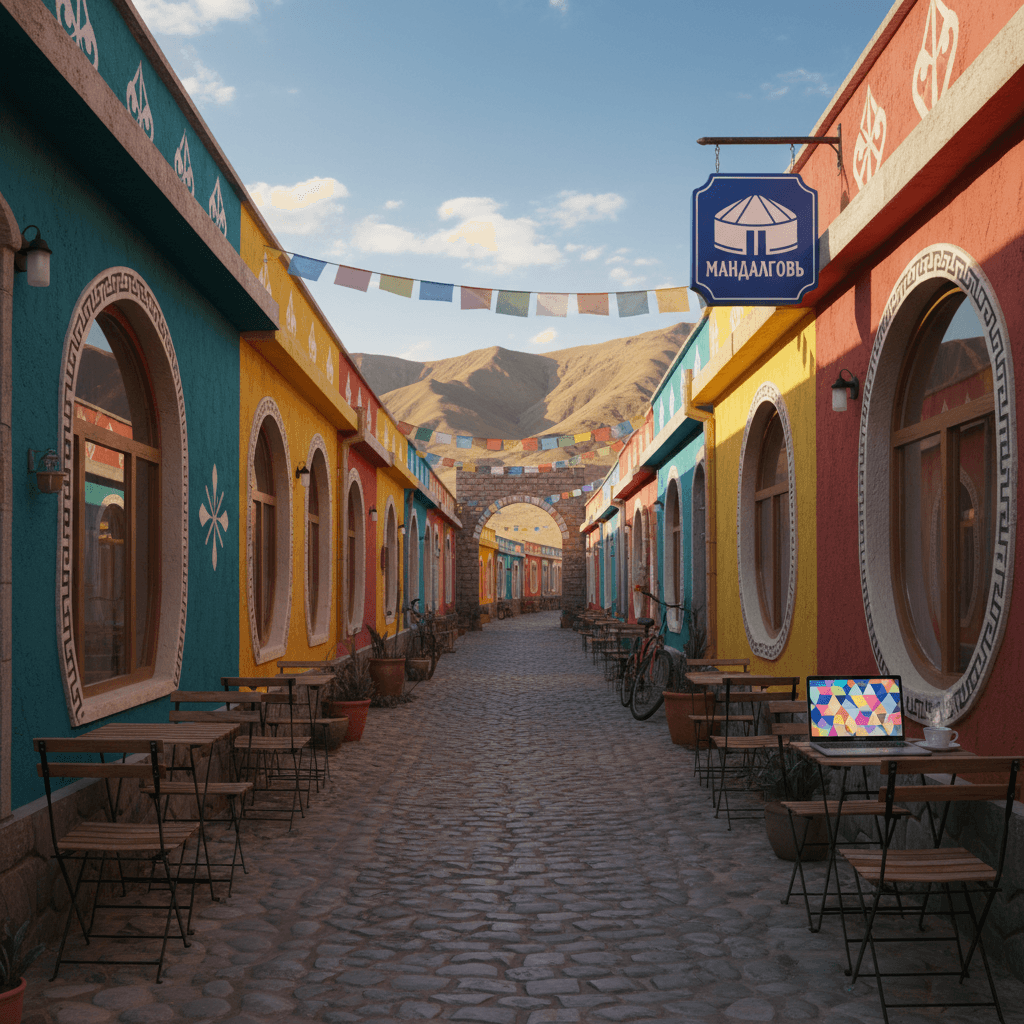
Mandalgovi
🇲🇳 Mongolia
Mandalgovi is the kind of place that forces you to slow down, whether you're ready for it or not. As the capital of Dundgovi Province, it serves as a gateway to the Gobi, sitting on the edge of the vast Mongolian steppe. It isn't a city of neon lights or high speed transit; it's a quiet, dust brushed outpost where the horizon feels infinite and the air smells like wild sage and dry earth. For the digital nomad, coming here is a deliberate choice to trade urban convenience for a raw, meditative solitude.
The vibe is profoundly rural. You'll see locals in traditional deel robes walking alongside younger residents in modern streetwear. Life revolves around the central market and the rhythm of the seasons. It’s a town of low rise buildings and ger districts that bleed into the surrounding hills. If you’re looking for a "scene," you won't find it here. Instead, you'll find a deep, heavy quiet that makes it an incredible spot for deep work or creative resets, provided you can handle the isolation.
The Nomad Experience
Living here in 2025 or 2026 feels like being on the frontier. Most travelers use it as a quick pitstop on the way to the Baga Gazriin Chuluu rock formations, but staying longer reveals a community that is incredibly welcoming once the initial curiosity wears off. It's affordable, but that low cost comes with a trade-off in infrastructure. You'll likely be working from a simple apartment or a local cafe where the internet is decent but not always bulletproof.
- The Solo Draw: Nomads love the absolute lack of distractions. It’s a place to finish that book or code that app without the pull of a nightlife scene.
- The Reality Check: The "Gobi dust" is real. Wind storms can coat everything in a fine layer of sand, and the winter temperatures are brutal, often dropping to -25°C in January.
- The Social Life: It’s centered around the market and small local eateries. You won't find nomad meetups here; your social life will likely consist of nodding to the same shopkeepers and chatting with the occasional Gobi tour guide.
Cost of Living Breakdown
While the estimated monthly cost for a comfortable life is around $3,725, savvy nomads can live here for much less. Most of that budget goes toward private transport and high quality rentals which are in short supply. If you're living like a local, your costs will plummet.
- Budget Living ($1,500 to $2,000): Expect to stay in a basic guesthouse or a ger on the outskirts. You'll be eating buuz (mutton dumplings) and dairy from the market for $2 to $4 per meal.
- Mid-Range ($2,500 to $3,000): This covers a simple, central apartment for $400 to $600 and a mix of home cooking and local restaurant meals.
- Upper Tier ($3,500+): This usually includes a modern provincial rental and frequent private 4x4 trips into the desert, which can cost $100 per day.
The Emotional Landscape
There is a specific kind of "Gobi fatigue" that hits after a few weeks. The landscape is beautiful but repetitive. However, the emotional payoff is a sense of perspective you can't get in Ulaanbaatar. You're living in a place where the sky takes up 80 percent of your vision. Travelers often say the first week feels lonely, the second week feels peaceful, and by the third week, they’ve found a focus they haven't felt in years. It’s not for everyone, but for the nomad who wants to disappear for a while, Mandalgovi is a rare, authentic sanctuary.
The Lowdown on Local Costs
Living in Mandalgovi is a lesson in extreme affordability, provided you're willing to trade modern luxuries for wide-open steppe. While Ulaanbaatar feels like a rising metropolis, Mandalgovi remains a quiet provincial hub where your dollar stretches incredibly far. Most expats and digital nomads find they can live comfortably on a fraction of what they'd spend in Europe or Southeast Asia, though the lack of high-end infrastructure means you'll often be "roughing it" by Western standards.
Expect a total monthly burn of around $3,725 if you're aiming for a "comfortable" lifestyle that includes private housing and frequent guided trips into the Gobi. However, budget-conscious travelers often get by on $1,500 to $2,000 by staying in gers or basic hostels and eating like a local. The biggest variable in your budget won't be the price of a beer, it'll be how often you hire a private driver to explore the surrounding rock formations.
Monthly Budget Breakdowns
The Budget Nomad
- Total Monthly Cost: $1,500 to $2,000
- Housing: $200 to $400. This usually gets you a traditional ger on the outskirts or a very basic room in a local guesthouse.
- Food: $2 to $4 per meal. You'll be eating plenty of buuz (meat dumplings) and dairy products from the central market.
- Transport: $20. Mandalgovi is small enough that you'll mostly be walking or taking the occasional $0.50 microbus ride.
The Mid-Range Resident
- Total Monthly Cost: $2,500 to $3,000
- Housing: $400 to $600. This covers a basic, functional apartment in the center of town near the administrative buildings.
- Food: $5 to $10 per meal. You can rotate between home cooking and the few local sit-down eateries.
- Transport: $50. This allows for regular shared taxi rides and the occasional weekend trip.
The Comfortable Expat
- Total Monthly Cost: $3,500+
- Housing: $700+. You'll be looking for the most modern provincial rentals available, which often feature better insulation against the Gobi winds.
- Food: $15+ per meal. Since there's no "fine dining" scene, this budget usually goes toward importing specialty items from Ulaanbaatar or eating at the best hotel restaurants.
- Transport: $100+. This covers private car hires or maintaining your own vehicle for desert excursions.
Day-to-Day Expenses
Groceries are cheap but seasonal. You'll find plenty of meat and flour, but fresh greens can get pricey in the winter months. Most nomads recommend using Wise for international transfers, though you'll need to keep plenty of cash (tugrugs) on hand as many local shops don't handle digital payments. If you need to stay connected, a local SIM from Mobicom or Unitel will run you about $5 to $10 for a decent data package, while an eSIM through GoHub is a popular choice for those arriving from abroad.
Working remotely here requires some creativity since there are no dedicated coworking spaces. Most people set up shop in local cafes or rely on home internet, which averages around 44 Mbps but can be temperamental during dust storms. Budget roughly $30 to $50 a month for a solid home setup or cafe hopping to ensure you stay online when the wind picks up.
Solo Nomads and Remote Workers
If you're heading to Mandalgovi to hunker down and get some work done, Central Mandalgovi is your only realistic option. This isn't a city with distinct districts; it's a compact provincial hub where everything happens around the central market and administrative buildings. Staying here keeps you within walking distance of the few cafes that might have usable 44 Mbps internet and the local shops where you can top up your Mobicom or Unitel SIM cards.
Most nomads find the central area convenient because it's the only place with reliable access to services. You'll likely be staying in a basic hotel or a modern provincial apartment, where a one bedroom unit typically runs between $400 and $600 per month. The vibe is quiet and dusty, but it’s the best spot for those who need to stay connected while planning trips into the Gobi. Keep in mind that there are no formal coworking spaces here, so you'll be working from your rental or nursing a coffee in a local eatery.
Expats and Long-Term Residents
Expats who have settled here often prefer the Steppe Edge, the area where the town's grid begins to dissolve into the vast Mongolian plains. This isn't a neighborhood in the traditional sense, but rather a collection of traditional ger districts and newer houses on the outskirts. It’s significantly cheaper, with monthly costs for a basic ger or small house ranging from $200 to $400.
Living on the edge provides the authentic "Gobi gateway" experience many travelers come for, offering wide open views and a peaceful atmosphere that the town center lacks. However, it comes with a trade-off in infrastructure. You'll likely need to rely on shared taxis, which cost about $2 to $5 per trip, as walkability drops off quickly once you leave the paved central roads. Expats recommend this area only if you're comfortable with a more rugged lifestyle and don't mind the occasional internet dropout.
Families
Mandalgovi doesn't have specific family-oriented zones or gated communities. Most families visiting or living here stick to the more developed parts of the central hub to stay close to the provincial hospital and pharmacies. While the town is generally safe and community-oriented, the lack of playgrounds or international schools makes it a challenging spot for a long-term family stay.
For a comfortable family setup, you'll want to look for the "modern provincial" rentals. These are newer builds that offer more space and better insulation against the harsh winters, where temperatures can plummet to -25°C in January. Expect to pay $700 or more for these units. Families usually find that the proximity to the market is a lifesaver for sourcing fresh dairy and mutton, which are staples of the local diet.
Adventure Travelers and Short-Term Visitors
If you're only in town for a few days before heading to the Ongi Monastery ruins or the Gobi rock formations, stay as close to the market as possible. This is the heartbeat of the town and the best place to find shared taxis or hire a private driver for around $100 a day. Travelers often say that staying central makes it much easier to coordinate with local guides who don't use apps like UBCab.
- Central Hub: Best for walkability and access to 44 Mbps internet.
- Steppe Edge: Ideal for those seeking isolation and lower rents starting at $200.
- Market Area: The best spot for finding transport and authentic $2 to $4 street food like buuz.
Regardless of where you land, remember that Mandalgovi is a place of extremes. In the summer months of June through August, the town is a pleasant, breezy base for exploration. By November, the isolation becomes real, and the neighborhood choice matters less than the quality of your heater.
Connectivity Realities
Working from Mandalgovi is an exercise in digital minimalism. While the town serves as the administrative heart of Dundgovi, it hasn't caught up to the high speed fiber dreams of Ulaanbaatar. You can expect average speeds around 44 Mbps, which is plenty for Slack, emails, and the occasional Zoom call, but you'll likely feel the lag during heavy file uploads or 4K streaming. The connection is generally stable in the town center, though it tends to drop off sharply once you hit the ger districts on the outskirts.
The local infrastructure relies on major providers including Mobicom, Unitel, Skytel, and G-Mobile. As of May 2025, Mongolia launched nationwide 5G service with these operators receiving licenses for deployment. Most nomads find Mobicom offers the most consistent coverage across the province. If you're coming from abroad, don't rely on roaming. Grab a local SIM card at one of the small shops near the central market for about $5 to $10. If you want to hit the ground running, an eSIM through GoHub is a solid alternative, starting at approximately $2-3 per GB, though physical SIMs usually offer better speeds in these remote latitudes.
Where to Work
If you're looking for a dedicated coworking space with ergonomic chairs and bottomless kombucha, you're in the wrong province. Mandalgovi doesn't have any formal coworking hubs. Your "office" will likely be your guesthouse, a rental apartment, or one of the few local eateries in the center. The vibe is informal; as long as you're buying tea or a bowl of buuz, most owners won't mind you parked with a laptop for an hour or two.
- Home Setup: This is your best bet for deep work. Most modern provincial apartments and guesthouses have basic routers. Expect to pay around $50 a month for a decent home setup if it isn't included in your rent.
- Local Cafes: There aren't many "laptop friendly" spots by Western standards. Stick to the small cafes near the government buildings or the central market. The WiFi is often "variable," so always have your phone hotspot ready as a failover.
- The Steppe Office: For those who really want to lean into the nomad lifestyle, some travelers use a high gain antenna or satellite device like Starlink to work from a traditional ger. It’s expensive but offers the ultimate view.
Practical Tech Tips
Power surges and occasional outages are part of life here, especially when the Gobi winds pick up. A high quality surge protector and a beefy power bank are non negotiable items for your kit. If you plan on taking your work on a day trip to the Ongi Monastery ruins or deeper into the desert, don't expect any signal at all. Most digital nomads here treat those trips as forced "deep work" sessions or total digital detoxes.
For financial tech, Wise is the preferred way to move money, but keep plenty of cash (Tugrugs) on hand. While some shops in the center might take a card, the internet goes down often enough that cash remains king. Lastly, download Google Translate for offline use. You'll need it to negotiate data top ups at the local shops since English proficiency in the Dundgovi tech sector is nearly zero.
Safety in the Steppe
Mandalgovi is a remarkably quiet town where the risk of violent crime is extremely low. Most nomads find the atmosphere peaceful, almost to the point of silence. Since it is a small provincial capital, the community is tight knit and people generally look out for one another. You can walk through the center during the day without a second thought, though the lack of street lighting in the outskirts makes a headlamp a smart investment for evening strolls.
The primary safety concerns here aren't related to people, but to the environment. The Gobi's weather can shift from sun to a blinding dust storm in minutes. If you are heading out on a desert excursion, expats recommend carrying a satellite communication device like a Garmin inReach. Cell service vanishes quickly once you leave the town limits, and getting lost in the vast Dundgovi terrain is a genuine risk for the unprepared.
A few practical safety tips for daily life:
- Stick to the center at night: While not dangerous, the outskirts have uneven terrain and occasional stray dogs that can be territorial.
- Emergency numbers: Keep 102 for police and 103 for medical emergencies saved in your phone, though English speakers are rare on these lines.
- Winter precautions: If you are here during the -25°C winter months, frostbite is a real threat. Never trek outside town alone in deep winter.
Healthcare Facilities
Healthcare in Mandalgovi is basic and functional for minor issues, but it is not equipped for complex procedures. The provincial hospital in the center of town handles routine consultations and emergency stabilization. However, travelers often say that for anything serious, you should head back to Ulaanbaatar, which is about a 4 to 5 hour drive away.
The local hospital often faces shortages of specialized equipment and western medications. If you have a chronic condition, you must bring a full supply of your prescriptions from home or Ulaanbaatar. You won't find high end private clinics here; it is a public system designed for the local population.
Pharmacies and Supplies
You will find several small pharmacies near the central market area. They stock essentials like bandages, basic antibiotics, and pain relievers. Most pharmacists speak very little English, so having Google Translate with the Mongolian offline pack downloaded is a lifesaver when trying to explain symptoms.
Medical costs and logistics:
- Local Pharmacy Visit: Most basic over the counter meds cost between $2 and $10.
- Hospital Consultation: Very affordable, often under $15 for a basic checkup, though the language barrier is a major hurdle.
- Medical Evacuation: Ensure your travel insurance covers emergency road or air transport to Ulaanbaatar or even Seoul, as local facilities are limited.
Most nomads living here long term keep a well stocked first aid kit that includes rehydration salts, broad spectrum antibiotics, and any specific cold and flu meds they prefer from home. Since the diet is heavily meat and dairy based, some travelers also suggest carrying digestive enzymes or fiber supplements to help your system adjust to the local fare.
The Walkability Factor
Mandalgovi is small enough that your own two feet are your most reliable asset. Most travelers and nomads stick to the central administrative hub near the market, where everything you need is within a 15 to 20 minute walk. The streets are laid out in a fairly straightforward grid, though you should prepare for dust and wind if you're out for long. It's the kind of place where you'll get to know the local landmarks quickly because there aren't many of them.
The town doesn't have a formal sidewalk infrastructure in every corner. If you're staying on the outskirts or near the steppe edge, the terrain becomes more rugged. Most expats recommend wearing sturdy shoes even for "city" walks, as the transition from pavement to dirt happens fast here.
Public Transport and Shared Taxis
Don't look for a subway or a complex bus network. Public transport consists of occasional microbuses that service the outskirts, costing roughly $0.50 per ride. They aren't on a strict digital schedule, so most locals rely on shared taxis instead. These are informal but effective. You can usually flag one down or find them idling near the central market and provincial offices.
- Shared Taxis: Expect to pay between $2 and $5 for a quick trip across town.
- Ride-Hailing: Apps like UBCab don't work here. You'll need to do things the old fashioned way by waving your hand at the curb.
- Language Tip: Having your destination written in Mongolian or saved as a photo on your phone is a lifesaver, as English proficiency among drivers is very low.
Regional Travel and the Gobi Gateway
If you're heading out to the rock formations or the ruins of Ongi Monastery, you aren't going to find a public bus. These trips require a private 4x4 vehicle. Most nomads coordinate with local guides or use firms like Follow the Tracks, which can cost $100 or more per day depending on the vehicle and driver. It's expensive, but necessary for the deep sand and rocky tracks of the Gobi.
For those arriving from Ulaanbaatar, the drive takes about 4 to 5 hours. While there is a small domestic airport (Dundgovi Aimag Airport), flights are sporadic and often seasonal. Most people arrive via pre-booked private transfers or the long-distance buses that run from the capital's Dragon Bus Terminal.
Driving and Biking
Self-driving isn't for the faint of heart. If you're brave enough to rent a car in Ulaanbaatar and drive down, ensure you have a GPS with offline maps like Maps.me. There are no bike or scooter rental shops in Mandalgovi. If you want to cycle the steppe, you'll need to bring your own gear from the capital. Most travelers find that the combination of walking for daily chores and hiring a driver for weekend excursions is the most stress-free way to handle the region.
Practical Transport Costs
- Monthly Transport Budget (Budget): $20. This covers mostly walking with the occasional microbus.
- Monthly Transport Budget (Mid-Range): $50. This allows for frequent shared taxis when the weather turns sour.
- Monthly Transport Budget (Comfortable): $100+. This includes private car hires for weekend trips into the desert.
The Language Landscape
In Mandalgovi, you are stepping into a world where the Khalkha dialect of Mongolian isn't just the primary language; it's often the only one you'll hear. Unlike the international bubble of Ulaanbaatar, English proficiency here is extremely low. You might find a few younger residents or tourism professionals who speak basic phrases, but for daily life at the market or the local pharmacy, you'll be relying on non-verbal cues and a few key Mongolian words.
Most nomads find that the language barrier adds to the "off-grid" charm, but it requires some preparation. Since the Cyrillic alphabet is used for signs and menus, being able to sound out letters helps tremendously when looking for specific shops or government offices. Locals are generally patient and appreciative when you attempt the language, even if your pronunciation is a bit off.
Digital Tools for Communication
Don't expect to rely on a live data connection for real-time translation while wandering the steppe outskirts. Digital nomads recommend downloading the Mongolian language pack on Google Translate for offline use. It's a lifesaver when you're trying to explain a specific dietary preference or asking for a bus schedule.
- Google Translate: Essential for its camera feature, which can translate printed Cyrillic on menus or signs.
- Microsoft Translator: Often cited by expats for having slightly better offline voice recognition in remote areas.
- SayHi: A popular choice for more natural, two-way conversation if you have a stable 4G signal.
Essential Phrases for Your Kit
Learning a handful of phrases will change your experience from being a confused tourist to a respected guest. Start with these basics:
- Sain baina uu? (Hello): Use this for everyone, from shopkeepers to nomadic families.
- Bayarlalaa (Thank you): An absolute must-have in your vocabulary.
- Khot kholboo? (Where is?): Useful for finding the market or the bus station.
- Ene khed ve? (How much is this?): You'll use this constantly at the central market.
- Uuchlaarai (Excuse me/Sorry): Helpful for getting someone's attention in a crowded shop.
Cultural Nuances and Non-Verbal Cues
Communication in the Gobi is about more than just words. If you're invited into a ger or a local home, there are silent rules you should follow. Always accept a bowl of milk tea or a snack with your right hand, or both hands if you want to be extra polite. Never lean against the support pillars of a ger, as it's considered bad luck for the household.
If you're heading out on a Gobi trek or visiting the Ongi Monastery ruins, consider hiring a local guide. Travelers often say that having a translator doesn't just help with the logistics; it opens up stories about the landscape and history that you'd never find in a guidebook. Since there aren't many formal translation services in town, your best bet is to connect with local guesthouses or post in Mongolian expat Facebook groups before you arrive to find a fixer.
Staying Connected
While the language might feel isolating, the tech doesn't have to. For reliable communication, expats recommend picking up a local SIM from Mobicom or Unitel as soon as you land. You can usually find these in central shops for about $5 to $10. If you prefer to be connected the moment you arrive, an eSIM through GoHub is a solid alternative, though it might cost a bit more at roughly $1 per GB. Just keep in mind that once you leave the town limits for the deep desert, even the best SIM card will likely lose signal.
Survival of the Continental Extreme
Living in Mandalgovi means making peace with a climate of extremes. It's a classic continental setup where the mercury swings wildly between seasons. You'll experience bone-dry air, intense sun, and the kind of wind that reminds you exactly why the Mongolian steppe remains so sparsely populated. Most nomads find the climate manageable if they time their arrival correctly, but if you show up in the wrong month without the right gear, the isolation becomes very real, very fast.
The town sits at an average elevation that keeps things dry. You won't deal with much humidity, but the trade-off is dust. When the Gobi winds pick up, usually in the spring, a fine layer of silt finds its way into every laptop keyboard and window seal. It's the price you pay for those endless blue skies that Mongolia is famous for.
The Golden Window: June to August
If you're planning a stint here, aim for the summer months. June, July, and August are the sweet spots when the steppe turns a dusty green and the weather is actually pleasant for outdoor work. Highs usually sit around 25°C (77°F), while nights stay cool at about 15°C (59°F). This is the only time of year when you can comfortably take your laptop outside or explore the nearby rock formations without heavy thermals.
- July is peak season: This is when the Naadam Festival happens. It's the best time for cultural immersion, though you'll find local guesthouses and transport options book up fast.
- Outdoor productivity: The long daylight hours in mid-summer are a massive perk for digital nomads. You'll have light well into the evening, which helps if you're syncing with Western time zones.
- Occasional storms: While it's generally dry, summer brings the occasional sudden downpour. These are usually brief but can turn the unpaved outskirts of town into a muddy mess for a day or two.
The Shoulder Seasons: May and September
May and September are the "wild card" months. You might get a week of perfect, crisp autumn weather, or you might get hit by a freak dust storm or an early frost. Expats who stay through September often say it's their favorite time because the summer crowds (mostly researchers and Gobi-bound tourists) thin out, and the air is incredibly clear. Prices for private drivers and local help often become more negotiable during these windows.
The Deep Freeze: November to March
Unless you're looking for total hermitage and have a very high tolerance for the cold, avoid Mandalgovi in the winter. Temperatures regularly plummet to -15°C (5°F) during the day and can hit a brutal -25°C (-13°F) at night. The town feels very quiet, and the logistical challenges of keeping a home or a ger warm become a full-time job.
Travelers often find that infrastructure in provincial towns like Mandalgovi isn't always up to the task of a harsh winter. Heating can be inconsistent, and the physical isolation is amplified when the steppe is covered in snow. If you do come during this time, you'll need professional-grade winter gear and a reliable backup power source, as the cold can occasionally strain the local grid.
What to Pack
Because the weather shifts so quickly, layers aren't just a suggestion; they're a requirement. Even in the height of summer, a sudden wind can drop the temperature by ten degrees in an hour. Expats recommend bringing high-quality lip balm, heavy-duty moisturizer, and a reusable water bottle to combat the dry Gobi air. If you're coming in the shoulder seasons, a windproof shell is more important than a heavy coat. For the digital side of things, a dust-proof sleeve for your electronics is a smart investment to protect against the persistent steppe grit.
Connectivity and Power
Internet in Mandalgovi is surprisingly functional for a regional outpost, but it requires a bit of strategy. Most nomads find that the 44 Mbps average speeds are plenty for Zoom calls and basic workflows, though reliability drops the further you get from the town center. Local providers like Mobicom and Unitel offer the best coverage; you can pick up a physical SIM at small shops in the market area for about $5 to $10.
If you prefer to hit the ground running, travelers often recommend GoHub for eSIMs, which offer various data packages starting at a few dollars per gigabyte depending on your needs. Since there aren't any formal coworking spaces, your best bet is to set up in local cafes. Don't expect dedicated "laptop culture" here; it's more about finding a quiet corner and asking for the password. Always download offline maps and Google Translate's Mongolian dictionary, as service is hit and miss once you head toward the Gobi.
Money and Logistics
Cash is still king in the Dundgovi steppe. While you'll find ATMs near the central administrative buildings, they can occasionally run out of bills or reject international cards. Expats recommend using Wise for larger transfers and keeping a healthy supply of Mongolian Tögrög for market purchases and shared taxis. Most local eateries and gers won't accept cards.
Finding a long term apartment is an informal process. You won't find listings on Airbnb or major booking sites. Instead, nomads usually scan local Facebook groups or work with agencies like Steppe Mongolia to find modern rentals. Expect to pay between $400 and $700 for a decent central apartment, though living in a traditional ger on the outskirts can drop your rent to $200 if you're up for the rustic lifestyle.
Health and Safety
Mandalgovi is a peaceful town where serious crime is rare. The biggest risks are usually environmental rather than social. Dust storms can kick up without much warning, and the winter temperatures are brutal, often dipping to -25°C in January. If you're planning a trip into the desert, nomads suggest carrying a satellite communication device, as the vastness of the Gobi is no joke if your vehicle breaks down.
The local provincial hospital provides basic care, but it's not equipped for complex emergencies. For anything serious, you'll likely need to head back to Ulaanbaatar. Stock up on your specific prescriptions before arriving; while there are pharmacies in the center for essentials, specialized medicine is hard to come by.
Local Etiquette
Cultural norms are deeply rooted in nomadic hospitality. If you're invited into a home or a ger, it's customary to accept the milk tea or snacks offered, even if you only take a small sip. Always ask for permission before photographing people, especially at the local markets or near the Ongi Monastery ruins. Respecting these small boundaries goes a long way in a community where everyone knows everyone else.
Getting Around
The town center is compact and highly walkable. For longer distances, you'll rely on shared taxis which cost between $2 and $5. There are no ride hailing apps like UBCab here, so you'll need to flag down drivers the old fashioned way. If you want to explore the surrounding rock formations or monasteries, expect to pay around $50 for a guided day trip, or upwards of $100 per day if you're renting a rugged 4x4 for self drive adventures.
Need visa and immigration info for Mongolia?
🇲🇳 View Mongolia Country GuideWild Card
Expect the unexpected