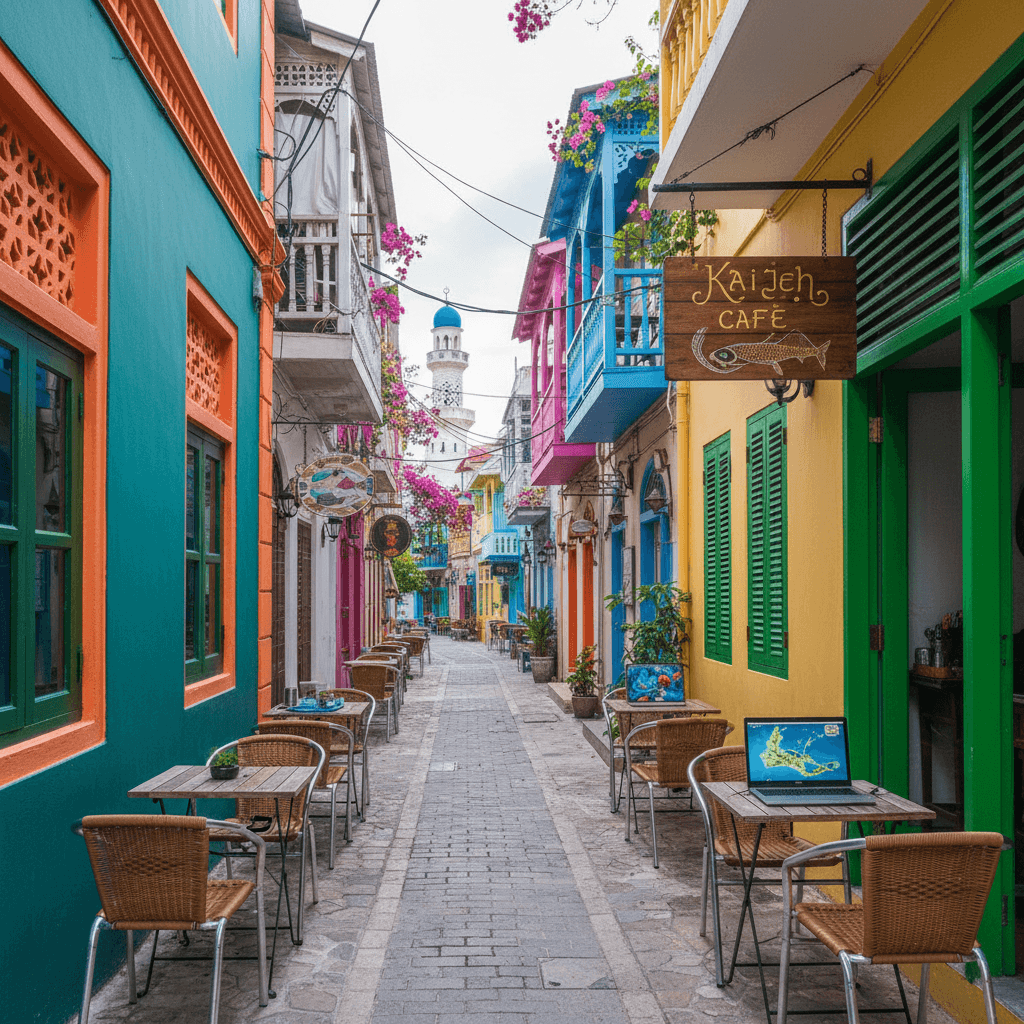
Male
🇲🇻 Maldives
Malé doesn’t feel like a tropical fantasy. It feels lived-in, squeezed tight and weirdly practical. You’ve got 133,000 people packed into about 2 square km, scooters zipping past prayer calls, the smell of fried fish and exhaust hanging in the humid air and then, ten minutes later, you’re staring at turquoise water like the whole place forgot to be a capital city.
That contrast is the point. Most nomads use Malé, Hulhumalé and Vilimale as a short-term base, because you get decent internet, easy airport access and quick jumps to resorts or local islands, but the tradeoff is real: it’s crowded, conservative and small enough that you’ll know your routes by heart in a week. Honestly, the city works best if you want productivity with a side of ocean views, not nightlife or constant novelty.
The vibe shifts fast after business hours. Streets calm down, shop shutters close and the city gets quieter in a way that feels almost meditative, though empty alleys can feel sketchy after dark, especially in parts of Malé and Hulhumalé. People love the fresh seafood, the beach walks, the slow lunch breaks and the fact that you can work in a café, then be on a ferry or speedboat not long after.
Not cheap. A solo nomad usually spends around $1,311 to $1,461 a month and that climbs fast if you want a private apartment in a central area. Rent is the killer, honestly, while street food and buses stay manageable.
Where most people base themselves
- Henveiru: Central, walkable, café-friendly, but crowded and rents start higher.
- Maafannu: Good for beach access and a slower pace, though petty theft does happen.
- Galolhu: Best for mosques, museums and a more local feel, with older buildings and sticky humidity.
- Hulhumalé: More space, newer apartments and bridge access to the airport, but evenings can feel empty and construction noise is common.
- Vilimale: Cheaper and bridge-linked, but you’ll rely more on ferries and have fewer options nearby.
Internet is, honestly, good enough for real work, with average speeds around 43 to 45 Mbps. The Hive is the main coworking pick, The Garage has a trendier café feel and The Coffee Club is a solid low-drama option when you just want strong WiFi and coffee that doesn’t taste like regret.
What makes Malé different is the tension. It’s paradise-adjacent, yes, but it’s also a small Muslim capital where modest dress matters, alcohol is off the table on local islands and daily life runs on ferry schedules, call to prayer and the heat pressing down on your shoulders. If you want soft sand, order at Salt Cafe or Sea House Café, then watch the light change over the water and decide whether this little city is charming, cramped or both.
Malé isn’t cheap and that surprises people who picture the Maldives as one long postcard. A solo nomad usually lands around $1,311 a month with rent or closer to $1,461 if you’re eating out often and using coworking spaces, which, surprisingly, puts it in the same ballpark as a few pricey Southeast Asian capitals.
Rent is the part that stings. In central Malé, a studio or 1BR usually runs $620 to $810, while Hulhumalé can hit $1,200+ for a small studio and that’s before you start thinking about views, AC bills or the weirdly cramped layout of some older buildings. Outside the center, you might save a bit, but the tradeoff is more ferry rides, more noise from scooters and less of that walk-everywhere convenience.
Food is manageable if you eat like a local. Street snacks and simple meals run $3.50 to $6, a mid-range meal for two lands around $6 to $34 and groceries for one person usually come in at $69 to $138 a week, depending on how much imported stuff you buy. Fresh tuna, mas huni, rice and tea keep costs down, though imported cheese, snacks and anything vaguely Western gets expensive fast.
Typical monthly costs
- Rent: $620 to $810 in central Malé, $1,200+ in Hulhumalé
- Food: $69 to $138 weekly groceries, $3.50 to $6 for cheap meals
- Transport: $0.65 local ticket, $17.60 for an 8 km taxi ride
- Coworking: $138 to $345 per month
Transport is pretty painless, honestly, because Malé is tiny and you can walk most places without much planning. Local buses and ferries are cheap, taxis add up quickly and apps like Quick MV help when you’re dragging a suitcase through humid air that clings to your shirt and makes every five-minute trip feel longer.
Coworking prices sit in a sensible middle ground. The Hive is the name people mention most for fast WiFi and a proper desk setup, The Garage feels more cafe-casual and The Coffee Club works if you just need reliable internet, cold water and a place to answer emails without the sound of honking scooters outside.
If you want to keep spending sane, aim for the budget or mid-range tier. Budget living, around $1,000 to $1,500, usually means shared housing in Hulhumalé and lots of local food, while mid-range at $1,500 to $2,500 gets you a better 1BR in Malé plus more cafe time and comfortable living starts once you’re ready to pay for location, convenience and fewer compromises.
Malé isn’t big, so your choice comes down to mood, budget and how much foot traffic you can stand. The center is handy, the outskirts are calmer and Hulhumalé feels more open, though it’s pricier and a bit unfinished in places. Crowds, honking and the smell of fried fish drift through the streets, then the calls to prayer cut across everything, which, surprisingly, can feel grounding.
Nomads
Henveiru is the default pick for most remote workers and honestly, it makes sense. You’re close to cafes, ocean views and the faster internet spots, so if you want to work, grab mas huni, then walk to The Hive or The Coffee Club, this is the easiest base.
- Rent: About $800 and up for a central room or small apartment.
- Best for: Walkability, coworking, quick food runs.
- Downside: It gets cramped fast and the noise doesn’t stop much.
If you want newer streets and more breathing room, Hulhumalé is the move, weirdly enough. It’s greener, easier on the eyes and you’re closer to the airport bridge, but evenings can feel dead and construction noise has a nasty habit of starting early.
Expats
Vilimale works well for expats who want cheaper bridge-linked housing without living right in the thick of Malé. The ferry rhythm is annoying at first, then you get used to it and the tradeoff is bigger apartments and a little less chaos. Don’t expect loads of nightlife, because there isn’t much.
- Rent: Usually lower than central Malé.
- Best for: Longer stays, quieter routines, practical budgets.
- Downside: You’ll depend on ferries more than you’d like.
Families
Hulhumalé is the easiest family choice, full stop. The roads are wider, there’s more space for kids to move around and the apartment stock is newer, though you’ll pay for that comfort and the place still feels a bit like a work in progress.
- Rent: Around $1,200+ for a small studio, often more for proper family units.
- Best for: Space, schools, easier airport access.
- Downside: Quiet evenings, dust and a lot of ongoing construction.
Solo travelers
Maafannu is a decent fit if you want beaches, a softer pace and easy access to the center without living right on top of it. I’d still skip wandering empty lanes after dark, because petty crime and gangy nonsense do happen, especially in poorly lit corners and that’s just not worth testing.
Galolhu suits solo travelers who care more about mosques, museums and older Maldivian city life than trendy cafes. It feels more local, more humid and a little worn around the edges, but if you like hearing bike bells, shop chatter and the faint hum of generators at night, it has character.
Malé is small, loud and weirdly workable. Internet speeds usually sit around 43 to 45 Mbps, which is fine for Zoom, calls and normal remote work, though I’d still keep a backup hotspot because one flaky afternoon can wreck your day. The city wakes up with prayer calls, scooter engines and the smell of fried fish drifting out of side streets, then settles into a slower rhythm once the office crowd disappears.
The coworking scene, turns out, is decent for a city this compact. The Hive is the main pick if you want fast WiFi, proper desks and a more serious work setup, while The Garage feels more like a trendy café where people stay longer than planned and The Coffee Club is the easy option when you just want a reliable table, an iced coffee and no drama.
Best Places to Work
- The Hive: Best all-around coworking space, central, professional and usually the safest bet for long work sessions.
- The Garage: Better for casual days, coffee, laptop time and people who don’t mind a bit of background buzz.
- The Coffee Club: Cozy, dependable and good when you want to work without committing to a full coworking membership.
Prices aren't cheap. Monthly coworking memberships usually run about $138 to $345 and that’s before you start paying for regular café habits, which, surprisingly, can add up fast if you’re doing two coffees and lunch every day. Dhiraagu and Ooredoo both sell SIMs at the airport and that’s the move, honestly, because you can land, buy data and be online before you’ve even figured out where the taxi stand is.
Internet Setup
- Speeds: Usually 43 to 45 Mbps, enough for meetings and cloud work.
- SIM cards: Around $7 to start, with 5GB to 30GB packs costing roughly $15 to $50.
- Backup: Keep a second SIM or hotspot, because outages and slowdowns do happen.
Most nomads work fine in Henveiru and central Malé, but the heat, the honking and the press of people can get tiring fast, so I’d avoid trying to do deep-focus work in the busiest corners all day. Hulhumalé has more space and a cleaner feel, though evenings can go quiet in a slightly lonely way and that tradeoff isn’t for everyone. If you want a place where the internet works and the coffee is passable, Malé does the job, but it won’t pamper you.
Male feels safe in the daytime, but don’t get lazy after dark. Empty roads in parts of Malé and Hulhumalé can turn sketchy fast and locals will tell you straight up to skip dim side streets, especially where gangs have been reported and knife incidents have happened. Not everywhere, though. The center is much calmer and resorts outside the city are usually the safest bet.
Most nomads move around the main blocks without trouble, because there’s foot traffic, shops and constant scooter noise, but the second the streets thin out, the mood changes. Honestly, that’s when you keep your phone tucked away, stay on lit roads and use Quick MV or a taxi instead of wandering. Petty theft happens and while violent crime isn’t common, it’s dumb to treat Malé like a sleepy beach town.
Healthcare basics
- Major hospital: Indira Gandhi Memorial Hospital or IGMH, is the main tertiary hospital in town with specialist departments and about 300 beds.
- Pharmacies: Easy to find in central Malé and Hulhumalé, so basic meds and prescriptions are usually easy to sort out.
- Emergency numbers: 102 for ambulance, 1199 for police.
IGMH handles serious issues better than smaller clinics, though the system can feel slow and a bit bureaucratic when you’re tired, sweating through a shirt and just want someone to look at the problem. For routine stuff, pharmacies are the faster move and staff often speak enough English to get you through the basics. Turns out, that saves a lot of hassle.
If you’ve got a chronic condition, bring your meds in original packaging and carry enough to last longer than planned, because local stock can be patchy for niche prescriptions. The heat, the humidity and the salty air can make you feel weirdly run down too, so drink more water than you think you need, then drink more. Small island, limited backup. That’s the reality.
Practical safety habits
- At night: Stick to central streets, use transport and don’t cut through dark alleys.
- Valuables: Keep cash light and your passport locked up unless you need it.
- Travel plan: Tell someone where you’re going if you’re heading to a quieter neighborhood or ferry terminal after sunset.
For women and solo travelers, modest dress matters in town and that affects how people respond to you. The conservative vibe is real, so save swimwear for beaches and resorts, skip public affection and don’t expect the same freedom you’d have in Bangkok or Lisbon. It’s manageable, just not carefree.
One last thing, if you’re in trouble, don’t try to tough it out alone. Call fast, get inside a lit place and ask your hotel or landlord for help if you don’t know the area well, because in Male, being cautious isn’t paranoia, it’s just smart street sense.
Malé is tiny, so walking gets you a lot farther than you’d expect and honestly that’s the easiest way to read the place. You’ll hear scooters buzzing past, horns nudging for space and the call to prayer drifting over the water, then ten minutes later you’re back on a quiet lane with salty air and hot pavement under your shoes.
Walk first. In central Malé, most errands, cafes and ferry terminals are close enough to handle on foot, though the sidewalks can be patchy and the traffic feels chaotic when school lets out or prayer times stack up. If you’re staying in Henveiru or Maafannu, walking usually beats taking a taxi for anything under a couple of kilometers.
For short hops, local buses and ferries are cheap and straightforward, but they’re slower than people expect. The bus network links parts of Greater Malé, including Hulhumalé and Vilimale and the fare is only around $0.65, which, surprisingly, makes it one of the cheapest ways to move around if you’re not in a rush.
Getting around by area
- Malé center: Best on foot, with taxis for rainy nights or luggage.
- Hulhumalé: Use buses, taxis or a rental bike, since distances stretch out and construction can make routes feel awkward.
- Vilimale: Ferry-first territory, the bridge helps, but public transport still rules.
Taxis are easy to flag or book and Quick MV is the app most travelers end up using for airport runs and city rides. A taxi from the airport to the city is around $17 or more, so if you’re landing with a backpack and no urgency, the public bus can save real money, though it’s less comfortable when the humidity is clinging and you’ve just stepped off a long flight.
Bikes and scooters are rentable for about $5 a day and that can be a decent option in Hulhumalé if you want a bit more freedom. Turns out, it’s also one of the few ways to make the wider area feel small, but watch the roads carefully, because drivers don’t always give cyclists much room and the heat can hit hard by midday.
To get to Velana Airport, you’ve got three sane choices, Quick MV taxi, a public bus or a hotel transfer if you’re carrying too much gear. The airport is only about 3 km away, so the trip’s short, but don’t assume it’ll be painless, traffic bunches up fast and a five-minute ride can turn into a sweaty little delay.
Dhivehi is the language you'll hear in shops, on ferries and drifting out of apartment windows when neighbors are arguing over dinner. English is widely understood in Malé, especially in hotels, offices, cafes and anywhere that deals with tourists, so day-to-day life is pretty painless. Still, a few words go a long way and locals usually soften up fast when you try.
The city feels bilingual in a practical way, not a polished one and honestly that's what makes it manageable. You can order coffee, ask for directions or sort a SIM card in English, then hear Dhivehi everywhere else, from the market to the mosque steps. Google Translate works well enough for signage and quick checks, though it won't save you from slang or fast conversation.
Useful phrases:
- Dhanyavaad: thank you
- Ingireysin vaahaka? do you speak English?
- Baajjaveri hingun: safe travels
- Assalaam alaikum: a common greeting you'll hear constantly
Pronunciation can be fiddly, so don't stress about perfect Dhivehi, people care more about the effort than the accent. A simple hello and thank you usually gets you a smile, which, surprisingly, makes service smoother in small shops and cafes. The tone here is polite but direct and if you're asking a favor, ask cleanly and wait your turn.
For expats and nomads, English is enough for housing, coworking, healthcare and transport apps, though forms and government errands can still feel clunky. That's where patience helps, because the bureaucracy can be slow, the paperwork can be repetitive and a receptionist might switch between English and Dhivehi mid-sentence without warning. You won't be lost, but you will sometimes feel like you're working around the system instead of through it.
If you want to blend in a bit better, keep your voice low in public, use respectful greetings and don't assume everyone wants to chat like they're on holiday. Malé is compact, noisy and very human, with calls to prayer, scooter horns and the smell of grilled fish hanging over side streets, so clear communication beats charm every time. Speak plainly, stay polite and you'll be fine.
Malé stays warm all year, with daytime temperatures usually sitting around 28 to 31°C, so your real choice isn’t “hot or cold,” it’s dry versus wet. The dry season, roughly December through April, is the sweet spot and February usually gets the least rain. Bright mornings, lower humidity, calmer seas, that’s when the city feels easiest.
Peak wet season runs from May through November, with November usually the soggiest month and honestly, it can feel relentless once the clouds park overhead. You’ll get sudden downpours, loud rain hammering tin roofs, puddles on narrow lanes and that sticky heat that clings to your skin even after sunset. Not ideal.
If you’re coming to work remotely, I’d aim for January, February or March. You still get the trade-off of a compact, crowded island, but the weather’s kinder, the ocean looks absurdly blue and the short ferry and speedboat rides to nearby islands are less likely to get messy. December is good too, though it can be busier and pricier.
Best months: December to April, especially February and March.
Worst month: November, hands down.
What each season feels like
- Dry season: Easier for day trips, beach time and commuting across Malé, Hulhumalé and Vilimale, because you’re less likely to get soaked running between cafes, ferries and co-working spots.
- Wet season: Cheaper at times, fewer tourists and weirdly a little calmer indoors, but the humidity is brutal and the air can smell like salt, exhaust and wet concrete after a storm.
- Ramadan months: Timing shifts every year, so check dates if you care about restaurant hours, because daytime eating rules and quieter streets can change the rhythm of the whole city.
Male doesn’t have dramatic temperature swings, so don’t overthink packing, but do bring light clothes, a real rain jacket and sandals that dry fast. Air conditioning can feel icy after a muggy walk, then the street hits you with wet heat again, so layers help more than you’d expect. Sunblock matters, obviously.
If you want the most comfortable stay, come in the dry months and book a place with reliable AC, decent windows and backup internet. That combo makes a bigger difference here than anywhere else, because the weather can turn your apartment into a steam room and a bad WiFi day is already annoying enough.
Malé runs on a small-island rhythm, so a lot of practical life is simpler than people expect, then slightly annoying in the details. The good part is that you can walk most places, grab fast internet and get to the airport in minutes, but the downsides are real, the heat hangs heavy, scooters buzz past your ear and some streets feel too quiet after dark.
SIM cards are easy. Pick up Dhiraagu or Ooredoo at the airport, get a tourist data pack and you’ll be online before your bag’s even cooled off, usually for $40 to $50 if you want 20 to 30GB and enough slack for video calls, maps and a few backup downloads.
Money is less elegant. ATMs are widespread, but fees add up fast, so use Wise or another transfer service when you can, because local banking can feel clunky and honestly nobody wants to lose cash to avoidable charges every week.
For apartments, check iBay.mv, Facebook groups like Rent Apartments Maldives, Kobapages and Boahiyaa, then move quickly when you see a decent listing. The better units in Henveiru and central Malé go fast, Hulhumalé has newer stock but higher asking prices and Vilimale can save money if you don’t mind ferry timing and a slightly slower evening routine.
Where to look
- Henveiru: Best if you want cafes, offices and easy walks, but rent gets pushed up by demand.
- Hulhumalé: Newer buildings, more space and easier airport access, though construction noise can be relentless.
- Vilimale: More affordable than central Malé, with a bridge connection, but fewer everyday conveniences.
For day trips, book speedboats to local islands like Ukulhas or Fulidhoo or take a resort transfer if you’re splitting work weeks with beach time. The sea air hits first, then the diesel smell from the dock and that contrast is basically the Maldives in one breath.
Dress modestly in town, no bikinis on local beaches, no PDA and don’t expect alcohol outside resort settings. That’s the deal and arguing about it will get you nowhere. Also, this is right-hand drive, so crossing roads takes a second, especially when taxis honk and motorcycles dart around corners.
Small things that save hassle
- Carry cash: Useful for ferries, small eateries and places that act modern until the card machine breaks.
- Use Quick MV: Good for airport transfers and city rides, especially when you don’t want to haggle in the heat.
- Keep shoes light: You’ll be taking them off a lot and cold tile floors are weirdly common indoors.
If you’re staying longer than a few weeks, buy a backup hotspot or a second SIM, because internet is usually fine, then suddenly not. Malé’s practical side is simple enough, the trick is accepting that the city works best when you plan around heat, prayer times, ferry schedules and the occasional random delay.
Need visa and immigration info for Maldives?
🇲🇻 View Maldives Country GuideHidden Gem
Worth the effort