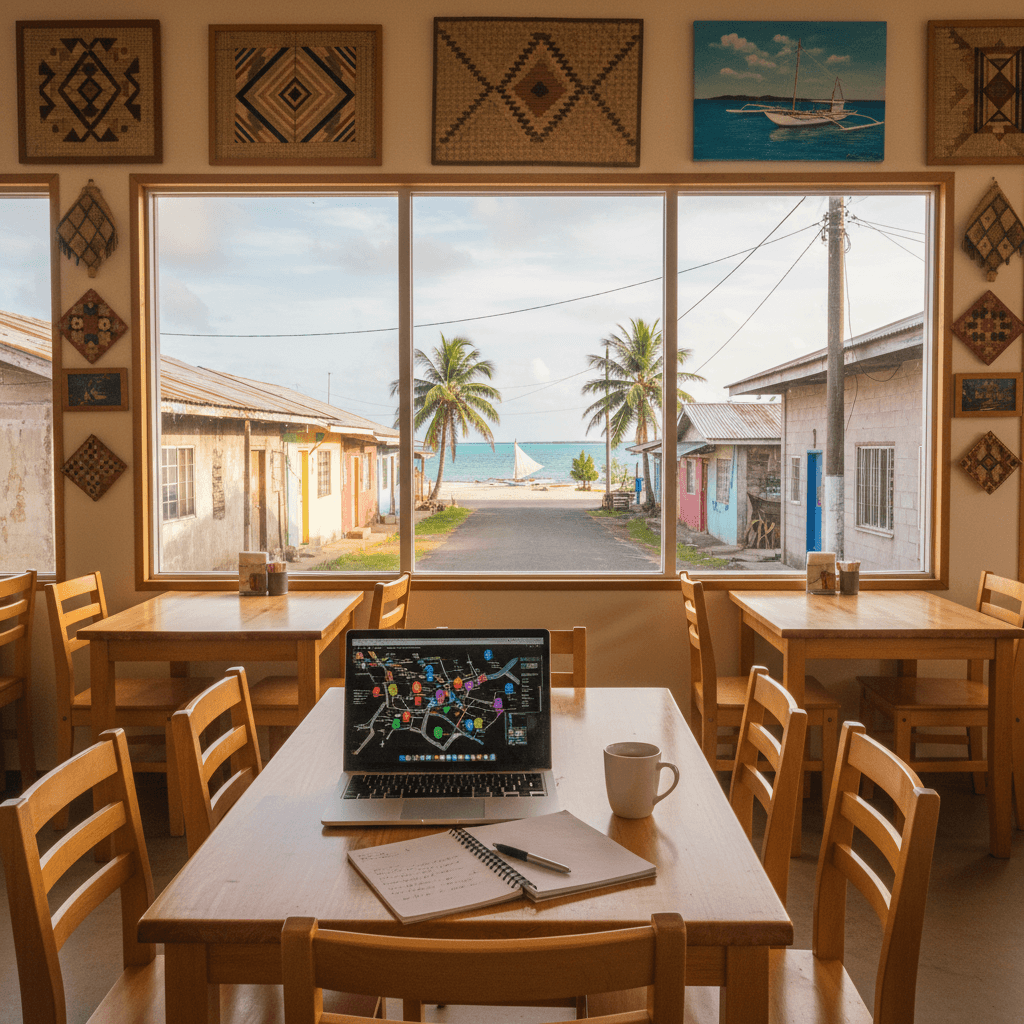
Majuro
🇲🇭 Marshall Islands
Majuro feels like a place that runs on tide charts, not clocks. The atoll is long and thin, the lagoon is gorgeous and the whole town hums with scooters, trade winds and the low thump of music drifting out of shops and bars. It’s calm, but not polished.
The vibe is friendly and a little rough around the edges. People know each other, strangers get noticed fast and Marshallese culture is still the center of daily life, so you’ll feel the community rhythm before you feel any “digital nomad scene,” which, honestly, is pretty small. You’re here for ocean light, quiet beaches and a slower pace, not for networking parties or flashy brunches.
Majuro isn’t cheap. Imported goods push prices up hard and the cost of living catches a lot of newcomers off guard. A modest month can run about $1,500 if you’re sharing housing and eating simply, while a more comfortable setup lands closer to $2,500 or higher, especially once rent, internet and normal restaurant meals start piling up.
- Budget month: about $1,500, shared housing, simple food
- Mid-range month: about $2,500, private room or 1BR, mixed dining
- Comfortable month: $3,500+, private apartment, more eating out
The main urban strip is DUD, short for Delap, Uliga and Djarrit and that’s where most nomads end up. Delap has government offices, Uliga has more services and a few social spots, while Djarrit is better for longer stays and residential life, though the trade-off is plain, it can feel crowded and rents are higher. Laura on the west end is quieter, with more space and beach access, but you’ll give up convenience.
Internet is decent by island standards, not great by remote-work standards. In DUD, you can usually get by for email, calls and normal admin work, but outside town it gets spotty fast and streaming or heavy uploads can be annoying. There’s no real coworking scene, so most people end up at cafes, using a local SIM and hoping the connection holds.
Day to day is simple. Shared taxis are the usual move, they’re cheap, frequent and a bit chaotic, with honking and quick stops along the main road. Walking works in the core, bikes are handy and you don’t really need a car unless you’re staying longer or living far from DUD.
- Best for: slow living, lagoon views, local contact
- Worst for: low budgets, fast internet, nightlife hunters
- Food scene: casual cafes, grills, bar food, not much else
It’s safe enough for most visitors, though petty theft can happen in the main area, so don’t leave valuables lying around. Majuro Hospital covers basic care, but serious issues mean a flight out and that’s the reality here, not a backup plan you can ignore. Bring insurance, bring patience and don’t expect island life to be cheap just because it looks relaxed.
Majuro isn’t cheap and that catches people off guard. A solo budget here lands around $1,500 a month, but that only works if you keep housing simple, eat locally and don’t expect imported comforts every day. The island runs on shipments, so prices jump fast and a bag of groceries can sting in a way that feels weirdly unfair when you’re staring at a tiny lagoon outside your window.
Most nomads end up paying the most for rent and food, then grumbling about it over instant noodles. A one-bedroom or studio in DUD, the main strip through Delap, Uliga and Djarrit, usually sits around $692 to $953 and that’s before you start adding in internet, transport and the occasional overpriced meal that somehow tastes like diesel and salt air.
- Budget: About $1,500 monthly, shared housing, cheap local meals, minimal extras.
- Mid-range: Around $2,500 monthly, private 1BR, mixed dining, more taxis.
- Comfortable: $3,500+ monthly, better apartment, imported groceries, nicer dinners out.
Food is where the island economy really shows its teeth. A fast-food meal runs about $10.50, lunch menus hover near $13.70 and a mid-range dinner for two can hit $30, which, honestly, isn’t a bargain once you’ve paid for a plane ticket to get here. Imported chicken can cost around $11 a kilo and that’s the kind of number that makes local produce and fish look a lot smarter.
Getting around doesn’t hurt as much, though it’s still not free. Shared taxis are the norm, short hops in DUD can be under $2 and a monthly transport budget around $44 is realistic if you’re not bouncing all over the atoll, though airport runs and longer trips to Laura can add up fast.
What You’ll Actually Pay For
- Rent: $692 to $953 for a studio or 1BR in DUD.
- Meal out: $10.50 for fast food, $13.70 for lunch, $30 for dinner for two.
- Internet: About $68 a month for a home plan, decent for email and calls, spotty outside the main area.
- Transport: Roughly $44 monthly if you keep it local.
Internet is fine for work, but don’t romanticize it. While speeds can reach up to 100+ Mbps, it can be patchy once you drift outside DUD and the signal can wobble during bad weather or busy hours. For remote workers, that means email and Zoom are usually okay, streaming can be annoying and a backup eSIM or second SIM isn’t paranoia, it’s insurance.
Source 1 | Source 2
Majuro doesn’t really have neat, separate neighborhoods the way bigger cities do, it’s more a string of islets stitched together by one narrow road, with the action concentrated in Delap, Uliga and Djarrit. The vibe shifts fast, too, from government offices and taxis to sea air, concrete storefronts and kids playing by the lagoon. Not cheap. Not quiet either.
Nomads
If you’re working remotely, stay in the DUD strip, especially Uliga or central Delap, because that’s where the cafes, banks, shops and most reliable mobile signal are clustered. Internet is, honestly, patchy enough that you’ll want a backup SIM and a patient attitude, but for email, calls and light client work, it gets the job done.
- Best fit: Uliga, Delap, central Djarrit
- Rent: Around $692 to $953 for a studio or 1BR
- Why stay here: Walkable, close to the airport, easier taxi access
- Watch out for: Higher rents, more noise, flaky WiFi outside the core
Expats
Expats usually end up in Delap or Djarrit first, because that’s where housing, errands and offices are easiest to sort out and frankly you’ll get tired of crossing the atoll for every small task. The area feels practical more than pretty, with taxi horns, salted air and the smell of grilled fish drifting past shopfronts in the evening.
- Best fit: Delap, Djarrit
- Rent: Budget about $953 monthly for a modest place, more for a private apartment
- Why stay here: Close to services, easier for paperwork, decent access to bars and restaurants
- Watch out for: Imported groceries are expensive and daily life adds up fast
Families
Laura is the calmer choice, with more open space, quieter roads and a more residential feel that suits long stays better than the DUD core. It’s farther from the central strip, so you’ll trade convenience for breathing room and that tradeoff matters when you’re dealing with kids, groceries and heat that clings to your clothes by midmorning.
- Best fit: Laura
- Rent: Similar to town, though some homes are larger for the money
- Why stay here: Quieter beaches, less traffic, more space
- Watch out for: Fewer shops, longer taxi rides, less of a social scene
Solo Travelers
Solo travelers usually do best in Uliga or Delap, where you’re close to bars, cafes and people, because Majuro gets very small very quickly if you’re stuck out in the wrong end of the atoll. Djarrit works too for longer stays, especially if you want something a bit less hectic, though the scene is still limited and nights can feel sleepy after a beer or two.
- Best fit: Uliga, Delap, Djarrit
- Rent: Shared housing or simple apartments keep costs closer to $1,500 monthly
- Why stay here: Easier to meet people, closest to food and taxis
- Watch out for: Petty theft in busy spots, limited nightlife
Majuro’s internet is decent by Micronesian standards, but don’t come here expecting slick island Wi-Fi and endless backup options. The real story is this, it works fine for email, Slack, calls and normal browsing in DUD, then gets flaky fast once you drift toward the outer ends of the atoll, where the signal can drop off and the humidity somehow feels even heavier.
NTC is the main provider and home plans around 50 Mbps run about $68 a month, which sounds fine until you remember how expensive everything else is here. Speeds average around 45 Mbps in the urban core, honestly good enough for most nomads, though streaming, big uploads and cloud backups can get annoying when the connection hiccups mid-task.
Where to work
- Island Cafe: The closest thing Majuro has to a go-to work spot, with Wi-Fi, coffee and a low-key room where you can hear forks clinking, fans humming and people talking over lunch.
- Marshall Islands Resort lobby and cafe areas: More comfortable for longer sits, though you’ll pay resort prices and the vibe is more “wait between errands” than true coworking.
- At home in DUD: Many long-stay visitors just rent in Delap, Uliga or Djarrit and work from there because, weirdly, that’s often the least painful setup.
There’s no proper coworking scene here, which is the biggest gap if you’re used to dedicated desks and reliable meeting rooms. That said, the Island Cafe and a few hotel spaces can do the job and most nomads end up building their schedule around the connection instead of the other way around, because Majuro doesn’t really care about your deadline.
SIM cards and backups
- NTC shop in DUD: The main place to buy local service, so go there first if you want data without fiddling around for half a day.
- Airalo eSIM: A handy backup if your phone supports it, especially if you want data the moment you land and don’t feel like chasing a store.
- Hotspot plan: Useful if you’re sharing a connection or moving between rentals, though coverage outside the main strip can be patchy.
For actual work, plan around simple tasks, not huge uploads or streaming marathons, because Majuro’s internet is, frankly, a little too fragile for that. If you’re staying a month or more, rent in DUD, grab a local SIM, test Wi-Fi before you commit and keep a backup hotspot ready, since one bad rain squall or a power wobble can wreck your afternoon.
Majuro feels calm on the surface, but don’t mistake that for carefree. Petty theft happens in DUD, especially around the busier stretches of Delap, Uliga and Djarrit, so keep your phone zipped away, use a bag with a real closure and don’t leave anything on a cafe table while you step outside for five minutes. Honestly, most travelers say they feel fine walking around, just stick to lit streets at night and trust the local pace.
There isn’t a dramatic no-go zone here, which is refreshing, but the island’s small size means everyone notices everything and that can work for you or against you. Late evenings can feel very quiet, with the sound of generators, wind off the lagoon and the occasional engine from a passing truck, so if a street feels too empty, just grab a shared taxi instead.
What to expect
- Violent crime: Low.
- Petty theft: The main annoyance, especially in DUD.
- Night walks: Fine in lit areas, but don’t drift around dark side streets.
- Transport: Shared taxis are the safe, easy default.
Healthcare is basic, not fancy. Majuro Hospital, also called Leroj Atama Memorial, handles outpatient care and emergencies and there are pharmacies around town for common meds, but anything complex usually gets referred to Hawaii or the Philippines, which, surprisingly, is just the reality here. Bring travel insurance, because a simple issue can turn into an expensive transfer fast.
For routine stuff, the system works well enough, though it’s not the place for guesswork. If you need antibiotics, wound care or a quick consult, you’ll probably get help, but if you’re managing something serious, chronic or highly specialized, you’ll want a plan before you arrive. The clinic floors are cold, the air often smells faintly of antiseptic and salt and the waits can be slow when the island is busy.
Healthcare basics
- Main hospital: Majuro Hospital, Leroj Atama Memorial.
- Phone: +692 625 4144 or +692 625 3632.
- Care level: Primary and secondary only.
- Pharmacies: Available for common medicines.
- Best move: Keep insurance and copies of prescriptions handy.
If you’re staying longer than a few weeks, pack your own must-haves, because pharmacy shelves can be limited and imports push prices up. Sunscreen, allergy meds, basic painkillers and anything you take daily should come with you and honestly, that includes a small first-aid kit because island logistics can be a pain.
Need a local rule of thumb? Be sensible, stay visible and don’t act like you’re back home in a city with 24-hour services. Majuro isn’t dangerous in the way some people expect, but it’s also not the kind of place where you want to wing it at 11 p.m. with cash in your pocket and your laptop under your arm.
Majuro is easy to get around, but it isn’t slick. There’s no Uber, no ride-hailing apps and no rush-hour gridlock in the big-city sense, just shared taxis, the occasional honk and salty wind blowing off the lagoon while you wait by the roadside.
Shared taxis are the default move in DUD and most short hops cost about $0.75 to $2, which feels cheap until you start making multiple trips a day. Airport runs usually land around $5 to $10, while longer rides, like out toward Laura, can jump quite a bit depending on distance and who’s driving.
Majuro’s core is compact enough to walk if you’re staying in Delap, Uliga or Djarrit and that’s where most nomads end up anyway. The roads can be busy with minibuses, taxis, scooters and stray dogs, so keep an eye out, especially after dark when the streetlights get patchy and the air feels heavy and still.
DUD and nearby
- Best for: Short errands, cafes, government offices, hotel hops.
- Transport: Shared taxi, walking, the odd bike.
- Cost: Usually $0.75 to $2 for local rides.
Laura
- Best for: Quieter beaches, families, longer stays.
- Transport: Bus or taxi, because it’s too far to casually walk.
- Cost: Around $2 by public bus from the Robert Reimers area, more by taxi.
Bikes are a solid option if you can handle the heat and don’t mind getting sprayed by wet pavement after rain. Rentals usually run about $5 to $10 a day and honestly that’s often the most practical choice for a few hours of exploring, especially if you want to move at your own pace without waiting for a cab.
Car rentals exist, but most visitors don’t need one. Parking isn’t usually the headache, it’s the extra cost and the fact that the island’s small enough that a car can feel like overkill, weirdly, unless you’re hauling gear or staying for a while.
- Airport to town: Quick taxi ride, usually $5 to $10.
- Between DUD neighborhoods: Fast, cheap and common.
- To Laura: Better to budget time, not just money.
If you’re coming in with luggage, just grab a taxi at the airport and ask the price before you get in. That tiny bit of clarity saves awkward back-and-forth and in Majuro, where everything moves at island pace, it’s the smoothest way to start.
English gets you pretty far in Majuro, especially in DUD, where government staff, hotel workers and most shop clerks switch to it without fuss. Marshallese or Kajin M̧ajeļ, is still the heartbeat of daily life, though, so hearing it in the market, on buses and in family compounds is normal, with that soft, fast rhythm you’ll hear long before you catch the words.
Use a few Marshallese phrases and people warm up fast. Iọkwe works for hello, Bar ba mokta? means how are you and Kwe is thank you, simple stuff, but it goes a long way when you’re buying fruit or asking for directions under the glare of midday sun.
English is usually enough for nomads and short-term expats, honestly, but don’t expect everyone to speak it the same way or at the same pace. In the outer parts of the atoll, conversations shift to Marshallese quickly and if you’re relying on Google Translate, you’ll want to keep your phrases short and your phone charged because the connection can be patchy.
People here are polite, reserved at first, then friendly once you’ve met them properly and that social shift matters. Don’t rush straight into photos or questions, ask first, take off your shoes when you enter homes and greet elders with a little patience, because that’s how you avoid sounding like a clueless tourist.
- Best language to know: English for daily transactions, Marshallese for goodwill.
- Useful phrases: Iọkwe, Bar ba mokta?, Kwe.
- Best translation tool: Google Translate for quick checks, not long chats.
The sound of Majuro is part language too, roosters, generators, scooter engines and people talking across porches while the sea hisses on the reef, so you’ll miss half the flavor if you stay behind a screen all day. If you’re here longer than a week, learn the basics, because it makes everyday life smoother and, frankly, it shows respect in a place where everyone notices how you behave.
Weather & Best Time to Visit
Majuro stays hot, humid and salty all year. The air sits around 28 to 30°C and the breeze off the lagoon helps, but only a little, because the humidity clings to your skin and the sun bounces off the water like a flashlight.
January to March is the sweet spot. Rain eases up, the trade winds feel cleaner and you’re less likely to get caught in those heavy afternoon downpours that drum on tin roofs and turn DUD into a damp, sweaty mess, which, surprisingly, can make a big difference if you’re trying to work or move around on foot.
Majuro’s rainy season runs roughly from May through December, with the wettest stretch usually landing in October and November. Wet doesn’t mean non-stop storm chaos, though, it means bursts of hard rain, gray skies and puddles that stick around longer than you’d like, so if you hate soggy clothes and patchy transport, don’t plan your trip around those months.
- Best overall: January to March, drier and more comfortable
- Still workable: April and May, before the heavier rains settle in
- Most annoying: October and November, wetter and stickier
That said, there’s no true cool season here. Nights stay warm, the mosquitoes show up fast after rain and air-con becomes less of a luxury and more of a sanity saver, especially in budget guesthouses where the fan just pushes hot air around the room.
If you’re a remote worker, aim for the drier months and book a place in DUD, where you’ll have the best shot at steady internet and quick taxi access when the weather turns ugly. Beach days are still possible in the wet season, but you’ll want to move early, before the heat gets mean and the clouds start building over the lagoon.
My take, honestly, is simple: come when the rain backs off. You’ll still sweat through your shirt, but at least you won’t be dodging storms between the airport, your guesthouse and a cafe with working WiFi.
Majuro runs on island time and that can be lovely or annoying depending on your mood. The pace is slow, the humidity sticks to your skin and if you're used to easy logistics, you'll feel the friction fast.
Start with the basics. Get an NTC SIM in the DUD area, because airport convenience isn't really a thing here. Bank access is patchy, so most nomads keep cash handy, use ATMs when they work and pair that with Wise or another fintech app, which, surprisingly, saves a lot of headaches.
Housing is usually handled through Airbnb monthly stays or direct local contacts. Don't expect slick apartment hunting, the market is small, the best places get snapped up and the nicer studios in Delap-Uliga-Djarrit can run high enough to make you blink twice.
- Budget stay: Around $1,500 a month, usually shared housing and simple meals
- Mid-range: About $2,500, with a private 1BR and more restaurant spending
- Comfortable: $3,500+, if you want privacy, imported groceries and fewer compromises
Getting around is easy enough, but don't overthink it. Shared taxis are the default, rides in DUD can be under $2 and a short trip to the airport usually runs about $5 to $10, though longer runs to Laura cost more and feel a lot less casual. Honestly, walking works fine in the compact core and bike rentals are a nice escape when the road traffic starts honking and coughing exhaust into the heat.
The social code matters here. Remove your shoes indoors, ask before taking photos and be polite with elders, because Marshallese hospitality is real, but so is the expectation that you'll act like a decent guest.
- Day trips: Government tours sometimes cover museums, parliament and boat-making demonstrations, usually for $50 or more
- Food: Keep it casual, Island Cafe and Flame Tree are common go-tos
- Internet: Good enough for email and Zoom, weirdly inconsistent for anything heavier
Majuro Hospital handles basic care, but anything complicated usually gets sent off-island, so travel insurance isn't optional if you're staying awhile. The clinics are fine for a scrape or fever, less fine for anything serious and that's the line you should respect.
Need visa and immigration info for Marshall Islands?
🇲🇭 View Marshall Islands Country GuideHidden Gem
Worth the effort