Magong
🇹🇼 Taiwan
The Island Escape You Didn't Know You Needed
If you're tired of the frantic energy of Taipei or the humid density of Kaohsiung, Magong is your pressure valve. It’s the administrative heart of the Penghu archipelago, but don't let the word administrative fool you. This is a salt-sprayed, wind-swept town where the rhythm of the tides dictates the pace of life. It feels less like a tech hub and more like a sleepy Mediterranean fishing village that somehow ended up in the Taiwan Strait.
Living here means trading skyscrapers for ancient basalt columns and MRT rides for scooter trips along the coast. The vibe is decidedly low-key. You'll see locals drying squid on racks under the sun and elders chatting in Hokkien outside century-old temples. It’s a place for the nomad who wants to disappear into their work for four hours and then spend the afternoon windsurfing or exploring crumbling coral-stone houses.
The Nomad Reality Check
Let's be real: Magong isn't Chiang Mai. You won't find a dedicated coworking space on every corner, and the English proficiency drops significantly once you leave the main harbor area. However, Taiwan's digital nomad visa options have made this island a viable long-term base. With the ability to stay for up to 180 days initially, renewable, with income requirements of approx. $5,700 USD/month or equivalent annual based on age, Magong is becoming a "slow-mad" favorite.
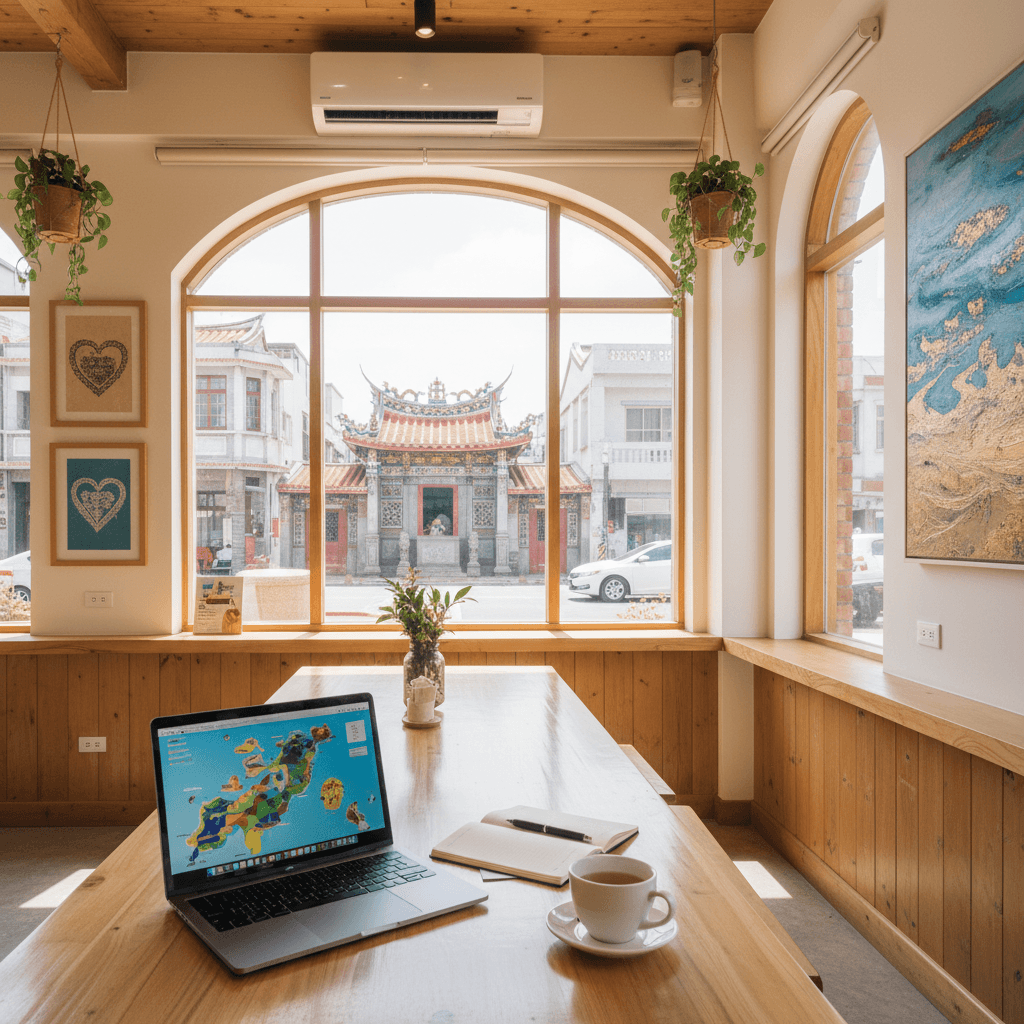
The internet is surprisingly fast, often hitting 5G speeds even on remote beaches. Most nomads set up shop in local cafes like Starbucks near the Pier 3 Mall or smaller, independent spots downtown. It’s a trade-off: you lose the networking events of the mainland, but you gain a backyard of white sand beaches and some of the best seafood in Asia.
What It Costs to Live the Island Life
Magong is significantly cheaper than Taiwan’s Tier-1 cities. You can live a very comfortable life here for $1,800 to $2,500 USD per month, though budget-conscious travelers can easily scrape by on $1,200 if they stick to local markets.
- Housing: A modern studio downtown or a 1BR near the water typically runs between $400 and $700 USD. Airbnb is your best bet for monthly stays, as traditional landlords often want year-long leases.
- Food: Street food like oyster omelets or cactus ice cream costs $3 to $5. A mid-range dinner with fresh catch-of-the-day will set you back about $15.
- Transport: Scooter rentals are the lifeblood of the island, costing around $10 USD per day, though monthly deals can be negotiated for much less.
The Seasonal Shift
Timing is everything in Penghu. From April to June, the weather is perfect, hovering around 25 to 30°C (77 to 86°F). This is also when the Fireworks Festival happens, turning the sleepy town into a festive hub.
The winter months from December to February are a different beast. The "Penghu wind" is legendary; it’s fierce enough to blow a scooter off course and brings a salty chill to the air. Most tourists flee during this time, leaving the island to the locals and a few hardy expats. If you enjoy moody, desolate landscapes and uninterrupted focus, the winter is actually a fantastic time to get deep work done.
Why Magong Hits Different
What sets Magong apart is the safety and the genuine hospitality. You can leave your laptop on a cafe table to go to the restroom without a second thought. There’s a profound sense of community here. You aren't just another face in a sea of foreigners; you're a guest in a tight-knit island culture. It’s the kind of place where the lady at the breakfast stand will remember your order by the third day, and the local fisherman might offer you a beer just because you looked interested in his boat.
The Island Discount
Living in Magong is a breath of fresh air for your bank account, especially if you're coming from the high-octane markets of Taipei or Singapore. While Taiwan is generally more expensive than Southeast Asian hubs like Chiang Mai or Da Nang, Magong sits in a sweet spot. It's an island town where the pace is slow and the prices follow suit. You can expect your daily expenses to run about 20% to 30% lower than what you'd pay on the mainland.
Most nomads find they can live comfortably here on a budget that would barely cover a studio in a western capital. The biggest variable is how you handle the "island tax" on imported goods; stick to local seafood and seasonal produce, and your New Taiwan Dollar (TWD) will stretch surprisingly far.
Monthly Budget Tiers
Depending on your lifestyle and how much you value a view of the basalt cliffs, here is what you should set aside each month:
- The Lean Nomad ($1,200 to $1,800 USD): This covers a modest studio in the downtown core, plenty of night market dinners, and getting around via the local bus system or on foot. You'll be relying on local cafes for your "office" and keeping the weekend island-hopping to a minimum.
- The Mid-Range Professional ($1,800 to $2,500 USD): This is the sweet spot for most. It grants you a nicer one-bedroom apartment near the beach areas, a dedicated scooter rental for exploring the archipelago, and the ability to eat at sit-down restaurants several times a week.
- The High-Flyer ($2,500+ USD): At this level, you're looking at upscale harbor-view lofts, frequent taxi rides, and premium dining. Since Magong lacks a massive luxury scene, you'll actually find it quite difficult to spend significantly more than this unless you're chartering private boats every weekend.
Housing and Utilities
Rent is your biggest saving. While there isn't a massive inventory of western-style "digital nomad apartments," using platforms like 591.com.tw or negotiating monthly rates on Airbnb is the way to go. Most expats recommend staying near the Magong Night Market for convenience or the harbor area for the breeze.
- Downtown Studio: $300 to $500 USD per month.
- Beachfront 1-Bedroom: $500 to $800 USD per month.
- Utilities (Electricity/Water/High-speed Internet): Usually around $60 to $100 USD. Be aware that air conditioning costs can spike in the humid summer months.
Food and Drink
Eating out is often cheaper than cooking for yourself in Taiwan. Magong is famous for its seafood, particularly oyster omelets and cactus ice cream. A meal at a local stall will rarely cost more than $3 to $5 USD. If you're heading to a mid-range restaurant for a sit-down dinner, expect to pay between $10 and $20 USD.
Groceries are affordable if you shop at local wet markets. If you're looking for familiar comforts, expect to pay a premium at the smaller convenience stores. A local beer will set you back about $2 USD, while a flat white at a specialty coffee shop usually costs around $4 USD.
Transport and Connectivity
Magong is compact and walkable, but to see the rest of Penghu, you'll want wheels. Many nomads use KKday or Klook to snag long-term scooter rentals, which typically cost around $100 USD per month. Public buses are cheap at roughly $1 USD per ride, but they don't run as frequently as they do in Taipei.
For your digital life, Taiwan's connectivity is world-class. You can grab an unlimited data SIM from Chunghwa Telecom for about $15 to $20 USD for 30 days. It's fast enough to tether your laptop and work from a beach if you need to.
Visa and Residency Costs
If you're planning to stay long-term, the new Digital Nomad Visa launched in January 2025 is a game changer. To qualify, you will generally need to meet an income requirement of approximately $5,700 USD per month, or show an annual income of $20,000 to $40,000 depending on your age. Just keep an eye on the 183-day rule; once you cross that threshold, you're considered a tax resident and your worldwide income may be subject to Taiwanese tax.
The Remote Worker’s Core: Downtown Magong
If you're landing in Penghu to work, you’ll likely want to base yourself in the Downtown Magong area, specifically near the Magong Night Market and the harbor. This is the only part of the island where you can realistically live without a scooter for every single errand. Most nomads find that being within walking distance of the Zhongzheng Road shopping district is a lifesaver for grabbing a quick $4 oyster omelet between Zoom calls.
- Rent: Expect to pay between $400 and $600 for a decent studio on Airbnb or through local agents.
- Vibe: It's the most "urban" Penghu gets. You'll have access to the island's best 4G/5G speeds and the highest concentration of cafes like Starbucks or local independent roasters where laptop work is culturally accepted.
- Pros: Best food access, reliable internet, and you’re close to the ferry terminal for weekend island hopping.
- Cons: It gets loud during the peak summer tourist season, and the "city" feel is tiny compared to Taipei.
The Expat & Long-Termer’s Retreat: Shanshui & South Beach
For expats who prioritize a view over a commute, the neighborhoods around Shanshui Beach or Lintou are the top picks. These areas feel less like a transit hub and more like a coastal residency. You’ll find a small but dedicated community of surfers and windsurfers here who appreciate the basalt cliffs and the slower pace of the southern coast. It's a 15 to 20 minute scooter ride into the city center, so it’s best for those who don't mind a bit of isolation.
- Rent: Larger 1-bedroom units or small houses usually range from $500 to $800.
- Vibe: Very relaxed and scenic. It’s where you go to actually feel like you're living on an island rather than just working from one.
- Pros: Immediate beach access, cleaner air, and a much quieter environment for deep work.
- Cons: You absolutely need a scooter or car. Dining options are limited to a few local seafood spots and guest house kitchens.
The Family-Friendly Choice: Outskirts Near Penghu Airport
Families or couples looking for more square footage often look toward the Ai-men or Huxi areas near the airport. These neighborhoods offer more traditional housing layouts and a quieter, residential atmosphere. While it's not "walkable" in the traditional sense, the proximity to the airport makes it convenient for those who need to fly back to the mainland for business frequently.
- Rent: You can often find multi-room apartments or older houses for $600+, providing much better value per square foot than downtown.
- Vibe: Traditional Taiwanese village life mixed with modern residential pockets. It’s safe, quiet, and very local.
- Pros: More space for the money, easy airport access, and close to the wide, sandy stretches of Ai-men Beach.
- Cons: Very limited English spoken in this area; you’ll rely heavily on translation apps like Pleco or Google Translate.
The Solo Traveler’s Hub: Magong Harbor North
Solo travelers often congregate in the northern edge of the harbor district. This area is packed with hostels and guesthouses that serve as the unofficial social headquarters for the island. Since there isn't a massive nomad-specific coworking scene yet, these communal spaces are where you'll meet others to split the $10 daily cost of a scooter rental or plan a trip to the Chimei basalt columns.
- Rent: Monthly stays in high-end hostels or guesthouses can be negotiated down to $300 to $500.
- Vibe: Social, transient, and energetic. It’s the best place to find people to grab a $15 seafood dinner with.
- Pros: Easiest place to make friends, close to the 119 emergency services and Penghu General Hospital.
- Cons: High turnover of neighbors and very little privacy if you're staying in shared accommodations.
Digital Speed and Island Connectivity
Taiwan consistently ranks as one of the fastest countries in the world for internet speeds, and Magong is a beneficiary of that nationwide infrastructure. Even though you are on an archipelago in the Taiwan Strait, you can expect reliable 4G and 5G coverage across the main town. Most nomads opt for a physical SIM from Chunghwa Telecom or FarEasTone upon arrival at the airport, which usually costs between $10 and $20 for a month of unlimited data. If your phone supports it, Airalo or Klook eSIMs are the easiest way to get online before you even step off the plane.
While the connection is fast, the "work from anywhere" culture in Magong is more about cozy cafes than dedicated high tech hubs. You won't find the massive, multi floor coworking spaces that dominate Taipei or Tainan here. Instead, the local community relies on a mix of high speed home setups and laptop friendly coffee shops. Public Wi-Fi is surprisingly seamless in government buildings and larger transit areas, but for a stable eight hour shift, you will want to stick to your accommodation's fiber line or a mobile hotspot.
Where to Set Up Shop
Since dedicated coworking spaces are scarce in Magong, your best bet is to embrace the "cafe office" lifestyle. The local culture is generally respectful of remote workers as long as you are a paying customer and don't hog a four person table during the lunch rush. Most shops expect you to buy a drink or a snack every few hours in exchange for the seat and electricity.
- Starbucks Magong: It is the reliable fallback. It has the most consistent power outlet situation and familiar Wi-Fi. It is often the default meeting spot for the few expats living on the island.
- 吹吹風 (Chui Chui Feng): Located near the water, this spot offers great views and a relaxed vibe. It is perfect for deep work sessions where you need a breeze and a break from the screen to look at the ocean.
The Remote Work Logistics
If you are planning a longer stay, the Taiwan Digital Nomad Visa launched in January 2025 is a game changer. It allows you to stay for up to two years by 2026 if you can prove remote work contracts or a monthly income equivalent of $10,000. While Magong is much cheaper than Taipei, having that legal status makes renting a long term apartment through platforms like 591.com.tw much easier.
For those who need a more professional environment periodically, some nomads take the short flight or ferry back to Kaohsiung or Tainan for a few days a month to use established hubs like Mosee Coworking. However, if you have a decent setup in a downtown Magong studio, the peace and quiet of the island usually outweighs the need for a formal office. Just keep in mind that English is less common here than on the mainland, so having Google Translate or Pleco ready for the Wi-Fi password struggle is a smart move.
Connectivity Costs at a Glance
- Unlimited 5G SIM (30 days): $15 to $25
- Average Cafe Spend (Daily): $8 to $15
- Monthly Coworking (Mainland Taiwan average): $150 to $300
- Home Fiber Internet (included in many rentals): $20 to $40
Most travelers find that the lack of formal coworking spaces is actually a plus. It forces a slower pace of life. You work for a few hours, grab some $3 oyster omelets at the night market, and then head to the beach. It is a trade off: you lose the networking events of a big city, but you gain a backyard of basalt columns and turquoise water.
Taiwan is consistently ranked as one of the safest places on the planet, and Magong is no exception. In fact, the island pace of Penghu makes it feel even more secure than the mainland. You can walk home alone at 2:00 AM without a second thought; petty crimes like pickpocketing or bag snatching are practically unheard of here. Most nomads find the biggest safety "threat" is simply forgetting their phone at a cafe and having a local chase them down the street to return it.
General Safety
There are no "bad neighborhoods" in Magong. Whether you are staying in the dense downtown core near the Magong Night Market or in a quieter rental out toward the airport, you're safe. The main thing to watch out for is road safety. While there isn't much traffic, scooters can zip around corners unexpectedly, and the wind in Penghu can be incredibly strong, sometimes making it tricky to handle a bike or scooter if you aren't experienced.
- Police: Dial 110 for emergencies. Officers are generally helpful, though English proficiency varies.
- Solo Travel: Female nomads and solo travelers often report feeling exceptionally comfortable here.
- Scams: Virtually non-existent, though it's always smart to confirm prices for boat charters or scooter rentals upfront.
Healthcare Access
Taiwan's healthcare system is world class, and even on the islands, the quality of care is high. For anything serious, Penghu Hospital or Tri-Service General Hospital Penghu Branch are the primary facilities. They are well equipped and handle most urgent needs. For specialized surgeries or rare conditions, patients are sometimes flown to Kaohsiung or Taipei, but for your standard nomad ailments or minor injuries, the local facilities are more than sufficient.
Pharmacies are easy to find throughout the town. Most pharmacists speak enough English to help you find over the counter meds for allergies, colds, or stomach issues. If you need a specific prescription, bring the original bottle or a clear photo of the label to help them match the generic ingredients.
- Medical Emergencies: Dial 119 for an ambulance.
- NHI (National Health Insurance): If you are here on the 2025 Digital Nomad Visa and stay long enough to become a resident, you'll eventually gain access to the NHI system, which offers incredibly low co-pays, often under $15 USD for a visit.
- Payment: Most hospitals and clinics expect cash or local cards, though larger facilities may take international credit cards. Always keep your receipts for travel insurance claims.
Environmental Awareness
The real safety concerns in Magong are environmental. The sun is intense, and the lack of shade on the coast means heatstroke is a genuine risk during the summer months. Always carry water and wear high SPF sunscreen. Additionally, typhoon season runs from July to September. During a red alert, the ferries and flights stop running, and you'll be expected to stay indoors. Locals are pros at handling this; just stock up on snacks and wait for the wind to die down.
Water safety is another factor. While the beaches are beautiful, the currents around the Penghu archipelago can be deceptive. Stick to designated swimming areas like Shanshui Beach and pay attention to local warnings about "Rouge Waves" or strong undertows, especially during the windier winter months.
The Island Pace: Walkability and Public Transit
Magong is the heart of the Penghu archipelago, but it feels more like a sleepy seaside town than a dense urban center. The downtown core is remarkably compact and walkable. If you secure a studio near the Magong Night Market or the harbor, you can reach most seafood stalls, pharmacies, and cafes on foot. Most nomads find the slow pace refreshing, though the lack of an MRT system means you won't have the seamless connectivity found in Taipei or Kaohsiung.
The local bus system is the primary public transport option. It's affordable, usually costing around $1 USD per ride, but the frequency can be frustrating if you’re used to city life. Expats often recommend a monthly bus pass for about $30 USD if you plan on exploring the outskirts without your own wheels. Keep in mind that English signage on buses can be sparse, so having a translation app ready is a lifesaver.
The Freedom of Two Wheels
To truly experience Magong like a local, you’ll want a scooter. It’s the unofficial mascot of Taiwanese transport. You can rent a basic scooter for roughly $10 USD per day, or negotiate a monthly rate of around $100 USD if you're staying long term. Apps like KKday or Klook often have deals for rentals, but you’ll need an International Driving Permit that specifically covers motorcycles.
If you prefer pedal power, YouBike stations are popping up, making it easy to grab a bike for a quick cross-town trip. The terrain is relatively flat, but the wind can be a serious factor. Penghu is famous for its gusty winters, and cycling against a January headwind is a workout you didn't ask for.
Ride-Hailing and Taxis
Don't expect to rely on Uber here; the service is virtually non-existent on the island. Instead, you'll rely on local taxis. They are reliable and safe, but they don't always cruise the streets looking for fares outside the airport and harbor areas. It's smart to have a local taxi dispatch number saved or ask your accommodation to call one for you. A typical trip from Penghu Airport (MZG) to the city center takes about 10 minutes and costs between $5 and $10 USD.
Island Hopping and Beyond
Getting out of town is part of the Magong experience. The harbor is your gateway to the rest of the archipelago. Ferries run regularly to islands like Chimei and Wangan, famous for their basalt columns and crystal clear water. You can book these tickets at the ferry terminal or via travel apps. For those looking to return to mainland Taiwan, the airport offers quick flights to Taipei and Tainan, while high-speed ferries connect Magong to Chiayi on the mainland in about 90 minutes.
Practical Transport Tips
- Navigation: Google Maps is generally accurate for bus timings, but checking the local transit kiosks is safer for rural routes.
- Payment: Get an EasyCard or iPASS at a 7-Eleven. You can use these for buses, ferries, and even some convenience store purchases.
- Safety: Traffic is less chaotic than Taipei, but always watch for scooters turning suddenly. Helmets are mandatory and strictly enforced.
- Airport Access: The airport is just a short 6-kilometer hop from downtown. If you're traveling light, the blue line buses are the cheapest way to get into the city.
The Language Landscape
In Magong, you'll find a linguistic environment that's significantly more traditional than the international bubbles of Taipei or Kaohsiung. Mandarin is the official language and what you'll use for most business and administrative tasks, but the local soul of the islands speaks Penghu Hokkien. It's a localized dialect of Taiwanese that you'll hear constantly in the fish markets and older residential alleys. While you don't need to master it, recognizing the melodic, slightly different tones compared to mainland Taiwan Mandarin will help you settle into the island's rhythm.
English proficiency is generally modest. You'll find fluent speakers at verified hotels like the Sheraton Penghu or among younger staff at trendy cafes near the Magong Old Street, but your local noodle stall owner or bus driver likely won't speak much English at all. Most nomads find that while locals are incredibly patient and friendly, communication often relies on a mix of basic Mandarin, hand gestures, and technology. It’s a 2 out of 5 on the English-friendliness scale, so come prepared with a few digital tools to bridge the gap.
Must-Have Apps and Tools
Living in Magong without a translation app is playing life on hard mode. Since traditional characters are used in Taiwan, make sure your tools are set correctly. Expats and long-term travelers swear by these three essentials:
- Google Translate: The camera feature is your best friend for deciphering menus at the Magong Night Market or reading utility bills. Download the offline Chinese (Traditional) pack so it works even when your signal dips in the basalt caves.
- Pleco: This is the gold standard for learners. It's a powerful dictionary app that works offline and is much more accurate for specific Chinese terms than general translators.
- Line: This isn't just a translation tool; it's the primary way Taiwan communicates. Whether you're booking a scooter rental or talking to a landlord, they'll likely ask for your Line ID. The app has a built-in translation bot you can add to chats to translate messages in real-time.
Communication Etiquette
The vibe in Penghu is noticeably more relaxed and indirect than in Western cultures. Saving "face" is important; if there's a misunderstanding at a shop, staying calm and smiling will get you much further than showing frustration. Tipping isn't a thing here, and trying to leave extra cash can sometimes cause confusion or be seen as a mistake that needs correcting. When entering someone's home or certain traditional guesthouses, always look for a pile of shoes at the door, it's a universal sign to de-shoe before entering.
Survival Phrases for Nomads
You'll win a lot of points with the locals by attempting even the most basic Mandarin. People in Magong are often pleasantly surprised when foreigners make the effort. Start with these basics:
- Nǐ hǎo: Hello (Universal and always welcome).
- Xiè xiè: Thank you.
- Bù yòng, xiè xiè: No thank you (Very useful for polite refusals at the market).
- Duō shǎo qián?: How much? (Expect to pay around $3 to $5 for street food meals).
- Wǒ bù huì shuō Zhōngwén: I don't speak Chinese.
- Tài bàng le!: Awesome! (Great for reacting to the sunset at Guanyinting Recreation Area).
If you're planning to stay for the full 2-year duration of the new 2025 Digital Nomad Visa, enrolling in a basic Mandarin course is a smart move. While Magong doesn't have the massive language schools found in Taipei, you can easily find private tutors for around $15 to $25 per hour, or use the island's high-speed 5G to take remote classes from teachers based on the mainland.
The Seasonal Cycle
Living on an island chain in the middle of the Taiwan Strait means your life is dictated by the wind. Unlike mainland Taiwan, Magong experiences a dramatic shift between the high and low seasons. Most nomads find the sweet spot falls between April and June or September and October. During these months, temperatures hover comfortably between 25°C and 30°C (77-86°F), making it easy to hop on a scooter and explore the basalt cliffs without melting.
The summer months of July and August are the peak of the tourism season, but they come with a catch. It gets incredibly humid, with highs often breaking 32°C (90°F). This is also prime typhoon season. While a direct hit isn't a weekly occurrence, the threat of cancelled ferries and flights is real. If you're on a tight deadline or have a flight to catch out of Taipei, the summer weather can be a gamble.
Winter: The Wind Factor
From November through March, Magong transforms. The northeast monsoon winds kick in, and they're no joke. It's not necessarily "cold" by global standards, with averages between 15°C and 20°C (59-68°F), but the constant, salt-heavy wind makes it feel much chillier. Many local businesses and seasonal cafes shut down during this time, and the ferry services to smaller islands like Chimei become infrequent.
Expats who stick around for the winter usually do so for the peace and quiet. It's the cheapest time to snag a long-term Airbnb, but you'll need a windbreaker and a tolerance for grey skies. If you're a windsurfer, this is actually your peak season, as the Penghu archipelago is world-renowned for its winter gale conditions.
Best Time for Digital Nomads
If you're planning a one to three-month stint to take advantage of the new 2025 Digital Nomad Visa, aim for the spring. Specifically, April and May are fantastic because you beat the summer crowds and the extreme heat. You'll get reliable 5G signals even on the beaches, and the outdoor markets are in full swing.
- April to June: The "Goldilocks" zone. Perfect for island hopping and working from outdoor cafes. Expect about 10 rainy days per month.
- July to September: Hot, humid, and busy. Great for social vibes and night markets, but watch the weather apps for typhoon warnings.
- October to November: The autumn transition. The heat breaks, the crowds thin out, and the water is still warm enough for a swim.
- December to March: The quietest period. Low prices on accommodation, but the wind can be relentless.
What to Pack
Since you'll likely be moving between air-conditioned cafes and the humid outdoors, layers are your best friend. Even in the height of summer, the bus and some co-working spots in Magong City crank the AC to sub-arctic levels. A light, water-resistant shell is a requirement for scooter rides, especially during the May to October rainy season when sudden downpours are common. If you're visiting during the monsoon months, bring a high-quality windbreaker; umbrellas are largely useless against the Penghu wind.
Survival Basics
Living in Magong requires a shift in gears. Unlike the high octane energy of Taipei, this is a town where things close early and the wind dictates the daily schedule. You'll want to carry cash, specifically New Taiwan Dollars (TWD), as many local seafood stalls and smaller guesthouses won't take international credit cards. For managing your finances across borders, most expats here rely on Wise to handle transfers without getting crushed by bank fees.
To stay connected, don't wait until you reach the islands. Grab a SIM card at the airport on the mainland when you land. Chunghwa Telecom or FarEasTone offer the best coverage across the archipelago. Expect to pay around $10 to $20 USD for a 30 day unlimited data plan. If your phone supports it, an eSIM from Airalo is a solid backup, though local physical SIMs generally offer better speeds for tethering your laptop at a beachside cafe.
The Digital Nomad Visa
Taiwan's new Digital Nomad Visa is a game changer for those looking to stay longer than a standard 90 day tourist entry. Launched in January 2025, it allows remote workers to stay for up to two years. To qualify, you'll need to show proof of remote work contracts or a monthly income equivalent to roughly $5,700 USD. While the paperwork happens online through the Taiwan Representative Office site, keep in mind that staying over 183 days in a calendar year makes you a tax resident, meaning you'll be liable for taxes on your worldwide income.
Getting Around the Islands
Magong's town center is small enough to navigate on foot, but to actually see the basalt columns or distant beaches, you need wheels. There is no MRT or subway system here. Most long term residents rent a scooter for about $100 USD per month. You can find rentals near the harbor via KKday or local shops, but make sure you have an International Driving Permit. If you aren't comfortable on a bike, the local bus system is cheap at about $1 per ride, though the schedules are geared more toward locals than tourists.
Budgeting for Island Life
Magong is significantly cheaper than the mainland, but your biggest expense will be housing since the nomad infrastructure is still developing. Here is what to expect for monthly costs:
- The Budget Tier ($1,200 to $1,800): You'll be staying in a studio near the night market for $300 to $500, eating $3 oyster omelets for dinner, and using free WiFi in public libraries or cafes.
- The Mid Range Tier ($1,800 to $2,500): This covers a nicer one bedroom apartment near the harbor for $500 to $800, a dedicated scooter rental, and frequent meals at mid range seafood spots where dinner runs $15.
- The Comfortable Tier ($2,500+): You can snag a high end apartment with a sea view for $900 or more, eat at upscale restaurants every night, and use taxis to get around instead of braving the wind on a scooter.
When to Visit
Timing is everything in Penghu. The "sweet spot" is April through June or September through October. During these months, temperatures hover between 25 and 30 degrees Celsius, and the humidity is manageable. Avoid July and August if you can; it's typhoon season, and the heat can be oppressive. Conversely, December through February brings fierce winds that can make outdoor work nearly impossible and turn the town into a bit of a ghost town.
Health and Safety
Taiwan is incredibly safe, and Magong is even safer. You can leave your laptop on a cafe table while you grab a refill without much worry. If you do get sick, Penghu General Hospital in the center of Magong provides high quality care. Most doctors speak enough English to get by, and pharmacies are easy to find for basic needs. For emergencies, dial 119 for an ambulance or 110 for the police.
Social Etiquette
The culture here is modest and polite. Always remove your shoes before entering someone's home or certain traditional guesthouses. Tipping isn't expected and can sometimes cause confusion, so just pay the sticker price. While English isn't widely spoken outside of major tourist spots, a few phrases of Mandarin like "Ni hao" (hello) and "Xie xie" (thanks) go a long way. Use the Pleco app for quick translations when you're navigating menus at the night market.
Need visa and immigration info for Taiwan?
🇹🇼 View Taiwan Country GuideHidden Gem
Worth the effort