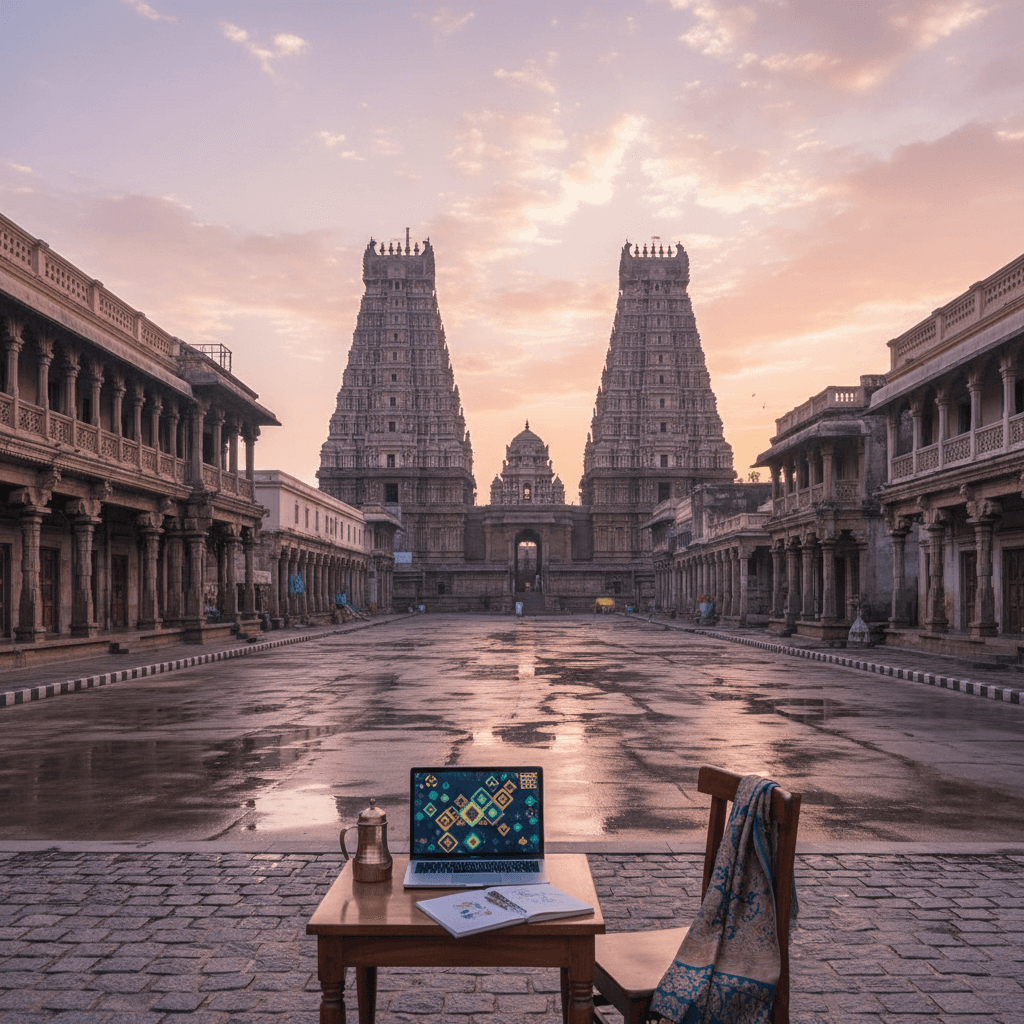
Madurai
🇮🇳 India
Madurai feels older than the map. The city revolves around Meenakshi Temple and that means your day might start with bells, scooter horns and the smell of filter coffee drifting out of a street stall, then end with heat sticking to your skin and exhaust hanging low over the road. It’s spiritual, noisy and sometimes a bit relentless.
Nomads come for the low costs and stay for the history, the reliable internet and the fact that you can still find a decent meal for pocket change. They also complain, fairly, about brutal summer weather, messy traffic and the social scene, which, surprisingly, can feel oddly hard to break into unless you already know a few locals or expats.
Who it suits
- Nomads: Good if you want cheap living, temple access and a slower daily rhythm.
- Expats: Best around Anna Nagar or near university areas, where daily life feels more organized.
- Travelers: Great for temple lovers and short stays, less so if you want nightlife.
Anna Nagar is the safest bet for most remote workers, with better roads, more services and coworking access, though rent’s noticeably higher. S S Colony can run about ₹20,000 to ₹30,000 for a 1BR and central places with AC push the budget up fast, so don’t expect a bargain just because the city feels affordable overall.
Cost, vibe and daily life
- Food: Street snacks run ₹50 to ₹100 and a simple dinner often lands around $2.
- Coffee: About $1 at many places, which makes long laptop sessions easy on the wallet.
- Coworking: Madurai Co-Workspace has solid WiFi and monthly desks around ₹5,000 to ₹12,500.
- Transport: Ola, Uber and Rapido are cheap and bikes save time when buses get packed.
Honestly, the city’s rhythm changes fast once the temple crowds thin out and then you notice the quieter streets, the jasmine vendors, the clatter of plates at Murugan Idli Shop and the low hum of ceiling fans in older cafes. The downside is obvious, summers are punishing, the roads can feel chaotic and making friends takes real effort unless you plug into temple tours, Facebook groups or a coworking space.
Best months are October to March, when the air is still hot but bearable. Skip the afternoon sun if you can, because Madurai’s heat doesn’t just sit on you, it clings and it turns every errand into a sweaty little battle.
Madurai stays cheap by big-city India standards, though it isn't bargain-basement once you want AC, a central address and decent coffee. Most single nomads end up around $923 a month, with expats often closer to $471 if they live simply and locals spend far less because they aren't paying for coworking, imported habits or a one-bedroom near Anna Nagar.
Rent does the heavy lifting here. A 1BR in the center runs about $274 and in areas like S S Colony you're usually looking at ₹20,000 to ₹30,000 for something decent, which sounds manageable until you add deposit, utilities and the slow drip of air-conditioning on brutal afternoons. Honestly, the heat changes the math fast.
Food is where Madurai feels kind. Street snacks cost ₹50 to ₹100, a basic dinner can land around $2, coffee is about $1 and beer is roughly $2, so you can eat well without wrecking your budget, especially if you like idli, dosa and mess food more than fancy plating.
What people usually spend
- Budget: $400 to $600, shared room, buses and street food.
- Mid-range: $700 to $900, 1BR on the outskirts, mixed dining, rideshares.
- Comfortable: $1,000+, central AC flat, coworking, pricier meals.
Coworking isn't outrageous, but it adds up, with hot desks around ₹12,500 a month at places like Madurai Co-Workspace in Anna Nagar. GoFloaters day passes start near ₹500, which is handy if you're only in town for a week or two and don't want to sit under a ceiling fan that sounds like it's about to give up.
Common monthly costs
- Transport: about $1 for a short Ola, Uber or Rapido ride.
- Internet: 12 to 77 Mbps, usually fine for remote work, weirdly stable in many areas.
- SIM data: Airtel or Jio plans can run about $1 for 10GB.
Anna Nagar is the cleanest bet for nomads, though it's pricier and you pay for that convenience in rent rather than charm. Nagamalai Pudukottai and Oomachikulam are cheaper and calmer, but you'll spend more time in transit and the honking, dust and temple bells still follow you around anyway.
If you want the blunt version, Madurai is affordable if you live like a local, comfortable if you compromise and expensive only when you insist on a polished expat setup. That's the real cost.
Madurai is cheap, hot and a little chaotic, which is exactly why some people like it. The city runs on temple bells, scooter horns, cardamom tea and a constant wash of exhaust and if you want polished nightlife, frankly, look elsewhere.
Nomads
Anna Nagar is the safest bet for remote workers, because it’s got the cleanest infrastructure, decent roads, easy access to cafes and the best coworking options in town. Rent runs roughly ₹15,000 to ₹25,000 for a 1BR, so it’s pricier than the rest of Madurai, but the tradeoff is simple, less time sweating over logistics.
- Best for: Remote work, errands, long stays
- Rent: ₹15,000 to ₹25,000 for a 1BR
- Work setup: Madurai Co-Workspace nearby, plus café work at places like Cafe Coffee Day
The coworking scene, turns out, is better than you’d expect for a city this size and internet is usually good enough for calls, uploads and all the usual laptop life. Still, don’t expect a social whirlwind, because most nomads say the hard part here isn’t Wi-Fi, it’s meeting people.
Expats
Nagamalai Pudukottai suits expats who want a quieter life near Madurai Kamaraj University, with more greenery and a more academic feel. It’s calmer than central Madurai, though you’ll rely on rideshares more often and the distance can get annoying when traffic snarls up.
- Best for: Families, academics, long-term expats
- Tradeoff: Quieter streets, farther from the center
- Feel: Residential, green, low-key
Anna Nagar still makes sense for many expats, honestly, especially if you want better grocery access, easier transport and fewer daily hassles. You’ll pay more, but you won’t be stuck in a neighborhood where every simple chore turns into a scooter ride across town.
Families
Oomachikulam and Silaiman work well if you want space, calmer streets and a slower pace. These areas feel more residential and less intense, with fewer cafes and less nightlife, though that’s not really a problem if you’ve got kids and want sleep.
- Best for: Family rentals, quieter living
- Pros: Lower-key streets, more space, easier access via major roads
- Cons: Still developing, not much going on after dark
Silaiman’s airport access helps if you travel often and Oomachikulam feels better for people who want a less frantic pace without giving up basic connectivity. The downside is obvious, fewer services, fewer social spots and more dependence on taxis or scooters.
Solo Travelers
If you’re on your own, stay near Anna Nagar or the central temple area, then branch out once you know the city. Solo travelers usually do best where the streets stay active, autos are easy to grab and there’s enough foot traffic to avoid that weird, isolated feeling after dark.
- Best for: Short stays, first-timers, social but independent travelers
- Safer bet: Busy streets, near amenities, easy rides
- Avoid: Quiet outer lanes at night
Madurai can feel magical at street level, jasmine in the air, dosa batter sizzling, temple drums echoing through the heat, but it gets lonely fast if you’re stuck far from the action. Pick a neighborhood with real movement, not just a pretty listing.
Madurai’s internet is, honestly, better than people expect. Speeds usually sit in the 12 to 77 Mbps range and for most remote work that’s fine, even if the connection sometimes wobbles during peak hours or a storm rolls through and the whole neighborhood hums with fan noise, scooter horns and the smell of frying oil.
The coworking scene is small but usable, turns out, with Madurai Co-Workspace in Anna Nagar being the name most nomads mention first because it has 100 Mbps WiFi and a proper office feel, while GoFloaters listings give you day passes from around ₹500 if you just need a desk for a few hours. Not flashy. Just practical.
Where to work
- Madurai Co-Workspace, Anna Nagar: Best bet for steady workdays, with hot desks starting from ₹500/day.
- GoFloaters spots: Handy for short stays, day-use desks start around ₹500.
- Cafe Coffee Day: Fine for light work and calls, though the music can get repetitive and the chair comfort isn't great.
If you’re staying longer, Anna Nagar makes the most sense because it’s where you’ll find the best mix of infrastructure, cafes and easier access to workspaces, while S S Colony and central areas can get pricier without giving you much extra. Frankly, you’re paying for convenience, not glamour and in Madurai that still beats sitting in a guesthouse room with a ceiling fan and a temperamental router.
Airtel and Jio both work well for backup data and SIMs are cheap enough that most travelers grab one without thinking twice. Buy through the app or at a store, keep your passport handy and don’t expect airport-style efficiency, the process can take a bit, though once it’s active you’re usually set for hotspot use and quick calls.
Best ways to stay online
- Primary internet: Fiber or coworking WiFi if you need stable video calls.
- Backup: Airtel or Jio mobile data, around ₹1 for 10GB in some plans, which is absurdly cheap.
- Working out of cafes: Good for a few hours, less so for all-day deep work.
Most nomads find Madurai workable rather than thrilling. The internet usually does its job, the chairs are a mixed bag and if you want long stretches of focused work, go early, get settled and avoid the afternoon heat when the whole city feels sticky and slow.
Madurai feels safe enough for most people in the center, but don’t get casual about the roads. The city has a decent safety score, yet traffic is noisy, fast and a bit mad, with horns, scooters, buses and the odd cow all vying for space, so crossing streets demands real attention. Nights are quieter, which sounds nice, but isolated lanes around the outskirts can feel uncomfortable, especially if you’re alone.
Frankly, the biggest risk here isn’t crime, it’s accidents and heat. Road police have pushed down crashes, though there are still hotspot zones where drivers take stupid chances and April to May can hit you with dry, punishing heat that feels like it’s pressing on your chest. Stay hydrated, avoid long midday walks and don’t trust a short ride to be a harmless one.
Where people feel most comfortable
- Anna Nagar: Usually the safest pick for nomads and expats, with better roads, more shops and easier access to coworking.
- Nagamalai Pudukottai: Calmer and greener, good for families, though it’s a bit removed from the city core.
- Oomachikulam: Quiet and developing, fine if you want space, but it can feel empty after dark.
- Silaiman and Avaniyapuram: Convenient near the airport, still rough around the edges, honestly and less handy for social life.
Healthcare is one of Madurai’s stronger points. Meenakshi Mission is the name people mention first for emergencies and the city has plenty of pharmacies, so you won’t be stuck hunting for basic meds or a late-night painkiller. The hospital scene is good enough that medical travel brings people here, which, surprisingly, says a lot.
Still, don’t assume every clinic moves fast or speaks polished English. Bring prescriptions, keep digital copies of your insurance and use translation apps when needed, because front-desk conversations can get tangled quickly, especially if you’re tired, sweaty and trying to describe something minor at 10 p.m.
What to keep handy
- Ambulance: 108
- Police: 100
- Pharmacies: Easy to find in most neighborhoods
- Best move: Save hospital and cab numbers before you need them
Most travelers get around fine with Ola, Uber or Rapido and that’s the smarter choice if you don’t speak Tamil. Buses are cheap, but crowded and confusing and walking after dark isn’t my favorite idea in the less central areas. Keep your phone charged, carry some cash and if you’re heading back late, book the ride before you leave dinner.
Getting around Madurai is cheap, noisy and a little messy, which honestly fits the place. If you’re staying near the center, auto-rickshaws and app cabs are the easiest fix, because traffic around the temple zone can feel like a horn test, with scooters cutting across lanes and buses grinding through the heat.
Ola, Uber and Rapido are the apps most travelers end up using, especially if you don’t speak Tamil and don’t want to haggle every five minutes. A short city ride often lands around $1, bike taxis are even cheaper and airport runs by Ola can be about ₹500, though surge pricing does bite when the roads clog up.
Public buses are the bargain option, but they’re crowded, route maps can be confusing and the whole thing gets tiring fast in summer. The Mattuthavani bus stand is the main hub, so if you’re making intercity trips, that’s where things start to make sense.
Best ways to move around
- App cabs: Best for most visitors, simple, fairly priced and less hassle than street haggling.
- Rapido bikes: Fast for solo trips, though you’ll get a faceful of heat and exhaust.
- Buses: Dirt cheap, but crowded and route-heavy, so they’re better for patient riders.
- Scooter rentals: Around ₹500 a day through apps, handy if you’re staying a while and don’t mind the traffic.
Walking around central Madurai is weirdly limited, even where the streets look close on a map, because footpaths vanish, crossings are chaotic and the midday sun will flatten you. Try to plan errands early, then stay indoors when the pavement starts radiating back at you.
If you’re based in Anna Nagar, you’ll have an easier time with rideshares, cafes and basic daily errands, while places like Nagamalai Pudukottai or Oomachikulam usually mean more dependence on vehicles. That tradeoff matters, because a cheap apartment on the edge can become annoying once you’re doing three rides a day and sweating through every transfer.
For day-to-day life, most nomads just keep Ola, Uber and Rapido installed, then top up with cash for smaller rides and backup plans. The roads are functional, not fun. And in Madurai, that’s about the honest standard.
Language & Communication
Tamil runs the show in Madurai and you’ll hear it everywhere, at tea stalls, in auto-rickshaws, outside the Meenakshi Temple, even in the shouty rhythm of market bargaining. English gets you by in hotels, colleges, coworking spaces and most business settings, but outside those pockets, people often know only the basics.
That said, people are usually patient and a few Tamil words go a long way. Say Nandri for thank you and Onga per enna? for what’s your name and you’ll get warmer reactions, sometimes a grin, sometimes a whole conversation that starts in Tamil and ends with hand gestures, phone screens and a lot of nodding.
The language barrier isn’t dramatic, but it can be annoying. Restaurant staff, drivers and local shopkeepers may switch to simple English, though Google Translate helps when directions get messy or an address has to be explained three times because everyone’s pointing at a different lane.
Practical communication is pretty simple. Use Ola, Uber and Rapido in the city, because app-based rides cut down the back-and-forth and frankly, that’s easier than negotiating in the heat while horns are blaring and scooters weave past your knees.
Internet calls and work chats are fine in the better neighborhoods, especially Anna Nagar, where coworking spots and cafés are more used to non-Tamil speakers. Madurai Co-Workspace is one of the cleaner bets for remote work and cafés like Cafe Coffee Day are casual fallback options, though don’t expect everyone around you to keep the noise down.
How People Communicate Day to Day
- In shops: Short English usually works, then prices get written or typed on a phone.
- With drivers: Show the destination in Tamil script if you can, it saves time and arguments.
- At temples: Keep your voice low, remove shoes and follow the flow without overthinking it.
- On WhatsApp: This is where a lot of local coordination happens, honestly, more than email.
Socially, Madurai can feel a bit closed if you only stay in expat bubbles. Meetups are sparse, so a lot of people make friends through temple tours, university links or repeated runs to the same idli shop, which, surprisingly, works better than forcing networking.
My advice, skip trying to speak perfect English and don’t stress about sounding polished. Use the basics, keep your phone ready, smile often and learn a few Tamil phrases, because in Madurai, communication is half language and half attitude.
Madurai is hot for most of the year and frankly, that shapes everything, from how far you’re willing to walk to how much AC you’ll beg for at night. The sweet spot is October to March, when the heat backs off a little and daytime highs sit around 30 to 36°C, so you can actually wander the temple streets without feeling like your shirt’s glued to your back.
Skip April and May if you can. They’re brutal, with highs around 37 to 38°C and the kind of dry heat that makes exhaust fumes, incense, fried snacks and dust hang in the air all at once, then smack you in the face when the traffic starts honking.
Best Months
- October to March: Best overall, drier and more tolerable, though nights can still feel warm indoors.
- January: One of the easiest months, about 32/20°C with barely any rain.
- October to December: Cooler days, but also the wettest stretch, so expect sudden downpours and sticky humidity.
Rain doesn’t turn Madurai into some soggy city, it just adds drama. When the monsoon hits, the roads smell like wet stone and diesel, traffic gets messy fast and you’ll want shoes that dry quickly because puddles, potholes and open drains don’t play nicely together.
July and August are usually less punishing than peak summer, but the air can still feel thick and stubborn and air conditioning starts to matter a lot more. If you’re renting long-term, check whether the apartment has solid cooling, because a cheap room with weak fans sounds fine until 2 a.m., when the walls are still radiating heat.
What Nomads Usually Do
- For comfort: Book long stays between November and February.
- For budget: Summer rates can soften a bit, but you’ll pay for it in sweat.
- For temple visits: Mornings are better year-round, before the stone floors get scorching.
Most travelers and expats just build their schedule around the heat, early starts, long lunches, then work again once the sun drops. Turns out, Madurai works better when you stop fighting the weather and plan around it, because the city’s rhythm changes hard between a pleasant winter morning and a punishing April afternoon.
Madurai is cheap enough to tempt remote workers, then hot enough to make you question your life choices in April and May. The city runs on temple bells, scooter horns, incense and frying oil, with enough internet and coworking options to get real work done if you can handle the heat. Honestly, that’s the tradeoff.
SIM and data: Airtel and Jio both work well and you can usually get a local SIM activated pretty fast through an app or store, sometimes within hours. Grab a decent data pack before you settle in, because walking into a new neighborhood with no signal here is just annoying, especially when you’re trying to book an Ola or find your guesthouse.
Money: Use PhonePe or Google Pay for everyday payments, because cash still matters but UPI saves you from hunting for change in crowded tea stalls. ATMs are common, though many travelers just pull out ₹10,000 at a time and call it a day, which turns out to be the simplest way to handle small expenses, auto rides and lunch.
Where to stay
- Anna Nagar: Best bet for nomads, with better infrastructure, easier errands and coworking access, but rents are higher.
- Nagamalai Pudukottai: Quieter, greener and more academic, good if you want space instead of noise.
- Oomachikulam: Calm and a bit removed, fine for longer stays if you don’t need nightlife, which you probably won’t find anyway.
Apartment searches usually happen through Housing.com or 99Acres and ₹10,000 to ₹30,000 gets you a wide range depending on location and AC. Don’t expect polished listings, because a lot of places look better in photos than they do in the flesh, with gritty floors, patchy paint and the occasional ceiling fan that sounds like it’s dying.
Daily life: Eat with your right hand, remove shoes before entering temples and keep some cash for tips, small snacks and auto fares. The temple area gets loud and crowded fast, with flower sellers calling out, scooters squeezing past and that warm mix of jasmine, exhaust and idli steam hanging in the air, so plan your errands around the quieter morning hours.
For weekend escapes, book a day trip to Alagar Kovil or join a local tour if you want something less chaotic than figuring it out alone. Skip the overcooked tourist routines, head out early, drink more water than you think you need and accept that in Madurai, surviving the afternoon heat is half the battle.
Need visa and immigration info for India?
🇮🇳 View India Country GuideHidden Gem
Worth the effort