Mörön
🇲🇳 Mongolia
The Gateway to the Blue Pearl
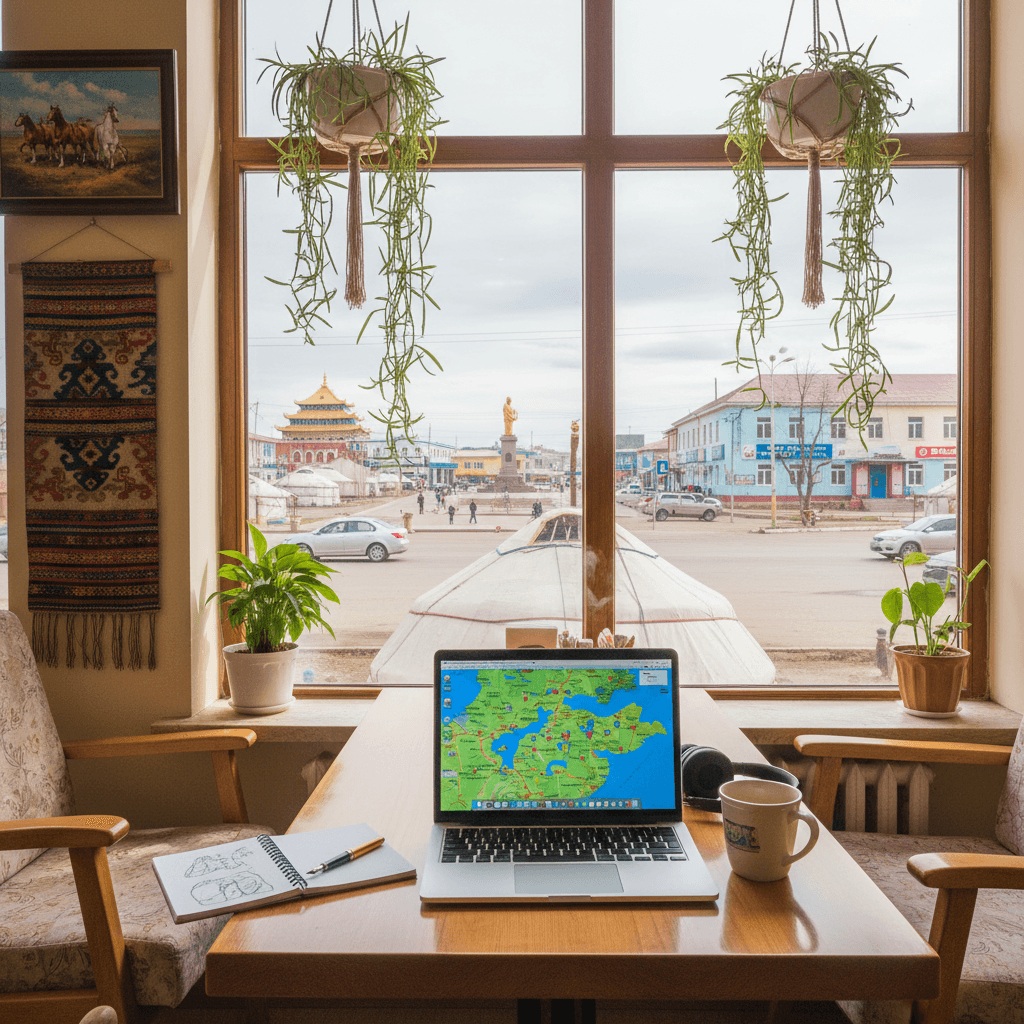
Mörön isn't your typical digital nomad hub. In fact, calling it a nomad destination is a stretch by 2025 standards. It’s a dusty, low-slung provincial capital that serves one primary purpose for most travelers: it's the jumping-off point for Lake Khövsgöl. You don't come here for the fiber-optic speeds or the artisanal oat milk lattes. You come here because you want to be on the doorstep of the Mongolian wilderness, and you're willing to trade modern comforts for a front-row seat to one of the most pristine landscapes on earth.
The vibe is distinctly transitional. It feels like a frontier town where the ancient nomadic lifestyle is slowly shaking hands with the 21st century. You'll see traditional gers parked next to concrete Soviet-style apartment blocks, and horses tied up near modern SUVs. It’s quiet, rugged, and unapologetically functional. If you’re the type of remote worker who thrives on routine and high-speed infrastructure, Mörön will feel like a challenge. If you’re looking to disconnect from the "hustle" and can manage your workload on a mobile hotspot, it offers a stark, beautiful isolation you won't find in Ulaanbaatar.
The Reality of the Remote Work Setup
Working from Mörön requires a bit of a survivalist mindset. Unlike the capital, which is increasingly courting the nomad crowd with events like Digital Nomad Week, Mörön remains focused on trade and transit. You won't find a dedicated coworking space here. Your office will likely be a small hotel room or a local cafe where the staff might be confused why you've been staring at a glowing screen for four hours.
- Connectivity: Don't rely on hotel Wi-Fi. It’s often sluggish or nonexistent. Smart nomads pick up a local SIM from Unitel or Mobicom. 4G coverage is surprisingly decent within the town limits, but it drops off the moment you head toward the mountains.
- The Social Scene: There isn't an established expat or nomad community. Your social life will consist of chatting with local shopkeepers or meeting adventure travelers passing through on their way to the lake. English is rare, so having a translation app and a sense of humor is mandatory.
- Atmosphere: It’s a slow-motion life. There is no rush hour. The "nightlife" is mostly quiet dinners and perhaps a cold beer at a local eatery. It’s a place for deep focus or total unplugging.
Cost and Comfort
One thing Mörön has going for it is the price tag. It is significantly cheaper than Ulaanbaatar, which is already considered highly affordable. Since there’s no "nomad tax" here, you’re paying local prices for everything. However, the trade-off is the quality of life. Healthcare is basic, and your dining options are largely limited to hearty Mongolian staples like buuz (steamed dumplings) and tsuivan (fried noodles with mutton).
Most nomads find that a week in Mörön is plenty before the lack of amenities starts to wear thin. It’s the perfect "buffer zone" to catch up on emails before heading into the taiga or out to the lake where signals vanish entirely. It’s a place that forces you to slow down, look up from your laptop, and realize you’re in one of the most remote corners of the world. It’s not about the "vibe" in a trendy sense; it’s about the raw, unfiltered experience of Mongolian provincial life.
What to Expect in 2025-2026
As Mongolia continues to promote its "Welcome to Mongolia" years, infrastructure is slowly improving, but Mörön remains a few years behind the curve. Expect a "bring your own everything" environment. If you need a specific dongle, a high-quality keyboard, or a particular supplement, buy it in Ulaanbaatar or bring it from home. Mörön won't have it. This is a destination for the pioneer nomad, the one who values a view of the Khangai Mountains over a stable 100Mbps connection.
The Reality of Mörön’s Economy
If you are coming from Ulaanbaatar or any Western capital, your first impression of Mörön will be how incredibly cheap it is. This is a provincial hub, not a tourist resort, so prices reflect the local economy rather than an expat bubble. You can live here on a fraction of what you would spend in the capital, but there is a trade off. You are paying for the basics; don't expect the artisanal coffee shops or high end grocery imports found in Ulaanbaatar.
Most travelers and the few remote workers who pass through find that $600 to $800 USD per month covers a very comfortable lifestyle, including a private guesthouse room and eating out for every meal. If you are staying long term and manage to secure a local apartment lease, that figure can drop even lower.
Accommodation and Housing
Mörön does not have a formal rental market for expats. You won't find listings on international sites, and there are no luxury serviced apartments. Most nomads negotiate monthly rates with local guesthouses or small hotels. These are typically simple, functional, and include heat, which is vital given the Khövsgöl climate.
- Guesthouse Monthly Rate: $350 to $500 for a private room with basic amenities.
- Local Apartment (1BR): $200 to $300, though these are hard to find without a local contact or Mongolian language skills.
- Utilities: Usually included in guesthouse stays. For apartments, expect to pay $40 to $60 for electricity and heating in the colder months.
Food and Dining
Eating out in Mörön is much more affordable than in the capital. You will mostly be dining at local "guanz" (canteens) that serve hearty Mongolian staples like buuz (steamed dumplings) and tsuivan (fried noodles). While there aren't many international options, the portions are massive and the prices are low.
- Local Meal (Guanz): $3 to $5 for a filling plate of dumplings or noodles and milk tea.
- Mid-range Restaurant Dinner: $8 to $12 for a more formal meal with meat-heavy dishes.
- Groceries: A weekly shop at the local market for bread, dairy, and seasonal vegetables costs around $25 to $35.
- Coffee: $2 to $3 for a basic brew, though quality varies wildly outside of major hotels.
Transportation and Connectivity
Mörön is a compact town. Most of your daily errands can be done on foot, which keeps transport costs nearly zero. If you need to get across town or to the airport, local taxis are the standard. Connectivity is your biggest "hidden" cost here. Since WiFi in guesthouses is often sluggish or unreliable for heavy Zoom calls, you will want to invest in a robust data plan.
- Local Taxi Trip: $1 to $2 for most hops within the town limits.
- SIM Card and Data: $15 to $25 per month for a high volume data package from providers like Mobicom or Unitel. Expats recommend getting a local eSIM for the best provincial coverage.
- Shared Van to Lake Khövsgöl: $5 to $10 for a seat in a northbound van.
Daily Essentials and Lifestyle
Beyond the basics, your spending will go toward gear and weekend trips. Mörön is the gateway to the wilderness, so many visitors find themselves buying extra wool layers or supplies for trekking. There are no coworking spaces in town, so your "office" costs are essentially the price of a few teas at a local cafe or the cost of your mobile hotspot.
- Gym Membership: $20 to $30 for basic local facilities.
- Beer (Local): $1.50 to $2.50 at a local bar or supermarket.
- Domestic Flight to Ulaanbaatar: $80 to $120 one way, depending on the season and how far in advance you book.
For Digital Nomads
If you are coming to Mörön with a laptop and a deadline, the reality is that "neighborhoods" in the traditional urban sense don't really exist here. The town is a low rise, dusty grid that serves as the gateway to Lake Khövsgöl. For the best chance at a stable workflow, you need to stay in the Central District near the main square. This is where you will find the most reliable power grid and the highest concentration of 3G and 4G towers from providers like Mobicom and Unitel.
There are no coworking spaces in Mörön. Your best bet is to set up in one of the larger hotels like the 50° 100° Hotel. These spots offer the most consistent WiFi, though you should still carry a local SIM card as a backup. Expect download speeds to fluctuate wildly. Most nomads who pass through here treat it as a "buffer zone" for a few days of administrative work before heading into the wilderness where connectivity disappears entirely.
- Rent: Guesthouses run about $15 to $30 per night; long term rentals are rare and negotiated in person.
- Vibe: Functional, quiet, and very remote.
- Connectivity: Best near the provincial government buildings.
For Expats and Long Termers
Expats in Mörön are usually here for NGO work or education, and they almost exclusively gravitate toward the Northwest Residential Area. This part of town is slightly removed from the noise of the main market and offers a bit more privacy. You won't find modern apartment complexes here. Instead, you will likely be looking at small detached houses or improved "ger" districts that have access to electricity.
Living here requires a DIY mindset. You will do your grocery shopping at the Delgermörön Market, which is the heart of the city's social and economic life. It is where you buy everything from solar panels to mutton. English is scarce, so most long termers rely on Google Translate offline packs and a few key Mongolian phrases to get by. It is a rugged lifestyle, but the community of locals is incredibly welcoming once you've been around for more than a week.
- Food: Local meals like buuz (dumplings) cost around $3 to $5.
- Transportation: Mostly walking or unofficial taxis; there are no ride sharing apps here.
- Social: Centered around the market and a handful of local pubs.
For Families
Families visiting Mörön should stick to the Southern Sector, specifically areas within walking distance of the Mörön Central Park. While the park is modest, it provides one of the few open green spaces for children to run around away from the main road traffic. This area is also closer to the local hospitals and pharmacies, which is a practical necessity when traveling with kids in rural Mongolia.
The infrastructure is basic. You won't find international schools or indoor play centers. Most families use Mörön as a 24 to 48 hour pit stop to stock up on supplies before hiring a Russian van to take them the 100 kilometers north to the lake. If you stay here, look for family run guesthouses that offer home cooked meals, as this is often easier than finding kid friendly options in the local canteens.
For Solo Travelers
If you are traveling solo, you want to be as close to the Main Market (Khuuchin Bazar) as possible. This is the transit hub of the city. It is the best place to find shared transport to Khatgal or to meet other travelers heading into the Khövsgöl province. Staying in this area means you are never more than a five minute walk from a hot meal or a shop selling GoHub compatible SIM cards.
Safety in Mörön is generally good, but the streets can get very dark at night. Solo travelers recommend staying in established lodges near the center to avoid long walks after sunset. The social scene is nonexistent in a Western sense, but the local "guanz" (canteens) are great places to observe the local pace of life over a bowl of tsuivan. It is an authentic, unvarnished look at provincial Mongolian life that most tourists skip on their way to the blue waters of the north.
- Safety: High during the day; keep your wits about you near the market at night.
- Top Tip: Buy your Unitel data top ups at the market before heading to the lake.
- Atmosphere: Busy, transit oriented, and authentic.
The Reality of Remote Work in the North
If you are planning to set up a professional workstation in Moron, you should adjust your expectations immediately. This is the gateway to Lake Khovsgol, not a tech hub. While Ulaanbaatar is making strides with dedicated coworking spaces and nomad events, Moron remains a rugged provincial capital where the internet is a tool for basic communication rather than high bandwidth video editing or heavy coding sessions.
You won't find sleek open plan offices with ergonomic chairs and bottomless espresso here. Most nomads passing through Moron treat it as a pit stop to handle emails before heading into the wilderness. If you need to get work done, your best bet is to secure a room at one of the few larger hotels like the 50 100 Hotel, which usually offers the most stable local connection, though it's still modest by international standards.
Connectivity and Data Strategy
Since reliable public Wi-Fi is almost non-existent in Moron cafes, you need to bring your own connection. The local infrastructure relies heavily on mobile data. The three big players are Mobicom, Unitel, and Skytel. For the best experience in the Khovsgol province, most travelers recommend Unitel for its superior rural coverage.
- SIM Cards: You can pick these up for a few dollars at the small shops near the central market.
- eSIMs: If you want to hit the ground running, providers like GoHub offer Mongolia packages that work well in urban centers.
- Speeds: Expect 4G in the center of town, but it can drop to 3G or disappear entirely as you move toward the outskirts or the lake.
- Backup: Always have an offline version of your tasks. Power outages aren't frequent, but they happen, and the network can get congested during the peak summer tourist months.
Where to Set Up Shop
Since there are no dedicated coworking spaces, you will be "cafe hopping," though the options are slim. Most local spots are geared toward quick meals rather than lingering with a laptop. Look for modern looking eateries near the main square. If a place looks like it serves western style coffee, it might have a corner where you can tuck away for an hour.
Expats and long term travelers often find that the most productive environment is a guesthouse common area. Places catering to international tourists are more likely to understand your need for a power outlet and a relatively quiet corner. Just don't expect blazing speeds; a 10 Mbps download speed is considered a huge win in this part of the country.
Practical Tech Tips for Moron
Working from Northern Mongolia requires a bit of a survivalist mindset toward technology. Here is what you should keep in mind before you arrive:
- Power Banks: Bring a high capacity power bank. If you decide to take a day trip to the lake or a nearby ger camp, you won't find a plug for hours.
- Offline Maps: Download the Moron area on Google Maps or Maps.me. Data can be spotty when you are navigating the dusty backstreets.
- VPN: While the Mongolian internet is generally open, a VPN is a good safety measure for the unsecured Wi-Fi networks you'll find in local hotels.
- Language Apps: English proficiency is very low here. Have a translation app with an offline Mongolian dictionary downloaded and ready to go.
Ultimately, Moron is a place to disconnect rather than stay plugged in. Most nomads find it's better to front load their work in Ulaanbaatar and use their time in Moron to enjoy the incredible landscapes of the north. If you absolutely must work, keep your tasks light and your patience high.
Staying Safe in the Khövsgöl Gateway
Mörön is a quiet provincial capital that serves as the primary jumping off point for travelers heading to Lake Khövsgöl. While it lacks the urban grit of Ulaanbaatar, it also lacks the infrastructure nomads expect in larger hubs. Generally, the city is safe for foreigners, but its remote nature means you need to be more self reliant than usual. Crimes against travelers are rare, though petty theft can happen at the local market or the bus station, so keep your bags close in crowded spots.
The biggest safety concerns here aren't people; they're the environment and the animals. Stray dogs can be territorial, especially at night, so it's best to stick to well lit areas or take a local taxi if you're moving around after dark. If you're planning to head out of the city for a "work from nature" session, always let your guesthouse know your route. Weather changes fast in Northern Mongolia, and getting lost in the steppe without a signal is a real risk.
- Emergency Number: Dial 102 for police and 103 for medical emergencies. English speakers are rare on these lines, so have a translation app ready or ask a local for help.
- Solo Travel: Most nomads find Mörön welcoming, though solo female travelers might deal with some unwanted attention in local bars. Stick to guesthouse lounges or busier cafes.
- Walking at Night: Street lighting is inconsistent. Carry a small flashlight or make sure your phone is fully charged if you're walking back to your accommodation late.
Healthcare and Medical Facilities
Healthcare in Mörön is basic at best. The Khövsgöl Provincial General Hospital is the main facility in town, but it's geared toward urgent stabilization rather than long term care or specialized treatment. Don't expect Western standards of comfort or English speaking staff. For anything serious, you'll likely need to be evacuated to Ulaanbaatar or even out of the country.
Pharmacies are scattered around the city center, mostly near the main market. You can find basic pain relievers, bandages, and some antibiotics, but brands will be Russian or Mongolian. If you rely on specific prescriptions, bring a full supply with you from home. It's highly unlikely you'll find specialized medications in a provincial town like this.
- Medical Insurance: Ensure your policy covers emergency medical evacuation. A flight to the capital can cost thousands of dollars out of pocket.
- Water Safety: Do not drink the tap water. Stick to bottled water or use a high quality filtration system like a Grayl or LifeStraw if you're staying long term.
- Vaccinations: Beyond standard shots, travelers often recommend being up to date on Hepatitis A and Typhoid due to different food handling standards in rural areas.
Practical Preparedness
Since Mörön isn't a typical digital nomad hub, there are no private international clinics. Most expats in Mongolia keep a well stocked first aid kit that includes rehydration salts, as stomach issues are the most common complaint for newcomers adjusting to the local diet. If you have a minor ailment, your best bet is to ask the staff at a higher end hotel like the 50° 100° Hotel to help you navigate the local medical system.
Connectivity is your lifeline here. Since local medical help is limited, having a working SIM card from Unitel or Mobicom is essential for reaching your insurance provider or embassy in an emergency. If you're heading toward the lake, 4G coverage becomes spotty, so download offline maps of the city and surrounding province before you leave your guesthouse WiFi.
Getting Around Mörön
Mörön isn't your typical digital nomad hub with a grid of subways or a fleet of ride sharing apps. It serves primarily as a gateway for travelers heading toward Lake Khövsgöl. Because of its layout and role as a provincial capital, you'll find that getting from point A to point B requires a bit of local intuition and some patience. Most nomads who pass through find that the town is small enough to navigate on foot, though the unpaved roads and dust can make long walks a bit of a chore.
Walking and Local Navigation
The center of Mörön is relatively compact. You can reach the main market and most administrative buildings within a 15 to 20 minute walk from the central square. Footpaths are inconsistent and often turn into dirt tracks, so leave the fancy footwear in your luggage. If you're staying in one of the few guesthouses near the airport road, walking to a cafe or a shop is doable during the day, but the lack of street lighting makes it less ideal after dark.
Expats and long term travelers recommend using What3Words or offline maps like Maps.me. Traditional addresses aren't really a thing here; people navigate by landmarks like the wrestling stadium or specific schools. If you get lost, pointing at a map on your phone is usually more effective than trying to pronounce street names in Mongolian.
Taxis and Private Drivers
You won't find Uber or Bolt in Mörön. Instead, the town relies on an informal taxi system. You can usually flag down a car by holding your hand out with your palm facing down. Most of these are just local residents looking to make a few extra Tögrög. A short trip within the town limits typically costs between 2,000 and 4,000 MNT. Always agree on the price before you close the door to avoid any awkwardness at your destination.
- Cash is king: Drivers don't take cards, and while some locals use QPay, you'll need physical bills.
- Language barrier: Most drivers speak zero English. Have your destination written down in Cyrillic or saved as a photo on your phone.
- Airport transfers: The Mörön Airport (MXV) is about 6 kilometers from the center. A taxi should cost around 10,000 to 15,000 MNT, though prices often spike when a flight lands.
Regional Travel and Reaching Lake Khövsgöl
If you're using Mörön as a base to work before heading into the wilderness, you'll eventually need to head north to Khatgal. This is the main village on the shore of Lake Khövsgöl, located about 100 kilometers away. The road is paved, which is a luxury in this part of Mongolia, and the drive takes roughly 90 minutes to 2 hours.
Shared minivans, often called purgons or microbuses, depart from the main market area once they are full. A seat usually costs around 15,000 to 20,000 MNT. If you value your personal space or have a lot of camera gear, you can hire a private 4WD vehicle for about 120,000 to 150,000 MNT. This is the preferred move for nomads who need to ensure they arrive in time for a scheduled Zoom call or a check in.
Connectivity on the Move
Don't expect to work while you're in transit. While Mobicom and Unitel provide decent 4G coverage within Mörön itself, signal strength drops off rapidly once you hit the open steppe. If you're planning to move around the province, travelers recommend picking up a local SIM card at the Unitel office in town rather than relying on international roaming. An eSIM from a provider like GoHub is a solid backup, but a local physical SIM usually offers better speeds for tethering your laptop in a pinch.
Vehicle Rentals
Renting a car to drive yourself is not recommended unless you have extensive experience with Mongolian terrain and a valid international permit. Most nomads who want autonomy prefer to "rent" a vehicle with a driver for the day. This usually costs between $50 and $80 USD plus fuel. It's the safest way to see the surrounding deer stones or nearby rivers without the stress of getting stuck in a rut or blowing a tire in the middle of nowhere.
The Linguistic Reality
In Mörön, you are stepping away from the international bubble of Ulaanbaatar. Mongolian is the sole language of daily life here. While younger generations in the capital often speak decent English, that trend hasn't fully migrated to the Khövsgöl province. You will find that shopkeepers, taxi drivers, and guesthouse owners generally speak only Mongolian. If you don't have a few phrases tucked away, simple tasks like buying a SIM card or ordering dinner become a game of charades.
The Cyrillic alphabet is used for written Mongolian. It is worth spending an afternoon learning the characters so you can read signs for pharmacies (Аптек) or grocery stores (Дэлгүүр). Most nomads find that people in Mörön are incredibly patient and helpful, even if they don't understand a word you're saying. A smile and a respectful attempt at the local tongue go a long way here.
Staying Connected
Reliable internet is the biggest hurdle for anyone trying to work from Mörön. Don't expect to find fiber optic speeds or flashy coworking spaces. Most travelers rely on mobile data to get things done. Mobicom and Unitel are the primary providers with the best coverage in the city limits. Skytel is another option, though it is often cited as having slightly patchier service once you head toward the lake.
- SIM Cards: You can pick up a local SIM at the small provider kiosks in the town center. Bring your passport for registration.
- eSIMs: For a smoother transition, many nomads recommend using GoHub or similar providers to set up an eSIM before landing. It saves you the hassle of finding a shop immediately.
- Data Speeds: Expect 4G in the center of Mörön, but speeds drop significantly as you move toward the outskirts or the airport. Video calls can be hit or miss; it is better to schedule your high bandwidth meetings for when you are back in Ulaanbaatar.
Essential Tools and Apps
Since English is scarce, your phone will be your best friend. Google Translate is helpful, but the offline Mongolian pack is a requirement because data can drop out unexpectedly. For navigating the town, Google Maps works for basic layouts, but many locals use What3Words or simply landmark based directions.
If you need to communicate with locals for guesthouse bookings or transport, Facebook Messenger is surprisingly popular in Mongolia. Many small businesses in Mörön don't have websites, but they do maintain active Facebook pages where they respond to inquiries. It is often the fastest way to get a price quote or check availability.
Key Phrases to Know
Learning these basics will make your daily life much smoother. Locals appreciate the effort, especially in a region that sees fewer long term foreign residents. Use these to break the ice:
- Sain baina uu: Hello (Formal/Standard)
- Bayarlalaa: Thank you
- Zaa: Okay / Understood (You will hear this constantly)
- Bi Mongol khol medne: I speak a little Mongolian
- Ene khed ve?: How much is this?
- Uuchlaarai: Excuse me / Sorry
The Digital Nomad Perspective
The general consensus among the nomad community is that Mörön is a place to "unplug" rather than a place to grind out a 40 hour work week. If your job requires constant connectivity and high speed uploads, you will find the infrastructure frustrating. Most people use Mörön as a base for 2 or 3 days while preparing for a trip to Lake Khövsgöl. If you must work, ensure you have a beefy data plan and a backup power bank, as minor power flickers aren't uncommon in the provincial centers.
Survival of the Fittest: The Seasonal Reality
If you are eyeing Mörön, you have to respect the climate. This isn't a place where you can just wing it with a light jacket. It is the gateway to the Siberian frontier, and the weather reflects that. You are looking at a subarctic climate where the ground stays frozen for a good chunk of the year. For most of us, the window to actually enjoy being here is narrow, but it is spectacular if you time it right.
The winter is brutal and long. From November through March, temperatures regularly plummet to -30°C (-22°F) or lower. Unless you are here for extreme cold-weather photography or a very specific cultural project, this is not the time for a nomad stint. The infrastructure in town is rugged, and while there is heating, the isolation during these months is intense. Most travelers and seasonal workers clear out by late October.
The Sweet Spot: June to August
The best time to set up shop in Mörön is during the short, glorious summer. July is the peak of the season. The days are long, the air is crisp, and the surrounding steppe turns a vivid green. Temperatures usually hover around a pleasant 18°C to 25°C (64°F to 77°F). This is when the town feels alive, serving as the jumping-off point for Lake Khövsgöl.
- June: The ice on the lake finally melts. It is still chilly at night, but the crowds haven't arrived.
- July: This is Naadam season. If you are here in mid-July, you will catch the local festivals featuring wrestling, horse racing, and archery.
- August: Still warm, though the rains can pick up. It is the best month for hiking and exploring the reindeer herder camps further north.
Shoulder Season Strategy
If you want to avoid the peak tourist prices and the hum of tour vans, late May and September are viable, though risky. In May, you might still see snow flurries. In September, the larch trees turn a stunning gold, but the first hard frosts arrive quickly. For a remote worker, these months are tough because if the weather turns, you are stuck indoors with very few "third spaces" like cafes to retreat to.
What to Pack and Expect
Even in the height of summer, the temperature swings are wild. You can be in a t-shirt at noon and reaching for a heavy fleece by 8:00 PM. The rain usually comes in short, heavy bursts during July and August, so a solid waterproof shell is mandatory. If you are planning to work, remember that heavy storms can occasionally mess with the local satellite or cellular signals, which are already hit-or-miss compared to Ulaanbaatar.
Most nomads who venture this far north do so for the "off-grid" experience. You aren't coming here for the climate control; you're coming for the air quality and the access to the wilderness. Just make sure your gear is rated for at least 10 degrees colder than you think you will need. In Mörön, the weather always has the final say.
Connectivity and the Digital Life
If you're planning to work from Mörön, your biggest hurdle will be the internet. While Ulaanbaatar is becoming a legit nomad hub, Mörön remains a frontier town. You won't find dedicated coworking spaces or "laptop friendly" cafes with ergonomic chairs here. Most nomads who pass through rely on Unitel or Mobicom SIM cards. Coverage is decent within the town limits, but speeds drop off fast once you head toward Lake Khövsgöl.
Pick up an eSIM before you leave the capital. GoHub is a popular choice for travelers, but for the best local rates, grab a physical SIM at the airport or in Ulaanbaatar. Expect speeds to be enough for emails and Slack, but you might want to turn off your camera during Zoom calls to avoid jitter. If you need a stable workspace, your best bet is to book a higher-end guest house and ask specifically about their Wi-Fi router placement before checking in.
Cost of Living and Logistics
Mörön is significantly cheaper than Ulaanbaatar, though your options for spending money are more limited. There isn't a formal rental market for nomads, so you'll likely be negotiating monthly rates with local guesthouses. Expect to pay between $250 and $400 USD for a decent private room with basic amenities. Food is incredibly affordable if you stick to local spots, with a hearty meal of buuz (steamed dumplings) or tsuivan (fried noodles) costing around $3 to $5 USD.
- Local SIM Card: $10 to $15 USD for a generous data pack.
- Coffee: $2 to $3 USD, though instant coffee is more common.
- Daily Food Budget: $15 USD for a comfortable lifestyle.
- Transportation: $1 to $2 USD for short taxi hops around town.
Getting Around and Staying Safe
The town is relatively small and walkable, though the dust and unpaved roads can make it a bit of a trek. There are no ride-sharing apps like Uber here. You'll need to rely on local "unofficial" taxis; just wave your hand at the side of the road and a car will likely stop. Always agree on the price before you get in. For longer trips to the lake or surrounding countryside, you'll need to hire a 4WD vehicle and driver, which usually costs about $80 to $100 USD per day including fuel.
Safety is rarely an issue in terms of crime, but the environment can be harsh. Healthcare facilities in Mörön are basic at best. For anything serious, you'll be heading back to Ulaanbaatar. Make sure your travel insurance covers medical evacuation. The language barrier is real here; English is rare outside of the main tourist guesthouses. Download Google Translate for offline use and learn a few basic Mongolian phrases. Even a simple "Bayarlalaa" (Thank you) goes a long way with the locals.
When to Visit
Timing is everything in Northern Mongolia. The window for a comfortable stay is narrow. June through August offers the best weather for exploring, but it's also peak tourist season, meaning guesthouses fill up fast. September is beautiful but starts to get chilly. Avoid the winter months unless you are prepared for temperatures that regularly dip below -30°C. Most nomadic infrastructure effectively shuts down from November until April.
For visas, most nomads enter on a standard tourist visa. Mongolia has been proactive about welcoming visitors lately, but there isn't a specific "Digital Nomad Visa" with long-term perks just yet. Most nationalities can get 30 to 90 days on arrival or via an e-visa portal. If you plan to stay longer, you'll likely need to do a border run or head back to the capital to navigate the bureaucracy of a residency permit.
Need visa and immigration info for Mongolia?
🇲🇳 View Mongolia Country GuideOff the Radar
Pioneer territory