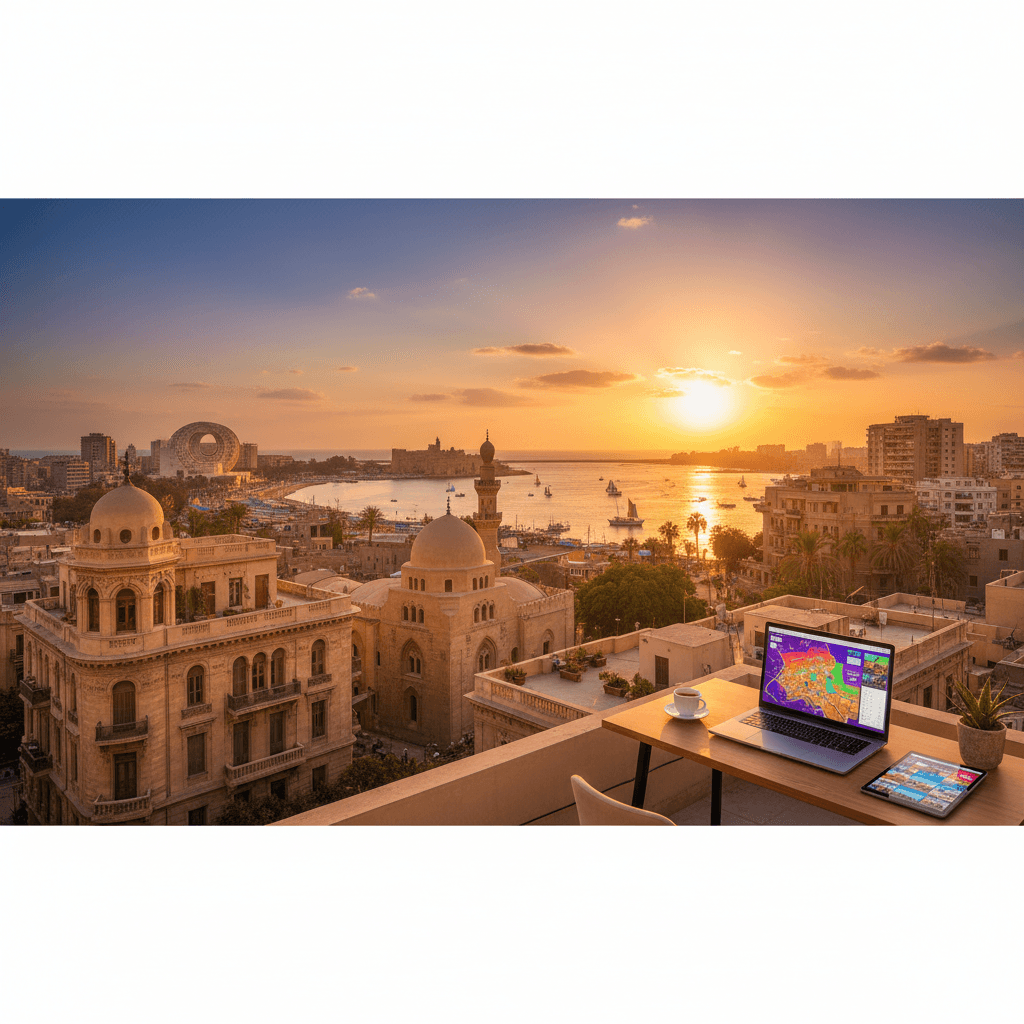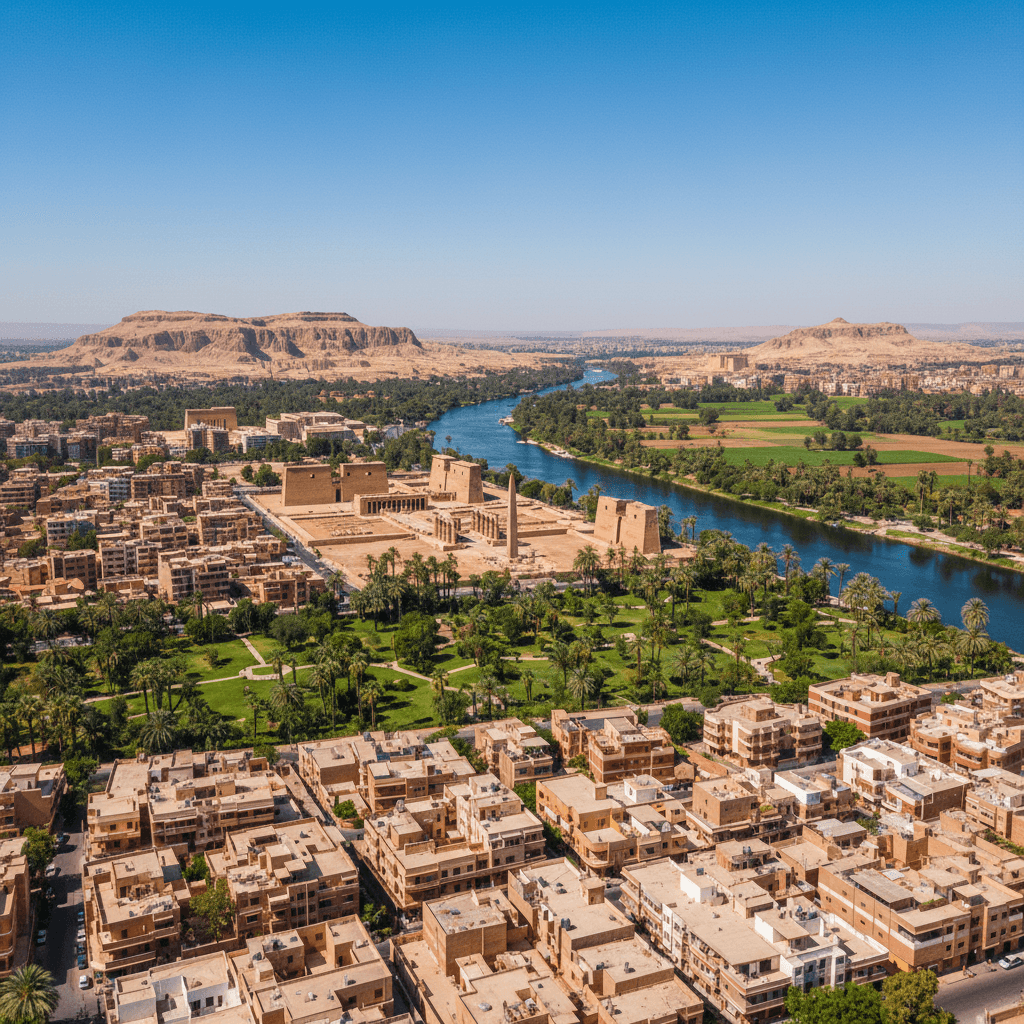
Luxor
🇪🇬 Egypt
Luxor doesn't ease you in gently. You step off the plane into air that smells like dust and diesel and something older, something you can't quite name and within twenty minutes you're standing in front of a temple wall covered in hieroglyphics that are four thousand years old. That's the thing about this place; history isn't a backdrop here, it's the whole point.
The pace is slow. Genuinely slow, not in a frustrating way but in a way that forces you to stop rushing, to sit with a glass of mint tea on the Corniche while feluccas drift past on the Nile and the call to prayer echoes off limestone cliffs across the water. Most nomads who come here expecting a typical city are, honestly, caught off guard by how much it feels like a village that got famous.
The costs are absurdly low. Around $400 a month covers rent, food and transport if you're keeping it simple and street koshari runs you a dollar or two. That said, the tradeoffs are real. Internet is unreliable, power cuts happen without warning and vendors in the tourist zones can be relentless, it wears on you after a few days.
Summers are brutal. May through September regularly hits 100°F, the kind of heat that turns a ten-minute walk into a bad decision. Most serious nomads time their stays for October through April, when temperatures drop to something actually livable and the light on the temples at golden hour is, weirdly, one of the more moving things you'll see anywhere.
The city splits across the Nile. The East Bank is where most of the action is: Luxor Temple lit up at night, cafes, restaurants, the noise of motorbikes and haggling. The West Bank is quieter, cheaper and closer to the Valley of the Kings; expats who stay longer tend to drift over there eventually.
Luxor isn't for everyone. It doesn't have a coworking scene worth bragging about, nightlife is minimal and English gets patchy fast once you leave the tourist strip. But if you want to work somewhere that feels genuinely unlike anywhere else, somewhere that puts modern life in uncomfortable and fascinating perspective, turns out this is hard to beat.
Luxor is, honestly, one of the cheapest places you'll find anywhere in the world to live and work remotely. Most nomads get by on around $400 a month at the budget end, with mid-range comfort landing closer to $600 and a genuinely cushy setup topping out around $1,000. That's rent, food, transport, the whole thing.
Rent is where Luxor really surprises people. On the East Bank near the Corniche, a studio or one-bedroom runs roughly $200 to $300 a month, you get Nile views and walkable streets but also tourist noise and the persistent smell of horse carriages baking in the heat. Cross to the West Bank and you're looking at $100 to $200 for something quieter, closer to the villages that sit in the shadow of the Valley of the Kings. Expats who've settled in tend to prefer the West Bank, it's slower, cheaper and you actually feel like you're living somewhere rather than passing through.
Food costs almost nothing. Street koshari runs $1 to $2, a solid sit-down meal at a local spot is $5 to $10 and you'd have to actively try to spend more than $15 unless you're heading somewhere like the Steigenberger Nile Palace. Transport adds maybe $12 a month if you're using microbuses and negotiating taxi fares around $1 to $2 per short trip.
Coworking is, turns out, pretty thin on the ground. Your main option is Regus, which offers dedicated desks at around $2.50 a day or you improvise at cafes along the Corniche. Internet is the real frustration here, speeds hover between 6 and 23 Mbps and power cuts happen without warning. Get a Vodafone SIM at the airport the moment you land, around $10 for 20GB, don't rely on cafe WiFi for anything deadline-sensitive.
Monthly Budget Tiers
- Budget: ~$400 (West Bank room, street food, local transport)
- Mid-range: ~$600 (East Bank apartment, mix of dining, coworking days)
- Comfortable: ~$1,000 (better apartment, reliable data, occasional upscale meals)
The low costs are real, weirdly real compared to almost anywhere else. Just go in knowing the infrastructure has limits, it's a trade-off most nomads decide is worth it.
Digital Nomads
The West Bank is where most nomads end up and honestly, it makes sense. Rent runs $100 to $200 a month for a decent one-bedroom in the villages near the Valley of the Kings, the streets smell like dust and jasmine in equal measure and the pace is slow enough that you can actually think. It's quieter than the East Bank, it's cheaper, it's real.
The tradeoff is connectivity. WiFi here is, turns out, unreliable enough to make you anxious before every call, so pick up a Vodafone SIM at Luxor Airport the moment you land, 20GB runs about $10 and treat it as your primary connection rather than a backup. Power cuts happen, cafes help, but don't count on either being consistent.
Expats
Long-term expats tend to split between the West Bank villages and the quieter stretches of the East Bank away from the Corniche crowds. West Bank life is genuinely cheaper and calmer, you're surrounded by locals rather than tour groups, the mornings start with the call to prayer echoing off limestone cliffs. East Bank gives you more walkability and a few more amenities, though rent climbs to $200 to $300 for a one-bedroom near Luxor Temple.
Facebook groups and local agents are, weirdly, the only real way to find apartments here. Airbnb isn't dominant, so budget extra time for the search.
Families
Luxor isn't really set up for families with kids. There aren't dedicated family neighborhoods, international schools are limited and the heat from May through September is frankly brutal, regularly hitting 100°F. If you're committed, the East Bank Corniche area is the most practical option, walkable, with better access to Luxor International Hospital and pharmacies. Still, most families with children pick Cairo instead.
Solo Travelers
Solo travelers do best on the East Bank Corniche. It's the most walkable part of the city, Nile views come standard and the concentration of cafes means you're never far from a cold Karkade and a working power outlet. Vendor hassle is real here, it's constant and occasionally exhausting, so learn "la shukran" early and use it without guilt. Short trips by taxi cost $1 to $2, negotiate before you get in.
Luxor's internet situation is, honestly, a mixed bag. Speeds hover between 6 and 23 Mbps on a good day and power cuts happen without warning, so don't build your workflow around cafe WiFi alone. Vodafone tends to outperform the others, hitting around 30 Mbps in central areas, it's still not fast enough to rely on for anything heavy like large uploads or video calls without a backup plan.
Get a local SIM at Luxor Airport before you leave the terminal. Vodafone and WE both sell 4G SIMs for around $10 with 20GB of data, that's genuinely the smartest first move you'll make. Orange and Etisalat are options too, but most nomads who've spent time here default to Vodafone for coverage consistency.
Dedicated coworking is thin on the ground. Most people end up working from cafes along the Corniche, where the Nile breeze makes the heat tolerable and the coffee is strong enough to keep you functional through the afternoon slump.
A few things to keep in mind when working from cafes:
- Power outlets: Scarce in most spots, bring a power bank
- Peak heat hours: Cafes fill up midday in summer, arrive early or go late afternoon
- Noise: The call to prayer, honking and vendor chatter are constant on the East Bank, not ideal for calls
- VPN: Some services are restricted in Egypt, a reliable VPN isn't optional
The West Bank is quieter and cheaper for rent, but cafe options thin out fast once you're away from the ferry landing. Most nomads who stay there work from their apartments and treat the SIM as their primary connection, which works fine for most tasks.
Bottom line: Luxor can work for remote work, but it rewards people who plan around the infrastructure rather than expecting it to meet them halfway. Slow mornings, strong SIM data, a good VPN and you'll manage just fine.
Luxor is, honestly, one of the safer cities in Egypt for travelers and nomads. Petty scams and persistent vendors are the main annoyance, not violent crime. That said, tourist areas around Luxor Temple and the Corniche attract hustlers who'll follow you half a block trying to sell a felucca ride, so you develop a thick skin fast.
The US State Department flags Egypt with a general "exercise increased caution" advisory, but Luxor itself has been stable for years. Avoid North Sinai entirely, don't go near political demonstrations and skip poorly lit streets on both banks after dark. Those are the real rules, everything else is standard city sense.
Emergency numbers to save immediately:
- Police: 122
- Ambulance: 123
- Primary hospital: Luxor International Hospital (the only facility most expats trust for anything serious)
Healthcare is where things get genuinely limited. Luxor International Hospital handles emergencies, but for anything complicated, Cairo is where you want to be. Pharmacies, though, are everywhere and surprisingly well-stocked, they're a first stop for most minor issues and pharmacists often speak enough English to help. Bring a supply of any prescription medications you rely on, sourcing specific brands locally is hit or miss.
Travel insurance isn't optional here. Medical evacuation to Cairo or Europe isn't cheap and the local hospital infrastructure won't reassure you if something serious happens. Most nomads use providers like SafetyWing or World Nomads before arriving.
Water is a simple one. Don't drink from the tap. Bottled water costs almost nothing, there's no reason to risk it and stomach issues from tap water will wreck a week of work faster than anything else in this city.
The heat, weirdly, is its own health hazard from May through September. Temperatures hit 100°F and the dry, gritty air feels like standing next to an open oven. Dehydration sneaks up on you, especially if you're walking between sites. Drink more water than you think you need, cover up and plan outdoor activity before 10am or after 5pm. Most nomads who ignore this advice learn the hard way within their first week.
Luxor doesn't have Uber or Careem. That's the first thing to know. You're working with taxis, horse carriages, microbuses and ferries and the system is, honestly, more negotiation-based than most nomads expect coming in.
Taxis are your default. Short trips around the East Bank run $1-2, but you'll need to agree on a price before you get in, not after. Drivers will quote tourist rates without hesitation, it's not personal, just how it works. For more reliable rides, verify the current number for A1 Taxis or try +20 102 049 1202. Airport transfers take about 20-30 minutes and typically cost between $5-10 depending on your negotiation.
The Corniche area on the East Bank is walkable, which most nomads appreciate after a few days of haggling with drivers. You can get from Luxor Temple to a decent cafe on foot without much trouble, the Nile breeze helps, though in summer that breeze is just hot air moving slowly past your face.
Getting to the West Bank means taking a local ferry across the Nile, which costs almost nothing and runs regularly. Once you're over there, microbuses and taxis are your options, it's less walkable and amenities are spread out, so factor that into your day if you're heading to the Valley of the Kings.
Horse carriages, called caleches, are everywhere near tourist sites. They're fine for short scenic stretches, negotiate hard before you climb in and agree on the full route upfront, vague agreements lead to inflated bills at the end. Bike and scooter rentals exist but aren't widely available or particularly reliable.
- Taxis: $1-2 for short trips; always negotiate before riding
- Reliable taxi contact: A1 Taxis, +20 102 049 1202
- West Bank ferry: Cheap, frequent, leaves from the East Bank corniche
- Microbuses: Cheapest option, crowded, no fixed stops
- Caleches: Horse carriages for short tourist-area trips; agree on price first
- Airport to center: ~20-30 minutes by taxi, $5-10 negotiated
There's no app to save you here, turns out the whole system runs on street-level negotiation and a bit of patience.
Arabic is the language of Luxor, full stop. English gets you by in tourist-heavy spots like the Corniche and around Luxor Temple, but step a few blocks inland or cross to the West Bank villages and you'll find it drops off fast, sometimes completely.
Most nomads manage fine day-to-day because the tourist economy has trained a lot of vendors, hotel staff and restaurant workers to handle basic English transactions. That said, "manage fine" and "communicate well" aren't the same thing and you'll feel the gap when something goes wrong, like disputing a taxi fare or explaining a dietary restriction at a local spot.
Download Google Translate before you land and keep it handy, it's genuinely useful here, not just a backup. The camera translation feature works well on menus and signs, which, surprisingly, saves a lot of awkward pointing. A few Arabic phrases go a long way too, locals visibly warm up when you make the effort.
- Shukran: Thank you (use it constantly)
- Min fadlak: Please
- Kam? How much? (your most-used phrase at markets)
- La, shukran: No, thank you (for fending off persistent vendors)
That last one is, honestly, more practical than it sounds. Vendor pressure around the major sites can be relentless and a firm "la, shukran" with eye contact lands better than any amount of polite English deflection.
Non-verbal communication matters more here than in most cities. A slight upward head nod means "no," which throws a lot of first-timers off, they think someone's agreeing when they're actually declining. Learn it early.
Phone SIMs are worth picking up at the airport from Vodafone or WE for around $10, partly for data, but also because WhatsApp is how everything gets arranged here, apartment viewings, taxi bookings, restaurant reservations. Locals don't email, they message. If you're trying to communicate outside of face-to-face interactions, WhatsApp isn't optional, it's just how Luxor works.
French speakers occasionally find it useful on the West Bank, a legacy of older tourism patterns, don't count on it though.
Luxor is, honestly, a desert city in the truest sense. Rain is basically a non-event, averaging somewhere between zero and a fifth of an inch annually, so you'll never need to pack an umbrella. What you do need to think hard about is heat, because the temperature swings here are dramatic enough to completely change your experience.
October through April is when most nomads show up and for good reason. Daytime temperatures sit between 48°F and 83°F (9°C to 28°C), the air is dry and manageable and you can actually walk between sites without feeling like you're being cooked alive. Mornings in winter carry a real chill, the kind that surprises first-timers who packed only light clothes, so bring a layer or two for early temple visits and felucca rides at dusk.
May through September is a different story. Temperatures push 90°F to 100°F (32°C to 38°C) and sometimes beyond, the sun is relentless and the gritty desert wind that kicks up in spring carries fine dust that gets into everything. Summers are brutally hot, full stop. Most long-term expats either leave during these months or structure their days around air conditioning, working mornings and late evenings while hiding indoors from noon to five. Productivity drops, tempers shorten, it's not Luxor's finest season.
If you want the sweet spot, aim for November through February. The tourist crowds are manageable rather than overwhelming, the light is gorgeous for photography in the late afternoon and you can comfortably walk the Corniche or cross to the West Bank without suffering for it. March and April are still good, turns out, but sandstorms become more frequent and the heat starts building fast by mid-April.
- Best months: November, December, January, February
- Shoulder season: October, March (warmer but workable)
- Avoid if possible: May through September
- Rainfall: Essentially zero year-round
- Winter nights: Can drop to 48°F (9°C), pack accordingly
One thing travelers consistently underestimate is how fast April heats up, it feels like spring for two weeks and then suddenly it's summer. Book your trip for winter, don't gamble on a late spring visit unless extreme heat genuinely doesn't bother you.
Luxor runs on Egyptian pounds and ATMs are everywhere along the Corniche. Use Wise or Revolut to avoid the brutal conversion fees at exchange counters and always carry small bills because vendors and taxi drivers rarely have change. Honestly, pulling cash from an ATM and loading up your Wise card before you arrive will save you more headaches than anything else on this list.
Get a SIM the moment you land. Vodafone and WE both have desks at Luxor Airport, around $10 for 20GB of 4G data and that's your lifeline because cafe WiFi here is, turns out, genuinely unreliable. Speeds hover between 6 and 23 Mbps on a good day, power cuts happen without warning, so don't count on a cafe connection for anything time-sensitive.
Summers are brutally hot. We're talking 100°F with a gritty desert wind that makes stepping outside feel like opening an oven door. If you have any flexibility, plan your stay between October and April when temperatures drop to a manageable 48 to 83°F and the light over the temples is, weirdly, even more dramatic.
Dress modestly outside tourist restaurants, especially on the West Bank where you're walking through actual villages. That means covered shoulders and knees, it's not a suggestion and removing your shoes before entering someone's home is expected without being asked. Tip around 10% at restaurants and a pound or two for anyone who helps you with bags or directions.
For getting around, there's no Uber or Careem. Negotiate taxi fares before you get in, short trips run $1 to $2 and save the number for A1 Taxis (+20 1024368204) because flagging down a random cab near Luxor Temple means you're starting at tourist price. Ferries to the West Bank cost almost nothing and run frequently.
- Emergency numbers: Police 122, Ambulance 123
- Hospital: Luxor International Hospital for anything serious
- Water: Bottled only, tap water isn't safe to drink
- Apartments: Find them through Facebook groups or local agents, not Airbnb
- Key phrases: Shukran (thank you), Min fadlak (please), Kam? (how much?)
Travel insurance isn't optional here, it's the one thing you don't want to skip.
Need visa and immigration info for Egypt?
🇪🇬 View Egypt Country GuideHidden Gem
Worth the effort
Monthly Budget Estimates
More cities in Egypt
Dahab
🇪🇬 Egypt
Hurghada
🇪🇬 Egypt
Sharm El Sheikh
🇪🇬 Egypt