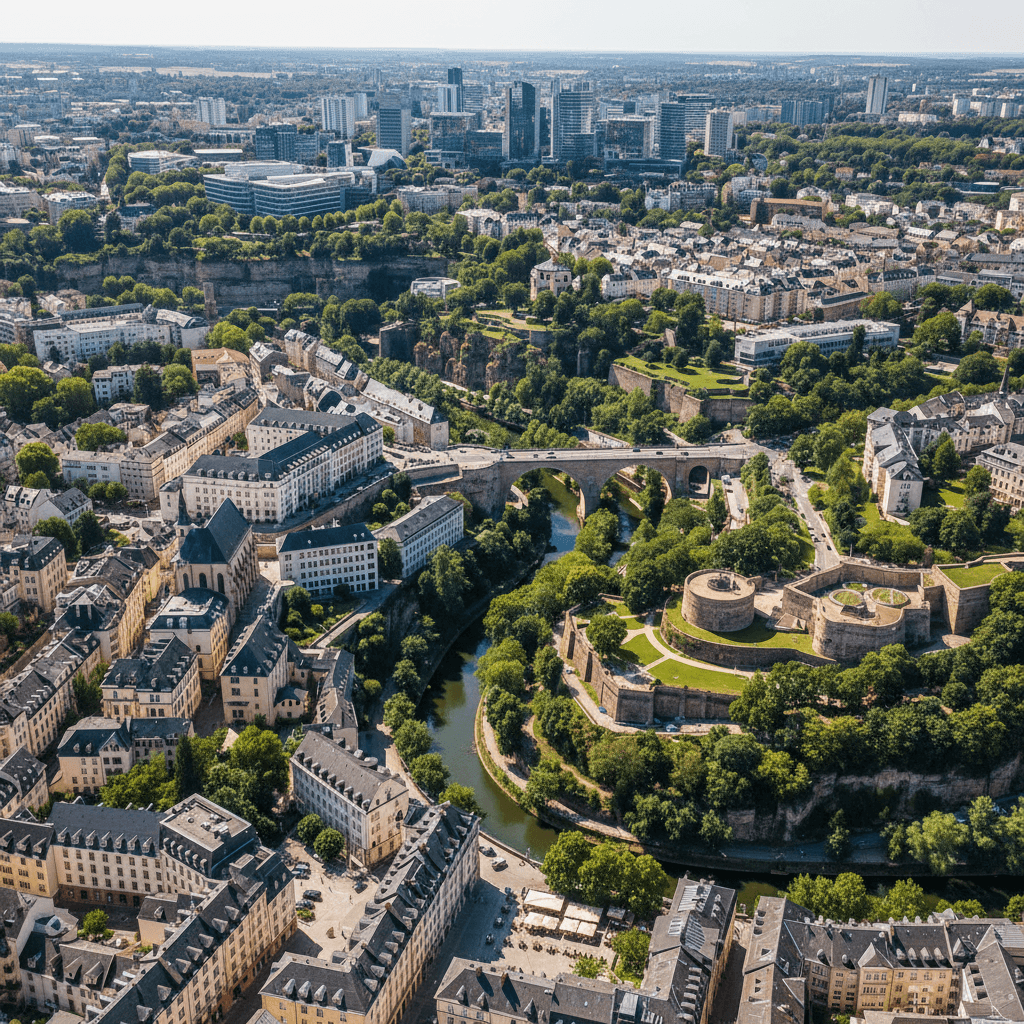
Luxembourg City
🇱🇺 Luxembourg
Luxembourg City feels polished, quiet and slightly guarded, like a place that knows exactly how rich it's and doesn’t feel like showing off. The streets are clean, the buses glide by for free and the old stone center drops suddenly into valleys and bridges that make your legs work harder than you expected, honestly.
It’s a good fit if you want order, safety, fast internet and a city where English gets you surprisingly far. It’s expensive. Really expensive. Most nomads either love the stability or get tired of paying top euro for a place that still shuts down a bit early, especially once the office crowd clears out and the evening air smells faintly of rain, exhaust and takeaway fries.
The social vibe can feel reserved at first. People aren’t rude, just cautious and that can make the first few weeks feel lonelier than you’d expect in a European capital, especially if you’re used to the easy chatter of Lisbon or Berlin.
Best areas to base yourself
- Gare: Best for walkability, train access, coworking and being near the action, though the late-night scene can feel rougher around the edges.
- Limpertsberg: Leafy, expat-heavy and calm, with cafés, schools and a more settled feel.
- Belair: One of the nicer all-around picks, with good restaurants and a local neighborhood mood.
- Kirchberg: Modern and corporate, handy if you’re near EU institutions, though it’s a bit sterile.
- Bonnevoie: Better on the budget side, more mixed, less polished, but easier on the wallet.
Expect to spend a lot. A one-bedroom in the center often lands around €1,350 to €2,000 and coworking runs from budget day passes near €15 to monthly setups in the €100 to €600 range, so your rent plus workspace can bite hard before you’ve even bought lunch.
On the upside, the infrastructure is excellent, the WiFi is solid and public transport is free nationwide, which, surprisingly, takes some of the sting out of the cost. The city is also very safe, so solo travelers and newcomers usually feel fine walking around, even if Gare gets a bit sketchier late at night.
If you need a place that feels stable, efficient and a little bit international, this works. If you want cheap drinks, messy nights and instant neighborhood warmth, look elsewhere.
Luxembourg City is expensive, full stop. A solo nomad can scrape by on €2,500 to €3,500 a month if you keep housing shared and eat cheaply, but most people land closer to €3,500 to €5,000 once they get tired of supermarket lunches and cramped rooms. That jump happens fast, honestly.
Rent is the part that bites. A studio or one-bedroom in the center usually runs €1,350 to €2,000, while places outside the core still sit around €1,000 to €1,700 and the nicer flats in Limpertsberg or Belair disappear quickly because expats know those neighborhoods feel calmer and less corporate than Kirchberg.
- Studio in center: €1,350 to €2,000
- 1-bedroom outside center: €1,000 to €1,700
- 3-bedroom in center: €1,900 to €3,800
- 3-bedroom outside center: €1,600 to €3,000
Food isn’t cheap either, though you can keep it sane if you skip sit-down dinners every night. A casual lunch is usually €8 to €15, a mid-range meal lands around €15 to €25 and a proper splurge at places like Schuman or Clairefontaine starts around €40 a head, with wine pushing the bill up fast, which, surprisingly, still gets ordered a lot.
Transport is the rare relief. Public transport is free across buses, trams and second-class trains nationwide, so you’ll hear the quiet hum of trams and the odd bicycle bell more than traffic most days and that alone takes a real chunk out of monthly expenses. Taxis exist, but they’re more of a backup plan.
- Public transport: Free
- Bike sharing: Affordable hourly or monthly passes
- Coworking day pass: From €14.99
- Monthly coworking: €100 to €600
- Private offices: €599 to €1,500+
Coworking prices swing wildly. Color Business Center is around €599 a month, Regus can run €55 a day for drop-in use and cheaper flex spaces may start near €100, but the nicer rooms, meeting spaces and 24/7 access cost more because demand stays high near Central Station and Kirchberg. The internet itself is solid, around 200 Mbps on average, so at least your video calls usually won’t collapse.
If you want to save money, Bonnevoie is the smart pick, Gare works if you want walkability and don’t mind some late-night grime and Clausen is pretty but pricey for what you get. Loud scooters, tram brakes and the smell of fries and exhaust drift through the central areas and that’s the tradeoff, convenience on one side, a painful rent bill on the other.
Luxembourg City is small on the map, but the neighborhoods feel pretty distinct once you’re living here. Rent is high almost everywhere and the “best” area depends on whether you want late-night trains, leafy streets or a quieter place that doesn’t empty your wallet quite as fast.
Digital Nomads
If you want the easiest day-to-day setup, Gare is the obvious pick. You’ve got the main station, coworking spots like Paladium Central Station and enough cafes and quick lunch places to keep you moving, though the area can feel a bit scruffy at night and, frankly, some streets get too quiet after dark.
- Gare: Best for walkability, transit and a social weekday routine. Rent is usually €1,350 to €1,650 for a 1-bedroom.
- Clausen: Better if you want character, riverside walks and bars with some atmosphere, though the hills are annoying and housing is thinner on the ground.
Most nomads who stay longer than a week end up liking Gare for convenience, then complaining about the noise from trams, delivery scooters and the occasional drunk laugh carrying down the street at 1 a.m. Clausen is prettier, weirdly, but less practical if you need groceries, coworking and a normal commute.
Expats
Limpertsberg and Belair are the safe bets. Limpertsberg feels polished and residential, with tree-lined streets, good schools and easy access to Parc de la Ville and the Grand Théâtre, while Belair is a bit trendier, with better restaurants and a more lived-in neighborhood feel.
- Limpertsberg: Best for community, schools and a calm base. Expect €1,400 to €1,700 for a 1-bedroom.
- Belair: Best for young professionals who want walkable streets and decent food nearby. Rent is usually €1,400 to €1,700 for a 1-bedroom.
- Kirchberg: Best if your office is there or you want modern apartments and easy access to EU institutions. It’s tidy, but a little sterile.
Kirchberg works well for expats who care more about convenience than charm and honestly that’s the tradeoff, glassy towers, wide roads and a corporate feel instead of cafes with personality. Limpertsberg is the most balanced choice if you want a proper neighborhood, not just a place to sleep.
Families
Limpertsberg and Kirchberg are the family-friendly picks, because they’re organized, relatively quiet and close to schools. Bonnevoie can work too if you want lower rent and a more mixed local feel, but it’s less polished and less expat-heavy.
- Limpertsberg: Best overall for families who want safety, schools and green space.
- Kirchberg: Best for modern housing, playground access and an easier school-run routine.
- Bonnevoie: Best for families watching costs. Rent is roughly €1,000 to €1,400 for a 1-bedroom, which is still expensive, just less painful.
Solo Travelers
If you’re here alone, pick Gare for convenience or Clausen for evenings out. Gare gives you the most transport options and the easiest access to the rest of the city, while Clausen is where you go when you want a few drinks, cobbled streets and the sound of the river below the bridges.
Skip the idea that the center is automatically best, because Luxembourg City’s tiny size makes almost everything reachable fast and the wrong street can feel dead by 9 p.m. Solo travelers who want a calmer base usually prefer Limpertsberg, though it’s quieter than some people expect.
Luxembourg City’s internet is, honestly, one of the least annoying parts of living here. The average speed sits around 200 Mbps, fiber is common in apartments and most places I checked had solid WiFi without the random dropouts that make remote work miserable.
The coworking scene is small, but it works. Most nomads end up in Gare or near the center because the commute’s easy, the coffee is decent and you’re not stuck listening to tram brakes and office chatter all day, which, surprisingly, matters more than fancy chairs.
Best coworking options
- Color Business Center: Coworking from €199/month, private office €599/month, with WiFi, furniture, meeting rooms, kitchen access, cleaning and reception. Good if you want something tidy and corporate.
- Paladium Central Station: At 10A Rue du Puits, about 8 minutes from Central Station, with 24 hour access, high speed WiFi, air conditioning and office equipment. Handy, no fuss.
- Regus: Flexible pricing, including around €12/day for a dedicated desk, €55/day for day use and monthly plans that can work out near €9/day. Expensive for what you get, but the network is reliable.
- Flexiroom and similar spaces: Budget plans start around €100 to €200/month, while premium setups run €400 to €600, usually with meeting rooms and 24/7 access.
Cafes are a mixed bag. Some specialty spots in Gare and the center are remote work friendly, others expect you to buy a pastry every hour and move on, so don’t assume a laptop and one espresso buys you a seat all afternoon.
If you need mobile data, the main providers are POST Luxembourg, Proximus and Tango and prepaid SIMs are easy to grab at the airport or in city shops. eSIMs work too, so you can land, turn off airplane mode and get online before your luggage even shows up.
For most digital nomads, the sweet spot is Gare if you want walkability and train access or Limpertsberg if you’d rather work somewhere quieter and greener. Kirchberg is cleaner and more corporate, though it feels a bit like sleeping inside a business park.
Best fit by type:
- Solo nomads: Gare, because everything’s close and coworking options are nearby.
- Longer stays: Limpertsberg or Belair, since they feel more livable day to day.
- Budget workers: Bonnevoie, though the setup’s less polished.
One last thing, the city’s internet is good, but the real test is whether you can find a chair that doesn’t squeak and a cafe that won’t glare at you after 90 minutes. That part, frankly, takes a little trial and error.
Luxembourg City feels safe in a way that’s almost boring, which, honestly, is a relief after bigger capitals where you’re checking your pockets every five minutes. Most people walk around comfortably day and night and the center feels quiet rather than edgy, with tram bells, church bells and the occasional train rumble doing more work than any siren. Still, the Gare district can get sketchy late at night, mostly petty stuff, so don’t leave your phone on a café table and wander off.
112 is the number to save first. That’s for police, fire and ambulance and operators usually speak English. For non-emergency police help, use 113 or 244-244-244 and if something smells like trouble, call early instead of waiting around, because the city rewards common sense and punishes dawdling less than panic.
What to watch for
- Gare: Fine by day, less pleasant after dark, especially around the station exits and busier side streets.
- Pickpocketing: Rare, but it happens near transport hubs and crowded events, so keep bags zipped and phones tucked away.
- Solo nights out: Usually okay, though the walk back from bars can feel strangely empty and a bit too quiet.
Healthcare is excellent, but it isn’t cheap if you’re uninsured or underinsured, so check your coverage before you arrive. The main hospitals are Centre Hospitalier de Luxembourg in the city center and Hôpital Kirchberg in the modern east side of town, both used to handling international patients and both run in a very orderly, no-nonsense way that can feel a little cold until you’re the one who needs it.
Main hospitals
- Centre Hospitalier de Luxembourg: 4 rue Ernest Barblé, L-1210 Luxembourg, phone 4411-11.
- Hôpitaux Robert Schuman, Hôpital Kirchberg: 9 rue Edward Steichen, handy if you’re staying in Kirchberg or Limpertsberg.
Pharmacies are easy to find and the pharmacists are often the first place locals go for minor issues, which turns out to be practical when you’ve got a sore throat, a rash or a headache after too much wine in Clausen. For poison emergencies, call 8002 5500. Keep your passport, insurance details and any prescription meds with you, because the paperwork can move fast when you’re prepared and annoyingly slow when you’re not.
Luxembourg City is tiny, expensive and weirdly easy to get around. The big win is free public transport, so buses, trams and second-class trains inside the country don’t cost you a cent, which, surprisingly, takes a lot of pressure off daily life.
Still, the city has hills that’ll make your calves complain, especially around Clausen and the old town, where you’ll hear tram bells, bus brakes and the occasional car horn bouncing off stone walls. If you’re carrying groceries or a laptop bag in the rain, you’ll feel it fast.
Public transport
- Best for: Getting across the city without thinking about parking.
- Cost: Free on buses, trams and 2nd-class trains nationwide.
- Reality: Clean, reliable and easy to use, though evening service can feel a bit sleepy outside the center.
Most nomads use the tram for Kirchberg and the buses for everything else, then walk the last stretch because the center is compact. The apps are straightforward and honestly, if you’re staying in Gare, Belair or Limpertsberg, you may barely need anything besides your feet.
Biking and walking
- Veloh: Handy for short trips and quick errands.
- Walking: Great in the center, annoying on steep streets.
- Best terrain: Flat areas around Gare and Kirchberg, less fun in the valleys.
Veloh works well for short rides, though Luxembourg’s hills and sudden rain can make biking feel more like a workout than transport. Side streets can be slick, the air gets damp in winter and turning up to a meeting slightly windblown is just part of the deal.
Taxis and rides
- When to use: Late nights, bad weather or airport runs.
- Downside: Pricier than you’d expect for such a small city.
Taxis are available, but most people don’t rely on them unless they really have to. Luxembourg City isn’t built for spontaneous cheap rides, so a short trip can feel oddly expensive for the distance.
Best neighborhoods for getting around
- Gare: Best for train access and central connections, but some streets feel rougher late at night.
- Kirchberg: Excellent tram access, modern, efficient and a bit corporate.
- Limpertsberg and Belair: Easy to live in, walkable and close to the center.
If you want the simplest daily routine, stay near Gare or Kirchberg, because you’ll spend less time changing buses and more time actually getting places. For a calmer neighborhood feel, Limpertsberg and Belair work better, though you’ll still want to check bus frequency before signing a lease. You can get around without a car and most people do.
Luxembourg City is one of those places where English gets you pretty far, then suddenly you hit French paperwork, German signs and Luxembourgish small talk in the same afternoon. Most nomads manage fine, honestly, but the mix can feel slippery if you’re expecting one clean language rule. The city sounds polished, though, with tram doors hissing, bus brakes squealing and office chatter drifting out of Kirchberg cafés.
English: widely spoken in offices, coworking spaces, hotels and most service jobs. French: used constantly in shops, restaurants, rental contracts and government forms, so it pays to know the basics. German: shows up a lot in newspapers and signage and Luxembourgish is the local social glue, even if you’ll hear it less in day to day expat life.
The practical move is simple, start in English, then switch to a few French phrases when you need service or want to avoid sounding entitled. “Bonjour”, “s’il vous plaît” and “merci” go a long way and weirdly, people soften fast when you make the effort. If you’re dealing with housing or anything official, expect French first, English second and a little patience on your side, because the bureaucracy can be slow and annoyingly old fashioned.
Useful local habits
- Start formal: “Bonjour” works better than a casual hello in shops and emails.
- Ask before switching: “English okay?” is normal and polite.
- Read the signs: transport, street names and notices may appear in more than one language.
- Don’t bluff French: locals spot it instantly and honestly, a simple phrase is better than shaky confidence.
For mobile and internet, connectivity is excellent, so video calls rarely wobble unless you’re on a crowded train or in a stone cellar bar in Clausen. Most apartments already have WiFi and fiber is common enough that remote work feels easy, not heroic. Need a SIM? Proximus, POST Luxembourg and Tango are the big names and prepaid cards are easy to grab in town or at the airport.
Coworking language: most spaces operate comfortably in English, especially Color Business Center, Paladium Central Station and Regus. Cafés around Gare and the center are usually fine for a laptop session too, though some places get protective about long stays during lunch rush, which, surprisingly, still happens in a city this expensive. If you’re in doubt, ask for the WiFi password and a quiet corner, then keep your voice down, because Luxembourgish politeness is real and people hear everything in a small room.
In emergencies, language isn’t a problem, operators on 112 speak English and respond fast. That’s reassuring. For non urgent help, pharmacists and hospital staff usually handle English well, but having a translated address or symptom note in French can save time if you’re flustered or half awake at 2 a.m.
Luxembourg City has a mild, damp climate and honestly, that means more gray skies than postcard sunshine. Winters are cold without being brutal, summers are warm rather than scorching and rain turns up often enough that you should keep a hood in your bag, not because the city falls apart, but because wet cobblestones get slippery fast.
The best time to visit is late spring through early autumn, especially May, June and September. Those months usually feel comfortable for walking the Grund, sitting on a terrace in Limpertsberg or crossing Kirchberg without sweating through your shirt and the parks smell like cut grass after rain.
Summer has the liveliest atmosphere, but it isn't perfect. You get longer days, open-air events and easier day trips, though prices jump, terraces fill up and the city can feel a bit sleepy after office hours because Luxembourg City never really does the late-night chaos thing.
Season-by-season snapshot
- Spring: Mild and changeable, with fresh air, light rain and fewer crowds. Good for walking-heavy trips.
- Summer: Warm, busy and social, but book early if you want a decent hotel or apartment.
- Autumn: My pick for most travelers, crisp weather, golden parks and fewer tourists, though evenings cool off quickly.
- Winter: Cold, dark and sometimes drizzly, with Christmas markets helping a lot, frankly, if you like mulled wine and chilly hands.
If you're coming as a digital nomad, shoulder season is the sweet spot. You'll still get stable internet, reliable transport and coworking desks at places like Color Business Center or Paladium Central Station, but the city feels calmer and your budget won't get hit quite as hard by summer demand.
Pack for layers, not drama. A waterproof jacket, closed shoes with grip and a sweater for evenings will cover most days, because the weather can flip from sunshine to cold drizzle in an hour and the wind across the plateaus around Kirchberg can feel sharp even when the forecast looks friendly.
Best overall: May to June, then September. Best for deals: November and January, though the skies can look like wet concrete. Best for atmosphere: December, if you don't mind short days and the sound of tram bells, chatter and rain hitting café awnings.
Practical Tips
Budget: Luxembourg City isn’t cheap and pretending otherwise just burns money. A shared room, lunch from a bakery and a coworking day pass can still land you around €2,500 to €3,500 a month, while a decent one-bedroom, regular restaurant meals and a monthly desk push you past €3,500 fast.
Housing bites hardest. One-bedroom places in the center often run €1,350 to €2,000 and even outer neighborhoods like Bonnevoie or Gare can feel pricey once you add deposits, utilities and the cold reality of European rent contracts, which, surprisingly, move fast if you’ve got paperwork ready.
Best areas:
- Gare: Best for walkability, trains and coworking, but some streets get a bit rough late at night.
- Limpertsberg: Quieter, leafy and expat-friendly, though you’ll pay for it.
- Bonnevoie: Usually the smarter budget pick, less polished, more local.
- Kirchberg: Practical for office life, less charming, very corporate.
Getting around: Public transport is free, which still feels slightly surreal after a few days here. Buses and trams are clean, frequent and easy to figure out, though rush hour can be packed and the tram hum gets old if you’re stuck standing with a coffee in hand.
Work setup: Internet is solid, usually around 200 Mbps and home fiber is common. Color Business Center, Paladium Central Station and Regus are the usual coworking picks, with day passes starting around €14.99 and monthly plans ranging from roughly €100 to €600, so choose based on whether you need silence or just a chair and WiFi.
The cafe scene is growing, honestly, but don’t expect every espresso bar to welcome you camping there all afternoon. Go early, buy another coffee if you’re staying and head to Gare or the city center if you want stronger WiFi and fewer side-eye glances.
Staying safe: Luxembourg City is very safe overall, even for solo travelers and that’s one of the few things here that really does live up to the reputation. Still, the Gare area can get sketchier after dark, with the usual petty theft and drunk noise, so keep your phone zipped away and trust your gut.
Emergency numbers:
- Emergency: 112
- Police non-emergency: 113
- Poison control: 8002 5500
SIMs and healthcare: Proximus, POST Luxembourg and Tango are the main mobile options and prepaid SIMs are easy to grab in town or at the airport. For medical care, CHL in Luxembourg City is the big-name hospital most newcomers hear about first and frankly, you’ll be relieved the system is well organized if you ever need it.
Need visa and immigration info for Luxembourg?
🇱🇺 View Luxembourg Country GuideEasy Landing
Settle in, no stress