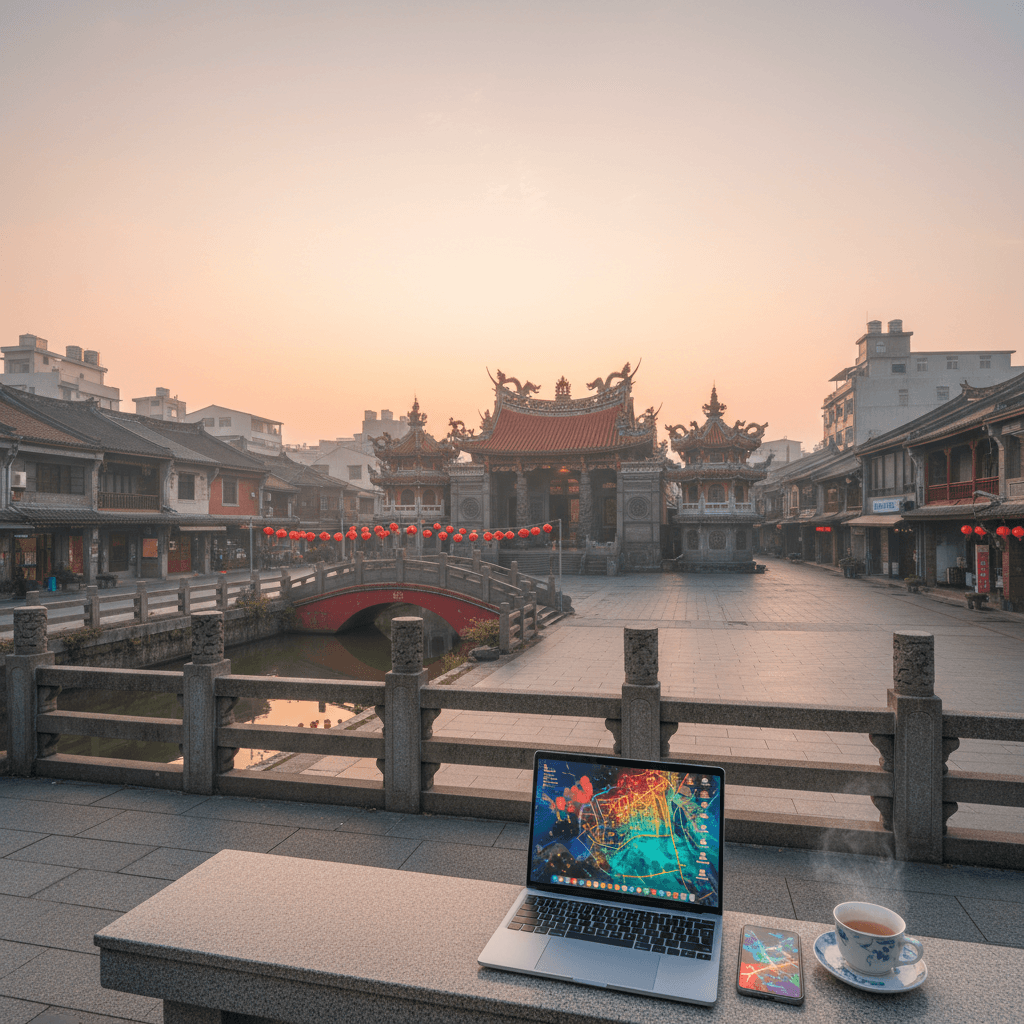
Luodong
🇹🇼 Taiwan
The Pulse of Yilan's Commercial Heart
Luodong is the kind of place that catches you off guard. While most travelers head to Yilan City for its administrative status or the coast for surfing, Luodong sits as the region's true commercial engine. It is compact, incredibly walkable, and carries a distinct energy that feels more lived in and authentic than the polished streets of Taipei. You won't find a forest of skyscrapers here; instead, you get a dense grid of low rise buildings, traditional shopfronts, and a massive green lung right in the center of town.
The vibe is a mix of old school industrial heritage and modern Taiwanese convenience. Because it was historically a major hub for the logging industry, there is a lingering sense of grit and productivity. Today, that has shifted into a thriving retail and food scene. It feels purposeful. People aren't just passing through; they are there to eat, trade, and live. For a nomad, this means you are immersed in a local rhythm rather than a tourist bubble.
The Night Market Gravity
Everything in Luodong eventually pulls toward the Luodong Night Market. It is widely considered the best in the county, and arguably one of the top three in Taiwan. While many night markets feel like they are performing for visitors, this one is the city's living room. You will find locals queuing for scallion pancakes made with the famous local Sanxing green onions or grabbing mutton soup on a chilly evening.
The market area isn't just about food, though. It is surrounded by a dense network of shops selling everything from clothing rentals for photo shoots to local candies. There is often live music or traditional theater performances happening near the park edges. It creates a nightly festival atmosphere that makes even a simple Tuesday feel like an event. If you live nearby, your dinner options are effectively infinite and affordable.
A Greener Pace of Life
When the density of the market area feels like too much, the Luodong Forestry Culture Park provides the necessary exhale. It is a massive expanse of ponds, old railway tracks, and restored wooden storehouses that remind you of the city's roots. It is the go to spot for a morning run or a midday break from the screen. Seeing the old steam locomotives parked among the trees gives the city a nostalgic, slightly melancholic beauty that you don't get in the more modern parts of Taiwan.
Digital nomads often find that Luodong offers a "Goldilocks" experience. It is small enough that you can get around easily by renting a bike from the GIANT store near the station, but it is connected enough to feel part of the world. With Taiwan's Digital Nomad Visa, launched January 2025, allows up to 180 days stay (initial 90 days + extension), Luodong is becoming a strategic base for those who want to explore the northeast coast without the astronomical rents of the capital.
Why Nomads are Looking Here
Living here feels like being in on a secret. You have access to some of the fastest internet in the world, with fixed speeds often hitting 122 Mbps, yet you are minutes away from the Pacific Ocean and the lush mountains of Yilan. It is a town of contrasts:
- The chaotic, neon lit energy of the night market versus the silent, misty mornings in the forestry park.
- The convenience of a major transit hub where you can hop on a train and be in Taipei in about 80 to 90 minutes.
- A local culture that is deeply traditional but welcoming to anyone willing to grab a stool at a street side stall.
You won't find dozens of dedicated coworking spaces with glass walls and avocado toast here yet. Instead, you'll find yourself working from quiet, character filled tea houses or modern cafes tucked away in the alleys. It is a place for the independent worker who values integration over isolation. If you want to feel the heartbeat of real Taiwan while staying productive, Luodong hits the mark perfectly.
The Price of Small-Town Taiwan
Living in Luodong feels like a financial breath of fresh air compared to the steep prices of Taipei. While the capital city often drains a nomad's budget with high rent and pricey cocktails, Luodong operates at Yilan County's more relaxed pace. You'll find that your money stretches significantly further here, making it an ideal spot for those who want to save while enjoying easy access to the coast and mountains.
Most nomads find that their largest expense is housing, but even that is manageable. Since Luodong is compact, you don't need to spend much on transportation. You'll likely spend most of your budget on the incredible local food scene, particularly at the night market, where a full dinner rarely tops a few dollars.
Monthly Budget Estimates
- Frugal Nomad: $900 to $1,200 per month. This covers a modest studio, eating primarily at local stalls, and using a bicycle for transport.
- Mid-Range Professional: $1,500 to $2,100 per month. This allows for a modern apartment near the park, frequent cafe visits, weekend trips around Yilan, and a few high-end meals.
- High-End Living: $2,800+ per month. You'll be living in the best available housing, likely renting a car or scooter, and dining at the region's top seafood spots.
Housing and Rent
Rent in Luodong is roughly 40% to 50% cheaper than in central Taipei. Most expats look for apartments near the Luodong Forestry Culture Park or the train station for convenience. While there aren't many dedicated "nomad hubs" yet, the local rental market is accessible if you use local platforms or Facebook groups.
- Studio Apartment: $350 to $500 per month. These are often "suites" in older buildings but are generally clean and well-maintained.
- Modern One-Bedroom: $600 to $850 per month. Expect better amenities and perhaps a view of the surrounding rice fields or mountains.
- Utilities (Electricity/Water/Internet): $60 to $100 per month. Electricity costs can spike in the humid summer months due to air conditioning.
Food and Drink
The Luodong Night Market is the heart of the city's food culture. It's not just a tourist spot; it's where locals eat. You can grab a famous scallion pancake or a bowl of mutton soup for $2 to $4. If you prefer sitting down at a mid-range restaurant, expect to pay between $10 and $15 for a solid meal with a drink.
- Local Meal: $3 to $6. Think braised pork rice, noodles, or bento boxes.
- Coffee at a Cafe: $3.50 to $5.50. Luodong has a growing specialty coffee scene where prices mirror those in bigger cities.
- Beer (Local): $1.50 to $2.50 at a convenience store like 7-Eleven or FamilyMart.
- Groceries (Weekly): $40 to $60. Shopping at local wet markets for produce will save you a lot compared to the supermarkets.
Transport and Connectivity
Luodong is incredibly walkable, but most long-term residents eventually rent a scooter to explore the nearby surfing beaches or mountain trails. The local GIANT store is the go-to for bike rentals if you aren't ready to commit to a motor. For trips to Taipei, the bus or train is your best bet, costing around $5 to $8 for a one-way ticket that takes about 75 to 90 minutes.
- Scooter Rental: $15 to $20 per day, or roughly $150 to $200 for a monthly lease.
- Mobile Data Plan: $15 to $25 per month for a truly unlimited 5G plan. Taiwan's internet speeds are world-class, even in smaller towns like this.
- Local Bus Fare: Less than $1 per trip.
For Digital Nomads: The Night Market District
If you want to be where the action is, aim for the blocks surrounding the Luodong Night Market. This is the heartbeat of the town. While it might sound noisy, staying a street or two back from the main stalls gives you access to the best infrastructure in Yilan. You will find the highest concentration of cafes with reliable Wi-Fi here, which is vital since dedicated coworking spaces are still rare in this part of Taiwan. Most nomads find that the convenience of having hundreds of food stalls right outside their door makes up for the smaller apartment sizes.
- The Vibe: High energy, convenient, and walkable.
- Internet: Strong 5G coverage and fiber available in most newer buildings.
- Key Spot: The area near the GIANT bike rental shop is great for those who want to balance work with quick cycling trips to the coast.
For Expats: Near Luodong Forestry Culture Park
Expats who plan on staying for a few months or longer usually gravitate toward the northern edge of the city near the Forestry Culture Park. It feels much less claustrophobic than the town center. The air is fresher, and there is a lot more greenery. You will find slightly larger apartment layouts here, often at better price points than the brand new developments near the train station. It is a quieter lifestyle, but you are still only a five minute scooter ride from the central amenities.
- The Vibe: Peaceful, green, and residential.
- Housing: Modern studios and multi bedroom apartments are common.
- Best Feature: Having a massive park with walking trails and old steam trains as your backyard for morning runs.
For Families: The Southern Residential Corridors
Families often prefer the southern outskirts of Luodong, heading toward the Traditional Arts Center. This area feels more like a traditional neighborhood and less like a tourist hub. The streets are wider, and there is less foot traffic from weekend visitors arriving from Taipei. It is a more authentic look at life in Yilan. You will need a scooter or a car if you live out here, as the density of shops is much lower, but the trade off is a significantly quieter environment for kids.
- The Vibe: Slow paced and community oriented.
- Transport: Highly dependent on personal wheels; public buses are less frequent here.
- Proximity: Close to larger grocery stores and the more sprawling cultural attractions.
For Solo Travelers: Near Luodong Train Station
If you are just passing through for a week or two, stay as close to the Luodong Train Station as possible. This is the gateway to the rest of the county. From here, you can easily hop on a train to Yilan City or take a bus out to the coastal surfing spots. Solo travelers recommend this area because it is well lit, feels incredibly safe even late at night, and has the highest density of hostels and budget friendly guesthouses. You won't feel isolated here, as there are always other travelers moving through the transit hub.
- The Vibe: Practical and transitional.
- Safety: Extremely high; Taiwan is famously safe for solo explorers.
- Accessibility: Direct links to Taipei via the Kamalan or Capital Star bus lines, which run every 15 to 20 minutes.
Connectivity and Speed
Taiwan is a global leader in digital infrastructure, and Luodong benefits from that same backbone. You can expect fixed broadband speeds averaging over 200 Mbps in Taiwan, while mobile 5G speeds averaging over 300 Mbps. For most nomads, this means video calls and large file uploads are a non-issue, even if you are working from a small guesthouse near the night market.
The 5G coverage in town is solid. If you are staying for a while, pick up a local SIM card from Chunghwa Telecom or Taiwan Mobile at the airport or a local shop. They have affordable unlimited data plans that make tethering a reliable backup. Most cafes and public spaces also offer free Wi-Fi, though you will often need a local phone number to authenticate the connection.
Coworking and Shared Spaces
Luodong is more of a cultural and residential hub than a tech center, so you won't find the massive, sleek coworking chains common in Taipei. Instead, the scene here is intimate and community driven. Many remote workers head to Yilan Youth Hub, located just a short train ride away in nearby Yilan City, which offers a professional environment for those who need a dedicated desk and networking opportunities.
Within Luodong itself, the Luodong Forestry Culture Park area has several quiet spots where you can get through a few hours of deep work. While not a formal coworking space, the library and certain community centers provide a quiet atmosphere for focused tasks. If you need a formal boardroom or high end office amenities, you will likely need to commute to the larger hubs in the county.
Laptop Friendly Cafes
The cafe culture in Luodong is where most nomads actually get their work done. You will find plenty of spots that are welcoming to laptop users, provided you order a coffee and a snack. Many local shops offer free power outlets, though it is always polite to ask first. The vibe is generally relaxed, and as long as it is not a peak weekend rush, staff won't mind you staying for a few hours.
- Starbucks Luodong: Located near the station, it is the most predictable option for consistent internet and power outlets if you are in a pinch.
Digital Nomad Logistics
The biggest update for anyone looking to base themselves here is the Digital Nomad Visa launched January 2025, allowing up to 180 days. This makes it significantly easier to stay in Luodong long term without doing constant visa runs. It is a game changer for those who want to experience the slower pace of Yilan County while maintaining a legal remote work status.
If you find yourself needing a break from the screen, the city is easy to navigate. You can rent a bike from the GIANT store near the station to clear your head between meetings. Most nomads find that the lack of a traditional office culture in Luodong is actually a plus, as it forces a better work life balance, especially with the Luodong Night Market offering plenty of distractions once you close your laptop for the day.
Keep in mind that while the internet is fast, English proficiency in local shops and smaller cafes can be hit or miss. Having a translation app ready will help you navigate Wi-Fi passwords and menu options. Overall, Luodong is a fantastic choice if you want the high speed reliability of Taiwan with a much more authentic, less corporate feel than the capital.
Safety in Luodong
Luodong feels like one of those towns where people still leave their scooters running while they pop into a 7-Eleven. It is incredibly safe, even by Taiwan's high standards. You can walk through the Luodong Night Market or the darker residential alleys near the Forestry Culture Park at 2:00 AM without a second thought. Petty crime like pickpocketing is rare, though you should still use common sense in the thick crowds of the night market on Saturday nights.
The biggest safety concern you'll face isn't crime, it's the traffic. Like much of Yilan, Luodong is built for scooters. Sidewalks can be inconsistent or blocked by parked bikes, forcing you to walk on the edge of the road. If you're renting a bike from the GIANT store near the station, keep your wits about you. Drivers are generally polite, but the sheer volume of scooters can be intimidating if you aren't used to the flow of Taiwanese traffic.
Natural disasters are the other factor to keep on your radar. Being on the northeast coast, Yilan is often the first place to feel the impact of typhoons and earthquakes. Most buildings in Luodong are reinforced concrete and built to withstand tremors, but it's smart to download the Central Weather Administration (CWA) app. It provides English alerts for seismic activity and heavy rain warnings, which are frequent in this part of the country.
Healthcare and Medical Services
You don't need to head back to Taipei if you get sick. Luodong is actually a medical hub for the Yilan region. The Lotung Poh-Ai Hospital and the Luo-Dong St. Mary's Hospital are both major facilities located right in the town center. They offer a full range of specialist services, emergency rooms, and modern diagnostic equipment. You'll find that many doctors here speak excellent English, as medical education in Taiwan is largely conducted in English.
If you're here on the Digital Nomad Visa launched January 2025, allowing up to 180 days, you likely won't be eligible for the National Health Insurance (NHI) immediately, so keep your private travel insurance details handy. For minor issues like a cold or a skin rash, look for local clinics marked with a blue and white "NHI" logo. A walk-in consultation at a private clinic usually costs between $15 and $30 USD, including basic medication.
- Lotung Poh-Ai Hospital: The largest private hospital in the county, great for emergencies and English-speaking specialists.
- St. Mary's Hospital: Known for high-quality care and a long history of serving the local community.
- Pharmacies: Look for the Watson's or Cosmed near the train station for over-the-counter needs, or local "Yakkyoku" pharmacies for prescriptions.
Pharmacies are everywhere in Luodong. If you need something specific, showing a photo of the chemical name on your phone usually works better than trying to describe symptoms if the pharmacist's English is limited. For dental work, there are several modern clinics along Zhongzheng Road that offer cleaning and basic repairs for a fraction of what you'd pay in the US or Europe.
Emergency Contacts
Keep these numbers saved in your phone just in case. Most dispatchers will have someone who can speak English, though you might need to wait a moment to be transferred.
- Police: 110
- Fire and Ambulance: 119
- English-speaking Tourist Hotline: 0800-011-765
The Hub: Luodong Station
Luodong is the transit pulse of Yilan County. Everything centers around Luodong Station, where the railway connects you to Taipei in about 80 to 100 minutes depending on whether you catch the express Tze-Chiang or the local train. Most nomads arriving from the capital find the train the most relaxed way to get here, costing approximately NT$300-400 for Tze-Chiang express to Taipei. Once you step out of the station, you are in the heart of the grid, and you can reach many of the central spots on foot.
Two Wheels are Better Than Four
While the center is walkable, Luodong is spread out enough that you will want wheels to visit the Forestry Culture Park or the outer edges of the night market. Bicycles are the local gold standard. There is a reliable Giant rental shop right near the station where you can pick up a high quality bike for the day. It is the best way to navigate the narrow alleys that get choked with traffic during the evening rush. If you have a local license or an International Driving Permit, renting a scooter is the real pro move. It gives you the freedom to scoot out to the Traditional Arts Center without waiting on a bus schedule.
The Bus Network
For longer hops within the county, the bus system is functional but requires a bit of patience. The Kuo-Kuang and Capital Star buses are the lifelines for commuters. These buses run frequently between Luodong and Taipei, often being faster than the train if traffic on the Xueshan Tunnel behaves. Within the city, look for the local shuttle buses that loop through the major tourist spots.
- EasyCard and iPass: You will need one of these stored value cards. You can tap them on every bus and at the train station. You can buy or top them up at any 7-Eleven or FamilyMart.
- Bus Frequency: Expect buses to run every 20 to 30 minutes on main routes, but they can get sparse on weekends when the crowds descend from Taipei.
- The Night Market Crunch: Avoid driving anywhere near the Luodong Night Market after 6:00 PM. The streets effectively become pedestrian zones, and parking is a nightmare.
Taxis and Ride Sharing
You won't find Uber operating with the same density here as you do in Taipei. You are better off using the FindTaxi app or just waving down a yellow cab near the station or major hotels. Most rides within the city limits will stay under $NT200. If you are heading out to a specific cafe or a coworking spot on the outskirts, have the address written in Chinese characters; many local drivers in Yilan don't speak much English and appreciate the clarity.
Navigating on Foot
Walking in Luodong is a mix of charm and chaos. The area around the Luodong Forestry Culture Park has lovely, paved paths that are perfect for a morning stroll before you start your work day. However, in the commercial center, sidewalks can be inconsistent or blocked by parked scooters. You will often find yourself walking on the edge of the street. It is perfectly safe, just stay alert. The city is compact enough that if you stay near the station, your daily commute to a coffee shop or the night market for dinner will rarely take more than 15 minutes.
The Language Gap
Expect a significant shift in English proficiency when you move from Taipei to Luodong. While Taiwan is generally easy to navigate, Luodong feels much more local. Most residents speak Mandarin as their primary language, and you will hear plenty of Taiwanese Hokkien, especially among the older generation at the Luodong Night Market. You won't find many English menus here, so having a translation app ready is a must for daily survival.
Most digital nomads find that while younger shop owners and staff at places like the GIANT bike shop might speak basic English, your interactions at smaller food stalls will rely heavily on pointing and smiling. It is part of the charm of Yilan County, but it does require a bit more patience than the capital. Locals are incredibly friendly and will often go out of their way to help, even if there is a massive language barrier between you.
Digital Tools for Survival
Since you are off the beaten path, your phone is your best friend. Google Lens is the gold standard here for translating physical menus or signs at the Luodong Forestry Culture Park. Most expats recommend downloading the Waygo app as well, which specializes in Chinese characters and works offline, a lifesaver if you are exploring the more remote parts of the surrounding mountains where signal might dip.
- Google Translate: Use the conversation mode for real time back and forth with landlords or vendors.
- Line: This is the primary communication tool in Taiwan. If you meet local friends or need to contact a business, they will expect to use Line rather than WhatsApp or SMS.
- Pleco: If you are serious about learning some Mandarin during your stay, this is the best dictionary app available.
Key Phrases to Know
Learning a few basics goes a long way in Luodong. Even a clumsy attempt at Mandarin will usually earn you a big smile and better service. Start with Ni hao for hello and Xie xie for thank you. If you are at the night market, Zhe ge (this one) while pointing will get you through most food orders. If you have dietary restrictions, have them written down in traditional Chinese characters on your phone to show servers.
The local dialect, Taiwanese, has its own flavor. You might hear Gau cha for good morning instead of the Mandarin Zao an. You don't need to learn it, but recognizing the sounds helps you feel more at home in the neighborhood. Most signs are in Traditional Chinese, so make sure your translation settings are not set to Simplified Chinese, which is used in Mainland China.
Connecting with the Community
Because Luodong is smaller, the expat community is tight knit but tiny. You won't find the massive digital nomad meetups that happen weekly in Taipei. Most communication happens in Facebook groups dedicated to Yilan expats or through local hobby groups. If you want to meet people, your best bet is to frequent the same coffee shops or the Traditional Arts Center, where you might run into other long term travelers.
Communication is about more than just words here. It is about the pace of life. People in Luodong take their time. Whether you are renting a bike or ordering a bowl of mutton soup, don't rush the process. Small talk, even if it is mostly through gestures, is part of the daily rhythm. If you stay for a few months, the vendors at your local breakfast stand will likely recognize your order before you even say a word.
The Northeast Rhythm
Luodong sits in the heart of Yilan County, a region defined by its proximity to the Pacific and the steep mountains of the Central Range. Because of this geography, the weather here is famously temperamental. Unlike the relatively predictable seasons of southern Taiwan, Luodong follows a pattern of high humidity and frequent rainfall. You'll want to pack a high quality raincoat and perhaps a pair of waterproof shoes, because when it rains in Yilan, it really pours.
The local climate is humid subtropical. This means summers are sweltering and winters are damp and chilly. While the temperature rarely drops to freezing, the high humidity makes a 12°C (54°F) day feel significantly colder than the numbers suggest. Most older apartments in the area don't have central heating, so nomads often find themselves buying small space heaters to get through the winter months.
Spring: The Sweet Spot
If you're looking for the most comfortable window to visit, aim for March through May. During the spring, the intense heat of the summer hasn't arrived yet, and the heavy winter rains start to taper off. Temperatures usually hover between 20°C and 26°C (68°F to 79°F). This is the ideal time to rent a bike from the local GIANT store and explore the Luodong Forestry Culture Park or take longer rides out into the surrounding rice paddies.
Expats often recommend spring because the air is clear and the lush green landscape of the Yilan plain is at its most vivid. It's the best time for outdoor focus before the humidity becomes a barrier to productivity. You can comfortably sit outside at a cafe near the Traditional Arts Center without needing a constant blast of air conditioning.
Summer: Heat and Typhoons
From June to September, Luodong turns into a steam room. Temperatures frequently climb above 33°C (91°F) with humidity levels that make walking to the Luodong Night Market feel like a workout. This is also typhoon season. While Taiwan’s infrastructure is incredibly resilient, a direct hit from a typhoon can shut down trains and shops for a day or two.
Despite the heat, summer is when the city feels most alive at night. The Luodong Night Market becomes the primary social hub once the sun goes down and the air cools slightly. If you’re visiting during this window, plan your deep work for the air conditioned afternoons and save your exploring for the evenings. Most nomads find that a midday shower and a change of clothes are mandatory during a Luodong July.
Autumn and Winter: The Rainy Retreat
Autumn, specifically October and November, is another pleasant transitional period. The cooling temperatures make for great hiking in the nearby mountains, though the rainfall begins to pick up again as the northeast monsoon kicks in. By December, Luodong enters its greyest phase.
- Wettest Months: October and November often see the highest rainfall totals due to monsoon patterns.
- Coldest Months: January and February, where dampness makes the air feel biting.
- Best for Crowds: Avoid the Lunar New Year period (usually late January or February) unless you enjoy massive crowds and surged prices.
If you enjoy a moody, Pacific Northwest vibe, you might actually like the winter here. It's a quiet time for the city, perfect for hunkering down with a laptop in a quiet corner of a local coffee shop. Just be prepared for weeks where you might not see the sun. Most travelers say that if you can handle the rain, the lack of tourists during the off season makes Luodong feel much more authentic and local.
Getting Around and Logistics
Luodong is compact enough that you can handle most daily errands on foot, especially if you stay near the train station or the night market area. For exploring the wider Yilan County, your best bet is renting a set of wheels. You can find a GIANT bicycle shop right in town if you want to keep things eco friendly, but most long term visitors prefer a scooter to reach the coastal spots or mountain trails. Just make sure you have a valid International Driving Permit with the motorcycle box checked; local police in Yilan are known to be stricter than those in Taipei.
The train is your lifeline to the rest of Taiwan. The local express trains get you to Taipei in about 60 to 80 minutes for roughly $8 USD. For local hops, the bus system is reliable but the schedules can be sparse once you head into the rural townships. Download the Bus+ app to track arrival times in real time so you aren't standing in the humid air longer than necessary.
Digital Nomad Essentials
While Luodong doesn't have the massive ecosystem of dedicated coworking spaces you'll find in Taipei, the internet infrastructure is world class. You can expect fixed broadband speeds over 200 Mbps; 5G over 300 Mbps. Most nomads set up shop in independent cafes or the local library. If you need a more formal setup, you might have to commute to Yilan City, which is only a few minutes away by train.
Taiwan's Digital Nomad Visa, launched January 2025, allows up to 180 days stay (initial 90 days + extension), which has made Luodong a much more viable base for those wanting to escape the capital's high rents. It's a great middle ground for people who need fast Wi-Fi but want to be within a ten minute drive of a rice paddy or a hiking trail.
Daily Life and Services
Banking is straightforward, though you should always carry cash. While the Luodong Night Market is the heart of the social scene, most vendors there won't take cards. You'll find plenty of ATMs at 7-Eleven or FamilyMart locations that accept international cards like Revolut or Wise. For healthcare, the Lotung Poh-Ai Hospital is a major facility in the center of town with English speaking staff and high standards of care.
Expect a lower cost of living here compared to the northern hubs. A solid meal at the night market or a local noodle shop will usually run you between $3 and $7 USD. The city is incredibly safe, even late at night, which is typical for Taiwan. Language can be a slight hurdle as English proficiency isn't as high as in Taipei, so having a translation app ready for menus is a smart move.
Local Amenities
- Luodong Forestry Culture Park: A massive green space that's perfect for a midday break from your laptop. It's quiet, shaded, and free to enter.
- Traditional Arts Center: Located on the outskirts, this is where you go to see local crafts and live theater demonstrations when you need some creative inspiration.
- Luodong Night Market: This is the city's main attraction. It's the largest in the region and stays active late, making it the default spot for dinner and socializing.
Need visa and immigration info for Taiwan?
🇹🇼 View Taiwan Country GuideEasy Landing
Settle in, no stress