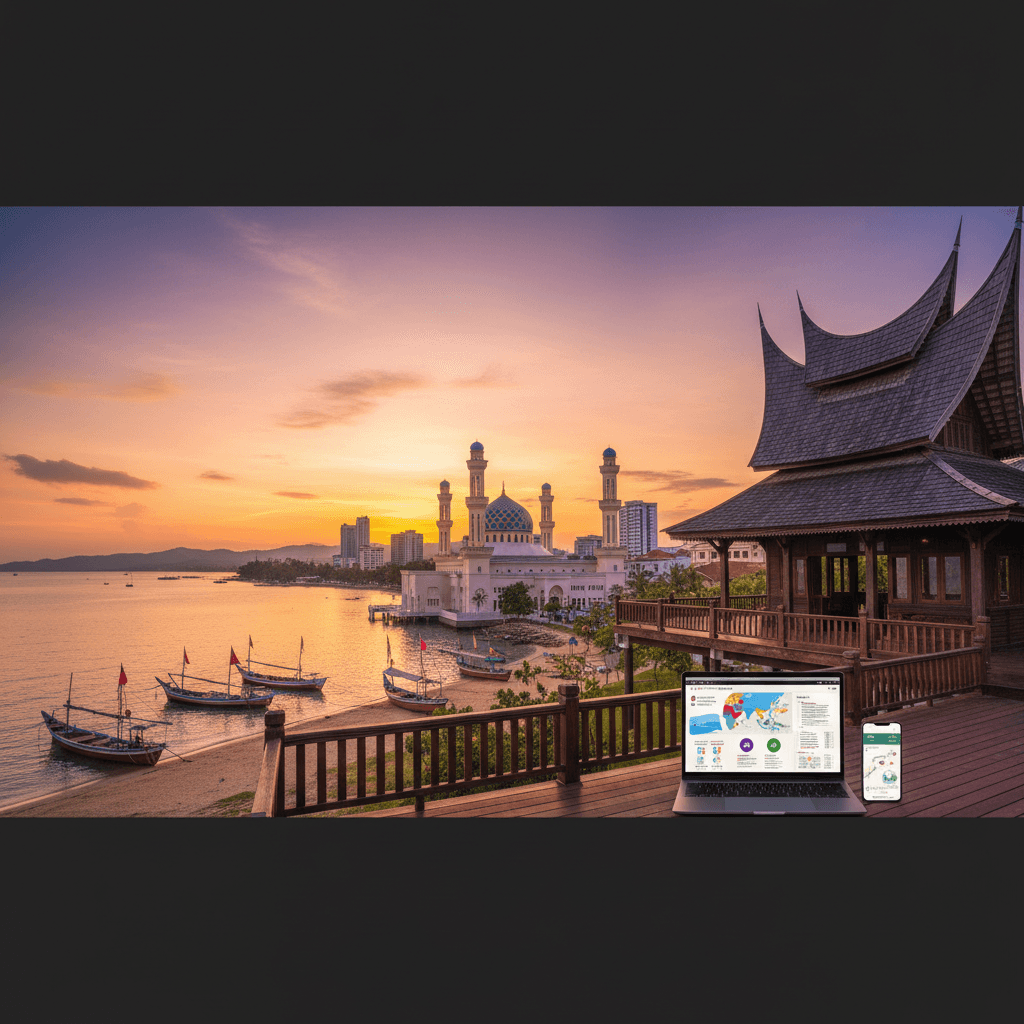
Lumut
🇧🇳 Brunei
The Vibe: Rainforest Silence and Slow Living
Lumut isn't your typical Southeast Asian nomad hub. You won't find the neon-lit coworking spaces of Bali or the 24/7 street food chaos of Bangkok here. Instead, this coastal village in the Belait District offers a profound, almost startling silence. It is a place where the primary soundtrack is the rustle of the surrounding rainforest and the distant lap of the South China Sea. Life moves at a pace dictated by nature and tradition, making it the ultimate destination for those looking to unplug from the "hustle culture" and lean into a meditative, eco-focused lifestyle.
The atmosphere is deeply conservative and respectful, reflecting Brunei's Islamic heritage. There is no nightlife in the Western sense, no bars, and a strict ban on alcohol. Most travelers find that this creates a safe, wholesome environment that encourages early mornings and healthy habits. It is the kind of place where you wake up at 6:00 AM to the sound of tropical birds, get your deep work done while the 4G signal is strongest, and spend your afternoons exploring the nearby rainforest areas.
While the tranquility is Lumut's greatest strength, it can be its biggest challenge for long-term stays. The isolation is real. Digital nomads often describe it as a "monastic" experience. It is perfect for a two-week deep-work retreat or a nature-heavy escape, but the lack of a social "scene" means you'll need to be comfortable with your own company or bring a partner along.
Cost of Living Breakdown
Living in Lumut is generally more affordable than the capital, Bandar Seri Begawan, simply because there are fewer ways to spend your money. You'll get by comfortably on a mid-range budget of $1,500 to $2,200 per month, though frugal solo travelers can manage on $1,000 if they stick to local guesthouses and village stalls.
- Rent: A basic village guesthouse or a modest 1BR apartment typically runs between $300 and $500. If you want something more modern, you might pay up to $900, but options are limited.
- Meals: A plate of Nasi Katok from a roadside stall is a steal at $2 to $4. A mid-range meal at a local Malay or Indian eatery will cost you $5 to $10.
- Transport: Since there are no buses, you'll rely on Grab rides ($3 to $7 per trip) or scooter rentals ($10 to $15 per day).
- Connectivity: Expect to pay $10 to $20 for a prepaid SIM with 20GB to 50GB of data.
The Digital Setup
Don't let the rural setting fool you. Brunei is pushing hard for "Smart Nation" status, and the infrastructure is surprisingly robust. You'll find 4G coverage reaching up to 98% in the more developed districts. Average mobile speeds hover around 87 Mbps, which is more than enough for Zoom calls or uploading large files from your porch.
The catch? There are no dedicated coworking spaces in Lumut. If you need a professional office environment, you'll have to make the trek to Bandar Seri Begawan to use spaces like Regus or Common Ground, which cost about $10 to $25 for a day pass. Most nomads in Lumut prefer to set up shop in local cafes or simply work from their accommodation using a mobile hotspot as a backup. The "cafe working culture" isn't fully established here, so while the WiFi is usually reliable, you might be the only person with a laptop in the room.
Safety and Practicalities
Safety is a non-issue in Lumut. Crime rates are incredibly low, and you can walk almost anywhere without a second thought. The main "dangers" are more likely to be the humidity or a heavy downpour during the rainy season from November to February. The local community is welcoming but expects visitors to dress modestly and respect local customs, especially regarding public displays of affection.
For healthcare, local clinics can handle the basics, but for anything serious, you'll head to the high-quality RIPAS Hospital in the capital. Most people speak English well, especially in professional settings, so you won't struggle to communicate your needs. Just remember to download the BruHealth app before you arrive; it's a staple of daily life here for health declarations and local info.
The Bottom Line on Lumut
Living in Lumut isn't like basing yourself in Bali or Chiang Mai. It's a choice for the nomad who wants to trade cafe hopping for rainforest trails and coastal quiet. Because it’s tucked away in the Temburong District, your overhead will be lower than in the capital, but you'll pay a "convenience tax" in the form of needing a car and planning your supply runs carefully.
A single nomad can get by on a budget of $1,000 to $1,500 per month if they’re sticking to local guesthouses and village eats. If you want a more mid-range lifestyle with a decent apartment and frequent trips into Bandar Seri Begawan, expect to budget between $1,500 and $2,200. For those who want total independence with a full-time car rental, you’re looking at $2,500 or more.
Housing and Neighborhoods
Lumut is small, so your options are usually limited to local guesthouses or modest apartments. You won't find luxury high-rises here; for those, you’d have to look at the Brunei-Muara district. Most nomads looking for long-term stays scout Facebook groups like "Brunei Rentals" or "Brunei Expats" rather than relying on booking platforms.
- Lumut Village: Best for the true isolationist. Rent for a budget guesthouse or a basic 1BR usually runs between $300 and $500. You’re close to the beach and the national park trails, but you'll feel the isolation quickly.
- Bangar: This is the main hub of Temburong. It’s better for families or those who need to be near a market and basic shops. Rental prices are similar, though availability is often tighter.
- Bandar Seri Begawan: If Lumut feels too quiet, many expats live here and commute for nature. Rent jumps to $600 to $1,000 for a mid-range spot, but you get actual amenities and a social scene.
Eating and Drinking
Food is one area where you can save a significant amount of cash. Local Malay stalls are everywhere, and the "nasi katok" (fried chicken and sambal with rice) is a staple that only costs about $2 to $4. It’s delicious, filling, and found on almost every corner.
If you want a sit-down meal at an Indian or Malay eatery, you'll spend about $5 to $10. For anything upscale or international, like the popular Pondok Sari Wangi, you’ll have to head into the capital and expect to pay $15 to $25 per person. Remember, Brunei is a "dry" country under Sharia law. There are no bars or clubs, and you won't find alcohol for sale anywhere in Lumut.
Connectivity and Workspace
While Lumut feels remote, Brunei’s push toward becoming a "Smart Nation" means the internet is surprisingly solid. You’ll get 4G coverage between 70% and 98% of the time, even in the Temburong area. Mobile speeds average around 87 Mbps, which is plenty for video calls and heavy uploads.
There are no dedicated coworking spaces in Lumut. Most nomads work from their rentals or local cafes, though the "laptop culture" isn't really established there. If you need a professional environment, you’ll have to drive to Bandar Seri Begawan to use spaces like Regus or Common Ground, which cost about $10 to $25 for a day pass or $100 to $200 for a monthly membership.
Transportation
This is the biggest hurdle for living in Lumut. There are no buses serving the village, and the area isn't walkable due to the rural road layouts and heat. You’ll rely heavily on the Grab app, with most short trips costing between $3 and $7. Many long-termers find it's more cost-effective to rent a scooter for $10 to $15 a day or secure a monthly car lease.
To get to Lumut from the international airport, most travelers take a Grab to the Bandar jetty and then a speedboat to Temburong. The total trip takes about an hour or two and costs roughly $20 to $30. Once you're in Lumut, having your own wheels is almost a requirement if you want to do more than sit on your porch.
For Solo Travelers and Nature Nomads
If you're coming to Lumut, you're likely here to disconnect or dive deep into the rainforest. This is the primary landing spot for solo travelers who want immediate access to the Ulu Temburong National Park trails and the quiet coastline. It's a small village vibe where the sound of the jungle usually drowns out any traffic.
Most nomads find the isolation refreshing for a week or two, but the lack of walkability is a real factor. You'll want to rent a scooter for about $10 to $15 a day to get around, as there are no local buses. For food, you'll be hitting up local stalls for $2 to $4 Nasi Katok (fried chicken and rice), which is the unofficial national dish of Brunei.
- Rent: $300 to $500 for budget village guesthouses.
- Internet: Reliable 4G via DST or Progresif prepaid SIMs; expect speeds around 87 Mbps.
- Atmosphere: Extremely quiet, conservative, and nature-focused.
For Expats and Long-Term Residents
Most expats working in the region actually choose to base themselves in Bandar Seri Begawan (BSB), located about 45 minutes away. While Lumut is beautiful, it lacks the infrastructure for a permanent stay, especially since there are no dedicated coworking spaces or international schools in the immediate vicinity. Expats recommend using Facebook groups like Brunei Expats to find sublets or modern apartments.
Living in the capital while commuting to Lumut for weekend escapes gives you access to better grocery stores like Supa Save and high-end dining. If you stay in BSB, you'll have access to Regus or similar spaces in BSB for professional work environments.
- Rent: $600 to $900 for mid-range apartments in BSB or outskirts.
- Dining: Mid-range meals at places like Pondok Sari Wangi for $15 to $25.
- Transport: Grab rides typically cost $3 to $7 per trip within the city.
For Families
Families looking for a slow-paced, safe environment often look toward Bangar, the main hub of the Temburong District. It's more of a functional town than a village, offering a local market, basic shops, and Guardian pharmacies. It feels incredibly safe, with almost zero crime, making it ideal for those with young children who want a backyard of primary rainforest.
The main challenge here is the lack of "western" entertainment. There are no cinemas or malls; life revolves around the river and the community market. For healthcare, there are local clinics in Bangar for basics, but for anything serious, you'll be taking a speedboat or a Grab to RIPAS Hospital in the capital.
- Housing: Limited rentals; mostly traditional houses or small apartments.
- Essentials: Local markets and pharmacies are easily accessible in the town center.
- Lifestyle: Very family-oriented but requires a car for any significant movement.
Strategic Tips for Choosing Your Base
Since Lumut doesn't have a "nomad district," your choice depends entirely on your tolerance for isolation. If you need a community, stay in Bandar Seri Begawan and visit Temburong on the weekends. If you're a writer or coder who needs absolute silence, a village guesthouse in Lumut is perfect. Just remember that Brunei is a "dry" country; there is no nightlife or alcohol available in shops, so your social life will likely revolve around coffee at local cafes or group tours to the canopy walks.
Before you arrive, download the BruHealth app and ensure you've completed your E-Arrival Card. For banking, Wise works well at ATMs in Bangar, but it's smart to keep cash on you for the smaller stalls in Lumut where cards aren't yet the norm.
Connectivity in the Coastal Wilds
Working from Lumut requires a bit of a shift in mindset. You aren't going to find high tech hubs or glass walled offices here. Instead, you get a solid 4G connection and the sound of the rainforest. While Brunei is pushing its Smart Nation initiative, Lumut remains a quiet outpost where your "office" is more likely to be a porch overlooking the Temburong greenery than a dedicated desk.
The mobile coverage is surprisingly robust for such a rural area. You can expect 4G coverage across about 70% of the Temburong district, with average mobile speeds around 100-160 Mbps nationally, solid in Temburong. It's plenty for Zoom calls or uploading large files, though you'll want to have a backup plan. Fixed broadband is available but can be a bit of a headache to set up for short term stays, so most nomads rely on local SIM cards and mobile hotspots.
SIM Cards and Data Plans
Don't wait until you get deep into the village to figure out your data. Most travelers pick up a SIM at the Brunei International Airport or in Bangar. DST and Progresif are the two main players. You can usually grab 20GB to 50GB of data for somewhere between $10 and $20. If you prefer to skip the physical kiosks, Airalo works well for eSIMs, though the local prepaid rates are usually better for heavy data users.
Public WiFi exists in some local spots, but it's rarely fast. Always use a VPN when connecting to public networks in Brunei for an extra layer of privacy. Most expats here keep their phone tethered to their laptop as the primary way to stay online.
Coworking and Work Friendly Cafes
If you're looking for a formal coworking space with ergonomic chairs and free flowing espresso, you won't find it in Lumut. There are zero dedicated coworking spaces in this part of the country. For a professional setup, you'll have to make the 30 to 45 minute trek to Bandar Seri Begawan. In the capital, you can find established spots like Regus in Bandar Seri Begawan.
In Lumut itself, the work culture is informal. You can set up in small local eateries, but they aren't "laptop cafes" in the Western sense. Most nomads find that their guesthouse or rental is the best place to get deep work done. If you need a change of scenery, head toward Bangar and look for smaller Malay or Chinese shops. Just be sure to buy a few drinks and don't overstay your welcome if the place gets crowded during the lunch rush.
Remote Work Logistics
- Mobile Data: Budget about $15 for a solid monthly data pack.
- Power: Electricity is generally reliable, but bring a power bank if you're heading out to the national park trails for the day.
- Apps: Download BruHealth for local health declarations and Grab for getting around.
The lack of a "cafe working culture" means you'll need to be self disciplined. Most people who choose Lumut do so because they want to disconnect from the city and focus on a specific project. It's a place for deep work, not for networking with other digital nomads. If you need a community of remote workers to stay motivated, you'll likely feel isolated here and might prefer staying in Bandar while visiting Lumut on the weekends.
A Safe Haven in the Rainforest
Lumut is one of those rare places where you can leave your laptop on a cafe table while you grab a refill without a second thought. Brunei consistently ranks as one of the safest countries in Southeast Asia, and this rural pocket of the Temburong District is no exception. Violent crime is almost non-existent here; your biggest safety concern will likely be navigating a dark road at night or spotting a stray macaque eyeing your snacks.
While the physical environment is incredibly secure, digital nomads need to be aware of the local legal framework. Brunei follows Sharia law, which means the social atmosphere is conservative. There is a total ban on the sale of alcohol, and public intoxication is a serious offense. You won't find bars or clubs in Lumut, so if your idea of safety includes a late-night walk home from a pub, you'll need to adjust your expectations to a quiet evening of stargazing instead.
Expats generally recommend dressing modestly to respect local norms. For men and women alike, keeping shoulders and knees covered when in public spaces or near mosques is the standard. Travelers often say that as long as you respect the local customs and the royal family, you'll find the residents of Lumut to be some of the most welcoming and helpful people in the region.
Healthcare and Medical Services
If you come down with a tropical bug or need a prescription filled, you'll find the healthcare system surprisingly efficient for such a remote area. For minor issues, head to Bangar, the nearby hub of Temburong, where you'll find well-stocked pharmacies like Guardian or Unity. Most pharmacists speak excellent English and can recommend over-the-counter fixes for common ailments.
For more serious medical needs, Lumut residents typically use the local clinics for initial triage, but anything major requires a trip to the capital. Raja Isteri Pengiran Anak Saleha (RIPAS) Hospital in Bandar Seri Begawan is the country's primary referral center. It features high-quality facilities and specialist staff who are almost all English-speaking. Getting there from Lumut takes about 45 to 60 minutes by road or speedboat, so it's wise to have a transport plan in place.
- Emergency Services: Dial 991 for police or ambulance assistance.
- Health Tracking: Most nomads find it helpful to download the BruHealth app, which is used locally for health declarations and finding nearby medical facilities.
- Insurance: While local clinics are affordable, expats recommend having international health insurance that covers medical evacuation to Singapore for extremely complex procedures.
Environmental Awareness
Since Lumut is nestled against the rainforest, "safety" also involves a bit of jungle common sense. The humidity is intense, often hovering around 80%, so dehydration is a real risk if you're out hiking the trails near Ulu Temburong. Always carry more water than you think you'll need. During the rainy season from November to February, flash flooding can occur, occasionally cutting off rural roads. If you're renting a scooter for $10 to $15 a day, keep a close eye on the clouds; tropical downpours happen fast and can turn dirt tracks into mud slides in minutes.
Lastly, keep your digital life secure. While physical theft is rare, using a VPN is a standard recommendation for nomads using public WiFi in local cafes. It ensures your data stays private while you're making use of the surprisingly fast 87 Mbps mobile broadband speeds found in the district.
The Reality of Getting Around
If you are planning to base yourself in Lumut, you need to adjust your expectations regarding transport. This is a rural, coastal pocket of Temburong where the pace of life matches the slow flow of the nearby rivers. There is no local bus service within Lumut itself; the infrequent yellow buses generally stick to the hub of Bangar. Most nomads find that while the isolation is great for deep work, it makes the logistics of a simple grocery run a bit of a project.
Walking is rarely a viable option unless you are just heading to the immediate beachfront or a neighbor's house. The roads are rural, the humidity is intense, and the infrastructure isn't designed for pedestrians. Most expats and long-term travelers here rely heavily on private vehicles or local workarounds to get from point A to point B.
Ride-Hailing and Taxis
The Grab app is your best friend in Brunei, though availability in Temburong can be spottier than in the capital. You can usually find a ride for between $3 and $7 per trip. It is a reliable way to get around if you don't want the hassle of driving, but during peak hours or heavy rain, wait times can climb. If you can't find a Grab, local taxis are available via phone or at designated stands in Bangar, though they are less convenient for spontaneous trips.
Two-Wheeled Freedom
For those staying more than a few days, renting a scooter or bike is the most practical way to reclaim your autonomy. You can find rental shops in Bangar or through local guesthouses in Lumut for about $10 to $15 per day. It’s the preferred method for nomads who want to explore national park trails or coastal spots without waiting on a driver. Just keep an eye on the weather; the tropical downpours from November to February can turn a quick ride into a soak in seconds.
Getting to Lumut from the Airport
Arriving at Brunei International Airport (BWN) is straightforward, but the journey to Lumut requires a bit of coordination. Most travelers take a Grab from the airport to the jetty in Bandar Seri Begawan. From there, you'll hop on a speedboat to Bangar. The combined cost of the Grab and the boat usually lands between $20 and $30. The total transit time is roughly 1 to 2 hours depending on how the boat schedules align. It’s a scenic introduction to the district, cutting through mangroves that feel worlds away from the airport terminal.
The "Smart Nation" Edge
While physical transport is old school, the digital side is surprisingly modern. Brunei’s push toward becoming a Smart Nation means that even in rural Lumut, you can manage most of your logistics through your phone. Travelers recommend using the BruHealth app for local updates and ensuring you have a local SIM from DST or Progresif. You can pick these up at the airport or in Bangar for $10 to $20, giving you enough data to keep your maps and ride-hailing apps running smoothly while you're out exploring.
Transport Summary
- Grab Rides: Expect to pay $3 to $7 for most local trips.
- Scooter Rental: Budget $10 to $15 per day for independent travel.
- Speedboat Transfer: $5-7 for the speedboat from Bandar jetty to Bangar.
- Walkability: Very low; a vehicle or bike is almost always necessary.
The Linguistic Landscape
You won't have much trouble getting your point across in Lumut. While Malay is the official language, English is widely spoken across Brunei, particularly in business, tourism, and government sectors. Most locals you'll encounter at the Bangar market or near the national park entrances will have a high level of English proficiency, as around 35-40% of the population speaks English. It makes the logistics of remote work much smoother than in other rural Southeast Asian hubs.
That said, the version of Malay spoken here has its own local flavor. You’ll hear "Bah" used constantly, it’s a versatile suffix that can mean "okay," "let’s go," or simply add emphasis to a sentence. While you can get by with zero Malay, learning a few phrases goes a long way in building rapport with the community in this conservative, quiet corner of the Temburong District.
Key Phrases for the Road
Carry these in your back pocket for daily interactions at nasi katok stalls or when arranging boat transfers:
- Selamat pagi: Good morning.
- Terima kasih: Thank you.
- Berapa harga?: How much?
- Di mana...?: Where is...?
- Sama-sama: You're welcome.
Digital Communication and Connectivity
Despite Lumut's isolated, rainforest-adjacent location, the push for "Smart Nation" status means you aren't actually off the grid. Mobile broadband coverage in the Temburong area sits between 70 and 98 percent for 4G. You’ll find average speeds around 87 Mbps, which is plenty for Zoom calls or uploading large files, though you should always have a backup data plan since fixed line broadband in rural rentals can be hit or miss.
Most nomads recommend picking up a local SIM card immediately upon arrival. You have a few solid options:
- DST or Progresif: These are the primary local carriers. You can grab a prepaid card at the Brunei International Airport or in shops around Bangar. Expect to pay $10 to $20 for a generous data bucket of 20GB to 50GB.
- Airalo: If you prefer to hit the ground running, an eSIM works well here, though it’s usually pricier per gigabyte than local physical cards.
- BruHealth App: This is a local staple. While its primary use was for health declarations, it remains a useful tool for staying connected to local health updates and requirements.
Communication Etiquette
Communication in Lumut isn't just about the words you use; it’s about the delivery. The culture is deeply rooted in conservative Islamic values, so a polite, soft-spoken approach is the standard. Loud or aggressive speech is generally frowned upon and won't get you very far with local authorities or service staff.
When meeting people, a slight nod of the head is a respectful way to acknowledge someone. If you're invited into a local home or a more traditional space, remember to remove your shoes. Most expats find that as long as you dress modestly and keep public displays of affection to a minimum, the locals are incredibly welcoming and helpful with directions or recommendations.
Apps and Tools
Since there isn't a massive "cafe working culture" in Lumut itself, you'll be doing a lot of your own legwork. Download the Google Translate offline Malay pack before heading into the deeper parts of the rainforest where signals might dip. For getting around, the Grab app is your lifeline. Since there are no buses servicing Lumut directly, you’ll be using it to book rides for $3 to $7 or to communicate with drivers via the in-app chat, which usually translates messages automatically.
Brunei doesn't really do "seasons" in the traditional sense. Since Lumut sits right on the edge of the rainforest in the Temburong District, you're looking at a tropical climate that stays pretty consistent. Expect temperatures to hover between 25°C and 32°C (77°F to 90°F) year-round. The air is thick with humidity, so if you're planning on hiking the nearby trails, do it early in the morning before the midday sun hits.
The Best Time to Visit: May to October
If you want to avoid getting soaked while carrying your laptop, aim for the window between May and October. This is generally the drier period. While you'll still see the occasional afternoon downpour, they're usually quick and help clear the humidity. Expats living in the area prefer July, when the weather is at its most stable as July is drier than peak monsoon months (Dec-Jan). It's the ideal time for exploring the Ulu Temburong canopy walk or taking a boat out from the jetty without worrying about a sudden tropical storm.
The Monsoon Season: November to February
The northeast monsoon hits its stride between November and February. You can expect heavy, persistent showers during this time. December and January are particularly intense, and flood risks aren't uncommon in the more rural, low-lying parts of Temburong. If you're a digital nomad who enjoys the "cozy" vibe of working from a guesthouse while rain hammers the roof, you might not mind, but keep in mind that transport becomes much trickier. The speedboats from the Bandar jetty can get choppy, and some eco-tours might be canceled for safety.
What to Pack and Prepare
- Lightweight fabrics: Stick to linen or moisture-wicking gear. The 80% humidity in January will make heavy cotton feel like a lead weight.
- Rain protection: A high-quality waterproof bag for your electronics is more important than an umbrella. Tropical winds often turn umbrellas inside out.
- Conservative layers: Since Lumut is a conservative Islamic area, you'll need to dress modestly. Even when it's 30°C, nomads should wear light trousers or long skirts and keep shoulders covered to respect local norms.
- The BruHealth App: Most travelers recommend keeping this on your phone for easy check-ins at local clinics or pharmacies if the humidity gets to you.
Seasonal Costs and Availability
Because Lumut isn't a massive tourist trap, you won't see the wild price swings you'd find in Bali or Phuket. However, local guesthouses can fill up during public holidays or royal celebrations.
- Budget Stays: Village guesthouses remain steady at $300 to $500 per month regardless of the month.
- Transport: Grab rides stay around $3 to $7, but expect longer wait times during heavy rain in the monsoon season.
- Food: Nasi katok stalls are open year-round, keeping your daily food spend around $2 to $4 for a quick local meal.
Most nomads find that a three-month stay starting in May gives them the perfect balance of manageable weather and the chance to see the rainforest at its most vibrant. Just remember that no matter when you go, the "Smart Nation" push means the 4G signal is usually strong enough to work through a storm, even if you're stuck inside a wooden guesthouse in the Temburong wilds.
The Cost of Living
Living in Lumut is significantly more affordable than basing yourself in the capital, though you sacrifice some convenience for those lower prices. Most nomads find they can live comfortably on $1,500 to $2,200 per month, while budget conscious travelers can make it work for around $1,000 if they stick to village guesthouses and local stalls.
- Housing: Expect to pay $300 to $500 for a basic studio or guesthouse in the Temburong area. If you want something more modern with better amenities, you'll likely need to look toward Bandar Seri Begawan, where mid range apartments run $600 to $900.
- Food: Local nasi katok stalls are your best friend here, offering filling meals for just $2 to $4. A mid range meal at an Indian or Malay eatery usually costs between $5 and $10.
- Transport: Since there are no buses in Lumut, you'll rely on Grab, which costs about $3 to $7 per trip, or scooter rentals for $10 to $15 a day.
Connectivity and Coworking
Brunei's push toward becoming a Smart Nation means the internet is surprisingly reliable even in rural spots. You'll get 4G coverage ranging from 70% to 98%, with average speeds around 87 Mbps. It's plenty for video calls, though you should always have a backup plan.
Lumut doesn't have dedicated coworking spaces yet. Most people working remotely here set up in local cafes or use their mobile data. If you need a professional environment, you'll have to head into Bandar Seri Begawan for spaces like Regus or Common Ground, where day passes cost $10 to $25.
For mobile data, pick up a prepaid SIM from DST or Progresif at the airport. You can get 20GB to 50GB for about $10 to $20. If your phone supports it, Airalo is a favorite for digital nomads who want to skip the physical SIM card hassle.
Safety and Health
Brunei is incredibly safe, and Lumut is no exception. Crime is rare, and you can walk around at night without worry. The main thing to remember is that this is a conservative Islamic society. Respect local norms by dressing modestly and avoiding public displays of affection. Alcohol is banned throughout the country, so don't expect a nightlife scene.
For medical needs, local clinics in Bangar handle the basics. For anything serious, expats recommend RIPAS Hospital in the capital. It's high quality, the staff speak English fluently, and it's well equipped. Make sure you have the BruHealth app installed on your phone, as it's used for health declarations and accessing services.
Getting Around
Public transport is almost non existent in Lumut. You won't find buses running through the village. Most residents and long term visitors rely on the Grab app for rides or rent a scooter for about $10 a day to get between the beach and the rainforest trails.
To get here from Brunei International Airport, take a Grab to the Bandar jetty and then catch a speedboat to Temburong. The whole trip takes about one to two hours and costs roughly $20 to $30. Once you're in Lumut, the roads aren't very walkable due to the heat and lack of sidewalks, so having your own wheels is a game changer.
Practical Essentials
- Banking: Use Wise or Revolut to keep conversion fees low. ATMs are easy to find in Bangar, but cash is still king in the smaller village shops.
- Language: Malay is the official language, but over 50% of the population speaks English well. Learning a few phrases like "Selamat pagi" (good morning) and "Terima kasih" (thank you) goes a long way.
- Weather: It's tropical and humid year round, usually between 25°C and 32°C. The rainy season hits hardest from November to February. Plan your visit between May and October for the best trekking weather.
- Digital Prep: Use a VPN if you're working from public WiFi. Also, remember to fill out your E-Arrival Card online before you land to speed up your entry at the border.
Need visa and immigration info for Brunei?
🇧🇳 View Brunei Country GuideHidden Gem
Worth the effort