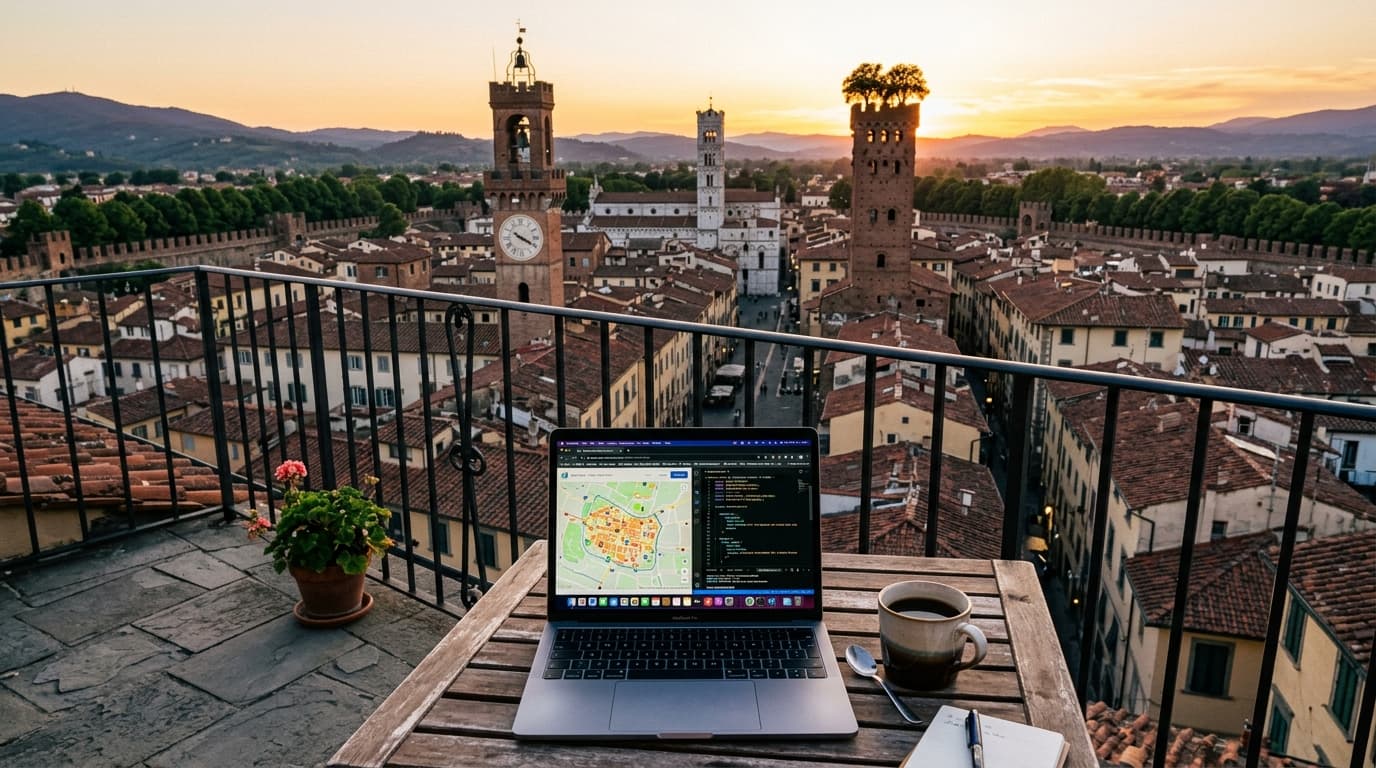
Lucca
🇮🇹 Italy
Lucca is a compact Tuscan city that feels unusually lived-in. You can cross the centro storico on foot, bike the ramparts in the cool of the evening, then end up under the striped façades near Piazza San Michele with a coffee and a little noise from the tables spilling onto the street. It’s calmer than Florence, less frantic than Milan and easier to settle into than most Italian cities of this size.
That slower pace is the point. The streets are flat, the center is car-free and the day-to-day rhythm is more café, market, paseo than rush hour. For nomads and expats who want charm without constant noise, Lucca works well, especially if you like being able to get to everything without thinking too hard.
What people like:
- Beautiful, human-scale streets inside the walls, with strong café culture and easy bikeability.
- A packed events calendar, from Summer Festival shows to Lucca Comics & Games and antique markets.
- Good train links to Pisa, Florence and the Versilia coast, so you’re not stuck in a pretty bubble.
It’s not all rosy. July and August can be sticky, crowded and loud, with the smell of sunscreen, exhaust and hot stone hanging in the air. Lucca Comics & Games turns the center into a squeeze and rents for short lets jump hard. If you’re here for remote work, the local job market is thin outside tourism, services and nearby industry, so this isn’t a place to arrive and casually find work.
Day to day, Lucca is friendlier on the wallet than Florence and often Pisa too. Espresso usually runs about €1.30 to €1.80 ($1.41 to $1.95), a simple lunch is around €10 to €15 ($10.84 to $16.26) and groceries for one careful shopper often land near €200 to €300 ($217 to $325) a month.
The best base for most nomads is inside the walls if you want atmosphere and can live with smaller flats or San Concordio if you want easier station access and a slightly more practical feel. Borgo Giannotti, San Marco and Arancio are solid too, just less postcard-perfect. Lucca’s appeal is simple, really, it gives you quiet, beauty and enough movement to stay interested without turning your life into a commute.
Lucca sits in a pretty forgiving middle ground for Italy. It’s cheaper than Florence, usually cheaper than Pisa for central long stays and still feels civilized, with train links, decent healthcare and enough cafés, bakeries and shops that you don’t need a car for day-to-day life.
The catch is seasonality. Rent jumps in summer and prices get ugly around Lucca Comics & Games, when hotel rates, short lets and even basic apartments can get snapped up fast. If you want calm streets and sane pricing, avoid those windows.
Typical monthly budget
- Single person: about €1,630 ($1,765) excluding rent.
- Family of four: about €3,540 ($3,835) excluding rent.
- Comfortable solo nomad: roughly €1,900 to €2,300 ($2,055 to $2,490) with rent, food and a few extras.
Rent by area
- Centro Storico: studio €650 to €850 ($705 to $920), 1-bed €750 to €1,000 ($810 to $1,080), 2-bed €950 to €1,300 ($1,025 to $1,405).
- San Concordio, Arancio, San Marco, Borgo Giannotti: studio €550 to €750 ($595 to $810), 1-bed €650 to €850 ($705 to $920), 2-bed €800 to €1,100 ($865 to $1,190).
Inside the walls is gorgeous, but you pay for the privilege. Expect smaller flats, more foot traffic, church bells, scooter noise and the occasional late-night clatter from bars or festivals. Outside the walls, you’ll usually get more space, easier parking and a lower price tag.
Daily costs
- Coffee: €1.30 to €1.80 ($1.40 to $1.95).
- Street food or a quick panino: €4 to €7 ($4.30 to $7.55).
- Simple lunch menu: €10 to €15 ($10.80 to $16.20).
- Trattoria dinner: €25 to €35 ($27 to $38) per person.
- Nice dinner in a prime square: €40 to €60 ($43 to $65) per person.
- Groceries: €200 to €300 ($216 to $325) a month for one person.
Transport stays manageable. You should verify current monthly pass pricing with Autolinee Toscane, while the train to Pisa takes about 22 to 27 minutes and costs roughly €4 ($4.30). Utility bills for a small flat can hit €80 to €150 ($86 to $162) and winter heating can sting when the tile floors turn cold.
Coworking is still fairly modest here. Day passes usually run €20 to €30 ($22 to $32), while monthly hot desks often sit around €150 to €250 ($162 to $270). Most nomads who stay longer just work from home, cafés or a desk with decent light and a reliable fiber line.
Lucca is small enough that your choice of neighborhood changes daily life more than it would in Florence or Pisa. Inside the walls, you get the postcard version, but also more noise, more tourists and more competition for rentals in peak months. Just outside, you usually get bigger flats, easier parking and a calmer morning that starts with church bells, scooter hum and espresso fumes drifting out of bars.
Nomads
Most nomads do best in the centro storico or San Concordio. The center keeps everything walkable, so you can move from a laptop session to a quick lunch in Piazza dell’Anfiteatro without touching a bus. San Concordio is the practical pick if you want the station, simpler arrivals and a slightly less precious apartment.
- Centro Storico: Best for café work and car-free living, but expect smaller flats, ZTL limits and more tourist noise in summer.
- San Concordio: Usually better value, with easier parking and a 10 to 15 minute walk into the old town.
- Borgo Giannotti: Good if you want local life, shops and a quick crossing into the walls.
Expats
Long-stay expats often end up in Arancio, San Filippo or Borgo Giannotti. These areas feel more ordinary, which is exactly the point if you’re tired of boutique shutters and gelato crowds. You’ll hear more scooters and less stroller traffic than in the center and rent usually buys you more square meters.
- Arancio: Quiet, residential and handy for hospitals and services.
- San Filippo: Strong for families or anyone who wants a real neighborhood feel without being stuck far out.
- Borgo Giannotti: A smart middle ground, with local shops and fast access to the walls.
Families
Families usually prefer the neighborhoods outside the historic core, especially San Marco, Sant’Anna and the eastern side near Arancio. The streets are less beautiful, sure, but they’re easier with groceries, strollers and school runs. Inside the walls can feel magical for a weekend, then annoying when you’re hauling bags over cobblestones in August heat.
- San Marco: Handy for daily errands and easier driving than the center.
- Sant’Anna: More residential, with practical housing and decent access to services.
- Arancio: A solid pick if you want quieter streets and roomier apartments.
Solo travelers
Solo travelers should stay inside the walls if the trip is short. You’ll be able to wander home late, grab a late-night slice and feel the city’s rhythm without worrying about transit. For longer stays, San Concordio is cheaper and less stage-set, while still keeping the center within easy reach.
Skip anything too close to Piazza dell’Anfiteatro if you’re a light sleeper. The evening chatter, clinking glasses and rolling suitcases can go on longer than you’d like, especially when the summer crowds hit.
Lucca’s internet is good enough for remote work, not flashy. In the centro storico, fiber is common in long-term rentals and speeds are usually solid for video calls, cloud work and normal office tasks, though old buildings can mean patchy Wi-Fi in thick-walled flats. If you’re staying inside the walls, ask for a recent speed test before you sign anything.
Mobile coverage is reliable across the city and most nomads use TIM, Vodafone, WindTre or Iliad for backup data. That matters in summer, when cafés get louder, the hum of scooters rises outside and your apartment router decides to sulk at the worst possible moment.
Coworking options are smaller than in Florence, but the scene is usable if you want a desk, better Wi-Fi and a little separation from apartment life. The big local name is Spazio Alvaro, which is more community-minded than corporate and works well for freelancers who don’t need a huge startup scene. A few people also use shared offices near San Concordio and around the station for easier access and parking.
Where people work
- Centro Storico: Best for café-hopping and walking everywhere, but not ideal for long Zoom-heavy days unless your flat has strong fiber.
- San Concordio: Convenient for the train station, usually easier for parking and often a better bet for quiet work-from-home setups.
- Borgo Giannotti: Good middle ground, with a local feel and a short walk or bike ride into the walls.
For a day or two, most nomads just work from cafés. Around Piazza San Michele and Via Fillungo, you’ll find plenty of espresso bars, though not all of them love laptops, especially at lunch. Order another coffee, keep your bag off the chair and don’t camp all afternoon if the place is packed.
Typical costs: day passes run about €20 to €30 ($22 to $33), hot desks about €150 to €250 ($162 to $270) a month and a basic fiber connection in an apartment usually lands around €25 to €45 ($27 to $49).
If you want the most practical setup, stay outside the walls in San Concordio or Borgo Giannotti and work in the historic center when you feel like it. That gives you quieter nights, easier grocery runs and fewer headaches with parking, while still keeping Lucca’s best coffee, church bells and evening passeggiata within walking distance.
Lucca feels calm more often than chaotic. Inside the walls, you’ll hear bike bells, church bells and the scrape of chairs on cobblestones more than sirens and that makes a difference if you’re working remotely or keeping a regular routine.
For day-to-day safety, the city has a very manageable feel. The centro storico is well lit, compact and busy enough that most streets don’t go dead at night, especially around Piazza San Michele, Via Fillungo and Piazza dell’Anfiteatro. Pickpocketing can still happen in crowded summer evenings and during Lucca Comics & Games, so don’t leave your phone loose on café tables and keep an eye on bags in packed train carriages.
Traffic is a bigger annoyance than crime. Scooters zip through narrow streets, delivery vans squeeze into awkward corners and parking outside the walls can be a headache, especially if you’re staying in San Concordio or Borgo Giannotti and driving in and out daily.
For most expats and nomads, the main healthcare advantage is access. Lucca has good basic services, nearby specialist care in the San Luca and Campo di Marte areas and easy rail links to Pisa for anything more serious. The system runs on appointments, paperwork and a fair bit of patience, so having your codice fiscale, health card details and insurance documents ready saves a lot of time.
Pharmacies are one of the city’s best safety nets. They’re everywhere, staff are usually practical and helpful and many carry the little over-the-counter fixes you’ll want before you bother with a doctor, from stomach remedies to basic cold medication.
What most residents rely on
- Pharmacies: First stop for minor issues, open-late options and quick advice.
- Hospital care: San Luca Hospital for emergencies and broader treatment.
- Private doctors: Handy if you want faster appointments and less waiting.
- Insurance: Bring proper coverage if you’re not fully enrolled in Italy’s public system.
The summer heat can be rough. July and August often feel sticky and stale by midday, with hot stone underfoot and little shade inside the walls, so dehydration and sun exposure are real issues if you’re walking or cycling all day.
Best areas for peace of mind: Centro Storico, San Concordio, Borgo Giannotti, Arancio and San Filippo all feel straightforward and lived-in. Centro Storico is the safest-feeling and easiest without a car, while San Concordio and the eastern neighborhoods are better if you want parking, space and quicker access to medical services.
Practical rule: keep copies of your passport, insurance and prescriptions on your phone and in email, then save the nearest farmacia and emergency number before you need them. Lucca isn't a place that usually tests your nerves, but bureaucracy can.
Lucca is easy to live in without a car. The centro storico is flat, compact and built for walking, with the old walls acting like a giant loop for a morning stroll or bike ride. Most days, you’ll hear bike bells, the low hum of scooters and the clack of cups from bar terraces before you’ve even had your first espresso.
Walking and cycling are the default here. Inside the walls, you can cross town in 15 to 20 minutes and the ramparts are one of the nicest places in Italy to get around with a bike or on foot. Rent a bike from a local shop or use the city bikes if you’re here short term, then stick to the pedestrian streets in the core, especially around Via Fillungo, Piazza dell’Anfiteatro and San Michele.
Lucca’s traffic rules are simple but annoying if you ignore them. The historic center has a limited traffic zone, so don’t assume you can just roll in and park near your apartment. Parking is much easier outside the walls, especially in San Concordio, San Marco and Borgo Giannotti, where you’ll also find easier access for deliveries and ride-hailing pickups.
Public transport
- Buses: Local buses run by Autolinee Toscane are useful for reaching neighborhoods outside the center, hospitals and nearby towns. A monthly pass usually lands around €35 to €45.
- Trains: Lucca’s station is handy for day trips. Pisa is a short train ride away. Florence is doable too, though the connection is less direct and often slower.
- Taxis and ride apps: They exist, but don’t expect big-city convenience. Book ahead when you can, especially after late dinners or during Lucca Comics & Games, when the whole town gets jammed.
Best areas for getting around depend on your routine. San Concordio is practical if you want the station and the center within walking distance. Borgo Giannotti works well if you like a neighborhood feel and still want to be over the river from the walls. Arancio and San Filippo are better if you’re staying longer and don’t mind biking or taking the bus for evenings out.
In summer, heat and crowds can make even short trips feel sluggish. The air gets sticky, streets smell faintly of exhaust and hot stone and a 10-minute walk can feel longer than it should. In winter, the center is calmer and much more pleasant to move through, though the tiled floors in older buildings can feel icy underfoot.
Lucca is easy to talk your way through, because most daily life happens in the center and people are used to visitors, students and expats. In shops and cafés, you’ll get by with basic Italian, hand gestures and a phone translator, but don’t expect much spontaneous English once you leave the main drag. The vibe is slower than Florence, so conversations can feel more patient, though not always more efficient. Bureaucratic desks are another story. There, a missing photocopy or the wrong form can turn into a half-day problem.
If you’re staying more than a few weeks, learn the practical phrases first: buongiorno, vorrei, posso, dov'è and grazie. They matter more than perfect grammar. Locals usually warm up fast if you make the effort, especially in smaller neighborhood bars where the espresso machine hisses and everyone seems to know each other's business. A decent phone plan and offline translation app will save you a lot of awkwardness at the pharmacy, train station and doctor’s office.
How far English gets you
- Centro storico: Usually enough for cafés, restaurants, hotels and tourist services, especially around Piazza dell'Anfiteatro and Via Fillungo.
- Train station and San Concordio: Better chance of English at ticket counters, coworking spaces and services used to commuters.
- Neighborhood errands: Less English, so expect to use Italian for rents, repairs, deliveries and anything with paperwork.
For remote workers, the bigger communication issue is speed, not language. Wi-Fi is generally fine in apartments and cafés and fiber is common enough, but some landlords still communicate the old-fashioned way, by calls, texts and in-person visits. Email can sit unanswered for days. If you need something fixed, a direct phone call usually works better than a polite message.
Lucca’s expat and nomad circles are big enough to be helpful without making the city feel closed off. You’ll hear English, French and German in coworking spaces, at aperitivo spots and during summer events, but day-to-day integration still depends on Italian. A few local references help too. Saying San Concordio, Borgo Giannotti or Piazza Napoleone correctly gets you much farther than smiling and pointing at a map.
For practical communication, these are the tools most people end up using:
- Google Translate: Best all-around backup for signs, menus and quick back-and-forth.
- WhatsApp: The default for landlords, service people and informal plans.
- Moovit or Trenitalia app: Useful for buses and train updates when schedules get messy.
- DeepL: Better than most apps for writing cleaner Italian emails.
One last thing, Lucca can feel quiet in winter and a bit crowded in summer, so communication shifts with the season. In July and August, everybody is a little more rushed and a little less patient. During Lucca Comics & Games, forget about calm. Streets are packed, voices bounce off the walls and even simple errands can take twice as long.
Lucca has real seasons and they shape the city fast. Summer can feel sticky and exhausted, with heat bouncing off the walls and the pavement holding it well into the evening. Winter is damp and quiet, with chilly tile floors, gray skies and the occasional rain that turns the bike lanes slick.
The sweet spot is usually spring and fall, especially April to June and September to mid-October. You get milder weather, longer café afternoons in Piazza San Michele and far less of the press-and-shove that hits the centro storico in peak summer. If you’re planning a stay, this is when Lucca feels most livable.
July and August are the toughest months. They’re hot, crowded and expensive, with more tour groups, louder streets and a noticeable jump in rents for short lets inside the walls. The city still works, but you’ll feel it, especially if you’re trying to get anything done in the afternoon without melting.
Lucca Comics & Games in late October is a different kind of chaos. The city fills up, accommodation prices jump and even simple errands take longer because the streets are packed shoulder to shoulder. If you don’t care about the festival, avoid those dates unless you’ve booked well ahead.
Best months at a glance
- April to June: Warm but manageable, good for walking and cycling the walls.
- September to mid-October: Probably the best balance of weather, light and crowd levels.
- July and August: Hot, busy and pricey, especially inside the walls.
- Late October: Book early if Lucca Comics & Games is on your calendar.
- November to February: Quiet and cheaper, but gray and damp.
If you’re working remotely, aim for shoulder season and book at least a month ahead. Long-stay rents outside the walls are easier to find in San Concordio, Borgo Giannotti and San Marco and you’ll usually get more space for the money than in the centro storico. Inside the walls, demand spikes faster when the weather is good.
Day to day, Lucca is easy to enjoy on foot or by bike, so weather matters more here than in a car-heavy city. Pack for humidity, sudden showers and cold evenings, not just sunshine. The right jacket and comfortable shoes will save you more grief than trying to time every outing perfectly.
Lucca is easy to live in, but it can get cramped fast. The centro storico is compact and flat, so most people walk or bike, then use the train for Pisa, Florence or the Versilia coast. Traffic noise is modest inside the walls, though summer brings more scooters, more tourists and more of that warm stone-and-coffee smell around Piazza dell’Anfiteatro.
Budget-wise, Lucca sits below Florence and often feels fair for western Europe, but don’t expect bargain-basement Italy. While costs have risen in recent years, a comfortable lifestyle for a remote worker generally requires a budget that accounts for the premium on housing within the walls and the local dining scene.
What to budget for
- Coffee: €1.30 to €1.80 at the bar.
- Simple lunch: €10 to €15 for a primo, water and maybe house wine.
- Mid-range dinner: €25 to €35 per person at a trattoria.
- Monthly internet: €25 to €45 for home fiber.
- Coworking: about €20 to €30 for a day pass, €150 to €250 monthly for a hot desk.
Rent jumps in July, August and during Lucca Comics & Games. Inside the walls, a one-bedroom often runs €750 to €1,000 ($810 to $1,080), while San Concordio or Borgo Giannotti usually shave a bit off and make parking less of a nightmare. If you want more space and less tourist clatter under your window, look just outside the centro.
Best areas for day-to-day life
- Centro Storico: best if you want cafés, charm and no car. Tiny flats, though and weekend noise can be brutal.
- San Concordio: practical, walkable and close to the station. Less pretty, more livable.
- Borgo Giannotti: local feel, quick walk to the walls and generally easier on the budget.
- Arancio and San Filippo: quieter, more residential and better if you need parking or hospital access.
Day to day, Lucca works best if you like a slower rhythm. Shops close for lunch, streets can feel almost sleepy in the afternoon, then the city wakes up again with aperitivo chatter, clinking glasses and scooters buzzing past the walls. If you need nonstop stimulation, you’ll get bored. If you want a calm base with trains, cafés and enough social life to stay sane, Lucca does the job.
Frequently asked questions
How much does it cost to live in Lucca as a digital nomad?
How much is rent in Lucca's historic center?
Which neighborhood is best for remote workers in Lucca?
Is Lucca good for working remotely?
How fast is the train from Lucca to Pisa?
What are the biggest downsides of living in Lucca?
Need visa and immigration info for Italy?
🇮🇹 View Italy Country GuideEasy Landing
Settle in, no stress