Los Ángeles
🇨🇱 Chile
The Lowdown on Los Ángeles
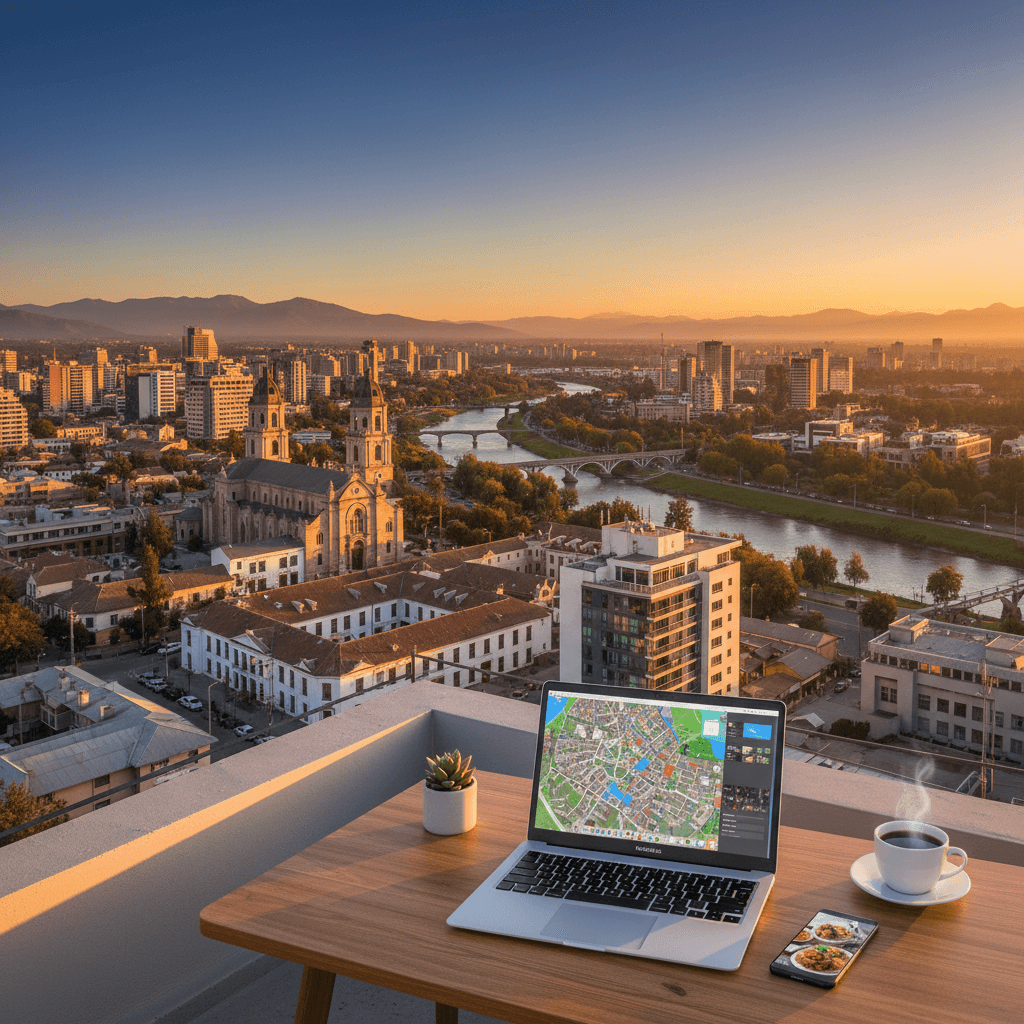
If you are looking for the high energy of Santiago or the bohemian hills of Valparaíso, Los Ángeles will surprise you. It is not a flashy nomad hub with neon signs and craft beer on every corner. Instead, it is a sturdy, authentic city in the heart of the Biobío Region that feels deeply Chilean. You will find a relaxed, family oriented atmosphere where the pace of life is dictated by the seasons and the nearby Andean foothills rather than a 24/7 hustle.
Most nomads who land here do so because they want to escape the "expat bubble" and actually use their Spanish. It is a place for deep work and quiet living. You will trade rooftop networking events for crisp morning walks in the Plaza de Armas and weekend trips to the Araucaria forests of Nahuelbuta National Park. It is the kind of city where the local baker remembers your order after three days, and the air feels noticeably cleaner than the capital.
The Vibe: Authentic and Unfiltered
The culture here is a blend of modern agricultural commerce and Mapuche indigenous traditions. It is unpretentious. You won't find many "digital nomad" cafes with ergonomic chairs, but you will find stable fiber optic internet and cozy panaderías where you can work for hours over a $3 completo and a coffee. Travelers often say the city feels safe and grounded, though solo travelers might find it a bit isolating if they don't seek out local connections via social media or the nearby university scene.
The emotional experience of Los Ángeles is one of transition. It is the gateway between the industrial north and the wild, rainy south. It is perfect for the "slow nomad" who is tired of the digital nomad circuit and wants a base that feels like a real home. You are close enough to Concepción for a dose of city life, but far enough away to enjoy a $900 to $1,200 monthly cost of living that makes your budget stretch much further than in Santiago.
What Your Budget Looks Like
While Chile is generally the most expensive country in South America, Los Ángeles remains a relative bargain. You can live well here for significantly less than the $1,500+ you would spend in the capital.
- Budget Lifestyle: $800 to $1,000 per month. This covers a basic apartment on the outskirts, plenty of empanadas and street food, and using the local micros for transport.
- Mid-Range Lifestyle: $1,200 to $1,500 per month. This is the sweet spot for most remote workers. You can afford a furnished one bedroom downtown, regular dinners at Chilean parrilladas, and frequent Uber rides.
- Comfortable Lifestyle: $1,800+ per month. At this level, you are looking at a modern apartment with mountain views, a car rental for weekend adventures, and dining at the few upscale spots in town or nearby Concepción.
Where to Plant Your Flag
Since there aren't specific "cool" neighborhoods defined by expats yet, your choice depends on how much you rely on walking versus driving.
- Centro (Downtown): This is the heart of the action. It is walkable and puts you near the main markets and bus terminals. It can be noisy during the day, but it is the best spot for solo travelers who want to be near the few coworking style cafes available.
- Villa Independencia: A more polished, residential area. Expats with families often prefer this zone because it is quieter and has more green space, though you will likely want a bike or an Uber account to get around.
- The Outskirts: If you are here for the nature, staying near Route 5 gives you quick access to the mountains. It is the cheapest option for rent, but you will feel the isolation without your own wheels.
Ultimately, Los Ángeles is for the nomad who wants to disappear for a few months, get a massive project done, and spend their weekends hiking through some of the most underrated national parks in South America. It is quiet, it is affordable, and it is as Chilean as it gets.
If you are coming from Santiago or Valparaíso, your wallet is going to breathe a sigh of relief in Los Ángeles. While it lacks the flashy nomad infrastructure of the capital, the trade off is a significantly lower burn rate. Most remote workers find they can live a high quality life here for about $1,200 to $1,500 per month, which covers a comfortable apartment, plenty of dining out, and weekend trips to the nearby mountains.
Monthly Budget Breakdowns
- The Lean Nomad ($800 to $1,000): This budget works if you stick to local markets, use the micro buses, and snag a studio apartment on the outskirts or through a long term Airbnb negotiation. You will be eating plenty of $3 empanadas and $5 street completos.
- The Mid Range Professional ($1,200 to $1,500): This is the sweet spot. It covers a furnished one bedroom in the city center, regular meals at Chilean parrilladas, and enough left over for a dedicated home office setup with high speed fiber.
- The High End Resident ($1,800+): At this level, you are looking at the best modern apartments in town, frequent car rentals for trips to Nahuelbuta National Park, and imported groceries from high end supermarkets.
Housing and Accommodation
Rent is your biggest saving here. Unlike Santiago, where a tiny studio in a trendy neighborhood can easily clear $700, Los Ángeles offers much more space for the money. You can often find a solid 1BR downtown for $450 to $600. If you are looking for something more residential and quiet, neighborhoods like Villa Independencia offer houses with green space, though you will likely want a car or a reliable Uber budget if you live out there.
Expats recommend using Airbnb for the first month to get your bearings, then checking local listings or Facebook groups like Chile Digital Nomads to find better long term rates. Be aware that most "nomad friendly" amenities like gyms or rooftop pools are less common here than in the big northern cities.
Food and Dining
Eating out is affordable if you stick to the local Chilean staples. A $8 lunch special (menú del día) usually includes a starter, main dish, and a drink. If you want something more upscale, a dinner for two at a nice steakhouse will run you about $50 including wine. Groceries are reasonable; you will spend about $250 to $300 a month if you shop at local ferias (open air markets) for your produce and stick to brands like Lider or Unimarc for the basics.
Connectivity and Logistics
- Home Internet: Expect to pay around $25 to $35 for a stable 50 to 100 Mbps connection via Movistar or WOM.
- Mobile Data: A local SIM from Entel or Claro with a 50GB plan costs roughly $15. Many nomads opt for a Holafly eSIM for immediate data upon arrival.
- Coworking: Since there are no dedicated coworking spaces in Los Ángeles, you will likely work from home or local cafes. Budget about $150 if you plan to commute to Concepción once or twice a week for a desk at a space like WeWork or La Maquinita.
- Transportation: A monthly bus pass is around $40, while local micro rides are a bargain at $0.50. Ubers are plentiful and cheap for short hops across town.
Overall, Los Ángeles is a "focus city." You won't find the social distractions or the high prices of the coast, making it a perfect spot to hunker down and get work done while keeping your overhead low.
For Solo Travelers and Nomads: El Centro (Downtown)
If you're landing in Los Ángeles to work remotely, you'll want to plant your boots in the Centro. While Chile's capital has flashy hubs like Lastarria, Los Ángeles keeps things functional and compact. Being downtown means you're within a five minute walk of the main plaza, local markets, and the most reliable Wi-Fi hotspots in the city.
Most nomads find the vibe here pleasantly slow compared to the chaos of Santiago. You won't find dedicated coworking brands like WeWork yet, but the local cafes and the public library serve as decent makeshift offices. The real draw is the proximity to the bus terminal, making it easy to hop on a $15 ride to Concepción or Santiago for a weekend of culture. Expect to pay between $450 and $600 for a furnished one bedroom apartment in this area.
- Rent: $450 to $600 for a central, furnished studio.
- Food: Street empanadas for $3; mid-range lunches for $12.
- Pros: High walkability, easy access to transport, best internet stability.
- Cons: Can get noisy during the day; limited nightlife options.
For Expats and Long-Term Residents: Villa Independencia
Expats looking for a more "neighborhood" feel usually gravitate toward Villa Independencia. This area trades the grit of the city center for green spaces and a quieter, residential atmosphere. It's the kind of place where you actually get to know your neighbors, which is a huge plus if you're trying to practice your Chilean Spanish over a backyard asado.
The streets here are wider and the air feels a bit fresher, being further from the main transit arteries. You'll likely need to rely on Uber or the local "micros" to get downtown for errands, but many long termers find the peace worth the $50 monthly transport spend. It's a solid choice if you're planning to stay for six months or more and want a house rather than a cramped apartment.
- Rent: $500 to $750 for a multi bedroom house.
- Vibe: Local, quiet, and community focused.
- Pros: Safe, residential feel, plenty of parks.
- Cons: Requires a car or frequent rideshares; fewer dining options.
For Families: Northern Residential Zones
Families moving to Los Ángeles generally look at the newer developments on the northern edge of the city. These areas are built with modern infrastructure and are close to the better private clinics and schools. It's a safe bet for those who want a "comfortable" lifestyle, with rents for modern houses often starting around $700.
Living here puts you closer to the road leads toward the Andean foothills and Nahuelbuta National Park. It's the best home base for weekend family trips to see the ancient Araucaria trees. Just keep in mind that the "suburban" layout means you're trading away that European style walkability found in the center.
- Rent: $700 to $900+ for modern, secure housing.
- Healthcare: Close to Hospital Regional and private pharmacies.
- Pros: High safety ratings, modern amenities, great for kids.
- Cons: Higher cost of living; car ownership is almost mandatory.
For Budget Travelers: Outskirts and Route 5 Access
If you're on a "budget" tier of $800 to $1,000 a month, look toward the outskirts near the Route 5 highway. These pockets offer the cheapest rents in the region, sometimes as low as $300 for a basic apartment. It's a popular choice for travelers who are just passing through or those using Los Ángeles as a cheap base for exploring the Biobío Region.
While the amenities are sparse, the connection to the highway is unbeatable. You can be out of the city and heading toward the mountains or the coast in minutes. Travelers often warn that these areas can feel a bit isolated at night, so it's best for those who value their privacy and a low price tag over a social scene.
- Rent: $300 to $450 for simple accommodations.
- Transport: Reliable local bus connections for $0.50 per ride.
- Pros: Very affordable, great for road trippers.
- Cons: Poor walkability; limited grocery and dining options nearby.
Connectivity and Speed
You won't have to worry about the internet in Los Ángeles. Chile consistently punches above its weight in global connectivity rankings, and this regional hub benefits from that infrastructure. Most apartments and local rentals come equipped with fiber optic connections through providers like Movistar or WOM, offering speeds between 50 and 100 Mbps for about $25 to $35 a month.
Mobile data is equally reliable. If you're staying for more than a week, skip the roaming charges and grab a local SIM. Entel is the gold standard for coverage if you plan on heading out to Nahuelbuta National Park, while Claro and WOM offer aggressive data packages. Expect to pay around $15 for a 50GB monthly plan. For those who want to hit the ground running, an eSIM from Holafly works perfectly here, though it's the more expensive route.
The Coworking Reality
Here is the honest truth: Los Ángeles doesn't have a dedicated, "nomad-style" coworking space yet. You won't find a WeWork or a community focused hub with networking events and free kombucha in the city center. If your work requires a professional office environment with meeting rooms and a community of remote workers, you'll need to head to Concepción, which is about an hour away, or Santiago.
In those larger cities, nomads typically gravitate toward La Maquinita or Impact Hub. If you are based in Los Ángeles and desperately need a desk for a day, the local libraries and cultural centers offer quiet corners and free Wi-Fi, though they lack the amenities of a private office. Most nomads here prefer the "home office" setup, renting a modern apartment in the Centro or Villa Independencia areas and relying on their own stable fiber connection.
Laptop-Friendly Cafes
Since dedicated desks are scarce, the local cafe scene is where most of the work happens. It is more of a traditional Chilean "panadería" vibe than a Silicon Valley coffee shop, but several spots are welcoming to the laptop crowd. You'll find the best luck in the streets surrounding the Plaza de Armas.
- Local Bakeries: Many of the larger "pastelerías" downtown have seating areas. While they don't always advertise Wi-Fi, they are usually happy to share the password if you're buying coffee and empanadas.
- Parque Forestal analogs: On sunny days, you'll see students and the occasional remote worker using mobile hotspots in the public plazas. It's a great way to soak up the local atmosphere while clearing your inbox.
Digital Nomad Community
Don't expect to find a "nomad village" here. The community is small and mostly consists of slow travelers or expats tied to the local agricultural or forestry industries. To find your tribe, most people join the Chile Digital Nomads & Remote Workers Facebook group. It's an active space where you can get advice on everything from the latest Digital Nomad Visa requirements to where to find the best late-night workspace in the Biobío Region.
Living here is a choice for those who value deep work and nature over social networking. It's a place to put your head down and get a project done during the week, then disappear into the Andes on the weekend. If you start feeling isolated, a $10 bus ticket will get you to the more social, urban energy of Concepción in no time.
Safety Standards and Local Reality
Los Ángeles is generally much quieter and safer than the chaotic urban sprawl of Santiago. While the capital struggles with rising reports of phone snatching and petty crime, this mid-sized hub in the Biobío Region retains a more traditional, rural Chilean safety profile. Most nomads feel comfortable walking through the Centro during the day, though you should keep your phone tucked away in crowded markets or near the main bus terminal.
The city doesn't have specific "no-go" zones in the way larger metropolises do, but standard street smarts apply after dark. Expats generally recommend sticking to well lit main avenues if you're out late. If you're staying in the more residential Villa Independencia, you'll find the atmosphere very family oriented and secure. The biggest risk here isn't violent crime; it's the occasional opportunistic theft of unattended bags in cafes or parked cars.
Emergency Contacts
Keep these three-digit numbers saved in your phone. They work nationwide and are the fastest way to get help:
- 131: Ambulance (Ambulancia)
- 133: Police (Carabineros)
- 132: Fire Department (Bomberos)
Healthcare Infrastructure
Chile has a dual healthcare system, and in Los Ángeles, you'll find a mix of public and private options. The Hospital Regional de Los Ángeles is the primary public facility. It's capable of handling emergencies, but like most public hospitals in Chile, wait times can be long for non-urgent issues. For routine visits or specialized care, nomads usually prefer private clinics which offer faster service and more modern amenities.
Most remote workers use international travel insurance like SafetyWing or World Nomads, which allows them to seek care at private facilities without paying massive out of pocket fees. If you need a specific specialist and can't find one locally, Concepción is only an hour away and serves as the region's medical powerhouse with several top tier private clinics.
Pharmacies and Everyday Wellness
You won't have any trouble finding medication. Major chains like Farmacias Ahumada, Cruz Verde, and Salcobrand are on almost every corner in the downtown area. Many are open 24 hours on a rotating basis, known locally as being "de turno."
- Prescriptions: Many medications that require a script in the US or Europe are available over the counter here, but always bring your original prescription for chronic meds.
- Water Safety: Tap water in Los Ángeles is technically safe to drink and meets high standards. However, the mineral content is quite high, which can upset sensitive stomachs. Most long term expats stick to bottled water or use a LifeStraw or Brita filter for daily consumption.
- Air Quality: During the winter months from June to August, air quality can dip because many locals use wood burning stoves for heat. If you have asthma or respiratory issues, keep an eye on local air quality sensors during the colder season.
Health Insurance Requirements
If you are applying for the Chile Digital Nomad Visa, you'll need to prove you have health insurance that covers you throughout your stay. Even if you're just visiting on a tourist permit, having a policy that includes medical evacuation is smart given the city's distance from the highly specialized trauma centers in Santiago. Expect to pay around $45 to $80 per month for a solid international plan that covers you in the Biobío Region.
Navigating the Streets
Los Angeles is a compact, grid-based city where your own two feet are often your best asset. The city center is highly walkable, allowing you to bounce between the central plaza, local banks, and grocery stores without needing a vehicle. Most nomads find that staying near the Centro neighborhood eliminates the need for a daily commute entirely.
When you need to cover more ground, look for the local "micros." These small, colorful buses are the lifeblood of the city's transit. A single ride costs roughly $0.50, making it an incredibly cheap way to get around. While there isn't a complex digital map for every route, the locals are famously helpful if you ask which bus is heading toward your destination. Just keep some small change or pesos on hand, as you won't be tapping a credit card here.
Ride-Hailing and Taxis
If you prefer the convenience of an app, Uber and Cabify both operate in Los Angeles. They're reliable and offer a safer, more transparent alternative to flagging down an unmarked car at night. A typical cross-town trip usually runs between $3 and $6. Travelers often say that having these apps installed is a lifesaver when arriving with heavy luggage or returning home after a late dinner at one of the local parrilladas.
For short, quick hops within the urban core, you'll also see "colectivos." These are shared taxis that run fixed routes and have signs on their roofs indicating their destination. They are slightly more expensive than a bus but faster and more comfortable, costing about $1 to $1.50 per seat.
Regional Connections
Since Los Angeles doesn't have its own commercial airport, you'll likely be arriving via Concepcion (CCP). The airport is about an hour away, and you can catch a shuttle or an Uber for $20 to $40. Alternatively, many nomads take the bus from Santiago, which is a comfortable 5 to 6 hour journey. Companies like Turbus and Pullman offer "semi-cama" or "salon cama" seats (which recline significantly) for $10 to $20.
The main bus terminal in Los Angeles is a major hub. From here, you can easily book day trips or weekend escapes to:
- Concepcion: The nearest large city for a dose of urban culture or a visit to a proper coworking space like WeWork.
- Antuco and Sierra Velluda: Essential for those who want to swap the laptop for hiking boots in the Andean foothills.
- Salto del Laja: A massive waterfall just north of the city that's a popular weekend spot for expats and locals alike.
Cycling and Micro-Mobility
While Los Angeles isn't as bike-friendly as the Providencia district in Santiago, it's flat enough to make cycling a viable option. You'll see locals on bikes, though dedicated lanes are sparse. If you're staying for a few months, buying a second-hand bike is a smart move for getting to the quieter residential areas like Villa Independencia without relying on the bus schedule.
Driving in the Region
If you plan on exploring the Nahuelbuta National Park or the surrounding vineyards, renting a car is the way to go. You can find rentals starting at $35 to $50 per day. The roads are generally in excellent condition, especially Route 5, the main north-south artery of Chile. Just be aware that gas prices are higher than in North America, and parking in the downtown core can be a bit of a headache during business hours.
The Chilean Spanish Challenge
In Los Ángeles, Spanish is the undisputed king. Unlike the tourist corridors of Santiago or the beach clubs of Viña del Mar, this is a city where life happens in the local tongue. While you might find English speakers in high end hotels or among the younger medical staff at Hospital Regional de Los Ángeles, your day to day interactions at the local feria or on a micro bus will require some Spanish.
Chilean Spanish is famous, or perhaps infamous, for its speed and unique slang. Locals often drop the "s" at the end of words and speak with a melodic, rapid fire cadence. In a regional hub like Los Ángeles, this accent is even more pronounced than in the capital. You'll hear the word "po" tacked onto the end of almost every sentence; it doesn't really mean anything, but it's the heartbeat of Chilean conversation.
Essential Language Survival Skills
If you're planning to stay for more than a week, download Google Translate for offline use and DeepL for more nuanced writing. Most nomads find that a basic grasp of "Spanglish" won't get them very far here. You'll need the essentials for daily life:
- ¿A cuánto está? (How much is it?) for the local markets.
- ¿Me cobra, por favor? (Can I pay, please?) when finishing a meal at a local parrillada.
- ¿Dónde tomo la micro para...? (Where do I catch the bus to...?) for getting around town.
Expats recommend learning a few "Chilenismos" to break the ice. Calling something "bacán" (cool) or referring to a situation as "fome" (boring) will immediately earn you a smile from the locals. It shows you're trying to integrate into their specific culture rather than just passing through.
Digital Communication and Connectivity
While the spoken language might be a hurdle, the digital infrastructure is world class. Chile consistently ranks as having some of the fastest internet in South America. In Los Ángeles, you can expect speeds between 50 and 100 Mbps on fixed lines from providers like Movistar or VTR. This makes video calls and heavy uploads seamless, even if you're working from a quiet Airbnb in Villa Independencia.
For mobile data, travelers often choose between two main paths:
- Local SIM Cards: Entel and WOM are the favorites. You can pick up a SIM for about $5 and load a monthly plan with 50GB of data for roughly $15. You'll usually need your passport to register the chip at an official store downtown.
- eSIMs: If you want to hit the ground running, Holafly offers unlimited data packages for Chile. It's more expensive than a local SIM but saves you the hassle of finding a store during your first hour in town.
Social Integration and Networking
Because the nomad scene in Los Ángeles is still in its infancy, you won't find the "digital nomad meetups" that are common in Medellín. Communication happens in the plazas and local cafes. If you're feeling isolated, the Chile Digital Nomads & Remote Workers Facebook group is the best place to find others in the region, though most members are based in Santiago or Concepción.
Expect locals to be polite but perhaps a bit curious about why you've chosen Los Ángeles over the bigger cities. A handshake is the standard greeting for men, while a single kiss on the right cheek is common between women or between men and women who have met before. Even if your Spanish is shaky, making the effort to greet people properly goes a long way in this community driven city.
Seasonal Breakdown
Los Ángeles sits in the Biobío Region, where the climate follows a classic temperate oceanic pattern. You'll experience four distinct seasons, but the shift from bone-dry summers to soggy winters is the most significant factor for your planning. If you're coming from the Northern Hemisphere, remember that the seasons are flipped: January is mid-summer, and July is the heart of winter.
Summer (December to February) is the undisputed peak season. Expect daily highs between 20°C and 30°C (68°F to 86°F). The air is dry, the skies are almost always clear, and the Andean foothills are calling. This is when most digital nomads and travelers flock to the area to take advantage of the long daylight hours for hiking in Nahuelbuta National Park. It's warm but rarely oppressive, though you'll want a place with good ventilation since air conditioning isn't a standard feature in every local apartment.
Fall (March to May) brings a crisp change to the air. Temperatures begin to dip, averaging around 12°C to 18°C (54°F to 64°F). The crowds thin out, and the landscape turns various shades of amber. It's a fantastic time for focused work; the city is quieter, and the afternoon light is perfect for cafe-hopping downtown. Be prepared for the first rains to start appearing toward the end of May.
Winter (June to August) is the rainy season. Temperatures hover between 5°C and 15°C (41°F to 59°F), but it can feel much colder due to the high humidity and dampness. This is the "worst" time to visit if you're looking for outdoor adventure, as heavy downpours are frequent. Many nomads find this period a bit isolating since the social scene moves entirely indoors and the gray skies can be persistent. If you do stay through winter, ensure your rental has a reliable heating source, like a wood-burning stove or a gas heater, as central heating is rare.
Spring (September to November) is a season of rebirth and unpredictable showers. Temperatures bounce back to the 15°C to 22°C (59°F to 72°F) range. September is particularly lively because of the Fiestas Patrias (national holidays), where you'll see the local culture at its peak with traditional food and dancing, though many businesses close for several days.
When to Book Your Stay
If you have the flexibility, aim for the shoulder seasons or the start of summer to get the most out of the region. Most travelers recommend specific windows based on what you want to achieve during your stay:
- Best for Outdoor Adventure: December to March. This is the prime window for trekking and visiting the nearby Laja Falls. The weather is stable, and the mountain trails are clear.
- Best for Budget and Focus: April to May or October to November. Rental prices on platforms like Airbnb often dip during these months, and the mild weather is ideal for those who want to balance work with light exploration without the summer heat.
- Months to Avoid: June and July. Unless you enjoy rainy, chilly days spent mostly indoors, these months can be a bit of a slog in Los Ángeles.
What to Pack
The key to Chilean weather is layering. Even in the height of summer, temperatures can drop significantly once the sun goes down. Travelers often suggest bringing a light windbreaker or a fleece for the evenings. If you're visiting between May and September, a high-quality waterproof jacket and sturdy boots are non-negotiable. The rain in the Biobío Region doesn't mess around, and you'll want to stay dry while navigating the downtown streets.
Connectivity and Workspace
You won't have to worry about the internet speed here. Chile consistently leads South America in fiber optic penetration, and Los Ángeles is no exception. Expect home speeds between 50 and 100 Mbps through providers like Movistar or WOM. If you're working from a rental, it's usually fast enough for seamless video calls.
The catch is the lack of dedicated coworking spaces. Unlike Santiago or nearby Concepción, Los Ángeles doesn't have a WeWork or a local equivalent like La Maquinita. Most nomads set up shop in local cafes or bakeries. If you need a professional environment for a day, you'll need to hop on a bus for an hour to Concepción. For local work, stick to the central libraries or cafes near the main plaza, though you should check for power outlets before you get too comfortable.
For mobile data, grab an Entel or WOM SIM card at a local shop for about $10 to $20. If you want to skip the hassle of physical stores, a Holafly eSIM is the standard choice for travelers who want to be online the moment they step off the bus.
Budgeting for Your Stay
Living here is significantly cheaper than in the capital. A solo nomad can live comfortably on $1,200 to $1,500 per month, while a tight budget could see you through on $800 if you're savvy with local markets.
- Housing: A furnished one bedroom downtown typically runs between $450 and $600 on Airbnb. Long term local leases are cheaper but harder to secure without a Chilean RUT (tax ID).
- Food: Local lunches (menú del día) cost around $8. If you're on the go, a street empanada or a "completo" hot dog will only set you back about $3 to $5.
- Transit: Local "micros" (buses) are roughly $0.50 per ride. Uber and Cabify are active and reliable for getting home after dark.
Safety and Health
Los Ángeles feels much more like a sleepy provincial town than a hectic city. It's generally safer than Santiago, though you should still keep an eye on your phone and wallet in the Centro area. Violent crime is rare; petty theft is the only real concern.
The healthcare system is robust. Hospital Regional de Los Ángeles handles emergencies, but most expats prefer private clinics for routine issues. Pharmacies like Farmacias Ahumada or Cruz Verde are on almost every major corner downtown. Keep these emergency numbers handy: 131 for an ambulance and 133 for the police.
Logistics and Language
While you can get by with English in tourist heavy spots like San Pedro de Atacama, Los Ángeles is very much a Spanish speaking environment. You'll want the basics for ordering food and navigating the bus station. Download Google Translate for offline use, as the local Chilean accent can be notoriously fast and full of slang.
The city is very walkable, especially if you stay in the Centro. For longer trips, the RED bus system connects you to the rest of the Biobío region. There is no major airport in town, so you'll likely fly into Concepción (CCP) and take a $20 to $40 Uber or a cheap bus to reach Los Ángeles. When paying for things, cards are accepted almost everywhere, but keep some cash for small street vendors and tips, which are usually 10 percent.
The Best Time to Visit
The sweet spot for weather is December through March. This is the Chilean summer, with dry days ranging from 20°C to 30°C. It's perfect for weekend trips to Nahuelbuta National Park. Avoid the winter months of June through August if you don't like the rain; the city gets quite damp and temperatures hover between 5°C and 15°C.
Need visa and immigration info for Chile?
🇨🇱 View Chile Country GuideHidden Gem
Worth the effort