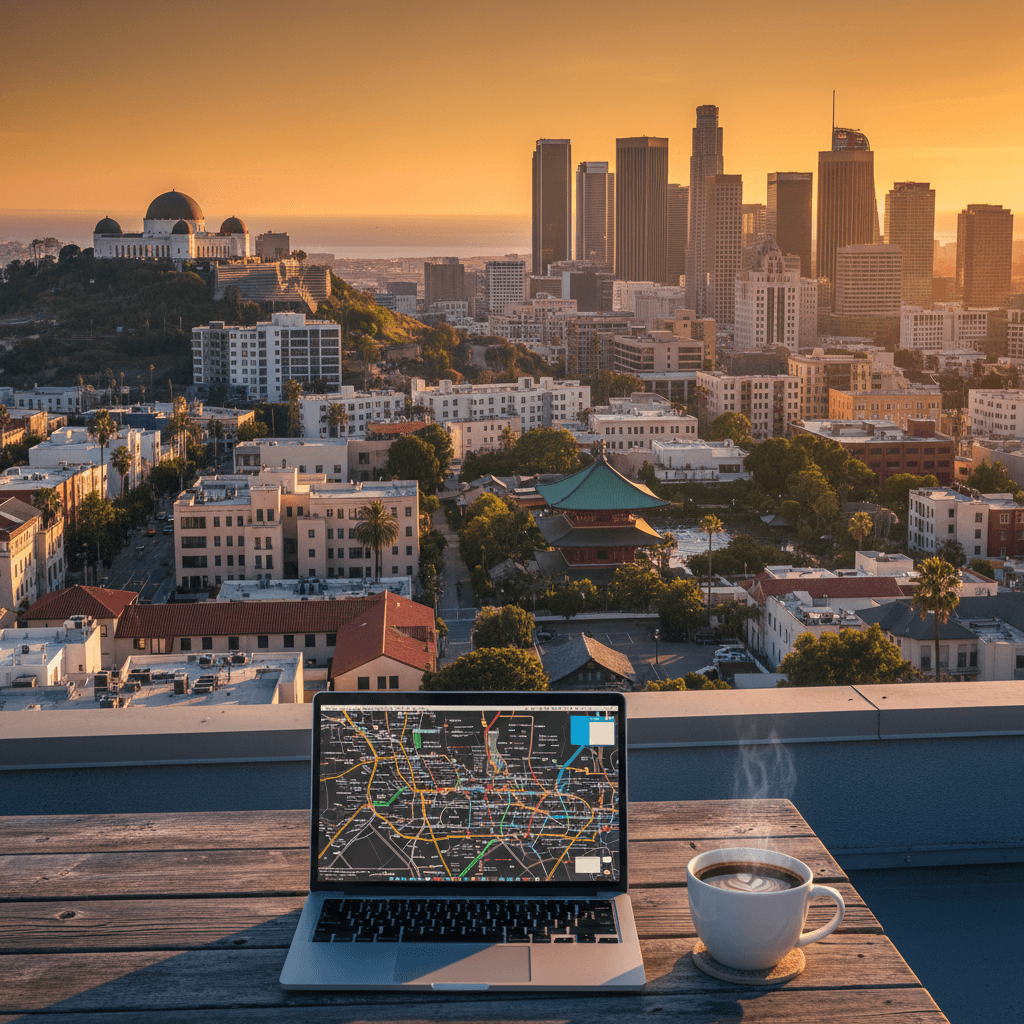
Los Angeles
🇺🇸 United States
Los Angeles is less of a singular city and more of a sprawling collection of distinct villages tied together by freeways and ambition. It is a place where you can take a morning conference call from a surfboard in Santa Monica and finish your day at a neon lit karaoke bar in Koreatown. The vibe is a constant tug of war between the high pressure hustle of the entertainment industry and a deeply ingrained laid back coastal attitude. It is this friction that makes LA magnetic for nomads who want the career networking of a global hub without the gray skies of London or New York.
The city operates on a different frequency than most nomad hotspots. While places like Chiang Mai or Lisbon feel walkable and contained, LA requires a strategy. Most people who live here find that their experience is dictated by their "bubble." If you choose your neighborhood wisely, you'll find a lifestyle defined by year round 72 degree weather, world class food trucks, and a creative energy that is genuinely infectious. However, the trade off is real: you will deal with legendary traffic and a cost of living that requires a healthy monthly budget.
The Financial Reality
Living the LA dream isn't cheap, and your monthly burn will depend heavily on your neighborhood choice. Most expats recommend budgeting at least $4,000 to $6,000 for a mid range lifestyle that includes a private studio and frequent dining out. If you are on a tighter budget of $2,000 to $3,000, you will likely be looking at shared housing in areas like Mid City or further east.
- Rent: Expect to pay $2,000 to $2,500 for a studio in Downtown LA. Moving toward the coast in Santa Monica, those prices jump to $3,500 or more.
- Food: You can grab legendary tacos for $5 to $10 at a street stand, while a sit down dinner in Silver Lake usually runs $20 to $40 per person.
- Transport: A TAP card for the Metro is $1.75 per ride, but most nomads rely on Uber or Lyft, which cost $15 to $30 for a typical cross town trip.
The Neighborhood Breakdown
Where you plant your laptop will define your social life. Nomads tend to cluster in areas where the coffee shop to person ratio is high and the "urban grit" is balanced by green space or beach access.
- Silver Lake: The go to for solo travelers and creatives. It has a hilly, hipster vibe with plenty of vegan spots and quirky cafes like those around Sunset Junction. Check out Zebulon for live music after you close your laptop.
- Downtown LA (DTLA): Best for those who want a more traditional "city" feel and better access to public transit. It offers more competitive rents and a huge variety of housing, though some blocks can feel intense.
- West Hollywood (WeHo): This is the social heart of the city. It is home to WeWork locations that are perfect for networking, surrounded by high end fitness studios and a legendary nightlife scene.
- Hollywood: While touristy, it houses Second Home, a coworking space famous for its natural light and garden like atmosphere. It is a favorite for nomads who need a productive, aesthetic environment.
Connectivity and Remote Work
You won't have to worry about the internet here. With average speeds over 90 Mbps, LA is built for high bandwidth work. The city is essentially one giant office; you will see people taking Zoom calls from the West Hollywood Library or working from a beachside cafe in Santa Monica. For a dedicated desk, coworking day passes usually range from $25 to $50. If you are staying for a month, memberships at major hubs like WeWork or Second Home run between $100 and $500 depending on your needs.
Moving Around the Sprawl
LA is notoriously car heavy, and while the Metro is expanding, it is not always the fastest way to get around. Many nomads find that living in a walkable pocket like Santa Monica or Silver Lake allows them to avoid the 405 freeway for days at a time. For short hops, electric scooters like Bird or Lime are everywhere and cost just a few dollars to zip around at 15 mph. If you are planning day trips to Joshua Tree or Santa Barbara, you will definitely want to rent a car for the weekend.
The real magic of Los Angeles happens in the moments between the hustle. It is the smell of jasmine on a night walk in Mid City, the first bite of a Koreatown BBQ feast, or the realization that you can spend your Saturday hiking Griffith Park and your Sunday at a gallery opening. It is a city that demands a lot from you, but it gives back a sense of possibility that few other places on earth can match.
The Price of the Dream
Living in Los Angeles isn't cheap, but it's a "choose your own adventure" city where your budget dictates your neighborhood. Most digital nomads find they need between $4,000 and $6,000 per month to live comfortably. This mid range bracket covers a private studio, plenty of Koreatown BBQ runs, and the occasional Uber when you don't feel like fighting for a parking spot.
If you're on a tighter budget of $2,000 to $3,000, you'll likely be looking at shared housing in areas like Mid City or parts of Downtown. On the flip side, if you're pulling in a high income and want the full California experience in Santa Monica or West Hollywood, expect your monthly burn to exceed $6,500 easily.
Monthly Rent by Neighborhood
Housing is your biggest hurdle. Prices for 2025 and 2026 show a wide gap depending on how close you are to the coast.
Downtown LA (DTLA)
- Average Rent: $2,000 to $2,500 for a studio.
- The Vibe: High rise living with better inventory. It's one of the few places where you can find a modern apartment without a year long waitlist.
Mid City
- Average Rent: $2,500 to $3,500 for a one bedroom.
- The Vibe: Centrally located near the 10 Freeway. It has the highest concentration of expats and nomads because it makes reaching both the beach and the Eastside manageable.
Silver Lake and Echo Park
- Average Rent: $3,000+ for a one bedroom.
- The Vibe: The hipster heart of the city. You're paying a premium for walkability to spots like Sunset Junction and vegan cafes.
Santa Monica
- Average Rent: $3,500+ for a one bedroom.
- The Vibe: Beachfront luxury. It's expensive and often requires a car to get anywhere else, but the air is cleaner and the networking is top tier.
Daily Expenses and Lifestyle Costs
Eating out is a sport in LA. You can grab world class tacos from a truck for $5 to $10, but a standard sit down dinner in Koreatown or Silver Lake usually lands between $20 and $40 per person before drinks. If you're hitting the trendy spots in WeHo, expect $50 or more.
Transportation costs depend on your patience. A single Metro ride is $1.75, and a monthly TAP card goes for $100. However, most nomads rely on rideshares like Uber or Lyft, which cost $15 to $30 for a typical 20 minute trip. If you're staying in a walkable pocket like Santa Monica, you can get away with using Bird or Lime scooters for a few dollars per ride.
Coworking and Connectivity
Internet is rarely an issue here. You'll get average speeds of 76 Mbps, and most cafes offer free WiFi as long as you keep the lattes coming. For a dedicated desk, WeWork in West Hollywood is a popular choice for networking, with monthly memberships ranging from $100 to $500. If you prefer a more aesthetic, plant filled environment, Second Home in Hollywood offers day passes for $25 to $50.
For your phone, grab an eSIM from T-Mobile or Verizon. Unlimited data plans generally cost between $30 and $60 per month, ensuring you stay connected while scouting for your next meeting spot.
The Fine Print
Don't forget the "invisible" costs. Tipping is mandatory in LA culture; plan to add 15% to 20% to every restaurant bill and bar tab. Healthcare is top notch at facilities like Cedars Sinai, but it's pricey, so make sure your nomad insurance is active before you land. While the city is generally safe, stick to well lit areas in DTLA at night and keep your wits about you in crowded tourist zones like Hollywood Boulevard.
Best for Nomads and Social Butterflies
If you want to be in the thick of the action, West Hollywood is the place to plant your flag. It is the city's social engine, packed with high energy nightlife and a high concentration of other remote workers. Most nomads head straight to WeWork West Hollywood to network, but the West Hollywood Library is a local secret for free high speed internet and killer views of the hills. Expect to pay a premium here, with 1BR apartments starting around $3,000.
For a different kind of creative energy, Silver Lake is the go to for those who prefer a hipster, indie vibe. It is one of the few truly walkable pockets in the city, centered around Sunset Junction. You will find plenty of vegan spots and quirky cafes like Intelligentsia where people actually work rather than just pose. After the laptop closes, catch a show at Zebulon. Rent is slightly more competitive than the west side but still hovers around $2,800 to $3,200 for decent spots.
Hollywood remains a solid choice if you need a professional base. Second Home Hollywood is one of the most unique coworking spaces in the world, featuring individual garden pods and tons of natural light. It is touristy, but the central location makes it easy to reach any other part of the city.
Best for Expats and Long Term Stays
Expats looking for a balance of price and accessibility usually land in Mid-City. It has the highest concentration of long term nomads because it sits right off the 10 Freeway, making the commute to either the beach or downtown manageable. It feels more residential and pleasant than the urban core, though some blocks still have that gritty LA edge. A 1BR here typically runs between $2,500 and $3,500.
If you want more of an urban, metropolitan lifestyle, Downtown LA (DTLA) offers the most variety in housing. You can find massive industrial lofts and modern studios for $2,000 to $2,500, which is a steal by California standards. The area is a hub for public transit, making it easier to live without a car. Just be aware that the neighborhood can change block by block, transitioning quickly from high end dining to intense urban grit.
Best for Solo Travelers and Beach Lovers
Santa Monica is the dream for solo travelers who want the classic California lifestyle. You have the sun, the surf, and a very active nomad network. It is one of the most walkable areas in the region, and the Metro Expo Line can take you all the way to DTLA for $1.75 if you need a change of scenery. The downside is the price tag; expect to pay $3,500 or more for a studio near the water.
Solo travelers also gravitate toward Koreatown for the social scene. It is a 24/7 neighborhood filled with speakeasies, karaoke bars, and some of the best food in the country. Tacos and street food will run you $5 to $10, while a full BBQ spread is around $30. It is dense, loud, and perfect if you don't want to feel alone in a big city.
Best for Families
Families often find their groove in the quieter parts of Santa Monica or the residential pockets of Mid-City. These areas offer better access to parks and a slower pace of life while remaining close to the attractions. While the city is car heavy, these neighborhoods have better safety ratings and more reliable infrastructure for those traveling with kids.
- Average Internet Speed: 76 Mbps
- Monthly TAP Card: $100
- Coworking Day Pass: $25 to $50
- Mid-range Meal: $20 to $40
Staying Connected in the City of Angels
Los Angeles is a powerhouse for remote work, boasting some of the fastest and most reliable internet in the United States. With average download speeds over 90 Mbps, you'll have no trouble handling video calls or uploading large files from almost anywhere in the city. Most apartments and cafes offer high speed fiber or cable connections, and public Wi-Fi is surprisingly robust in spots like the West Hollywood Library, where you can work with a view for free.
For your mobile data, skip the physical SIM card hassle and grab an eSIM from T-Mobile or Verizon. Expect to pay between $30 and $60 per month for a solid data plan. Most nomads find that having a reliable backup hotspot is helpful, though rarely needed given how ubiquitous free Wi-Fi has become in local coffee shops and public spaces.
Top Coworking Spots
LA's coworking scene is as diverse as its neighborhoods. Whether you want a high energy networking hub or a quiet, plant filled sanctuary, there is a desk waiting for you. Most spaces offer day passes ranging from $25 to $50, while monthly memberships typically land between $100 and $500.
- Second Home Hollywood: This is arguably the most beautiful workspace in the city. It's designed like a garden with individual yellow "pods" surrounded by lush plants. It's perfect if you need natural light to keep your productivity up.
- WeWork West Hollywood: Located in a trendy area, this branch is a favorite for those looking to network. It's a multi-use space that attracts a mix of tech founders, entertainment professionals, and digital nomads.
- Industrious: With multiple locations across Downtown LA and the Westside, these spaces lean more professional and quiet, ideal for those who have a heavy meeting schedule.
Cafe Culture and Remote Work
If you prefer the hum of a coffee shop over a formal office, Silver Lake and Santa Monica are your best bets. Silver Lake is packed with quirky, funky cafes where seeing a laptop on every table is the norm. Sunset Junction has a high concentration of spots with reliable Wi-Fi and great espresso.
In West Hollywood, the public library is a secret weapon for nomads. It offers free high speed internet and a quiet atmosphere that's hard to find in the city's more chaotic corners. Just keep in mind that many popular cafes in high traffic areas like Venice might have "no laptop" policies on weekends, so always check for signs before you get settled with your charger.
Comparison of Work Hubs
Choosing where to plant your laptop depends on your budget and how much you value being near the beach versus the urban center.
Downtown LA (DTLA)
- Vibe: Urban, grit meets luxury, very central.
- Coworking Price: $250 to $400 per month.
- Internet Quality: Excellent, high concentration of fiber.
Silver Lake
- Vibe: Hipster, creative, focused on independent cafes.
- Coworking Price: $200 to $350 per month.
- Internet Quality: Very good, though cafe Wi-Fi can get crowded.
Santa Monica
- Vibe: Beachy, upscale, tech-heavy (Silicon Beach).
- Coworking Price: $400 to $600 per month.
- Internet Quality: Top tier, catering to major tech firms.
Expats recommend joining local Facebook groups or nomad hubs to find "desk mates" or temporary office shares. These communities often post about pop up coworking events or discounts on monthly passes at newer spaces looking to build their membership base.
Staying Safe in the City of Angels
Los Angeles is generally a safe place for remote workers, provided you use the same street smarts you would in any major American metro. Most nomads stick to well trodden areas like Silver Lake, West Hollywood, and Santa Monica, where the vibe is active and pedestrian friendly. In these neighborhoods, you will mostly just be dealing with standard urban awareness rather than serious concerns.
The city does have a gritty side that can catch newcomers off guard. Downtown LA and parts of Mid City are a patchwork of blocks; one street might be full of trendy lofts and the next can feel quite isolated. Expats usually suggest avoiding certain pockets of Downtown at night, particularly near Skid Row, where the reality of the city's homelessness crisis is most visible. If a street looks deserted or poorly lit, just call an Uber or Lyft. It is the standard way to get home, and rides usually cost between $15 and $30 depending on the distance.
Your biggest safety risk in LA is actually on the road. Traffic is aggressive, and if you are driving, you need to stay alert. Pedestrians should never assume a car will stop just because they are in a crosswalk. If you use the metro or buses, keep your belongings close and stay aware of your surroundings, especially during off peak hours.
Healthcare and Medical Services
If you need medical attention, you are in one of the best places in the world for high quality care. Los Angeles is home to world class institutions like Cedars Sinai and UCLA Health. These facilities are top tier, but they come with the high price tag typical of the US healthcare system. You should never arrive without a solid international health insurance policy or a nomad specific plan like those offered through SafetyWing or World Nomads.
For minor issues, skip the hospital and head to an urgent care clinic. They are much faster and more affordable for things like a flu or a minor injury. You will find plenty of these across the city, often branded as Carbon Health or Exer Urgent Care. For prescriptions or basic supplies, CVS and Walgreens are on almost every major corner and often stay open 24/7.
Emergency Contacts and Resources
- Emergency Services: Dial 911 for police, fire, or medical emergencies.
- Non-Emergency Police: Dial 311 for city services or to report non urgent issues.
- Poison Control: Call 1-800-222-1222 if you have a chemical or medication emergency.
Practical Wellness Tips
The air quality in LA has improved over the decades, but "smog days" still happen, especially in the heat of late summer. If you have asthma, keep an eye on the air quality index (AQI) during August and September. On the flip side, the outdoor lifestyle is a huge health perk. Most nomads find their mental health improves just by hitting the trails at Griffith Park or taking a morning walk along the Santa Monica beach path. Just remember to wear sunscreen; the California sun is stronger than it feels, even when the breeze is cool.
The Car Culture Reality
Los Angeles is famously sprawling, and the rumors about traffic are 100 percent true. Most nomads find that while the city is trying to move away from its car-dependent reputation, your experience will vary wildly depending on which neighborhood you call home. If you're living in Silver Lake or Santa Monica, you can get away with walking to your morning coffee or evening yoga. Everywhere else, you'll likely be looking at a screen, checking Google Maps or Waze to see if a ten mile trip will take twenty minutes or an hour.
Public Transit: The Metro and TAP Cards
The Metro system is more extensive than people give it credit for, though it requires some patience. The rail lines and buses are the most budget-friendly way to get around at $1.75 per ride. You'll need a TAP card, which you can buy at stations or load onto your phone via their app. For a predictable commute, the system uses fare capping at $5 per day or $18 for 7 days.
- The Expo Line: This is a favorite for nomads staying Downtown who want to hit the beach in Santa Monica without dealing with the 10 Freeway.
- Buses: They go everywhere, but they're subject to the same traffic as cars. Use them for short hops within neighborhoods like Mid-City or West Hollywood.
- Metro Micro: This is a newer on-demand rideshare service run by the city in specific zones for just $1. It's a great hack for short trips in areas like Highland Park or Eagle Rock.
Ridesharing and Micro-mobility
When public transit doesn't cut it, Uber and Lyft are the default. Expect to pay between $15 and $30 for a standard cross-town trip. During peak rush hour or after a concert at the Hollywood Bowl, these prices can easily double. If you're just going a mile or two, look for Bird, Lime, or Lyft electric scooters parked on the sidewalk. They're capped at 15mph and are perfect for bypassing gridlock on Sunset Boulevard or Abbot Kinney.
Getting to and from LAX
Getting out of the airport is often the biggest logistical hurdle. A rideshare from LAX to West Hollywood or Silver Lake typically costs between $30 and $50, but you have to take a shuttle to the LAX-it lot first to meet your driver. If you're watching your budget, the FlyAway bus is a solid alternative that runs to Union Station or Van Nuys for about $10. From Union Station, you can catch the subway or a cheaper Uber to your final destination.
Walking and Biking
LA isn't a traditionally walkable city, but it's becoming more bike-friendly. The Marvin Braude Bike Trail is a 22-mile paved path right on the sand, perfect for cycling between Santa Monica and Redondo Beach. For daily errands, nomads recommend sticking to "pocket neighborhoods." If you live in Silver Lake, you can walk to Zebulon for a show or Erewhon for a smoothie, but you'll still want a car or a rideshare app for anything beyond your immediate three-block radius.
Practical Transport Tips
- Avoid the 405: This freeway is legendary for its congestion. Try to schedule your meetings or gym sessions to avoid being on any major freeway between 8:00 AM to 10:00 AM and 4:00 PM to 7:00 PM.
- Parking Apps: If you do rent a car, download SpotHero or ParkWhiz. Finding street parking in Koreatown or Downtown is a nightmare, and these apps can save you from a $60+ parking ticket.
- Safety: While the Metro is generally efficient, travelers suggest staying alert, especially late at night on the Red Line or in certain parts of Downtown. Stick to well-lit areas and busier carriages.
The Linguistic Landscape
English is the undisputed king of communication in Los Angeles, but calling it a monolingual city would be a massive oversight. Because of its deep roots and proximity to the border, Spanish is spoken by nearly half the population. You will hear it in the kitchens of Silver Lake, on the buses in Mid-City, and throughout the street food scene in Downtown. Most nomads find that while they can get by perfectly with just English, having a few Spanish phrases in your back pocket goes a long way when ordering $5 tacos or chatting with locals.
The city is a collection of cultural enclaves where English often takes a backseat. In Koreatown, signs are frequently in Hangul, and you might find that servers at smaller family-run spots prefer Korean. The same goes for neighborhoods like Little Ethiopia or Little Tokyo. It creates a global atmosphere that makes the city feel less like a standard American hub and more like a collection of international villages. Most expats recommend using Google Translate for its real-time camera feature, which is a lifesaver for deciphering menus or signs in these specific districts.
The Local Dialect and Social Cues
Angelenos have a reputation for being laid-back, but the communication style is fast-paced, especially in professional circles like West Hollywood or the tech-heavy Santa Monica. There is a specific "LA shorthand" you will pick up quickly. People talk in freeway numbers (the 10, the 405, the 101) rather than cardinal directions. If someone says "I am five minutes away," they usually mean fifteen, likely because they are stuck in the soul-crushing traffic the city is known for.
Networking is a language of its own here. At coworking spaces like WeWork West Hollywood or Second Home in Hollywood, conversations often lead with "What are you working on?" or "Who are you with?" It is a city built on the entertainment and tech industries, so the social vibe is often a mix of genuine friendliness and strategic networking. Do not be surprised if a casual coffee at Sunset Junction turns into a LinkedIn connection or a project pitch.
Practical Connectivity
Staying connected is rarely an issue. Most nomads rely on eSIMs from major carriers like T-Mobile or Verizon, which offer high-speed data plans ranging from $30 to $60 per month. These are easy to set up before you even land at LAX. If you are working from cafes in Silver Lake or the West Hollywood Library, you will find that free public WiFi is standard and usually fast enough for video calls, with average speeds over 90 Mbps across the city.
For day-to-day logistics, a few apps are non-negotiable for your phone:
- Google Maps: Necessary for navigating the complex bus and Metro rail system, or just checking if the 405 is a parking lot.
- Uber or Lyft: Essential for late-night returns when you do not want to navigate Downtown or Mid-City on foot.
- Wise or Revolut: Most expats use these for local transactions to avoid the high fees of traditional US banks.
Tipping and Etiquette
Communication also extends to the bill. Tipping is not optional in Los Angeles; it is a fundamental part of the service economy. Standard practice is to tip 18% to 20% at restaurants and bars. If you are grabbing a quick coffee or a taco from a truck, $1 or $2 is plenty, but at sit-down spots in trendy areas, anything less than 15% is often seen as a sign of poor service or a major social faux pas. It is a small price to pay for the high-energy, multicultural social life that makes LA a top-tier nomad destination.
The Sweet Spot: When to Land in LA
Los Angeles is one of those rare places where the weather rarely dictates your plans. Most nomads find that the city stays comfortably mild year round, with temperatures typically hovering between 21°C and 32°C (70°F to 90°F). You won't need a heavy parka here, but you will need layers; the Pacific breeze can make the evenings feel surprisingly crisp even after a scorching afternoon.
If you want the quintessential Southern California experience, aim for May through October. This window offers the most consistent sunshine and the best conditions for beach days in Santa Monica or hiking the trails around Griffith Observatory. Just keep in mind that "June Gloom" is a real phenomenon where a thick marine layer blankets the coast in fog until mid afternoon. If you're staying in Silver Lake or Downtown, you'll likely see the sun much earlier than those out west.
Avoiding the Rain
While LA is famous for its droughts, the winter months from December to February bring the occasional downpour. You can expect about 5 to 10 rainy days per month during this stretch. It's rarely a washout, but the city famously struggles with infrastructure when it gets wet, meaning traffic goes from bad to worse. Temperatures during these months usually sit between 15°C and 20°C, which is still pleasant for outdoor coworking at spots like Second Home Hollywood, provided you grab a seat under a heater.
Seasonal Nomad Vibes
The "best" time to visit often depends on what you want to do when you're off the clock. Travelers who prioritize networking and events usually prefer the spring and autumn. The summer months bring heavy tourist crowds to Hollywood and the beach piers, which can drive up short term rental prices on platforms like Airbnb or Urban95.
- Spring (March to May): Great for hiking and outdoor festivals without the intense July heat. The desert day trips to Joshua Tree are also at their peak during this time.
- Summer (June to August): Peak beach season. Expect higher humidity and crowded coworking spaces. This is the best time for rooftop bars and outdoor cinema screenings.
- Autumn (September to November): Many locals consider this the best time of year. The crowds thin out, but the "Santa Ana" winds keep the air warm and the skies incredibly clear.
- Winter (December to February): The quietest time for the nomad community. It's cooler and wetter, but you'll find better deals on monthly stays in Mid City or Downtown.
Practical Packing for the Climate
Expats recommend packing for a "dry heat" rather than tropical humidity. Even in the height of summer, the lack of moisture means you won't feel as sticky as you would in Miami or New York. However, the sun is intense. High quality sunscreen and a solid pair of sunglasses are non negotiable. If you're planning to work from cafes in Santa Monica, a light windbreaker or hoodie is a must for those ocean breezes that kick in after 4:00 PM.
Ultimately, there isn't a truly "bad" time to be here. Whether you're grabbing a $10 taco in Koreatown in the middle of January or surfing in August, the city remains functional and social. Most nomads find that a six month stint starting in May allows them to catch the best of the weather while building a solid professional network before the holiday slow down in December.
Making the Move
Los Angeles is less of a single city and more of a massive collection of suburbs held together by 76 Mbps internet and a shared frustration with the 405 freeway. If you're coming for the nomad life, your biggest hurdle isn't finding a good latte; it's the cost of entry. Budget about $4,000 to $6,000 a month for a mid range lifestyle that includes a decent studio and enough left over for Uber rides and Koreatown BBQ. If you're looking to keep it under $3,000, you'll likely be hunting for a room in a shared house in Mid City or Downtown.
Where to Plant Your Laptop
Choosing a base is the most important decision you'll make here because your neighborhood determines your quality of life. Most nomads gravitate toward Silver Lake for its walkable Sunset Junction area and abundance of vegan spots. If you need a more corporate, high energy networking environment, West Hollywood is the go to spot.
Downtown LA (DTLA)
- Monthly Rent: $2,000 to $2,500 for a studio.
- Vibe: Urban, gritty, and incredibly central with the best public transit access.
- Best for: Expats who want a big city feel without the Westside price tag.
Silver Lake
- Monthly Rent: $3,000+ for a 1BR.
- Vibe: Hipster central with quirky cafes and live music at spots like Zebulon.
- Best for: Creative nomads and solo travelers who prefer hills and nature over skyscrapers.
Santa Monica
- Monthly Rent: $3,500+ for a 1BR.
- Vibe: Beach culture meets tech hub. Very walkable but expensive.
- Best for: Surfers and those with a higher budget who want the ocean breeze.
Internet and Productive Spaces
Reliable WiFi is a given across the city. Many remote workers skip the home office and head to Second Home Hollywood for its plant filled, sun drenched workspaces. You can grab a day pass there if you aren't ready to commit to a monthly $100 to $500 membership at a WeWork. For a free option, the West Hollywood Library has solid WiFi and some of the best views of the city. For mobile data, pick up a T-Mobile or Verizon eSIM for $30 to $60 a month to stay connected while you're out.
The Transportation Puzzle
LA is famously car dependent, but you don't necessarily need to buy a vehicle. The Metro rail system is improving, especially the Expo Line connecting Santa Monica to Downtown for $1.75 a ride. For shorter hops within neighborhoods, Bird and Lime scooters are everywhere. If you're heading out for drinks, expect to pay $15 to $30 for an Uber or Lyft. Most people find that a mix of public transit and rideshares is cheaper than dealing with the headache of parking a rental.
Health and Safety
Stick to the well lit, populated areas and you'll generally be fine. Like any major US city, some parts of Downtown and Mid City can feel a bit rough at night, so stay aware of your surroundings. If you need medical care, Cedars-Sinai is world class. Make sure you have travel insurance that covers US healthcare costs, as out of pocket expenses are astronomical. For minor issues, CVS and Walgreens pharmacies are on almost every major corner.
Social Life and Tipping
Networking happens naturally at coworking spaces or through the massive expat groups on Facebook. If you want to meet locals, head to Koreatown for late night karaoke or join a beach volleyball game in Santa Monica. When you're out eating, remember that tipping is mandatory in the local culture. Aim for 18% to 20% at sit down restaurants. Most places accept Apple Pay or cards, but keep a few dollars on hand for taco trucks, where $10 will get you a world class meal.
Need visa and immigration info for United States?
🇺🇸 View United States Country GuideEasy Landing
Settle in, no stress
Monthly Budget Estimates
More cities in United States
Miami
🇺🇸 United States
Las Vegas
🇺🇸 United States
Phoenix
🇺🇸 United States