Lome
🇹🇬 Togo
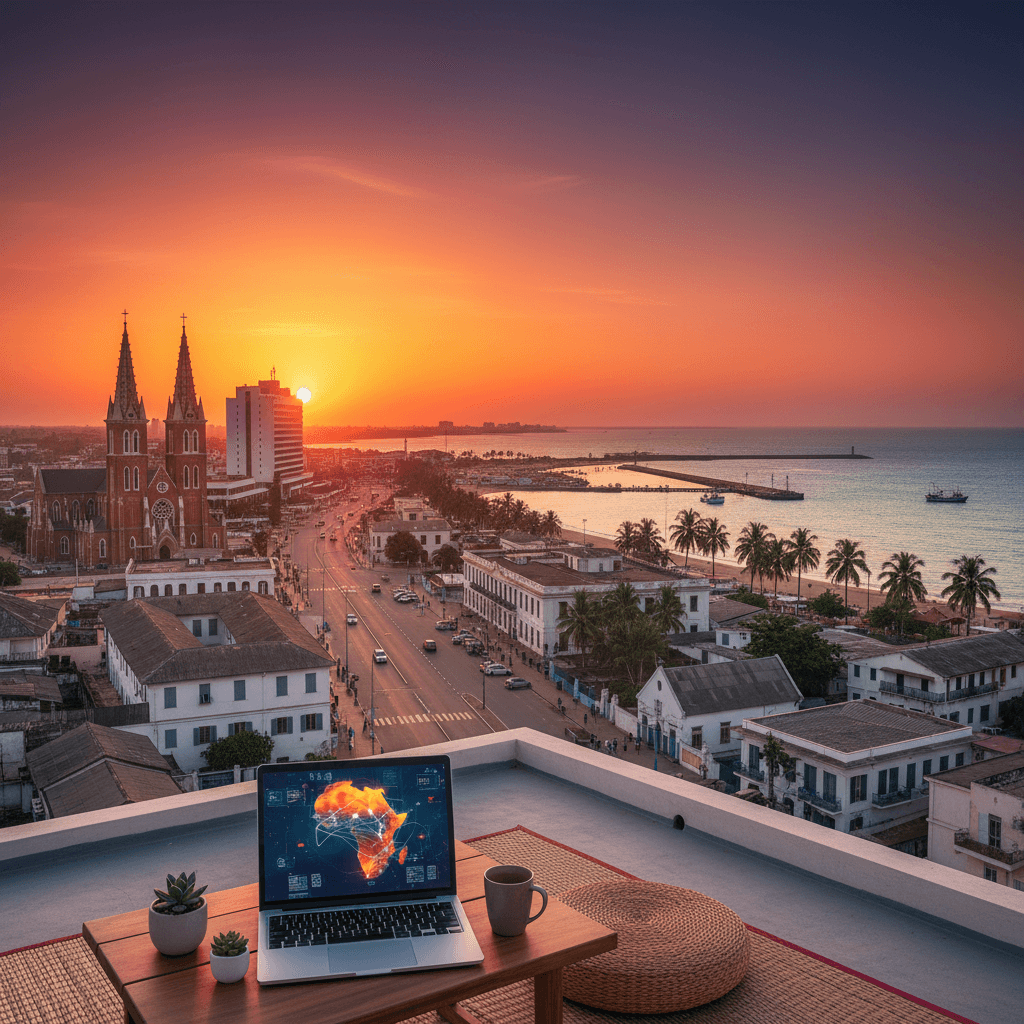
Lomé doesn't try to impress you. It just exists, loud and unhurried at the same time, a coastal capital that moves at its own pace and doesn't particularly care if you keep up. The smell of grilled brochettes drifts off every other corner, moto-taxis weave through traffic with practiced indifference and somewhere nearby, always, there's a market stall selling something you can't quite identify. That's the texture of daily life here and honestly, most nomads either love it immediately or spend two weeks warming up to it.
What makes Lomé genuinely different is the contrast. You've got a world-class fetish market (Akodésséwa, the largest voodoo market on earth) sitting a short taxi ride from embassy compounds with reliable WiFi and cold Lebanese food. French colonial architecture bleeds into Ewe fishing villages. The city is a major trade gateway between Ghana and Benin, so there's real commercial energy here, not just tourism infrastructure propped up for outsiders.
The vibe is laid-back, but not sleepy. Afternoons slow down, the humidity clings to everything and you'll find yourself defaulting to the same shaded café by noon. Evenings pick back up, the night markets get loud and Robinson Plage draws a crowd of locals and expats mixing in a way that feels genuinely unforced.
Costs are, turns out, one of the strongest arguments for being here. A solo nomad can live comfortably on $800 a month including rent, less if you're eating street food and skipping the expat bubble. That's not a compromise lifestyle either, it's fresh fish, a decent apartment and cold Castel beers most evenings.
The frustrations are real though. Power cuts without warning, WiFi in budget accommodation is frequently unreliable and petty theft in markets is common enough that you shouldn't carry anything you'd miss. The city rewards people who adapt rather than resist, expats who've been here a while will tell you that almost immediately.
Lomé isn't a polished nomad destination with co-living spaces on every block. It's a working city that happens to be affordable, coastal and weirdly fascinating and that combination is rarer than it sounds.
Lomé is, honestly, one of the more affordable bases you'll find on the continent. The average solo nomad spends around $800 a month all-in, rent included and you can push that down to $500 if you're sharing a place and eating where locals eat. Families of four are looking at roughly $1,900. Not bad for a coastal capital with actual beach access.
Rent does most of the heavy lifting in your budget. A studio or one-bedroom in Centre-Ville runs XOF 150,000 to 250,000 a month (around $245 to $410), which sounds great until you factor in the noise, the crowds and the petty theft risk that comes with being central. Tokoin and Kodjoviakopé cost more, XOF 300,000 to 600,000 ($490 to $985), but expats consistently say the quieter streets and more reliable power are worth the premium. Adidogomé sits in the middle at XOF 200,000 to 400,000 and is where most mid-range nomads end up landing.
Food is where Lomé genuinely shines. Street brochettes and grilled fish at the night markets cost XOF 2,000 to 4,000 ($3 to $6.50), the smell of charcoal smoke and palm oil hitting you before you even see the stalls. A proper sit-down meal at a maquis runs XOF 5,000 to 10,000, upscale Lebanese or Italian in Kodjoviakopé pushes past XOF 15,000. Most nomads eat local most of the time, it's cheaper and frankly better.
Transport is cheap, zémidjans (moto-taxis) run XOF 300 to 1,000 per ride, budget around XOF 80,000 ($130) monthly if you're relying on them daily. Coworking at Lome Business Center adds XOF 150,000 ($245) if you need a dedicated desk with AC and parking.
Here's how the tiers actually break down for a solo nomad:
- Budget ($655/month): Shared studio, street food daily, zémidjans everywhere
- Mid-range ($1,150/month): One-bedroom in Adidogomé, maquis meals, occasional Yango or Gozem rides
- Comfortable ($1,970/month): Villa in Tokoin, upscale dining, running a car
One thing that catches people off guard: power outages are common, a generator-ready apartment costs more upfront, that's a real line item, not a maybe.
For Digital Nomads: Centre-Ville and Kodjoviakopé
Centre-Ville is where most nomads land first and honestly, it makes sense. You're walking distance from cafes, markets and the main transport arteries, zémidjans buzzing past every thirty seconds, the smell of brochettes drifting off charcoal grills at noon. Rent runs around XOF 150,000 to 250,000 a month for a studio, which is cheap, the noise and petty theft risk are real though, so keep your bag close near Grand Marché.
Kodjoviakopé is the smarter long-term pick. It's quieter, the diplomatic crowd keeps things orderly and the hotels here actually deliver on WiFi promises, which, surprisingly, not everywhere in Lomé can claim. You'll pay more, closer to XOF 300,000 and up, but you're buying reliability, not just a postcode.
For Expats: Tokoin
Tokoin is, frankly, the expat default for good reason. Embassies cluster here, security is tighter and the streets feel a few decibels calmer than Centre-Ville. Rent hits XOF 300,000 to 600,000 for something decent. That's the tradeoff: you get a neighborhood that functions, but your monthly budget climbs fast.
The upside is that Tokoin's infrastructure is more stable than most of the city, backup generators are common in rental listings here, which matters when Lomé's grid decides to take the afternoon off. Expats recommend budgeting for a generator-ready apartment from day one, not after your third blackout.
For Families: Adidogomé and Nyékonakpoè
These two neighborhoods sit further from the center and require a car, there's no getting around that. But the tradeoff is space, calmer streets and rents that land between XOF 200,000 and 400,000 for a proper one-bedroom or small house. Schools and clinics are accessible, the pace feels more livable for anyone traveling with kids.
For Solo Travelers and Budget Seekers: Bè
Bè sits right on the coast, it's loud at night and the infrastructure is basic, but the price and the atmosphere are hard to beat. You're getting turns out the most authentic slice of Lomé here: fishermen hauling nets at dawn, the salt-and-exhaust mix of the beachfront road, street food that costs almost nothing. Solo travelers on a tight budget consistently rate it the most memorable place to stay, just don't expect fast WiFi or quiet evenings.
Connectivity in Lomé is, honestly, a mixed bag. You'll get 15-30 Mbps in decent hotels and cafes, which is enough for video calls and uploads, but power outages hit without warning and can knock out your router mid-deadline, so backup planning isn't optional here, it's just part of the routine.
The coworking scene is small but functional. Lome Business Center is the main option, with reliable WiFi, AC and parking for around XOF 150,000 a month ($245). La Bulle Space runs higher-speed connections and has a quieter, more focused atmosphere. Most nomads end up splitting time between one of these and a cafe, because working from your apartment gets old fast when the power flickers.
Cafe culture works fine for laptop sessions, though there's an unspoken rule: buy something every hour or so. Nobody's going to kick you out aggressively, but you'll feel the looks if you nurse one coffee for four hours. The cafes in Kodjoviakopé tend to have more reliable WiFi than Centre-Ville spots, which are noisier and more prone to the kind of slow connections that'll make you want to throw your laptop into the Atlantic.
For mobile data, grab a SIM at the airport. Both Togocel and Moov sell them for XOF 1,500-3,000 ($2.50-5) and data bundles run XOF 2,000-10,000 depending on how much you need. Togocel's 4G coverage is, turns out, slightly more consistent across the city, though Moov holds its own in most neighborhoods. Either way, a local SIM is your lifeline on bad WiFi days and there will be bad WiFi days.
- Lome Business Center: XOF 150,000/month ($245), WiFi, AC, parking included
- La Bulle Space: High-speed connection, quieter environment, good for focused work
- Togocel SIM: XOF 1,500-3,000 at the airport, data from XOF 2,000
- Moov SIM: Same price range, solid 4G in most areas
- Cafe sessions: Budget for drinks; Kodjoviakopé cafes beat Centre-Ville for speed
One non-negotiable: bring a power strip and make sure your housing has a generator or inverter backup. Outages are weirdly frequent, they don't follow any pattern you can predict and losing work to a blackout is the kind of frustration that follows you all day.
Lomé sits at a moderate risk level, not a dangerous city, but not a carefree one either. Petty theft is the main issue and it's concentrated in predictable spots: the Grand Marché, public beaches and anywhere crowds bunch up around vendors. Most nomads and expats find that basic awareness goes a long way, keep your phone in your front pocket, don't flash cameras near the fetish market and avoid Boulevard du Mono after dark.
Solo walking at night is, honestly, something most long-term residents just don't do in unfamiliar areas. Stick to lit streets in Kodjoviakopé or Tokoin, where the diplomatic crowd lives and you'll rarely feel unsafe. Centre-Ville is fine during the day, it gets sketchier once the market stalls close and the street lighting thins out.
For healthcare, the picture is mixed. CHU Sylvanus Olympio is the main public hospital, 1,200 beds and it's improving, but expats almost universally skip it for anything serious. Clinique Saint Joseph is the go-to for the expat and diplomatic community, better equipment, English-speaking staff on rotation and shorter waits. Pharmacies are genuinely widespread, you'll find one within a few blocks in most neighborhoods and they're turns out surprisingly well-stocked for basics.
Before you arrive, sort these out:
- Yellow fever vaccine: Mandatory for entry, no exceptions, carry the physical card.
- Malaria prevention: Lomé is endemic year-round; most expats use prophylaxis or have a treatment plan ready.
- Travel insurance: Get a policy that covers medical evacuation, because if something serious happens, you may need to get to Accra or Abidjan fast.
- Emergency contacts: Police is 101; for medical emergencies, call your clinic directly rather than waiting for a public ambulance, response times are unreliable.
The honest reality is that Lomé isn't the kind of place where you'll feel paranoid walking around, it's the kind of place where you learn the rhythms quickly and adjust. Most people who've spent time here say the safety concerns are manageable, frankly more manageable than in several other West African capitals. Just don't be careless, the city rewards a little street sense.
Lomé's transport scene is, honestly, pretty simple once you stop overthinking it. Two options cover 90% of your trips: zémidjans and taxis.
Zémidjans are the moto-taxis you'll see swarming every intersection, weaving through traffic with complete disregard for lane markings, horns cutting through the thick exhaust-and-fry-oil air. They're cheap, XOF 300 to 1,000 per ride and fast in a way that'll either thrill or terrify you depending on your tolerance for risk. Most nomads use them daily for short hops, then quietly stop after their first close call. Taxis run XOF 1,000 to 3,000 and are, turns out, the smarter call at night or when you're carrying a laptop bag you'd rather not lose to a pothole-induced wobble.
For anything app-based, Yango, Gozem and BKG Speed all operate here. Yango is the most widely used, the pricing is fixed upfront, it's a genuine relief compared to haggling with a taxi driver who's decided your accent means you can afford triple the local rate. Download all three before you need them, coverage gaps mean one app often works when another doesn't.
Centre-Ville is walkable. That's it, that's the whole list of walkable areas. Everywhere else, you'll need wheels and there's no real bike or scooter rental infrastructure to speak of, so don't count on it.
Getting in from the airport is almost comically easy. Lomé Tokoin Airport (LFW) sits right inside the city, the taxi ride to most neighborhoods is six minutes and costs XOF 600 to 1,800. Less than three dollars. Weirdly, that's one of the smoothest airport arrivals in West Africa.
Fuel runs XOF 850 per liter if you're renting a car or hiring a driver long-term, which expats in Tokoin and Adidogomé often do for the commute-heavy lifestyle those neighborhoods require. It adds up, a car-dependent month realistically costs XOF 80,000 or more just in transport, budget accordingly.
- Zémidjans: XOF 300 to 1,000 per ride, fastest option, highest risk
- Taxis: XOF 1,000 to 3,000, better for nights and gear-heavy days
- Ride apps: Yango, Gozem, BKG Speed; download all three
- Airport to city: XOF 600 to 1,800 by taxi, roughly six minutes
- Monthly transport budget: roughly XOF 80,000 ($130)
French is the official language and you'll hear it everywhere that matters: government offices, banks, business meetings, upscale restaurants in Kodjoviakopé. It's not optional. If your French is shaky, you'll feel it immediately, not just socially but practically, because English gets you almost nowhere outside the diplomatic quarter.
Day-to-day on the streets, though, it's Ewe and Mina doing the heavy lifting. The market vendors at Akodésséwa, the zémidjan drivers, the woman selling brochettes outside your guesthouse at 9pm, they're all operating in Ewe first. Your French might get a polite response, it won't always get you the local price.
A few Ewe phrases go a surprisingly long way and honestly, people light up when a foreigner makes the effort. The basics:
- Hello: Ɛfoa? (EH-fwa)
- Thank you: Akpe (AH-kpeh)
- Yes: E
- No: Ao
That's genuinely enough to break the ice. Don't overthink the pronunciation, just try it, the attempt matters more than the accuracy.
Google Translate handles French-Ewe reasonably well, turns out it's more reliable here than in a lot of West African cities where local languages are underrepresented in the training data. Download the French and Ewe packs offline before you arrive because your data connection will, frankly, pick the worst moments to disappear.
Most expats settle into a rhythm where they handle formal situations in French and pick up just enough Ewe to navigate markets and moto-taxi negotiations without getting obviously tourist-taxed. It takes a few weeks. The tonal qualities of Ewe are weirdly hard to replicate at first, but you don't need fluency, you need enough to signal respect.
One thing worth knowing: written communication in Lomé's business world defaults to formal French, sometimes stiffly so. Emails to landlords, coworking spaces like Lome Business Center or local agencies should be properly written, not casual. Sloppy French reads as disrespectful here, not just foreign.
The language barrier is real but manageable. It's not Bangkok, where broken English carries you everywhere. Come with functional French and a handful of Ewe words, you'll be fine.
Lomé sits on the Gulf of Guinea, so the climate is tropical and, honestly, pretty consistent year-round. Temperatures hover between 27°C and 30°C (80°F to 86°F) no matter the month, the humidity clings to you the moment you step outside and the air smells like salt, exhaust and whatever's grilling on the nearest corner. What actually changes is the rain.
The dry season runs roughly November through February and that's when most nomads and travelers want to be here. January and February are the sweet spot: clear skies, lower humidity and the kind of bright coastal light that makes the beach at Bè look like a postcard. December works too, though it fills up with regional visitors and prices nudge upward.
Then the rains come. There are actually two wet seasons, which catches people off guard, the first peaks around June, the second around October. June is genuinely difficult, with frequent heavy downpours that turn unpaved streets into rivers and knock out power more than usual. Rain hammers tin roofs loud enough to make a video call impossible, internet slows to a crawl and zémidjans drivers hike their prices because, well, they can.
March through May is a shoulder period worth considering. It's warmer and drier than the rainy months, prices are lower than peak season and the city's markets and night spots are less crowded. Expats who've been here a while often prefer this window precisely because it's quieter.
A few things to keep in mind when planning:
- Best months: January and February for dry weather and reliable skies
- Shoulder season: March to May, warmer but manageable, fewer tourists
- Avoid if possible: June and October, peak rainfall, infrastructure strain
- Year-round reality: Humidity is always present, pack light, breathable clothing regardless of season
- Harmattan winds: December and January bring a dry, gritty wind from the Sahara that coats everything in fine dust and can irritate eyes and sinuses
No season is truly "bad" in an absolute sense, Lomé doesn't get cold, it doesn't flood catastrophically. But if your work depends on stable power and fast internet, the rainy months will test your patience in ways a sunny February simply won't.
Get a SIM card the moment you land at Lomé Tokoin Airport (LFW). Both Togocel and Moov have desks in the arrivals hall; bring your passport, hand over XOF 1,500 to 3,000, then top up with a data bundle for another XOF 2,000 to 10,000 depending on how much you need. eSIM support is growing, turns out, but physical SIMs are still more reliable here.
Banking is, honestly, more straightforward than you'd expect. Local ATMs work fine for withdrawals, mobile money is widely accepted for everyday payments and Western Union handles international transfers when you need them. Don't bother hunting for a full-service international bank branch, you won't find one easily.
Power cuts happen. Frequently. Expats recommend prioritizing apartments that are generator-ready or already have backup power wired in, because sitting in the dark at 2pm during a work call gets old fast. Pack a surge-protected power strip too, the voltage spikes when the grid flickers back on.
For finding an apartment, Facebook groups and local agencies beat any international rental platform. Expect to pay two to three months' deposit upfront, often with quarterly rent in advance, that's the standard expectation not a negotiation tactic, arguing about it will get you nowhere. Adidogomé and Nyékonakpoè offer the best mid-range value if you don't mind needing transport.
A few cultural things worth knowing before you arrive:
- Greetings: Always shake hands when meeting someone; skipping it reads as rude, not casual.
- Dress: Modest clothing matters outside beach zones, especially in markets and government areas.
- Tipping: Around 10% is appreciated in restaurants; it's not automatic here.
- Voodoo sites: No photos at Akodésséwa or any fetish market without explicit permission. Seriously.
- Yellow fever: Vaccination is mandatory for entry; carry your certificate.
Day trips are weirdly affordable for what you get. Kpalimé's waterfalls run around $187 on a guided tour, Togoville on Lake Togo is closer and cheaper and the colonial forts at Aného cost roughly $100 to $170 depending on how you arrange transport.
French gets you everywhere in business and expat circles. Learn a few words of Ewe though, "Akpe" for thank you lands well, people genuinely appreciate it.
Need visa and immigration info for Togo?
🇹🇬 View Togo Country GuideOff the Radar
Pioneer territory