Livingstone
🇿🇲 Zambia
The Adventure Capital on the River Bank
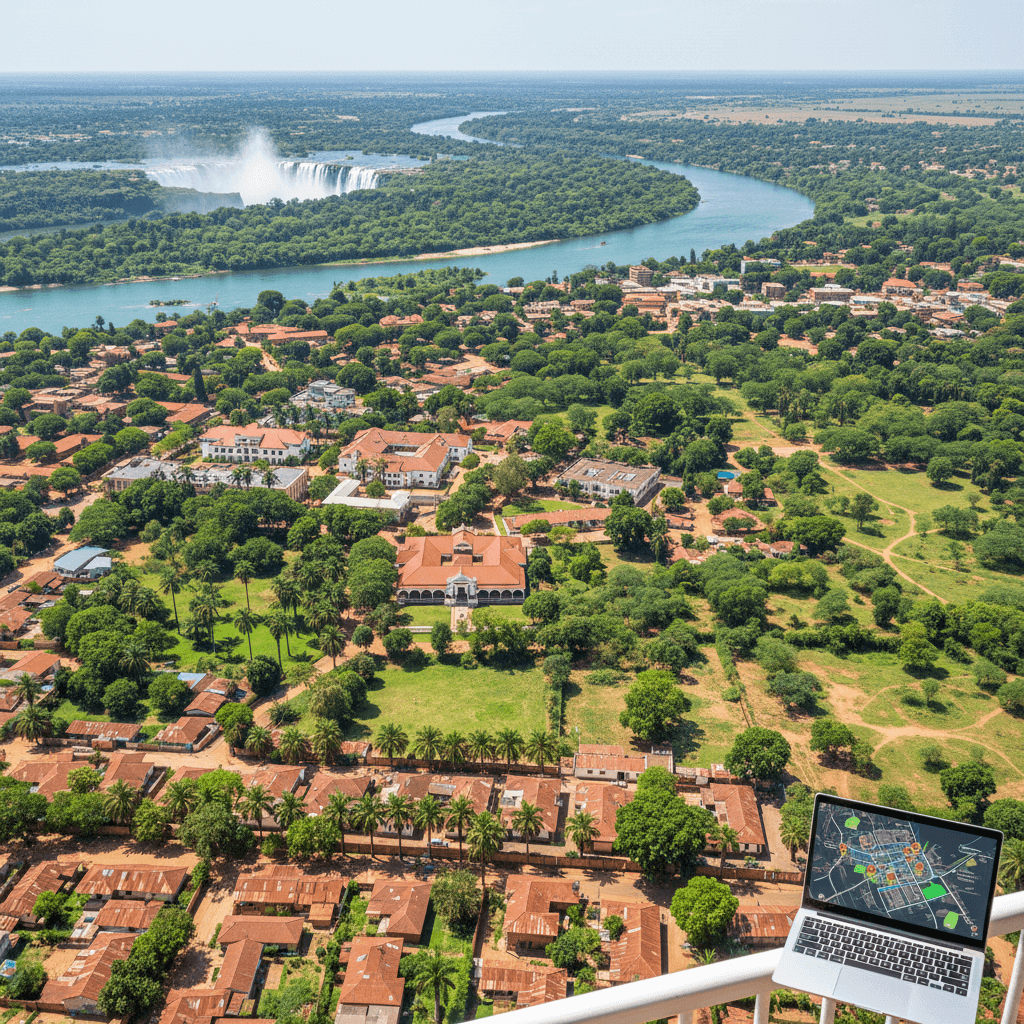
Livingstone isn't your typical digital nomad hub. It's a town where the roar of the Zambezi River and the constant mist of Victoria Falls dictate the rhythm of life. Locally known as Mosi-oa-Tunya, or The Smoke That Thunders, this place feels like a frontier outpost that's been polished for visitors. You'll find a quirky mix of colonial architecture, dusty local markets, and upscale safari lodges all rubbing shoulders in a compact, walkable center.
The vibe here is deeply relaxed, bordering on slow. Outside of the adrenaline-fueled tourist zones, the pace of life follows the Zambian sun. It's common to see elephants wandering near the outskirts or hippos bobbing in the river during a sunset cruise. For nomads, the emotional draw is the proximity to raw nature. There is something grounding about finishing a work session and heading straight to a Grade 5 rapid or a bungee platform overlooking a 111 meter drop.
However, Livingstone demands a specific kind of traveler. It’s perfect for the "adventure nomad" who prioritizes experiences over high-speed infrastructure. If you need 100 Mbps to survive the day, this town will break your heart. If you can handle a bit of digital friction in exchange for world-class safaris and a beer by the river, you'll fit right in.
The Cost of Living Reality
Livingstone is a bit of an anomaly in Zambia. While the country is generally affordable, this town is a major tourism magnet, which keeps prices higher than you might expect for the region. Most nomads find themselves spending between $1,200 to $2,000 per month for comfortable nomad lifestyle that includes a mix of local living and the inevitable "must-do" tours.
- Budget Tier ($1,500/month): This involves staying in shared guesthouses or hostels further from the river and eating primarily at local markets. You'll be relying on "nshima" (the local maize staple) and street food to keep costs down.
- Mid-range Tier ($2,000/month): This covers a basic private apartment or a long-stay rate at a mid-tier lodge. You'll mix home cooking with dinners at local cafes where a meal runs about $10 to $15.
- Comfortable Tier ($2,500+/month): This is for those who want private, air-conditioned lodging and frequent access to the upscale restaurants near the falls, where a nice dinner can easily top $20.
The Digital Nomad Trade-off
Let's talk about the elephant in the room: the internet. Speeds here are notoriously fickle, ranging from a sluggish 4 Mbps to a decent 33 Mbps on a good day. It is not the place for heavy video editing or back-to-back Zoom calls without a backup plan. Most remote workers rely on local SIM cards from providers like MTN or Airtel, using their phones as hotspots when the lodge Wi-Fi inevitably dips.
There are no formal coworking spaces in Livingstone yet. You'll be working from your accommodation or finding a corner in a riverfront cafe. The trade-off is the social scene. While there aren't many formal nomad meetups, the community is built through shared experiences. You'll meet people while white-water rafting, during a game drive in Mosi-oa-Tunya National Park, or over a Mosi lager at a backpacker bar. It’s a social life rooted in physical activity rather than networking events.
When to Go and What to Expect
The weather is divided into three distinct seasons, and your experience will change drastically depending on when you land. The dry season from May to October is widely considered the best time to visit. The air is cooler, the mosquitoes are fewer, and the white-water rafting is at its peak. The rainy season from November to April brings lush greenery but can also lead to flooded roads and some activity closures.
English is the primary language for business and tourism, so you won't have any trouble getting around or negotiating at the markets. While the town is generally safe, it's a place where you need to respect the environment. This isn't just about petty crime; it's about remembering that the Zambezi is a wild river and the wildlife is very real. Living here means embracing a bit of the unpredictable and trading your high-speed fiber for a front-row seat to one of the seven natural wonders of the world.
The Cost of Adventure
Livingstone is a unique beast when it comes to your wallet. While much of Zambia is incredibly affordable, this town sits right at the edge of one of the world's most famous natural wonders. That means you are paying a "tourism tax" on almost everything. Most nomads find they need between $1,200 to $2,000 per month to live comfortably here, which is a bit of a jump compared to the capital, Lusaka.
The local economy revolves around the Zambezi River and the Victoria Falls. If you stick to the local markets and eat like a resident, you can keep costs down, but the temptation of sunset cruises and white-water rafting will quickly eat into your budget. It is a place where you pay for the proximity to the wild.
Monthly Budget Tiers
- The Budget Nomad ($1,500/month): You are staying in shared guesthouses or hostels, eating primarily street food like nshima with relish, and being very selective about which big-ticket activities you book.
- The Mid-Range Resident ($2,000/month): This covers a basic private apartment or a long-term rate at a lodge, a mix of cooking at home and dining at local cafes, and a few excursions a month.
- The Comfortable Expat ($2,500+ /month): You are looking at private, high-end lodging near the river, regular dinners at riverside lodges, and the freedom to book safari drives or bungee jumps whenever the mood strikes.
Housing and Neighborhoods
Finding a place to stay in Livingstone is more about finding the right lodge or guesthouse rather than a traditional apartment hunt. There are no major residential high-rises here; instead, you will find low-slung colonial architecture and sprawling garden properties.
Central Livingstone
- Rent: $800 to $1,200 for a decent private setup.
- Vibe: Noisy but convenient. You are close to the Livingstone Museum and the main markets.
- Pros: You can walk to most necessities and the few spots with decent Wi-Fi.
Zambezi Riverfront / Outskirts
- Rent: $1,500+ for luxury lodges or private villas.
- Vibe: Quiet, lush, and wild. It is common to see elephants or hippos near the property lines.
- Cons: You will need a vehicle or a reliable taxi contact to get into town for supplies.
Food and Dining
Dining out is a tale of two price points. If you head to the local markets, you can grab a filling meal for under $5. However, most nomads find themselves gravitating toward the mid-range cafes and lodge restaurants where the "nomad vibe" is stronger.
- Mid-range Cafe Meal: Expect to pay $10 to $15 for a solid lunch and a coffee.
- Upscale Riverside Dinner: A meal at a lodge overlooking the Zambezi starts at $20 to $30 per person, excluding drinks.
- Groceries: Stick to local produce like avocados, tomatoes, and greens for the best value. Imported goods at the supermarkets come with a heavy price tag.
The Hidden Costs: Gear and Connectivity
The biggest "hidden" cost in Livingstone is actually the internet. Because the local infrastructure is often slow, averaging between 4 Mbps and 33 Mbps, many remote workers end up buying multiple SIM cards from providers like MTN and Airtel to use as backups. Data bundles are not expensive, but the frustration of a dropped video call might cost you more in productivity.
Transportation is another factor. While the town is compact, you will likely rely on taxis or tour operators to get to the Falls or the National Park. There are no major ride-hailing apps like Uber here, so you will want to negotiate a daily or weekly rate with a local driver you trust. Most travelers say that having a "regular" taxi contact is the best way to avoid the tourist markup on every trip.
For Digital Nomads
Livingstone isn't your typical digital nomad hub with sleek glass offices and high speed fiber. If you're here, you're likely prioritizing the Zambezi River over your Zoom background. Most nomadic travelers gravitate toward the Town Centre or the area along Mosi-oa-Tunya Road. This central strip keeps you close to the few cafes where the internet might actually cooperate, though you should expect speeds to fluctuate between 4 Mbps and 33 Mbps. It's a "work in the morning, bungee jump in the afternoon" kind of place.
Living in the center means you're within walking distance of the Livingstone Museum and local markets. While there aren't dedicated coworking spaces yet, you'll find nomads nursing coffees at places like Cafe Zambezi. Monthly costs for a mid range lifestyle sit around $2,056, which is steep for Zambia but manageable if you're earning in USD or Euros. Just make sure to grab a local MTN or Airtel SIM card as soon as you land; you'll need the mobile data as a backup when the cafe Wi-Fi inevitably dips.
For Expats
Expats looking for a long term stay usually head toward the Riverside areas or the quieter residential pockets just outside the main tourist drag. These neighborhoods offer more privacy and a break from the constant flow of backpackers. You won't find high rise apartments here; instead, expect colonial style houses with gardens or modern gated compounds. A comfortable private rental and a lifestyle that includes frequent dining out will put your monthly budget closer to $2,500.
Life here moves at a slow, Southern African pace. You'll spend your weekends on sunset cruises or visiting the local craft markets. The expat community is small but tight knit, often revolving around the lodges and conservation groups. Since the town is compact, you can get around easily by taxi, though many long term residents eventually find it easier to have their own vehicle for grocery runs and weekend trips into the bush.
For Families
If you're bringing the kids, look for accommodation on the outskirts of town. These areas are significantly quieter and offer the space families need. It's a unique environment for children, where an elephant wandering near the perimeter fence isn't out of the question. Safety is generally high in the residential zones, but you'll want to stay in a place with good security and reliable power, as "load shedding" or blackouts can be a factor in Zambian life.
Livingstone is an outdoor classroom. Families often spend their time at the Mosi-oa-Tunya National Park for rhino tracking or taking the shorter trails around the falls. While the town lacks the massive shopping malls of Lusaka, the local markets provide fresh produce, and the community is very welcoming to children. Budget around $2,800 per month for a family to live comfortably with private transport and a larger home.
For Solo Travelers
Solo travelers should stick to the hostel and lodge district near the center of town. This is the heart of the "adventure capital" vibe. It's the best way to meet people for group activities like Grade 5 white water rafting or trips to Devil's Pool. Staying central also means you're close to the cheapest food options, with street food and local markets offering meals for just a few dollars, keeping your budget closer to $1,500 if you're frugal.
- Town Centre: Best for walking access to shops, museums, and transit.
- Zambezi Riverfront: Best for luxury stays and proximity to wildlife.
- Batoka Gorge: Best for adrenaline junkies wanting to be near the swing and zip line sites.
Walking around during the day is generally safe and easy, but solo travelers should use taxis after dark. Most of your social life will happen through organized tours. Whether you're sharing a boat for a sunset cruise or a raft on the rapids, the tourism focused nature of the city makes it incredibly easy to find a crew for the day.
The Connectivity Reality Check
Livingstone is a dream for your Instagram feed but can be a bit of a nightmare for your Zoom calls. If your job depends on high speed stability or heavy data uploads, you need to manage your expectations before you land. Most nomads find that you can generally expect 10-25 Mbps on mobile data on a good day. It is the kind of place where you do your deep work offline and wait for the "golden hour" of connectivity to send those emails.
The local infrastructure hasn't quite caught up to the influx of remote workers yet. Power outages, known locally as load shedding, can occasionally knock out Wi-Fi for hours. Travelers often say that having a backup plan is not just smart, it is mandatory. Do not rely solely on your hotel or guesthouse Wi-Fi if you have a deadline looming.
Mobile Data and SIM Cards
Since fixed line internet is hit or miss, your best bet is to lean heavily on mobile data. It is often faster and more reliable than the Wi-Fi at mid range lodges. You will want to pick up a local SIM card as soon as you arrive. The two heavy hitters in Zambia are MTN and Airtel. You can find their kiosks at the airport or at the Mosi-oa-Tunya Square shopping center in the middle of town.
- MTN: Generally praised for better data bundles and decent coverage within the town limits.
- Airtel: A solid alternative that sometimes has better reach if you are staying further out toward the Zambezi River.
- Registration: You will need your passport to register the SIM. The process is usually quick, and you can be up and running in about 15 minutes.
Where to Work
Livingstone does not have dedicated, high tech coworking spaces like you would find in Lusaka or Cape Town. You will be practicing the art of "laptop nesting" in cafes and hotel lounges. Most nomads gravitate toward the cafes in the town center or the more established lodges along the river road. The vibe is laid back, and as long as you are ordering coffee or a meal, staff generally do not mind you camping out for a few hours.
For a more professional setup, some of the higher end hotels near the falls offer business centers. They are pricey, but they often have the most stable connections and back up generators for when the power dips. If you are staying in a hostel or budget guesthouse, expect the internet to be shared with twenty other people, which usually makes video calls impossible during peak evening hours.
Practical Tips for Staying Online
If you are planning to stay for a month or more, consider investing in a portable MiFi router. You can buy these at the MTN or Airtel shops. It allows you to create your own personal hotspot, which is usually more secure and stable than public Wi-Fi. Many expats recommend keeping both an MTN and an Airtel SIM card so you can swap between them depending on which tower is performing better that day.
Try to schedule your heavy lifting, like software updates or cloud backups, for late at night or very early in the morning. The network congestion eases up significantly when the rest of the town is asleep. If you are a digital nomad who thrives on community and fast fiber, Livingstone might feel a bit isolating. However, if you can work around the technical hurdles, the reward is having one of the world's greatest natural wonders as your backyard office.
Staying Safe in the Adventure Capital
Livingstone is generally a welcoming, tourism-centric hub where the local community takes pride in its reputation as a safe gateway to Victoria Falls. Because the economy relies heavily on visitors, you'll find a relaxed atmosphere compared to the high energy of Lusaka. However, being the adventure capital of Africa brings its own set of unique safety considerations, mostly involving the four-legged residents and the powerful Zambezi River.
Street crime is relatively low, but standard urban precautions apply. Opportunistic petty theft, like pickpocketing, can happen in crowded markets or near the main bus terminal. Most nomads feel comfortable walking around the central areas during the day, but it is better to take a taxi after dark, especially if you are heading to lodges further out along the river. Keep your valuables out of sight and don't carry large amounts of cash when exploring the town center.
The most significant safety factor here is the wildlife. Livingstone isn't just near a national park; it is practically inside one. Elephants frequently cross the main roads, particularly the Mosi-oa-Tunya Road leading to the falls. If you are walking or cycling, give these giants a very wide berth. Never attempt to approach them for a photo. Hippos and crocodiles are also a constant presence in the Zambezi, so sticking to designated boat tours and avoiding the riverbank at night is non-negotiable.
Health and Medical Logistics
Healthcare in Livingstone is functional for minor issues, but limited for serious emergencies. For routine needs, you will find several pharmacies in the town center stocked with basic over-the-counter medications and first aid supplies. If you need a doctor, the Livingstone Central Hospital is the primary facility, though many expats and travelers prefer private clinics for faster service and more modern equipment.
Malaria is a reality in this part of the world, especially during the rainy season from November to April. Most nomads staying long-term opt for a combination of mosquito repellent, sleeping under nets, and sometimes prophylactic medication. It is a good idea to consult a travel clinic before you arrive to ensure your vaccinations for Hepatitis A, Typhoid, and Tetanus are up to date.
For any serious medical emergency or specialized care, medical evacuation to South Africa is often the standard protocol. Comprehensive travel insurance that specifically covers "medevac" is a requirement for anyone planning to stay here. If you are participating in high-risk activities like Grade 5 white-water rafting or the 111-meter bungee jump, double-check that your policy doesn't have an "extreme sports" exclusion clause.
Practical Emergency Info
- Water Safety: Do not drink the tap water. Stick to filtered or bottled water to avoid stomach upsets. Even long-term residents usually use high-quality filters at home.
- Sun Protection: The Zambian sun is intense, with temperatures averaging 27°C. Heat exhaustion is a common issue for newcomers, so carry hydration salts and a hat.
- Emergency Numbers: Keep the local police and your embassy's contact details saved. While 999 is the general emergency number in Zambia, response times vary, and calling a private security firm or your lodge's management is often faster.
- Digital Safety: Since internet speeds often hover between 4 Mbps and 33 Mbps, using a VPN is a smart move for security, especially when hopping between different lodge Wi-Fi networks or using local SIM cards from MTN or Airtel.
While the infrastructure might feel a bit rugged, the community is tight-knit. Travelers often find that if they run into trouble, locals are quick to offer help. As long as you respect the wildlife and keep your wits about you in the busy markets, your stay in Livingstone should be more about the adrenaline of the falls than any safety concerns.
Getting Around Livingstone
Livingstone isn't your typical metropolitan sprawl. It is a compact, tourism centric town where the pace of life matches the slow flow of the Upper Zambezi. Most of your daily movement will happen between the town center and the Victoria Falls area, which are separated by about 10 kilometers of paved road. While it's easy to navigate, you'll need to plan your transport based on whether you're heading to a morning meeting at a cafe or an afternoon safari.
Taxis and Private Transfers
Taxis are the lifeline of Livingstone. You won't find Uber or Bolt here yet, so you'll be relying on local blue taxis. These aren't metered, so you must agree on the fare before the wheels turn. A standard trip within the town center usually costs around $2 to $5, while a ride out to the Victoria Falls entrance or the waterfront lodges typically runs between $10 and $15.
- Shared Taxis: If you want to move like a local, look for shared taxis running the main road toward the Falls. They're much cheaper, often costing less than $1, but they won't leave until every seat is filled.
- Airport Transfers: Harry Mwaanga Nkumbula International Airport is just 5 kilometers from town. Most lodges offer a shuttle, but a private taxi will charge you roughly $15 for the 15 minute drive.
- Driver Contacts: Most nomads find a reliable driver in their first few days and save their number on WhatsApp. This is the most efficient way to handle grocery runs or late night trips back from dinner.
Walking and Micromobility
The town center itself is quite walkable. You can easily get between the Livingstone Museum, the local markets, and central cafes on foot. However, the heat can be punishing between October and December, making even a ten minute walk feel like a marathon. Beyond the central grid, walking isn't practical because of the distances and the occasional wildlife crossing. It is not uncommon to see elephants on the outskirts of town, especially near the river roads, so walking at night outside the brightly lit center is a bad idea.
Bicycle rentals are available through some guest houses and tour operators. It is a great way to explore the flatter parts of town, but keep in mind that many roads are unpaved and can be incredibly dusty during the dry season or muddy during the rains from November to April.
Tour Operator Shuttles
If you are in town for the adventure, you might not need to worry about transport at all for your big outings. Almost every major activity provider, whether you are bungee jumping, white water rafting, or heading out on a sunset cruise, includes a complimentary pickup and drop off service from your accommodation. This is often the most reliable way to get around if you're staying at one of the more secluded lodges along the Zambezi.
Regional Travel
If you're looking to head further afield, like a day trip over the border to Botswana for a Chobe safari, the tour companies handle the logistics and border crossings for you. For those heading to Lusaka, luxury buses depart from the central station daily. The trip takes about 6 to 7 hours and costs roughly $20 to $25. It's a long haul, but the coaches are generally comfortable and far more reliable than the smaller minibuses used for shorter intercity hops.
The Linguistic Landscape
English is the official language of Zambia and the primary mode of communication in Livingstone. Because this is the country's undisputed tourism hub, you will find a very high level of English proficiency among tour operators, hotel staff, and shop owners. You can easily navigate daily life, negotiate at the Maramba Market, or book a white-water rafting trip without needing a translator.
While English gets you through the workday, the local heart of the city beats in Tonga and Lozi. These are the most common indigenous languages spoken in the Southern Province. You will also hear Nyanja and Bemba, which act as lingua francas across much of Zambia. Learning a few words in Tonga goes a long way in building rapport with locals, as it shows you are more than just a passing tourist on a safari circuit.
Useful Phrases for Your Stay
Zambians are generally polite and place a high value on formal greetings. Jumping straight into a question without a "hello" can be seen as abrupt. Here are a few basics to help you blend in:
- Mwapona: This is a standard Tonga greeting for "How are you?" or "Hello."
- Kabotu: The reply to the above, meaning "I am fine."
- Twatela: Thank you.
- Mwane: A respectful term often added to the end of sentences when speaking to elders or service staff.
- Mosi-oa-Tunya: While not a phrase you will use for "coffee," it is the local name for Victoria Falls, meaning "The Smoke That Thunders." Using the local name shows respect for the heritage of the site.
Digital Communication and Connectivity
Communication isn't just about what you say; it is about staying connected. This is where Livingstone gets tricky for the remote work crowd. The internet is notoriously fickle here. You can expect average speeds between 4 Mbps and 33 Mbps, which makes heavy video conferencing or large file uploads a gamble. Most nomads find that relying on hotel Wi-Fi is a recipe for frustration.
The best strategy is to go local immediately. Pick up a SIM card from MTN or Airtel as soon as you arrive. You can find these at the airport or at various kiosks along Mosi-oa-Tunya Road. Data bundles are relatively affordable, but the "unlimited" plans often have aggressive fair usage caps. Expats recommend carrying two SIMs from different providers; if the MTN tower is acting up, Airtel might still be pushing a signal.
Social Etiquette and Communication Style
The communication style in Livingstone is relaxed and indirect. People are rarely in a rush, and "Zambian time" is a real factor you will have to adjust to. If a meeting or a taxi is ten minutes late, it is rarely seen as a slight. It is just the pace of life near the river.
When you are out at the bars or cafes near the Livingstone Museum, you will find that locals are quite open to conversation. Digital nomads often mention that it is easy to make friends here, though the community is more centered around shared adventures like bungee jumping or sunset cruises than formal networking events. If you are struggling with a local service or need directions, a smile and a patient explanation will get you much further than a demanding tone.
Essential Apps
While Livingstone is not as tech-heavy as Lusaka, a few digital tools make life easier:
- WhatsApp: This is the universal tool for everything. From booking a taxi to confirming a safari or chatting with a landlord, if you do not have WhatsApp, you do not exist in the local economy.
- Google Translate: Not strictly necessary for English speakers, but the offline Zambian language packs can be fun for practicing Tonga.
Timing Your Stay for the Smoke That Thunders
Livingstone doesn't follow a standard four season calendar. Instead, your life here will be dictated by the Zambezi River's rhythm. The town stays warm with an average temperature of 27°C, but the humidity and water levels shift drastically throughout the year. Choosing when to arrive depends entirely on whether you are here to see the world's largest curtain of falling water or to survive a Grade 5 rapid.
The Dry Season: May to October
This is widely considered the best window for digital nomads and adventurers alike. From May to August, the weather is mild and clear. The nights can get surprisingly chilly, so you will want a decent jacket for those sunset cruises. By September and October, the heat cranks up significantly, often pushing past 35°C.
- Victoria Falls: In May and June, the falls are at "High Water." You will get soaked just standing on the footbridge, and the spray is so dense it can actually obscure the view. By October, the Zambian side can dry up to a trickle, revealing the rock face.
- Wildlife: This is peak safari season. As the bush dries out, elephants and hippos congregate around the Zambezi and permanent water holes, making them much easier to spot.
- The Devil’s Pool: If you want to swim at the very edge of the falls, you usually need to wait until the low water window between late August to late December.
The Rainy Season: November to April
When the rains hit in November, the landscape transforms from dusty brown to a deep, electric green. It is a beautiful time to be in Zambia, but it presents some logistical hurdles for remote work. Thunderstorms are spectacular but can interfere with the already shaky 4-33 Mbps internet speeds. You should expect heavy, short bursts of rain rather than constant drizzle.
Travelers often find that January and February are the most challenging months. Some dirt roads become impassable, and certain safari camps close down. However, if you are on a budget, this is when accommodation prices drop and the "emerald season" offers the best photography lighting.
The White-Water Rafting Window
If you are coming to Livingstone specifically for the world class rafting, timing is everything. The most intense "Low Water" rafting usually happens between August and late December. This is when the rapids are at their most technical and exciting. When the river rises too high, usually around April or May, the rafting operations often shut down entirely for safety because the river becomes too volatile.
The Nomad Verdict
For a first time stay, aim for June through August. You get the best of both worlds: the falls are still powerful, the weather is comfortable for walking around the markets, and the malaria risk is lower because there is less standing water. Just keep in mind that this is peak tourist season, so you will be competing with vacationers for the best spots at the riverside cafes. If you prefer a quieter vibe and don't mind the heat, September is the sweet spot before the rains begin.
Connectivity and the Nomad Reality
Livingstone isn't your typical digital nomad hub with high speed fiber and glass walled coworking spaces. In fact, the internet is the biggest hurdle here. Speeds fluctuate wildly between 4 Mbps and 33 Mbps, making video calls a bit of a gamble. Most remote workers rely on local SIM cards from MTN or Airtel. You can pick these up at the airport or in town; just make sure to bring your passport for registration. Since dedicated coworking spaces are virtually non-existent, you'll likely be working from your lodge or a cafe near the town center.
Cost of Living Breakdown
While Zambia is generally affordable, Livingstone carries a "tourism tax" because of its proximity to the falls. You should budget between $2,041 and $2,798 per month for a comfortable stay. This covers a private guesthouse, regular dining out, and a few of those famous adventure activities. If you're on a tighter budget of around $1,500, you'll be sticking to shared accommodations and local markets.
- Budget Tier ($1,500): Shared guesthouses, local market meals, and walking instead of taxis.
- Mid-range Tier ($2,000): Private basic apartment or lodge, a mix of cafe meals and home cooking, and occasional tours.
- Comfortable Tier ($2,500+): Upscale riverfront lodging, frequent restaurant dining, and regular safari or adrenaline activities.
Daily Expenses and Dining
Eating out is a tale of two price points. Local markets offer very cheap Zambian staples like nshima, while mid-range cafes in the center will run you about $10 to $15 for a meal. If you head toward the luxury lodges along the Zambezi for a sunset view, expect to pay $20 or more for an entree. For groceries, stick to the town center shops before heading out to more remote lodges, as prices rise the closer you get to the park entrance.
Navigation and Neighborhoods
The town is small and relatively easy to navigate on foot if you're staying central. For longer trips, taxis are the standard. There aren't any major ride hailing apps like Uber operating here yet, so you'll want to negotiate your fare upfront. Most travelers find that tour operators handle the bulk of their transport for activities like white water rafting or visits to Mosi-oa-Tunya National Park.
While there aren't distinct "nomad neighborhoods," most people choose their base based on proximity to the river. The central area near the Livingstone Museum is great for walking to shops and markets. If you prefer quiet, look for lodges slightly further out, but keep in mind you'll be more dependent on taxis and may face even spottier Wi-Fi.
Weather and Timing
The climate follows three distinct seasons. Most nomads prefer the dry season from May to October. This is when the weather is mild, averaging around 27°C, and the white water rafting is at its peak. The rainy season typically runs from November to April. While the landscape turns a stunning green, some roads get muddy and certain river activities might be restricted due to high water levels.
Practical Survival Tips
- Banking: Carry some cash in Zambian Kwacha for markets and small shops. While larger hotels and tour operators take cards, smaller vendors often don't.
- Language: English is the official language and is widely spoken in town, especially in the tourism sector. You'll also hear Tonga, Bemba, and Nyanja spoken by locals.
- Wildlife: This isn't a theme park. Elephants and hippos are common near the river and sometimes even wander near the outskirts of town. Always give them a wide berth and listen to your guides.
- Health: Use mosquito repellent and consult a travel clinic about malaria prophylaxis before you arrive. Livingstone is a high risk area.
Need visa and immigration info for Zambia?
🇿🇲 View Zambia Country GuideOff the Radar
Pioneer territory