Lilongwe
🇲🇼 Malawi
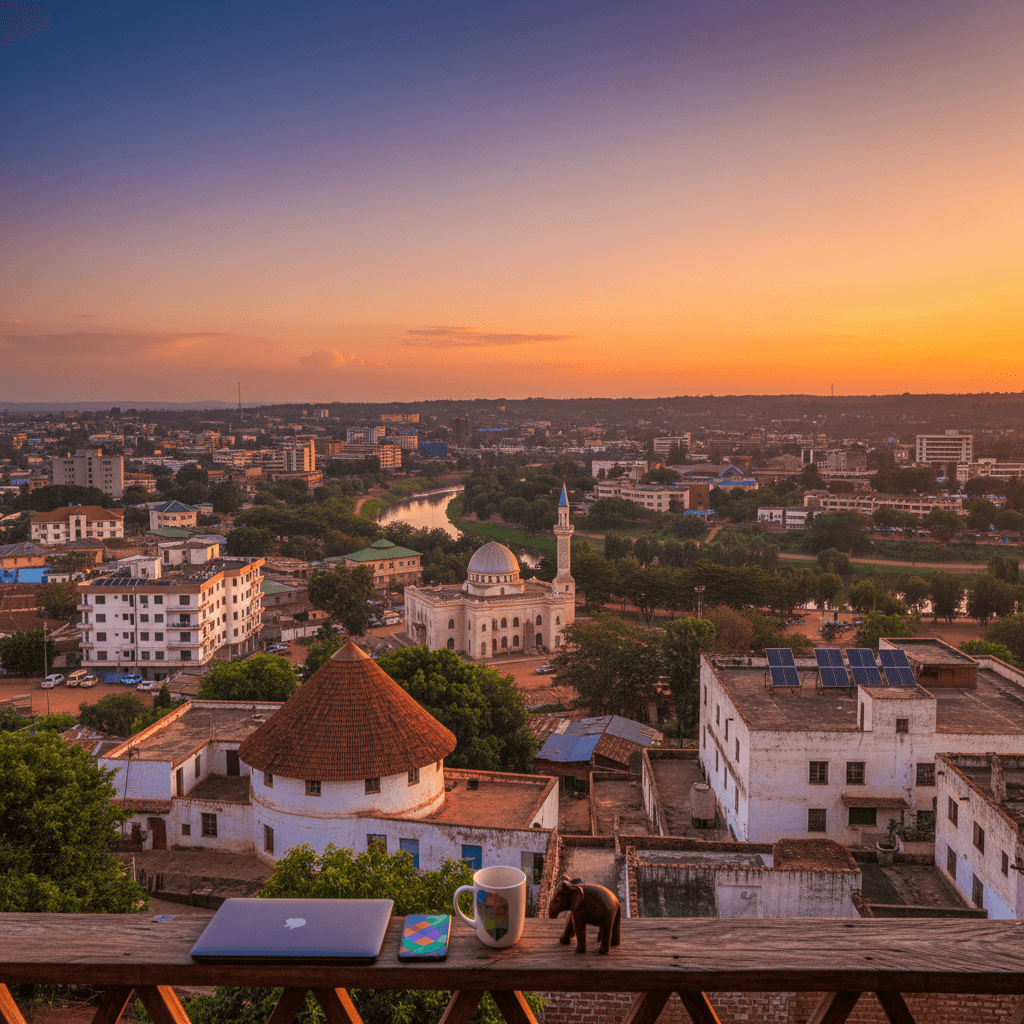
Lilongwe doesn't try to impress you. There's no skyline, no tourist circus, no relentless hustle trying to separate you from your money. What you get instead is a genuinely slow pace of life, warm greetings from strangers, the smell of charcoal smoke drifting through open-air markets and a city that, honestly, feels like it's still figuring out what it wants to be.
That quietness is either the whole point or the dealbreaker, depending on who you are.
The city splits into two distinct personalities. Old Town is loud, crowded and alive in the way African markets always are, minibuses honking, vendors calling out, the air thick with fried dough and diesel. New Town and Area 3 are the opposite: wide roads, embassies, expat restaurants and a calm that borders on sleepy. Most nomads and long-term expats plant themselves in Area 3 or Area 10, where it's safer and the food options are actually decent.
Costs are low, though not as low as the headlines suggest. Budget travelers can scrape by on $800 a month sharing a place and eating street nsima for $3 a meal, but a realistic mid-range setup, think a one-bedroom apartment at around $295, occasional coworking at The Works inside Latitude 13 and eating out a few times a week, lands closer to $1,200.
Fixed-line internet remains limited at 2-3 Mbps, though TNM's 5G network (launched July 2025) offers significantly faster mobile data speeds up to 600 Mbps in Lilongwe. Most nomads grab an Airtel or TNM SIM card at the airport and run mobile data as a backup, which helps, though it's not a real fix for video calls or large uploads.
Weather-wise, Lilongwe sits at a comfortable altitude, so even the hot months don't feel brutal. The rainy season runs November through April and the January downpours are serious, rain hammering corrugated rooftops, roads flooding without warning. September and October are the sweet spot: dry, warm and clear.
What makes this city different from other low-cost capitals is the absence of pressure. Nobody's selling you anything aggressively, the pace is genuinely relaxed and expats here tend to stay longer than they planned. That's either the magic or the trap, turns out it's usually both.
Lilongwe is, honestly, one of the more affordable capitals on the continent. That doesn't mean it's dirt cheap, but your money stretches further here than in Nairobi or Cape Town and the day-to-day costs are predictable once you know where to look.
Most nomads land somewhere in the $1,200 to $2,000 range per month, depending on how much comfort they need. Expats who've settled in and found local rhythms often get by closer to $850, sharing housing and eating where the locals eat. Budget travelers can push it down to $800 if they're in shared accommodation and living off street food, which runs $3 to $5 a meal and tastes like it was cooked by someone's grandmother, because it probably was.
Budget Tier (~$800/month)
- Rent: $200 (shared housing)
- Food: ~$5/day, street stalls and local markets
- Transport: ~$50 via minibuses (kabati)
Mid-Range (~$1,200/month)
- Rent: $295 for a 1BR in the center
- Food: ~$10/day, cafes and mid-range spots
- Transport/Coworking: ~$100 combined
Comfortable (~$2,000+/month)
- Rent: $400+ or Airbnb averaging $58/night
- Food: ~$20/day, upscale dining, a three-course dinner for two runs around $32
- Transport/Coworking: $150+ with ride-hailing and a proper desk
Coworking isn't turns out free, but it's reasonable. The Works at Latitude 13 Degrees charges around $101 a month for a hot desk with 24/7 access and coffee included, the European Business Centres run anywhere from $50 to $300 depending on what you need. If you just want a quiet table and decent wifi, Lark Cafe and The Chapter Coffee House both work fine.
Groceries and local produce are genuinely cheap, imported goods less so. ATMs dispense up to MWK 1 million per transaction, banking is functional but fintech options are limited, don't count on anything beyond basic card use. Rent in Area 3 or Area 10, where most expats cluster, sits at the higher end of local prices, but the security and access to international restaurants make it worth the premium for most people.
Lilongwe doesn't have one neighborhood that works for everyone, it has four distinct pockets that each suit a different kind of person. Pick the wrong one and you'll spend your first week annoyed.
Nomads: Area 3 and Area 10
This is where most nomads land and honestly, it makes sense. Area 3 and Area 10 have the embassies, the better restaurants and a safety profile that lets you walk to a cafe without constantly watching your back. The Works at Latitude 13 Degrees is right in this orbit, $101 a month for a hot desk with 24/7 coffee access, which becomes your de facto office when the WiFi at your apartment drops to its usual 2 Mbps crawl.
The downside is real isolation. Minibus routes, turns out, don't prioritize this area, so you're either using the Ipemelere ride-hailing app constantly or budgeting $100-plus a month just on taxis. It's convenient, it's just not cheap to live in.
Solo Travelers: Old Town
Old Town is loud, crowded and smells like charcoal smoke and frying oil in the best possible way. Markets spill onto the road, minibuses honk through intersections and a full meal costs you $3 at a street stall. It's the most alive part of Lilongwe, which also means it carries the most petty crime risk. Don't flash your phone, don't wander after dark and you'll probably be fine, most solo travelers who stay here short-term report it's worth the trade-off for the energy and the price.
Expats on a Budget: Area 10
Longer-term expats who want something calmer than Old Town but cheaper than a fully serviced apartment often settle in Area 10. Rent for a decent one-bedroom sits around $295 a month, there's reliable access to mid-range restaurants and the neighborhood has enough foot traffic to feel safe without the chaos of Old Town.
Families: Sunnyside and Nyambadwe
These are the quieter residential areas with walled compounds, gardens and on-site security guards, which matters more than it sounds given Lilongwe's rising break-in rates. Rents push $400 and above, so it's the priciest option. But for families who need space, routine and a slower pace, Sunnyside and Nyambadwe are, weirdly, some of the most livable neighborhoods in any East African capital at this price point.
The internet landscape in Lilongwe is currently in transition. Traditional fixed-line speeds average 2-3 Mbps, but TNM's 5G network (launched July 2025) offers speeds up to 600 Mbps in Lilongwe. Most nomads find that while basic connections require some patience, the availability of high-speed mobile data has significantly changed the workflow for those needing to handle video calls or large uploads.
Mobile data is your best backup and often your primary tool for high-speed tasks. Airtel and TNM are the two main carriers, both sell SIM starter packs for around MWK 1,000-2,000 at the airport or in-store and you'll need your passport to register. TNM's 85GB bundle runs about MWK 40,000 and is, turns out, better value than buying small daily packs. An eSIM is worth considering if you want data sorted before you land.
For coworking, the options are limited but they do the job.
- The Works at Latitude 13: Hot desks at $101/month with 24/7 access and coffee included. It's the most polished setup in the city, quiet, air-conditioned and popular with expats who need reliable hours.
- European Business Centres: More flexible pricing, roughly $50-300/month depending on what you need. Good for longer stays where you want a proper desk.
- Skillsway Inc.: A smaller, local option that's worth checking if the bigger spaces feel too corporate or too expensive.
Cafes are a real alternative and honestly more social. Lark Cafe and The Chapter Coffee House both attract the laptop crowd, the WiFi isn't always faster than mobile data but the atmosphere makes up for it and you're more likely to meet other nomads there than at a formal coworking desk.
The coworking scene is small, that's just the reality. There's no buzzing hub of freelancers the way you'd find in Nairobi or Cape Town. What Lilongwe has instead is space, quiet and low competition for good seats.
If you're doing anything bandwidth-heavy, utilizing the 5G coverage areas or downloading files during off-peak hours can make a significant difference. Video calls work best tethered to a high-speed mobile connection rather than cafe WiFi, which can drop mid-sentence without warning. Plan around it and it's manageable, fight it and you'll be miserable.
Lilongwe is, honestly, a moderate-risk city. Petty theft and burglaries have been climbing in recent years and violent assaults aren't unheard of, so this isn't a place where you can completely switch off your awareness. That said, most nomads who stick to Area 3 and Area 10 find day-to-day life pretty calm, those neighborhoods have embassies, expat restaurants and enough foot traffic that you don't feel exposed.
Old Town is a different story. It's lively and cheap, the markets smell of dried fish and charcoal smoke and the energy is genuinely interesting, but petty crime is real there and after dark it gets dicey fast. Don't wander unlit streets at night, anywhere in the city. That's not paranoia, that's just how it's.
A few practical rules most expats follow:
- Transport: Use the Ipemelere ride-hailing app instead of flagging random taxis. Trips are tracked, drivers are registered, it's the safer call.
- Cash: Don't flash large amounts. ATMs dispense up to MWK 1,000,000 per transaction, withdraw what you need and keep it out of sight.
- Emergencies: Police on 997, ambulance on 999. Save both before you need them.
- Vaccines: Get hepatitis A and typhoid sorted before you arrive. Malaria prophylaxis is also worth discussing with your doctor.
Healthcare is, turns out, the city's biggest practical weakness. Government hospitals are severely under-resourced and most expats won't go near them for anything serious. The Medical Aid Society Clinic is the most commonly recommended option, it's limited but functional for routine issues. For anything genuinely urgent, medical evacuation to South Africa or Kenya is the realistic path, which means travel insurance with solid evacuation coverage isn't optional here.
Pharmacies are widespread and reasonably well-stocked for basics. You can find common medications without much trouble, though specialty drugs are hit or miss, bring enough of anything you rely on regularly.
The honest summary: Lilongwe is manageable, not dangerous by default. Stay in the right neighborhoods, use tracked transport, carry good insurance. The risks are real, they're also largely avoidable with a bit of common sense.
Lilongwe isn't a city you'll navigate with Uber. It doesn't exist here. Your two real options are minibuses and ride-hailing and honestly, most nomads end up using both depending on the neighborhood and time of day.
Minibuses, called kabati, are the cheapest way to move around, costing next to nothing for short hops across Old Town or into the center. They're loud, they're packed and the routes aren't always obvious if you don't speak Chichewa, but locals are genuinely helpful if you ask. Budget travelers swear by them, expats tend to avoid them after dark.
For anything that requires a fixed destination or a late-night return, the Ipemelere app is what most people use. It's a local ride-hailing service with tracked drivers and a phone line (+265 888 81 93 33) if the app gives you trouble, which, surprisingly, it sometimes does. Taxis are also available at hotels and markets, just agree on a price before you get in, arguing about it afterward will get you nowhere. Airport transfers from Kamuzu International run around $20 to $30 either way.
Walking is fine in New Town and around Area 3 or Area 10 during the day. The streets are, turns out, reasonably manageable on foot in those neighborhoods, wide roads, not too much foot traffic. Old Town is a different story: more chaotic, more noise, minibuses honking through narrow gaps, the smell of fried street food and exhaust mixing in the heat. It's worth doing once, not ideal for a daily commute.
Bikes and scooters are technically an option but rentals are hard to find and the roads aren't forgiving. Most long-term residents don't bother.
A few things to keep in mind:
- Minibuses: Cheapest option, roughly $0.50 to $1 per ride, cash only, crowded during peak hours
- Ipemelere app: Tracked, safer at night, fares are honest, download before you land
- Hotel taxis: Convenient but pricier, always agree on fare upfront
- Airport transfer: $20 to $30 by taxi or Ipemelere from LLW
- Walking: Fine in Area 3 and New Town, skip it after dark anywhere
Malawi's official language is English, so you won't hit a wall trying to get things done in business districts, hotels or expat-heavy areas like Area 3. Most shopkeepers, guesthouse staff and coworking receptionists speak it well enough to communicate clearly, it's just the depth of conversation that varies.
On the street, though, Chichewa (also called Nyanja) is what people actually speak. It's the heartbeat of daily life here and honestly, knowing even a handful of words changes how locals treat you. You go from being another passing foreigner to someone who made the effort and that matters in Lilongwe more than most places.
A few phrases worth memorizing:
- Moni: Hello
- Muli bwanji?: How are you?
- Ndili bwino: I'm fine
- Zikomo: Thank you
Drop a Moni at a market stall or a Zikomo after someone helps you and you'll get a reaction that's, weirdly, almost disproportionate to the effort. People light up. It's a small thing that costs nothing.
For anything beyond basic pleasantries, Google Translate handles Chichewa reasonably well, download the offline pack before you go because mobile data in Lilongwe can be inconsistent. While 5G rollouts have begun in select urban hubs, coverage is still expanding and having offline access ensures you aren't reliant on the network for real-time translation.
Communication infrastructure is a genuine weak spot. SIM cards from Airtel or TNM are cheap and widely available, passport required and bundles run around MWK 800 for 250MB daily or MWK 40,000 for 85GB monthly. Still, don't expect fast data even with a local SIM, the network itself is the bottleneck.
WhatsApp is, frankly, how almost everything gets coordinated here. Landlords, taxi drivers, coworking staff, local contacts, they're all on it. Set it up before you land, because phone calls to unfamiliar local numbers can go unanswered where a WhatsApp message won't. That's just how Lilongwe works.
Lilongwe sits at around 1,050 meters above sea level, which keeps temperatures more comfortable than you'd expect for a city this close to the equator. You're looking at 21-30°C (70-86°F) year-round, so it never gets brutally hot and it never really gets cold either.
The year splits cleanly into two seasons. The rainy season runs November through April, peaking in January when you can get 223mm of rain in a single month. That's not a light drizzle, it's proper downpours that turn dirt roads into mud and fill the air with the smell of wet earth and overflowing drains. Humidity clings during these months, your clothes feel damp by mid-morning and afternoon thunderstorms roll in fast enough to catch you off guard.
The dry season, May through October, is honestly when Lilongwe feels like a different city. Skies clear out, the air dries up and temperatures drop to a genuinely pleasant range. May and June can feel almost cool in the evenings, cool enough that a light jacket isn't ridiculous. By September and October, it warms back up without the humidity, which makes those two months the sweet spot most nomads and expats point to as the best time to visit.
Best time to visit: September and October. Dry, warm and clear, it's the easiest Lilongwe gets. If you're planning a longer stay, the full dry season from May onward works well too.
January and February are, frankly, the months to avoid if you have flexibility. Rain disrupts everything from road conditions to power reliability and the humidity makes working from a non-air-conditioned space genuinely miserable. Coworking spots with reliable AC become less optional, more necessary.
- Rainy season: November to April; heavy rain, high humidity, muddy roads
- Dry season: May to October; clear skies, low rainfall, cooler evenings
- Peak comfort: September to October; warm days, dry air, minimal rain
- Avoid: January to February if possible; 223mm monthly rain peak, power outages more common
One thing worth knowing: the dry season also turns out to be peak season for wildlife trips to nearby parks, so accommodation around Lilongwe books up faster than you'd think. Plan ahead if you're arriving in September.
Get a local SIM on arrival. Airtel and TNM both have desks at Kamuzu International Airport, you'll need your passport and a starter pack runs around MWK 1,000 to 2,000. The 85GB bundle for roughly MWK 40,000 is, honestly, the best value if you're staying more than a week. Daily top-ups (250MB for MWK 800) work fine for lighter use.
Cash is king here, full stop. ATMs are around but they cap withdrawals at MWK 1,000,000 per transaction, so plan ahead before weekends when machines run dry. Fintech options are limited, most landlords, markets and minibus drivers won't take anything but physical kwacha, don't assume otherwise.
For getting around, skip trying to flag random taxis and download Ipemelere instead. It's tracked, the drivers know it and you won't spend ten minutes haggling over a fare that should've been obvious. Minibuses (kabati) are cheap and go everywhere, they're loud and packed and smell like diesel and ambition, but they work. Airport transfers by taxi or Ipemelere run $20 to $30 depending on traffic.
Safety is moderate, which is a polite way of saying stay alert. Burglaries are rising, Old Town gets dicey after dark and unlit side streets anywhere in the city aren't worth the shortcut. Stick to Area 3 and Area 10 at night, turns out most expats settle there for exactly this reason. If something goes wrong, police are on 997 and ambulance is 999, though hospitals here are genuinely poor so travel insurance with medical evacuation isn't optional.
A few customs worth knowing before you put your foot in it:
- Greetings: Always greet before asking anything. "Moni" (hello) and "Zikomo" (thank you) go a long way, locals notice when you skip pleasantries.
- Elders: Show deference, weirdly small gestures like a slight bow when handing something over are appreciated.
- Tipping: Not mandatory but welcomed; MWK 1,000 to 2,000 at restaurants is reasonable.
- Dress: Conservative outside expat areas, especially near markets and government buildings.
The rainy season runs November through April, January peaks at 241mm and the humidity clings to everything. September and October are the sweet spot, dry, warm, clear skies. If you're planning a day trip, the Lilongwe Wildlife Centre is worth an afternoon, it's close and frankly underrated.
Need visa and immigration info for Malawi?
🇲🇼 View Malawi Country GuideWild Card
Expect the unexpected