Ölgii
🇲🇳 Mongolia
The Altai Frontier
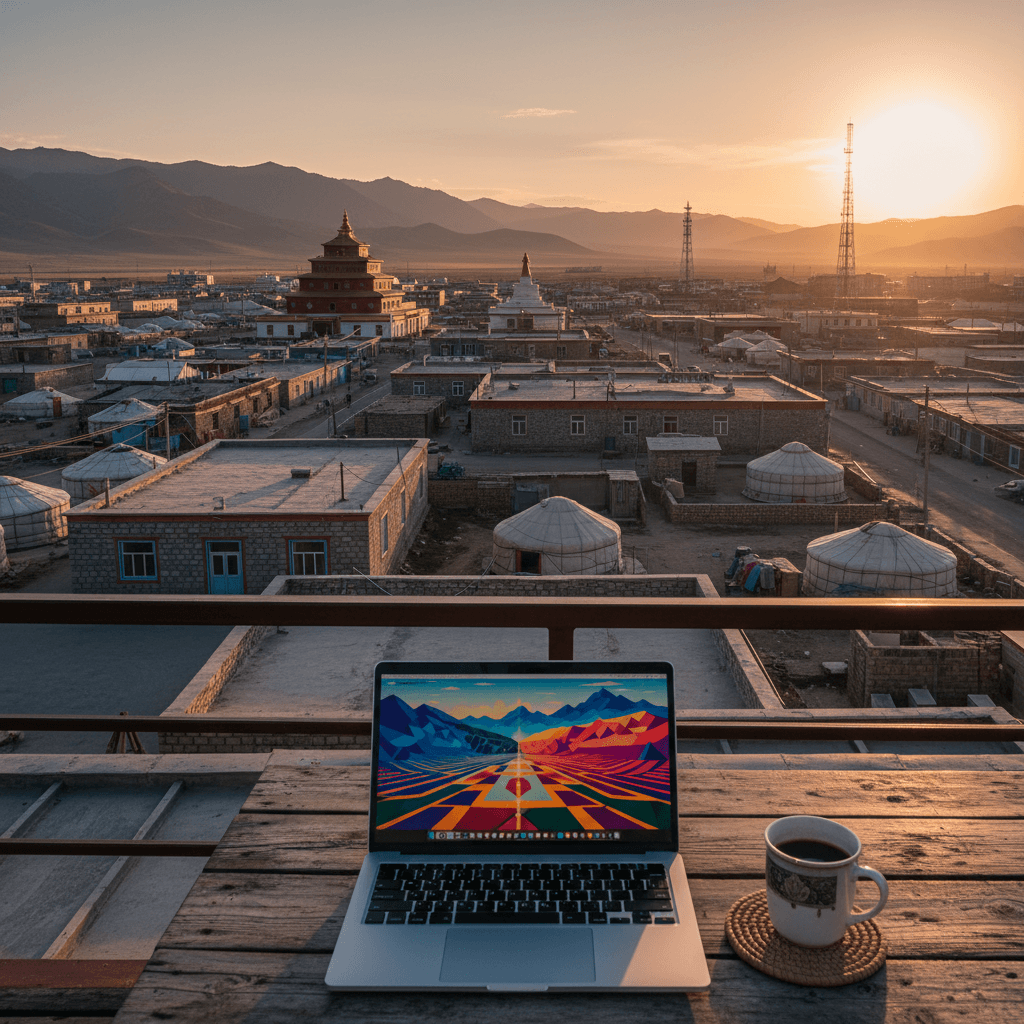
Ölgii isn't your typical digital nomad hub. You won't find sleek glass coworking spaces or specialty oat milk lattes here. Instead, you'll find a raw, dusty outpost tucked into the folds of the Altai Mountains where the air smells like woodsmoke and livestock. It is the capital of Bayan-Ölgii, Mongolia’s westernmost province, but it feels more like a gateway to Central Asia. Most of the 50,000 residents are ethnic Kazakhs, meaning the language, the food, and the vibes are distinct from the Mongol heartland further east.
The emotional pull of Ölgii is the silence. It’s the kind of place where you can stand on a ridge at the edge of town and feel the sheer scale of the wilderness pressing in. Most travelers arrive here for the Eagle Festivals in the autumn or to use the town as a base for expeditions into Altai Tavan Bogd National Park. It’s a staging ground for the extraordinary, a place where you’ll see 4x4 vans loaded with gear parked next to local horsemen navigating the unpaved side streets.
Living here means embracing a slow, analog pace. You’ll spend your mornings at the local market (Zakh) watching traders barter over thick wool carpets and your afternoons trying to find a stable enough signal to upload a few files. It’s a destination for the nomad who is burnt out on Bali and looking for something that feels genuinely undiscovered. You’re not here for the infrastructure; you’re here for the hospitality of families who have hunted with golden eagles for centuries.
The Cost of Living
Budgeting for Ölgii is tricky because there isn't a traditional rental market. You won't find listings on Airbnb. Most nomads coordinate long term stays through local tour operators like Discover Altai or negotiate directly with guesthouse owners. Prices are generally 20% to 50% lower than in Ulaanbaatar, though anything imported from the capital carries a premium.
- Budget Tier ($800 to $1,200/month): This covers a shared ger (yurt) or a very basic guesthouse room, eating mostly street food like manty (dumplings) or mutton skewers, and getting around on foot.
- Mid-Range ($1,500 to $2,000/month): This gets you a private apartment or a high end guesthouse stay, regular meals at the town’s few sit down restaurants, and a budget for domestic flights or occasional guided 4x4 trips.
- Comfortable ($2,500+ /month): At this level, you’re likely funding frequent expeditions into the mountains, hiring private translators, and opting for the most modern housing available in the city center.
Connectivity and Work
Working from Ölgii requires a strategy. There are no dedicated coworking spaces, so your best bet is to set up in a central cafe or your guesthouse. The internet is surprisingly decent in the town center if you use a local SIM. Travelers recommend Unitel or Mobicom for the most consistent coverage. You can pick up a SIM at the airport or in town for about $5 to $10 with a generous data package.
The golden rule for nomads here is the "alternating" method. Spend three or four days deep in the Altai for the views and the culture, then head back to central Ölgii for a couple of days to blitz through your emails and uploads. Don't rely on finding WiFi in the mountains; it’s a total dead zone once you leave the city limits.
The Neighborhoods
Ölgii is compact enough that "neighborhoods" are really just zones defined by their proximity to the center. Most nomads stay within a few blocks of the main square or the airport for convenience.
Central Ölgii is the functional heart of the city. It’s dusty and the architecture is a mix of Soviet style blocks and traditional fenced yards. It’s the best place for solo travelers because you’re within walking distance of the supermarkets, the bank, and the tour offices. Rent here for a basic apartment usually lands between $200 and $400 per month if you can find a local lead.
The Outskirts are where the city fades into the steppe. This is where you’ll find more traditional ger camps and homestays. While it’s much more scenic and offers immediate access to hiking trails, you’ll be reliant on taxis or a hired 4x4 to get into town for supplies. It’s the choice for those who want the full nomadic immersion and don't mind a bit of isolation.
Practical Realities
The weather is the ultimate boss in Ölgii. If you visit between June and September, you’ll have mild days perfect for trekking. If you come in the winter, be prepared for temperatures to plummet to -20°C. Most nomads avoid the deep winter unless they are specifically coming for the Nauryz celebrations in March. For getting around, there are no apps. You’ll be flagging down shared taxis for $1 or $2 or walking the flat, open streets of the center. Just remember to carry cash, as ATMs can be temperamental and international cards aren't accepted everywhere.
Living in Ölgii isn't about luxury or convenience; it's about trading high-speed fiber for high-altitude horizons. As the westernmost hub in Mongolia, it's significantly cheaper than Ulaanbaatar, though you'll pay a small premium for imported goods that have to make the long trek across the steppe. For a digital nomad, your biggest expense won't be rent, but the cost of 4x4 transport and guides to get you out into the Altai Mountains where the real magic happens.
Monthly Budget Estimates
- Budget Tier ($800 to $1,200): This covers a basic apartment or a shared ger, plenty of street food like manty dumplings, and getting around on foot. You're living like a local and keeping your excursions close to town.
- Mid-range ($1,500 to $2,000): This allows for a private one bedroom apartment, dining out at the better restaurants in the center, a solid data plan, and the occasional domestic flight back to the capital.
- Comfortable ($2,500+): At this level, you're frequently booking guided tours to see eagle hunters, staying in high-end homestays, and buying imported comforts at the local markets.
Housing and Neighborhoods
The city is compact and dusty, so neighborhood distinctions are more about proximity to the center than "vibes." Most nomads stick to Central Ölgii near the airport and the main market zone. It's the only place where you'll find reliable electricity and a semblance of walkability to shops. Expect to pay between $200 and $400 for a basic apartment here. Don't look for Airbnb; you'll need to coordinate through local tour operators like Discover Altai or find a homestay once you land.
If you're here for the "real" Mongolia, the Altai Outskirts near the Tavan Bogd base are where travelers go for nomadic immersion. There's no traditional "rent" here; you're paying for a spot in a family ger. It's spectacular but lacks any modern amenities, meaning no running water and zero privacy. You'll need a 4x4 to get back to town for supplies.
Eating and Socializing
Food is affordable but repetitive. You’ll spend $2 to $5 on a filling meal of mutton and noodles at a local canteen. A mid-range dinner in one of the few established restaurants will run you $5 to $10. There isn't much of a nightlife scene. Socializing happens at the markets or during the autumn Eagle Festivals. Most people meet through shared tours or by hanging out at the local cafes while trying to catch a signal.
Connectivity and Logistics
Internet is the biggest hurdle. There are no dedicated coworking spaces, so you'll be relying on your phone's hotspot. Unitel and Mobicom are the main providers. Grab a SIM card at the airport for about $5 to $10; the data is surprisingly cheap and works well in the city center. Once you head into the mountains, expect total radio silence unless you're carrying a satellite device.
Getting around town is easy and cheap. A shared taxi ride is usually $1 to $3, and the center is small enough to walk in 20 minutes. For anything outside the city limits, you'll need to hire a Russian van or a 4x4, which is where your budget can quickly double if you aren't splitting the cost with other travelers.
Practical Costs
- Street food meal: $3
- Local SIM with 10GB data: $8
- Shared taxi ride: $2
- Monthly gym or basic club access: $25 (if available)
- Domestic flight to Ulaanbaatar: $120 to $180
Cash is king here. While some shops in the center might take a card, you'll need a stack of Togrog for the markets and any trips into the countryside. ATMs are available but can run out of cash during festival seasons, so always have a backup supply of USD to exchange.
For Digital Nomads
If you're trying to stay connected while staring at the Altai peaks, Central Ölgii is your only real move. This isn't a city of distinct districts; it's a compact hub where everything revolves around the central market and the tiny airport. You'll want to stay within a few blocks of the Unitel or Mobicom offices to ensure you can top up your data regularly. Most nomads treat the local hotels or basic apartments here as a base camp, coming back from the wild to upload files and shower before heading back out.
- Rent: Expect to pay between $200 and $400 for a basic one bedroom apartment or a comfortable room in a guest house.
- Internet: There are no dedicated coworking spaces. Your best bet is using a Unitel SIM for a hotspot or working from low-key cafes near the square. Speeds are surprisingly decent for such a remote outpost, but they can be temperamental during storms.
- Daily Life: It's dusty and functional. You'll be eating plenty of manty (dumplings) and beshbarmak for about $3 to $7 a meal.
For Adventurous Expats
Expats in Ölgii are usually here for the long haul, often working with NGOs or running tour companies like Discover Altai. For a more permanent feel, look toward the western edge of town. This area transitions quickly from Soviet-style blocks to traditional fenced plots. It's quieter and offers better views of the mountains, though you'll definitely need a 4x4 vehicle to handle the unpaved side streets, especially when the winter snow sets in around November.
- Atmosphere: This is where you'll find a more authentic Kazakh vibe. It's conservative and quiet. Residents value their privacy but are incredibly hospitable once you're introduced.
- Cost of Living: A mid-range lifestyle, including a private vehicle and better grocery imports, will run you about $1,500 to $2,000 a month.
- Social Scene: It's small. Most socializing happens in private homes or during the Eagle Festivals in September and October.
For Solo Travelers
The Market Zone is the heart of the action for solo travelers. It's where the shared taxis congregate and where you'll meet other travelers planning treks to Tavan Bogd. Staying here means you don't need a car; you can walk to the bank, the post office, and the stalls selling heavy camel wool socks for $5. It feels like a frontier town, and while it's safe, the language barrier is real. Learning a few words of Kazakh like "Rahmet" (thank you) goes a long way here.
- Accommodation: Look for "Tourist Ger" camps on the outskirts or budget guest houses near the center. You can find a bed for $15 to $25 a night.
- Transport: Shared taxis around town cost less than $2. For the mountains, you'll be splitting the cost of a Russian van with other travelers, which usually runs about $50 to $100 per day depending on the distance.
- Safety: The area is very safe for soloists, but the environment is harsh. Always let someone know your coordinates if you're heading into the foothills.
For Families
Ölgii isn't a typical family destination due to the lack of infrastructure, but for those who make the trip, the Altai Outskirts provide the most space. Families usually opt for homestays with local eagle hunters rather than staying in the city center. These are located about 30 to 60 minutes outside the main town. It's a raw, educational experience where kids can learn about nomadic life firsthand, though you'll have to sacrifice modern plumbing and reliable electricity.
- Setup: Most families arrange these stays through local guides who handle the logistics and translation. It's more of an all-inclusive experience than a standard rental.
- Healthcare: There's a basic provincial hospital in the center of Ölgii for emergencies, but for anything serious, you'd be looking at a flight back to Ulaanbaatar.
- Best Time to Visit: Stick to the summer months of June through August when the weather is mild, around 20°C (68°F), making outdoor activities much easier for children.
Digital Survival in the Altai
Working from Ölgii isn't about finding the perfect ergonomic chair or a high speed fiber connection. It's about strategic planning and embracing a slower, more intentional workflow. This is the westernmost hub of Mongolia, a place where the infrastructure is built for survival and trade rather than Zoom calls. If you're coming here, you're likely balancing a few hours of emails against days of exploring the Altai Tavan Bogd.
The connectivity landscape is surprisingly decent in the town center but drops to zero the moment you head into the mountains. Most digital nomads use Ölgii as a "base camp" to batch their work, uploading content and clearing inboxes before disappearing into the wilderness for nomadic homestays.
Connectivity & Speeds
Don't rely on hotel WiFi; even the better lodges in town have connections that fluctuate wildly based on how many people are trying to stream at once. Instead, your best bet is a local SIM card. Unitel and Mobicom are the two heavy hitters here. Unitel generally gets the nod from travelers for having the most consistent 4G coverage within the city limits and even in some surprising pockets of the steppe.
- Data Costs: You can pick up a SIM card for about $5 to $10, which usually includes a generous data package of 10GB to 20GB.
- eSIMs: If you want to be connected the second you land at the tiny Ölgii airport, providers like Gohub offer Mongolia plans, though they are pricier than buying locally.
- Speeds: In central Ölgii, expect download speeds between 5Mbps and 15Mbps on 4G. It's enough for basic video calls, but don't expect to 4K stream without buffering.
Where to Work
There are no formal coworking spaces in Ölgii. You won't find a WeWork or a dedicated quiet zone with hot desks. Instead, you'll be "cafe hopping," though the options are limited. Most nomads find that working from their guesthouse or a local eatery is the most productive route.
The local cafe culture is functional. People come to eat and move on, so if you're planning to camp out for four hours with a laptop, make sure you're ordering consistent rounds of tea or coffee. The market area has a few basic spots, but they can be loud and dusty. If you need deep focus, your best bet is a private room in a central hotel where you can tether to your phone's data.
Practical Nomad Tips
Power stability is generally good in town, but surges happen. A solid power bank is a requirement, not a luxury, especially if you plan on taking your laptop on a multi day trip to visit eagle hunters. Most gers in the countryside won't have outlets, though some families use solar panels that can juice up a phone in a pinch.
- Offline Tools: Download your Google Translate packs for both Kazakh and Mongolian. While Mongolian is the official language, Kazakh is the heart of Ölgii.
- Banking: Stick to Khan Bank or TDB ATMs in the center for cash withdrawals. Most local shops and markets are cash only, though some larger spots might accept the Unitel payment app.
- Hardware: Bring a dust proof sleeve for your laptop. The winds in western Mongolia carry fine grit that can wreak havoc on keyboards and ports.
The trade off for the spotty internet is the lack of distractions. When the sun sets over the Altai, you won't care about your Slack notifications. Most travelers recommend a "rhythm of three": three days of focused work in an Ölgii guesthouse, followed by three days of total disconnection in the mountains. It's the only way to truly experience this region without the stress of a fading signal.
Personal Safety and Local Vibes
Ölgii is one of those rare places where your biggest safety concern isn't pickpockets or scams, but rather the sheer scale of the wilderness. Within the city limits, it is remarkably safe. The population is predominantly Kazakh and adheres to a conservative, community oriented Muslim culture. Travelers often find themselves invited for tea rather than hassled. Since the town is small and everyone knows everyone, crime rates are low. You can walk through the central market or the dusty side streets without looking over your shoulder.
The real danger lies in the "off-grid" nature of the region. If you are heading out to the Altai Tavan Bogd or visiting eagle hunters in the foothills, you are entering a zone where help is hours or even days away. Most nomads recommend never venturing into the mountains without a local guide who knows the terrain and the temperamental weather patterns. Solo trekking is discouraged because of the lack of marked trails and the presence of wolves or snow leopards in the high altitudes. If you are going deep into the backcountry, carrying a satellite communication device like a Garmin inReach is a smart move since cell service vanishes the moment you leave the valley.
Healthcare and Medical Facilities
Healthcare in Ölgii is basic and functional for minor issues, but it is not the place for complex medical needs. The provincial hospital in the center of town can handle stitches, basic infections, or common stomach bugs. For anything more serious, you will likely be looking at a medevac back to Ulaanbaatar or even abroad. Because of this, high quality travel insurance with evacuation coverage is non-negotiable here.
Pharmacies are scattered around the central market area. You can find standard antibiotics and painkillers, but don't expect specific Western brands. If you have a regular prescription, bring enough to last your entire trip plus a two week buffer. The high altitude and dry air can also trigger respiratory issues or severe dehydration, so keep a stash of electrolytes and heavy duty moisturizer in your pack.
- Emergency Number: Dial 103 for medical emergencies, but be aware that English speakers are rarely on the line.
- Hospital: Bayan-Ölgii General Hospital is the primary facility in the city center.
- Pharmacies: Pharmacies are scattered around the central market area.
- Water Safety: Do not drink tap water. Stick to bottled water or use a high grade filter like a Grayl, especially when staying in gers.
Environmental Hazards
The weather is a legitimate safety factor. Even in the middle of summer, temperatures can plummet below freezing overnight in the mountains. Travelers often underestimate how quickly a sunny afternoon can turn into a blinding snowstorm. If you are visiting for the Eagle Festival in October, pack gear rated for -20°C. Frostbite is a real risk during the winter months if you aren't properly layered in wool and down.
Another thing to watch for is the livestock. While the horses and camels are generally well trained, they are semi-wild animals. Always approach them from the front and follow your guide's instructions. If you are staying in a nomadic camp, keep a respectful distance from the large Tibetan mastiffs or "bankhar" dogs used to guard the herds; they are working animals, not pets.
Practical Tips for a Smooth Stay
Since English isn't widely spoken, download an offline version of Kazakh and Mongolian on Google Translate. Most locals will appreciate the effort, and it’s a lifesaver when trying to explain a medical symptom at the pharmacy. Also, keep a stash of cash in Mongolian Tugrik (MNT). While more shops are starting to accept card payments via local apps like Unitel, the system often goes down when the wind blows too hard. Having 100,000 to 200,000 MNT on hand ensures you won't be stranded if an ATM runs out of bills.
Getting around Ölgii is a lesson in patience and rugged adaptability. This isn't a city where you'll be checking a transit app for the next bus or hailing a sleek ride share. It is a frontier town, compact enough to navigate on foot but sprawling enough into the Altai foothills that you'll need a different strategy the moment you leave the central dusty grid.
The Local Commute
Within the town center, your own two feet are your best asset. Most of the action, from the central market to the tiny airport, is concentrated in a walkable radius. For longer hauls across town, look for shared taxis. These aren't marked like traditional cabs; they're often just local drivers picking up people along a general route. You'll likely pay between $1 and $3 for a quick hop. There are no ride hailing apps like Uber or Ulaanbaatar's local equivalents here, so you'll need to brush up on your Kazakh or Mongolian gestures to flag someone down.
Public transport is limited to a few sparse microbuses. They don't run on a strict schedule and can be a bit of a squeeze, but they're incredibly cheap, usually costing under $0.50. Most nomads find that for daily errands, walking is simply more reliable than waiting for a bus that may or may not show up.
Heading into the Altai
If you're heading out to meet eagle hunters or reach the Tavan Bogd base camp, the logistics get serious. The roads quickly turn into rutted tracks that swallow standard sedans whole. A 4x4 vehicle is non negotiable for anything outside the city limits. Most travelers hire a local driver and a Russian UAZ furgon or a sturdy Japanese SUV through outfits like Discover Altai. Budget around $100 to $150 per day for a private vehicle, driver, and fuel if you're heading deep into the wilderness.
For the more adventurous, some tour operators offer bike or scooter rentals specifically geared toward Altai trails. Expect to pay roughly $50 per day for a supported bike tour. It's a grueling way to travel given the elevation and wind, but it's the gold standard for those wanting total immersion in the landscape.
Arrival and Departure
Your journey likely starts at the Ölgii airport, a small facility that feels more like a bus station for planes. Domestic flights from Ulaanbaatar via MIAT or Hunnu Air are the primary way in. Once you land, don't expect a shuttle. Most guesthouses and tour guides will arrange a pickup for about $5 to $10. If you haven't pre arranged a ride, you can usually snag a spot in a taxi waiting outside the terminal for a similar price.
- Shared Taxis: $1 to $3 per ride within town limits.
- Airport Transfers: $5 to $10 for a pre arranged pickup.
- 4x4 Expedition Rental: $100+ per day including a driver and fuel.
- Walking: Free and the most common way to navigate the central market zone.
Expats recommend keeping a stash of local Tugrik (MNT) in small denominations. While the world is going digital, Ölgii's transport economy runs almost entirely on physical cash. If you're planning a multi day trip into the mountains, always confirm your return transport before the driver leaves your homestay; cell service disappears quickly once you leave the city center.
The Kazakh Connection
Unlike the rest of Mongolia where Khalkha Mongolian reigns supreme, Ölgii is a cultural and linguistic island. You're in the heart of the Kazakh diaspora here. Almost 90 percent of the locals speak Kazakh as their first language. It's a Turkic tongue that sounds nothing like the Mongolian you might have heard in Ulaanbaatar. If you've spent time in Central Asia, you'll recognize the melodic, rhythmic flow of the speech.
While Mongolian is the official language for government business and schools, Kazakh is the language of the street, the market, and the dinner table. Most locals are bilingual, but their heart is in Kazakh. You'll find that many older nomads in the Altai mountains might actually struggle with Mongolian, preferring their native tongue exclusively.
Breaking the Language Barrier
English proficiency is very low in Ölgii. Outside of professional trekking guides and the staff at the few larger hotels, you won't find many English speakers. If you're planning on a solo nomadic immersion, communication becomes a game of charades and hospitality. Most travelers find that hiring a local guide through outfits like Discover Altai isn't just about the 4x4 transport; it's about having a cultural bridge who can translate the complex stories of eagle hunters.
For the digital nomad trying to get by, Google Translate is your best friend, but there's a catch. Make sure you download the Kazakh, Mongolian, and Russian offline dictionaries before you leave Ulaanbaatar. Russian is still understood by many of the older generation due to Soviet era ties, and it can be a lifesaver if your Mongolian phrases aren't landing.
Essential Phrases to Pack
Using a few Kazakh words will get you a much warmer reception than Mongolian ones in this province. It shows you recognize their distinct identity. Start with these basics:
- Rahmet: Thank you (The most important word in your kit).
- Salemetsiz be?: Hello (Formal).
- Keshirińiz: Excuse me / Sorry.
- Bul qansha turady?: How much does this cost?
- Ie / Joq: Yes / No.
If you do want to use Mongolian, stick to Sain baina uu? for hello and Bayarlalaa for thank you. Most locals will appreciate the effort regardless of which language you pick.
Staying Connected
Communication isn't just about talking; it's about your data. For a remote outpost, Ölgii has surprisingly decent mobile coverage within the town limits. You'll want to grab a physical SIM card from Unitel or Mobicom. Unitel is generally the favorite for travelers heading into the Altai Tavan Bogd region because their towers tend to reach just a little bit further into the valleys.
Expect to pay about $5 to $10 for a SIM card with a massive data allowance, usually around 10GB to 20GB. If you prefer the convenience of an eSIM, providers like Gohub work well, but they often piggyback on local networks and might be slightly slower than a direct local SIM. Once you leave the town of Ölgii and head into the mountains, expect total radio silence. Most nomads who need to stay "online" for work will spend three days in the wild and then head back to a central guesthouse in Ölgii for a "sprint" work day to upload files and check emails.
Social Etiquette and Body Language
In Kazakh culture, communication is often non verbal and deeply rooted in respect. When you enter a ger (or a "kiiz ui" as the Kazakhs call it), always move in a clockwise direction. If you're offered a bowl of tea, take it with your right hand, often supporting your right elbow with your left hand as a sign of respect. Silence is also perfectly acceptable. You don't need to fill every gap in conversation with small talk; sitting quietly and enjoying tea with a host family is considered a valid and respectful form of social interaction.
Survival of the Fittest
Ölgii isn't a place where you check the 10 day forecast to see if you need a light jacket. It's a high altitude, continental climate where the weather dictates every aspect of daily life. If you aren't prepared for the extremes, the Altai Mountains will let you know quickly. Most of the year is defined by a bone chilling, dry cold that keeps the landscape locked in ice, while the brief summer window offers some of the most spectacular, clear sky trekking on the planet.
The Golden Window: June to September
This is when the region actually wakes up. From June through August, temperatures are surprisingly pleasant, usually hovering between 15°C and 25°C (59°F to 77°F). The days are long, giving you plenty of light for mountain expeditions or long sessions working from a cafe in town. You might get hit by a sudden summer shower in July, but they're usually over in minutes.
September is arguably the best month for nomads who want the full Kazakh experience without the frostbite. The air gets a crisp edge, the mosquitoes vanish, and the legendary Golden Eagle Festival preparations begin. It's the sweet spot for photography and seeing the steppe in its transition from gold to white.
The Deep Freeze: October to April
If you're planning to visit during the winter, you better have some serious gear. By November, the mercury regularly drops to -20°C (-4°F), and in the dead of January, it can plummet even further. Life in Ölgii slows to a crawl. Many ger camps close down, and domestic flights from Ulaanbaatar can be delayed by heavy snow or visibility issues.
The only reason most travelers brave March is for Nauryz, the Kazakh New Year. It's a beautiful time of traditional games and horse racing, but you'll be celebrating in temperatures that rarely break freezing. If you're staying in a traditional ger during these months, you'll be feeding the central stove every few hours just to keep your coffee from icing over.
Seasonal Breakdown
- Spring (April to May): Dusty and unpredictable. The snow melts, creating muddy tracks, and high winds are common. Not ideal for trekking, but May starts to see the first greenery.
- Summer (June to August): Peak season. Perfect for Altai Tavan Bogd climbs. Expect 20°C days and 5°C nights. This is the only time the high mountain passes are reliably open.
- Autumn (September to October): The festival season. September is perfect; October starts to get genuinely cold, with snow becoming a permanent fixture by the end of the month.
- Winter (November to March): Extreme isolation. Only for those who want to document the harshest nomadic life or attend winter eagle hunting sessions. Expect -15°C to -30°C.
Pro Tips for the Elements
The sun at this altitude is no joke. Even in the middle of a freezing February day, the UV rays are intense. Travelers always recommend high SPF sunscreen and polarized sunglasses to avoid snow blindness. If you're heading out to the nomad camps, don't rely on your tech's battery life; the cold drains iPhones and cameras in minutes. Keep your power banks tucked inside your jacket against your body heat.
Most nomads find that layering is the only way to survive a day in the Altai. You'll start the morning in a heavy wool coat and end up in a t shirt by noon, only to pile it all back on the second the sun dips behind a peak. If you're booking a homestay through Discover Altai or similar local outfits, ask specifically about their heating situation if you're visiting outside of the July peak.
Survival Basics
Ölgii isn't your typical digital nomad hub. It's a rugged outpost where the paved roads end and the Altai Mountains begin. You're coming here for the Kazakh culture and the eagle hunters, not for high speed fiber. Most travelers find that Unitel or Mobicom SIM cards are your best bet for staying connected. Pick one up at the airport or in the center for about $5 to $10. While 4G is surprisingly decent in town, it'll drop to zero the second you head into the mountains, so download your offline maps and translation files before leaving the city limits.
Cash is king here. While some shops in the center might take a card, you'll need Mongolian Tugrik (MNT) for almost everything else. ATMs are clustered around the central square, but they can be temperamental or run out of bills during the Eagle Festivals in September and October. If you're heading out for a homestay, bring more cash than you think you'll need. There are no banks in the gers.
Cost of Living
Living here is significantly cheaper than Ulaanbaatar, though prices for imported goods can spike because of the logistics. You can get by comfortably on a mid range budget of $1,500 to $2,000 a month, which covers a private apartment, plenty of local meals, and the occasional guided expedition.
- Budget Tier ($800 to $1,200): Expect to stay in a shared ger or a very basic guesthouse, eat mostly street food like manty (dumplings), and get around on foot.
- Mid Range ($1,500 to $2,000): This gets you a private one bedroom apartment in the center, a mix of dining out, and enough left over for domestic flights or a few days with a guide.
- Comfortable ($2,500+): At this level, you're likely paying for full service tours, private 4x4 transport, and high end nomadic homestays through outfits like Discover Altai.
Where to Base Yourself
The city is small enough to walk across in thirty minutes, so neighborhood distinctions are more about convenience than vibe. Most nomads stick to Central Ölgii near the market and the airport. It's dusty, but it's where the food and the Wi-Fi are. Rent for a basic apartment or a central ger usually runs between $200 and $400 a month.
If you're here for the "real" Mongolia, you'll want to spend time on the Altai Outskirts. This isn't a neighborhood so much as a collection of nomadic winter camps and summer pastures near Tavan Bogd. You won't find an Airbnb here; you'll need to coordinate with local families or tour operators for a long term stay. It’s the ultimate off grid experience, but you'll be trading your laptop for a horse.
Getting Around
There are no ride hailing apps in Ölgii. If you need to get somewhere, you'll flag down a local car that acts as an informal taxi. A ride across town usually costs between $0.50 and $2. For anything outside the city, you need a 4x4. Most travelers hire a van and a driver through a local agency, especially if they're heading to the Altai Tavan Bogd National Park. If you're feeling adventurous, some outfitters rent out mountain bikes for around $50 a day, but be prepared for punishing terrain and wind.
Food and Social Life
The social scene revolves around the dinner table. Kazakh hospitality is legendary, and you'll likely be invited for beshbarmak (meat and noodles) or mutton dumplings more than once. There aren't many "cool" cafes or bars, so most socializing happens in guesthouses or at the local markets. During the Nauryz spring festival in March, the whole town comes alive with horse games and traditional music. It's the best time to meet locals and other travelers.
Weather and Timing
The climate is brutal. If you aren't a fan of -20°C temperatures, stay away between December and March. The sweet spot is June through September. The days are long, the mountain passes are open, and the weather is perfect for trekking. Just remember that even in July, the temperature can plummet at night, so high quality wool layers are a must.
Need visa and immigration info for Mongolia?
🇲🇳 View Mongolia Country GuideOff the Radar
Pioneer territory