Lethem
🇬🇾 Guyana
The Frontier Spirit
Lethem isn't your typical digital nomad hub with glass-fronted cafes and ergonomic chairs. It is a dusty, sprawling frontier town where the Amazon rainforest meets the vast Rupununi savannah. Sitting right on the border with Brazil, it feels like a place where two worlds collide. You'll hear a mix of English, Portuguese, and indigenous Macushi dialects while walking down the main red-dirt roads.
The vibe here is rugged and unpretentious. It's the kind of place where people know each other by name, and the pace of life slows down to match the heat of the midday sun. You aren't coming here for a high-speed urban lifestyle; you're coming to disconnect from the noise and reconnect with a raw, untouched side of South America. It's gritty, authentic, and lacks the polished tourism veneer found in the Caribbean islands to the north.
Life on the Edge of the Rupununi
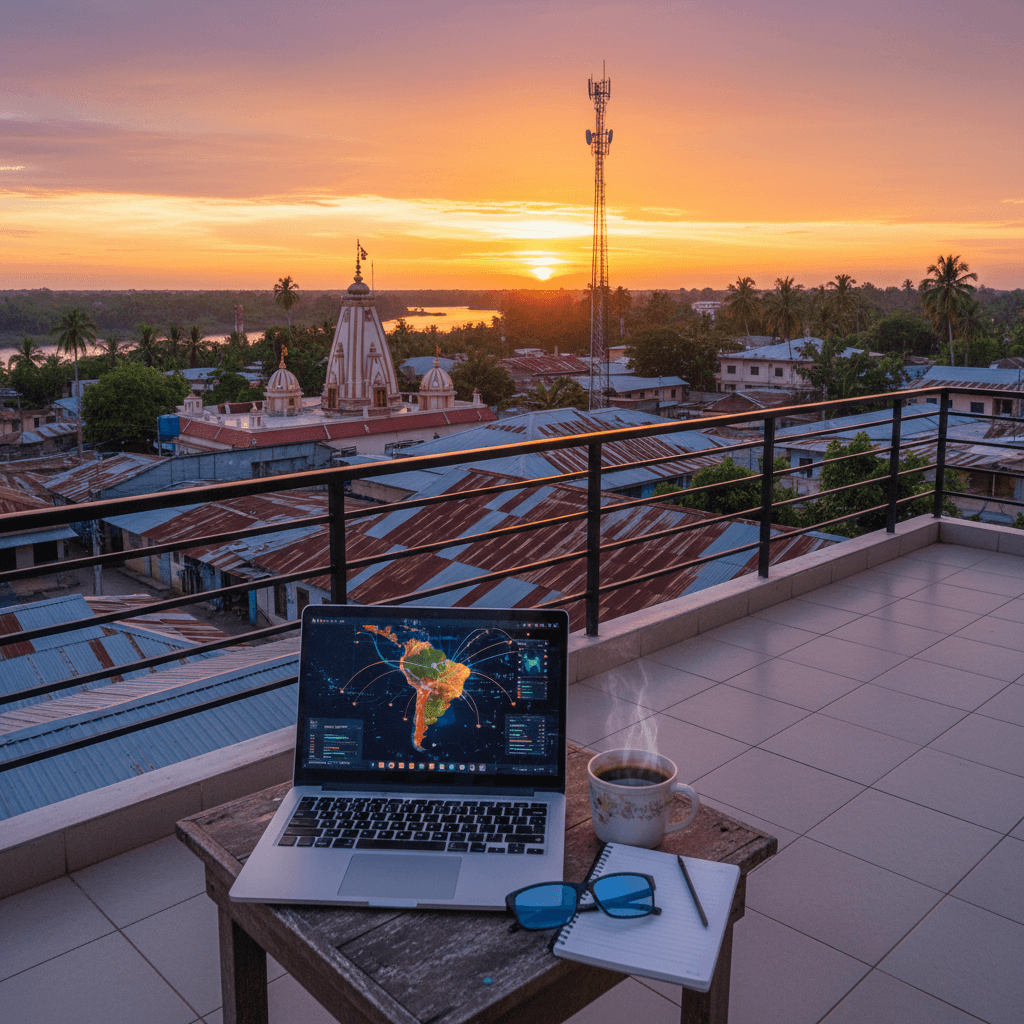
Living in Lethem feels like being a pioneer. Most of the action centers around the commercial strip near the border, where Brazilian traders cross the Takutu River Bridge to buy goods. The town itself is small, but the horizon feels infinite. The emotional experience of being here is one of profound isolation mixed with a strange sense of freedom. When the sun sets over the Kanuku Mountains, the sky turns shades of purple and orange that you just don't see in a polluted city.
Nomads who find their way here are usually the adventurous type, often stopping through on their way to explore the interior or heading south into Brazil. You'll find yourself hanging out at places like the Takutu Hotel, which serves as a de facto social hub. It's one of the few spots where you can rely on a steady breeze, a cold Banks beer, and a somewhat consistent internet connection to check your emails before heading out into the bush.
The Reality Check
You need to manage your expectations before booking a flight. Guyana doesn't have a specific digital nomad visa, so most visitors rely on a standard tourist stay, which is typically 30 days but can often be extended at the immigration office. Infrastructure is basic. Power outages happen, and the internet is more "functional for messaging" than "ready for 4K video streaming."
- The Heat: It is intense and dry. Most life happens in the early morning or late afternoon to avoid the 35 degree Celsius peaks.
- The Connectivity: You'll want a local GTT or Digicel SIM card, but don't expect blazing speeds. It's a "work in the morning, explore in the afternoon" kind of town.
- The Transport: Getting here is an adventure in itself. You can take a 1 hour flight from Georgetown or brave a 12 to 15 hour minibus ride through the jungle, which is a rite of passage for any serious traveler in Guyana.
Who Is Lethem For?
This town is for the nomad who is tired of the Tulum and Medellin circuit. It’s for the person who wants to spend their weekends on an ATV crossing savannahs or spotting giant otters and jaguars in the nearby wetlands. It isn't easy, and it isn't always comfortable, but it is undeniably real. If you can handle the dust and the occasional lizard in your bathroom, Lethem offers a perspective on South America that very few outsiders ever get to see.
The Frontier Budget
Living in Lethem feels like stepping into a frontier town where the rules of typical digital nomad hubs don't apply. You won't find the standardized price lists of Georgetown here. Instead, you are dealing with a border town economy that fluctuates based on the supply chain from the capital and the exchange rate with the Brazilian Real across the bridge in Bonfim.
Most nomads find that a monthly budget of $1,200 to $1,500 USD allows for a comfortable, albeit basic, lifestyle. This isn't a place where your money buys luxury; it buys access to one of the most remote savannahs on earth. You are paying a premium for logistics, especially for anything imported or reliant on steady electricity and cooling.
Accommodation and Base Camps
Traditional apartment rentals for short terms are rare. There isn't a local equivalent of Zillow or a heavy Airbnb presence. Most long term visitors negotiate monthly rates directly with local guesthouses. The Takutu Hotel is the standard bearer for reliability, where you can expect to pay around $50 to $80 USD per night for a room with air conditioning and functional WiFi. If you are staying for a month, you can often talk these rates down significantly, sometimes closer to $900 USD for a block booking.
- Guesthouse Monthly Rate: $800 to $1,100 USD
- Basic Room (Fan only): $35 to $45 USD per night
- Luxury Lodge (Outskirts): $150+ USD per night
Food and Daily Sustenance
Dining out in Lethem is a mix of Guyanese creole flavors and Brazilian influence. You'll find plenty of spots serving up roast meats and rice and beans. A solid meal at a local eatery will run you about $7 to $12 USD. If you are shopping at the local markets, prices for fresh produce are reasonable, but anything in a box or a can that had to travel the long road from Georgetown will have a noticeable markup.
Coffee culture hasn't quite hit the Rupununi yet. You'll likely be drinking instant coffee or Brazilian brands. Expect to spend about $300 to $400 USD a month on food if you mix market shopping with a few nights out at the hotel bars.
Connectivity and Logistics
This is the biggest "hidden" cost of Lethem. Internet isn't just a utility; it's a challenge. While hotels provide WiFi, it's often sluggish during peak hours. Many remote workers invest in a local SIM card from Digicel or E-Net and buy data bundles as a backup. A heavy data user might spend $60 to $100 USD a month just to stay stable.
Transportation is another factor. While the town is walkable, the heat usually wins. Local taxis are cheap for short hops, usually a few dollars, but the real cost comes from getting here. A flight from Georgetown is around $150 USD one way. The bus is cheaper, around $60 USD, but it's a grueling 15 hour journey that most people only do once for the experience.
Visa and Stay Requirements
Guyana hasn't jumped on the digital nomad visa bandwagon yet. Most Western travelers, including those from the US, Canada, and the UK, can enter on a standard tourist visa which is usually granted for 30 days. You can often apply for extensions at the Ministry of Home Affairs in Georgetown, but in Lethem, your options for official paperwork are limited. Most people use Lethem as a 30 to 60 day base before moving on to Brazil or heading back to the coast.
- Tourist Visa Cost: Usually free or $25 USD depending on nationality
- Visa Extension: Approx $25 USD
- Local SIM Card: $5 to $10 USD for the kit
For the Frontier Nomad
If you're coming to Lethem to work, you'll want to stay as close to the Commercial Zone as possible. This isn't a neighborhood in the traditional suburban sense; it's the heart of town where the shops, government offices, and banks cluster. Living here puts you within walking distance of the few spots with reliable power and backup generators.
Most nomads gravitate toward the Takutu Hotel area. Since dedicated coworking spaces don't exist here yet, this vicinity is your best bet for stable WiFi and a desk. You'll find that many remote workers treat the hotel's common areas as their de facto office. Expect to pay around $60 to $80 USD per night for a room with air conditioning, which is a non-negotiable comfort given the savannah heat.
- Internet: Relies heavily on E-Networks or GTT; speeds are modest but functional for emails and basic calls.
- Vibe: Busy during the day with cross-border traders, quiet but dusty at night.
- Best for: Short-term stays and those who need proximity to the Brazil border crossing.
For Long-Term Expats
Expats and NGO workers often look toward the residential pockets on the eastern edge of town, moving away from the airstrip. These areas offer a bit more breathing room and a chance to rent a standalone house rather than staying in a guesthouse. It's much quieter here, and you'll get to experience the true pace of life in the Rupununi.
Renting a small house can be a bit of a "word of mouth" game. You won't find these listings on major apps. Instead, you'll need to talk to locals at the markets or check notice boards. Monthly rent for a basic, furnished house can range from $400 to $700 USD, depending on how modern the amenities are. You'll likely be responsible for your own water storage and security arrangements.
For Solo Travelers and Adventurers
If you're here for the raw experience and don't mind a bit of a commute, look at the outskirts near the savannah trails. This isn't about luxury; it's about being the first person out on the track in the morning. Solo travelers often prefer the smaller guesthouses located just off the main road leading toward the mountains.
These spots are social hubs where you'll meet ranch hands, researchers, and other travelers heading into the interior. It’s the best place to find a seat on a 4x4 or a minibus heading to Georgetown. Prices for a basic bed in these guesthouses usually hover around $30 to $50 USD per night. It's rugged, but it's where the best stories start.
- Transport: You'll definitely want a bicycle or a local contact with a motorbike.
- Social: High; you'll meet everyone passing through the region.
- Safety: Generally safe, though it's dark at night, so a headlamp is a piece of gear you'll use daily.
For Families
Lethem is a challenging move for families due to the limited infrastructure, but those who do settle here prefer the northern residential clusters. These areas feel more like a community, with more space for kids to play and less commercial traffic. You're still within a five minute drive of the main shops, but you're far enough away from the border noise to feel settled.
Families usually prioritize houses with fenced yards and reliable water tanks. While there aren't many "amenities" like parks or playgrounds, the proximity to the wide open savannah provides a natural backyard. Most families end up hiring local help for cooking and cleaning, which is quite affordable, often costing around $200 to $300 USD per month for part-time assistance.
Connectivity on the Frontier
Working from Lethem requires a mindset shift. You aren't in a tech hub; you're in a dusty border town where the savannah meets the rainforest. While the town serves as the primary link between Guyana and Brazil, the digital infrastructure is still catching up to its status as a regional gateway. You won't find sleek glass offices with ergonomic chairs here. Instead, your "office" will likely be a shaded veranda or a corner of a local guesthouse.
Verify current primary internet service providers with local sources. Most reliable connections are found in the established hotels near the airstrip or the commercial center. Speeds are modest, often hovering between 5 Mbps and 10 Mbps on a good day. It is enough for emails, Slack, and the occasional voice call, but you should manage your expectations regarding high definition video conferencing or uploading large video files. Power outages can happen, especially during the rainy season, so a fully charged power bank and a laptop with a solid battery are non negotiable tools for your kit.
Coworking and Work Friendly Spots
Since dedicated coworking spaces don't exist in Lethem yet, nomads usually gravitate toward the Takutu Hotel. It is the town's most established anchor for travelers and offers the most consistent WiFi in the area. The patio area provides a decent breeze and enough space to spread out with a laptop. If you need a change of scenery, some of the smaller guesthouses along the main road toward the Brazil bridge offer quiet corners, though you should always check the signal strength before settling in for a deep work session.
For a more local feel, a few small cafes near the market area provide a place to sit, but they are better suited for quick tasks rather than an eight hour shift. Most remote workers here tend to front load their heavy bandwidth tasks while in Georgetown and use their time in Lethem for writing, planning, or offline projects. If you really get stuck, some locals use Brazilian SIM cards like Vivo or Claro because the proximity to the border allows for roaming signals from Bonfim, which can sometimes be faster than the local Guyanese networks.
Mobile Data and SIM Cards
Getting a local SIM card is your best bet for a backup. You can pick up a GTT or Digicel card at small shops in the town center. To get set up, you will need to show your passport and pay a small fee for the SIM, usually around $500 to $1,000 GYD. Data plans are relatively affordable, but they are sold in capped bundles. Most nomads find that a 10GB or 15GB plan covers their mobile needs for a week or two, provided they aren't streaming movies.
- GTT Top Up: Available at most convenience stores near the airstrip.
- Signal Strength: Strongest in the town center, fades quickly as you head into the Rupununi savannah.
- Mobile Hotspots: Highly recommended as a primary backup for hotel WiFi.
Digital Nomad Logistics
Guyana does not currently offer a specific digital nomad visa. Most visitors enter on a standard tourist stay, which is typically granted for 30 days and can be extended at the immigration office in Georgetown. If you are planning to stay long term, you will need to keep a close eye on your stamps. The cost of living is higher than you might expect for such a remote area because many goods are trucked in from the capital or brought over from Brazil.
- Daily WiFi Budget: Often included in room rates of $15,000 to $25,000 GYD per night.
- Data Costs: Expect to spend about $3,000 to $5,000 GYD per week for a generous mobile data plan.
- Hardware: Bring every adapter and cable you need. Replacement electronics are nearly impossible to find in Lethem.
Living here is about embracing the frontier lifestyle. You trade fiber optic speeds for incredible sunsets over the Kanuku Mountains and the chance to explore the interior on your weekends. It is a place for the self sufficient worker who values adventure over a perfect ping rate.
Staying Safe in the Frontier
Lethem feels more like a quiet ranching outpost than a high stakes border town, but its position on the edge of Brazil means you need to keep your wits about you. Most people here are incredibly welcoming, though the frontier energy means things can get a bit rowdy around the bars near the Takutu River Bridge after dark. Petty theft isn't rampant, but leaving expensive tech visible in a parked 4x4 is asking for trouble.
Walking around during the day is generally fine, but the sun is your biggest adversary. The savannah heat is intense, so nomads usually plan their movements for early morning or late afternoon. If you're heading out to the surrounding villages or exploring the Kanuku Mountains, always go with a local guide. It's easy to lose your bearings in the vast Rupununi grasslands, and cell service drops to zero the moment you leave the town center.
Regarding solo female travelers, the vibe is mostly respectful, though you might deal with some unwanted attention in crowded areas like the market. It's best to stick to well lit main roads if you're out at night. Most expats and long term visitors use trusted taxi drivers rather than walking home late, especially since the street lighting can be hit or miss.
Healthcare and Medical Realities
Medical facilities in Lethem are basic. The Lethem Regional Hospital can handle minor injuries, infections, or basic diagnostic tests, but it isn't equipped for complex surgeries or serious emergencies. If something major happens, you're looking at a medevac flight to Georgetown or crossing the bridge into Boa Vista, Brazil, which has private hospital options.
Malaria and Dengue are present in the region, so your best defense is a high quality repellent and ensuring your accommodation, like the Takutu Hotel, has intact mosquito netting. Most travelers also opt for Yellow Fever vaccinations before arriving, as you'll likely be asked for your card if you decide to cross the border into Brazil.
- Emergency Number: Dial 911 for police or 913 for medical emergencies.
- Pharmacies: There are a few small dispensaries in town that carry basics like antibiotics and painkillers, but bring a full supply of any specific prescription meds you need.
- Water Safety: Do not drink the tap water. Stick to bottled water, which is sold in almost every small shop (locally called "bottom houses").
- Health Insurance: Ensure your policy specifically covers "medical evacuation" by air. Without it, a flight to Georgetown can cost upwards of $2,000.
The Visa Situation
Guyana doesn't have a specific digital nomad visa yet. Most remote workers enter on a standard Tourist Visa, which is usually granted for 30 days upon arrival for many nationalities, including US, UK, and Canadian citizens. You can often apply for extensions at the Ministry of Home Affairs if you're staying in Georgetown, but in Lethem, you'll need to keep a close eye on your stamps.
Some long term travelers manage their stay by doing "border runs" to Brazil, though this isn't a guaranteed long term strategy. Since you're working remotely, keep your professional life low key. The immigration officers are looking for people taking local jobs, not someone typing on a laptop at a cafe. Always have proof of onward travel and a bank statement showing you can support yourself, as they occasionally ask for these at the small Lethem airport strip.
The Frontier Layout
Lethem isn't a city in the traditional sense. It's a sprawling frontier town where the streets are wide, dusty, and laid out in a way that makes walking under the midday sun a bit of an endurance test. Most of the action happens around the Barrack Road area and the commercial strip near the Brazilian border. Since the town is the gateway to the Rupununi savannah, the infrastructure is built more for rugged utility than urban convenience.
Getting Around Town
You won't find Uber or any high tech ride hailing apps here. Instead, local taxis are the lifeblood of the town. You can usually find them clustered near the airport or around the larger shops. A short trip within the town limits typically costs around $500 to $1,000 GYD. It's always smart to agree on the price before you hop in, though drivers are generally straightforward with visitors.
- Bicycles: Many locals and long term visitors find that a sturdy mountain bike is the best way to handle the flat terrain and the heat. Some smaller guesthouses might have one you can borrow, or you can check the local general stores to buy a basic model if you're staying for a month.
- Walking: It's doable in the early morning or late afternoon. However, the lack of shade and the red dust kicked up by passing trucks makes this less than ideal during the peak of the day.
- Motorbikes: If you're comfortable on two wheels, motorbikes are common. They handle the unpaved side streets much better than a small car would.
The Journey from Georgetown
Getting to Lethem is an adventure in itself, and you have two very different options depending on your budget and tolerance for discomfort. Most nomads who value their sanity and their laptop screens choose to fly. Verify current airline operations and flight schedules with official sources. The flight takes about 60 to 90 minutes and offers incredible views of the rainforest canopy meeting the savannah. A round trip ticket usually hovers around $250 to $300 USD.
The alternative is the infamous "bus" ride. These are actually 12 seater minibuses that depart from Georgetown, often near the Stabroek Market area. It's a grueling 12 to 18 hour journey over unpaved roads and through the rainforest. While it only costs about $10,000 to $15,000 GYD, it's notorious for being incredibly bumpy and dusty. If it's the rainy season, the road can become a muddy trek that takes even longer. Most seasoned travelers only recommend this if you're on a very tight budget or looking for a serious "roughing it" story.
Crossing into Brazil
One of the unique perks of being in Lethem is the proximity to Bonfim, Brazil. The Takutu River Bridge connects the two countries, and it's a quick trip across. You can take a taxi from the center of Lethem to the border checkpoint. Just remember that Guyana drives on the left and Brazil drives on the right; the bridge has a clever crossover system to swap lanes. Make sure your yellow fever vaccination card is handy, as officials occasionally ask for it when crossing back and forth.
Heading into the Savannah
If you want to explore the surrounding Rupununi region or visit nearby indigenous villages like St. Ignatius, you'll need something more substantial than a sedan. Renting a 4x4 is expensive and usually requires a local driver who knows the trails. Most nomads coordinate with lodges or local guides who use modified SUVs or ATVs to navigate the bush tracks. Expect to pay a premium for these excursions, as fuel prices in the interior are significantly higher than in the city.
English is the official language of Guyana, which makes Lethem a surprisingly easy place to land if you are coming from North America or Europe. You won't struggle to read menus or chat with the staff at the Takutu Hotel. However, because Lethem sits right on the border with Brazil, the linguistic vibe is far more fluid than you might expect. You are just as likely to hear Portuguese as you are English, especially around the commercial strips where Brazilian traders cross over to shop.
The Local Dialect
While English is the standard, most locals speak Guyanese Creole in their day to day lives. It is fast, rhythmic, and borrows heavily from West African and British influences. You will understand most of it if you listen closely, but it can take a few days for your ears to adjust to the cadence. If you are heading out into the Rupununi savannah for an ATV trip, you will also encounter various Indigenous languages like Macushi or Wapishana. Most people in these communities are bilingual, so you can still get by with English just fine.
The Brazilian Influence
Because the Takutu River Bridge links Lethem directly to Bonfim, Brazil, Portuguese is the unofficial second language here. Many shop owners and taxi drivers are fluent in both English and Portuguese. If you have been traveling through South America and your Portuguese is better than your English, you will feel right at home. It is a true frontier town where the two languages blend together in shops and markets. Learning a few basic Portuguese phrases like bom dia or obrigado goes a long way with the cross border crowd.
Staying Connected
Communication isn't just about what you say, it is about how you stay online. Lethem is remote, and the infrastructure reflects that. Digicel and GTT are the two main service providers. You can pick up a SIM card easily in town, but don't expect blazing 5G speeds. Most nomads find the connection is enough for emails and basic messaging, but high bandwidth video calls can be a gamble. The WiFi at local spots like the Takutu Hotel is generally reliable for basic tasks, but it is always smart to have a backup data plan.
- Primary Language: English
- Common Languages: Guyanese Creole, Portuguese, Macushi
- SIM Card Cost: Approximately $5 to $10 USD for a starter pack with data
- Best Networks: Digicel usually has better coverage in the rural savannah areas
Communication Tips
People in Lethem are generally quite friendly and direct. A polite good morning or good afternoon is expected when you enter a shop or start a conversation. It is a small town where reputations matter, so being respectful to the locals goes a long way. If you are planning to head deep into the interior, tell someone your route before you go. Signal drops off quickly once you leave the main town area, and you won't want to rely on your phone for navigation in the bush.
WhatsApp is the king of communication here. Whether you are booking a 4x4 tour or checking room availability, most businesses prefer a quick text over a phone call or email. Make sure you have it installed and updated before you arrive. You will find that even the smallest local operators use it as their primary storefront.
The Rhythm of the Savannah
In Lethem, the weather isn't just a topic of conversation; it dictates the entire pace of life. Being deep in the Rupununi savannah means you are dealing with a tropical climate that oscillates between intense heat and dramatic downpours. Most nomads find that the days are consistently hot, with temperatures often hovering around 32°C (90°F). It is the kind of heat that makes those air conditioned rooms at the Takutu Hotel feel like a necessary luxury rather than a splurge.
The year is split into two distinct periods: the dry season and the wet season. If you want to actually get work done and explore the surrounding trails without getting stuck in a mud pit, timing your arrival is everything. The landscape changes so drastically between seasons that a spot you visited in January might be completely underwater by June.
The Dry Season: October to April
This is widely considered the best time to base yourself in Lethem. From October through April, the savannah is golden, the roads are passable, and the skies are generally clear. This is the prime window for those multi day ATV and 4x4 adventures that the region is famous for. You can zip across the plains toward the Brazilian border without worrying about a flash flood washing out the track.
- Dust and Heat: Be prepared for a lot of dust. The red dirt of the Rupununi gets everywhere during these months, and the sun can be relentless.
- Ease of Travel: Those 12 seater minibuses from Georgetown are never exactly comfortable, but they are significantly more reliable when the roads aren't turned into soup.
- Wildlife Spotting: As water sources shrink, animals congregate around the remaining ponds, making it the best time for photography and nature treks.
The Wet Season: May to August
When the rains hit, usually starting in May and peaking in June and July, Lethem transforms. The parched brown grass turns a brilliant, neon green almost overnight. While it is beautiful, it presents a unique set of challenges for anyone trying to maintain a nomadic lifestyle. The humidity spikes, and the bugs, especially the mosquitoes, become a constant presence that requires a steady supply of repellent and a high quality net.
Travel during this time is unpredictable. The main road connecting Lethem to the capital often becomes a series of deep craters and mud bogs. If you are planning to visit during the rains, skip the bus and book a flight from Georgetown. It is more expensive, but it saves you from a 24 hour ordeal in a stuck van. Many of the remote lodges and camping spots also become inaccessible as the rivers rise, so your weekend escape options will be limited to what is reachable by boat.
The Sweet Spot: September
If you can swing it, September is often the "goldilocks" month. The rains have started to taper off, so the dust hasn't quite taken over yet, but the landscape is still lush and green. The temperatures are slightly more bearable, and the town feels more like its authentic, quiet self. It is a great time to settle in, find a reliable WiFi signal, and enjoy the frontier atmosphere before the heat of the deep dry season kicks back in.
Visas and Legalities
Guyana doesn't have a specific digital nomad visa, so you'll likely be entering on a standard tourist visa. For most visitors, this allows for a 30 day stay, though you can often apply for extensions at the Ministry of Home Affairs in Georgetown. Since Lethem is a border town, many travelers find it easy to do a quick crossing into Bonfim, Brazil, to reset their paperwork if they aren't ready to leave the Rupununi just yet. Keep your passport on you at all times; police checkpoints are common on the road heading north.
Connectivity and Power
Don't expect fiber optic speeds here. Most nomads rely on the WiFi at places like the Takutu Hotel, which is stable enough for emails and basic browsing but might struggle with heavy video calls. It is a smart move to grab a local SIM card from GTT or Digicel as soon as you arrive. Data plans are relatively cheap, and you can use your phone as a hotspot when the hotel router acts up. Power outages happen occasionally, especially during the rainy season, so a decent power bank is a mandatory part of your kit.
Budgeting for the Frontier
Lethem is more expensive than you might expect for a rural town because almost everything is trucked in from Georgetown or imported from Brazil. You should budget around $1,200 to $1,500 USD per month to live comfortably. While there aren't formal coworking spaces, you'll spend a fair bit on air conditioned rooms and transport.
- Basic Hotel Room: $50 to $80 USD per night
- Local Meal: $7 to $12 USD
- Monthly Grocery Run: $300 to $400 USD
- Minibus to Georgetown: $60 to $80 USD
Getting Around
The town itself is small enough to walk, but the heat is intense. Most people use local taxis for short hops. If you are heading to Georgetown, you have two choices: a 1 hour flight or a grueling 12 to 16 hour minibus ride. The bus is an experience you probably only want to have once. It travels over unpaved red clay roads that turn into thick mud during the rains. If you choose the road, pack plenty of water and expect to be covered in dust by the time you arrive.
Health and Safety
Lethem is generally safer than Georgetown, but you still need to be smart. Stick to well lit areas at night and keep an eye on your gear. Malaria and dengue are present in the region, so your primary defense is a high quality mosquito net and plenty of repellent. The local hospital can handle basic issues, but for anything serious, you will want to be evacuated to a private facility in the capital. Make sure your travel insurance specifically covers remote medical evacuation.
When to Visit
The weather dictates everything here. The dry season runs from September to April, and this is when the savannah is most accessible for ATV trips and exploring. During the wet season, the landscape turns into a massive wetland. While it is beautiful, many roads become impassable, and the humidity levels will make you very thankful for that air conditioning at the Takutu.
Need visa and immigration info for Guyana?
🇬🇾 View Guyana Country GuideWild Card
Expect the unexpected