Lecce
🇮🇹 Italy
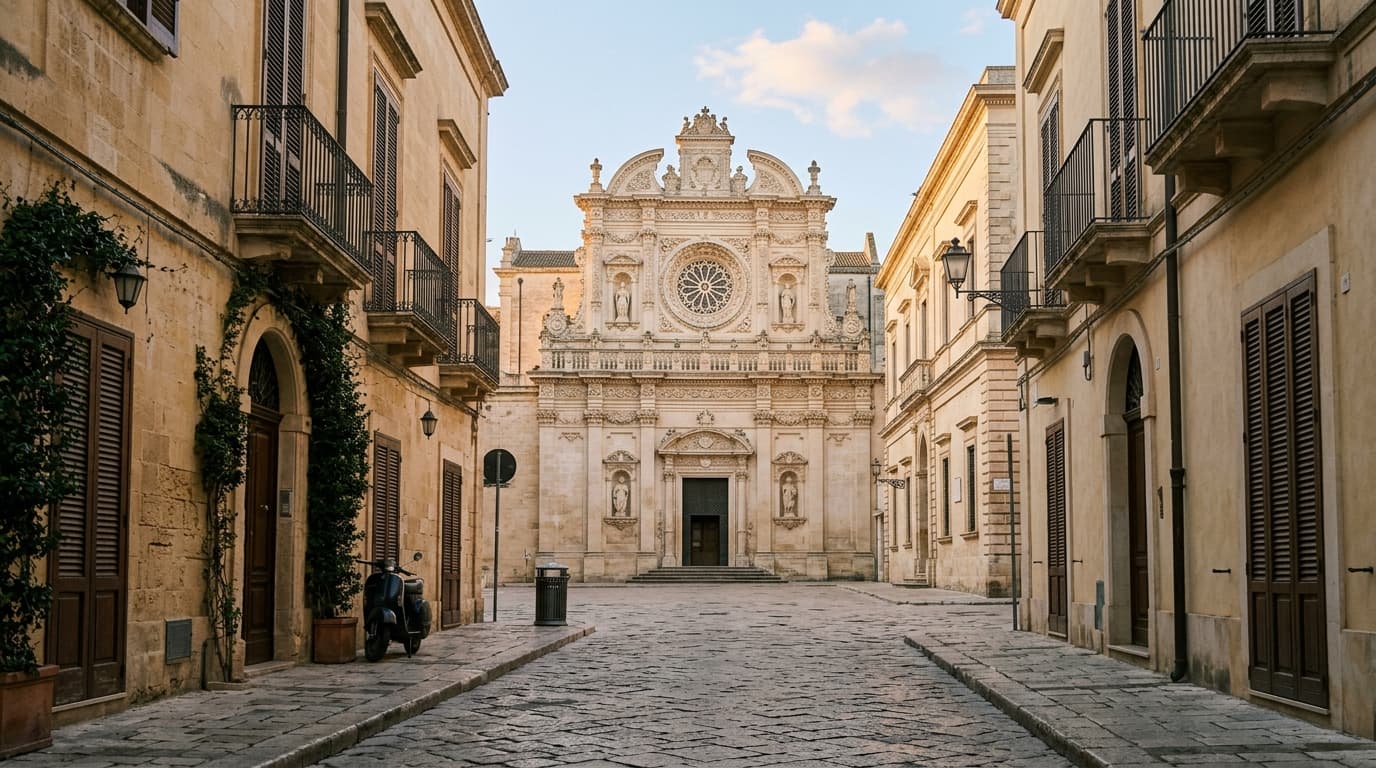
Lecce feels built for people who want to work, eat and wander without constantly checking a map. The centro storico is compact, so you can cross from Piazza Sant'Oronzo to Piazza del Duomo on foot, past limestone facades that turn gold in the late afternoon and stone streets that stay warm well into the evening. It’s beautiful, yes, but it’s also calm in a way bigger Italian cities rarely are.
The pace is southern and unhurried. Lunch stretches out, shops close, scooters buzz by and then the city wakes back up after dark with families, students and older couples filling the squares. You’ll smell espresso, grilled meat and the occasional whiff of exhaust drifting through narrow lanes. For slowmad types, that rhythm is the point.
Most nomads like Lecce for three things: it’s cheaper than the big-name hubs, it’s easy to walk and the beaches of Salento are close enough for a day trip. Expats also like the sense of normal life here, which is stronger than in tourist-heavy towns. You’re not coming for a huge coworking tribe or a late-night party circuit. The scene is smaller and that’s part of the trade-off.
The downside is real. English-speaking meetups are limited, the international community is still modest and flight connections can be annoying because you usually route through Brindisi or Bari. Summer can be brutally hot, with humidity that clings to your skin and stone buildings that hold the heat long after sunset. In winter, the city can feel sleepy, especially if you’re used to a constant stream of events.
What feels different here
- Daily rhythm: Long lunches, quiet afternoons and busy evenings.
- Walkability: Most of the old town is car-light and easy to cover on foot.
- Atmosphere: More local, less polished, less overrun than Italy’s major nomad cities.
- Access: Easy reach to Otranto, Gallipoli and both the Adriatic and Ionian coasts.
If you want nonstop networking, Lecce will probably feel too small. If you want good food, low stress and a place where the evenings still sound like conversation and clinking glasses instead of club speakers, it lands very well.
Lecce is cheap for Italy, but it’s not bargain-basement cheap. A solo nomad who keeps things simple can expect to spend around €1,200 to €1,400 a month, while a more comfortable setup usually lands between about €1,600 and €2,000 ($1,733 and $2,167).
Housing is where the real savings show up. A one-bedroom in the centro storico typically runs around €500 to €600 ($542 to $650), but if you move just outside the old town, places in Mazzini or San Lazzaro are often about €400 to €500 ($433 to $542). The east side, including Salesiani, Aria Sana, Stadio and Castromediano, is usually easier on the wallet and feels more residential, with more modern buildings and less weekend noise from bars and scooters echoing off stone streets.
Typical monthly costs
- Studio or room: about €320 to €450 ($347 to $488), depending on area and condition
- 1BR apartment: about €420 to €600 ($455 to $650)
- Work and internet: €50 to €200 ($54 to $217), depending on whether you use cafés, home Wi-Fi or coworking
- Food: €250 to €350 ($271 to $379) if you mix groceries and casual meals out
- Local transport and short trips: €80 to €200 ($87 to $217)
Eating out won’t wreck your budget if you keep it local. A rustico leccese, focaccia or slice of pizza usually costs €2 to €4 ($2 to $4) and a panino or puccia with a drink tends to be €5 to €8 ($5 to $9). Sit-down lunches are still reasonable, with pasta dishes around €9 to €14 ($10 to $15), pizza at €7 to €10 ($8 to $11) and a glass of house wine for €3 to €5 ($3 to $5).
Coworking is cheaper than in Rome or Milan, though the scene is smaller. Hot desks in Lecce start around €65 ($70) a month in older listings and day passes are often under €20 to €25 ($22 to $27). Most nomads who stay longer either split their time between a café, home and a coworking room or they just skip coworking altogether and work from a cool apartment with good air conditioning, because summer heat here can be brutal and the humidity sticks to you.
Transport is easy to budget. Local buses are only a few euros, regional trains to Bari start around €11 ($12) and the Brindisi to Lecce bus can be about €4.50 ($5). If you want a slower, calmer base with good food, walkability and lower prices, Lecce makes a lot of sense. If you want a big international network and nonstop flights, it doesn’t.
Lecce is small enough that you can cross most of it on foot, but the neighborhood you pick still changes the whole mood. The centro storico gives you baroque facades, café noise and late-night chatter drifting off Piazza Sant'Oronzo, while the outer areas are calmer, cheaper and easier for longer stays.
Nomads
Mazzini and San Lazzaro are the sweet spot for most remote workers. You’re close to the old town without paying centro storico rents and you get easier supermarket runs, better bus access and a more normal day-to-day rhythm.
- Rent: about €450 to €700 for a 1BR
- Best for: longer stays, decent internet, quick walks into town
- Downside: less charm than the historic center, more traffic and apartment blocks
If you want quiet workdays, look at Aria Sana, Salesiani and the Stadio area. They’re more residential, so you’ll hear scooters, apartment doors slamming and the occasional dog barking instead of bar noise at midnight.
Expats
San Lazzaro works well for expats who want access to clinics, shops and an easier commute without living in the tourist core. It’s one of the few areas where you can live like a local and still be in the centro in 15 to 20 minutes on foot.
- Rent: about €450 to €700 for a 1BR
- Best for: practical long-term living, errands, steady routine
- Downside: less postcard pretty, fewer evening terraces
Castromediano is another smart pick if you want a quieter base and don’t mind being a bit outside the center. It’s less romantic, sure, but the tradeoff is lower rents and fewer tourists wandering past your window at 11 p.m.
Families
Salesiani, Castromediano and the east side of Lecce make the most sense for families. Apartments are usually larger, streets are less crowded and you’re more likely to find parking without circling for half an hour.
- Rent: about €400 to €650 for a 1BR, more for 2BRs
- Best for: space, quieter streets, easier parking
- Downside: fewer cafés and little daily-life friction if you want the center often
Families who stay longer usually prefer the modern residential zones over the centro storico because the old town’s cobblestones, narrow lanes and summer noise get old fast.
Solo travelers
The historic center is the obvious choice for short stays. You’re steps from dinner, aperitivo and the main sights and at night the limestone glows warm under the streetlights while conversations spill out of the bars.
- Rent: about €400 to €550 for a studio
- Best for: atmosphere, walking everywhere, easy social life
- Downside: noisier, pricier and a pain with luggage or a car
Skip the prettiest lane if you’re staying a month or more and need sleep. For most solo travelers, the center is great for a week, then Mazzini or San Lazzaro starts making more sense.
Lecce’s internet is good enough for remote work, but don’t expect Milan-level infrastructure or a huge coworking scene. In the centro storico, fiber is common in apartments and guesthouses, though old stone buildings can mean patchy signal in back rooms and courtyards. Cafés around Piazza Sant’Oronzo and Via Nazario Sauro usually have usable Wi-Fi, but the air-conditioning can be weak and the noise level isn't great for calls.
Most nomads who stay more than a week end up working from home, a café in Mazzini or a coworking space a few days a week. Summer is the tricky season. The heat hangs over the pavements, scooters buzz past and every open door leaks espresso, fried pastry and exhaust into the street, so stable internet matters more than pretty desks.
Where to work
- Impact Hub Lecce: One of the better-known coworking options, with a professional setup, meeting space and a more serious work feel than a café.
- Spaziomag: Smaller and quieter, good if you want a low-key desk without the chatter you get in central coffee bars.
- Cafés in Mazzini and San Lazzaro: Better for a laptop session than the historic center, especially if you order properly and keep calls short.
- Home setup: Often the smartest choice for medium-term stays, since rents are still manageable and apartments usually have better Wi-Fi than public spots.
Coworking passes in Lecce are still fairly cheap by Italian standards. Day passes often land under €20 to €25 ($22 to $27) and monthly hot desks start around €65 ($70) in older price listings, though the best spaces can cost more for private offices or meeting-room access. Don’t expect a long list of options. There just aren’t many.
Internet setup tips
- Check fiber before you sign: Ask the landlord which provider is installed and get a speed test screenshot, not just a promise.
- Use a local SIM as backup: TIM, Vodafone and WindTre all have solid coverage in town, which helps when your apartment Wi-Fi drops.
- Book a desk for calls: If you do client meetings, pay for a coworking day instead of fighting café noise and clinking cups.
- Pick your area carefully: Mazzini and San Lazzaro are easier for work than the busiest lanes of the old town.
The short version: Lecce works well if you want calm, decent internet and a lower monthly burn. It’s not the place for constant networking or a flashy nomad crowd. It is the place for quiet mornings, long lunches and an afternoon call with the shutters half-closed while church bells drift in from the piazza.
Lecce feels generally safe, especially in the centro storico and the central neighborhoods around Mazzini and San Lazzaro. You’ll still want the usual city instincts, though, because scooters cut through narrow streets, pickpockets work train stations and summer crowds can make Piazza Sant’Oronzo feel a little careless after dark.
The bigger day-to-day annoyance is heat, not crime. Summer afternoons can feel heavy and dusty, with hot stone underfoot, scooter exhaust in the air and very little shade in the old town. If you’re here from June through September, plan errands early, carry water and don’t assume every pharmacy or café will be open when you want it.
What to expect by area
- Centro storico: Safe and walkable, but noisier at night and pricier. Tourist foot traffic drops fast in the shoulder season, then returns with a vengeance in summer.
- Mazzini and San Lazzaro: A practical base for longer stays, with supermarkets, pharmacies and fewer late-night crowds. It’s quieter, but still central enough that you can walk most places.
- Stadio, Salesiani and Castromediano: More residential and calm. These areas suit people who want cheaper rents and don’t mind relying on buses or a bike.
For healthcare, Lecce is decent for a mid-sized southern Italian city. The main public hospital is Vito Fazzi, which handles emergencies and specialist care and there are plenty of private doctors, dental clinics and pharmacies in the center. Pharmacies often post night and holiday duty hours, so you’re not stranded if you need medication late.
Travelers and expats usually use the local family doctor, a private clinic or a walk-in specialist for anything non-urgent. English isn’t guaranteed, so it helps to keep a translation app handy and know the Italian words for symptoms, prescriptions and allergies. For a simple prescription refill or a blood test, the system works fine. For anything bureaucratic, it can be maddeningly slow.
Health tips that actually matter
- Bring prescriptions: Keep the generic drug name, not just the brand, on hand.
- Get insurance: Private coverage makes a big difference for specialist visits and faster appointments.
- Use the pharmacy network: Farmacie are often your quickest first stop for minor issues, sunscreen, motion sickness meds and basic advice.
- Watch the summer heat: Dehydration sneaks up fast in the old town’s limestone heat, especially if you’re walking a lot.
Emergency care is straightforward, but don’t expect the speed you’d get in a big private system. If you need urgent help, call 112. For most nomads, the setup is good enough, especially if you’re healthy, insured and not relying on Lecce for complex care.
Lecce is easy to get around on foot and that’s the main reason people settle here. The centro storico is compact, the streets are mostly flat and you can cross from Piazza Sant’Oronzo to Piazza del Duomo in a few minutes, passing stone facades, espresso bars and the smell of warm pasticciotto drifting out of pastry shops.
For daily life, walking beats everything else. Cars make the old town annoying fast, with tight lanes, limited access and parking that can turn into a grim little treasure hunt. If you’re staying near Mazzini, San Lazzaro or the historic center, you’ll probably walk to cafés, markets and dinner spots without thinking about it.
Walking and local movement
- Best for: Centro storico, Mazzini, San Lazzaro and nearby residential streets.
- Downside: Summer heat is brutal, especially in July and August, so midday walks can feel sticky and drained of energy.
- Tip: Do your longer walks early or after sunset, when the streets fill with chatter and the air finally cools.
Bikes can work, but Lecce isn’t a bike-first city. The old center has narrow streets, mixed traffic and enough scooters, delivery vans and stray pedestrians to keep things mildly chaotic. A foldable bike helps more than a fancy city bike if you’re living here medium-term.
Public transport and day trips
- Local buses: Cheap, but routes and schedules can feel patchy if you’re used to bigger cities.
- Regional trips: Buses and trains make it simple to reach Otranto, Gallipoli and other Salento towns for beach days or dinner.
- Brindisi connection: Useful for flights, since Lecce doesn’t have major direct international service.
For rail, Lecce is linked to Bari and Brindisi, so you can still get out of town without much hassle. A trip to Bari takes about 1 hour 40 minutes on faster regional trains and Brindisi is the obvious airport run if you’re flying in or out. Taxis exist, but they’re not the cheap answer for everyday movement, so most long-stay visitors reserve them for late nights or heavy luggage.
If you’re staying a month or longer, don’t bother renting a car unless you really need one. Between buses, trains and your own two feet, Lecce works better when you move slowly and plan around the heat, the markets and the late southern rhythm of the day.
Lecce is friendly, but it’s not a place where everyone instantly speaks English. In cafés, bakeries and shops in the historic center, you’ll usually get by with a smile, a few Italian phrases and a lot of pointing at what you want. Outside the touristy core, especially in quieter neighborhoods like Mazzini or San Lazzaro, English drops off fast.
Most expats and long-stay travelers pick up survival Italian quickly because the city runs on everyday face-to-face life. People talk at the counter, on the street and in the piazza and you’ll hear the local Salento cadence everywhere, soft but fast, with a lot of clipped endings. If you’re coming for a month or more, learning the basics pays off fast, especially for housing, medical visits and anything bureaucratic.
The local dialect, Lecce Salentino, isn’t the same as standard Italian. You won’t need it to live here, but you’ll hear it in markets, in family conversations and from older locals. It can sound completely different from classroom Italian, so don’t assume you’re missing standard words if a butcher or taxi driver suddenly sounds hard to follow.
What helps day to day
- Italian basics: "Buongiorno," "per favore," "quanto costa?" and "non parlo bene italiano" go a long way.
- Translation apps: Google Translate and Deepl are the go-to tools for menus, leases and quick back-and-forth messages.
- Phone and email: WhatsApp is everywhere. Many landlords, contractors and even clinics prefer it over email.
- Paperwork: Don’t expect fast answers from offices. Bring copies, patience and a backup plan.
For work calls and remote jobs, internet is usually fine in central Lecce, but it’s not flawless everywhere. In the old town, stone walls can weaken signals inside some apartments, so test the connection before you sign a lease. If you need a steady setup, cafés around Piazza Mazzini and coworking spots like We DO Coworking are safer bets than trying to work from a beautiful but patchy apartment.
The practical reality is simple, Lecce rewards people who don’t mind a little friction. You’ll hear scooters buzzing past, church bells on the hour and the clatter of cups on saucers, then you’ll spend five minutes sorting out a delivery or utility question in a mix of Italian, gestures and WhatsApp messages. It’s annoying at times, but once you settle into the rhythm, communication gets easier and the city feels less like a puzzle and more like a routine.
Lecce has two real seasons for visitors: spring and fall are pleasant, summer can be punishing. April through June is the sweet spot, with warm days, long light and enough evening breeze to keep the stone streets bearable. September and October are the other good window, when the sea is still warm and the city feels a little less fried by the sun.
July and August are a different animal. The heat sits on the limestone and comes back at you at night, so even a 10-minute walk can feel sticky and slow. The old town gets noisier too, with scooters, late dinners and glasses clinking in the squares well past midnight. If you like quiet, skip the peak of summer.
Winter is mild by northern European standards, but Lecce can feel flat and damp. Cafés stay open, locals still linger over espresso and the prices for apartments are easier to swallow, yet some beach towns shut down and the city loses energy. January and February are fine for a longer stay if you want calm and don’t mind grey skies and the occasional cold snap.
Best time by travel style
- For beach time: June and September, when the water is good and the crowds are thinner.
- For remote work: April, May, late September and October, when you can work before lunch and still enjoy the evening.
- For lower prices: November through March, though some seaside spots are sleepy and a bit bleak.
If you’re planning a longer stay, aim for shoulder season and book before the student rush and summer holidays. Apartments in the centro storico and near Piazza Mazzini move fastest in spring and the better ones disappear once the weather turns properly hot. In the center, mornings smell like coffee, bakery sugar and sun-warmed stone; by afternoon, the air can feel dusty and still.
Pack for heat, not glamour. A fan helps, AC is worth paying for and a place with good shutters or thick walls makes a real difference when the sun bakes the city. For beach days, Lecce works best as a base from May to October, with the Adriatic and Ionian coasts both close enough for a last-minute escape.
Lecce is easy to live in if you like walking, lingering over coffee and not having your day chewed up by logistics. The centro storico is compact, the streets are stone underfoot and the pace is slow enough that lunch can still run long, with scooters buzzing past and the smell of espresso, fried dough and late-afternoon heat hanging in the air. It’s a good fit for slowmad nomads, but it’s not the place for a huge international scene or nonstop nightlife.
Money: rent and daily life are still far cheaper than Rome, Milan or Florence. A decent 1BR in Mazzini or San Lazzaro often lands around €450 to €700 ($486 to $756), while the historic center usually starts closer to €500 and climbs fast if the flat is renovated. Shared rooms outside the center can dip to €350, though the tradeoff is a longer walk and a less charming commute.
Food: keep it local and your budget stays sane. A rustico leccese, slice of pizza or puccia sandwich usually costs €2 to €8 ($2 to $9) and a solid sit-down meal with pasta, pizza and a glass of house wine often comes in under €20 ($22). Weekly groceries for one person can stay around €40 to €60 ($43 to $65) if you shop the markets and skip imported stuff.
Neighborhoods that work best
- Centro storico: best for charm, short stays and people who want cafés and bars outside the door. It’s noisy at night and parking is a pain.
- Mazzini and San Lazzaro: practical for medium-term stays, with better apartment stock, easier supermarkets and fewer tourist crowds.
- Salesiani, Stadio and Castromediano: more residential and often better value, though you’ll miss the old-town atmosphere.
Getting around: you probably don’t need a car if you’re staying central. Local buses are cheap, regional trains to Bari take about 1 hour 40 minutes and Brindisi is the main jump-off for flights. Lecce does have taxis and rideshare options, but they’re not the kind of thing you want to rely on every day.
Work setup: coworking is thinner here than in Italy’s bigger cities, so most nomads mix cafés, home internet and a day pass when needed. Expect flexible desks to start around €20 to €25 a day and monthly hot desks around €65 or more. If you need a big English-speaking community, Lecce can feel quiet. If you like focused work and a calmer soundtrack, that’s the point.
Summer is the rough patch. It gets brutally hot, the air feels thick and sticky and some parts of town slow to a crawl. Spring and fall are much easier, with better temperatures, beach day trips to the Adriatic or Ionian coast and fewer days spent hiding from the sun.
Frequently asked questions
Is Lecce good for digital nomads?
How much does it cost to live in Lecce as a digital nomad?
How much is rent in Lecce?
Where do digital nomads usually stay in Lecce?
How is the internet for remote work in Lecce?
Are there coworking spaces in Lecce?
Is Lecce safe for expats and remote workers?
Need visa and immigration info for Italy?
🇮🇹 View Italy Country GuideHidden Gem
Worth the effort
Monthly Budget Estimates
More cities in Italy
Salerno
🇮🇹 Italy
Padua
🇮🇹 Italy
Genoa
🇮🇹 Italy