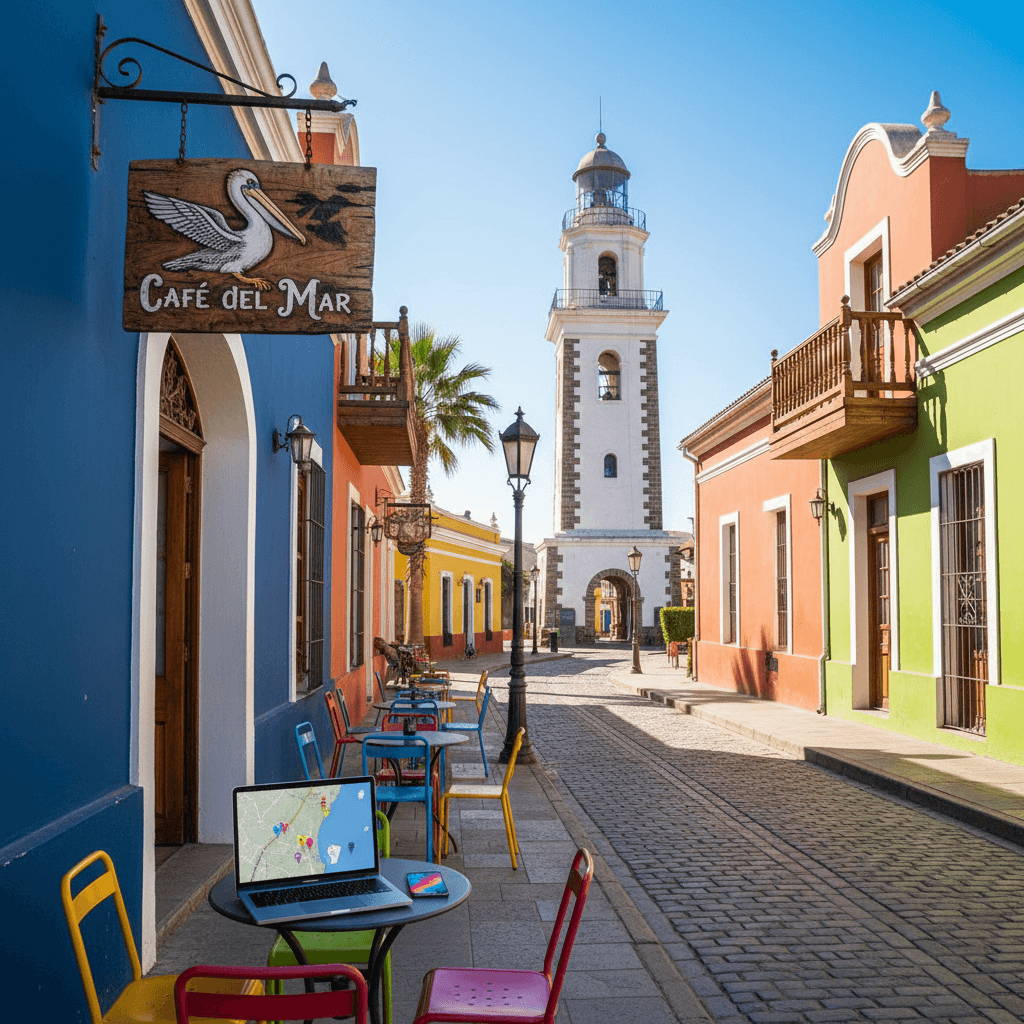
La Serena
🇨🇱 Chile
The Pacific Slow-Burn
If Santiago is Chile's frantic, caffeinated heart, La Serena is its deep, salt-aired exhale. It manages to feel like a sleepy colonial outpost and a modern coastal hub all at once. You'll notice the difference the moment you step off the bus or plane; the air is cooler, the pace is noticeably slower, and the architecture feels more like 18th-century Spain than 21st-century South America. It's a place where the morning fog, known locally as the camanchaca, often lingers until noon, giving you a built-in excuse to stay in your hoodie and linger over a second coffee before the sun finally breaks through.
Nomads usually land here when they're burnt out on the noise of bigger capitals. It's one of the few places in Chile where you can snag a high-speed fiber connection and then walk five minutes to a 2.7-mile beach promenade. The vibe isn't about "hustle culture"; it's about balance. You'll see locals jogging along the Avenida del Mar or gathering at the Faro Monumental lighthouse, which serves as the city's stoic, red-and-white guardian. It's a town that rewards those who don't mind a bit of quiet and a lot of fresh seafood.
What Sets It Apart
La Serena hits a sweet spot for the budget-conscious traveler. Your monthly burn here will likely sit between $2,200 and $2,500 for a mid-range lifestyle, which is roughly 30% to 40% cheaper than Santiago. Because it's a university town and a growing tech hub, there's an undercurrent of energy that keeps it from feeling like a retirement village. You get the benefits of a modern city, stable 4G/5G coverage, and reliable infrastructure without the "tourist trap" prices found in Valparaíso or San Pedro de Atacama.
The city is also famously LGBTQ+ friendly and generally more relaxed than the conservative pockets of rural Chile. However, be prepared for the "Serenense" speed of life. Bureaucracy moves like molasses here, and if you're trying to get a local bank account or a lease sorted, you'll need a healthy dose of patience. English isn't widely spoken once you leave the main hotels, so brush up on your Spanish if you want to do more than just point at menus.
The Daily Rhythm
Most nomads divide their time between two distinct zones. The Historic Center is where the soul of the city lives, packed with neo-colonial buildings, the Teatro Municipal, and various archaeological museums. It's dense, walkable, and feels authentically Chilean. Then there's the Waterfront, a strip of restaurants and pubs that comes alive as the sun goes down. If you're looking for social life, this is where you'll find it, especially during the summer months of December, January, and February when the city swells with visitors.
For those who need a dedicated workspace, the coworking scene is growing. While you'll find the usual big names like Regus or WeWork in the capital, La Serena's local spots offer desks for around $150 to $300 a month. When the workday ends, the ritual is almost always the same: a walk toward the water. You can even trek all the way to the neighboring port city of Coquimbo along the beach, a three-hour stroll that offers some of the best views of the bay, especially from the University of La Serena lookout.
Why Nomads Stay
- The Climate: It's rarely too hot or too cold, making it a year-round destination for those who hate extreme weather.
- Stable Infrastructure: With average internet speeds hitting 238 Mbps, you won't have to worry about dropping out of Zoom calls.
- The Gateway Factor: It's the perfect base for weekend trips to the Elqui Valley for stargazing or the Atacama region for desert adventures.
- Authenticity: It doesn't feel like a city built for foreigners; you're living in a real Chilean community.
The emotional payoff of La Serena is the lack of pressure. You aren't constantly dodging traffic or fighting crowds. Instead, you're living in a city that values its history and its coastline equally. It's a place to recharge your batteries while staying productive, provided you don't mind the occasional morning mist and a culture that refuses to be rushed.
The Cost of Living in La Serena
If you're looking to escape the high prices of Santiago without sacrificing the coastal lifestyle, La Serena is a breath of fresh air. It sits in a sweet spot for budget management; it's developed enough to have reliable infrastructure, yet it hasn't seen the aggressive price hikes of Valparaíso or the capital. Most nomads find they can live a high-quality life here for about $2,200 to $2,500 per month, though savvy travelers can certainly shave a few hundred dollars off that if they stick to local markets and long term rentals.
One of the biggest draws is that your money simply goes further. You're getting Pacific Ocean views and colonial charm at a 30% to 40% discount compared to Santiago. While it's not "dirt cheap" by Southeast Asian standards, the stability and safety of Chile make the price point feel justified for those who want a predictable environment.
Monthly Budget Estimates
- Budget Tier: Expect to spend around $2,200. This covers a modest apartment further from the water and mostly cooking at home.
- Mid-Range Tier: Roughly $2,500. This is the sweet spot for most digital nomads, allowing for a nice place near Avenida del Mar and regular dinners out.
- High-End Tier: If you want a luxury condo with a view and frequent trips to the Elqui Valley, you'll likely clear $3,200+.
Connectivity and Workspace Costs
Reliable internet is non-negotiable, and luckily, La Serena delivers. Chile has some of the fastest fixed broadband in the region. You'll likely pay between $25 and $35 for a high-speed home connection, which typically clocks in at a very stable 238 Mbps. Mobile data is equally affordable and 5G coverage is widespread across the city center.
For those who need a professional environment, coworking isn't as saturated as it is in Santiago, but options are growing. A dedicated desk in a local space will generally run you between $150 and $300 per month. If you prefer the cafe route, the waterfront along Avenida del Mar is lined with spots where you can work with a view for the price of a few coffees.
Food and Daily Expenses
Eating out is where your budget can fluctuate the most. The waterfront is packed with "tourist" prices, but moving just a few blocks inland towards the historic center makes a massive difference. Locals recommend hitting the fish markets for the catch of the day if you enjoy cooking. It's the best way to get world-class seafood without the restaurant markup.
- High-speed Internet: $25 to $35 per month.
- Coworking Desk: $150 to $300 per month.
- Local SIM with Data: Roughly $10 to $15 for a solid monthly plan.
- Domestic Beer: $3 to $4 at a standard bar.
Keep in mind that while card payments are accepted almost everywhere, having some pesos on hand is helpful for smaller street vendors or quick bus fares. If you're planning on staying long term, learning basic Spanish is a financial move as much as a social one; it helps you navigate local rental agreements and avoid the "gringo tax" in non-tourist areas.
The Coastal Strategist: Avenida del Mar
If you came to La Serena for the Pacific breeze, this is where you belong. Stretching for 2.7 miles, this waterfront strip is the city's pulse. It is perfect for nomads who want to walk out of their apartment and immediately hit a bike path or a beach club.
- The Vibe: Energetic and vacation-like. You will find a mix of modern high-rise apartments and some of the city's best nightlife.
- Coworking & Connectivity: While dedicated coworking spaces are still popping up, the cafes along the beach offer solid 238 Mbps speeds. It is the best spot for "work from beach" days.
- Best for: Digital nomads and solo travelers who prioritize views and social life over quiet colonial charm.
The Culture Seeker: Downtown (Centro Histórico)
Living in the center feels like stepping back into Chile's colonial past. The architecture is defined by the "Plan Serena" style, featuring symmetrical white buildings and red tiled roofs. It is remarkably walkable, putting you minutes away from the Archaeological Museum and the Plaza de Armas.
- The Vibe: Traditional and busy during the day, but it slows down significantly at night. It is the most "authentic" Chilean experience you can get in the city.
- Daily Life: You are close to the main markets and the Teatro Municipal. Everything you need for daily errands is within a ten-block radius.
- Best for: Expats who want to be immersed in the local language and history rather than the tourist bubble.
The Long-Term Resident: Near the Japanese Garden
Located along Avenida Francisco de Aguirre, this area serves as a bridge between the beach and the downtown core. It is home to the Park Kokoro No Niwa, one of the largest Japanese gardens in South America. It offers a much quieter, leafy environment compared to the windy beachfront.
- The Vibe: Peaceful and residential. The streets are lined with sculptures and trees, providing a bit of a sanctuary from the coastal humidity.
- Accessibility: You are perfectly positioned to catch a bus or a "colectivo" (shared taxi) to either the lighthouse or the university lookouts.
- Best for: Families and long-term expats who need a stable home base with green space.
Practical Neighborhood Logistics
Moving around La Serena is relatively straightforward, but your choice of neighborhood dictates your budget. While a mid-range lifestyle here typically costs around $2,500 per month, your housing costs will fluctuate based on proximity to the water.
- Avenida del Mar prices spike during the summer months of December, January, and February. If you are arriving then, book well in advance.
- Downtown living is generally more affordable but requires more diligence regarding home security, as is common in most Chilean city centers.
- Most expats recommend using Coquimbo as a secondary option; the neighboring city is just a three hour walk down the promenade and often has even lower grocery and market prices.
For those looking to get work done, keep an eye out for local hubs like La Maquinita or Espacio Cowork. Even if they aren't right on your doorstep, the city's compact nature means you are rarely more than a 15 minute taxi ride from a reliable desk and a strong cup of coffee.
Connectivity and Speeds
If you're coming from Santiago or North America, you'll be pleasantly surprised by the infrastructure here. Chile is a global leader in fiber optic penetration, and La Serena punches well above its weight for a coastal city. You can expect average download speeds well above 300 Mbps, with the Coquimbo region averaging 763.1 Mbps as of October 2025, which is more than enough for heavy video conferencing or uploading large files to the cloud.
Most modern apartments and Airbnb rentals along Avenida del Mar come equipped with high speed fiber. A reliable home connection usually costs between $25 and $35 USD per month. Mobile data is just as impressive; 5G coverage is extensive throughout the city center and the beachfront, so tethering your phone as a backup is a viable strategy if the power flickers during a coastal storm.
Coworking Spaces
The coworking scene in La Serena is smaller and more intimate than the massive hubs in Santiago, but it's growing quickly. While you won't find a WeWork on every corner, the local options provide a much more authentic connection to the regional tech scene. Most nomads gravitate toward the downtown area or the tech hubs near the University of La Serena for dedicated desk space.
- La Brújula Cowork: A well-established hub that understands the local "emprendedor" (entrepreneur) spirit. Expect a professional environment with ergonomic chairs and reliable backup power.
- Nueva Costanera Cowork: Located near the coastal area, this spot is great for networking with local professionals and small business owners.
Pricing is quite reasonable compared to international standards. A dedicated desk generally runs between $150 and $300 USD per month. If you only need a spot for a day or two, daily passes are common and usually cost around $15 to $20 USD.
The Cafe Culture
Working from cafes is a bit of a mixed bag in La Serena. In the colonial downtown area, you'll find plenty of charming spots with thick walls and decent Wi-Fi, though they can get noisy during the lunch rush. The waterfront along Avenida del Mar offers the best views, but the Wi-Fi in beachside pubs can be hit or miss. Most nomads recommend using these spots for "light" work like clearing emails rather than high stakes meetings.
If you're heading out to work for the afternoon, keep these tips in mind:
- Look for "Café con Piernas" alternatives: Traditional Chilean coffee shops can be a bit different than the laptop friendly spots you're used to. Stick to the modern bakeries and specialty coffee shops near the Plaza de Armas for a better work environment.
- Power Outlets: Older buildings in the city center are stingy with plugs. Always show up with a full charge or a portable power bank.
- Peak Hours: Chileans take lunch seriously. Between 1:30 PM and 3:30 PM, cafes will be packed and loud. It's better to time your deep work for the morning or late afternoon.
Data and SIM Cards
Getting connected on the go is straightforward. You can pick up a local SIM card from providers like Entel, WOM, or Movistar at almost any pharmacy or grocery store. Entel generally has the best reputation for coverage if you plan on taking weekend trips into the Elqui Valley or further up the coast. A prepaid plan with plenty of data will rarely cost you more than $15 USD per month, making it one of the most affordable parts of living here.
Staying Safe in the Second Oldest City
La Serena is generally much calmer than the frantic streets of Santiago, but it still requires a level of street smarts. Most nomads feel comfortable walking the Avenida del Mar during the day, though it's best to stick to well lit areas once the sun goes down. The city has a relaxed, coastal vibe that can sometimes lower your guard, but petty theft like bag snatching does happen, especially near the Faro Monumental where tourists congregate.
Local expats suggest keeping a close eye on your belongings in the La Recova Market. It's a great spot for crafts, but the crowds make it a prime location for pickpockets. If you're heading out for the night, use apps like Uber or Cabify rather than hailing a random car off the street. It provides a digital trail and a fixed price, which saves you from the "gringo tax" often applied to foreigners.
The biggest safety concern for many isn't crime, but nature. Chile is one of the most seismic countries on earth. You'll likely feel a few "temblores" (small tremors) during a long stay. Most buildings in the city center are built to modern earthquake standards. Just look for the Vía de Evacuación signs that point toward higher ground, a standard precaution for tsunami safety along the coast.
Healthcare and Medical Services
If you get sick, you're in decent hands. Chile's healthcare system is one of the best in South America, though the quality between public and private facilities is night and day. For anything more serious than a cold, head straight to a clínica (private hospital) rather than a hospital (public). Private care is faster, cleaner, and much more likely to have staff who speak at least some English.
- Clínica Elqui: This is the go to private facility for most expats and nomads in La Serena. It's modern and handles emergencies, specialists, and lab work.
- Pharmacy Chains: You'll see Cruz Verde, Ahumada, and Salcobrand on almost every corner. They are well stocked and many medications that require a prescription elsewhere are available over the counter here.
- Emergency Number: Dial 131 for an ambulance, 132 for fire, and 133 for the police (Carabineros).
Healthcare costs are reasonable if you have international insurance like SafetyWing or Genki. A standard consultation with a specialist will usually run you between $40 and $70 USD out of pocket. If you plan on staying long term on a temporary resident visa, you'll eventually need to choose between FONASA (public insurance) or ISAPRE (private insurance).
Wellness and Environment
The air quality in La Serena is fantastic, typically sitting at an AQI of 25, which is a massive relief if you're coming from the smog of Santiago. The tap water is technically safe to drink, but it has a very high mineral content that can be tough on the stomach if you aren't used to it. Most nomads buy 20 liter jugs of purified water for daily use to avoid the "La Serena belly."
Food safety is high. You can eat the salad and trust the seafood at the local markets without much worry. Just keep an eye on the sellos (black warning seals) on packaged foods. Chile has strict labeling laws for high sugar, salt, and fat content, making it easy to track what you're actually putting in your body while you work from the coast.
Making the Trek: Getting to La Serena
Most nomads arrive via a quick flight from Santiago, which takes about one hour. The Florida Airport (LSC) is small and efficient, located just a few miles from the city center. You can grab a taxi or a transfer at the arrivals hall; expect to pay around $10 to $15 USD for a ride into the downtown area or the beachfront.
If you prefer the scenic route, the bus system in Chile is surprisingly high quality. Premium "Salón Cama" seats on companies like Turbus or Pullman Bus feel like first class on an airplane. The trip from Santiago takes roughly 6 to 7 hours and usually costs between $15 and $30 USD depending on how early you book.
The Coastal Commute: Avenida del Mar
The star of the show here is the Avenida del Mar. This 2.7-mile promenade connects the iconic Faro Monumental lighthouse with the neighboring city of Coquimbo. It features a dedicated bike trail and wide sidewalks, making it the most pleasant place in the city to get around without a car.
Walking the entire length to Coquimbo takes about 3 hours at a steady pace. It is a favorite weekend activity for locals and expats alike. If you are staying in one of the beachfront apartments, a sturdy bicycle is your best friend for quick trips to cafes or the grocery store.
Public Transit and Local Rides
While Chile generally has reliable public transport, the system in La Serena relies heavily on "colectivos." These are shared taxis that run on fixed routes. They look like regular black sedans with signs on the roof indicating their destination. They are faster than buses and very affordable, usually costing less than $1 USD per ride. You just wave one down, and if there is a seat, you're in.
Micro-buses also frequent the main arteries like Avenida Francisco de Aguirre. These are great for getting from the colonial city center down to the beach. They are cheap, though they can get crowded during peak summer months like January and February.
Ride-Hailing and Driving
Uber is active in La Serena and is generally the preferred choice for nomads who don't speak much Spanish yet. It removes the need to negotiate fares or explain directions. Most trips within the city limits will run you between $4 and $8 USD. It's a reliable backup for late nights when colectivos are less frequent.
If you plan on exploring the Elqui Valley or heading up to the University of La Serena lookout for those famous bay views, renting a car is a smart move for a weekend. Most major agencies operate out of the airport or downtown. Just keep in mind that parking near the beach gets tight during the high season.
Walkability and Navigation
The city center is laid out in a classic grid, making it very easy to navigate on foot. You can easily walk between the Archaeological Museum, the Plaza de Armas, and the Japanese Garden in a single afternoon. However, the trek from the colonial center down to the beach is a bit of a haul on foot, so most people rely on a quick colectivo or bike ride to bridge that gap.
- Colectivo Fare: Roughly $0.80 to $1.20 USD per person
- Uber to Beachfront: $5 to $7 USD from downtown
- Bus to Santiago: $20 USD average for a comfortable seat
- Bikeability: High along the coast, moderate in the city center
The Reality of Chilean Spanish
If you're planning to make La Serena your base, you need to know that Chilean Spanish is its own beast. Locals speak fast, drop the "s" at the end of words, and use a heavy dose of Chilenismos (slang). Even if you're fluent in Mexican or Spanish Spanish, you'll likely spend your first week asking people to repeat themselves. While the pace of life in La Serena is slower than Santiago, the speech remains just as rapid.
Most nomads find that Spanish is a requirement for anything beyond ordering a coffee at a beachfront cafe. Outside the main tourist spots on Avenida del Mar and the higher-end hotels, English proficiency is quite low. You'll need at least a survival level of Spanish to handle your grocery shopping, talk to a landlord, or sort out a technical issue with your home internet.
Essential Local Slang
To blend in and actually understand what's happening at the local pubs, you'll want to memorize a few key terms. These are used constantly across all social classes.
- Cachai?: This is the Chilean "You know?" or "Do you understand?" You'll hear it at the end of almost every sentence.
- Po: A filler word added to the end of words for emphasis. "Si, po" or "No, po" are the most common variations you'll hear in daily errands.
- Bacán: Used to describe something cool or great. If you find a solid coworking spot, it's bacán.
- Fome: The opposite of bacán. Use this to describe a boring movie or a flat party.
- Luca: This is the slang for 1,000 Chilean pesos. If someone says a street snack costs "dos lucas," they mean 2,000 pesos.
Communication Tools and Connectivity
Since you'll likely be leaning on translation apps frequently, having a reliable data plan is a must. Chile has some of the best mobile connectivity in South America, and La Serena is no exception with strong 4G and 5G coverage throughout the city center and the coastline.
- WhatsApp: This is the primary way everyone communicates. You'll use it to book hair appointments, message your landlord, and join local expat or nomad groups. If a business has a phone number listed, it's almost certainly a WhatsApp account.
- Google Translate: The "Conversation" mode is a lifesaver for bureaucratic tasks or banking. Download the Spanish dictionary for offline use, as some older buildings in the city center have thick colonial walls that can drop your signal.
- SpanishDict: Most expats prefer this over Google for specific Chilean idioms and better grammar explanations.
Practical Language Tips
If your Spanish is rusty, try to do your "heavy" administrative lifting in the mornings. Banks and government offices in La Serena are generally more patient before the midday rush. Most nomads recommend taking a few weeks of intensive classes at a local language school or hiring a private tutor for conversation practice specifically focused on the Chilean accent.
When you're out at the Faro Monumental or grabbing seafood at the markets, don't be afraid to use "Mas lento, por favor" (Slower, please). People in La Serena are generally friendly and proud of their city, and they'll usually slow down their "Chileno" enough for you to catch the drift if they see you're making an effort.
The Sweet Spot: High Summer
If you're looking for the quintessential beach experience, aim for December through February. This is the Southern Hemisphere summer, and it's when La Serena truly wakes up. While much of Chile's interior swelters, the coastal breeze here keeps temperatures hovering in a comfortable range of 65°F to 75°F (18°C to 24°C). You'll get clear skies and the best conditions for sunset walks along the Avenida del Mar.
The trade-off for perfect weather is the crowd. January and February see a massive influx of domestic tourists from Santiago. Prices for short-term rentals can spike, and the usually quiet cafes become packed with families. If you value peace over beach weather, you might find this period a bit overwhelming.
The Nomad's Choice: Shoulder Seasons
Most long-term expats and nomads swear by the shoulder months: October to November and March to April. During these windows, the "Camanchaca" (the thick coastal fog) begins to thin out, and the air is crisp. You'll avoid the summer price hikes and the winter chill. Daytime highs remain around 60°F to 68°F, which is perfect for working from a patio without needing the AC on full blast.
March is particularly pleasant. The vacationers head home, the city regains its relaxed rhythm, and the ocean is often at its warmest after soaking up the summer sun. It's the best time to snag a deal on a beachfront apartment that was double the price just four weeks earlier.
Winter and the Camanchaca
From June to August, La Serena takes on a moodier character. It's rarely freezing, with lows around 45°F (7°C), but the humidity makes it feel colder than the thermostat suggests. This is when the Camanchaca is most prevalent; you might wake up to a wall of white fog that doesn't burn off until midday. Rainfall is infrequent but usually concentrated in these months.
If you're a fan of atmospheric, misty mornings and having the entire beach to yourself, winter isn't bad. Just ensure your accommodation has decent heating. Many older buildings in La Serena aren't well-insulated, and those damp winter nights can get bone-chilling without a space heater.
Air Quality and Stargazing
One of the biggest perks of La Serena's climate is the air quality. With an average AQI of 25, it's a breath of fresh air compared to the smoggy winters in Santiago. This clarity is exactly why the surrounding Elqui Valley is world-famous for its observatories. Even if it's cloudy on the coast, a quick 45-minute drive inland usually puts you under some of the clearest night skies on the planet.
Quick Seasonal Snapshot
- Peak Season (Dec-Feb): Best for swimming and nightlife. Expect $2,500+ monthly budgets due to demand.
- Shoulder Season (Mar-May, Oct-Nov): Best for nomads. Stable weather, lower rents, and quiet cafes.
- Low Season (Jun-Sep): Best for budget travelers. Foggy mornings and cool nights, but very affordable.
Connectivity and Power
You won't have to hunt for a signal here. Chile has some of the fastest fixed broadband in South America, and La Serena is no exception. Most modern apartments and cafes clock in at around 238 Mbps. If you're planning to work from an Airbnb, just double check that they have a fiber connection, as older buildings in the city center can sometimes be hit or miss.
For mobile data, grab a SIM card from Entel or WOM as soon as you land. You can find their kiosks in mall areas like Mall Plaza La Serena. Expect to pay about $25 to $35 USD a month for a solid data plan that handles video calls without a hiccup. 5G coverage is surprisingly consistent throughout the urban areas and along the beach.
Money and Banking
Chile is very card friendly. You can tap your way through most of the day using Visa or Mastercard. Even the smaller cafes along Avenida del Mar usually have Transbank terminals. However, it is smart to keep a few Chilean Pesos (CLP) on you for the local "colectivos" (shared taxis) or for buying fresh papayas from street vendors.
ATMs (Redbanc) are everywhere, but be aware that Chilean banks often charge a hefty withdrawal fee for foreign cards, sometimes up to $7 or $8 USD per transaction. Try to use Banco Estado or Scotiabank for slightly better rates. If you're staying long term, many expats use Wise to manage transfers and avoid local banking bureaucracy, which is notoriously slow and requires a RUT (national ID number).
Language and Local Nuance
Spanish is the name of the game here. Outside of the higher end hotels or specialized tour agencies, English is fairly rare. Chilean Spanish is also famous for being fast and full of "chilenismos" like "po" and "cachai." You'll want to have Google Translate downloaded for offline use, especially when dealing with utilities or local landlords.
The pace of life in La Serena is noticeably slower than Santiago. Locals value a relaxed approach, so don't be surprised if "tomorrow" actually means "later this week." Embracing this "siesta" culture, where many shops close for a few hours in the afternoon, will save you a lot of frustration.
Health and Safety
La Serena is generally much safer than the capital, but you should still use common sense. The Avenida del Mar is great for a sunset run, but keep your wits about you after dark in the quieter stretches between the lighthouse and Coquimbo. The air quality is excellent, usually sitting around AQI 25, which is a massive relief if you're coming from the smog of Santiago.
For medical needs, the private clinics (Clinicas) offer high quality care that most nomads find affordable out of pocket. Clinica Elqui is a reliable choice for emergencies or specialist appointments. Pharmacists, or "quimicos farmaceuticos," are very knowledgeable and can often help with minor ailments without a doctor's visit.
Getting Around
The city is surprisingly walkable if you stay near the center or the beach, but the two areas are a bit far apart for a casual stroll. Most residents use colectivos, which are sedans with signs on the roof that run fixed routes. They are faster than buses and cost about $1 USD.
- Uber and Cabify: These work well here and are generally safer and more transparent than hailing a street taxi.
- Biking: There is a great bike path along the 2.7 mile coastal promenade. It is the best way to get between La Serena and Coquimbo while avoiding traffic.
- Walking: Stick to the Avenida Francisco de Aguirre when moving between the city center and the coast; it is well lit and lined with statues.
Need visa and immigration info for Chile?
🇨🇱 View Chile Country GuideHidden Gem
Worth the effort