Kutaisi
🇬🇪 Georgia
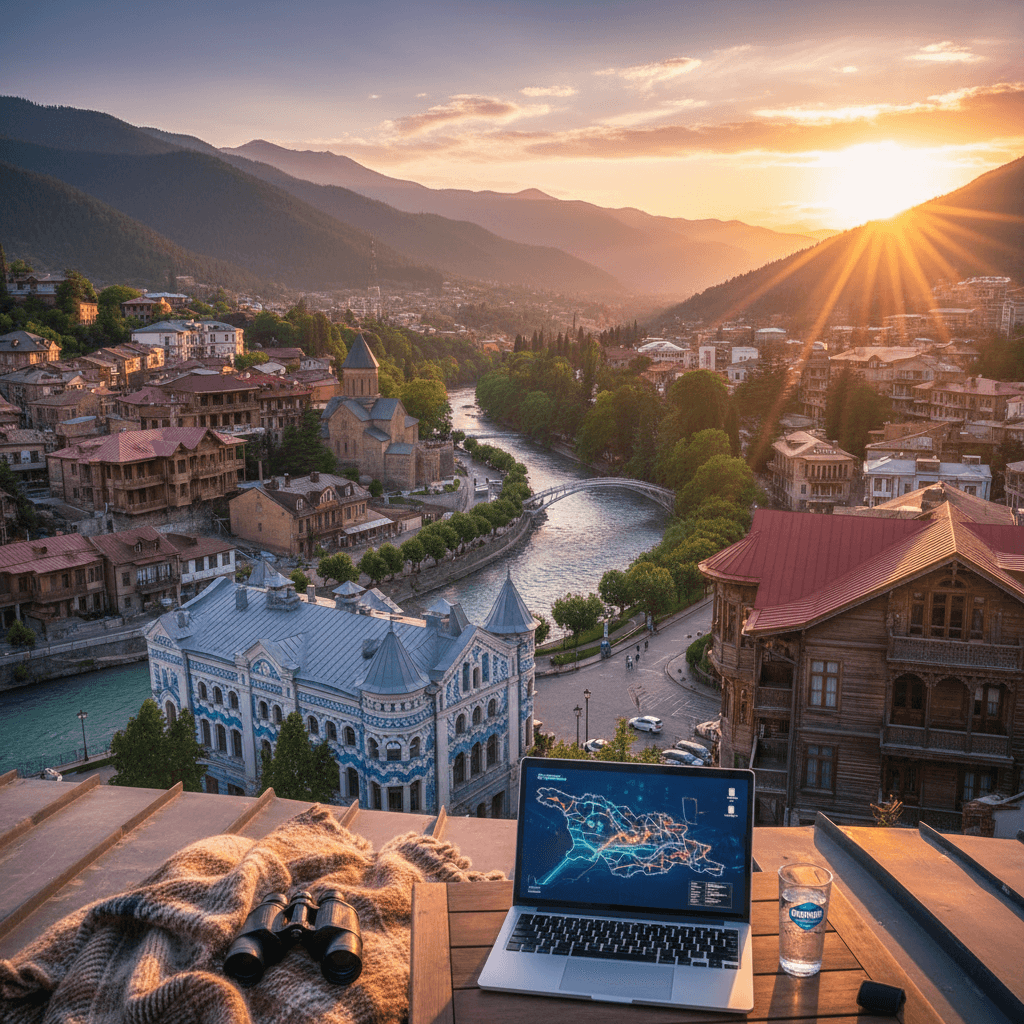
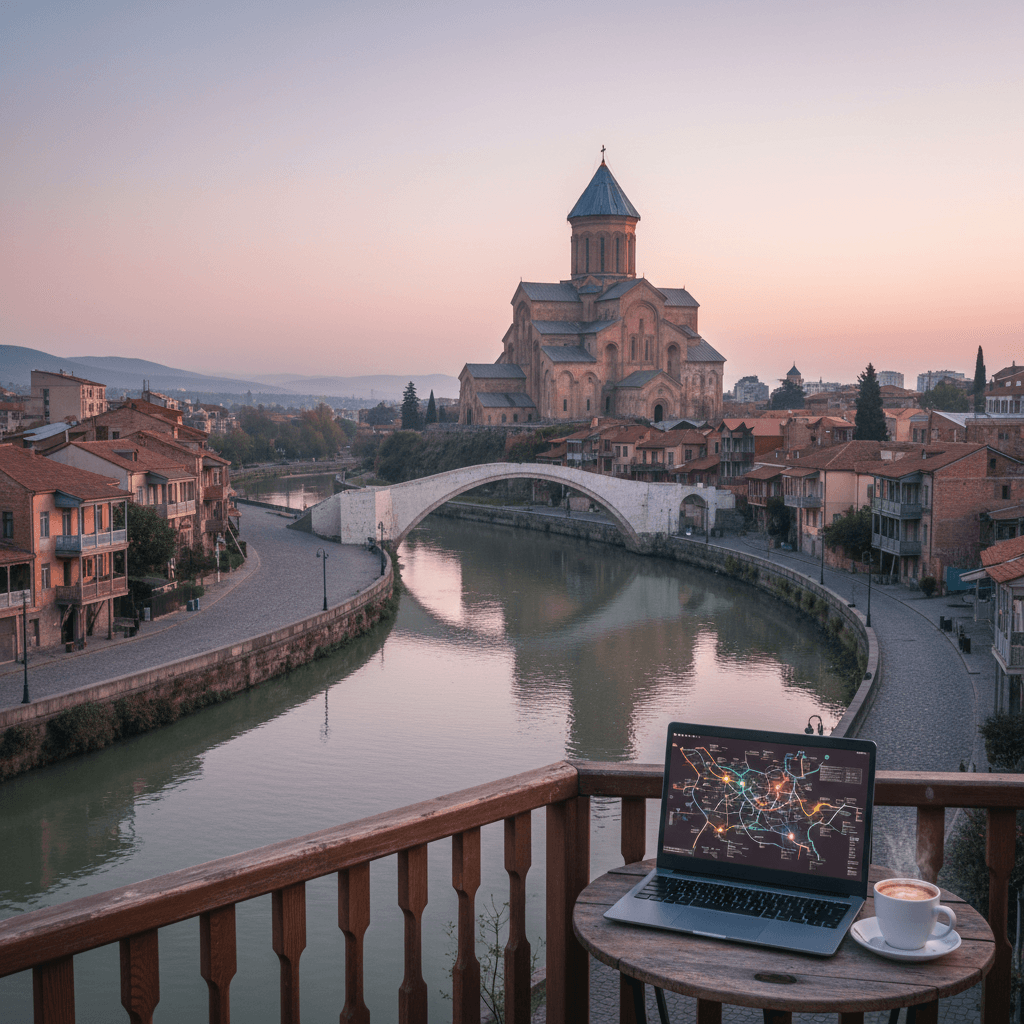
While Tbilisi grabs the headlines and Batumi lures the beach crowd, Kutaisi remains the soulful, unhurried heart of Georgia. It is one of the oldest continuously inhabited cities in the world, but don't expect a polished museum. Instead, you'll find a gritty, authentic charm where laundry hangs over the Rioni River and ancient ruins sit right next to Soviet era apartments. It is a city that moves at the speed of a long lunch, making it a sanctuary for nomads who are burnt out on the frantic pace of major tech hubs.
The Local Vibe
Living here feels like being invited into a giant, slightly disorganized living room. The locals are famously hospitable; it is common to be offered a glass of homemade wine by a neighbor before you have even unpacked your bags. The atmosphere is a blend of Mediterranean relaxation and Caucasian mountain grit. You will spend your afternoons wandering through the central market or sitting by the river, watching the water rush over the white stones that give the city its name. It is quiet, yes, but for many remote workers, that silence is the perfect backdrop for deep focus.
Cost of Living Breakdown
Kutaisi is remarkably affordable, even by Georgian standards. You can comfortably live here on $1,500 to $2,000 a month without checking your bank balance constantly. A budget traveler can easily get by on $1,000 if they stick to local markets and shared housing.
- Studio/1BR Apartment: Expect to pay between $200 and $400 in the city center.
- Daily Meals: A quick khachapuri or street food run costs $2 to $5, while a full dinner with wine at a mid range spot sits around $10.
- Transportation: Local marshrutkas (minibuses) and city buses are roughly $0.50 per ride.
- Connectivity: A local SIM card from Magti with plenty of data will set you back about $10.
Neighborhoods for Nomads
Kutaisi is compact and walkable, so where you stay depends on how close you want to be to the action. Most nomads gravitate toward the City Center, particularly the streets surrounding the Colchis Fountain and the Rioni River. This area puts you within walking distance of the best cafes and the historic Bagrati Cathedral. The views here are stunning, though the infrastructure in older buildings can be temperamental.
If you prefer peace and quiet, the areas toward the outskirts near the canyons offer a more rural feel. It is ideal for families or those who want to wake up to mountain views, but you will sacrifice internet reliability and easy access to shops. Most expats stick to the center to stay close to the few reliable Wi-Fi spots available.
Work, Internet, and Logistics
Connectivity is the main trade off for Kutaisi's low prices. Average speeds hover between 15 and 31 Mbps, which is plenty for Zoom calls but might feel sluggish for heavy video editing. Fiber optic internet is still a luxury, so always ask your landlord for a speed test before signing a lease. Dedicated coworking spaces are rare here, though you can occasionally find a quiet corner in a cafe. Many nomads treat Tbilisi hubs like Impact Hub or Terminal as their "office" for a few days a month, taking the $5 bus ride to the capital when they need a high speed environment.
Getting Around and Staying Safe
You won't need a car in the city center. Walking is the best way to soak in the architecture, and for longer trips, the Bolt and Yandex Go apps are cheap and reliable, with most rides across town costing under $3. Georgia is exceptionally safe, and Kutaisi is no exception. You can walk through the central districts at night without a second thought. For healthcare, basic needs are handled by local pharmacies and clinics, but for anything serious, most people head to Tbilisi.
Why Kutaisi?
The emotional pull of Kutaisi lies in its lack of pretension. It isn't trying to be the next Berlin or Lisbon. It is a place where citizens from about 98 countries can stay visa-free for up to 1 year, check current rules for your nationality, eat the best food of your life for the price of a coffee in London, and spend your weekends exploring the Prometheus Caves or the Okatse Canyon. It is a destination for the nomad who wants to disappear into a culture rather than just observe it from a laptop screen.
The Price of Authenticity
Kutaisi is one of those rare spots where your bank account can finally take a deep breath. While Tbilisi has seen prices climb over the last few years, Georgia's third largest city remains stubbornly affordable. Most solo nomads find they can live quite comfortably here on $1,500 to $2,000 a month without really trying to save. If you are on a strict budget and don't mind shared housing and plenty of street food, you can even squeeze by on $1,000.
The real draw is the lack of "expat tax" that you often find in more westernized hubs. Local prices are just the prices. You'll likely spend $2 to $5 on a quick lunch of khachapuri or lobiani from a hole-in-the-wall bakery. Even a nice sit-down dinner at a mid-range spot in the city center rarely tops $12 per person, including a glass of local wine.
Housing and Neighborhoods
Since Kutaisi doesn't have the massive high-rise developments of Batumi, finding a place usually involves scouring Facebook groups or local rental sites. Most nomads gravitate toward the Central Kutaisi area near the Rioni River. It is walkable, historic, and puts you right by the Bagrati Cathedral.
- Central Kutaisi: Expect to pay $200 to $400 for a decent one-bedroom apartment or studio. It is the best spot for accessibility, though some older buildings might have basic infrastructure.
- The Outskirts: If you head toward the canyon areas, prices drop even further. You might find more space for your money, but you will sacrifice internet reliability and easy access to shops.
Daily Essentials and Getting Around
Transport is almost a non-expense here. The local marshrutkas (minibuses) cost about $0.50 per ride. If you prefer the convenience of an app, Bolt and Yandex Go are the standard choices. A cross-town trip rarely costs more than $3 or $5. For those arriving at the international airport, a taxi into the center usually runs between $5 and $10.
Staying connected is equally cheap. You can pick up a SIM card from Magti or Beeline at the airport or in town for about $10, which usually includes a generous amount of data. While the internet in the city center is generally fine for video calls, it can get spotty the further you move into the hills.
Working and Socializing
Kutaisi is still catching up on the coworking front. There isn't a massive "laptop cafe" culture yet, and dedicated spaces are limited. Many nomads end up working from their apartments or taking the bus to Tbilisi for a few days to use Impact Hub or Terminal Khorava, where day passes go for about $10.
For groceries and household goods, the local markets are your best friend. Buying seasonal produce from the Green Bazaar is significantly cheaper than the supermarkets. If you prefer the convenience of a modern store, look for Spar or Carrefour, though you will pay a small premium for imported brands. Generally, a weekly grocery run for one person averages around $40 to $60 depending on how much cheese and wine you plan to consume.
Safety and Healthcare
The city is remarkably safe, even late at night. There aren't really any "no-go" zones to worry about. For healthcare, there are basic hospitals and pharmacies that can handle routine issues, and the tap water is safe to drink. However, for anything serious or specialized, most expats recommend making the three-hour trip to the better-equipped facilities in Tbilisi. It is always a good idea to have travel insurance that covers medical evacuation just in case.
The Nomad Hub: Central Kutaisi
If you're coming to Kutaisi to work, you'll want to stay as close to the Rioni River and the historic core as possible. This is where the city's pulse is loudest, though "loud" in Kutaisi is still a whisper compared to Tbilisi. Most nomads gravitate toward the streets surrounding Bagrati Cathedral or the white stone bridge area. It's the most walkable part of town, keeping you within a 10 minute stroll of the few cafes that offer decent WiFi and the best local wine bars.
- Rent: Expect to pay between $200 and $400 for a decent one bedroom apartment.
- Vibe: Authentically Georgian with a mix of ancient ruins and crumbling Soviet charm.
- Connectivity: This is your best bet for stable internet, with speeds typically hitting 15 to 31 Mbps.
Living here means you're near the local markets where you can grab fresh khachapuri for $2. While there isn't a dedicated coworking space in the city center yet, many remote workers set up shop in local cafes or take the $0.50 marshrutka to explore nearby sites when the screen fatigue hits. It's a low stress environment where your biggest daily challenge is usually deciding which cheap taxi app, Bolt or Yandex, has the shorter wait time.
The Expat Choice: Right Bank and Colchis Fountain
Expats looking for a slightly more "settled" feel often look just across the river from the main tourist drag. This area feels a bit more residential but keeps you close to the major landmarks like the Colchis Fountain. You'll find slightly better infrastructure here, and it's easier to find apartments with modern renovations. It's the sweet spot for those who want to avoid the "tourist bubble" while still being able to walk to a mid range dinner that costs about $10.
- Rent: Mid range apartments usually sit around $350.
- Social Life: You'll likely meet other foreigners at the local bars or through Facebook groups, as there isn't a massive, organized expat scene here yet.
- Practicality: Very high. You're close to the main pharmacies, banks, and grocery stores.
Families: The Green Outskirts
For families, the city center can feel a bit cramped and the sidewalks are often uneven. Moving slightly toward the outskirts, particularly toward the canyon areas or the quieter northern residential pockets, provides more space and cleaner air. It's much quieter, which is great for kids, but you'll sacrifice walkability. You'll definitely need to rely on the Bolt app, which usually costs about $3 to $5 to get into the heart of the city.
- Rent: Larger houses can be found for $500 to $700, offering significantly more value than the capital.
- Pros: Proximity to nature and the stunning Prometheus Cave or Okatse Canyon for weekend trips.
- Cons: Internet can be spotty, and you'll be far from the few English speakers in town.
Solo Travelers: Near the Tsentraluri Moedani
If you're solo and only staying for a month or two, stick to the area around the main square, Tsentraluri Moedani. It's the easiest place to navigate without knowing much Georgian or Russian. You’re right by the bus stops that take you to the airport for about $5 and near the marshrutkas that head to Batumi or Tbilisi for $10 to $15. It's the most social part of the city, making it easy to join a free walking tour and meet people.
- Safety: Extremely high. Solo travelers, including women, generally report feeling safe walking home at night.
- Budget: You can live comfortably on $1,200 a month here if you're eating at local spots and using public transport.
- Language: You'll find the highest concentration of English speaking youth in the shops and cafes around this area.
Connectivity and Speeds
Kutaisi is a place where you trade blazing fast fiber for a slower, more intentional pace of life. While Tbilisi is the country's high tech hub, Kutaisi is still catching up. You can expect average download speeds between 15 Mbps and 31 Mbps in the city center. It is enough for Zoom calls and standard remote work, but if your job involves uploading massive 4K video files, you might feel the lag.
The most important rule here is to never rely solely on your apartment's Wi-Fi. Infrastructure can be inconsistent, especially in older buildings near the Rioni River. Most nomads recommend getting a local SIM card immediately. Magti is the gold standard for coverage, though Beeline or Cellfie is a solid, budget-friendly alternative. You can usually snag a SIM with a generous data package for about $5 to $10 at the airport or in the city center.
Coworking Spaces
If you are looking for a massive, glass-walled coworking complex, you won't find it here yet. The coworking scene in Kutaisi is sparse. Most remote workers treat the city as a "deep work" retreat or a base for weekend adventures rather than a networking hub. If you absolutely need a professional environment, you might find yourself taking the $0.50 marshrutka or a $2 Bolt ride to smaller local initiatives or quiet hotel lobbies.
For those who need a true community hub, many nomads actually keep a membership at Impact Hub or Terminal Khorava in Tbilisi and just commute back and forth for major meetings. Those spaces typically run about $10 for a day pass or $100 to $200 per month. In Kutaisi itself, your best bet is to scout out a laptop-friendly guesthouse in the central district where the hosts understand the needs of digital nomads.
Laptop-Friendly Cafes
Kutaisi doesn't have a massive "cafe working culture" like Berlin or Chiang Mai. Many local spots are designed for long, slow Georgian meals rather than sitting with a MacBook for four hours. However, the central area near Bagrati Cathedral has a few gems where the staff won't mind you staying a while if you keep the coffee orders coming.
- Central Kutaisi: Stick to the newer cafes along the river. They are more likely to have stable routers and accessible power outlets.
- Peak Hours: Try to get your heavy lifting done in the mornings. Georgian lunch and dinner times can get loud, and the social atmosphere isn't always conducive to focus.
- Mobile Hotspots: Always have your Magti hotspot ready. If the cafe Wi-Fi dips, the 4G signal in the city center is generally reliable enough to act as a backup.
Practical Setup Tips
Living here is incredibly affordable, with a mid-range lifestyle costing between $1,500 and $2,000 per month, but that savings comes with the need for a bit of self-sufficiency. Before booking an Airbnb or a long-term rental, ask the host for a Speedtest screenshot. It is a common request, and most hosts are happy to oblige.
- Apps to Download: Get Bolt or Yandex Go for getting around. They are much more reliable than trying to negotiate prices with street taxis.
- Power: Power outages aren't frequent, but they happen. A decent power bank and a fully charged laptop are your best friends.
- Backup: If the internet fails completely, the airport is only about 20 to 30 minutes away and often has better connectivity than the residential outskirts.
Ultimately, Kutaisi is for the nomad who wants to save money and explore canyons on their lunch break. As long as you have a local SIM and realistic expectations about speed, you will find it a peaceful place to get things done without the distractions of a larger city.
Safety in the City
Kutaisi maintains a reputation as one of the safest hubs for remote workers in the Caucasus. It lacks the frantic energy of Tbilisi, which naturally results in a lower crime rate and a more relaxed atmosphere. You can comfortably walk through the central districts near the Rioni River or the Bagrati Cathedral late at night without feeling on edge. Most nomads report that the city feels like a large village where people look out for one another.
While violent crime is extremely rare, you should keep your wits about you regarding petty theft in crowded markets or the main bus station. The most significant safety concern isn't crime, but rather the local driving style and infrastructure. Sidewalks can be uneven, and drivers don't always yield at crosswalks. When you're crossing the street near Colchis Fountain, wait for a clear gap rather than assuming a car will stop.
- Emergency Services: Dial 112 for police, fire, or ambulance. This is a unified EU-style system with English-speaking operators available.
- Solo Travel: Women and solo travelers generally find Kutaisi very welcoming. Locals are hospitable and will often go out of their way to help if you look lost.
- Tap Water: You don't need to rely on plastic bottles here. The tap water in Kutaisi is safe to drink and often comes from mountain springs.
Healthcare Access
The healthcare system in Kutaisi is functional for routine issues, but it's more basic than what you'll find in the capital. There are several private clinics and hospitals that can handle minor illnesses, infections, or basic diagnostics. Pharmacies are everywhere, usually marked with a green cross, and most are open 24/7. You'll find that many pharmacists speak basic English and can provide over the counter help for common ailments.
For anything specialized or serious, most expats and long term nomads head to Tbilisi. The three hour drive or train ride is worth it for the international standard hospitals available there. If you have a chronic condition, it's smart to stock up on your specific medications before arriving, though common brands are easily accessible and very affordable.
Health & Safety Essentials
- Insurance: Even though Georgia is affordable, carry a policy that covers medical evacuation to Tbilisi or even Istanbul for major emergencies.
- Apps: Download Bolt or Yandex Go for transport. Using these apps is safer than hailing random cars, as it tracks your journey and provides a fixed price, usually between $2 and $5 for a cross-town trip.
- Stray Dogs: You'll see plenty of stray dogs roaming the streets. Most are tagged, vaccinated, and surprisingly friendly, but it's best to give them their space and avoid feeding them near your apartment.
- Health Costs: A standard doctor's consultation at a private clinic typically runs between $20 and $40.
Overall, your biggest "danger" in Kutaisi is likely a hangover from too much local wine or a twisted ankle on an old cobblestone street. It's a city that allows you to keep your guard down, which is a big part of why the nomad community here is growing. Just stick to the central areas for your accommodation and keep the 112 number saved in your phone just in case.
Getting Around
Kutaisi is a compact city where the rhythm of life is noticeably slower than in Tbilisi. Most nomads find the city center highly walkable, especially the areas flanking the Rioni River. If you're staying near the Colchis Fountain or the streets leading up to Bagrati Cathedral, you can reach most cafes, markets, and historical sites on foot within 15 to 20 minutes.
When you need to cover more ground or head to the outskirts for canyon tours, you have several affordable options. The local transport system relies heavily on marshrutkas, the ubiquitous white minibuses found throughout Georgia. These cost roughly $0.50 per ride. While they don't follow a strict digital timetable, they are frequent and reliable for getting across town or reaching the main bus station.
Ride-Hailing and Taxis
For most remote workers, ride-hailing apps are the go-to choice. They eliminate the need to haggle and ensure you aren't overcharged as a visitor. You should download both Bolt and Yandex Go before you arrive. A typical trip within the city limits usually costs between $2 and $5. Most travelers recommend using these apps specifically for airport transfers or when carrying groceries, as they are significantly more convenient than flagging down a random car on the street.
Micromobility and Bikes
While Kutaisi isn't a cycling mecca, you will find limited bike and scooter rentals in the central district. Expect to pay around $5 per day for a rental. The streets can be a bit bumpy and traffic is sometimes unpredictable, so most expats suggest sticking to the quieter side streets or the river paths rather than main thoroughfares.
Intercity Travel
Kutaisi serves as a strategic hub for exploring the rest of the country. If you're planning a weekend trip to the capital or the coast, you have a few solid choices:
- Marshrutkas: These depart regularly from the main bus station near the Grand Mall. A trip to Tbilisi or Batumi typically costs under $10 and takes about 3 to 4 hours.
- Georgian Railway: For a more comfortable, if sometimes slower, journey, the train station offers daily connections. It is a great way to see the landscape without the white-knuckle experience of a high-speed minibus.
- Car Rentals: If you want to visit the Okatse Canyon or Prometheus Cave on your own schedule, local rentals are available. Prices vary, but having your own wheels is the only way to truly explore the Caucasus foothills at your own pace.
Airport Transfers
Kutaisi International Airport is located about 25 kilometers west of the city. It is a major entry point for budget airlines like Wizz Air. To get to your apartment, you can grab a taxi for about $5 to $10, or hop on one of the dedicated shuttle buses that sync with flight arrival times. The drive usually takes about 20 to 30 minutes depending on traffic near the city entrance.
Overall, you won't need a car if you live centrally. The combination of high walkability and dirt-cheap ride-hailing makes navigating Kutaisi one of the least stressful parts of living here. Just keep some small change in your pocket for the occasional marshrutka ride, and you'll be set.
The Linguistic Landscape
In Kutaisi, you'll be navigating a linguistic environment that feels far more traditional than the international bubble of Tbilisi. The primary language is Georgian, a unique Kartvelian tongue with its own mesmerizing script. While it's beautiful to look at, it's notoriously difficult for foreigners to pick up beyond the basics. Most nomads find that while the language barrier exists, the locals' legendary hospitality usually bridges the gap.
English proficiency is a mixed bag. You'll find that younger Georgians and those working in the tourism sector near the city center or the airport speak it quite well. However, once you step into a local market or deal with older landlords, English quickly fades. Russian remains a common second language for the older generation, though its usage is increasingly sensitive among the youth for obvious political reasons.
Essential Tools and Tech
Don't expect to get by on charisma alone. You'll want to have Google Translate downloaded for offline use before you arrive. The app's camera feature is a lifesaver for translating menus and signs written in the Georgian alphabet. For daily communication, WhatsApp and Viber are the standard; most local businesses and landlords prefer these over email or phone calls.
Expats recommend learning a few key phrases to break the ice. It goes a long way with the locals, who genuinely appreciate the effort. Start with these:
- Gamarjoba (Hello)
- Madloba (Thank you)
- Ki / Ara (Yes / No)
- Bodishi (Sorry/Excuse me)
- Nakhvamdis (Goodbye)
Navigation and Connectivity
Getting around the city or heading out to the nearby canyons requires a bit of digital assistance. While the central areas are walkable, you'll likely use Bolt or Yandex Go for longer trips. These apps are vital because they bypass the need to negotiate fares in Georgian. A typical ride across town usually costs between $2 and $5. If you're feeling adventurous and want to use the marshrutkas (minibuses), keep in mind that destination signs are often only in Georgian, so having a map app open to track your location is a smart move.
For your phone, don't rely on international roaming. Pick up a local SIM card immediately. Magti and Cellfie are the two heavy hitters. You can grab a card at the airport or in the city center for about $5 to $10, which usually includes a generous amount of data. Magti is generally cited by remote workers as having the most reliable coverage if you plan on taking day trips into the mountains or rural areas.
Social and Professional Communication
Kutaisi doesn't have the massive expat meetups you'll find in the capital. Most social coordination happens in Facebook groups like Expats in Georgia or specific digital nomad forums. Because the community here is smaller and more tight knit, communication tends to be informal. If you're looking for a professional environment, you might find the "cafe working culture" a bit thin. Most nomads stick to their apartments for deep work or head to Impact Hub if they're visiting Tbilisi for a few days, as Kutaisi's own coworking scene is still very much in its infancy.
When interacting with locals, remember that communication is often indirect and heavily focused on relationship building. A simple transaction at a shop might turn into a ten minute conversation if you're willing to engage. It's a slower pace of life, and the language reflects that, focus on the "human" element rather than just the information being exchanged.
Finding Your Rhythm in Kutaisi
Kutaisi doesn't follow the hectic pace of Tbilisi or the seasonal madness of Batumi. It’s a city that breathes with the seasons, shifting from misty, dramatic river views in the winter to sun-drenched cafe terraces in the summer. For most nomads, the climate here is a major draw, offering a temperate middle ground that rarely feels extreme but definitely keeps you on your toes with occasional rain.
The Best Time to Visit
If you want the sweet spot for productivity and exploration, aim for May through October. This window offers the most reliable weather for those weekend trips to the nearby canyons or the Caucasus foothills. During these months, temperatures usually hover between 23°C and 32°C, making it warm enough for light clothing but rarely so hot that you're trapped indoors by the AC.
- Spring (April to June): This is arguably the most beautiful time to arrive. The city turns incredibly green, and the Rioni River is at its most powerful. Expect some rain, but the mild temperatures around 18°C to 24°C are perfect for walking the hilly streets of the city center.
- Summer (July to August): It gets warm, sometimes peaking near 39°C on the hottest afternoons. While it’s less humid than the coast, you’ll want a workspace with reliable cooling. This is the peak season for hiking in the nearby mountains, where the air stays crisp.
- Autumn (September to October): This is "Velvet Season." The crowds thin out, the harvest begins, and the wine culture really takes center stage. Temperatures stay comfortable, often in the mid-20s, and the autumn colors in the surrounding nature are spectacular.
- Winter (November to March): Kutaisi gets quiet. It’s chilly, with averages between 11°C and 17°C, though it can dip lower. It rarely snows heavily in the city, but it can feel damp. If you’re a fan of moody, grey aesthetics and having the local cafes all to yourself, you’ll find the winter prices for long-term rentals are a steal.
What to Pack
Layers are your best friend here. Even in the height of summer, the temperature can drop quickly once the sun goes down behind the mountains. If you're visiting in the shoulder seasons, a solid waterproof jacket is mandatory. Kutaisi is known for its sudden rain showers, and you don't want to be caught halfway up the hill to Bagrati Cathedral without a shell.
For the digital nomad kit, bring a high-quality power bank and perhaps a universal adapter, though Georgia uses the standard European two-pin plugs. Since the internet can be a bit variable, having a Magti or Beeline SIM card with a generous data plan acts as a vital backup for those rainy days when you're working from a local guesthouse or a river-view cafe.
Seasonal Living Costs
While Kutaisi is affordable year-round, you'll notice slight shifts in your budget depending on when you arrive. Winter is the time for negotiating long-term stays, as many guesthouse owners are happy to lock in a monthly rate when tourist traffic is low. In the summer, expect to pay a bit more for centrally located spots near the Rioni River, as these are highly sought after by regional travelers.
- Peak Season (June-August): Expect to pay $400+ for a prime central apartment.
- Off-Peak (November-March): You can often find comfortable setups for $200 to $300 if you're willing to commit to a few months.
- Daily Life: Regardless of the month, a mid-range meal remains steady at $8 to $12, and your transport via Bolt or local buses stays around $0.50 to $2 per trip.
Getting Settled and Staying Connected
Kutaisi is a breath of fresh air for those who find Tbilisi too chaotic. It’s the kind of place where you can actually hear yourself think, but that slower pace comes with a few technical trade-offs. Most nomads find that while the city center is walkable and charming, the digital infrastructure is still catching up. You should expect internet speeds to hover around 15 to 31 Mbps. It’s enough for Zoom calls and standard workflows, but if you’re uploading massive video files, you might feel the lag.
There isn't a massive coworking culture here yet. While Tbilisi has heavy hitters like Impact Hub, Kutaisi is more about laptop-friendly cafes or working from your apartment. For stable mobile data, grab a SIM card from Magti or Beeline at the airport or a central kiosk. You can usually get unlimited data for about $10, and the coverage is surprisingly solid even as you head toward the canyons.
Cost of Living Breakdown
Your money goes incredibly far here. A solo nomad can live quite well on $1,500 to $2,000 a month without really trying to save. If you’re on a tight budget, you can easily scrape by on $1,000 if you stick to local markets and shared housing.
- Housing: A decent one bedroom apartment in the city center typically runs between $200 and $400.
- Food: Street food like fresh lobiani or khachapuri costs $2 to $5. A nice dinner at a mid-range spot will set you back about $10.
- Transport: Local buses and marshrutkas are a steal at $0.50 per ride.
Navigating the City
The city is split by the Rioni River, and the central area near the Bagrati Cathedral is where you want to be. It’s the most walkable part of town and keeps you close to the history. If you head further out toward the outskirts or the canyon areas, it gets very quiet and very green, but the internet becomes hit or miss and you’ll definitely need a car.
For getting around, download Bolt or Yandex Go. These apps are the gold standard for reliable, cheap rides, usually costing between $2 and $5 to get anywhere within the city limits. If you're heading to the airport, a taxi usually runs about $5 to $10 depending on your haggling skills or the app price at the time.
Safety and Local Life
Kutaisi is remarkably safe. You can walk through the center at night without a second thought. Georgian hospitality is legendary, so don’t be surprised if a local strikes up a conversation. English proficiency is high among the younger crowd, but having Google Translate with the Georgian offline pack is a lifesaver for talking to older residents or shopkeepers. A simple "Gamarjoba" (hello) or "Madloba" (thank you) goes a long way.
Healthcare is fine for the basics, and there are plenty of pharmacies stocked with familiar brands. For anything serious, though, most expats recommend making the three hour trip to Tbilisi where the specialized hospitals are located. The tap water is safe to drink, which is a nice perk you don't always get in this part of the world.
Visa and Logistics
Georgia has one of the most generous visa policies on the planet. Citizens from about 98 countries can stay visa-free for up to 1 year, verify for your nationality. If you want to formalize things as a digital nomad, there are paths for those earning at least $2,000 a month. Banking is straightforward too; Wise and Revolut work perfectly at local ATMs, which are scattered all over the central district.
The best time to visit is May through October. The winters are chilly but rarely brutal, while the summer months can get hot, often reaching 32°C (90°F). If you stay during the shoulder seasons, you'll dodge the rain and the small crowds of tourists heading to the nearby Prometheus Cave or Okatse Canyon.
Need visa and immigration info for Georgia?
🇬🇪 View Georgia Country GuideHidden Gem
Worth the effort
Monthly Budget Estimates
More cities in Georgia
Batumi
🇬🇪 Georgia
Mestia
🇬🇪 Georgia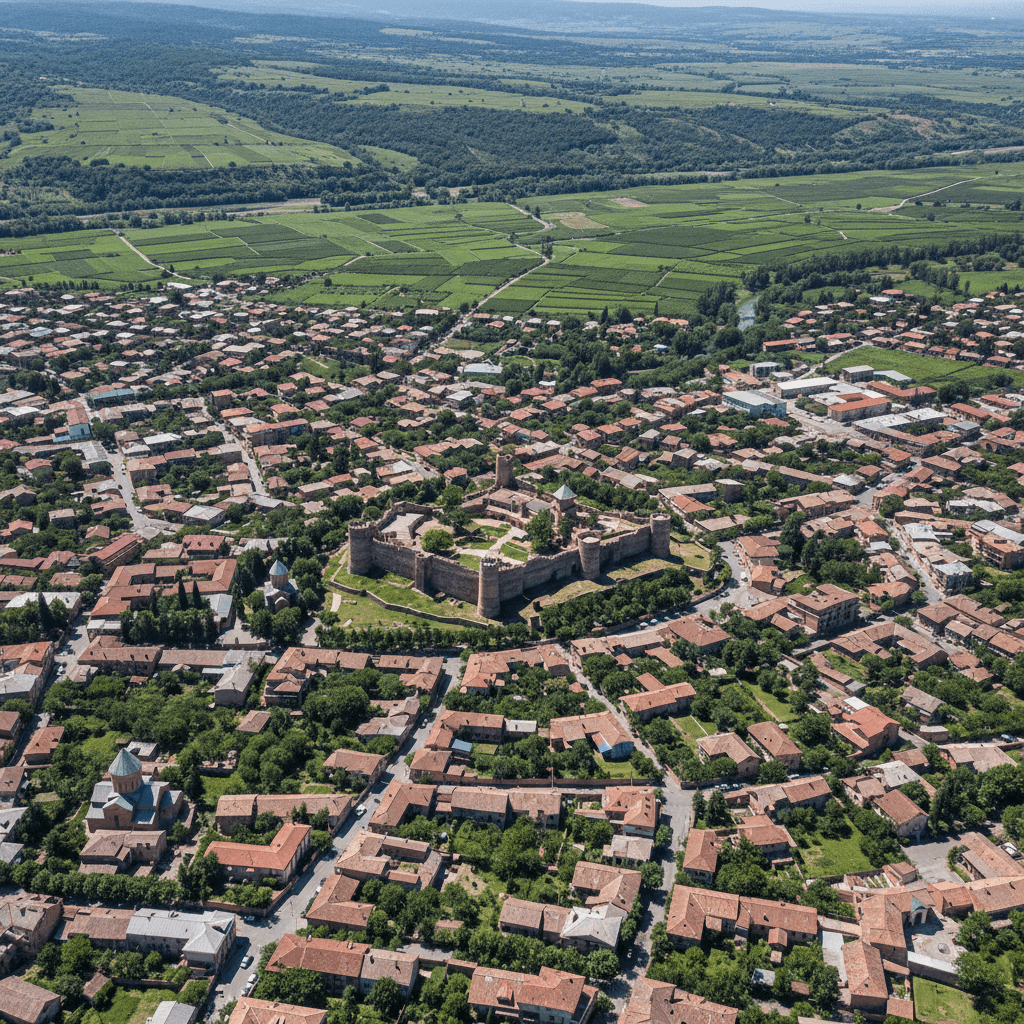
Telavi
🇬🇪 Georgia