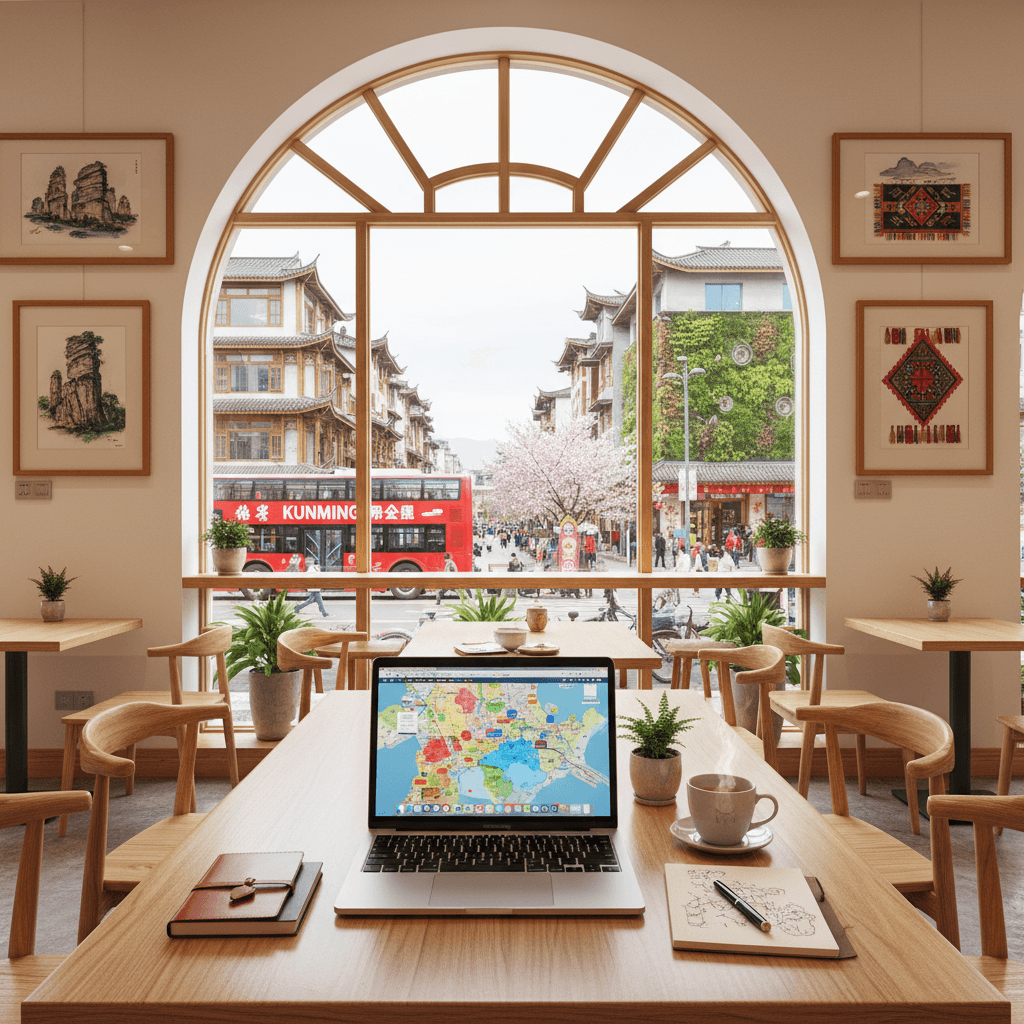
Kunming
🇨🇳 China
The City of Eternal Spring
Kunming is a city that breathes. While the megacities of China’s coast are defined by a relentless, high-octane grind, Kunming feels like it’s perpetually on a Sunday afternoon stroll. Sitting at an elevation of 1,900 meters, it earns its "City of Eternal Spring" nickname with a climate that stays between 15 and 25 degrees Celsius through most of the year. You won't find the suffocating humidity of the south or the bone chilling winters of the north here.
The vibe is a unique cocktail of urban energy and mountain relaxation. It serves as the sophisticated gateway to Yunnan province, blending the comforts of a provincial capital with the diverse influences of 25 different ethnic groups. You’ll see this in the architecture of the Old Street tea houses and taste it in the wild mushroom hotpots that locals obsess over during rainy season. It’s a place where high-speed trains to Dali and Laos sit alongside ancient flower markets and sprawling parks.
The Nomad Reality Check
For digital nomads, Kunming is a bit of an outlier. It’s not a plug and play hub like Chiang Mai or even its neighbor Dali. The community here is smaller and more fragmented, mostly consisting of English teachers, long term expats, and travelers passing through to the mountains. You’ll need to be self sufficient. English proficiency is low, sitting at a 1 to 1.5 out of 5 on the fluency scale, so your days will involve heavy use of translation apps and WeChat.
The work setup requires some planning too. The Great Firewall is a permanent fixture, meaning a VPN is non-negotiable for accessing Slack, Google, or WhatsApp. Reliable Wi-Fi can be hit or miss in local cafes, so many nomads rely on Trip.com eSIMs to stay tethered. If you can handle the technical hurdles and the language barrier, the reward is a lifestyle that’s significantly more authentic and less "tourist-packaged" than other Asian nomad hotspots.
Cost of Living Breakdown
Living here is affordable, though prices have crept up compared to the rural villages deeper in Yunnan. A comfortable monthly budget usually falls between $1,200 and $1,900. If you’re living like a local, you can survive on $800, but most nomads prefer a bit more cushion for modern amenities.
- Housing: A modern studio in the city center typically runs 3,000 to 5,000 RMB ($420 to $700). If you head toward the outskirts or near Dianchi Lake, you can find spots for as low as 2,000 RMB ($280).
- Food: Street food like those found at the Shuangqiao Night Market will only set you back 10 to 20 RMB ($1.40 to $2.80). A mid range meal in a sit down restaurant usually costs between 50 and 100 RMB ($7 to $14).
- Transport: Metro rides are cheap at 2 to 5 RMB, and DiDi (the local Uber) rides across town rarely exceed 30 RMB ($4).
The Neighborhood Scene
Where you park yourself depends on whether you want history or high-rises. Most short term visitors gravitate toward Kunming Old Street. It’s walkable, packed with live music and street performers, and has that atmospheric evening glow that makes for great photos. The downside is the crowds and the slightly inflated "tourist" pricing for coffee and snacks.
For a more "expat-standard" life, the area around Sheng Shopping Mall is the go to. This is the modern heart of the city with international brands, cinemas, and the most reliable caffeine stations. If you’re looking for peace and quiet, the Dianchi Lake and Daguan Park area offers fresh air and scenic views, though it’s a bit of a trek from the central nightlife. It’s popular with families and those who want to be closer to nature without leaving the city limits.
The Emotional Draw
What really sticks with you about Kunming isn't a specific monument, it's the pace. It’s the sight of seniors doing Tai Chi in Green Lake Park at dawn, the smell of roasting coffee beans in a hidden alleyway, and the ease of jumping on a two hour train to escape into the mountains whenever the city feels too small. It’s a city for the nomad who is tired of the "nomad scene" and wants to disappear into a place that feels lived-in, honest, and perpetually in bloom.
The Price of Eternal Spring
While Kunming is often called the gateway to Yunnan, it carries a slightly higher price tag than its neighboring nomad magnets like Dali. You should budget between $1,200 and $1,900 per month for a comfortable stay. This range covers a private apartment, a mix of street food and sit-down meals, and the occasional weekend trip into the mountains. If you're coming from Shanghai or Beijing, these prices will feel like a bargain; however, if you've been living in Southeast Asia, the cost of imported goods and modern rentals might surprise you.
Most nomads find that their largest expense is housing. While the city is expansive, staying in a central, well-connected area is worth the extra cost to avoid long commutes on the metro. Daily expenses are manageable, especially if you embrace the local markets and avoid the high-end international malls for every meal.
Monthly Budget Tiers
- Budget ($800 to $1,200): Living like a local. This means a room in a shared apartment, eating almost exclusively at night markets or noodle shops, and sticking to the metro and buses for transport.
- Mid-Range ($1,200 to $1,600): The sweet spot for most digital nomads. You'll have a private one-bedroom apartment, eat at mid-range restaurants a few times a week, and use DiDi rides when you're in a rush.
- Comfortable ($1,800+): A modern apartment in a prime location like Kunming Old Street, frequenting upscale dining in Sheng Shopping Mall, and regular weekend excursions to the Stone Forest or nearby lakes.
Rent and Utilities
Housing prices vary significantly based on your proximity to the city center and the quality of the building. Most landlords prefer long-term leases, so short-term nomads often find better luck through specialized rental apps or by negotiating with serviced apartment providers.
- City Center Studio/1BR: 3,000 to 5,000 RMB ($420 to $700)
- Outskirts/Suburban Housing: 2,000 to 3,500 RMB ($280 to $490)
- Dianchi Lake Area: 4,000 RMB ($560) for mid-range options with better air quality.
Food and Dining
You can eat very well in Kunming without breaking the bank. The city is famous for its "Over-the-Bridge" rice noodles, which are both filling and affordable. Street food is the heartbeat of the social scene here, particularly after dark.
- Street Food: 10 to 20 RMB ($1.40 to $2.80). Head to the Shuangqiao Night Market for cheap BBQ and local snacks.
- Mid-Range Restaurant: 50 to 100 RMB ($7 to $14) per person for a sit-down meal with drinks.
- Upscale Dining: 150+ RMB ($21+) for international cuisine or high-end Yunnanese specialty restaurants.
Transport and Connectivity
Getting around is remarkably cheap. The metro system is clean and efficient, with most rides costing between 2 and 5 RMB. For door-to-door service, the DiDi app is the local equivalent of Uber and is incredibly reliable. A typical cross-town ride will rarely exceed 30 RMB ($4.20).
Internet costs are low, but the "tax" you pay here is in frustration. You'll need a high-quality VPN to access Western sites, which is an additional monthly cost. Many nomads recommend buying a Trip.com eSIM before arriving to bypass some of the local censorship hurdles, though this gets expensive if you use it as your primary data source. For a dedicated workspace, expect to pay around 500 RMB ($70) a month if you can find a formal coworking desk, though most people just set up in cafes for the price of a coffee.
For Solo Travelers and Culture Seekers: Kunming Old Street
If you want to feel the pulse of the city right outside your door, the Old Street area (Qianwang Street) is your best bet. It's the most atmospheric part of Kunming, filled with restored wooden tea houses, narrow alleys, and street performers who come out every evening. It's highly walkable, which is a massive plus in a city where the language barrier can make hailing rides a bit of a chore.
While it's definitely the most touristy spot in town, solo travelers love it because it never feels lonely. You can grab a stool at a local tea house, watch the world go by, or find live music in the evenings. Expect to pay a bit more for the privilege of staying here, with rents for decent studios often hitting 4,000 to 5,000 RMB. The downside? It gets loud and crowded on weekends, so it's not the spot for those seeking total peace.
For Expats and Long-Term Nomads: Sheng Shopping Mall (Central)
Expats who prioritize convenience over "vibe" usually gravitate toward the Sheng Shopping Mall area and the surrounding central business district. This is where you'll find the international comforts that make a long stay easier: cinemas showing English-language films, western grocery stores, and modern gyms. It's also the best spot for finding reliable cafes with decent seating for a few hours of laptop work.
- Rent: High for Kunming, usually 3,500 to 5,000 RMB for a modern one-bedroom.
- Food: A mix of high-end mall dining (150 RMB+) and hidden local noodle shops in the backstreets.
- Connectivity: Best access to the metro lines, making it easy to reach the airport or the high-speed rail station.
For Families and Nature Lovers: Dianchi Lake and Daguan Park
If the urban density of the city center feels suffocating, head south toward Dianchi Lake or the Daguan Park vicinity. This area is significantly quieter and offers much more green space for kids to run around. Many families choose this neighborhood because it feels less like a concrete jungle and more like a resort town, especially with the proximity to the Yunnan Ethnic Village.
Housing here is often more spacious and modern compared to the cramped apartments downtown. You can find larger units for around 4,000 RMB, though you'll be further from the main nightlife hubs. Just keep in mind that the lake can get a bit stagnant in the summer, and you'll rely more on DiDi rides to get into the city center, which usually cost between 20 and 30 RMB per trip.
For Budget-Conscious Digital Nomads: The Outskirts and Metro Hubs
Kunming isn't as cheap as Dali, but you can still find great value if you look near the further metro stations or the Shuangqiao area. Nomads on a tighter budget often look for apartments on the outskirts where rent drops to 2,000 or 3,000 RMB. While it lacks the charm of Old Street, the savings allow for a much higher quality of life elsewhere.
Living near Shuangqiao Night Market is a favorite for foodies. You can eat like a king for 15 to 25 RMB on street food like grilled mushrooms and local BBQ. The tradeoff is a longer commute and a very "local" experience where English is non-existent, so make sure your Pleco and Google Translate (with an offline pack) are ready to go. Most nomads find that staying near any Line 1 or Line 2 metro stop provides enough mobility to make the cheaper rent worth the distance.
The Connectivity Reality Check
Working from Kunming requires a bit more tactical planning than your average digital nomad hub. The elephant in the room is the Great Firewall. You won't be checking Slack, Google, or WhatsApp without a rock-solid VPN. Even with one, local Wi-Fi speeds vary, often requiring a VPN which impacts performance. It's enough for emails and basic tasks, but you might want to keep your camera off during those Zoom calls.
Most nomads find that relying on local hotel WiFi is a gamble. Instead, grab a Trip.com eSIM before you land. It's a lifesaver because it often bypasses some of the stricter app blocks, acting as your primary data source when public networks fail you. If you're planning a longer stay, getting a local SIM is an option, but be prepared for a more restricted browsing experience.
Coworking and Laptop-Friendly Cafes
You won't find a massive "Digital Nomad" branded coworking space in the heart of Kunming like you would in Bali or Lisbon. The community here is smaller and more fragmented. Most remote workers treat the city as a gateway to Dali, where dedicated spaces are more common for about 500 RMB ($70) a month.
In Kunming, your best bet for a productive afternoon is the cafe culture. The Sheng Shopping Mall area is packed with modern spots where you can blend in with local students and professionals. For a more atmospheric vibe, head to Kunming Old Street. You'll find historic tea houses that are surprisingly quiet during the day, perfect for light admin work or writing, though they aren't always equipped with power outlets at every seat.
Digital Setup Essentials
- VPNs: Download and test at least two different providers before you enter China. They are much harder to install once you're behind the firewall.
- Alipay and WeChat: These aren't just for social media; they are your wallet. Link your international card before arrival to pay for everything from 2 RMB bus rides to your morning latte.
- DiDi: The local version of Uber. It has a functional English interface and is incredibly reliable for getting across town for 10 to 30 RMB.
- Pleco: Since English proficiency is quite low, around 1 to 1.5 out of 5, this dictionary app is a necessity for translating menus or technical issues with your router.
The Local Work Rhythm
The city operates at a relaxed pace compared to the coastal giants. Most cafes don't get crowded until after lunch, giving you a solid window of morning productivity. If you need a serious "office" day, some travelers recommend the business centers in higher-end hotels near the city center, as they typically offer the most stable high-speed lines in the province.
While the infrastructure isn't quite at "nomad paradise" levels yet, the low cost of living and the 15 to 25°C spring weather make the occasional connection hiccup easier to swallow. Just don't expect to run a high-bandwidth streaming empire from a park bench by Dianchi Lake.
Personal Safety and General Security
Kunming is remarkably safe, even by the high standards of major Chinese cities. Most nomads feel comfortable walking through the city center or the Old Street area well after midnight. Violent crime is extremely rare, but you should still keep an eye on your phone and wallet in crowded spots like the Shuangqiao Night Market, where pickpockets occasionally operate. Expats generally suggest avoiding the darker, industrial edges of the city at night, mostly because the lighting is poor and sidewalk quality can be unpredictable.
If you're heading out to Dianchi Lake or Daguan Park, keep in mind that these areas get quiet after dark. While they aren't dangerous, the lack of foot traffic means it's harder to hail a DiDi if you haven't pre-booked one. One specific local tip: always notify your bank before you arrive. China’s payment systems are highly integrated, and if your card gets flagged and blocked while you're trying to set up Alipay or WeChat Pay, you'll find it very difficult to handle even basic transactions.
Healthcare and Medical Services
The healthcare system in Kunming is efficient but can be a bit overwhelming if you don't speak Mandarin. English proficiency among hospital staff is low, typically rated around 1 out of 5. For anything serious, head to the international clinics or larger hospitals near the Kunming Changshui area or the city center. Expats often recommend having a translation app like Pleco or the WeChat built-in translator ready to go before you walk into a consultation.
Pharmacies are everywhere and easy to spot by their green cross signs. You can get most over-the-counter meds without a hassle, but for specific Western brands, you might need to visit a larger hospital pharmacy. If you run into a real emergency, dial 120 for an ambulance or 110 for the police. Most travelers find it's faster to call a DiDi to the hospital for non-life-threatening issues than waiting for an ambulance.
Altitude and Environmental Health
One thing that catches many newcomers off guard is the altitude. Kunming sits at about 1,900 meters (6,200 feet). While it's not high enough to cause severe altitude sickness for most, you might feel winded or get a slight headache during your first 48 hours. It's smart to take it easy, stay hydrated, and avoid heavy exercise until you've acclimated.
Air quality is generally better here than in Beijing or Shanghai, thanks to the "Eternal Spring" climate and constant breezes. However, Dianchi Lake has faced pollution issues in the past. While the parks surrounding it are beautiful for a jog, locals usually advise against swimming in the lake itself. Stick to the walking paths and enjoy the view from a distance.
Safety Checklist for Nomads
- Download Alipay and WeChat: Link these to your international card immediately. Cash is rarely used and can be a headache to change.
- eSIM over Local SIM: Grab a Trip.com eSIM before you land. It bypasses the Great Firewall so you can access Slack and Google without a glitchy VPN.
- VPN Backup: Even with an eSIM, have a solid VPN installed on your laptop for deep work sessions.
- Health Insurance: Ensure your policy covers "international-standard" private clinics, as the public fever clinics can have long wait times and zero English support.
The Digital Lifeline: Apps and Payments
Before you even step off the plane at Changshui International Airport, you need two apps: Alipay and WeChat. Cash is nearly extinct here, and most vendors won't have change for a 100 RMB note. Link your international card to Alipay before arrival; it has a built in "Transport" mini-app that generates QR codes for the metro and buses. You'll also use this to pay for DiDi, the local version of Uber, which is incredibly cheap and reliable.
Most nomads find that DiDi is the easiest way to get around if you aren't fluent in Mandarin. The app has a built in translation feature, so you can message your driver in English and they'll see it in Chinese. A typical cross-town trip usually costs between 10 RMB and 30 RMB. If you're heading from the airport to the city center, expect to pay between 50 RMB and 100 RMB depending on traffic.
Mastering the Metro and Buses
Kunming's metro system is modern, clean, and expanding fast. It’s the best way to avoid the city’s notorious rush-hour congestion. Rides are a steal, typically costing between 2 RMB and 5 RMB. Line 6 connects the airport directly to the city, taking about 30 to 45 minutes to reach the main transit hubs.
- Metro Hours: Most lines run from 6:30 AM to 10:30 PM.
- Bus Network: Extensive but can be intimidating for newcomers. Use AMaps (Gaode) or Baidu Maps to track routes. Even though the interface is in Chinese, the icons for bus stops and real-time tracking are intuitive.
- Payment: Swipe your Alipay transport QR code at the turnstile or when boarding the bus.
Two-Wheeled Exploration
For shorter distances, look for the sea of colorful shared bikes from HelloBike or Meituan parked on nearly every sidewalk. You'll need to scan the QR code via their respective apps or through Alipay. It’s a great way to explore the Old Street area or the paths around Cuihu (Green Lake) Park. Just be mindful of the electric scooters; they're silent, fast, and everywhere.
If you're feeling adventurous, you can rent electric scooters through local apps, but most travelers stick to the bicycles for simplicity and safety. The city is relatively flat in the central districts, making it quite bike-friendly compared to the hilly terrain of nearby Chongqing.
Regional Travel: Beyond the City Limits
Kunming is the primary gateway to the rest of Yunnan, and the high-speed rail system is world-class. Kunming South Railway Station is the main hub for bullet trains. You can reach Dali in about 2 hours or Lijiang in about 3 to 3.5 hours. Tickets are affordable, but they sell out during public holidays, so book a few days in advance via the Trip.com app.
For nature escapes like the Stone Forest, you can take a dedicated tourist bus or a short 20 minute high-speed train ride. While Kunming is walkable in pockets like the Sheng Shopping Mall area or Old Street, you'll definitely rely on the metro and DiDi to bridge the gap between the scenic spots near Dianchi Lake and the urban core.
Practical Transit Tips
- Download Apple Maps or AMaps. Google Maps is useless here even with a VPN because the GPS coordinates are intentionally offset in China.
- Keep a power bank with you. Since your entire ability to move and pay for things depends on your phone, a dead battery is a genuine emergency.
- If you take a taxi instead of a DiDi, make sure they "da biao" (use the meter). However, DiDi is almost always a better experience for non-Mandarin speakers.
- The high-speed rail stations require your physical passport for entry and boarding; digital copies or photos won't work.
The Language Barrier is Real
If you're coming from a hub like Shanghai or even nearby Chiang Mai, the linguistic shift in Kunming will be immediate. English proficiency here is low, sitting at about a 1 out of 5 on most nomad scales. Outside of high end hotels or specific expat haunts in the Sheng Shopping Mall area, you won't find many locals who speak more than a few words of English.
Mandarin is the standard, but Kunming is also a melting pot for Yunnan's 25 ethnic minority groups. You'll frequently hear Yi or Bai dialects in the markets. Don't let this intimidate you, though. The locals are generally patient with foreigners, and the city's "Eternal Spring" nickname seems to apply to the temperament of the people as well.
The Digital Survival Kit
Since you can't rely on verbal communication, your phone is your lifeline. Most nomads consider WeChat the single most important tool for survival. Beyond messaging, its built in translation feature is what you'll use to read menus and chat with landlords or DiDi drivers. If a vendor says something you don't understand, they'll often just point to a QR code or type the price into a calculator.
- Pleco: This is the gold standard for Chinese dictionaries. It works offline, which is a lifesaver when your VPN decides to act up.
- Google Translate: It's great for the camera feature, but remember it's blocked by the Great Firewall. You'll need an eSIM from Trip.com or a solid VPN to use it. Download the Chinese offline pack before you land.
- Waygo: An alternative for visual translation that specializes in menus and signs, often working better than Google in niche scenarios.
Communication as a Nomad
Working from cafes in Kunming Old Street requires a bit of social engineering. Since you won't find a dedicated nomad community like the one in Dali, you'll be interacting mostly with locals. Travelers often find that carrying a physical business card with your name and "Digital Nomad" written in Chinese characters helps explain why you're nursing a coffee for three hours with a laptop.
If you're looking for an English speaking community, your best bet is to join local WeChat groups. These are the "hidden" hubs where expats trade info on everything from apartment rentals to the best mushroom hot pot spots. You can usually find QR codes for these groups posted on bulletin boards in Western style cafes near the university district.
Key Phrases for Your First Week
While apps do the heavy lifting, knowing a few basics goes a long way in building rapport. Use these to break the ice at the Shuangqiao Night Market:
- Ni hao: Hello.
- Xie xie: Thank you.
- Ting bu dong: I hear you, but I don't understand (incredibly useful).
- Zhe ge: This one (perfect for pointing at street food).
- Duoshao qian?: How much money?
- Tai guile!: Too expensive! (Use this playfully when haggling for souvenirs).
Most nomads find that after two weeks, they develop a rhythm of "survival Chinese" mixed with heavy gesturing. It's a slower way to live, but it's part of the charm that keeps the cost of living around $1,964 for a comfortable lifestyle compared to the more Westernized, and expensive, coastal cities.
The City of Eternal Spring
Kunming earned its nickname for a reason. Sitting at an elevation of 1,900 meters, the city manages to dodge the sweltering humidity of southern China and the bone chilling winters of the north. You can expect a consistent, mild climate where temperatures generally hover between 15°C and 25°C (59°F to 77°F) throughout the year. It's the kind of place where you rarely need a heavy parka or a high powered air conditioner.
Dry, sunny days dominate the winter months from December to February. While the sun is strong during the day, temperatures can drop toward freezing at night. Most apartments in Kunming lack central heating, so nomads often find themselves buying space heaters or electric blankets to stay comfortable after dark. Spring arrives early in March, bringing a massive explosion of cherry blossoms and camellias across the city parks.
When to Plan Your Stay
If you're looking for the absolute best window to visit, aim for March to May or September to November. During these shoulder seasons, the air is crisp, the skies are clear blue, and the flowers are in full bloom. It's the ideal time for working from a cafe terrace in Kunming Old Street or taking weekend trips to the Stone Forest without melting in the sun.
The rainy season hits between June and August. While it doesn't usually rain all day, you'll encounter frequent, heavy afternoon downpours. This is also when Yunnan's famous wild mushrooms hit the local markets like Shuangqiao. Foodie nomads often brave the rain just to sample the seasonal fungi delicacies that appear in local hotpot spots during these months.
Peak Times to Avoid
Like the rest of China, Kunming gets overwhelmed during "Golden Week" holidays. Unless you enjoy massive crowds and tripled accommodation prices, stay away during these periods:
- Chinese New Year: Usually late January or February. The city quietens down as shops close, but transport becomes a nightmare.
- National Day: The first week of October. Expect every park and train to be at absolute capacity.
- Labor Day: The first few days of May.
The Altitude Factor
New arrivals often forget that Kunming sits on a high plateau. The air is thinner and the UV rays are significantly stronger than in coastal cities like Shanghai. Travelers often report feeling slightly winded during their first few days or getting a surprise sunburn on a cloudy day. Expats recommend keeping a high SPF sunscreen and a reusable water bottle handy to help your body adjust to the 1,900 meter elevation.
Seasonal Budget Expectations
While Kunming is generally more affordable than Beijing, prices fluctuate based on the tourist calendar. Expect to pay a premium for short term rentals and Airbnbs during the peak summer months when domestic tourists flee the heat of the lowlands to enjoy Kunming's cool breeze.
- Peak Season (July to August, October): Expect to pay $1,800 to $2,000 per month for a comfortable lifestyle as short term housing supply tightens.
- Shoulder Season (March to June, September): A mid range nomad budget of $1,200 to $1,600 goes much further.
- Low Season (November to February): You can find the best deals on long term apartment rentals, often dipping below $1,000 if you're willing to negotiate.
Connectivity and Digital Survival
Living in Kunming requires a bit of a digital toolkit before you land. The Great Firewall is very much a reality here, blocking everything from Slack and Google to WhatsApp and Instagram. Most nomads find that relying on local Wi-Fi, which averages a sluggish 7 Mbps, is a recipe for frustration. Instead, grab a Trip.com eSIM before you arrive. It usually bypasses the firewall and provides much more reliable data than the spotty connections at cafes in the Sheng Shopping Mall area.
If you need to get serious work done, don't expect a dedicated coworking scene like you'd find in Chiang Mai. Most people treat the historic tea houses in Kunming Old Street as their office, though they can get loud. For a more traditional desk setup, many nomads take the two hour train to Dali where coworking spaces in Dali offer monthly plans around 500 RMB ($70), check current listings.
Money and Costs
Kunming is affordable by Western standards, but it's pricier than nearby Dali or Chengdu. You should budget between $1,200 and $1,900 per month depending on how much you crave imported comforts. Rent for a solid one bedroom in the city center typically runs between 3,000 and 5,000 RMB ($420 to $700). If you're on a tighter budget, look toward the outskirts near Dianchi Lake, where prices drop closer to 2,000 RMB ($280).
Eating out is where you'll save the most. Street food at the Shuangqiao Night Market will cost you about 10 to 20 RMB ($1.40 to $2.80) for a filling meal of wild mushrooms or BBQ. A mid-range dinner in a proper restaurant usually lands between 50 and 100 RMB ($7 to $14). Cash is nearly extinct here; you'll need to set up Alipay or WeChat Pay immediately, linking them to your international card to pay for everything from a 2 RMB bus ride to your rent.
Language and Navigation
English proficiency is quite low here, even among younger crowds. You're looking at a 1 out of 5 for English ease. Download Pleco for dictionary needs and use the Google Translate offline pack. For getting around, the DiDi app is your best friend. It has an English interface and allows you to type in destinations, which saves you from the struggle of explaining directions to a driver.
The metro system is clean and efficient, costing between 2 and 5 RMB per trip. If you're coming from Kunming Changshui Airport, the metro or airport bus takes about an hour to reach the center, while a DiDi will cost you roughly 50 to 100 RMB.
Health and Safety
Kunming is exceptionally safe, but the altitude is a factor many forget. At 1,900 meters, you might feel winded or get a headache during your first few days. Take it easy and hydrate. If you do need medical care, look for international clinics near the city center or the airport area. In an emergency, dial 110 for police or 120 for an ambulance, though having a translation app ready is a must.
Top Neighborhoods for Nomads
- Kunming Old Street: Best for short stays and culture. It's walkable and packed with live music and tea houses, though it gets crowded and noisy at night.
- Sheng Shopping Mall Area: The expat choice. It's modern, central, and has the best access to international food and cinemas.
- Dianchi Lake / Daguan Park: Ideal for a slower pace. It's farther from the action but offers more green space and slightly lower rent.
Need visa and immigration info for China?
🇨🇳 View China Country GuideOff the Radar
Pioneer territory