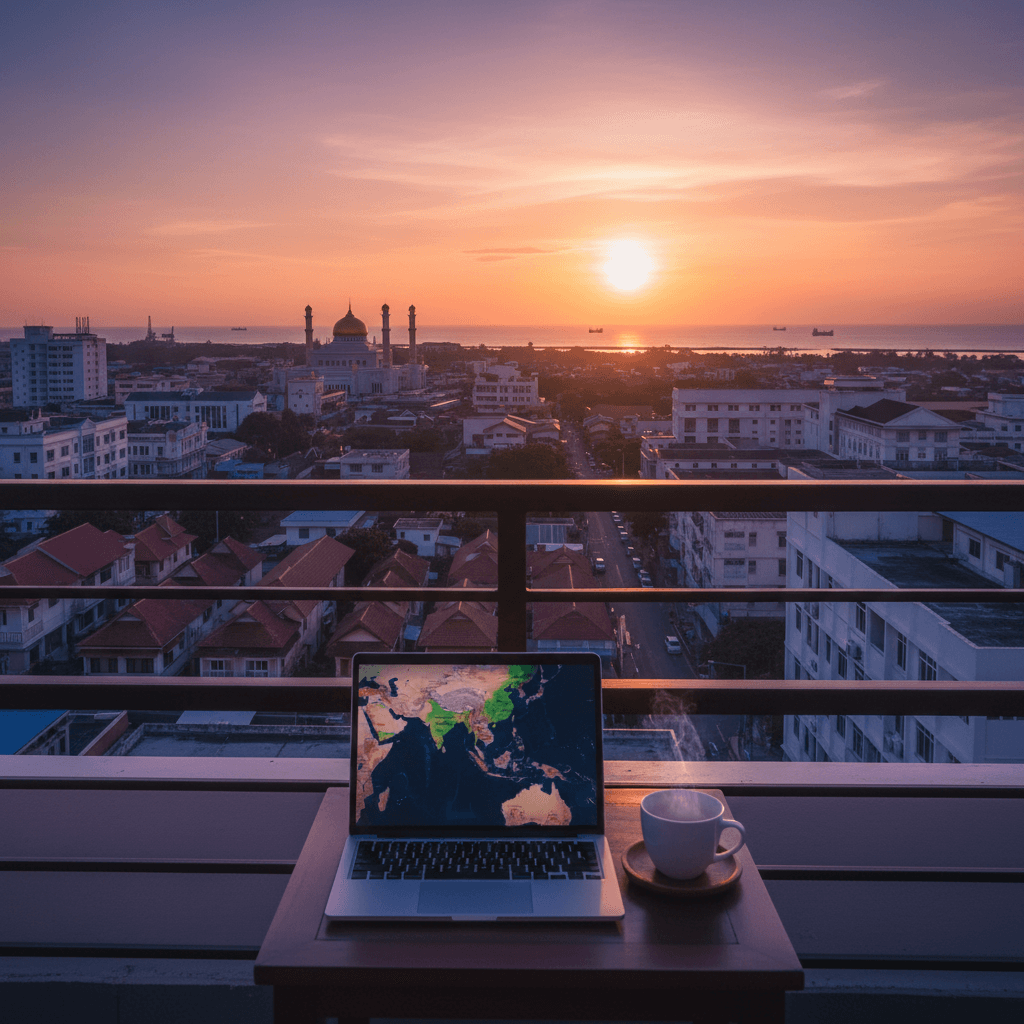
Kuala Belait
🇧🇳 Brunei
The Energy of the Oil Coast
Kuala Belait, or KB as the locals call it, doesn't feel like your typical Southeast Asian digital nomad hub. You won't find the frantic motorbike swarms of Bali or the neon-soaked nights of Bangkok here. Instead, this coastal town moves to the steady, rhythmic hum of the energy industry. It’s a place defined by its proximity to the South China Sea and the massive oil fields of Seria just down the road. For a remote worker, the vibe is intensely focused and surprisingly quiet.
The town feels like a well manicured secret. It’s clean, exceptionally safe, and carries an air of understated wealth. Because the local economy is so tied to international energy giants, you’ll find a unique blend of traditional Malay culture and a polished expat lifestyle. It’s the kind of place where you can spend your morning working from a modern cafe and your afternoon walking along a deserted beach with nothing but the sound of the waves for company.
The Emotional Landscape
Living here feels like a retreat into deep work. The lack of a party scene or "laptop squatting" culture means you aren't constantly distracted by social obligations or the FOMO that plagues other nomad spots. It can feel a bit lonely at first if you're used to instant community, but there’s a profound peace in the slow pace. Most nomads find the initial silence a bit jarring, but eventually, the safety and predictability of KB become its biggest draws.
You’ll likely feel like a guest in a very private, very comfortable home. The locals are polite and English is widely spoken, especially in business circles, making daily life frictionless. However, the conservative Islamic atmosphere is ever present. You won’t find bars or clubs, and Friday afternoons see the town go completely still for prayers. It’s a place for early risers, nature lovers, and those who actually want to get their projects finished.
What Sets KB Apart
What makes Kuala Belait different is the sheer lack of "tourist fluff." Everything here exists for a reason, usually related to the oil industry or local life. This authenticity is refreshing. You aren't being sold a curated "nomad experience"; you're just living in a wealthy, tropical town. The infrastructure is solid, with 107 Mbps internet speeds that would make many Thai islands jealous, and the Dart app makes getting around easy without needing to haggle with taxi drivers.
The cost of living reflects this premium environment. While you can find street food for B$5, a comfortable lifestyle with a private apartment and imported groceries will likely run you over $3,200 USD a month. It’s a high price for a quiet life, but for those who value safety, high speed connectivity, and a total lack of chaos, it’s a trade off that makes sense.
Top Areas for Nomads
- Kuala Belait Town Center: This is where you want to be if you value walkability. You’re close to the silver sands of the beach and the main clusters of shops. It’s the best spot for solo travelers who want to be near the few WiFi cafes available.
- Seria: About 20km away, this is the heart of the expat community. It has a more industrial, compound heavy feel. It’s great if you’re looking to connect with long term expats via Facebook groups, but it feels less like a "town" and more like a work hub.
- Kampong Ayer Outskirts: While more common in the capital, the stilt village areas near KB offer a glimpse into traditional life. It’s beautiful for a visit, but most remote workers find it too remote for a reliable daily setup.
The Nomad Reality Check
If you need a craft beer at 5:00 PM to unwind, KB will frustrate you. If you need a different coworking space for every day of the week, you’ll be disappointed. But if you want a base where the 4G coverage hits 98%, the crime rate is near zero, and the rainforest is your backyard, this town offers a level of tranquility that's becoming increasingly hard to find in the digital nomad world.
The Cost of Quietude
Kuala Belait isn't your typical Southeast Asian budget hub. Unlike the digital nomad hotspots in Bali or Chiang Mai, this town is built on the back of the oil industry. This means prices are higher than the national average, largely because so much of what you'll consume is imported. You can expect to spend around $3,210 USD (roughly B$4,300) per month to live comfortably here. It’s a trade-off: you're paying a premium for extreme safety, high speed internet, and a peaceful environment free from the chaos of larger cities.
Monthly Budgeting Tiers
Your lifestyle in "KB" will dictate which end of the spectrum you fall on. Because there aren't many dedicated nomad hostels, your biggest variable will always be housing.
- Budget ($2,000 to $2,500 USD): This tier requires a bit of hustle. You'll likely be looking for shared housing through local Facebook expat groups or word-of-mouth in the Seria area. You'll eat mostly at tamu markets or street stalls, use the purple public buses for B$1, and rely on home WiFi rather than coworking memberships.
- Mid-range ($2,500 to $3,200 USD): This is where most remote workers land. It covers a private one-bedroom studio or small apartment, which usually runs between B$1,500 and B$2,500. You'll have enough to use the Dart app for rides and eat at decent cafes a few times a week.
- Comfortable ($3,200+ USD): If you want a modern private apartment with amenities, frequent upscale dining where meals hit B$40 or more, and the flexibility to fly out of Bandar Seri Begawan for weekend trips, this is your bracket.
Daily Expenses and Local Prices
Food is where you can really control your burn rate. Local Malay dishes and seafood at the markets are a steal, but the moment you crave Western comforts or imported goods, the price jumps significantly.
- Street Food & Local Markets: B$5 to B$10 per meal. Look for Nasi Katok or fresh grilled fish.
- Mid-range Dining: B$15 to B$25 for a solid meal at a sit-down restaurant or a "laptop-friendly" cafe.
- Upscale Dining: B$40+ per person. These spots usually cater to the oil and gas executive crowd and focus on imported ingredients.
- Transportation: A short trip on the Dart app costs between B$5 and B$10. It's the local equivalent of Grab and is much more reliable than the limited bus system.
- Connectivity: A DST or Progresif SIM card with a monthly unlimited data plan will set you back about B$30.
Housing and Workspace Costs
There isn't a traditional real estate market for short-term nomad rentals here. Most expats recommend searching for "Kuala Belait Rentals" on social media or checking local community boards. Since there aren't many dedicated coworking hubs in town, you'll likely be working from home or a handful of quiet cafes. If you do find a basic shared office space, expect to pay between B$200 and B$400 a month for a desk. Most nomads find that investing in a higher-tier home internet plan is a better use of funds than hunting for a nonexistent "startup vibe" in a workspace.
One thing to remember is the lack of a "sin tax" because there is no alcohol sold in the country. You won't be spending money on bars or clubs, which can actually save you a significant chunk of change compared to living in a place like Bangkok or Manila. Your social budget will instead go toward coffee, weekend trips to the rainforest, or dinners with the local expat community.
For Nomads and Remote Workers
If you're landing in Kuala Belait to get some deep work done, you'll want to plant yourself in the Town Center. It is the most walkable part of an otherwise car dependent district and puts you within striking distance of the few cafes that won't mind you opening a laptop for an hour or two. You'll find the best internet speeds here, often hitting 107 Mbps, which is plenty for video calls or heavy uploads.
While dedicated coworking spaces are thin on the ground, the Town Center offers easy access to grocery stores and the Dart ride hailing service, which is Brunei's version of Grab. Most nomads opt for short term rentals or hotels near the coast so they can balance work with sunset walks on the beach. Expect to pay around $1,500 to $2,500 BND for a decent studio or one bedroom apartment in this central hub.
For Expats and Long Term Residents
Expats usually gravitate toward the residential pockets between Kuala Belait and Seria, which is about 20 kilometers away. This area is heavily influenced by the oil and gas industry, meaning the housing is often more modern and geared toward international standards. Many expats prefer the gated feel of these communities because they offer a built-in social network in a town where nightlife is nonexistent.
Living here means you're close to the high quality healthcare facilities and international schools that serve the petroleum sector. It feels a bit more industrial than the town center, but the trade off is a higher standard of living and better security. Housing is usually sourced through local Facebook groups or word of mouth within the expat community, as many of the best spots aren't listed on international booking sites.
For Families
Seria is the go to choice for families moving to the district. It’s quieter than the main KB town center and feels much more like a suburban neighborhood. The presence of the oil compounds means there are parks, playgrounds, and a community atmosphere that’s hard to find elsewhere in the country. You'll have easy access to the Panaga area, which is famous for its sports clubs and family friendly recreation.
- Pros: Extremely safe, close to top tier healthcare, and near established expat schools.
- Cons: You will absolutely need a car; the purple buses are cheap at $1 BND but they aren't practical for school runs or grocery hauls.
- Housing: Mostly large, multi bedroom detached houses or compounds.
For Solo Travelers and Culture Seekers
If you’re just passing through or want a more "authentic" experience, look toward the Kampong Ayer outskirts. While the most famous water village is in the capital, the stilt houses on the fringes of the Belait River offer a unique look at traditional Bruneian life. It’s a bit more remote, so it’s not ideal if you need to be in a cafe every morning, but the cultural immersion is unmatched.
Solo travelers often find that staying closer to the Tamu (open air markets) in the town center is the best way to meet locals. You can grab a meal for $5 to $10 BND and chat with vendors who are usually happy to practice their English. It’s a low stress environment where safety is never a concern, even if you're walking alone at night.
Neighborhood Comparison at a Glance
- Kuala Belait Town Center: Best for walkability and WiFi. Rent: $1,500+ BND. Vibe: Coastal and quiet.
- Seria / Panaga: Best for families and oil industry pros. Rent: Varies by compound. Vibe: Suburban and community focused.
- Kampong Ayer Outskirts: Best for short term cultural stays. Rent: Lower, mostly guesthouses. Vibe: Traditional and rustic.
Connectivity and the Digital Landscape
Brunei's digital infrastructure is surprisingly robust for such a quiet corner of Borneo. In Kuala Belait, you'll find a reliable backbone for remote work, thanks to a national push for high speed fiber and widespread 4G coverage. Brunei has robust internet infrastructure with competitive speeds, which is more than enough for seamless video calls or uploading large files to the cloud.
The local 4G network provides widespread coverage across the Belait District. While you'll rarely drop a signal in town, it's smart to set up a local SIM immediately. Most nomads head to DST or Progresif. You can grab a starter SIM for about $10 BND, and unlimited monthly data plans usually run around $30 BND. You'll find their kiosks at the airport or in the town center shops.
While the speed is there, the "laptop culture" is still catching up. You won't find the rows of people working on MacBooks that you'd see in Bali or Chiang Mai. The Digital Economy Masterplan 2025 is pushing for better tech integration, so expect the infrastructure to keep improving during your stay.
Coworking and Workspaces
Kuala Belait doesn't have a dedicated, name brand coworking scene yet. If you're looking for a formal office setup with ergonomic chairs and networking events, you'll likely be disappointed. Most remote workers here rely on their home setups or hotel desks. However, there are a few ways to find a professional environment.
- Private Office Rentals: Some local business centers in the town center offer basic desk rentals. These are functional but lack the community "vibe" of typical nomad hubs. Expect to pay between $200 and $400 BND per month for a consistent spot.
- The Coffee Shop Strategy: Since dedicated spaces are scarce, many nomads rotate through local cafes. The staff is generally friendly, but the concept of "laptop squatting" for six hours isn't deeply ingrained. It's polite to order something every hour or two.
- Hotel Business Centers: If you're staying at one of the larger hotels catering to the oil and gas industry, their business centers are often the most reliable "quiet zones" for focused work.
Best Cafes for Remote Work
Since you'll likely be working from cafes, you need spots with reliable power outlets and decent air conditioning. While Kuala Belait is small, a few local favorites serve as unofficial offices for the expat and nomad community.
- Coffee Bean & Tea Leaf: A reliable standby in the center of town. It has consistent WiFi and enough power outlets to keep you going through a long afternoon session.
- Starbucks: Located near the waterfront area, it follows the international standard for speed and comfort. It's often the busiest spot, so get there early if you need a table near a plug.
- Local Artisan Cafes: Several smaller, independent shops have popped up near the town center. These are great for shorter tasks, though their WiFi can sometimes be less reliable than the big chains.
Practical Work Considerations
Working from Kuala Belait requires a bit of a shift in mindset. Because the town is so safe and quiet, it's an incredible place for "deep work" phases where you need to finish a major project without distractions. However, the lack of a social nomad scene means you'll have to be proactive about meeting people through expat Facebook groups or local interest clubs.
Keep in mind that Fridays are significant in Brunei. Everything, including cafes and offices, shuts down between 12:00 PM and 2:00 PM for Friday prayers. It's a non-negotiable part of the weekly rhythm, so plan your meetings and lunch breaks accordingly. Most nomads use this time to take a break themselves or work offline from their apartments.
A Haven of Low-Stress Living
Kuala Belait is arguably one of the safest spots in Southeast Asia. Because the town is small and the economy is heavily tied to the stable oil and gas sector, crime is almost non-existent. Most expats and nomads find they can walk around comfortably at any hour without a second thought. There aren't any "no-go" zones or neighborhoods to avoid; even the more industrial areas near Seria feel secure and predictable.
The biggest safety factor for newcomers isn't crime, but the legal environment. Brunei follows strict Islamic laws, which means there is no alcohol sold in the town. Travelers can bring in a limited amount for private consumption if they meet the customs requirements, but public intoxication or disruptive behavior is taken very seriously. As long as you respect the local customs and dress modestly in public, you'll find the locals incredibly welcoming and the environment entirely stress-free.
Healthcare Standards and Facilities
The healthcare system in the Belait District is excellent, particularly because of the long-standing expat community working for Shell. The quality of care is high, and the facilities are modern. Public healthcare is technically free for citizens, but it remains very affordable for foreigners. Most nomads and expats prefer using the regional hospitals or private clinics for faster service.
- Suri Seri Begawan Hospital: This is the main government hospital in Kuala Belait. It handles most emergencies and specialist consultations.
- Panaga Health Centre: Located nearby in the Seria/Panaga area, this facility is widely used by the expat community and is known for its high standards of outpatient care.
- Pharmacies: You'll find well-stocked pharmacies throughout the town center. Common medications are easy to find, though it is smart to bring a copy of your prescription for any specialized maintenance drugs.
Emergency Information
In the event of an emergency, the response times in Kuala Belait are generally quick due to the town's compact size and lack of heavy traffic. Keep these local numbers saved in your phone just in case:
- Police and Ambulance: Dial 991
- Fire Department: Dial 993
- Search and Rescue: Dial 998
Practical Wellness Tips
The tropical heat is the most common health hurdle for nomads. With average highs of 32°C and heavy humidity, dehydration can sneak up on you. Expats recommend sticking to bottled or filtered water, though the tap water in Brunei is generally considered among the safest in the region. If you're heading out for a beach day or a hike in the nearby rainforest, high-SPF sunscreen and mosquito repellent are non-negotiable to avoid nasty burns or dengue risk.
For those staying long-term, it's worth getting a local health insurance policy or ensuring your international nomad insurance covers medical evacuation to Singapore for extremely complex procedures, though for 95% of medical needs, the local facilities in Kuala Belait are more than sufficient.
The Local Layout
Kuala Belait isn't your typical sprawling Southeast Asian hub. It's compact and functional, built largely around the needs of the energy industry. If you're staying in the Town Center, you'll find it surprisingly walkable. Most of the shops, cafes, and essential services are clustered within a few blocks, making it easy to grab a coffee or head to the beach without needing a vehicle. However, once you step outside this central grid, the tropical heat and lack of continuous sidewalks make walking a chore rather than a lifestyle choice.
Expats living in the nearby Seria district or the suburban fringes of KB almost exclusively rely on cars. If you're here for more than a few weeks, you'll notice that the town's rhythm is dictated by the "oil and gas" commute. Traffic is rarely an issue compared to Bandar Seri Begawan, but the humidity means you'll want a door-to-door transport solution for anything further than a ten-minute stroll.
Ride-Hailing and Taxis
Forget about the global giants here; Grab doesn't operate in Brunei. Instead, you need to download Dart. It's the local equivalent and the absolute lifeline for any nomad without a private car. The app works like Uber, offering transparent pricing and reliable service within the Kuala Belait and Seria areas. Most short trips around town will cost you between B$5 and B$10.
Traditional taxis exist but are becoming a rarity. You won't find them cruising the streets looking for fares. If you prefer a standard cab, you'll usually have to find them at the main bus station or have your hotel call one. Honestly, sticking with Dart is the way to go; it's transparent with pricing and saves you the hassle of negotiating a fare in the heat.
Public Buses
Brunei's public transport is modest. In Kuala Belait, you'll see the iconic purple buses. These are essentially minivans or small coaches that run specific routes connecting KB to Seria and other nearby settlements. They are incredibly cheap, usually costing just B$1 per ride, but they don't run on a strict, high-frequency schedule. They're great for a budget-friendly local experience, but if you have a Zoom call scheduled, don't rely on them to get you back to your laptop on time.
Getting to KB from the Airport
Most travelers arrive via Bandar Seri Begawan (BWN), approximately 85km (53 miles) away, roughly a 1.5-2 hour drive from Kuala Belait. A Dart from the international airport to KB is the most convenient option, though it can be pricey. If you're looking to save money, you can take a bus from the capital's main terminal to Seria, and then catch a connecting purple bus to KB. For those arriving on smaller regional flights, Anduki Airport (KBZ) is much closer, and a quick Dart ride will get you into the heart of town for about B$10 to B$20.
Wheels of Your Own
While you won't find the ubiquitous scooter rentals common in Bali or Thailand, car rentals are available for those planning a longer stay. Expect to pay around B$50 to B$70 per day for a basic sedan. Driving is on the left side of the road, and the infrastructure is excellent. Roads are well-maintained and signage is clear. If you plan on exploring the Ulu Belait rainforest or taking frequent trips to the capital, having your own wheels is the ultimate luxury in a town where public options are slim.
Summary of Transport Costs
- Dart Ride (Short distance): B$5 to B$10
- Purple Bus Fare: B$1 flat rate
- Anduki Airport Transfer: B$10 to B$20
- Daily Car Rental: B$50 to B$70
- Fuel Price: Highly subsidized and very cheap, usually under B$0.55 per liter
The Linguistic Landscape
You'll find that getting around Kuala Belait is remarkably straightforward compared to other Southeast Asian hubs. While Standard Malay is the official language, the town's identity is heavily shaped by its status as an industrial hub for the global oil and gas sector. This has created a bilingual environment where English is not just a secondary language, but the primary medium for business, signage, and most professional interactions.
Most nomads find they don't need to learn Malay to handle daily logistics. From ordering a B$5 laksa at a local stall to discussing lease terms with a landlord, English will almost always get the job done. That said, the local dialect, Brunei Malay, is what you'll hear in the markets and among friends. It's distinct from the Malay spoken in Kuala Lumpur, but the "standard" version is what's taught in schools and used in official government documents.
Level of English Proficiency
Expect a high degree of fluency in "KB," as locals call it. Because of the heavy expat presence from the nearby Shell operations and international schools, the service industry is well-versed in English. You won't just find basic "survival English" here; many locals are highly articulate and comfortable engaging in complex conversations. This makes Kuala Belait one of the easier spots in the region for solo travelers who might feel isolated by language barriers elsewhere.
Key Phrases for the Road
While you can survive on English alone, throwing out a few Malay phrases goes a long way in building rapport with the community. It shows you're not just passing through. Here are the basics that expats recommend keeping in your back pocket:
- Selamat Pagi: Good morning. You'll hear this constantly in the early hours at the tamu (market).
- Terima Kasih: Thank you. It's the most versatile phrase you can learn.
- Sama-sama: You're welcome. Use this when someone thanks you for your B$1 bus fare.
- Berapa harga?: How much? Useful for market stalls that don't have printed price tags.
- Inda: No. (A local Bruneian variation of the standard "Tidak").
- Ngam: Correct or "That's right." You'll hear this used as a filler word in many conversations.
Digital Tools and Apps
If you run into a specific document or a sign in a more rural area that isn't translated, Google Translate is your best bet. It handles Malay quite well, especially for text-to-image translations. For navigating the town or calling a ride, the Dart app is entirely in English, so you won't have any trouble setting your pickup points or communicating with drivers.
For those looking to dive deeper into the culture, there aren't many formal language schools specifically in Kuala Belait. Most nomads pick up the basics through social interaction at cafes or by joining local Facebook expat groups. If you're staying long-term, consider looking for a language exchange partner; many locals are keen to polish their English or learn a third language in exchange for teaching you Malay.
Social Nuances
Communication in Brunei is generally polite, soft-spoken, and indirect. It's rare to hear people raising their voices in public. When meeting someone for the first time, a gentle handshake is common, though some conservative locals may prefer a simple nod and a hand over the heart. Following these subtle cues will help you blend into the town's quiet, respectful atmosphere much faster than any vocabulary list will.
The Tropical Rhythm
Kuala Belait sits right on the equator, so you can expect a climate that's consistently warm, humid, and lush. Average temperatures range from 24°C (75°F) lows to 31-33°C (88-91°F) highs year-round, meaning your wardrobe will mostly consist of lightweight, breathable fabrics. While the heat is steady, the rain is what truly defines the seasons here.
You'll experience two distinct phases: the wet season and the slightly drier window. Even during the "dry" months, a quick afternoon downpour is common, often providing a welcome break from the humidity. Expats usually plan their outdoor adventures around these patterns to avoid getting caught in the heavy tropical deluges that can turn streets into temporary streams.
The Best Window: April to October
If you're looking for the most reliable weather for beach walks or exploring the nearby rainforests, aim for the April to October window. During these months, the humidity feels a bit more manageable and the sun stays out longer. Daytime highs usually hover around 32°C (90°F), while evenings dip to a comfortable 24°C (75°F).
Digital nomads often prefer this period because it's easier to move between cafes and apartments without worrying about monsoon-level rain. It's the ideal time to check out the silver sands of Belait's coast or take a Dart ride out to the oil monuments in Seria. The skies are generally clearer, making for some spectacular sunsets over the South China Sea.
The Monsoon Peak: November to March
The northeast monsoon hits its stride between November and March. You'll see the heaviest rainfall during December and January. These aren't just light sprinkles; they're intense, thunderous downpours that can last for hours. While the rain keeps the surrounding jungle incredibly green, it can put a damper on local travel and outdoor social plans.
Travelers often find this time of year a bit isolating if they're staying in quieter residential areas. However, if your goal is to hunker down and get some serious deep work done, the sound of rain on a tin roof provides a great backdrop for productivity. Just make sure your accommodation has solid climate control, as the humidity spikes significantly during the rainy months.
Seasonal Breakdown
- Dry Season (April to October): Best for outdoor activities and travel. Expect highs of 32°C and lower rainfall totals.
- Transition Months (September to October): Weather becomes more unpredictable. You'll see a mix of clear mornings and stormy afternoons.
- Wet Season (November to March): Peak rainfall occurs in December and January. Great for focused indoor work but challenging for sightseeing.
Practical Survival Tips
The sun in Brunei is intense. Even on cloudy days, the UV index is high, so high-SPF sunscreen is a must if you're spending time outdoors. Most nomads find that the best way to handle the heat is to follow the local lead: stay indoors or in the shade during the peak sun hours of 11:00 AM to 3:00 PM, and save your errands or walks for the early morning or late afternoon.
Indoor spaces, from shopping centers to local cafes, usually have the air conditioning cranked up high. It's a bit of a local paradox that you'll need light clothes for the street and a light sweater or hoodie for working in a cafe. If you're planning to visit during the wet season, invest in a sturdy umbrella rather than a raincoat, as the humidity makes waterproof clothing feel like a portable sauna.
Connectivity and Tech Setup
Staying connected in Kuala Belait is straightforward, though you'll want to handle your SIM card logistics as soon as you land. Most nomads head straight for a DST or Progresif booth at the airport or in the town center. A starter kit usually costs around B$10, and you can top up with unlimited data plans for about B$30 per month. The 4G coverage is surprisingly robust across the Belait District, and the 2025 infrastructure upgrades mean you can expect download speeds hovering around 107 Mbps.
The biggest hurdle for remote work is the lack of dedicated coworking spaces. You won't find a WeWork here. Instead, expats and nomads tend to rotate through local cafes. While a "laptop squatting" culture hasn't fully taken root, most spots allow you to work if you're buying coffee. Just be mindful of the quiet atmosphere; it's a place for deep work rather than loud Zoom calls.
Money and Housing
While the national average for living in Brunei is lower, Kuala Belait is an oil town, which pushes costs up. You should budget roughly $3,210 USD per month for a comfortable lifestyle. This covers a private apartment, which usually runs between B$1,500 and B$2,500, along with imported groceries and dining out.
- Budget Tier ($2,000 to $2,500 USD): Shared housing, eating at tamu markets for B$5 to B$10 per meal, and using the purple public buses.
- Mid-range Tier ($2,500 to $3,200 USD): A 1BR studio, mixing home cooking with mid-range meals at B$15 to B$25, and using ride hailing apps.
- Comfortable Tier ($3,200+ USD): Modern private apartments, upscale dining at B$40+ per plate, and frequent trips to Bandar Seri Begawan.
Finding a place to stay usually happens through local Facebook groups or expat networks rather than polished booking sites. If you're staying long term, look for rentals in the town center for walkability, or Seria if you want to be closer to the expat social clubs. Banking is handled by BIBD, and while international cards work at most ATMs, it's smart to keep cash on hand for the smaller markets.
Getting Around
Kuala Belait isn't particularly walkable once you leave the immediate town center. There are no bike or scooter rentals to speak of, and the purple buses, while cheap at B$1 per ride, aren't always frequent. Your best friend will be the Dart app. It's Brunei's version of Grab or Uber. Most short trips around town will cost you between B$5 and B$10. For international travel, you'll likely fly into Bandar Seri Begawan and take a two hour car transfer down the coast.
Cultural Etiquette and Safety
Safety is one of the biggest perks here. It's incredibly peaceful with almost zero crime, so you can walk around at night without a second thought. However, the social rules are strict. Brunei is a conservative Islamic nation, and Kuala Belait follows suit. Dress modestly, covering shoulders and knees, and avoid public displays of affection.
There is a total ban on the sale of alcohol. While some expats have private allowances for personal consumption, there are no bars or nightclubs. Friday afternoons are particularly quiet as the town shuts down for prayers between 12:00 PM and 2:00 PM. English is widely spoken, especially in business and among the oil industry professionals, so you'll have no trouble communicating. A simple "Terima kasih" (thank you) goes a long way with the locals.
Weather and Timing
The weather is tropical and humid year round, usually sitting at 28°C. If you hate the rain, avoid the peak monsoon months from November to March. The best window for visiting is between April and October. The days are hotter, reaching 32°C, but the skies are clearer, making it much easier to enjoy the nearby beaches or the Seria oil fields during your downtime.
Need visa and immigration info for Brunei?
🇧🇳 View Brunei Country GuideHidden Gem
Worth the effort