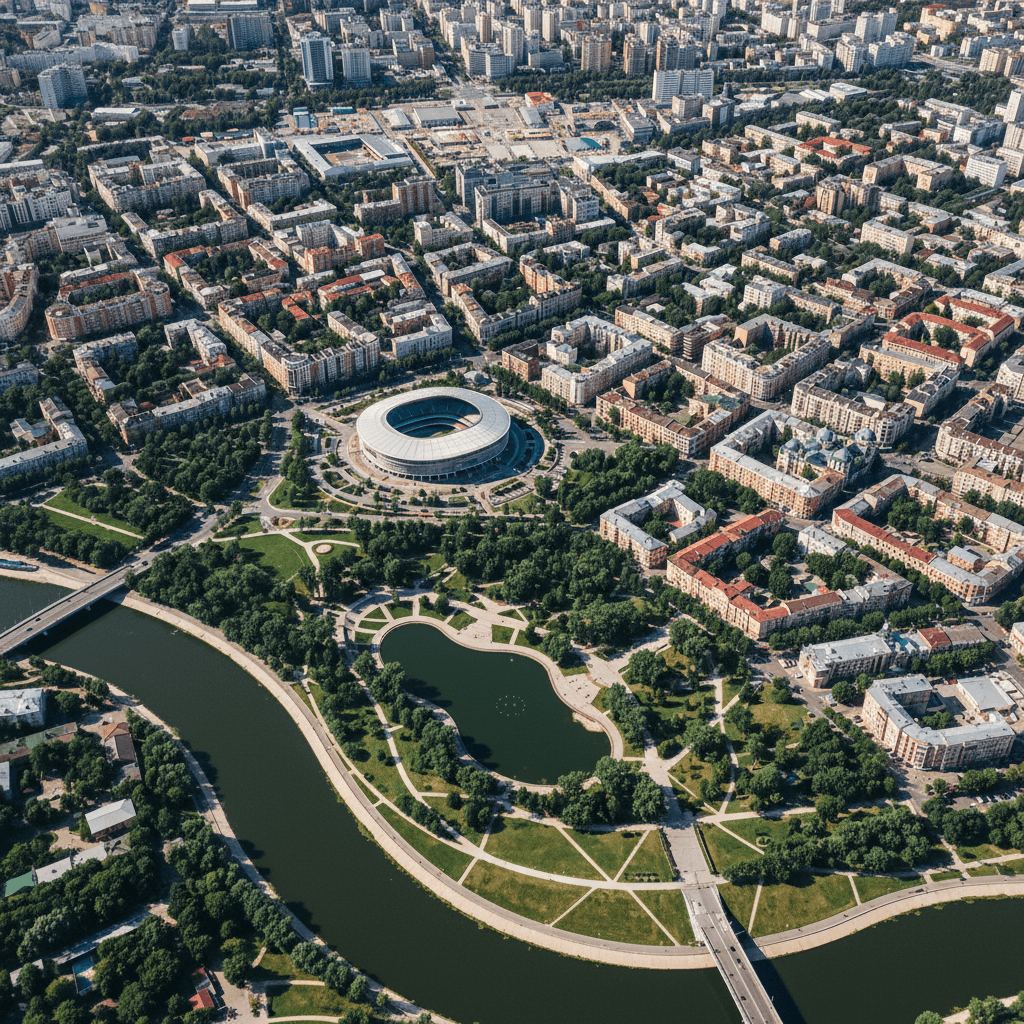
Krasnodar
🇷🇺 Russia
The Southern Pulse
Krasnodar is a strange, magnetic mix of a relaxed southern pace and an ambitious urban energy. While Moscow is all about the grind and St. Petersburg feels like an open air museum, Krasnodar is where Russia goes to breathe. It sits in the Kuban region, a place defined by fertile black soil and a subtropical sun that keeps the city warm long after the rest of the country has pulled on their winter coats. You'll feel the difference in the streets; people actually take the time to sit by a fountain or linger over a coffee.
The city's heart beats loudest on Krasnaya Street. On weekends, large sections become pedestrian only, turning the center into a massive outdoor living room. It is a sensory overload of Soviet era monuments, street musicians, and high end boutiques. Most nomads find the contrast fascinating. One minute you are walking past a stern bronze statue of Catherine the Great, and the next you are ducking into a sleek specialty coffee shop with a minimalist interior that could be in Berlin or Brooklyn.
There is a specific emotional payoff to being here. It is the feeling of discovering a spot that hasn't been sterilized by over tourism. You'll spend your afternoons wandering through the Galitsky Park (Park Krasnodar), which is arguably one of the best modern urban spaces in Europe. Its futuristic spirals and light installations feel like a sci-fi movie set, offering a sharp break from the city's retro, photogenic backstreets. It is a city that rewards the curious, even if the lack of English signs means you'll be leaning heavily on Yandex Translate to get by.
The Cost of Living
Life here isn't as cheap as it used to be, but your money still goes a long way compared to Western Europe. A mid range lifestyle usually clocks in around $1,600 per month. If you are on a tighter budget, you can scrape by on $1,200, but you'll be trading a central apartment for a longer commute and more home cooked meals.
- Budget Tier: $1,200 per month (Shared housing, heavy use of street food).
- Mid Range: $1,600 per month (1BR in the Center, regular dining out).
- Comfortable: $2,200+ per month (Luxury flat on Krasnaya, upscale riverside dining).
Where to Plant Your Flag
Choosing a neighborhood is all about your tolerance for noise versus your desire for convenience. The city is sprawling, but most nomads stick to three main zones.
The Center
- Best For: First timers and digital nomads.
- The Vibe: Historical architecture meets modern amenities. Everything is walkable.
- Rent (1BR): $500 to $800.
- Downside: It gets loud and crowded, especially during summer festivals.
Eastern District (Near Park Krasnodar)
- Best For: Couples and those who want quiet.
- The Vibe: Polished, new, and right next to the city's best park.
- Rent (1BR): $600 to $900.
- Downside: It feels a bit like a construction zone in some parts as it continues to develop.
Krasnaya Street (Central Core)
- Best For: Solo travelers and foodies.
- The Vibe: The absolute thick of the action. You are steps away from every major landmark.
- Rent (1BR): $900+.
- Downside: Premium prices and constant foot traffic outside your door.
Connectivity and Work
The internet situation is reliable for most remote work. Average speeds hover around 100 Mbps. It is perfectly fine for sending emails, Slack, and Zoom calls, even if you are uploading large files. Most nomads skip the formal coworking spaces, which run between $100 and $200 a month, and opt for the cafe culture along Krasnaya Street. Hotels like the Platan or Intourist also provide reliable workspaces if you need a professional environment.
For mobile data, grab a SIM card from MTS or Beeline as soon as you land. They are cheap and easy to set up. Just make sure you have the Yandex GO app downloaded. It is the local equivalent of Uber and the only sane way to get around when the public transport stops being reliable after 10 PM. A typical ride across town will only set you back $2 to $5.
The Real Talk
Krasnodar isn't perfect. The language barrier is real, and the summer heat can be punishing, often hitting 35°C (95°F) in July. You'll also find that the city goes quiet surprisingly early. After 11 PM, the buses thin out and the residential streets can feel a bit isolated. However, for those who want a base that feels authentic, safe, and culturally deep, this southern hub offers a rhythm of life that is hard to find anywhere else in the region.
A Southern Russian Reality Check
Krasnodar is often called the gateway to the Russian south, but for digital nomads, it presents a unique financial puzzle. While it carries a reputation for being more affordable than Moscow or Saint Petersburg, current market shifts have pushed the average monthly burn for a solo traveler to around $1,645. It is a city of contrasts where you can grab a quick snack for a few dollars on a street corner, yet find yourself paying premium rates for a modern apartment near the city's famous park.
Most nomads find the sweet spot in a mid-range budget of $1,600 per month. This covers a reliable one-bedroom apartment in the center and frequent meals at the trendy cafes lining Krasnaya Street. If you are sticking to a tighter budget of $1,200, you will likely be looking at shared housing and relying more on local grocery chains like Magnit or Pyaterochka rather than dining out.
Breaking Down the Monthly Rent
Housing will be your biggest expense, and prices fluctuate significantly based on how close you are to the central action. Expats recommend focusing on three specific zones:
- The Center: This is the go-to for first-timers who want to be near theaters and the main fountains. Expect to pay between $500 and $800 for a standard one-bedroom apartment. It is crowded, but you save on transport.
- Eastern District: Located near the sprawling Park Krasnodar, this area is full of shiny new developments. Rent here sits between $600 and $900. It is quieter and feels more modern, though it is still finding its feet in terms of local amenities.
- Krasnaya Street: Living directly on or adjacent to the main artery is the luxury choice. Prices often exceed $900 for high-end units. You are paying for walkability and immediate access to the best food in the city.
Daily Sustenance and Socializing
Eating out is one of the city's highlights, especially if you enjoy southern Russian flavors. Street food and quick bites at pedestrian stalls will only set you back $3 to $5. A standard lunch at a mid-range cafe usually totals $10 to $15, while an upscale dinner at a riverside restaurant can easily climb to $30 or more.
Coffee culture is growing, and you will find plenty of spots to work from for the price of a latte. If you prefer a dedicated workspace, coworking desks in the central districts generally range from $100 to $200 per month. Hotels like the Platan or Intourist also offer quiet corners if you need a professional environment for a few hours.
Getting Around and Staying Connected
The city is surprisingly walkable if you stay central, but for everything else, you will live on the Yandex GO app. Rides across town are incredibly affordable, typically costing between $2 and $5. Public transport is an option during the day, but travelers often complain that reliability drops off a cliff after 10 PM, making ride-sharing apps a necessity for late-night returns.
Connectivity is a bit of a mixed bag. Average speeds hover around 14 Mbps, which handles emails and basic calls but might struggle with heavy video editing or large uploads. For mobile data, locals suggest picking up a SIM card from MTS or Beeline. These plans are cheap and easy to set up, providing a necessary backup for when cafe WiFi becomes spotty.
Practical Financial Tips
- Foreign bank cards are currently a challenge in Russia. Most expats suggest using SWIFT alternatives or looking into expat-friendly banking solutions before arrival.
- Use Yandex Translate for everything. English proficiency is low, and being able to translate a menu or a lease agreement on the fly is a lifesaver.
- Booking platforms like Ostrovok.ru are often more reliable than Western sites for finding short-term stays with local payment options.
- Budget for a 5 to 10 percent annual increase in costs, as prices in this region have been trending upward recently.
The Center: Best for First-Timers and Digital Nomads
If you want to be where the action is, the city center is your home base. Most nomads find this area the most convenient because it balances historical Soviet architecture with the modern amenities needed for remote work. It is the most walkable part of the city, though it gets crowded during the weekends when the local crowds descend on the plazas.
Living here puts you near the best coworking setups, typically costing between $100 and $200 per month. You will find reliable workspaces in established spots like the K&K or Intourist hotels. The internet speed averages around 14 Mbps, which is enough for emails and basic calls, but you might want a local SIM from MTS or Beeline for a more stable hotspot. Rent for a one-bedroom apartment in the center usually falls between $500 and $800.
Krasnaya Street: Best for Solo Travelers and Foodies
Krasnaya Street is the city's main artery and the ultimate spot for anyone traveling solo. It is a long, pedestrian-friendly stretch lined with theaters, fountains, and endless cafes. Expats recommend this area if you want to be within a two-minute walk of the best food in the region. You will find everything from $3 street snacks to upscale dining where a meal might run you $30 or more.
The trade-off here is the price and the noise. This is the most expensive part of town, with luxury apartments often starting at $900. It is also the most touristy area, so expect a constant hum of activity. If you enjoy late-night strolls and being in the middle of a social hub, this is the place, but keep in mind that public transport thins out significantly after 10 PM.
Eastern District: Best for Families and Couples
Located near the famous Park Krasnodar, the Eastern District is a newer, more polished part of the city. Families and couples gravitate here because it feels less like a concrete jungle and more like a modern urban retreat. The park itself is a massive draw, featuring world-class landscaping and plenty of space for kids to run around.
The residential buildings here are mostly new constructions, which means better insulation and more modern layouts than the older Soviet blocks in the center. Rent is slightly higher than the mid-range central options, typically ranging from $600 to $900. While it is quieter and safer for families, it can feel a bit isolated if you don't have a car or aren't comfortable using the Yandex Go app, which usually costs $2 to $5 for a trip into the center.
Practical Neighborhood Tips
- Safety: Stick to the well-lit main streets. While the city is generally safe, quiet residential zones on the periphery can feel a bit dark and desolate after 11 PM.
- Navigation: Forget Google Maps here. Download Yandex Maps and Yandex Translate before you arrive; they are much more accurate for local transit and finding specific building entrances.
- Connectivity: Many cafes on Krasnaya Street have a strong working culture, but always ask "Gde WiFi?" before you sit down to ensure they aren't having a slow day.
- Budgeting: A comfortable lifestyle with a central apartment and frequent dining out will cost you roughly $2,200 per month, while a budget-conscious nomad can get by on $1,200 by sticking to shared housing and street food.
Connectivity and Speed
Krasnodar presents a unique challenge for the remote worker. While the city feels modern and the tech scene is growing, the average fiber speed is around 100 Mbps. This is fine for Slack, emails, and the occasional Zoom call, but you might struggle with heavy video editing or massive file uploads. Most nomads find that relying on a single connection is a mistake.
The local workaround is a solid 4G backup. You'll want to grab a local SIM card immediately upon arrival. MTS and Beeline are the two heavy hitters here, offering cheap data plans that often outperform hotel WiFi. You can pick these up at the airport or any small shop along Krasnaya Street. Just bring your passport for the registration process.
For navigating the digital side of the city, Yandex is your best friend. Forget Google Maps; Yandex Maps is far more accurate for finding specific building entrances and checking real-time bus locations. Yandex Translate is also a better bet for the local dialect than its competitors.
Top Coworking Spots
While the city doesn't have a massive "nomad hub" feel yet, the Center district is where you'll find the most reliable infrastructure. Dedicated coworking spaces usually run between $100 and $200 per month for a hot desk. If you prefer a more formal environment, many expats recommend checking out the business centers within hotels like the Platan or Intourist. They offer quiet, professional corners and reliable power outlets.
If you're staying closer to the Eastern District near Park Krasnodar, the coworking scene is a bit thinner, but the newer buildings often have better modern wiring. You'll likely pay a premium in this area, with monthly memberships leaning toward the $200 mark, but you get the benefit of being near the city's most impressive green space for your lunch breaks.
Cafe Culture and Remote Work
If you prefer the hum of a coffee shop, Krasnaya Street is your office. The cafes here are used to people lingering with laptops, though it's always polite to keep the coffee flowing if you're taking up a table for three hours. The vibe is relaxed, and the southern pace of life means nobody is going to rush you out the door.
- The Center: Best for those who need to be within walking distance of everything. It's crowded but has the highest density of WiFi-enabled cafes.
- Yandex GO: Use this app to get between your apartment and your workspace. Rides usually cost between $2 and $5, making it a no-brainer when you're carrying a heavy laptop bag.
Practical Tech Tips
Banking is the biggest hurdle for nomads right now. Foreign credit cards are notoriously tricky to use. Most long-term travelers recommend looking into SWIFT alternatives or opening a local account if you plan to stay for a while. Having a stash of cash is a smart move, though Yandex Pay works well if you can get your accounts linked.
Power outages aren't a daily occurrence, but they happen more often in the quiet residential zones on the outskirts. If your work is deadline-dependent, staying in the Center or the Eastern District provides a much safer bet for consistent electricity and uptime. Most nomads find that as long as they have a local SIM with a hotspot and a decent power bank, the city is a perfectly functional base for a few months.
General Safety in the Southern Capital
Krasnodar is generally a safe place for nomads to hang out. It lacks the frantic edge of Moscow, leaning more into a laid back southern pace. Most travelers feel perfectly comfortable walking through the Center or along Krasnaya Street during the day and early evening. The city has a low violent crime rate, and you'll mostly just need to keep your wits about you regarding petty theft in crowded markets, same as any other European city.
The main thing to watch out for is the drop off in activity once the sun goes down. While the main drag stays lit up, the side streets and quiet residential zones can get pretty dark. Since public transport starts thinning out significantly after 10 PM or 11 PM, it's better to avoid wandering through unlit parks or peripheral neighborhoods alone late at night. If you're out late, just use Yandex GO. It's the local version of Uber, it costs between $2 and $5 for most trips, and it's the gold standard for getting home safely.
Healthcare and Wellness
If you get sick, you'll find that healthcare here is functional but can be a bit of a hurdle if you don't speak Russian. Public hospitals are reliable for basic issues and emergencies, but the facilities often look a bit dated. For anything non urgent, most expats head to private clinics where you're more likely to find English speaking staff and modern equipment. You can find pharmacies, or Aptekas, on almost every corner. They're well stocked, though you should bring your own specific prescriptions from home just in case.
In an emergency, dial 112. It's the universal number for police, fire, and medical services. Most nomads find that having a translation app like Yandex Translate is a lifesaver when trying to explain symptoms to a doctor or pharmacist, as English proficiency is pretty low outside of the main tourist spots.
Staying Connected and Secure
Digital security is just as important as physical safety here. Since foreign bank cards can be tricky to use, nomads usually rely on a mix of cash and local fintech solutions. For your phone, grab a SIM card from MTS or Beeline as soon as you arrive. They offer cheap data plans that are easy to activate. While the average internet speed sits around 14 Mbps, which is fine for emails and basic Zoom calls, it can get laggy if you're pushing heavy video files.
- Emergency Number: 112
- Best Navigation App: Yandex Maps (much more accurate than Google here)
- Ride Hailing: Yandex GO
- Translation: Yandex Translate
Practical Tips for a Smooth Stay
The city's vibe is conservative but welcoming. When visiting cultural landmarks or Orthodox sites like the local monasteries, dress modestly. It's a small gesture that goes a long way with the locals. If you're looking for community, nomad meetups are a bit thin on the ground, so your best bet is to head to the cafes along Krasnaya Street or the workspaces in hotels like Platan or Intourist. You'll often find other remote workers tucked away there with their laptops.
Keep an eye on the weather if you're planning to be out and about. The subtropical climate means summers are scorching, often hitting 35°C (95°F). If you're sensitive to heat, stay hydrated and plan your walks for the early morning or after the evening cool down begins.
Navigating the Southern Capital
Krasnodar is a city built for walking, at least if you're sticking to the historic core. Most nomads find that life revolves around Krasnaya Street, the city's main artery. On weekends, large sections of this road often close to cars, turning into a massive pedestrian zone where you can wander between theaters, fountains, and street performers without looking over your shoulder for traffic.
If you're heading further out to spots like Park Krasnodar or the Botanical Garden, you'll need a plan beyond your own two feet. The city's layout is a mix of tight Soviet grids and sprawling new developments, making a reliable transit app your best friend during your stay.
The Golden Rule: Download Yandex GO
Forget about trying to hail a cab on the street or using apps that work in Western Europe. In Krasnodar, Yandex GO is the undisputed king. It functions exactly like Uber or Lyft; you'll see the driver's photo, the car's plate, and a fixed price before you even step inside. It's incredibly affordable compared to US or EU standards.
- Short city hops: Expect to pay between $2 and $3.
- Cross-town treks: Even during busier times, these rarely exceed $5 or $6.
- Airport runs: A trip to Pashkovsky Airport typically sits around $7 to $10 depending on demand.
Expats recommend keeping a local SIM card from MTS or Beeline linked to the app. While you can pay in cash, linking a local bank card makes the experience seamless. Just keep in mind that traffic in the center can get heavy during rush hour, so give yourself an extra 20 minutes if you have a meeting.
Public Transit and the 10 PM Wall
The city has a network of trams, buses, and trolleybuses that are great for budget travelers. Trams are particularly useful because they bypass the notorious traffic jams on the main roads. They're cheap, usually costing less than $0.50 per ride, and they give you a gritty, authentic look at the local neighborhoods.
However, there's a catch that catches many newcomers off guard. Public transport starts thinning out significantly after 10 PM. By 11 PM, most routes have stopped entirely. If you're out late at a wine bar or a late night cafe on Krasnaya, don't count on the bus to get you home. Stick to Yandex GO for anything after dark to avoid being stranded in quiet residential zones.
Micromobility and Navigation
For those who prefer two wheels, electric scooter rentals have taken over the central districts and the Eastern District near the stadium. You'll find them parked on almost every corner. Use local apps like Whoosh or Urent to unlock them. They're perfect for ziping through the park or getting from one end of the pedestrian zone to the other when your legs give out.
When it comes to finding your way, Yandex Maps is far superior to Google Maps in this region. It shows more accurate building entrances, real time bus locations, and even which specific business doors to use. It's an absolute necessity for finding those tucked away coworking spaces or "hidden" cafes in the courtyards of the Center.
Getting to and From the City
Most travelers arrive via Pashkovsky Airport. While there are buses available, they can be cramped and confusing if you don't speak Russian. Taking a Yandex GO car from the arrivals terminal is the standard move. If you're arriving by train at Krasnodar-1 station, you're already quite close to the action. A quick 10 minute ride will put you right in the heart of the Krasnaya Street district.
While the city is generally safe, nomads suggest avoiding unlit parks and isolated peripheral areas late at night. Stick to the well lit main drags where the "southern energy" keeps things lively well into the evening. As long as you have your phone charged and your Yandex app ready, getting around this southern hub is one of the easiest parts of the trip.
The Language Barrier
In Krasnodar, you're stepping into a space where Russian is the absolute king. Unlike Moscow or St. Petersburg, English proficiency is quite low here. You might find a handful of English speakers in high end cafes along Krasnaya Street, but don't expect the barista or the grocery store clerk to follow along. Most nomads find that while locals are generally helpful, the communication gap is real.
You'll need to get comfortable with the Cyrillic alphabet quickly. Even being able to sound out signs for "Pharmacy" (Аптека) or "Market" (Рынок) makes a massive difference in your daily stress levels. Travelers often say that people in the south have a more relaxed, warmer demeanor than in the north, so don't be afraid to use hand gestures and a smile while you're fumbling through a transaction.
Digital Lifelines
Since you won't be chatting your way through most situations, your phone is your best friend. Yandex Translate is the gold standard here. It generally handles the nuances of Russian better than Google, and the photo translation feature is a lifesaver for reading menus at local spots or signs in the Eastern District.
- Yandex Translate: Use it for voice-to-voice conversations and menus.
- Yandex GO: This is the local Uber. It removes the need to speak to drivers, which is great because most don't speak English. Rides usually cost between $2 and $5.
- Yandex Maps: Much more accurate for local business hours and house numbers than other map apps.
Staying Connected
Internet speeds in Krasnodar average around 100 Mbps, which is great for heavy 4K video uploads and seamless Zoom calls. Most nomads recommend getting a local SIM card immediately to stay tethered. Local providers like MTS and Beeline have kiosks everywhere, and data plans are incredibly cheap compared to Western standards.
If your home internet gets laggy, head to the center. Hotels like the Platan or Intourist have reliable workspaces. You can also find a desk in central coworking spots for about $100 to $200 a month. Most cafes on Krasnaya Street are laptop friendly during the day, though they get loud once the evening crowds arrive.
Useful Phrases for Your First Week
Learning a few basics goes a long way in gaining respect from the locals. Start with these:
- Zdravstvuyte: Hello (formal).
- Spasibo: Thank you.
- Gde WiFi?: Where is the WiFi?
- Ya ne govoryu po-russki: I don't speak Russian.
- Schet, pozhaluysta: The bill, please.
Social Dynamics
Because the nomad scene is small, you won't find many organized English speaking meetups. Most expats and remote workers connect through Telegram groups or by hanging out at Park Krasnodar. If you want to meet people, cultural spots like the State Art Museum or the theaters near the center are your best bet. Just keep in mind that social circles often revolve around shared hobbies, so joining a local gym or a hobby group can help you break the ice despite the language hurdle.
The Seasonal Sweet Spots
Krasnodar is a city of extremes when it comes to the mercury. Because it sits in Russia's humid subtropical south, you'll experience a version of the country that feels more like the Mediterranean than the Siberian tundra. Most nomads agree that May, June, and September are the golden windows for a visit. During these months, temperatures hover comfortably between 20°C and 28°C (68°F to 82°F), perfect for working from a sidewalk cafe on Krasnaya Street without breaking a sweat.
If you arrive in July or August, be prepared for a reality check. The heat often spikes to 35°C (95°F) or higher, and the humidity can make the air feel thick. Locals tend to retreat to air conditioned malls or head toward the Black Sea coast on weekends, leaving the city center feeling a bit sluggish. If you aren't a fan of sweltering afternoons, avoid the peak of summer.
Winter in Krasnodar is surprisingly mild compared to Moscow or St. Petersburg. From December through February, you'll see temperatures ranging from 0°C to 10°C (32°F to 50°F). It rarely stays below freezing for long, and while you might see a dusting of snow, it usually melts into rain within a day. It's a gray, damp season, but it's rarely "stay indoors or freeze" cold.
What to Expect Month by Month
- March to April: The city wakes up quickly. Spring is short but beautiful, though April can be unpredictable with sudden rain showers.
- May to June: This is peak season for a reason. The Botanical Garden is in full bloom, and the evening crowds on the pedestrian zones are at their most energetic.
- July to August: The "sauna" months. Expect high electricity bills for AC and very quiet streets during the midday sun.
- September to October: The "Velvet Season." The heat breaks, but the evenings remain warm enough for outdoor dining. October sees the start of the rainy season, so keep an umbrella handy.
- November to February: Quiet, misty, and affordable. Rent prices are easier to negotiate, but you'll deal with overcast skies and damp winds.
The Nomad Perspective on Timing
If you're planning a three month stint, aim for late August through November. You'll catch the tail end of the warm weather, enjoy the harvest season's fresh produce at the local markets, and avoid the most expensive short term rental hikes that happen in early summer. Travelers often mention that the city's parks, particularly Park Krasnodar, are best enjoyed in the autumn when the modern architecture is framed by changing leaves.
Keep in mind that the rainy season kicks in around May and lingers through October. It’s rarely a constant downpour, but quick, heavy thunderstorms are common. If you’re relying on electric scooters or walking to get to a coworking space in the Center, those rain boots will be more useful than a heavy winter parka. Most expats find that the lack of extreme cold makes Krasnodar a viable year round base, provided you have a high tolerance for a few months of summer humidity.
Logistics and Connectivity
Krasnodar is a city that rewards those who plan around its digital quirks. Most nomads find the average internet speed of 14 Mbps a bit laggy for heavy video editing or high stakes calls, so you'll want to scout your accommodation's router before committing. If your home WiFi fails, head to the cafes along Krasnaya Street. Local coffee shops and the workspaces inside the Intourist and Platan hotels offer a more reliable connection and a decent office vibe for about $100 to $200 a month.
Staying connected on the move is cheap and easy. Grab a SIM card from MTS or Beeline at the airport or any small shop in the Center. You can get a massive data plan for just a few dollars. To get around, download Yandex GO immediately. It is the local equivalent of Uber and works flawlessly; rides across town usually cost between $2 and $5. For navigation, ditch Google Maps for Yandex Maps, as it is far more accurate for local bus routes and walking shortcuts.
Money and Housing
The financial setup here is currently the biggest hurdle for international travelers. Foreign credit cards are notoriously tricky, so you should look into SWIFT alternatives or expat friendly banks before you arrive. For booking your stay, Ostrovok.ru is the go to platform since it often accepts different payment methods that global sites won't.
Your budget will largely depend on how close you want to be to the action. Expect to spend about $1,600 a month for a comfortable mid range lifestyle. Here is how the neighborhoods break down for monthly rent:
- The Center: Best for your first stay. It puts you near the historical architecture and the best food. Rent for a 1BR: $500 to $800.
- Eastern District: Located near the famous Park Krasnodar. It is modern and great for families, but it feels a bit more like a developing suburb. Rent for a 1BR: $600 to $900.
- Krasnaya Street: The heart of the city's social life. It is walkable and packed with shops, but it is the most expensive area. Rent for a 1BR: $900+.
Daily Life and Safety
Krasnodar is generally safe, even for solo travelers. The main thing to watch out for is the clock. Public transport starts thinning out significantly after 10 PM, and the streets can get quite lonely once the buses stop running. Stick to well lit main thoroughfares if you are out late. For any emergencies, dial 112.
The food scene is a highlight, especially if you move away from the tourist traps. You can grab quick street snacks for $3 to $5 on pedestrian side streets, while a solid mid range dinner will run you about $15. If you are looking to meet people, Park Krasnodar and the State Art Museum are the natural gathering points, though the nomad community here is smaller than in Moscow or St. Petersburg.
Weather and Timing
The southern climate means summers are no joke. From June to August, temperatures frequently hit 35°C (95°F) with high humidity. Most expats recommend visiting in May, June, or September. During these months, the weather stays between 20°C and 28°C, which is perfect for exploring the Botanical Garden or taking day trips. If you visit a religious site, remember to dress modestly to respect local customs.
Language can be a barrier since English proficiency is low once you leave the main hotels. Download Yandex Translate and learn the basics. A simple "Zdravstvuyte" (hello) and "Gde WiFi?" (where is the WiFi?) will get you a long way with the locals.
Need visa and immigration info for Russia?
🇷🇺 View Russia Country GuideHidden Gem
Worth the effort