Krabi Town
🇹🇭 Thailand
The Authentic Heart of the Andaman
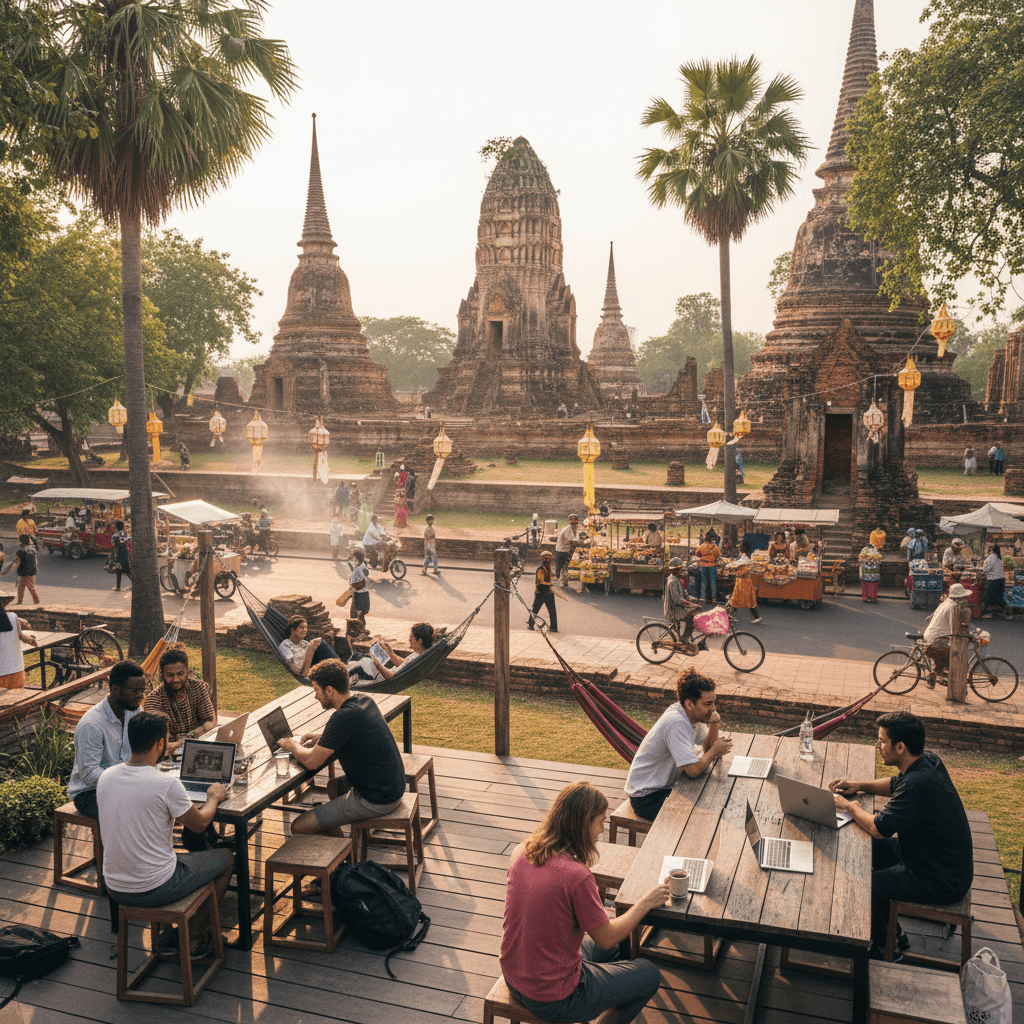
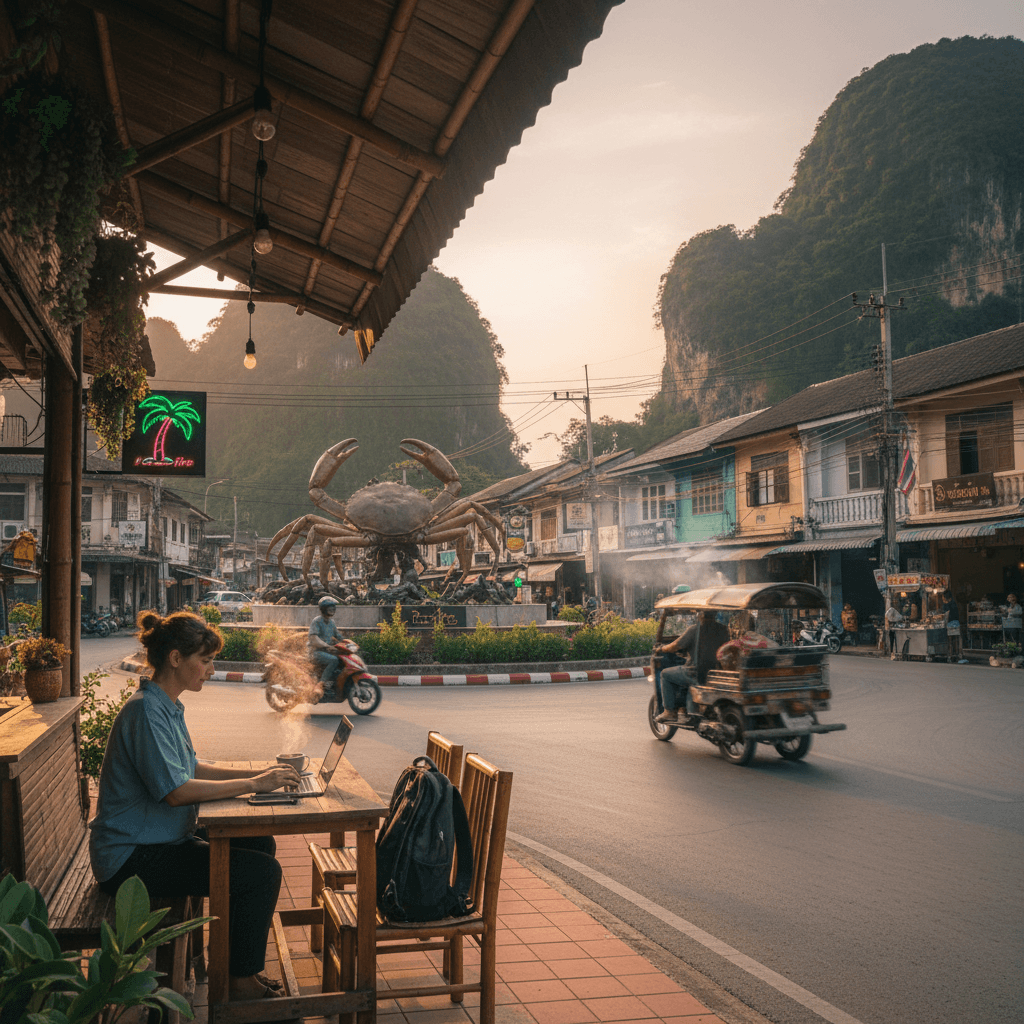
If you're looking for the neon lights of Bangkok or the relentless party energy of Phuket, Krabi Town isn't it. Instead, you'll find a relaxed, nature-inspired pace where dramatic limestone karsts serve as the backdrop to your morning coffee. It’s a place where the local community feels real and accessible, offering a grounding experience that many nomads find missing in more commercialized hubs.
The vibe here is decidedly "slow travel." You’ll see expats and locals mingling at the riverside walk or sharing tables at the night markets. It’s the kind of town where the shop owners remember your face after two visits, making it easy to build authentic connections in a short amount of time.
Life Between the Karsts and the Coast
Living here means balancing the convenience of a functional town with the rugged beauty of Southern Thailand. Experienced expats recommend Krabi Town for its lower cost of living and walkable center, while those craving the ocean breeze usually gravitate toward Ao Nang. While Krabi Town is more about local markets and 1BR apartments in the $400, $500 range, Ao Nang offers that classic beach-town energy with easier access to Railay Beach and the surrounding islands.
For those who want total seclusion, neighborhoods like Klong Muang offer a quiet, resort-style atmosphere. Meanwhile, many nomads seeking a "chill" island experience take the ferry over to Koh Lanta, where life slows down even further and studios can be found for around $360 a month. The beauty of this region is that you aren't stuck in one lane; you can work from a riverside cafe on Tuesday and be on a long-tail boat by Saturday.
The Practical Side of Paradise
Reliable infrastructure is what keeps the nomad community growing here. You'll find internet speeds ranging from 47 to 206 Mbps, which is more than enough for video calls and heavy uploads. Dedicated workspaces like Lekker Cafe in Krabi Town or KoHub on nearby Koh Lanta provide professional environments with monthly rates between $126 and $180.
Getting around is straightforward if you're comfortable on two wheels. Scooter rentals average about $100 per month, though travelers often note that songthaews (shared taxis) is the go-to app for affordable car rides when the tropical heat gets too intense. For daily life, your budget can be as lean or as lush as you like. A comfortable mid-range lifestyle, including a nice apartment and frequent dining out, typically sits around $1,036 per month.
Food, Community, and Connection
The social scene revolves around food and the outdoors rather than late-night clubs. You'll likely spend your weekends at the Walking Street Night Market, where you can grab local Thai dishes for under $3.00. It’s the primary social hub where you’ll run into other digital nomads and travelers planning their next rock-climbing trip or island hop.
While Thai is the dominant language, you’ll find that English is moderate in the main hubs, and a simple "Sawasdee" goes a long way. Most newcomers use apps like Wise for banking and Grab for food delivery to bridge the gap while they settle in. It’s a town that rewards the curious; the more you step out of the tourist zones and into the local "sois" (side streets), the more Krabi Town reveals its quiet, steady charm.
When to Go
Timing is everything in Southern Thailand. The dry season from December to April offers the best weather for island hopping and outdoor work sessions, with January and February seeing the least rain. Many nomads find the rainy season from May to November a bit disruptive, especially during the peak downpours of September and October, but the trade-off is significantly lower rent and a much quieter town.
The Price of Paradise
Krabi Town is one of the most wallet-friendly hubs in Southern Thailand, especially compared to the pricier resort stretches of Phuket or Samui. On average, you can live comfortably here for around $1,200 USD per month. If you're sticking to a strict budget by eating local and sharing a house, you can get by on as little as $640, while a more upscale lifestyle with a high-end condo and frequent coworking usually sits around $2,060.
Many nomads find that the real savings come from staying in Krabi Town proper rather than the beach areas. While the town lacks immediate sand and surf, the lower cost of groceries and rent makes it a strategic base for long-term stays. You'll still be close enough to the action to jump on a scooter and hit the coast when the mood strikes.
Housing and Neighborhoods
Your biggest monthly expense will be rent, and prices fluctuate based on how close you are to the water. In the center of Krabi Town, a modern 1-bedroom apartment typically ranges from $360 to $500. It’s a walkable area with convenient access to markets and services, though it does get a bit more traffic noise.
If you prefer being near the limestone cliffs, Ao Nang is the primary expat hub. Expect to pay at least $450 to $600 for a basic studio here. While it's more expensive and crowded with tourists, you're paying for the convenience of being steps away from island-hopping boats and a massive selection of international dining.
- Krabi Town: Best for value and local immersion. Rent is lower, and the Walking Street Night Market is right at your doorstep.
- Ao Nang: The place for social butterflies. It’s pricier but offers the most western amenities and nightlife.
- Klong Muang: A quiet alternative for those who want privacy. It’s about 30 minutes from the main hub and lacks a bit in the way of amenities.
- Koh Lanta: For the ultimate "chill" vibe, this island offers studios for around $360, though you'll need to factor in ferry costs and a more remote feel.
Eating and Drinking
Food is where Krabi truly shines for the budget-conscious traveler. A meal at a local street stall or the night market will set you back roughly $2.86. If you’re heading out for a mid-range dinner for two with a couple of drinks, expect to pay around $18.
Experienced expats recommend sticking to the fresh markets for produce and local Thai spots for daily meals to keep costs down. While international food is available in Ao Nang, the prices jump significantly. For a social night out, the town has about 25+ bars, but the vibe is generally low-key compared to the "party-all-night" reputation of Bangkok.
Staying Connected and Productive
For remote work, the internet infrastructure is surprisingly robust. You’ll find average speeds between 47 and 206 Mbps in most cafes and dedicated workspaces. Monthly coworking memberships in the region typically range from $126 to $180.
When you land, grab an eSIM from providers like AIS, DTAC, or TrueMove. You can get unlimited data for 7 to 30 days for roughly $10 to $20. Most nomads use Wise for banking and local ATMs for cash, though you should be aware of the standard 220 THB fee for foreign card withdrawals.
Getting Around
Public transport is limited, so most residents rely on Grab or Bolt for ride-hailing. Bolt is often the cheaper of the two for quick trips across town. If you’re comfortable on two wheels, renting a scooter for the month costs about $100, which is the most efficient way to explore the surrounding karsts and secluded bays.
Travelers often note that while the town center is walkable, you'll want a vehicle for anything else. A taxi from the airport to Krabi Town takes about 20 minutes at a fixed fare, making the arrival process relatively stress-free compared to larger cities.
For Digital Nomads and Solo Travelers: Krabi Town
If you're looking for the best value and an authentic local experience, Krabi Town is the place to settle. Many nomads find the cost of living here significantly lower than in the coastal strips, with one-bedroom apartments typically ranging from $550 to $700 per month.
The town center is highly walkable, making it easy to hop between the weekend Walking Street Night Market and various local cafes. You'll find reliable internet speeds ranging from 47 to 206 Mbps, which is plenty for video calls and heavy uploads.
For a dedicated workspace, experienced nomads recommend Lekker Cafe and Workspace. It offers a professional environment with monthly rates around $126 to $180. While you aren't right on the sand, the convenient services and local prices make it a strategic base for long-term stays.
For Expats and Social Butterflies: Ao Nang
Travelers who want to be in the heart of the action usually head to Ao Nang. It's the primary tourist hub, known for its easy access to island hopping and a high concentration of international restaurants and bars. It's the easiest place to meet people, as the social scene revolves around the 25+ bars and beachfront spots.
Living here comes with a premium; expect to pay $500 or more for a decent apartment. While it can get crowded during the peak season from November to April, expats appreciate having everything from pharmacies to international hospitals within a short scooter ride.
Getting around is simple with apps like Grab or Bolt, though many long-term residents choose to rent a scooter for about $100 a month. Just keep in mind that traffic can get heavy, and you should always wear a helmet to stay safe on the local roads.
For Families and Privacy Seekers: Klong Muang
If you prefer a quieter pace away from the crowds, Klong Muang is a top choice for families and expats seeking privacy. This area is characterized by its tranquil beaches and upscale resorts, offering a much more relaxed atmosphere than Ao Nang.
The trade-off for the peace and quiet is a lack of immediate amenities. You're about a 30-minute drive from the main hubs, so having your own transportation is almost necessary here. It’s ideal if you prioritize a backyard or a quiet beach walk over being near a coworking space or nightlife.
For the Ultimate Chill: Koh Lanta
Technically an island but closely tied to the Krabi scene, Koh Lanta is the go-to for nomads seeking a "slow life" vibe. It’s famous among the remote work community for KoHub, one of the most well-known coworking spaces in Thailand. Many travelers note that the community here is exceptionally tight-knit.
Rent is surprisingly affordable, with studios starting around $360. While you have to deal with ferry access and a more remote feel, the combination of cheap housing and a dedicated nomad culture makes it hard to beat for a month-long stint. Just remember that during the rainy season from May to November, many businesses on the island close down.
Practical Essentials for All Neighborhoods
No matter where you land, grab an eSIM from DTAC, TrueMove, or AIS at the airport. You can get unlimited data for 7 to 30 days for roughly $10 to $20. For daily spending, Wise is the preferred tool for many expats to manage transfers and ATM withdrawals.
When dining out, you can eat well on a budget. Street food meals average around $2.86, while a mid-range dinner for two usually hits about $18. If you're staying long-term, try negotiating your rent directly through sites like local Facebook groups or FazWaz rather than just booking nightly rates.
Connectivity and Speed
You won't have to worry about dropping out of Zoom calls in Krabi Town. The local infrastructure is surprisingly robust, with average fiber speeds ranging from 47 Mbps to over 200 Mbps. Most guesthouses and modern apartments include high-speed Wi-Fi in the rent, though it's always worth testing the signal in your specific room before signing a monthly lease.
For a reliable backup, experienced expats recommend grabbing a local SIM card immediately upon arrival. AIS, DTAC, and TrueMove are the primary providers, and you can pick up an eSIM at the airport for roughly $10 to $20 USD. These packages typically offer unlimited data for 7 to 30 days, ensuring you stay connected even while working from a beachside shack in Railay.
Dedicated Coworking Spaces
While Krabi Town is quieter than Chiang Mai, it has a focused remote work scene. Many nomads find the community here more intimate than the massive hubs in Bangkok, making it easier to actually meet your desk neighbors in a professional environment with ergonomic seating and air conditioning.
If you prefer a mix of work and island life, KoHub on nearby Koh Lanta is legendary among the nomad community. It's famous for its "workation" vibe and communal lunches. Expect to pay between $126 and $180 USD per month for a full-time hot desk membership, while daily rates are available for those who just need a few hours of deep focus.
The Cafe Office Culture
Krabi Town has a growing collection of laptop-friendly cafes that welcome remote workers. Most owners don't mind you staying for a few hours if you're ordering coffee and food. Travelers often note that the local Thai coffee shops are much more affordable than the international chains found in Ao Nang.
Work-friendly spots generally offer stable Wi-Fi and power outlets, though it’s polite to move on after two or three hours. If you're staying in Ao Nang, you'll find more "digital nomad" branded cafes, but be prepared for higher prices and more tourist foot traffic. For a more authentic, focused atmosphere, stick to the smaller shops in the Krabi Town center.
Practical Tech Tips
Power outages are rare but can happen during the peak of the rainy season from September to October. Many nomads carry a portable power bank and use their phone as a hotspot during heavy storms. It's also a good idea to download Grab or Bolt; these apps are the easiest way for getting between your accommodation and your favorite workspace, with Bolt often providing the most competitive rates in town.
For managing your finances while working remotely, Wise is the standard recommendation for paying local landlords or transferring Thai Baht. Most coworking spaces and larger cafes accept credit cards, but you'll still want to keep cash on hand for the Walking Street Night Market and smaller local eateries where a meal will only set you back about $2.86.
Summary of Costs
- Monthly Coworking Membership: $126 - $180 USD
- Daily Pass: Approximately $10 - $15 USD
- Unlimited Data SIM (30 days): $20 USD
- Mid-range Studio Rent: $360 - $500 USD
Staying Safe in Krabi
Krabi Town is widely considered one of the safest hubs in Southern Thailand for digital nomads and solo travelers. While the atmosphere is relaxed, experienced expats recommend staying vigilant regarding petty theft, particularly in crowded areas like the Walking Street Night Market.
The most significant safety concern isn't crime, but road safety. If you're renting a scooter for around $100 per month, always wear a helmet and stay alert for unpredictable traffic patterns. Many nomads find that using ride-hailing apps like Grab or Bolt is a safer and more affordable alternative to driving yourself.
There are no specific "no-go" zones in Krabi Town, but it's wise to stick to well-lit paths if you're walking back to your accommodation late at night. Travelers often note that the local community is protective of its peaceful reputation, making it a comfortable place for long-term stays.
Healthcare Infrastructure
You won't have to worry about finding quality medical care while based here. For serious concerns or emergencies, Krabi Nakharin International Hospital is the primary facility, offering 24/7 emergency services and modern equipment. You can reach emergency services by dialing 1669.
If you have minor ailments, you'll find that pharmacies are widespread throughout the town center and near Ao Nang. Most pharmacists speak excellent English and can provide over-the-counter consultations for common issues like heat exhaustion or minor infections.
- Hospital for Emergencies: Krabi Nakharin International Hospital.
- Emergency Number: Dial 1669 for immediate assistance.
- Prescriptions: Most pharmacies are open late and staffed by English-speaking professionals.
Practical Wellness Tips
The tropical climate is the biggest adjustment for most newcomers. With temperatures regularly hitting 31-35°C, dehydration and sunburn are common pitfalls. Nomads recommend carrying a reusable water bottle and applying high-SPF sunscreen, especially if you're taking boat trips to Railay Beach or the surrounding islands.
When it comes to food safety, the local markets are generally high-quality. However, if you have a sensitive stomach, stick to stalls with high turnover. Travelers often suggest starting slow with spicy local dishes to let your system adjust to the regional flavors.
For those staying long-term, it's worth noting that digital nomad insurance is highly recommended. While local costs for minor check-ups are affordable, international-standard private care for major incidents can add up quickly without coverage.
Navigating Krabi Town
Krabi Town is famously walkable within its central core. You'll find that the riverside area, local markets, and many guesthouses are all within a short stroll of one another. Many nomads find that staying near the Walking Street Night Market allows them to handle most daily errands on foot without ever needing a vehicle.
For longer distances, Grab and Bolt are the go-to ride-hailing apps. Experienced expats recommend checking Bolt first, as it often offers cheaper rates than Grab for the same distance. These apps take the guesswork out of pricing and are the most reliable way of getting to neighborhoods like Ao Nang or the quieter Klong Muang beach area.
Scooters and Bikes
If you're planning to stay for a month or more, renting your own wheels is the most cost-effective way to explore. A scooter rental typically costs around $100 per month. This gives you the freedom to scout out remote cafes or head to the limestone karsts for a sunset view on your own schedule.
Safety is a priority here, and travelers often note that local traffic can be unpredictable. You should always wear a helmet and carry an international driving permit to avoid fines. If you aren't comfortable on a motor kit, bicycles are a much cheaper and more relaxed alternative for getting around the flatter parts of town.
Public Transport and Shared Rides
Public buses are limited in Krabi Town, but you'll frequently see songthaews (converted pickup trucks with benches). These operate on somewhat fixed routes between the town center and the beaches. They are a budget-friendly way to travel, though they can be slower as they stop frequently to pick up passengers along the way.
For island hopping, long-tail boats are the primary "taxis" of the sea. You can easily catch these from the pier to reach Railay Beach or Koh Lanta. Most nomads find the 20-minute trip from the airport to the town center easiest via fixed-fare airport taxis or private transfers, which provide a hassle-free start to your stay.
Commuting for Work
If you're heading to a coworking space like The Garage in Krabi Town or making the trek to beachfront workspaces, having your own transport is a major advantage. While the town center is compact, these dedicated workspaces might be just far enough away that a $30 to $100 monthly transport budget becomes necessary.
Many digital nomads prefer the value of living in the town center and using the money they save on rent, often $400-$500 for a 1BR, to fund occasional trips to the beach. It's a trade-off that allows for a quieter work week with easy access to adventure on the weekends.
Key Transport Tips
- Download Bolt and Grab immediately upon arrival for reliable pricing.
- Budget $100 monthly if you plan on renting a scooter for total independence.
- Airport transfers take about 20 minutes to reach the town center.
- Wear a helmet at all times to avoid local police checkpoints and stay safe.
- Use songthaews for a cheap, authentic way to get between Krabi Town and Ao Nang.
Navigating the Local Lingo
In Krabi Town, you'll find that Thai is the dominant language used in daily life. While it's the administrative heart of the province, the atmosphere is more local than the high-octane tourist strips of Phuket or Samui.
English proficiency is moderate throughout the town center and becomes much stronger as you move toward the tourist hubs of Ao Nang. Many nomads find that shop owners, market vendors, and apartment managers in Krabi Town know enough English to handle rentals and daily transactions without much fuss.
Experienced expats recommend learning a few "survival" phrases to smooth over daily interactions. Starting a conversation with "Sawasdee" (hello) and ending with "Khop khun" (thank you) goes a long way in building rapport with the locals. To help with the tonal nuances, many travelers use apps like Simply Learn Thai or Learn Thai Phrases to practice on the go.
Staying Connected
Reliable internet is the backbone of the nomad lifestyle here, and Krabi doesn't disappoint. You can expect average speeds ranging from 47 to 206 Mbps in most cafes and dedicated workspaces. This is more than enough for video calls and heavy uploads, making it a favorite spot for remote workers who need to stay productive.
For a structured work environment, The Garage in Krabi Town is a popular choice among the community. If you're looking for a more island-centric vibe, KoHub is the go-to spot on nearby Koh Lanta. Monthly rates for coworking spaces typically fall between $126 and $180, providing a stable desk and a built-in social circle.
When you land, picking up a local SIM card is a priority. Travelers often note that AIS, DTAC, and TrueMove offer the best coverage in the region. You can grab an eSIM at the airport for $10-$25 for 15-30GB or limited unlimited plans. If you're staying longer, topping up your balance at any 7-Eleven is quick and easy.
Communication in Healthcare and Services
If you need medical attention, communication is rarely a barrier. Krabi Nakharin International Hospital provides 24/7 emergency care, and most of the medical staff speak excellent English. Pharmacies are also widespread throughout the town, and you’ll find that pharmacists are generally well-versed in English and can help with common ailments.
For getting around, the language barrier is bypassed entirely by using technology. Digital nomads frequently use Grab or Bolt to book rides. Bolt is often the cheaper alternative in Krabi for cars and motorbikes. These apps allow you to set your destination and see the fare upfront, which eliminates the need for price negotiations in broken Thai.
Social Etiquette and Non-Verbal Cues
Communication in Krabi involves more than just words; it’s about respect and local customs. Travelers often observe that the wai (placing your palms together in a prayer-like gesture) is the standard greeting. It’s a simple sign of respect that is highly appreciated by the local community.
Expats also remind newcomers to pay attention to non-verbal signals. Remember to remove your shoes before entering someone’s home or certain small boutiques, and always dress modestly when visiting temples. These small actions often communicate more than a perfectly phrased sentence in Thai ever could.
The Seasonal Rhythm
Krabi Town follows a distinct tropical cycle that dictates the flow of life for both locals and remote workers. You'll find consistent warmth year-round with highs typically ranging between 31°C and 35°C, while evenings stay comfortable at around 23°C to 25°C.
Experienced expats generally divide the year into two main phases: the dry season and the monsoon season. While the heat is a constant, the humidity and rainfall patterns will significantly impact your ability to hop between islands or work from outdoor cafes.
The Peak Window: December to April
Many nomads find that December through April is the ideal time to base themselves in Krabi Town. This period offers the most reliable weather, with January and February historically seeing the least amount of rainfall.
During these months, the skies are clear and the Andaman Sea is calm, making it the perfect time for weekend trips to Railay Beach or the Phi Phi Islands. Because the weather is so dependable, this is also when the nomad community is most active at spots like The Garage coworking space.
Travelers often note that while this is the best time for adventure, it's also the busiest. You'll want to secure your long-term rentals on platforms like Agoda or FazWaz well in advance, as prices in popular areas like Ao Nang can climb when the crowds arrive.
The Shoulder and Rainy Season: May to November
The monsoon season begins in May and stretches through November. Travelers should prepare for the peak of the rains in September and October, which frequently see 22 or more rainy days per month.
While some nomads hate the disruptions caused by heavy downpours, others appreciate the "green season" for its perks. Krabi Town becomes much quieter, and you can often negotiate lower monthly rates on apartments, sometimes finding studios for as low as $360 to $400.
If you're planning to work remotely during this time, reliable indoor infrastructure is key. Experienced expats recommend choosing accommodation with high-quality Wi-Fi, as afternoon storms can make commuting to a cafe on a scooter a soggy challenge. Fortunately, internet speeds in town remain strong, often hitting 206 Mbps even when it's pouring outside.
What to Pack and When to Go
Whenever you choose to visit, the tropical climate requires a specific approach to packing and daily life. Local residents suggest focusing on breathable fabrics and keeping a high-quality rain jacket or poncho handy if you're riding a scooter.
- Best for clear skies: Visit between January and March for peak sunshine and calm seas.
- Best for budget seekers: Look at May through June, when the rains are starting but haven't reached their peak, and rental prices begin to drop.
- Best for social vibes: The dry season (November to April) brings the most meetups and active Facebook expat groups.
- What to avoid: If you rely on outdoor island hopping for your weekend "reset," September and October might feel too restrictive due to frequent boat cancellations.
Ultimately, Krabi Town offers a more authentic, slow-paced lifestyle than the heavy tourist hubs. Whether you're dodging a September downpour in a cozy cafe or sunbathing in February, the dramatic limestone backdrop remains just as impressive.
Getting Connected and Staying Online
Staying productive in Krabi Town is surprisingly easy, provided you set up your tech right upon arrival. Experienced expats recommend picking up an eSIM from DTAC, TrueMove, or AIS immediately at the airport; you can get unlimited data packages for 7 to 30 days priced between $10 and $20 (299, 599฿).
For serious work sessions, internet speeds are reliable, often hitting 47, 206 Mbps in dedicated spaces and cafes. Many nomads find The Garage in Krabi Town to be a reliable home base, while others head to KoHub for a more community-focused atmosphere. Expect to pay between $126 and $180 per month for a full-time coworking membership.
Budgeting for the Nomad Life
Krabi Town is significantly more affordable than the nearby beach hubs. A comfortable mid-range lifestyle usually costs around $1,036 per month, though budget-conscious travelers can get by on roughly $640 by sticking to local markets and shared housing. If you want an upscale experience with frequent dining out, budget closer to $2,060.
Rent for a 1-bedroom apartment in the town center typically ranges from $360 to $500. When you're hungry, street food is a steal at about $2.86 per meal, while a nice dinner for two at a mid-range restaurant averages $18. For managing your finances, most nomads use the Wise app for transfers and local ATMs for cash, though you should always carry some Baht for the smaller markets.
Navigating the Neighborhoods
Choosing where to drop your bags depends on your priorities for work and play. Travelers often note that Krabi Town offers the best value for long stays because it's walkable, authentic, and close to the best night markets. If you need to be near the water, Ao Nang is the primary tourist hub with easy island access, though rent jumps to $500+ and the crowds are much thicker.
- Krabi Town: Best for solo nomads and those seeking cheaper rent and local services.
- Ao Nang: Ideal for beach lovers who don't mind seasonal crowds and higher prices.
- Klong Muang: A quiet alternative for families or those wanting privacy, located about 30 minutes from the main action.
- Koh Lanta: A short ferry ride away, offering a chill island vibe and studios for around $360.
Transport and Safety
Getting around is straightforward once you download Grab or Bolt. Many nomads find Bolt to be the cheaper option for quick car trips. If you're comfortable on two wheels, scooter rentals are the standard way to explore, costing roughly $100 per month, just remember to always wear a helmet and carry an international driving permit.
The area is generally very safe, but travelers should stay alert in crowded markets to prevent petty theft. If you have a medical emergency, Krabi Nakharin International Hospital provides 24/7 care. You can reach emergency services by dialing 1669, and you'll find that most pharmacists in town speak excellent English.
Local Customs and Weather
Respecting local etiquette goes a long way in Krabi. You'll see the wai greeting (pressing palms together) everywhere; it’s polite to return the gesture. Always remove your shoes before entering a home or certain small shops, and dress modestly with shoulders and knees covered when visiting temples.
Timing your stay is crucial for your outdoor plans. The dry season from December to April is the most popular, with January and February offering the clearest skies. If you visit during the rainy season from May to November, be prepared for heavy downpours, especially in September and October when rain occurs on average 22 days per month.
Need visa and immigration info for Thailand?
🇹🇭 View Thailand Country GuideEasy Landing
Settle in, no stress
Monthly Budget Estimates
More cities in Thailand
Pattaya
🇹🇭 Thailand
Chanthaburi
🇹🇭 Thailand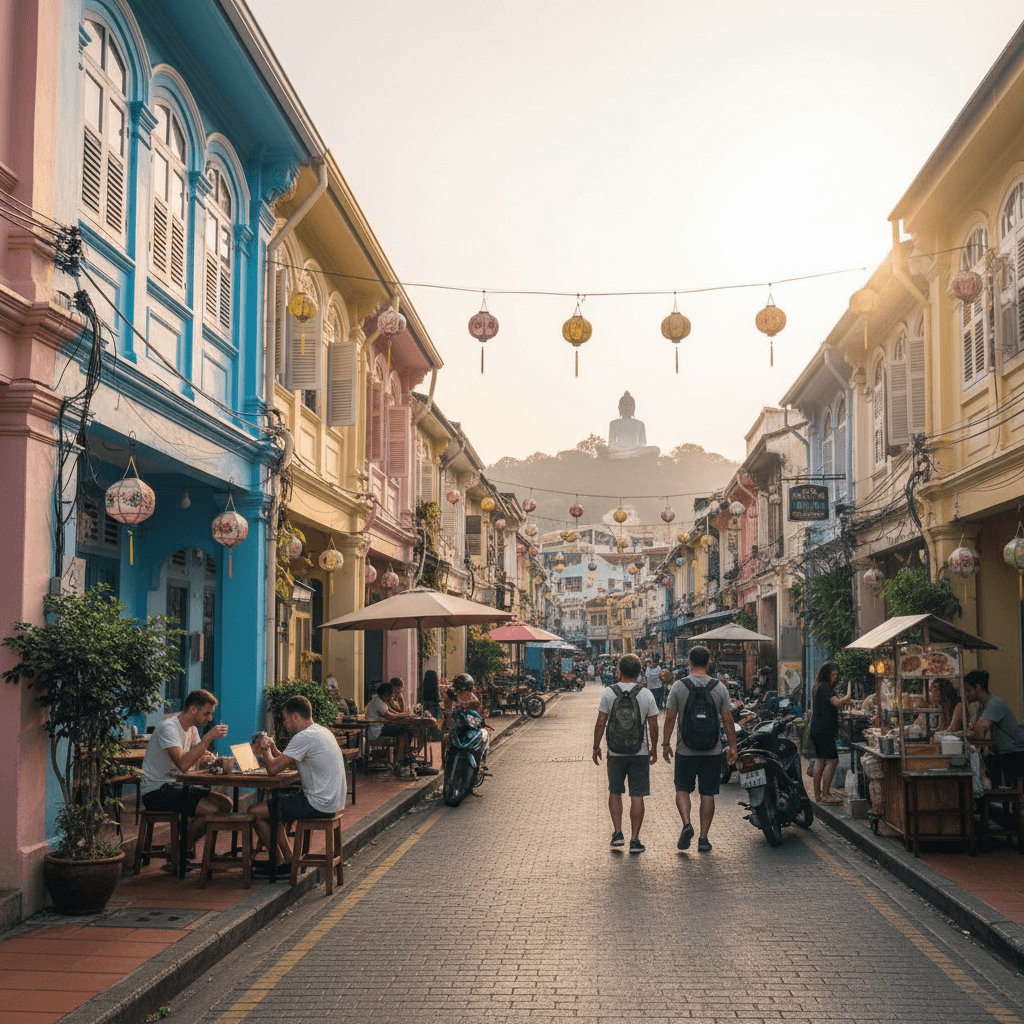
Phuket City
🇹🇭 Thailand