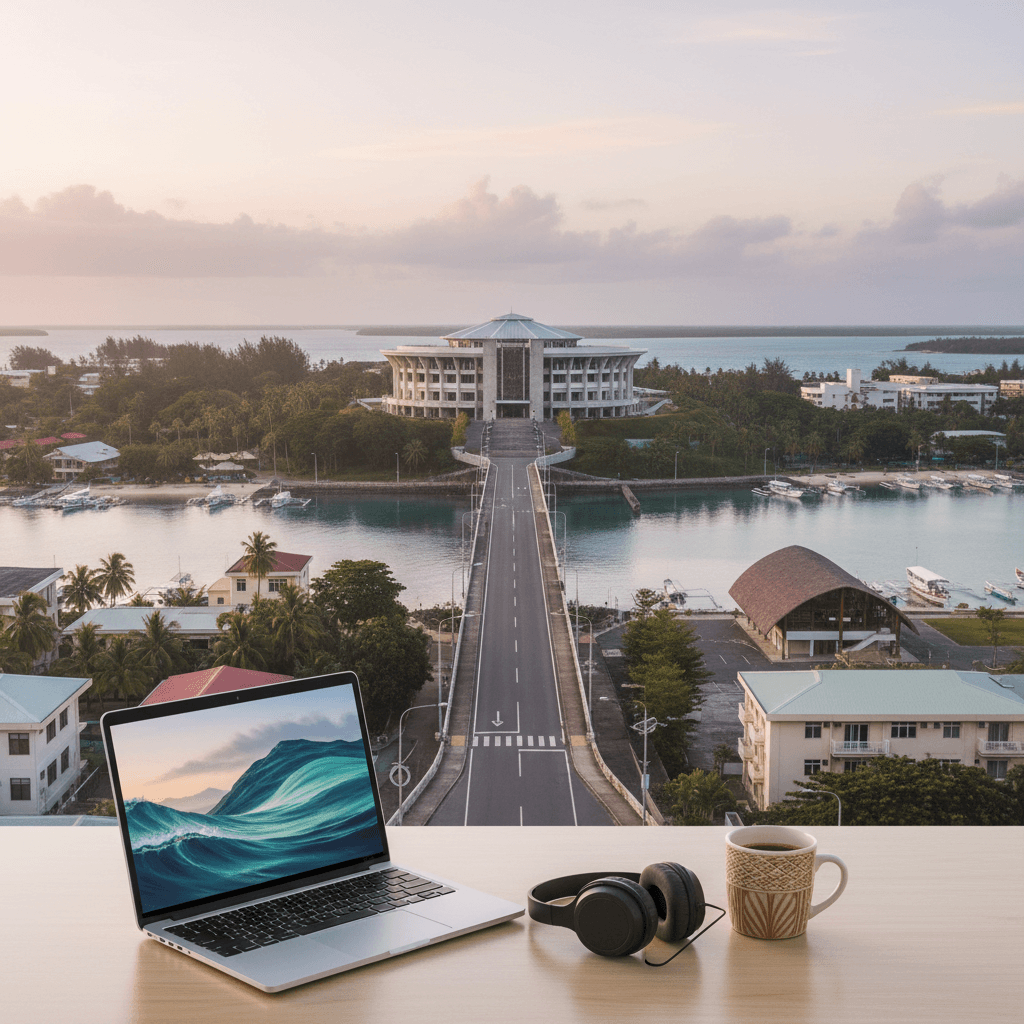
Koror
🇵🇼 Palau
Koror feels like the place where Palau actually happens, but in a sleepy, salt-air kind of way. It was the old capital and it still carries that practical, slightly scruffy energy, with dive boats, bank lines, school runs and delivery trucks sharing the same narrow roads. Not cheap. Not hectic either.
The vibe is relaxed, nature-first and a little isolated, which some nomads love and some hate hard. You get turquoise water, reef chatter and a lot of quiet between errands, then a sudden burst of honking near downtown when everyone’s trying to squeeze past a tourist van or a parked pickup, honestly it can feel oddly small for a place with such big scenery.
What it feels like: humid mornings, bright reef light, AC humming in hotel lobbies and the occasional diesel smell drifting off the harbor. People move on island time, which sounds charming until you need a repair, a transfer or a stock item that’s stuck on a boat somewhere.
Where most nomads base themselves
- Koror town: Best for first-timers, walkable enough for daily life, close to cafes, banks, dive shops and hotels like Palau Central Hotel, though traffic and noise show up fast.
- Malakal: Quieter, more marina-side, popular with divers and expats who want sea views and a bit more breathing room, but there are fewer shops and less casual foot traffic.
- Babeldaob: Better if you want space and lower rents, though the commute back into Koror gets old, especially if you’re doing it in humidity and rain.
Housing isn’t bargain-basement, so budget plans get tight fast. A single nomad can scrape by around $1,500 to $2,000 with shared housing and local food, but most people who want a private place, taxis and the occasional nicer dinner land closer to $2,500 or more and that’s before you get hit by imported groceries.
Internet is usable, sometimes frustrating and weirdly dependent on where you’re sitting. Fixed lines can hit 50 to 60 Mbps, but cafe WiFi and mobile data wobble, so DOUREOR and hotel lobbies matter more than they should and yes, you’ll hear plenty of complaints about buffering. Still, the tradeoff is hard to argue with when you step outside and the lagoon looks fake.
Safety is one of Koror’s quieter wins and most people don’t worry much about crime beyond the usual petty stuff. What they do worry about is isolation, limited jobs and the feeling that if you forget something, replacing it might take a week and cost double.
Koror isn’t cheap. The island runs on imported goods, small supply chains and a lot of freight that’s been baked into the sticker price before it ever hits a shelf, so a normal life here can feel oddly expensive for such a laid-back place. A single nomad can scrape by on $1,500 to $2,000 if housing is shared and meals stay local, but that budget gets tight fast once you start taking taxis and eating out.
Rent is the big bite and honestly, it’s the part that surprises most newcomers. A studio or one-bedroom in central Koror averages about $750 a month, with some places dipping to $450 and others pushing past $1,000, while outer areas sit closer to $550, though you’ll usually trade convenience for a longer, less glamorous commute.
Typical monthly costs
- Budget: $1,500 to $2,000, shared housing, local eateries, minimal taxi use
- Mid-range: $2,500 to $3,500, one-bedroom in Koror, mixed dining, taxis or a rental car
- Comfortable: $4,000+, private apartment, frequent restaurant meals, vehicle rental
Food prices can sting in weirdly familiar ways, because a simple meal out still lands around $12 at an inexpensive spot, while a mid-range dinner for two can reach $75 and fast food combos hover near $10. Street BBQ, bento boxes and the night market are where your money goes further and the smell of grilled meat, soy and exhaust around Ernguul Park makes that obvious pretty quickly.
Transport is another budget trap. Taxis start around $2.50, short rides from resorts into town usually fall in the $6 to $8 range and there’s no real ride-hailing safety net, so if you’re out late you’re either calling a cab or paying for your own wheels. Gas runs about $6.75 a gallon, which makes driving feel expensive before you’ve even hit the reef road.
Connectivity isn’t a bargain either. Postpaid data plans start at $21.20 for 20GB and fixed internet with decent speeds can still feel steep when the WiFi stutters during peak use. Koror has cafes and coworking spots like DOUREOR, though most nomads keep a backup SIM because hotel internet can be maddeningly inconsistent.
The short version? Budget more than you think. Koror rewards people who eat simply, rent smart and accept that island convenience costs real money and if you want comfort, quiet and a private place with reliable internet, you’ll pay for it every month.
Solo travelers, Koror town
This is the easiest base if you want cafés, dive shops, banks and a short walk to dinner. It’s noisy, though, with scooters buzzing past, vans honking and the smell of grilled fish drifting out of the night market, so light sleepers should ask for an inner room.
- Best for: First-timers, short stays, anyone who wants everything close by
- Rent: Around $750 for a central studio or 1BR
- Tradeoff: Less space, more traffic and prices that sting
Most solo nomads stick here because you can work from a hotel, grab lunch at Kramer's Cafe, then swing by the dock for a dive boat without wasting half the day in transit. The flip side is obvious and honestly, you pay for convenience in Koror more than almost anywhere else on the island.
Nomads, Malakal
Malakal feels a bit cooler and calmer, with marina views, dive boats and a slower pace after dark. The bridge keeps you close to Koror town, but it also means you’re never far from the engine noise, sea breeze and the occasional diesel smell near the harbor.
- Best for: Divers, expats and people who want quieter evenings
- Rent: Often a touch lower than central Koror, depending on the unit
- Tradeoff: Fewer shops, fewer dining choices
The coworking scene, turns out, is pretty thin here, so most remote workers still rely on hotel WiFi, PNCC fixed lines or coliving setups like DOUREOR in Koror. If you need stable internet, don’t gamble on random café connections, they can crawl to 5 to 15 Mbps and drop at the worst moment.
Families, Babeldaob-side areas
Families usually do better outside the tight Koror core, especially if they want more room, lower rents and a yard where kids can actually move around. The tradeoff is commutes, plain and simple, because school runs and grocery trips take longer and the roads can feel sleepy, even by island standards.
- Best for: Longer stays, larger households, people with cars
- Rent: Often closer to $550 outside central Koror
- Tradeoff: Fewer services, longer drives into town
It’s quieter out there, with more trees, less foot traffic and a bit of breathing room, which, surprisingly, matters a lot once you’ve spent a week in Koror’s tighter streets. You’ll want a vehicle, though, because taxis add up fast and public transport is patchy at best.
Expats, near Koror center
If you’re staying months, not weeks, most expats end up close to the center but just off the busiest roads, where they can get to supermarkets, clinics and the hospital without living above the noise. DOUREOR is a practical pick if you want a ready-made setup, stable WiFi and fewer headaches with utilities.
- Best for: Long stays, remote work and people who want services nearby
- Rent: Budget $1,500 to $2,000 monthly for a modest setup, more if you want comfort
- Tradeoff: Imports are expensive and the internet still isn’t great
Frankly, Koror rewards people who keep things simple. Live near what you use, keep cash on hand and pick a neighborhood based on your tolerance for noise, because the island pace is slow, but the practical annoyances, rent, power, weather and weak connectivity, can hit hard.
Koror’s internet works fine for email, Slack and a few tabs, but it can feel painfully slow if you’re used to mainland speeds. On 4G, expect roughly 5 to 15 Mbps and even the better fixed lines can still be pricey, so plan around that instead of pretending you’ll be on some slick fast-island setup. Not cheap.
The good news is that there are a few workable setups. PNCC’s fixed internet offers decent speeds around 50Mbps where available, with prices around $130/month, and that’s what most people chase if they’re staying longer, because hotel WiFi can be flaky, café internet can drop at the worst moment and a sudden tropical downpour will absolutely expose a weak connection.
Best Ways to Work
- DOUREOR: The closest thing Koror has to a real coworking-coworking setup, with coliving rooms, communal space and stable WiFi, which, surprisingly, makes it one of the easiest places to get actual work done.
- Cafes: Kramer's Cafe and a few similar spots are fine for a laptop morning, though you’ll want to order something and keep expectations modest, because speed and plug access aren’t guaranteed.
- Hotel lobbies: Useful in a pinch, but the connection can be hit or miss and the background hum of luggage wheels, ice machines and lobby chatter gets old fast.
If you’re staying a month or more, get a PNCC SIM early. Airtime starts at $10 and data bundles begin around $5.30 per GB, so you can patch together a decent mobile setup without burning through your budget on roaming fees, though honestly the signal still varies by area and weather.
What Nomads Usually Do
- Short stays: Use hotel WiFi and café hopping, then download everything you need before heading out for the day.
- Longer stays: Ask about PNCC fixed internet or a room with known-good WiFi, because moving in blind can be annoying.
- Backup plan: Keep a mobile hotspot ready, since one outage can turn a normal workday into a sweaty, frustrating mess.
The best rhythm is simple, work early, when the air is cooler and the island’s a little quieter, then spend the afternoon away from a screen. Koror’s humidity clings to you, the ceiling fans buzz and if a truck rolls by on the road outside, you’ll hear every rattle, so a solid connection matters more here than in a place where you can just shrug and find the next café.
Koror feels safe, honestly, in the way small island towns often do, low-key, familiar and a little sleepy after dark. Petty theft happens, mostly around hotels and the airport, so don’t leave cash, passports or a laptop sitting in plain view, even for five minutes. The streets get quiet fast and the only real nuisance is the occasional drunk noise, a scooter buzzing past or rain hammering tin roofs at 2 a.m.
There aren’t any major no-go neighborhoods and most nomads just stick to central Koror, Malakal or their hotel zone and call it a day. Curfews can be enforced, weekday nights especially, so if you’re out late, keep your wits about you and don’t assume “island time” applies to police checks too. That part can be annoying. Frankly, it usually is.
Emergency basics:
- Emergency number: 911
- Main hospital: Belau National Hospital in Koror
- Pharmacies: Available in town and around clinics
Belau National Hospital is the place everyone uses and it’s decent for an island system, with 24/7 emergency care, surgery, dialysis and even a hyperbaric chamber for dive injuries. But for anything complex, you’ll probably need evacuation, because serious trauma, specialist care and high-end diagnostics get thin fast once you’re beyond the basics. Get evacuation insurance before you arrive, not after you’re already sick, because that bill gets ugly in a hurry.
For everyday stuff, pharmacies are easy enough to find and clinic staff usually speak English well enough that you won’t be gesturing your way through a fever or a coral cut. The air-conditioned waiting rooms can feel icy against skin that’s been sweating in 30°C humidity and the whole place has that sharp mix of antiseptic, saline and damp clothes drying out too slowly.
What most travelers do:
- Carry: Travel insurance with evacuation cover
- Keep handy: Passport copy, local contact, blood type, prescription list
- Use: Hotel staff or your host for clinic directions
If you’re diving, don’t be casual about it. Koror has good dive medicine for an island, but the nearest chamber shouldn’t be your backup plan, it should be your last stop. Sunburn, dehydration and stomach bugs are much more common than violent crime, weirdly enough, so water, shade and basic first aid matter more here than street smarts in the usual big-city sense.
Getting around Koror is simple in theory and a bit annoying in practice. There isn’t a real public bus network, taxis are fixed-rate and if you want to move on your own schedule, you’ll probably end up renting a car or scooter. Not cheap. Still, the island is small enough that you won’t spend your life in traffic, just the occasional slow crawl past shopfronts, sea spray and a few honking pickups.
Most nomads stay in Koror town or Malakal because that’s where the hotels, dive shops and restaurants are clustered and walking works fine for short errands, especially around the center. The sidewalks can be patchy, though and the humidity clings to you like a wet shirt, so a 15-minute walk can feel longer than it looks on a map. Honestly, if you’re carrying groceries or gear, you’ll want wheels.
What actually works
- Taxis: Fixed fares are the norm, with rides from resorts to central Koror often around $6 to $8 and airport transfers usually landing near $20 to $30.
- Car rental: Companies like Palau Trinity, plus the usual international names, rent cars for roughly $35 a day, which makes sense if you’re splitting costs or planning island day trips.
- Scooters: Handy for solo travelers, but the rain, heat and occasional rough road patches can make them miserable, frankly, after a few days.
- Walking: Best for central Koror, where cafés, shops and a few coworking-friendly spots sit close together.
There’s no Uber and ride-hailing apps aren’t part of the picture, so you’ll usually book taxis through your hotel or ask a driver directly. Public buses do exist in a loose, weekday-only way, but they’re not reliable enough to plan your day around and they cost about $1 a ride when they show up. That’s the reality, weirdly old-school for a place with so many tourists.
If you’re staying longer than a few days, renting a car is the least frustrating option, especially if you want to hit beaches, marinas or supermarkets outside the center. Parking is generally easier than in a big city, but roads can still get clogged near downtown at busy times, with engine noise, scooter buzz and that salty, diesel-heavy air hanging over the water. For a quick island transfer, ask your hotel to arrange it, because that usually beats standing around guessing when the next taxi might appear.
English gets you pretty far in Koror, honestly and that makes daily life easier than in plenty of island capitals. Most signs, menus and hotel desks are in English, Palauan is official too and you’ll hear Alii! as the standard hello. Language won’t usually block you here, but the pace can, because people move on island time and replies can come slow if the office is busy or the internet’s acting up.
For day to day stuff, you can usually sort things out without stress, especially in Koror town, Malakal and around the hotels. If you need a backup, Google Translate works surprisingly well for Palauan and that’s handy when you’re staring at a handwritten shop note or trying to decode a local phrase at the night market.
How people communicate
- Main language: English, with Palauan used locally and in family settings
- Useful greeting: Alii, which you’ll hear everywhere
- Translation help: Google Translate is usually enough for simple phrases
- Style: Friendly, indirect and a bit quiet, so don’t bark questions across a counter
Public-facing staff are usually polite, though sometimes brief and honestly that’s just normal here. If someone seems slow to answer, they’re probably not being rude, they’re just moving at a calmer rhythm, with a fan humming overhead and the smell of fried fish or exhaust drifting through the room.
One thing that catches newcomers off guard is how casual communication can feel in practice. A WhatsApp message, a Facebook post or a quick phone call often works better than formal email and if you’re trying to line up housing, boat trips or a taxi, that’s the channel locals actually watch.
Practical communication tips
- Best channel: WhatsApp and Facebook messages get faster replies than email
- Phone service: PNCC SIMs are easy to get in Koror and prepaid data is the norm
- Internet reality: WiFi can be shaky, so keep offline maps and screenshots ready
- Good habit: Speak plainly, wait your turn and don’t rush people
If you’re working remotely, build in a little slack, because a dropped call or slow upload can turn a simple morning into a mess. Cafes and hotels vary a lot and the connection can be fine at 9 a.m. then crawl by lunch, which, weirdly, is just part of the routine here.
Keep your tone warm, keep your requests simple and don’t overcomplicate things. A smile, a clear hello and a bit of patience go a long way and in Koror that’s often better communication than perfect grammar ever will be.
Koror is hot all year, humid too and that humid air clings to you the second you step off a plane. Average temperatures sit around 28 to 30°C, so if you hate heat, there’s no perfect month, just less miserable ones. Rain comes and goes hard, often with a loud slap on tin roofs, then the sun snaps back out and turns the roads into steam.
The sweet spot is February through April. Those months are drier, the sea’s usually calmer and diving days feel easier to plan because you’re not constantly dodging afternoon downpours, though you’ll still sweat through your shirt walking five minutes in Koror town. April is the cleanest pick, honestly, with fewer rainy days and good visibility around the Rock Islands.
June through October is the wet stretch and it can get annoying fast. July is especially soggy, with long runs of rain and that gray, sticky feeling that makes even a short taxi ride feel longer, while typhoon risk hangs around from June into December, so weather apps matter more than usual. It’s still doable, just less pleasant and your plans need slack.
Best times by traveler type
- Divers: February to April for better odds of clear water and fewer weather delays.
- Budget travelers: The wet season can be cheaper and quieter, but expect more rain interruptions.
- Digital nomads: Go in the drier months if you can, because power glitches and stormy WiFi are less irritating when the sky isn’t dumping water all afternoon.
Koror doesn’t really have a cool season, so pack for sweat, sudden rain and strong sun no matter when you land. Weirdly, the best daily rhythm is often early morning work, late lunch, then outings once the heat eases a bit, because midday humidity can feel like a wet towel wrapped around your face. If you want the cleanest balance of weather and logistics, spring wins and it wins by a lot.
Best overall: February to April. Most annoying stretch: June to October.
Koror runs on island time, so don’t expect much to happen fast. The upside is real, though, low crime, blue water everywhere and a daily rhythm that feels calmer than most Pacific hubs, even if the humidity sticks to your skin and the generator hums in the background.
Cash still matters. Banks are limited, fintech options are thin and card machines can be fussy, so I’d keep USD on hand and a backup ATM card tucked somewhere safe. Banking usually means Bank of Guam or Bank of Hawaii and if you’re staying longer, get your paperwork sorted early because bureaucracy here can drag for no good reason.
Getting Connected
- SIM card: Buy a PNCC SIM or eSIM at the Koror office, Monday to Friday, 8am to 4pm.
- WiFi: Hotel internet varies wildly and honestly, a café that streams a meeting cleanly is worth keeping in your notes.
The coworking scene is tiny but workable. DOUREOR is the name most nomads hear first and Kramer's Cafe is a decent backup when you just need a table, a fan and coffee that doesn't taste like regret. Internet speeds can be patchy on mobile, so if your work depends on heavy uploads, get a fixed line or prepare for delays.
Getting Around
- Taxis: Fixed rates are common, around $6 to $8 from resorts into town.
- Cars: Rentals through local agencies start around $35 a day.
- Buses: Cheap at about $1 a ride, but weekday service is limited and unreliable.
Don’t count on rideshares, because there aren’t any and the bus system sounds cheaper than it's useful. Walking works in central Koror, though the roads can be noisy, hot and a bit narrow, with scooters buzzing past and the occasional exhaust cloud hanging in the afternoon air.
Where to Stay
- Koror town: Best for short stays, shops and dive operators, but it's pricier and noisier.
- Malakal: Quieter, with marina views and easier access to boats.
- Babeldaob: Better for space and cheaper housing, though the commute gets old fast.
For rentals, most people check Airbnb long stays, Facebook groups like Palau Buy, Sell and Trade or local listing sites. A one-bedroom in central Koror often lands around $550 to $750, which, surprisingly, doesn’t buy much space, so inspect the place before you commit. Some units are fine, others are damp boxes with weak AC and a fridge that rattles all night.
Respect matters here. Say “Alii!”, don’t be loud with elders and learn the idea of bul, which is a local way of protecting places and customs, especially around nature. Palau’s reefs and lakes are taken seriously and if you plan a Jellyfish Lake or Rock Islands trip, book licensed operators only, because shortcuts get you nowhere and sometimes get you fined.
Need visa and immigration info for Palau?
🇵🇼 View Palau Country GuideHidden Gem
Worth the effort