Koh Kong
🇰🇭 Cambodia
The Untamed Frontier
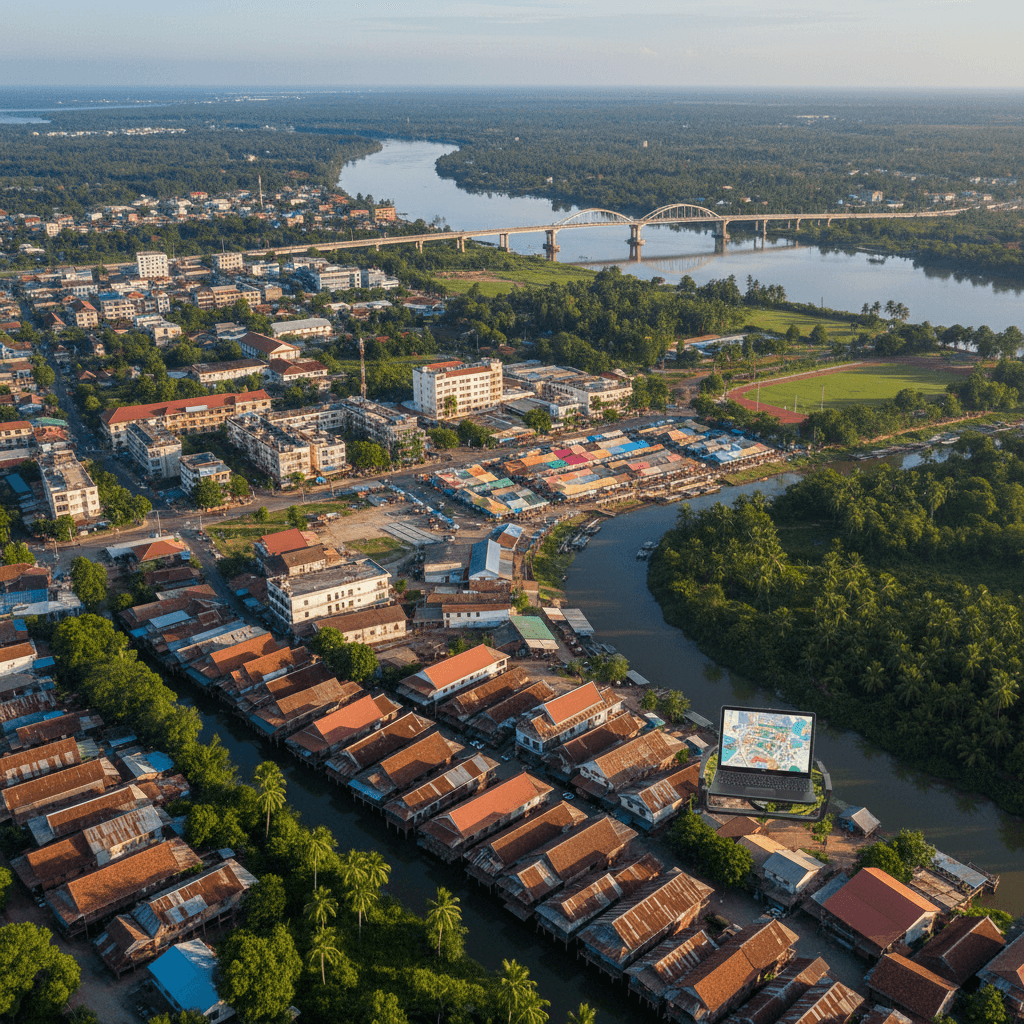
Koh Kong is where Cambodia gets wild. Tucked away in the southwest corner against the Thai border, it feels worlds apart from the neon glow of Phnom Penh or the crowded temples of Siem Reap. This is a place for the nomad who prefers the sound of a jungle canopy over the hum of an air conditioner. It’s rugged, slightly unpolished, and arguably the last true frontier for eco-adventurers in the country.
The vibe here is defined by the Cardamom Mountains, a massive stretch of rainforest that looms over the town. Life moves at the pace of the river. You’ll find a mix of traditional Khmer fishing culture, a growing eco-tourism scene, and a small but dedicated pocket of expats who value isolation over infrastructure. It’s the kind of place where you spend your mornings grinding through emails at a riverside cafe and your afternoons trekking toward waterfalls or kayaking through some of Southeast Asia's best-preserved mangroves.
The Emotional Landscape
Living in Koh Kong feels like exhaling. There’s a certain freedom in being off the grid, but it comes with a trade-off. You won't find sleek coworking spaces or high-speed fiber optics at every corner. Instead, you get a raw, authentic connection to nature. Most nomads find the isolation rejuvenating for a week or two, though the lack of a structured community can feel lonely if you stay much longer. It’s a town of early mornings and quiet nights, perfect for deep work or a total digital detox.
Cost of Living Breakdown
Koh Kong remains remarkably affordable, even by Cambodian standards. You can live comfortably here for a fraction of what you’d spend in Thailand or Bali. Most expats find that $1,000 to $1,500 a month buys a very solid mid-range lifestyle.
- Rent: Budget guesthouses on the outskirts start around $150 to $250. For a more central 1-bedroom apartment in Khemarak Phoumin, expect $300 to $500. High-end riverfront resorts can climb past $600.
- Food: Street food like Fish Amok or noodle soup costs $2 to $3. A meal at a mid-range local eatery runs about $5 to $8.
- Transportation: Short tuk-tuk rides are usually $1 to $3. Many nomads rent a scooter for $20 to $30 a month to get around independently.
The Neighborhood Layout
Since there isn't a massive nomad hub, choosing where to plant your laptop depends entirely on how much "civilization" you need.
Central Koh Kong Town (Khemarak Phoumin)
- The Vibe: The local heart of the province. It’s walkable and has the best access to markets and the few cafes with reliable WiFi.
- Best For: Solo nomads and short-term travelers who need to stay connected.
- Pros: Most affordable housing and easiest access to food.
- Cons: It can be noisy and lacks the "jungle" feel of the outskirts.
Tatai River
- The Vibe: Pure eco-luxury and isolation. Think floating lodges and the sound of the river.
- Best For: Adventure-focused nomads on a "working holiday."
- Pros: Incredible natural beauty and immediate access to waterfalls.
- Cons: Very remote. You’ll be relying entirely on 4G/LTE data, which can be spotty.
Bakclong & Preak Chim
- The Vibe: A quieter, more residential feel on the edge of the mangroves.
- Best For: Long-term expats and families.
- Pros: Larger villas are available at lower prices; very peaceful.
- Cons: You’ll definitely need your own scooter to get into town for supplies.
The Reality Check
While the beauty is undeniable, Koh Kong isn't a "plug and play" destination. Internet speeds generally hover between 50 and 100 Mbps in the better town cafes, but rural outages are common. Most serious workers rely on Smart or Metfone SIM cards as a backup. You won't find a dedicated coworking space here; instead, you'll be frequenting spots like Suzy Time Café or riverside guesthouses. If you need a high-octane social life or a polished urban environment, this isn't it. But if you want to see monkeys from your balcony and pay $2 for a fresh seafood dinner, you'll find it hard to leave.
The Lowdown on Local Costs
Koh Kong is easily one of the most affordable corners of Cambodia. While places like Phnom Penh and Siem Reap are seeing prices creep up, this border town remains a haven for those looking to stretch a budget. You can live here comfortably on a fraction of what you'd spend in Thailand or Bali, provided you're okay with a simpler, more rugged lifestyle. Most nomads find that $600 to $900 a month covers the basics for a budget stay, while $1,500 gets you a very comfortable life with plenty of seafood dinners and weekend jungle excursions.
The local economy still runs largely on cash, though you'll find ATMs from Canadian Bank or Wing around town. It's a place where your dollar goes incredibly far at the local markets, especially if you're buying fresh tropical fruit or the morning's catch from the Gulf of Thailand. Expats often remark that the value for money here is "extremely good," even if the infrastructure hasn't quite caught up to the price point.
Breaking Down the Monthly Budget
Living costs in Koh Kong vary depending on whether you want to stay in the heart of the riverside action or tuck yourself away in an eco-lodge further out. Here is what you can expect to pay for the essentials:
- Housing: A simple studio or a room in a guesthouse on the town outskirts typically runs between $150 and $250. If you want to be in central Khemarak Phoumin, expect to pay $300 to $500. For those wanting a luxury experience, riverfront resorts and high end eco-lodges can go for $600 and up.
- Food and Drink: Street food like fish amok or noodle soup is a steal at $2 to $3 per meal. Local eateries usually charge between $5 and $8, while a high end dinner at an eco-lodge will start around $15.
- Connectivity: Since there are no dedicated coworking spaces in town, you'll likely spend $2 to $5 a day on coffee or snacks at riverside cafes to use their WiFi. A local SIM card from Smart or Metfone with 20GB of data costs about $5 to $10.
- Transportation: Getting around the town core is mostly free if you like to walk. Otherwise, a quick moto or tuk-tuk ride is $1 to $2. Monthly scooter rentals are the way to go for most expats, costing roughly $20 to $30 plus gas.
Housing and Neighborhoods
You won't find flashy condo buildings or gated expat compounds here. Instead, the market is dominated by local guesthouses and small villas. Most nomads start their search on Facebook groups like Koh Kong Expats or by simply walking the riverside and looking for "for rent" signs.
Central Koh Kong Town (Riverside)
- Rent: $250 to $450
- Vibe: Social and convenient. This is where most solo travelers and nomads hang out because it's walkable and close to the markets. The downside is the noise and occasionally hit or miss WiFi.
Bakclong / Preak Chim
- Rent: $200 to $400
- Vibe: This is the go-to for long term expats. It's quieter, surrounded by mangroves, and offers more affordable standalone houses. You'll definitely need your own scooter if you live out here.
Tatai River Area
- Rent: $500+ (mostly resort-based)
- Vibe: Pure nature. It's perfect for adventure seekers who want to wake up to the sound of the jungle. However, it's very isolated and you'll be almost entirely dependent on 4G for work.
Practical Saving Tips
If you're looking to keep costs down, shop at the local markets instead of the smaller convenience stores that stock imported goods. Fresh seafood is a massive bargain here; travelers often say it's some of the cheapest and freshest in the country. For transport, skip the daily tuk-tuks and rent a bicycle for about $2 a day or a scooter for the month. Just keep in mind that while the town is cheap, the "casino zone" near the border can be a bit of a money pit and is generally avoided by the nomad community.
Solo Travelers and Short-Term Nomads
If you are landing in Koh Kong for a few weeks to recharge, Central Koh Kong Town (Khemarak Phoumin) is your best bet. This is the heartbeat of the province, centered around the picturesque riverside. It is the most walkable part of the region, packed with affordable guesthouses where rooms go for $15 to $25 a night. You will find the most reliable, though still occasionally spotty, WiFi in the cafes lining the water.
Most nomads here set up shop at local spots like the riverside cafes to catch a breeze while they work. While there are no formal coworking spaces yet, the vibe is social and you will likely bump into other backpackers at the evening food stalls. Expect to pay $2 to $4 for a plate of fresh seafood or fish amok. The downside is the noise from local traffic and the occasional karaoke session, but the convenience of having markets and transport nearby makes it the logical choice for a first stay.
Expats and Long-Term Residents
For those planning to stay a few months or more, the neighborhoods of Bakclong and Preak Chim on the outskirts of town offer a much more peaceful lifestyle. This is where you will find many of the long-term expats who prefer a villa or a larger house over a cramped guesthouse. Rent for a decent one bedroom or small house in these areas typically ranges from $300 to $500 per month.
Living here requires a bit more self-sufficiency. You will definitely want to budget $20 to $30 a month for a scooter rental since public transport is non-existent this far out. These neighborhoods sit right against the mangroves and trekking trails, so it is perfect if you want to start your mornings with a jungle hike rather than a city commute. It is quiet, green, and feels far removed from the border town grit.
Adventure Nomads and Nature Lovers
If your work allows for frequent offline stints or you only need a solid 4G connection, the Tatai River area is unparalleled. Located about 20 kilometers from the main town, this area is defined by luxury eco-lodges and riverfront resorts. It is not cheap, with comfortable riverfront stays starting at $600 and climbing much higher for high-end eco-resorts.
Travelers often choose this area for the scenery, specifically the nearby waterfalls and the chance to live right on the water. Be warned that you will be relying almost entirely on 4G/LTE data via a Smart or Metfone SIM card. It is an isolationist's dream, but the lack of a proper supermarket or social hub means you will be eating most of your meals at your lodge or small local eateries.
Safety and Areas to Avoid
While Koh Kong is generally safe for foreigners, most expats recommend avoiding the casino zones near the Thai border crossing. These areas are dominated by large, flashy developments that can feel a bit dodgy at night and lack the charm of the rest of the province. Stick to the riverside or the rural outskirts for a better experience.
- Central Town: Best for walkability and cheap $2 street food.
- Bakclong: Best for quiet, long-term stays in nature.
- Tatai River: Best for high-end eco-living and jungle access.
- Koh Kong Island: Great for day trips, but remember that overnight stays on the island are currently illegal.
Connectivity Realities
If you're coming to Koh Kong expecting fiber optic speeds and high tech hubs, you'll need to adjust your expectations. This is a frontier town for digital nomads. The internet here is best described as functional for general tasks but prone to the occasional afternoon nap. In the main town of Khemarak Phoumin, most guesthouses and riverside cafes offer speeds between 50 and 100 Mbps. It's plenty for emails and Slack, but you might find your Zoom video lagging during heavy rainstorms or local power outages.
The golden rule for working here is to have a backup. Don't rely solely on the Wi-Fi at your accommodation. Power banks are a necessity, and a local SIM card is your lifeline. Most nomads suggest getting a Smart or Metfone SIM as soon as you arrive. You can pick these up at local markets for about $5 to $10, and 20GB of data is usually enough to get you through a week of hotspotting if the landline goes down. If you're staying out near the Tatai River or the mangroves, forget the Wi-Fi; you'll be relying almost entirely on 4G/LTE signals.
The Coworking Scene (or Lack Thereof)
There are currently no dedicated coworking spaces in Koh Kong. If you need a professional office environment with ergonomic chairs and networking events, you're better off taking a three hour trip to Sihanoukville or a longer trek to Phnom Penh. In those cities, you'll find spots like The Desk or Workspace 1 in Phnom Penh, which are much better suited for intense deep work sessions.
In Koh Kong, your "office" will be a riverside cafe or a quiet corner of an eco-lodge. The vibe is very much "laptop on a wooden table" rather than "Silicon Valley startup." Most nomads find that the cafes along the riverfront are the best spots to settle in. They usually offer free Wi-Fi for customers and a steady supply of caffeine. It’s a social way to work, and you’ll likely run into other travelers planning their next jungle trek between emails.
Best Spots to Log On
- Riverside Cafes: These are the heart of the nomad life here. They offer the most reliable connections in town and a great breeze off the water.
- Eco-Lodges: If you're staying further out, places like the Tatai River resorts have internet, but it's often slower and limited to common areas. It's better for "checking in" rather than "grinding out" a project.
- Guesthouses: Stick to the central town area if you need to stay connected. The further you get from the town core, the more the signal drops.
Practical Tech Tips
Security is a common concern when using public networks in Cambodia. Expats and long term travelers almost always recommend using a VPN like ExpressVPN to keep your data safe while hopped onto a cafe's router. Since the town is small, you won't find many tech shops selling high end gear. If you lose your MacBook charger or need a specific adapter, you're likely looking at a trip to a larger city to find a replacement.
For those who need to make international calls or handle banking, the local 4G is surprisingly robust for mobile apps. Many nomads use Airalo for eSIMs if they're just passing through, but the local physical SIMs are significantly cheaper for long term stays. Just remember to bring your passport when you go to buy one at a local shop.
Stay Sharp and Secure
Koh Kong is generally a safe, low stress environment for foreigners. Violent crime is rare here, and most travelers find the locals to be incredibly welcoming. However, the town's proximity to the Thai border and its rugged geography mean you need to keep your wits about you more than you would in a city like Siem Reap.
Petty theft is the most common issue. While it isn't rampant, opportunistic bag snatching or phone grabs can happen, especially near the riverside or in the market areas after dark. Expats recommend keeping your valuables out of sight and using a cross body bag when walking. Scams aren't as sophisticated here as they are in Phnom Penh, but you should always agree on a price before hopping on a moto or booking a boat tour to Koh Kong Island.
The border zone near the casinos is the only area that residents suggest avoiding at night. These spots can feel a bit dodgy and unregulated compared to the chill vibe of the town center. If you are heading out for jungle treks, never go alone. The Cardamom Mountains are dense and easy to get lost in. Stick to licensed guides to avoid unregulated trails that might still have unexploded ordnance (UXO) risks in deep, remote areas.
Managing Your Health
Healthcare in Koh Kong is basic. You'll find several pharmacies in the town center that stock generic medications for stomach issues, infections, or minor aches. For small ailments or routine checkups, local clinics are fine, but don't expect Western standards or English speaking specialists.
For anything serious, you have two main options. Most expats head to Sihanouk Province Referral Hospital in Sihanoukville, which is about a 3 hour drive away. However, because you're right on the border, many long term residents prefer crossing into Thailand for major medical procedures or emergencies, as the facilities in Trat or Bangkok are significantly more advanced.
- Emergency Contacts: Dial 117 for police. Ambulance services are sparse, so most people use PassApp or a local taxi to get to a clinic quickly.
- Vaccinations: Ensure you're up to date on Hepatitis A and B, Typhoid, and Tetanus. Since this is a jungle heavy region, talk to a doctor about Malaria and Dengue prevention.
- Water Safety: Never drink the tap water. Stick to bottled water, which is cheap and available at every corner store.
Insurance and Preparedness
Since the local medical infrastructure is limited, high quality travel insurance is non negotiable. Make sure your policy covers medical evacuation, especially if you plan on trekking in the Cardamoms or spending time on the Tatai River. If you get seriously injured in the jungle, the cost of getting you to a proper hospital in Thailand can be astronomical without coverage.
Keep a small first aid kit with you, especially if you're staying in eco lodges or remote riverside huts. Include rehydration salts, antiseptic cream, and plenty of high strength mosquito repellent. The bugs in the mangroves don't play around, and preventing bites is your best defense against local fevers.
Getting Around the Wild West
Koh Kong isn't your typical tech-forward hub. You won't find a fleet of electric scooters or a grid-locked subway system here. Instead, the transit vibe is rugged and DIY, perfectly matching the town's position as the gateway to the Cardamom Mountains. If you're staying in the town center of Khemarak Phoumin, your own two feet are often your best asset. The riverside area and central markets are compact enough that you can handle most errands with a short walk.
For anything beyond a three-block radius, the local tuk-tuk or moto-taxi is the standard choice. Expect to pay between $1 and $3 for most hops within the town limits. Unlike Phnom Penh or Siem Reap, ride-hailing apps like PassApp and Grab have limited availability in Koh Kong, so you'll need to negotiate prices with drivers directly. It helps to have small denominations of Riel or US Dollars ready, as drivers rarely have change for a twenty.
The Freedom of Two Wheels
Most expats and long-term nomads eventually realize that a rental is the only way to truly see the province. The roads leading out toward the mangroves or the Thai border are surprisingly well-paved, though you'll still want to keep an eye out for wandering livestock or the occasional pothole.
- Scooter Rentals: Most guesthouses along the riverside can arrange a 125cc scooter for $4 to $7 per day. If you're staying for a month, you can usually negotiate this down to around $20 to $30 a month if you're a good haggler.
- Bicycles: If you're just looking to cruise the town or hit the nearby trails, mountain bikes go for about $2 a day. Just remember that the humidity here is no joke; you'll be drenched before you hit the city limits.
- Fuel: You'll see roadside stands selling gasoline in old Coca-Cola bottles. It works in a pinch, but it's better to fill up at the actual PTT or Tela stations to ensure the fuel isn't watered down.
Reaching the Peaks and Islands
Getting out into the deep nature requires a bit more planning. If you're heading to the Tatai River or the waterfalls, you'll likely need to hire a private car or a dedicated driver for the day. For the islands, things get even more specific. There is no public ferry to Koh Kong Island. Instead, you have to book a spot on a tour boat or hire a private longtail from the pier. These trips usually run $20 to $30 for a return journey. Since overnight stays on the island aren't officially permitted, these are strictly day-trip affairs.
Intercity Connections
Moving between Koh Kong and the rest of Cambodia is a lesson in patience. The journey to Sihanoukville takes about 3 to 4 hours via minivan and costs roughly $10 to $15. If you're heading back to the "civilization" of Phnom Penh, prepare for a 6-hour haul that will set you back about $20. Most nomads recommend using Vireak Buntham or Larryta for these routes, as their vans are generally newer and have better AC. If you're crossing the border into Thailand, the Cham Yeam crossing is just 10 kilometers away, easily reachable by a $5 tuk-tuk ride.
Practical Transport Tips
- Night Travel: Avoid driving scooters on the rural roads after dark. The lack of streetlights and the presence of heavy trucks make it unnecessarily risky.
- Safety Gear: Always wear a helmet. Not only is it the law, but the local police occasionally set up checkpoints near the bridge to collect "fines" from bare-headed foreigners.
- Offline Maps: Since 4G can be spotty once you head toward the Cardamoms, download the Koh Kong region on Google Maps for offline use. It’s a lifesaver when you're trying to find a specific eco-lodge entrance in the jungle.
The Linguistic Landscape
In Koh Kong, you're stepping into a corner of Cambodia where the tourism machine hasn't fully smoothed over the language barrier. Khmer is the heartbeat of daily life here. While you'll find polished English at high-end eco-lodges like those along the Tatai River, the town center is a different story. Most shopkeepers and market vendors speak very little English, so you'll rely heavily on smiles, gestures, and a handful of local words.
The younger generation is increasingly tech-savvy and often speaks basic English, but don't expect the fluency you'd find in Siem Reap. Because of the proximity to the border, you might actually hear more Thai being spoken in the markets than English. Expats who stay long-term usually find that learning the basics isn't just a courtesy; it's a survival tactic for getting the right price at the wet market or explaining a mechanical issue with a rented scooter.
Key Khmer Phrases for Your Pocket
Mastering a few sounds will change your entire experience. People in Koh Kong are incredibly welcoming, and even a butchered attempt at Khmer usually earns you a wide grin and better service. Focus on these essentials:
- Sua s'dei: Hello (Informal and widely used).
- Ar-kun: Thank you.
- Chhmuah ey?: What is your name?
- T'lai pon-man?: How much does this cost?
- Ch'nganh: Delicious (Use this at street stalls for instant friends).
- Ot te, ar-kun: No, thank you (Vital for politely declining tuk-tuk rides).
Digital Tools and Communication Apps
Since English proficiency is low, your smartphone is your best friend. Most nomads and expats rely on a specific stack of apps to bridge the gap. Google Translate is the obvious choice, but make sure you download the Khmer offline pack before you head out on a jungle trek where signal might drop. The camera translation feature is hit-or-miss with the Khmer script, so typing phonetically often works better.
For local logistics and staying in touch, Telegram is the undisputed king of communication in Cambodia. Whether you're talking to a guesthouse owner or a local guide for a trip to the Cardamom Mountains, they'll likely ask for your Telegram handle. It's much more common than WhatsApp or Messenger here.
Staying Connected
Communication isn't just about what you say; it's about staying online. In the town of Khemarak Phoumin, you'll find decent speeds at riverside cafes, but the reliability can be frustrating. Smart and Metfone are the two providers most residents recommend. You can pick up a SIM card at the local market for about $5, and data packages are incredibly cheap, often around $10 for 20GB.
If you're planning to work from a bungalow or an eco-lodge further out, don't trust the Wi-Fi. Many digital nomads use their phone as a hotspot, which is often faster and more stable than the local router. Just keep in mind that once you head deep into the mangroves or toward the waterfalls, the bars on your phone will disappear quickly. Always tell someone your plans before you go off-grid.
Cultural Nuances in Conversation
Communication in Koh Kong is as much about body language as it is about words. It's a "saving face" culture, meaning direct confrontation is rare and usually counterproductive. If there's a misunderstanding with a bill or a booking, keep your voice low and stay patient. Getting angry or loud will almost certainly shut down the conversation.
A small tip that goes a long way: use both hands when giving or receiving money or business cards. It's a sign of respect that locals notice. Also, remember that a "yes" doesn't always mean "I agree." Sometimes it just means "I hear you speaking," so it's always smart to double-check important details like pickup times or prices by writing them down.
The Tropical Rhythm
Koh Kong operates on a distinct tropical schedule that dictates everything from jungle trekking to boat departures. Since it sits right against the Cardamom Mountains, the weather here is more dramatic than in the flatlands of Phnom Penh. You'll experience a classic two season split, but the humidity remains a constant companion year round, usually hovering between 25°C and 35°C.
The dry season runs from December to April. This is when the skies clear up and the dirt roads into the mountains become passable for motorbikes. The rainy season takes over from May to November, with the heaviest deluges typically hitting between June and October. During these months, the jungle turns an incredible electric green, but the rainfall can be intense enough to wash out trails and turn town streets into temporary streams.
Peak Season: December to February
If you're looking for the sweet spot, aim for the window between December and February. The air is slightly cooler, often resting around a comfortable 28°C, and the humidity takes a rare backseat. This is prime time for day trips to Koh Kong Island or kayaking through the Peam Krasaop mangroves without getting caught in a sudden downpour.
Expats generally recommend this period for anyone planning to work remotely. Power outages, which are a recurring headache in rural Cambodia, are less frequent during the dry months because there's less storm damage to the lines. You'll find the town a bit more social too, as travelers congregate at riverside guesthouses and cafes to swap trekking stories.
The Shoulder Months: March and April
By March, the heat starts to crank up significantly. Temperatures often spike to 35°C or higher, and the air feels heavy. April is the hottest month of the year, coinciding with the Khmer New Year celebrations. While the town gets festive, the heat can be draining if your accommodation only has a basic wall fan. If you're sensitive to the sun, make sure you've booked a place with reliable air conditioning for these two months.
The Monsoon Experience: June to October
Travelers often avoid the peak monsoon, but it has a certain rugged charm if you aren't on a tight schedule. From July to September, you can expect daily rain, often in short, violent bursts in the afternoon. Flooding is common in the lower parts of town, and the ferry rides to the outer beaches can get choppy or be cancelled entirely.
The upside? Prices for guesthouses along the riverside drop, and the waterfalls in the Cardamoms, like Tatai, are at their most thunderous and impressive. Just be prepared for the logistical hurdles. Internet signals can dip during heavy storms, and the jungle trails become a muddy playground for leeches. If you're a digital nomad, this is the time to ensure you have a beefy data plan on Smart or Metfone as a backup for when the Wi-Fi inevitably blinks out.
Timing Your Visit
- Best for Trekking: January and February offer dry paths and clear mountain views.
- Best for Budgeting: May to September sees lower rates at eco-lodges and guesthouses.
- Worst for Travel: August and September can be frustratingly wet, making boat travel to Koh Kong Island difficult.
- Hottest Month: April, where midday temperatures frequently hit 35°C+.
Most nomads find that a stay of two to four weeks during the cool season provides the best balance. You get the outdoor adventure during the day and enough stability to clear your inbox in the evenings without the weather interfering with your workflow.
Connectivity and Power
Internet in Koh Kong is reliable enough for basic tasks, but it isn't the high speed fiber you'll find in Phnom Penh. Most riverside cafes and guesthouses offer speeds between 50 and 100 Mbps. However, rural outages happen, especially during the monsoon season. Most nomads rely on 4G backups to stay online during power dips.
Pick up a local SIM card from Smart or Metfone at the town market. You can get 20GB of data for about $5 to $10. If you prefer an eSIM, Airalo works well here too. Since there aren't any dedicated coworking spaces like those in the capital, you'll likely be working from spots like the riverside cafes. Always carry a power bank, as charging outlets aren't a guarantee in the more rustic jungle lodges.
Getting Around
The town center of Khemarak Phoumin is small and very walkable. For longer trips, you can grab a moto or a tuk-tuk for $1 to $3. Unlike the bigger cities, the PassApp ride-hailing app hasn't fully taken over here yet, so you'll need to negotiate prices with drivers directly. It helps to have a few Riel on hand for these short rides.
Many expats and long term travelers prefer renting their own wheels. A scooter rental usually runs between $4 and $7 per day. If you're heading out to the mangroves or the trails near the Tatai River, a mountain bike rental for $2 a day is a great way to explore. To get into town from elsewhere in Cambodia, expect a $10 to $15 bus ride from Sihanoukville or a $20 trip from Phnom Penh.
Money and Budgeting
Koh Kong is one of the most affordable corners of the country. You'll find ATMs from Canadian Bank and ABA that accept Visa and Mastercard, but they dispense USD or Riel with varying fees. It's a cash heavy economy, especially at the local markets and seafood stalls.
- Budget Lifestyle: $600 to $900 per month. This covers a basic guesthouse room, street food meals, and local transport.
- Mid-Range Lifestyle: $1,000 to $1,500 per month. This gets you a nicer apartment in the town center, regular cafe visits, and frequent weekend trips.
- Comfortable Lifestyle: $1,800+ per month. This is for those staying in high end eco-resorts or riverfront villas with all the amenities.
Health and Safety
The vibe here is safe and laid back. Violent crime is rare, though you should keep an eye on your belongings in tourist areas to avoid petty theft. Stick to marked trails when trekking in the Cardamom Mountains; the jungle is dense and it's easy to lose your way without a guide. Avoid the casino zones near the border at night, as they can feel a bit sketchy and are mostly geared toward short term gamblers.
Healthcare is basic. Local pharmacies stock most common generics, and there are small clinics for minor ailments. For anything serious, expats usually head to the hospital in Sihanoukville, which is about a three hour drive, or cross the border into Thailand for higher quality care. Make sure your travel insurance covers medical evacuation just in case.
Local Customs and Language
English isn't as widely spoken here as it is in Siem Reap. You'll get by fine in guesthouses, but at the markets, a few Khmer phrases go a long way. Use Susaday for hello and Arkun for thank you. Having the Google Translate offline Khmer pack on your phone is a lifesaver for reading menus or signs.
Respect local traditions by removing your shoes before entering someone's home or a temple. Dress modestly when you aren't at the beach, covering your shoulders and knees. Most visitors enter on a 30 day e-visa, but if you're planning to stay longer, look into a business visa for better flexibility and easier renewals.
Need visa and immigration info for Cambodia?
🇰🇭 View Cambodia Country GuideOff the Radar
Pioneer territory