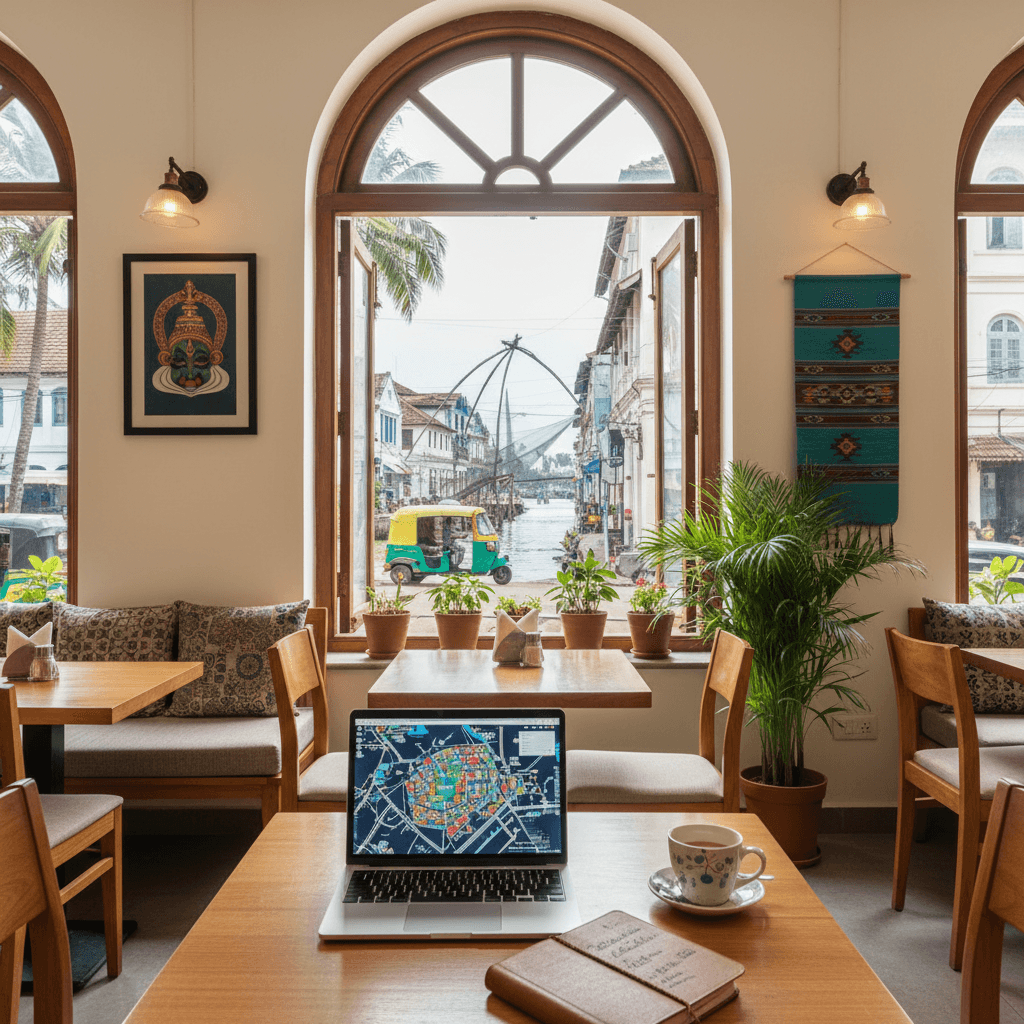
Kochi
🇮🇳 India
The Slow-Burn Coastal Retreat
Kochi isn't your typical high-octane Indian metropolis. It's a city that prioritizes balance over burnout, making it a favorite for writers, designers, and long-stay nomads who've grown tired of the frantic pace in places like Bangalore or Mumbai. Here, the mornings are quiet, the air is thick with the scent of salt and spice, and there's a pervasive sense of greenery that follows you even into the urban pockets.
The city's personality is shaped by its history as a major colonial port. You'll find a strange, beautiful mix of Portuguese, Dutch, and British architecture layered over deep South Indian roots. It's often called the gateway to Kerala, or "God's Own Country," and it lives up to the name with a rhythm that feels more like a coastal village than a commercial hub. If you're looking for a place where you can actually hear yourself think while you work, this is it.
The Local Vibe and Nomad Experience
Living here feels like stepping into a living museum that hasn't forgotten how to be modern. In Fort Kochi, the colonial quarter, you can spend your lunch break watching fisherman haul in massive Chinese nets or wandering past 500 year old churches. It's remarkably accessible; most things you'll need are within a short walk or a quick INR 50 to 150 auto-rickshaw ride.
Nomads usually gravitate toward the cafe culture here. Spots like Kashi Art Cafe and Fort House aren't just for tourists; they're makeshift offices where the WiFi is steady and the coffee is excellent. While the professional network is smaller than what you'd find in a Tier-1 city, the community is tight-knit and welcoming. You'll likely meet other remote workers at Centre A or Fortune Cowork, where the infrastructure is built to handle the occasional monsoon power surge.
What to Expect on the Ground
- The Pace: Expect things to move slower. Whether it's waiting for a meal or setting up a local SIM card, patience is a requirement.
- Connectivity: While luxury hotels and coworking spaces offer speeds up to 80 mbps, budget guesthouses can be hit or miss. Always have a local Airtel or Jio SIM as a backup.
- The Climate: It's tropical and humid. The dry season from October to March is the sweet spot. During the monsoon months of June through September, the rain is spectacular but can play havoc with the power grid.
- Culture: It's a deeply artistic city. Don't be surprised if your workday ends with a Kathakali dance performance or an impromptu art gallery opening.
Cost of Living Breakdown
Kochi is incredibly kind to your wallet, especially compared to international nomad hubs. You can live comfortably on a mid-range budget of about $1,120 per month, while those on a tighter string can get by on roughly $730.
- Monthly Rent: Prices vary wildly by neighborhood. Fort Kochi offers heritage stays, while Kakkanad is better for modern apartments. Expect to pay anywhere from $300 to $600 for a decent long-term setup.
- Coworking: A hot desk will typically run you between INR 500 and 2,500 per day depending on the level of luxury and amenities.
- Food: Local eateries are a steal. You can grab a traditional Kerala meal for a few dollars, though upscale dining in tourist areas will command a premium.
The real draw of Kochi isn't just the low cost or the history; it's the ease of escape. When the screen fatigue hits, the backwaters of Allepey or the tea plantations of Munnar are just a short trip away. It’s a place that encourages you to close your laptop and actually experience the world around you.
The Cost of Living in Kochi
Kochi is a breath of fresh air for those tired of the price tags in Bangalore or Mumbai. It sits in that sweet spot where you can live a high quality life without constantly checking your banking app. Most digital nomads find they can live comfortably on a mid range budget of $1,120 per month, while those keeping a tighter grip on their wallet can make it work for around $732 per month.
Monthly Budget Breakdown
- Housing: Expect to pay between $150 and $400 for a 1-2 BHK apartment depending on location and amenities.
- Coworking: Daily passes at professional hubs like Centre A usually run between INR 500 and 2,500 ($6 to $45).
- Connectivity: A local SIM from Airtel or Jio is incredibly cheap. You can get a monthly plan with 1.5GB of daily data for about INR 200 to 500 ($2.50 to $6).
- Transport: A typical auto rickshaw ride across town will only cost a few dollars, and the new Water Metro is equally budget friendly.
Housing and Neighborhoods
Where you park your laptop changes your overhead significantly. Fort Kochi is the soul of the city, filled with renovated heritage properties and boutique hotels. It is walkable and atmospheric, but you pay a slight premium for the location. If you are looking for a long term apartment with modern amenities, many expats head toward Kakkanad. It is more of a residential and tech hub where your dollar stretches further for square footage.
Eating and Drinking
Food is where Kochi really shines for the budget conscious traveler. You can find incredible local meals at "hotels" (local eateries) for just a couple of dollars. If you prefer the cafe scene, spots like Kashi Art Cafe or Fort House offer a Western friendly environment and solid WiFi, though prices there align more with international standards. A mid range dinner for two rarely exceeds $20 to $30, even in the tourist heavy areas of Fort Kochi.
Practical Spending Tips
Power surges and occasional outages are part of the deal here, especially during the monsoon months from June to September. Savvy nomads recommend spending a little extra on accommodation that guarantees power backup or a dedicated coworking membership at a place like Fortune Cowork or Centre A. It is a small price to pay to ensure you don't drop off a Zoom call mid sentence.
When you arrive, skip the expensive international roaming. Head to a kiosk at Cochin International Airport with a copy of your passport and a hotel address. You can pick up a tourist SIM for INR 400 to 800 and be online before your taxi even leaves the lot. For getting around, download local ride hailing apps to avoid haggling over every single trip; it keeps your transport costs predictable and transparent.
The Creative Soul: Fort Kochi
If you are a writer, designer, or a nomad who thrives on aesthetics, Fort Kochi is your base. It is the city's historical heart, where Portuguese and Dutch architecture meets the Arabian Sea. The pace here is refreshingly slow. You can spend your mornings watching the iconic Chinese fishing nets and your afternoons working from a heritage cafe.
The walkability here is a massive plus. You rarely need a car; most things are a short stroll or a quick auto-rickshaw ride away. The neighborhood feels more like a global village than an Indian metro, making it easy to settle in without the usual big city sensory overload. Just keep in mind that while the vibe is old world, the prices in the boutique hotels and upscale restaurants carry a premium.
- Rent: Expect to pay around $150 to $300 per month for a 1 BHK apartment, or $220 to $400 for a 2 BHK in Fort Kochi heritage properties, depending on amenities and exact location.
- Vibe: Artistic, historical, and incredibly laid back.
- Connectivity: Reliable WiFi is common in spots like Kashi Art Cafe or Fort House, which are staple workspaces for the remote crowd.
The Long-Term Resident: Kakkanad
For nomads planning to stay for several months or those who need a more "corporate" infrastructure, Kakkanad is the move. Located further inland, it serves as the city's tech hub. It lacks the colonial charm of the coast, but it makes up for it with modern apartment complexes and better coworking options.
This is where you'll find a more consistent professional network. It is less touristy and more functional, offering a glimpse into the modern, upwardly mobile side of Kerala. It’s also generally more budget friendly for those looking to rent a proper modern apartment rather than a tourist rental.
- Rent: More affordable than the coast, often ranging from $130 to $300 for modern 1-2 BHK units.
- Best for: People who need a serious office setup and proximity to the startup community.
- Workspaces: Home to Centre A Coworking Space, which offers professional amenities and networking events starting around $6 to $45 per day.
The Nature Seeker: Alleppey & Varkala
Technically day trips or secondary bases, these spots are where nomads go when they need to swap the city for the tropics. Alleppey is the gateway to the backwaters, while Varkala offers dramatic cliffside ocean views. Many travelers split their time, spending a few weeks in Kochi for the culture and then heading south for a "workation" by the water.
Infrastructure is a bit more rugged here. You will want to double check your accommodation’s WiFi before committing, as power surges are more frequent during the monsoon season. However, the trade off is waking up to tea plantations or the sound of the surf.
- Transport: Use the Kochi Water Metro for a unique way to navigate the waterways.
- Connectivity: Zostel Varkala and Nomads Backwaters are the go-to hubs for reliable internet and community vibes.
- Mobile Data: Grab an Airtel or Jio SIM at the airport for $5 to $10; it is often more reliable than hotel WiFi.
The Solo Traveler: Ernakulam (City Center)
Ernakulam is the frantic, energetic engine of Kochi. It is where the main train stations and shopping malls are located. While it’s not as "pretty" as Fort Kochi, it’s the most convenient spot for solo travelers who want to be in the middle of everything. You have easy access to the Kochi Metro and the best street food prices in the city.
- Food: Local eateries are incredibly cheap, with filling meals often costing under $3.
- Safety: Generally very safe, though the crowds can be intense during peak hours.
- Access: Best for those who want to use Kochi as a springboard to explore the rest of Kerala via rail or bus.
Connectivity and Speed
Kochi presents a tale of two digital worlds. In modern tech hubs like Kakkanad, fiber connections can reach 80 mbps. In Fort Kochi, speeds vary but typically range from 10-20 mbps depending on provider and location. While that's fine for emails and Slack, it can struggle with heavy video calls or large uploads.
Most nomads recommend staying in luxury hotels or boutique heritage properties if you need to work from your room, as they usually invest in dedicated lines. Budget guesthouses often promise "high-speed WiFi" but deliver patchy signals that die during the occasional tropical storm. If your work is deadline-dependent, always have a backup plan involving a local SIM card or a dedicated desk at a coworking hub.
Top Coworking Spaces
When the home setup fails or you just need some professional energy, Kochi has a few solid options that cater to the remote crowd. Prices typically range from ₹500 to ₹2,500 ($6 to $45) per day depending on the level of luxury and amenities you need.
- Centre A: This is the gold standard for professionals in the city center. It's modern, polished, and offers everything from flexible hot desks to formal meeting rooms. It's also a great spot to meet the local startup crowd.
- Fortune Cowork: A reliable choice for those staying near the business districts, offering stable power backup which is a lifesaver during the monsoon season.
- Gostops and Zostel: These are more social, hostel-style environments. They're perfect for writers or designers who don't mind a bit of background chatter in exchange for a community vibe and affordable rates.
- Nomads Backwaters: For a change of pace, this spot lets you work with a view of Kerala's famous waterways, blending productivity with the slow-burn lifestyle the region is known for.
Café Culture and Remote Work
Kochi has a growing café scene where nobody will bat an eye if you open a laptop for a few hours. The general etiquette is to keep the coffee or snacks flowing. Many spots will provide a WiFi password once you've made a minimum purchase.
Kashi Art Cafe is a local legend; the WiFi is decent and the courtyard atmosphere is hard to beat for creative work. Fort House is another favorite for nomads, offering a strong signal and a breeze off the water. If you're looking for a more modern "laptop café" feel, you'll find several emerging spots in the newer parts of the city that cater specifically to the digital crowd.
Mobile Data and SIM Cards
Don't rely solely on hotel WiFi. Local mobile data is incredibly cheap and serves as a vital safety net. Airtel and Jio are the heavy hitters here, offering excellent 4G coverage across the city.
- Where to buy: Grab a tourist SIM at Cochin International Airport kiosks or any authorized mobile shop in town.
- Cost: Expect to pay between ₹400 and ₹800 for a starter pack. Monthly recharges with 1.5GB to 2GB of daily data usually cost between ₹200 and ₹500.
- Requirements: You'll need a copy of your passport, your visa, and a local address. Most nomads just use their hotel or guesthouse address for the paperwork.
Infrastructure Quirks
Power outages and surges are a reality of life in Kerala, especially during the heavy monsoon months from June to September. Most coworking spaces and high-end hotels have heavy-duty backup generators, but smaller Airbnbs might not. If you're planning a long stay, always ask your host about "power backup" or "inverters" before booking. It's also wise to use a surge protector for your expensive gear to handle any fluctuations in the grid.
Staying Safe in the Streets
Kochi is widely regarded as one of the safest urban centers in India, particularly for solo travelers and women. The local culture is generally respectful and conservative, which translates to a lower rate of violent crime compared to other major metros. In areas like Fort Kochi, you'll feel comfortable walking home from a cafe after dark, though it is always smart to stick to well lit paths.
The biggest safety hurdles are usually more annoying than dangerous. You might encounter overeager auto-rickshaw drivers or "guides" near the Chinese Fishing Nets who are looking for a commission. Use ride-hailing apps like Uber or Ola to avoid haggling over fares. If you do take a local rickshaw, agree on the price before the wheels move. Most drivers are honest, but a little firm negotiation goes a long way.
Monsoon season brings its own set of risks. Between June and September, heavy rains can cause localized flooding and make the roads slippery. Power surges are also common during storms. If you are working on expensive gear, expats recommend using a high quality surge protector or working from a space like Centre A, which has professional grade infrastructure to handle the grid's quirks.
Healthcare Standards and Hospitals
Kochi is a major hub for medical tourism, so the quality of private healthcare is excellent. You won't struggle to find English speaking doctors who were trained internationally. For anything serious, head to the private hospitals which offer western standards of care at a fraction of the price you'd pay in the US or Europe.
- Aster Medcity: A massive, multi-specialty hospital located on a waterfront campus. It is often the first choice for expats due to its modern facilities and streamlined international patient desk.
- Amrita Hospital: One of the largest hospitals in South Asia. It is highly respected for specialized treatments and emergency care.
- Medical Trust Hospital: Centrally located and reliable for urgent care or specialist consultations.
For minor issues like "Delhi Belly" or seasonal allergies, local pharmacies (chemists) are everywhere. You can get most basic medications over the counter, but it is better to have a digital copy of your prescription just in case. Apollo Pharmacy and MedPlus are reliable chains found throughout the city.
Practical Wellness Tips
The tropical humidity is no joke. Dehydration and heat exhaustion can sneak up on you while you are exploring the colonial ruins. Stick to bottled water, even for brushing your teeth if you have a sensitive stomach. Brands like Bisleri or Kinley are available at every corner shop for about ₹20 per liter.
Mosquitoes are active, especially during the twilight hours near the backwaters. While malaria isn't a massive concern in the city, Dengue fever pops up occasionally. Use a repellent containing DEET and look for "Odomos," a popular local cream that works wonders. If you start feeling flu-like symptoms after a few bites, don't tough it out at home; get a quick blood test at a local clinic.
Emergency Contacts
Keep these numbers saved in your phone. Most operators will speak English, especially in a city as international as Kochi.
- Police: 100
- Ambulance: 102 or 108
- Fire: 101
- Women's Helpline: 1091
The Walkability of Fort Kochi
If you've spent any time in India's mega-cities, Fort Kochi will feel like a breath of fresh air. The colonial quarter is surprisingly compact and pedestrian friendly. You can easily spend your mornings wandering between 16th-century Portuguese churches and the iconic Chinese fishing nets without ever needing a motor. Most nomads find that staying within this historic grid means their daily commute to a cafe or coworking space is just a ten minute stroll under the rain trees.
Mastering the Auto-Rickshaw
When you need to venture further out, the humble auto-rickshaw is your best friend. They're everywhere, and they're perfect for short hops that are too long to walk in the Kerala heat. While many drivers are fair, it's always smart to agree on a price before you hop in. For a more predictable experience, most expats recommend using ride-hailing apps like Uber or Ola. These apps work well in Kochi and save you the hassle of haggling over every trip. Expect to pay around ₹50 to ₹150 for most local runs within the city limits.
The Water Metro: A Nomad Favorite
Kochi's newest pride is the Water Metro, a fleet of electric, air-conditioned boats that connect the islands to the mainland. It's not just a commute; it's one of the most scenic ways to get around. It's affordable, modern, and bypasses the traffic congestion of the city's bridges. If you're staying in Fort Kochi but need to head to the mainland for a meeting or a shopping trip, this is the way to go. The boats are clean, quiet, and offer a unique perspective of the backwaters that you won't get from a car window.
Arriving and Departing
Cochin International Airport is a bit of a trek, sitting about 40 kilometers away from the heart of Fort Kochi. Since it's the world's first fully solar-powered airport, your journey starts on a sustainable note. To get to your accommodation, you have a few solid options:
- Pre-paid Taxi: You'll find a counter inside the arrivals hall. It’s a fixed price, usually ranging from ₹1,200 to ₹1,500 depending on your destination and whether you want AC.
- Uber/Ola: There is a designated pickup zone. It's often slightly cheaper than the pre-paid counter, but you might wait a few minutes for your driver to navigate the airport traffic.
- Airport Bus: If you're on a budget, the orange "Kurtane" electric buses run frequently and are very cheap, though they can be a bit of a squeeze with large luggage.
Two-Wheels and Long Stays
For those planning to stick around for a few months, renting a scooter is a popular move. It gives you the freedom to explore the outskirts and nearby beaches like Cherai at your own pace. Rental prices usually hover around ₹4,000 to ₹6,000 per month. Just be prepared for the local driving style; it's a bit more "fluid" than what you might be used to back home. If you're heading out on day trips to places like Alleppey or Munnar, Kochi is well-connected by the Indian Railway network, with Ernakulam Junction serving as the main hub for long-distance trains.
Practical Transport Tips
- SIM Cards: Grab a local SIM at the airport from Airtel or Jio for ₹400 to ₹800. You'll need your passport and a hotel address. Having data is vital for using ride-hailing apps.
- Monsoon Travel: During the heavy rains from June to September, stick to the Water Metro and covered rickshaws. Walking becomes a bit of a splash zone.
- Connectivity: If you're heading to the tech hub of Kakkanad, factor in extra time for road traffic, as the commute from the coastal areas can be slow during peak hours.
The Local Linguistic Landscape
Kochi is a polyglot's playground, though the primary language you'll hear on the street is Malayalam. It's a rhythmic, complex language that locals take immense pride in. While it might sound intimidating at first, you don't need to be fluent to survive a month in Fort Kochi or Kakkanad. Most residents are bilingual or even trilingual, easily switching between their mother tongue and other regional languages.
English is the unofficial bridge for the nomad community here. It's widely understood in business circles, coworking spaces like Centre A, and the upscale cafes of Fort Kochi. You'll have no trouble ordering a flat white at Kashi Art Cafe or discussing lease terms in English. However, once you step into residential neighborhoods or smaller local markets, the English proficiency drops. In these spots, a smile and a few basic Malayalam words go a long way in building rapport.
Essential Language Apps and Tools
While you can get by with English, having a few digital tools on your phone makes daily life much smoother. Travelers often rely on these to bridge the gap:
- Google Translate: The camera feature is a lifesaver for reading local signs or menus that aren't translated. Download the Malayalam pack for offline use, as data can be spotty in certain heritage buildings.
- WhatsApp: This is the primary communication tool for everything in Kochi. From your landlord to your auto-rickshaw driver, everyone uses it. It's often easier to text via WhatsApp because it allows both parties to use translation tools if a voice call gets confusing.
- Voice-to-Text: If you're struggling to explain a specific destination to a driver, using a voice translator can prevent a lot of wrong turns.
Connectivity and SIM Cards
Staying connected is the backbone of the nomad lifestyle, and Kochi makes this relatively easy if you know where to go. Most nomads head straight to Cochin International Airport kiosks upon arrival to grab a tourist SIM. You'll need a physical copy of your passport and your hotel or Airbnb address for activation. Expect to pay between ₹400 and ₹800 for a starter pack that includes a healthy daily data allowance.
For long-term stays, Airtel and Jio are the heavy hitters. They offer 4G coverage that is surprisingly robust across the city. You can top up your data through their respective apps for around ₹200 to ₹500 per month, which usually nets you 1.5GB to 2GB of data every single day. This is a great safety net for those moments when your guesthouse WiFi decides to take a siesta during a monsoon storm.
Navigating Social Nuances
Communication in Kochi isn't just about the words you use; it's about the pace. The city operates on a slower rhythm than Mumbai or Bangalore. When dealing with local services, a polite, patient approach works better than the high-pressure "big city" attitude. Expats recommend being very specific with directions and times, as "ten minutes" can sometimes be a flexible concept in the local culture.
If you're looking to connect with the professional crowd, the startup scene is your best bet. Places like Fortune Cowork or Gostops host events where English is the standard. It's here that you'll find the local entrepreneurs and remote workers who can give you the real "insider" tips on navigating the city's quirks. Most staff at these hubs are fluent in English and are more than happy to help you translate a tricky document or explain a local custom.
The Tropical Rhythm
Kochi doesn't do "mild." Located in the heart of Kerala, the city operates on a tropical cycle that dictates everything from your afternoon caffeine fix to when you should schedule that high stakes Zoom call. The air is thick, the greenery is aggressive, and the sun stays consistent. You'll mostly deal with temperatures hovering around 29°C to 32°C, though the humidity often makes it feel like a few degrees higher.
Most nomads find the climate manageable if they lean into the local pace. This means working from air conditioned cafes like Kashi Art Cafe during the heat of the day and saving your walks through Fort Kochi for the golden hour when the breeze kicks in from the Laccadive Sea.
Peak Season: October to March
This is the sweet spot for remote work and exploration. The heavy rains have moved on, leaving the landscape lush but the skies clear. It's the most reliable time for infrastructure; you'll experience fewer power surges and more stable internet connections compared to the stormy months. Travelers often flock here in December and January for the Kochi-Muziris Biennale, a massive contemporary art festival that turns the city into a global gallery.
Expect daytime highs around 30°C and slightly cooler, pleasant evenings. Because this is prime tourist season, prices for boutique stays in Fort Kochi will be at their highest, and you'll want to book your coworking desks at spots like Centre A in advance if you need a dedicated setup.
The Monsoon Shift: June to September
The Southwest monsoon is a serious event in Kerala. It isn't just a light drizzle; it's a relentless downpour that can last for days. While the rain is beautiful and turns the nearby Western Ghats into a neon green paradise, it presents real challenges for digital nomads. Expats recommend having a solid backup plan for power and connectivity during this window. Infrastructure takes a hit, and occasional power outages are part of the deal.
If you're a writer or a solo creator who loves a moody, atmospheric environment, the monsoon might suit you. Just ensure your accommodation has a reliable power backup. Many budget guesthouses don't, which can leave you stranded mid-upload. On the plus side, you can snag significant discounts on long term rentals in areas like Kakkanad or heritage villas in Fort Kochi during these months.
The Humidity Peak: April and May
Before the rains arrive, the heat cranks up. April and May are the hottest months, where the "feels like" temperature can easily hit 35°C or higher. It's a sticky, slow time of year. If you aren't a fan of constant sweating, this is the time to head north to the tea plantations of Munnar for a working retreat where the altitude keeps things crisp.
Quick Seasonal Breakdown
- Best for productivity: October to March. Stable power, clear skies, and a lively social scene.
- Best for budget: June to August. Low season rates apply across the board, just watch out for the rain.
- Best for nature: September. Right after the rains, the backwaters and waterfalls are at their most spectacular.
- What to pack: Light linens, a high quality umbrella, and a surge protector for your laptop.
Connectivity and Tech Setup
Kochi is a slow burn for digital nomads, and your first priority should be getting a reliable connection. While Fort Kochi is packed with cafes, the WiFi in budget guesthouses is often better suited for scrolling social media than taking Zoom calls. For serious work, head to Centre A Coworking Space in the city center. It is the gold standard for nomads here, offering daily passes from INR 500 to 2,500. If you are looking for a more community focused vibe, Fortune Cowork and Gostops are popular alternatives where you can actually network with local entrepreneurs.
Don't rely solely on public WiFi. Pick up a local SIM card immediately at Cochin International Airport or a mobile shop in town. Airtel and Jio have the best 4G coverage. A tourist SIM costs between ₹400 and ₹800 and requires a copy of your passport and your hotel address for activation. Once you're set up, monthly recharges for 1.5GB of daily data usually cost less than ₹500. It's an affordable backup for when the occasional power surge knocks out the router.
Navigating the City
Fort Kochi is one of the few places in India where you can actually spend the day on foot. It is compact and colonial, meaning most sights and cafes are within a short walk. For longer distances, use the Kochi Water Metro. It is a modern, efficient way to get around the islands and avoids the humid traffic of the mainland. For quick hops, auto-rickshaws are everywhere, but it's often easier to use ride-hailing apps like Uber or Ola to ensure a fair price without the haggling.
Cochin International Airport is about 40 kilometers from the main nomad hubs. While there are rail connections, most expats find a pre-paid taxi or an app-based ride to be the most painless way to reach Fort Kochi after a long flight. If you're staying long term, you might consider a scooter rental, though the local traffic rhythm takes some time to master.
Cost of Living Breakdown
Your budget in Kochi goes significantly further than in Mumbai or Bangalore. A mid-range lifestyle usually sits around $1,120 per month, while those on a tighter budget can get by on roughly $732. Here is what to expect for your main expenses:
Monthly Housing
- Fort Kochi: Best for writers and creatives. You'll pay a premium for heritage buildings, but the walkability is worth it.
- Kakkanad: The practical choice for long-stayers. It's closer to the tech hubs and offers more modern apartment complexes.
- Short-term: Airbnb is the standard for stays under a month, with prices varying wildly based on AC and backup power features.
Eating and Drinking
- Local Eateries: You can find incredible Kerala meals for just a few dollars.
- Cafes: Places like Kashi Art Cafe and Fort House are nomad staples. They have solid WiFi and great food, though you'll pay closer to Western prices.
- Groceries: Fresh produce is cheap at local markets, but imported goods will spike your bill.
Weather and Seasonal Survival
Timing is everything in Kerala. The dry season from October to March is the sweet spot. The weather is manageable, and the infrastructure is most stable. Avoid the peak monsoon months of June through September if you can. The rain is relentless, and the humidity can be brutal for electronics. This is also when you're most likely to deal with power outages, so if you're staying during the rains, make sure your accommodation has a solid power backup system or "inverter."
Language and Culture
While Malayalam is the local tongue, English is widely spoken in Fort Kochi and within the business community. You won't have trouble ordering food or talking to your coworking manager. That said, learning a few phrases of Malayalam goes a long way with locals. Respect is big here; when visiting religious sites or smaller villages on day trips to Allepey or Munnar, dress modestly and always ask before taking photos of people or ceremonies.
Need visa and immigration info for India?
🇮🇳 View India Country GuideEasy Landing
Settle in, no stress