Kobe
🇯🇵 Japan
The Balanced Alternative to Japan's Giants
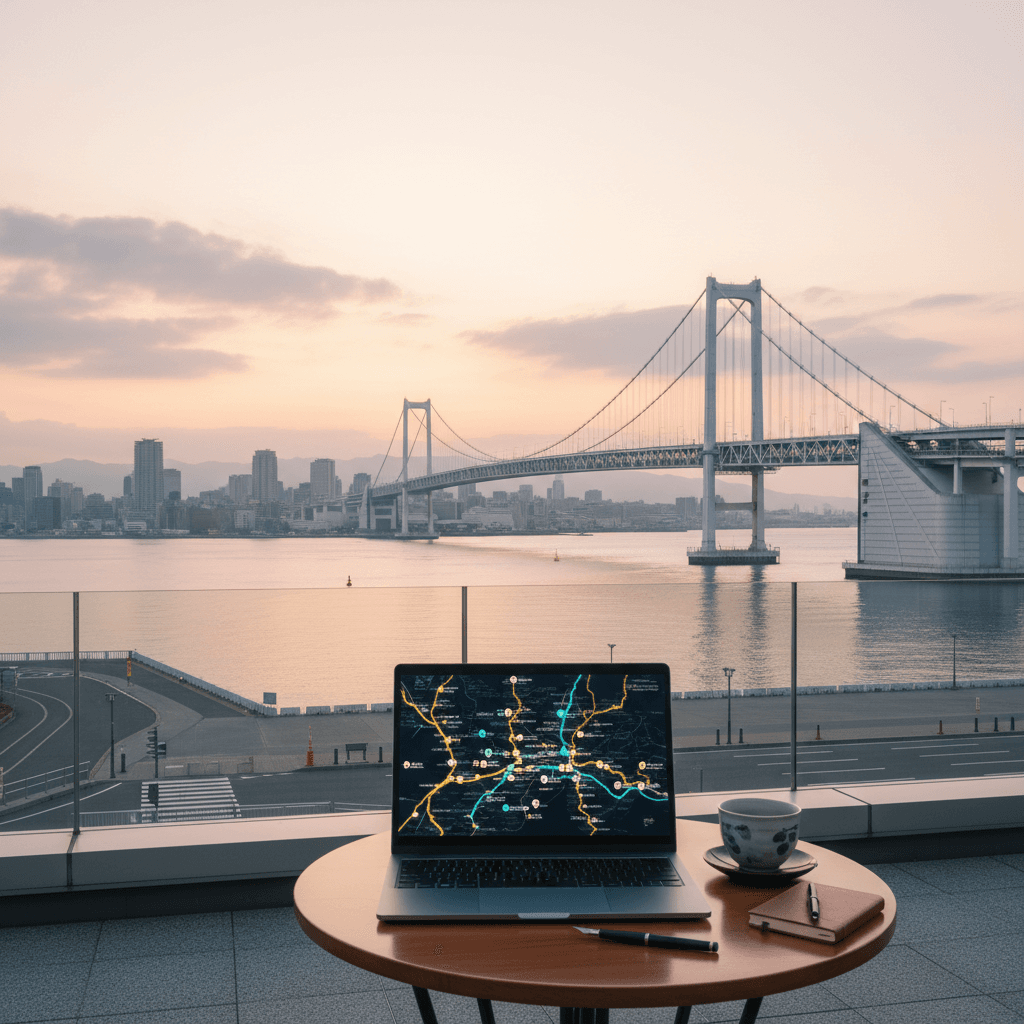
Kobe is the city for nomads who want the efficiency of Japan without the sensory overload of Tokyo or the tourist fatigue of Kyoto. It sits perfectly between the mountains and the sea, offering a cosmopolitan vibe that feels more like a relaxed Mediterranean port town than a frantic Asian metropolis. While Osaka is only 20 minutes away by train, Kobe operates at a different speed. It is a place where you can spend your morning hitting a deadline in a quiet Sannomiya cafe and your afternoon hiking Mount Rokko or 1,000 year old trails.
The city's history as one of Japan's first ports to open to the West gives it a unique architectural grit and grace. You will find European style brick manors in Kitano and one of the country's most active Chinatowns in Nankinmachi. Expats often describe it as a "work mode" city. It is functional, incredibly safe, and has some of the fastest internet speeds in the world, averaging 200-230Mbps. It lacks the massive nomad meetups of Bali or Lisbon, but the community here is tight knit and focused on long term quality of life.
What It Costs to Live Here
Living in Kobe is significantly easier on the wallet than Tokyo, with rent prices often 20% to 30% lower. Most digital nomads find they can live comfortably on a mid range budget without feeling like they are sacrificing the "Japan experience."
- Budget Tier (150,000 to 200,000 JPY): Expect a modest studio in the Sannomiya periphery for 50,000 to 70,000 JPY. You will mostly eat at local spots like Sukiya or grab 600 JPY takoyaki from street stalls, using free cafe WiFi to get work done.
- Mid Range Tier (200,000 to 300,000 JPY): This gets you a nice apartment in Motomachi for around 100,000 JPY. You can afford a part time membership at WeWork Kobe for 20,000 JPY and regular dinners at izakayas where a meal and a drink run about 2,500 JPY.
- Comfortable Tier (300,000+ JPY): You will likely live in the upscale Kitano or Rokko areas with rents starting at 120,000 JPY. This budget allows for full time coworking access and occasional splurges on world famous Kobe beef, which can cost 10,000 JPY or more for a high end dinner.
The Neighborhood Breakdown
Kobe is narrow and easy to navigate. Most of your life will revolve around the strip between the mountains and the harbor.
- Sannomiya: The undisputed heart of the city. It is the best base for solo travelers and nomads who want to be steps away from the JR station, Starbucks, and the WeWork office. It is walkable and lively, though it can get crowded during the evening rush.
- Motomachi: Just west of Sannomiya, this area feels a bit more international and historic. It is perfect if you want to be near the harbor and the best coffee shops. Rent for a studio here typically floats around 70,000 JPY.
- Kitano: If you don't mind walking up steep hills, this is the most beautiful part of Kobe. It is quiet, leafy, and full of historic foreign residences. It is popular with families and expats who prefer a peaceful environment over neon lights.
- Rokko: Located toward the eastern end of the city, this area is right at the foot of the mountain. It is a 20 minute train ride to the center but offers the best air quality and direct access to hiking trails.
The Practical Realities
While the infrastructure is flawless, Kobe isn't a "plug and play" destination for everyone. English proficiency is lower here than in Tokyo, so you will want Google Translate and a few basic phrases like Sumimasen (excuse me) to get by. Most nomads recommend getting an ICOCA card immediately for seamless transport and using Wise or Revolut for daily spending, as local bank accounts are notoriously difficult to open on a nomad visa.
The social scene requires effort. You won't stumble into a digital nomad party on every corner. Instead, you'll find your tribe at WeWork events or through Facebook expat groups. The trade off is a city that feels like a real home rather than a tourist playground. It is a place where the barista remembers your order and the commute involves a view of the ocean, making it a top tier choice for those who value productivity and peace.
The Cost of Living in Kobe
Kobe is often described by the nomad community as the "sweet spot" of Japanese urban living. While Tokyo prices can chew through a budget and Osaka's energy can be relentless, Kobe offers a more manageable financial profile. You can generally expect your yen to go 20% to 30% further here than in the capital, especially when it comes to housing. Most expats find they can live a very comfortable, high quality life on a budget that would feel restrictive in Shinjuku or Shibuya.
For those keeping a close eye on the books, a solo nomad can get by on roughly 150,000 to 200,000 JPY per month. This budget assumes you're staying in a modest studio in areas like Sannomiya, eating primarily at local ramen shops or grabbing 600 JPY takoyaki from street stalls, and utilizing free WiFi in cafes like Doutor or Starbucks. It's a functional lifestyle that doesn't feel like you're depriving yourself, thanks to Japan's high standard for even the most basic amenities.
If you're looking for a more balanced experience, the mid range tier sits between 200,000 and 300,000 JPY. This allows for a nicer apartment in Motomachi, a dedicated coworking desk, and frequent dinners at mid range izakayas where a meal typically runs about 2,500 JPY. At this level, you aren't just surviving; you're actively participating in the city's food and social culture.
Monthly Budget Breakdowns
- Budget Tier: 150,000 to 200,000 JPY
- Rent: 50,000 to 70,000 JPY (Studio near Sannomiya)
- Food: 40,000 to 50,000 JPY
- Transport: 10,000 JPY (Bus pass and walking)
- Workspace: Free (Cafes with a purchase)
- Mid-Range Tier: 200,000 to 300,000 JPY
- Rent: 80,000 to 120,000 JPY (1BR in Motomachi)
- Food: 60,000 to 80,000 JPY
- Transport: 15,000 JPY (JR lines and ICOCA top-ups)
- Workspace: 20,000 JPY (Part-time coworking)
- Comfortable Tier: 300,000+ JPY
- Rent: 120,000+ JPY (Upscale Rokko area)
- Food: 100,000+ JPY (Includes high end Kobe beef and fine dining)
- Transport: 20,000+ JPY (Frequent taxis and GO app usage)
- Workspace: 40,000 JPY (Full access 24/7 desk)
Key Expenses and Local Prices
Food is where Kobe really shines. You can find a world class meal at Steakland in Motomachi for around 8,000 JPY, but your daily fuel will likely be much cheaper. A standard lunch set in a business district usually costs around 1,000 to 1,500 JPY. Travelers often recommend using an ICOCA card for all transport, which works on the JR Kobe Line and local buses. Budget about 10,000 JPY a month for general city roaming.
Connectivity is another fixed cost to account for. Since the digital nomad visa doesn't provide a residence card, you'll likely rely on travel SIMs or pocket WiFi. Sakura Mobile is a popular choice among long term travelers, offering 15GB plans for around 3,500-4,000 JPY. For a professional setup, a hot desk at WeWork Kobe in Sannomiya will set you back about 25,000 JPY per month, providing a reliable home base for those who find working from apartments too isolating.
Financial logistics are best handled through fintech apps. Experienced nomads suggest using Wise or Revolut for daily spending and currency conversion. Local banks are notoriously difficult for temporary residents to access, so having a digital first backup prevents the headache of frozen accounts or high international transaction fees. It's a small detail that saves a lot of stress when the rent is due.
For Digital Nomads: Sannomiya
If you want to be in the middle of the action, Sannomiya is the place to plant your flag. It functions as Kobe's primary nervous system, connecting the JR lines with endless rows of cafes and coworking spots. Most nomads find this area mimics the energy of Tokyo's Shibuya but at a much more manageable volume. You can walk from a morning deep-work session at WeWork Kobe to a quick 600 JPY takoyaki lunch without ever needing a train card.
- Average Rent: 80,000 JPY for a modern one-bedroom.
- Vibe: High energy, urban, and ultra-convenient.
- Best for: Networking, fast WiFi, and those who hate commuting.
- The Trade-off: It gets loud on weekend nights when the izakayas fill up.
For Solo Travelers: Motomachi
Just a short walk from the main hub, Motomachi offers a more textured, international atmosphere. It's home to Nankinmachi (Chinatown) and sits right near the harbor, giving it a breezy, open feel that's perfect for exploring on foot. Solo travelers often say they prefer the dining scene here, as it's packed with small, friendly eateries where eating alone is the norm. You'll find plenty of mid-range spots like Steakland where you can grab a world-class meal for around 8,000 JPY.
- Average Rent: 70,000 JPY for a studio apartment.
- Vibe: Cosmopolitan, historic, and foodie-centric.
- Best for: Photography, harbor walks, and street food.
- The Trade-off: The main shopping arcades can get swamped with tourists during peak seasons.
For Expats: Kitano-cho
Nestled at the foot of the mountains, Kitano is where Kobe's history as a foreign trade port is most visible. The neighborhood is famous for its Ijinkan (historic western-style houses), giving it a European flair that many long-term residents find comforting. It's quieter and more residential than the city center, though you'll need some decent leg strength to handle the steep hills. Expats recommend this area for its clean air and the impressive views overlooking the bay.
- Average Rent: 100,000 JPY and up for a 1BR in a nicer building.
- Vibe: Sophisticated, hilly, and quiet.
- Best for: Long-term stays, peace and quiet, and historic architecture.
- The Trade-off: It's a workout to get home, and prices for groceries and rent are noticeably higher.
For Families: Rokko
If you're traveling with a crew or just need more space, head east to Rokko. This area feels like a breath of fresh air, literally. It's the gateway to Mount Rokko, offering easy access to hiking trails and cable cars. The streets are wider, the parks are more frequent, and the pace is significantly slower than Sannomiya. While it's a 20-minute train ride to the city center, many find the trade-off for a larger apartment and better air quality is worth the commute.
- Average Rent: 120,000 JPY for larger, multi-room units.
- Vibe: Natural, suburban, and relaxed.
- Best for: Nature lovers, families, and those on a "work-mode" retreat.
- The Trade-off: You'll rely heavily on the Hankyu or JR lines for any nightlife or major shopping.
Connectivity and Speed
Kobe is a dream for anyone who relies on a steady connection. You can expect high-speed fiber, often exceeding 200Mbps nationally in most apartments and hotels. While the city feels more relaxed than Tokyo, its infrastructure is just as sharp. Most nomads find that even the public WiFi in major hubs like Sannomiya Station is reliable enough for quick tasks, though you will want a dedicated setup for video calls.
Since the Japanese digital nomad visa doesn't provide a residence card, you won't be able to sign up for traditional long-term phone contracts. Expats recommend grabbing an eSIM or a travel SIM from providers like Sakura Mobile right at the airport. Expect to pay around 3,000 JPY for a monthly 15GB data plan. If you are a heavy data user, renting a pocket WiFi device is a popular alternative that ensures you have a private, secure signal wherever you go.
Top Coworking Spaces
The coworking scene in Kobe is concentrated around the Sannomiya and Motomachi areas. It is professional, quiet, and highly efficient. Unlike the social, beer-on-tap atmosphere you might find in Bali or Lisbon, Kobe spaces focus heavily on productivity.
- WeWork Kobe: Located in the heart of Sannomiya, this is the gold standard for international nomads. It is one of the few places where you will find a high concentration of English speakers. A monthly hot desk goes for starting around 40,000 JPY/month. The views over the harbor from the higher floors are a massive perk.
- Regus Kobe: Ideal for those who need a more corporate environment or private meeting rooms. They offer day passes for around 3,000 JPY, which is perfect if you are just passing through for a week.
- 120 Workplace Kobe: This is a local favorite with a slightly more creative vibe. It is often cheaper than the big international chains and offers great views of the waterfront.
The Cafe Office Culture
Kobe has a deep-rooted coffee culture thanks to its history as a port city. Nomads here often skip the formal offices for a few hours in a "Kissaten" (traditional coffee shop) or a modern cafe. Most chains like Starbucks and Doutor offer free WiFi with a purchase, but they can get crowded on weekends.
If you need to take a call, look for cafes that offer private "telework booths." These are becoming more common in Japan. They are soundproof, small pods you can rent by the minute via an app. Locals are generally respectful of people working, provided you aren't shouting into a headset. A mid-range latte will run you about 500 to 700 JPY, and most places won't rush you out if you stay for a couple of hours.
Practical Checklist for Remote Work
- Power Plugs: Japan uses Type A and B sockets (two flat pins). Most cafes have outlets at the counter seats, but carrying a small power bank is smart for longer days.
- Language Apps: Keep Google Translate with the offline Japanese pack ready. While coworking staff often speak some English, the login portals for local WiFi networks are frequently Japanese-only.
- Noise Levels: Kobe cafes are remarkably quiet. If you have a loud meeting, it is better to book a booth at WeWork or use a dedicated telework pod to avoid getting side-eyed by the locals.
- Payment: While many modern spaces take credit cards, some smaller local hubs are cash-only. Always keep some yen on hand or use your ICOCA card for small payments.
General Safety in Kobe
Kobe consistently ranks as one of the safest cities in Japan, which is saying a lot in a country already famous for its low crime rates. Most nomads find they can walk through nearly any neighborhood at 3:00 AM without a second thought. While it's a major port city, it lacks the gritty edge you might find in similar hubs elsewhere. The vibe is decidedly more relaxed than Osaka or Tokyo.
The only area where you should stay a bit more alert is the nightlife district around Sannomiya. On Friday and Saturday nights, the narrow alleys fill up with revelers. You aren't likely to be targeted for a crime, but you might encounter some rowdy behavior or "touts" trying to lure you into overpriced bars. If a stranger approaches you on the street to suggest a specific club, just keep walking.
Natural safety is actually more of a talking point here than street crime. Kobe is sandwiched between the mountains and the sea, making it beautiful but prone to specific risks. Expats recommend familiarizing yourself with the city's evacuation routes for tsunamis or landslides, especially if you're staying in the hilly Kitano or Rokko areas. Download the NERV Disaster Prevention app; it provides real-time alerts for earthquakes and typhoons in English.
Healthcare Infrastructure
The medical care in Kobe is world-class, though the system can feel bureaucratic if you're used to walk-in clinics. If you're on the new Digital Nomad Visa, remember that you're required to hold private health insurance with at least 10 million JPY in coverage, as you won't be eligible for the national health insurance scheme. Most clinics expect payment upfront in cash or via credit card, so keep your receipts for reimbursement.
For English-speaking support, these are the primary options travelers and expats rely on:
- Kobe University Hospital: This is the heavy hitter for serious issues. They have an International Medical Support Center specifically designed to help foreigners navigate the system.
- Kobe Kaisei Hospital: Located near the Nada area, this facility is well-known among the expat community for having several English-speaking doctors and staff.
- AMDA International Medical Information Center: If you're stuck, call their hotline at 03-6233-9266. They provide over-the-phone interpretation and can help you find a specific specialist who speaks your language.
Pharmacies and Prescriptions
You'll see drugstores like Matsumoto Kiyoshi and Kokumin on almost every corner in Motomachi. These are great for over-the-counter basics like painkillers or cold medicine, but be aware that Japanese doses are often much weaker than what you'll find in the US or Europe. If you have a specific prescription, bring a large supply with you. Bringing more than a one-month supply of certain medications requires a Yunyu Kakunin-sho (an import certificate) which you must apply for before you land.
Emergency Contacts
Memorize these two numbers immediately. You can dial them from any phone, even without a local SIM card:
- 119: Fire and Ambulance. If you don't speak Japanese, stay on the line; they can often patch in an English translator within seconds.
- 110: Police. Use this for reporting accidents or lost property.
- #7119: This is a non-emergency consultation line. If you're feeling sick but aren't sure if you need an ambulance, call this number to speak with a nurse who can advise you on the nearest open clinic.
Most nomads find the peace of mind in Kobe is a huge productivity booster. Being able to leave your laptop on a cafe table while you go to the restroom is a luxury that's hard to give up once you've experienced it.
The Pulse of the City: Trains and Transit
Kobe is a dream for anyone who hates the logistical headache of a massive metropolis. The city is sandwiched between the mountains and the sea, which means most transit runs east to west in a predictable, linear fashion. You'll likely find yourself relying on the JR Kobe Line for most trips. A quick hop from Sannomiya to Kobe Station costs about 200 JPY, and the trains are as punctual as you'd expect in Japan.
For getting around the harbor or heading toward the artificial islands, the Port Liner is your go-to. It's an automated guideway transit system that gives you some of the best views of the waterfront. If you're staying further out in the hills of Rokko, the city bus network is reliable, though it requires a bit more patience with Japanese signage. Most nomads find that a monthly budget of 10,000 to 15,000 JPY covers all their transit needs comfortably.
The Golden Rule: Get an ICOCA Card
Don't waste time fumbling with paper tickets at vending machines. Pick up an ICOCA card as soon as you arrive. It's a rechargeable smart card that works on almost all trains, buses, and even at many convenience stores or vending machines. You can tap in and out of turnstiles in seconds. If you're coming from Tokyo, your Suica or Pasmo card will work here too, so there's no need to buy a new one.
Two Wheels and Two Feet
Sannomiya and Motomachi are incredibly walkable. You can easily spend an entire afternoon wandering from the high end boutiques of the former foreign settlement to the narrow narrows of Chinatown without ever needing a vehicle. It's one of the perks travelers often mention when comparing Kobe to the sprawling nature of Osaka.
If you need to cover more ground, the Docomo Bike Share program is a lifesaver. You'll see the red electric bikes parked at hubs all over the city. It costs about 150 JPY for 30 minutes. It’s perfect for those days when you want to breeze down to the Meriken Park waterfront without breaking a sweat in the summer humidity.
Taxis and Ride-Hailing
Uber exists here, but it mostly just summons local taxis and can be pricier than other options. Locals and savvy expats use the GO app or JapanTaxi. These apps are much more reliable for getting a ride in a pinch, especially late at night when the trains stop running around midnight. Just keep in mind that taxis in Japan aren't cheap; a short trip across town can easily hit 2,000 JPY, so save them for when you're carrying groceries or catching a flight.
Getting to the Airport
If you're flying into Kansai International (KIX), you have two main choices. The JR Haruka Express or a rapid train takes about 60 to 70 minutes and costs roughly 2,000 JPY. However, many nomads prefer the Airport Limousine Bus. It's a similar price, but they handle your luggage for you and drop you off right in the heart of Sannomiya. If you want a more scenic entrance, there is even a high speed ferry that connects KIX directly to Kobe Airport in about 30 minutes for around 1,880 JPY.
Key Transport Costs at a Glance
- Single Train Fare (Local): 160 to 300 JPY
- Docomo Bike Rental: 150 JPY per 30 mins
- Monthly Transit Pass: 10,000 to 15,000 JPY
- KIX Airport Bus: 2,000 JPY
- Initial ICOCA Deposit: 500 JPY
The Reality of English in Kobe
Kobe has a long history as a gateway for international trade, but don't let the Western architecture in Kitano fool you. English proficiency remains relatively low outside of major hotels and high-end restaurants. While you'll find English signage at Sannomiya Station and on the JR Kobe Line, your daily interactions at local supermarkets or smaller izakayas will likely be in Japanese.
Most digital nomads find that while they can survive with Google Translate, the social experience opens up significantly with just a few weeks of dedicated study. Locals are generally patient and polite, but they may feel shy or hesitant to engage if they think their English isn't perfect. Initiating a conversation with a simple Japanese greeting goes a long way in breaking the ice.
Mastering the Local Dialect
One unique aspect of living here is Kobe-ben, a local dialect of the broader Kansai region. It's softer than the boisterous Osaka-ben you'll hear just 20 minutes away by train. You'll often hear locals end sentences with "to" or "toru" instead of the standard "te iru." While you don't need to speak it, recognizing these sounds helps you feel more like a local and less like a tourist passing through.
Communication Tools and Apps
To keep things running smoothly, expats and travelers recommend a specific toolkit for your phone. These are non-negotiable for staying connected and understood.
- Google Translate: Download the offline Japanese language pack. The camera feature is a lifesaver for reading menus and checking ingredients at the grocery store.
- VoiceTra: A speech-to-speech translation app developed by a Japanese research institute. It often handles Japanese sentence structures more accurately than other apps.
- DeepL: Best for translating emails or longer messages if you're dealing with a landlord or a coworking space manager.
- Line: This is the primary communication app in Japan. If you meet someone at a meetup or a cafe, they'll ask for your Line ID before they ask for your phone number.
Survival Phrases for Nomads
You'll want to memorize these basics to show respect and make your daily errands easier. A little effort here earns you a lot of goodwill.
- Sumimasen: Excuse me or sorry. Use this to get a waiter's attention or when navigating through crowds.
- Arigatou gozaimasu: Thank you. Use the full version to be polite to staff.
- Eigo hanasemasu ka?: Do you speak English? It's better to ask this than to start speaking English immediately.
- Kore o onegaishimasu: This one, please. Very useful when pointing at items on a menu or in a shop window.
- Wi-Fi arimasu ka?: Do you have Wi-Fi? You'll use this often in the cafes around Motomachi.
Connecting with the Community
Since the social scene is quieter than Tokyo's, nomads often find their tribe through specific hubs. WeWork Kobe in Sannomiya is a reliable spot for meeting other English speakers. For a more organic experience, head to the international bars along Tor Road. These spots act as informal community centers where expats and locals who are comfortable speaking English tend to congregate.
If you're staying for more than a month, travelers often suggest joining a language exchange or a short-term course. It's a practical way to meet people and ensures you aren't just living in an English-speaking bubble. Even if you're only here for 90 days, knowing how to order your 600 JPY takoyaki in Japanese makes the city feel much more like home.
The Seasonal Sweet Spots
Kobe’s climate is generally kinder than Tokyo’s concrete jungle or Kyoto’s basin heat, but you still need to time your arrival carefully to avoid the humidity spikes. Most nomads aim for the shoulder seasons. Spring (March to May) and Autumn (September to November) are the goldilocks zones where the air is crisp, the hills of Mount Rokko turn vivid colors, and you can actually walk from Sannomiya to the harbor without needing a second shower.
October and November are arguably the best months for a long-term stay. The typhoon season usually tapers off by late September, leaving you with clear blue skies and temperatures hovering between 15°C and 25°C. It’s perfect for taking your laptop to a cafe terrace in Kitano or hiking the trails behind Shin-Kobe station before your afternoon deep-work session.
The Summer Humidity Hurdle
If you’re planning to be here in July or August, prepare for a battle with the elements. Temperatures rarely stay below 30°C, and the humidity makes it feel significantly hotter. This is the time of year when the "work-mode" vibe Kobe is famous for gets tested, as most people retreat to air-conditioned coworking spaces like WeWork Kobe or the underground malls of Santica to stay productive.
The rainy season, or tsuyu, typically hits in June and early July. You’ll see high rainfall and grey skies, which can be a bit of a dampener if you’re hoping for mountain views. On the plus side, the city is much quieter, and you won’t have to fight for a seat at the popular cafes in Motomachi.
Winter: Mild but Crisp
Winter in Kobe, running from December through February, is cold but rarely brutal. Average highs sit around 9°C or 10°C. You might see a light dusting of snow once or twice a year, but it rarely sticks. Expats often recommend this season for the Luminarie light festival in December, though be warned that the central districts become incredibly crowded during the event.
For digital nomads, winter is a great time to focus. The air is dry, the skies are often sunny, and the local onsen (hot springs) in Arima are just a short train ride away. It’s a classic Kobe move to finish a Friday work session and head over the mountain to soak in the "gold water" springs to warm up.
Monthly Weather Breakdown
- January: The coldest month, averaging 5°C to 9°C. Very dry and sunny. Great for clear mountain views but you’ll need a heavy coat.
- April: Cherry blossom season. Temperatures jump to a comfortable 19°C. Expect higher prices for short-term rentals and crowds in the parks.
- July: Peak heat and humidity. Highs of 29°C to 32°C with frequent heavy rain. Keep your umbrella and the GO taxi app handy.
- October: The nomad favorite. Mild 23°C days and low rainfall. Ideal for exploring the city’s international heritage houses on foot.
When to Book Your Stay
If you want the best balance of price and comfort, aim for late February or early September. You’ll beat the peak tourist rushes of the cherry blossoms and the autumn leaves, making it easier to snag a monthly apartment in Sannomiya or Motomachi for around 70,000 JPY to 80,000 JPY. Travelers often find that arriving just before the peak seasons allows them to settle into a routine before the city gets busy with domestic tourists.
Connectivity and Gear
You won't have to hunt for a signal here. Japan's internet speeds are legendary, and Kobe holds its own with averages topping 200Mbps. Most nomads pick up an eSIM from Sakura Mobile or a physical SIM at the airport for around 3,000 JPY per month. It's a smart move since the digital nomad visa doesn't give you the residence card needed for long term local contracts.
For deep work, Sannomiya is the place to be. WeWork Kobe offers a familiar setup for about 25,000 JPY a month. If you prefer the cafe circuit, Doutor and Starbucks are reliable, though nomads often suggest using phone booths for private calls to keep the quiet atmosphere. Most cafes won't rush you out if you've bought a coffee, making them great secondary offices.
Money and Costs
Kobe is significantly easier on the wallet than Tokyo. You'll likely spend 20% to 30% less on rent here. For a mid range lifestyle, budget between 200,000 and 300,000 JPY per month. This covers a nice studio in Motomachi, plenty of izakaya dinners, and a part time coworking desk.
- Rent: Budget 50,000 to 70,000 JPY for a simple spot in Sannomiya, or 120,000+ JPY for a view in the Rokko area.
- Food: A quick bowl of ramen or street takoyaki runs about 600 to 800 JPY. A high end Kobe beef dinner at Steakland will set you back around 8,000 to 10,000 JPY.
- Finance: Stick to Wise or Revolut. Local banks are notorious for freezing accounts or requiring residency paperwork that nomads simply don't have.
Getting Around
The city is remarkably walkable, especially between Sannomiya and the harbor. For everything else, grab an ICOCA card. It works on the JR Kobe Line, the Port Liner, and city buses. A typical monthly transport budget is around 10,000 JPY.
If you're in a hurry, download the GO app or JapanTaxi for ride hailing. For a bit of exercise, the Docomo Bike rental scheme is a local favorite; it costs about 150 JPY for a 30 minute ride. To get to Kansai International Airport (KIX), the limousine bus or the JR train takes about an hour and costs roughly 2,000 JPY.
Health and Language
Kobe is incredibly safe, even late at night. If you do run into trouble, dial 119 for an ambulance. Kobe University Hospital is the go to for expats because they have a dedicated English desk. For minor issues, look for a Matsumoto Kiyoshi pharmacy.
English levels are lower here than in Tokyo. You'll want to keep Google Translate handy with the offline Japanese pack downloaded. Learning a few basics like sumimasen (excuse me) goes a long way with the locals. Most travelers find that while the language barrier exists, people are patient if you're trying.
Timing Your Stay
Spring and autumn are the sweet spots. March to May brings the cherry blossoms and temperatures around 15 to 20°C. October and November are equally pleasant for hiking Mount Rokko. Avoid July and August if you can; the humidity is intense, and it's peak typhoon season. Winters are chilly, usually sitting between 5 and 10°C, but they're generally dry and sunny.
Need visa and immigration info for Japan?
🇯🇵 View Japan Country GuideEasy Landing
Settle in, no stress