Ko Lanta
🇹🇭 Thailand
The Vibe: Island Life at a Slower Speed
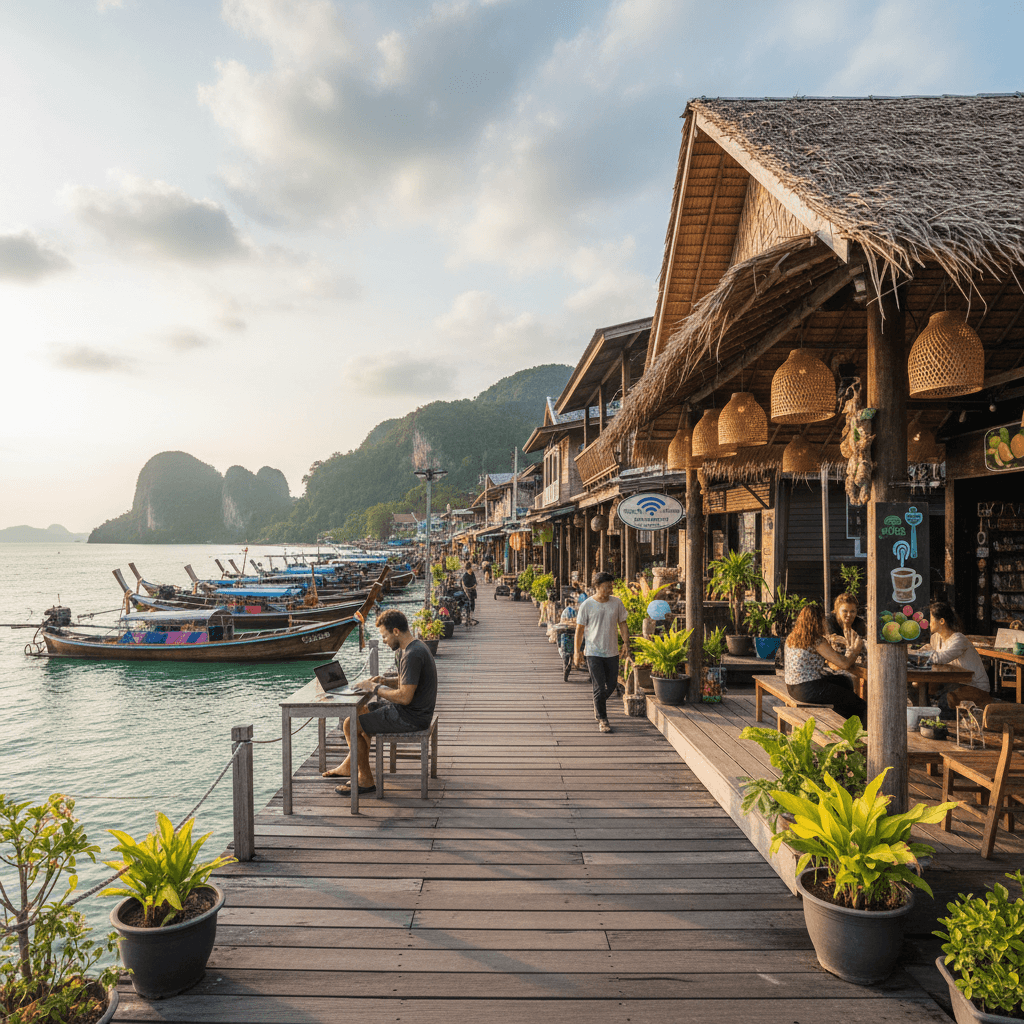
If you're looking for the neon-soaked chaos of Phuket or the non-stop party of Koh Phangan, you won't find it here. Ko Lanta is where the pace finally drops a gear. It's an island that feels lived-in and authentic, largely due to its unique blend of Thai Muslim fishing communities and a tight-knit international nomad scene.
Experienced expats often describe the atmosphere as "bohemian-functional." You can spend your morning on a high-speed fiber connection and your afternoon riding a scooter past wandering goats and emerald jungles. It’s an island that rewards those who want to work hard and then completely disappear into a sunset with a $2.30 beer in hand.
The Nomad Experience
The emotional heart of the remote work scene is KoHub on Long Beach. Many nomads find that this isn't just a place to plug in, but the center of their social lives. While the island is famous for its chill energy, the work infrastructure is surprisingly robust. You’ll find 500+Mbps fiber at the main hubs, though travelers often note that power outages can happen during the rainy season.
Socializing here is low-key. Instead of massive clubs, think biweekly beach bar meetups and sunset sessions at spots like The Irish Embassy Pub or Fat Turtle. It’s easy to make friends because the community is smaller and more intentional than in the northern hubs like Chiang Mai.
Where to Plant Your Flag
Choosing a neighborhood depends on how much "island" you want versus how much "infrastructure" you need. Long Beach (Prae Ae) is the undisputed favorite for solo nomads. It’s walkable, offers easy coworking access, and has a great balance of sandy shores and evening bars.
Families and those who prefer calmer waters usually head to Klong Dao Beach. It’s close to the Saladan pier and has the best concentration of resorts and schools, though you'll pay slightly more for the convenience. If you’re on a tighter budget, Saladan village offers cheaper huts and a local feel, while Lanta Old Town on the east coast provides a look at the island's history and mangroves, though you’ll definitely need a scooter to reach the beaches.
The Cost of Living
Your money goes a long way here, with an average monthly spend for a solo nomad sitting around $807. Here is how the budget typically breaks down:
- Housing: A basic studio or 1BR in the center averages $386, while those looking for luxury resorts or AC villas should budget $1,200+.
- Food: Street food and local lunches are a steal at roughly $3.13. A mid-range dinner for two usually hits around $27.
- Work: A monthly pass at KoHub is about 6,500 THB (~$190), while a day pass costs 400 THB (~$12).
- Transport: Scooter rentals run 200-300 THB per day. If you aren't riding, tuk-tuks are the primary way to get around, with short trips between Saladan and Klong Dao costing 40-80 THB.
Practical Realities
The island is generally very safe, but travelers often warn about motorbike accidents and the occasional bout of food poisoning. For medical needs, the TakeCare Clinic in Saladan is the go-to for walk-ins, with a typical visit costing around $29.
Internet is reliable in dedicated spaces, but it's smart to grab a local SIM from AIS, True, or DTAC as a backup. You'll need your passport to register one at a local shop. While English is common in tourist areas, learning a few phrases like "khop khun" (thank you) goes a long way, especially in the more traditional Old Town.
The best time to be here is November to April, when the weather stays around 28-30°C and the rain is minimal. If you visit during the monsoon peak in September or October, be prepared for many businesses to close and some areas to feel quite isolated.
The Price of Paradise
Ko Lanta is famous among the digital nomad community for being one of the most affordable islands in Thailand that doesn't sacrifice infrastructure. You'll find it significantly cheaper than Phuket or Koh Samui, with an average monthly cost of around $807 for a solo traveler. This figure covers your rent, local food, and a few beachside sunsets without a strict budget.
Experienced expats recommend thinking in tiers when planning your budget. A budget-friendly lifestyle costs between $600 and $800, which usually means a basic fan-cooled bungalow and plenty of street food. If you're looking for a mid-range experience at $800 to $1,200, you'll enjoy a private one-bedroom apartment and regular cafe visits. For those who want resort-style living with full AC and high-end dining, expect to spend $1,200 or more.
Housing and Neighborhoods
Where you park your scooter matters. Many nomads flock to Long Beach (Prae Ae) because it balances sandy shores with easy access to coworking hubs. If you're traveling with family, Klong Dao Beach is the go-to for its calm, shallow waters, though rent here is slightly higher. For the best deals, budget-conscious travelers often head to Saladan or Lanta Old Town, where you can find simple huts or local apartments for as little as $294 per month.
- Saladan & Klong Dao (Center): Expect to pay around $386 for a 1BR. This area puts you near the pier and the most reliable grocery stores.
- Three-Bedroom Homes: If you're sharing with a group, a large house in the center averages $710, while more remote "cheap" options drop to $527.
- Lanta Old Town: It's incredibly atmospheric and cheap, but keep in mind you'll be further from the swimming beaches and will need a scooter or tuk-tuk to get around.
Eating and Drinking
Food is where Ko Lanta truly shines for the wallet. A local lunch or street food meal costs about $3.13, making it easy to eat out every day. If you're heading out for a mid-range dinner for two, you're looking at roughly $27. For those craving home comforts, an upscale meal or fast food fix runs about $8.70.
Coffee culture is alive and well here, with a cappuccino averaging $2.06. When the sun goes down, a local beer will cost you about $2.30 at most beach bars. Travelers often note that while the island has a Muslim heritage, alcohol is widely available in tourist areas, though prices are slightly higher than on the mainland.
Work and Connectivity
Reliable internet is essential for the island's nomad scene. While many cafes offer decent WiFi, the gold standard is KoHub on Long Beach. It's famous for its community vibe and backup generators, a lifesaver since island power outages can happen. A day pass is 400 THB (about $12), while a monthly membership is 6,500 THB (roughly $190).
- Home Internet: A 50Mbps+ fiber connection costs roughly $20 per month.
- Mobile Data: Always grab a local SIM from AIS, True, or DTAC. 5G is strong in Saladan and Old Town, and it serves as a vital backup when the power dips.
Transport and Practicalities
There's no Grab on the island, so you'll rely on tuk-tuks (motorbike sidecars). A short trip between Saladan and Klong Dao usually costs 40-80 THB, but longer hauls can reach 400 THB. Most long-termers rent a scooter for 200-300 THB per day, though monthly rates are significantly lower. Just be careful, motorbike accidents are the most common safety concern on the island.
For healthcare, the TakeCare Clinic in Saladan is the standard choice for walk-ins. A typical visit for something like food poisoning or a fever costs approximately $29. Most travelers find the island very safe, but it's always smart to have Wise or Revolut ready for ATM withdrawals to keep conversion fees low.
For Digital Nomads: Long Beach (Prae Ae)
If you're coming to the island to get things done, Long Beach is the place to be. It strikes the perfect balance between a social scene and a functional workspace. Many nomads find this area the most convenient because it's home to KoHub, the island's premier coworking space known for its high-speed fiber internet and backup generators for those occasional power outages.
You can expect to pay around $386 for a central one-bedroom apartment here. The beach itself is a massive stretch of sand perfect for sunset runs, though travelers often note that the nightlife can get a bit loud near the beach bars. For food, you're close to the Irish Embassy Pub and plenty of mid-range cafes where a solid lunch costs about $3.13.
For Families and Shoreline Lovers: Klong Dao Beach
Located just south of the main pier, Klong Dao is the go-to neighborhood for families and those who prefer calm, shallow waters. The bay is protected, making it safe for kids to swim, and the beach is lined with resorts that offer more "comfortable" tier amenities. Experienced expats recommend this area for its proximity to Saladan, which makes grocery runs and school drop-offs much easier.
Living here is slightly pricier, with monthly budgets often exceeding $1,200 for a resort-style setup or a multi-bedroom villa. While it's more developed, it maintains that relaxed island pace. You'll find plenty of tuk-tuks available here, with short rides to the village costing between 40 and 80 THB.
For Budget Seekers and Long-Term Expats: Saladan Village
Saladan is the island's main hub and the first place you'll see when arriving by ferry. It's not a typical beach neighborhood, but it's the most practical place to live if you're watching your wallet. You can find basic huts or local apartments for as low as $294 per month.
Expats often choose Saladan because it's walkable and puts you right next to the TakeCare Clinic and the best local markets. While it's busier and lacks the "toes in the sand" vibe of the southern beaches, the savings on rent and easy access to AIS or True shops for SIM cards make it a strategic base. It's also the best spot to find 200-300 THB daily scooter rentals.
For Culture Seekers and Solo Travelers: Lanta Old Town
On the east side of the island, Lanta Old Town offers a completely different atmosphere. It's a traditional Thai Muslim fishing village built on stilts over the water. Solo travelers who want to escape the "nomad bubble" often head here for the immersion, though you'll need a scooter or a 400 THB tuk-tuk ride to reach the swimming beaches on the west coast.
The cost of living here is very low, but the internet can be less reliable than in Long Beach. It's quiet, scenic, and surrounded by mangroves. Just keep in mind that English is less common here, so learning basic phrases like khop khun (thank you) and mai pen rai (no worries) will go a long way with your neighbors.
For the Laid-Back Soul: Klong Nin
If your priority is a "no shoes, no shirt" lifestyle, Klong Nin is the neighborhood that fits. It's located right in the middle of the island's west coast, featuring a road that runs directly alongside the beach. It's popular with solo travelers and couples who want a mix of bohemian bars and great sunsets without the larger crowds of Long Beach.
The vibe here is decidedly relaxed, but travelers should be aware that prices can spike during the peak season from November to April. While there are plenty of restaurants like Fat Turtle nearby, you'll be further away from the main coworking hubs, so a 5G SIM card backup is a smart move for anyone working from their patio.
Connectivity and Speed
Internet reliability on Ko Lanta has improved significantly, making it a top-tier choice for remote work in the Andaman Sea. You'll generally find fiber optic connections in most guesthouses and villas, with average speeds hovering around 50Mbps to 100Mbps. For a standard connection, expect to pay about $20 per month if you're setting up your own long-term line.
Experienced expats recommend having a backup plan, as the island is prone to occasional power outages, especially during the rainy season. Many nomads use a local SIM card from AIS, True, or DTAC to tether their laptops when the power dips. You can pick these up at the pier or in Saladan; just remember to bring your passport for registration. 5G coverage is surprisingly strong in Saladan and Old Town, and you can often find unlimited data promos through provider apps or Shopee.
The Hub of the Community
The crown jewel of the island’s work scene is KoHub, located near Long Beach (Prae Ae). It’s more than just a workspace; it’s the center of gravity for the local nomad community. Travelers often note that the "KoHub vibe" is what keeps them coming back to the island year after year. It offers the fastest fiber on the island, with speeds reaching 500+Mbps in certain zones.
One of the biggest draws of KoHub is its onsite generator, which ensures you stay online even when the rest of the neighborhood goes dark. Pricing is straightforward: a day pass costs around 400 THB, while a monthly membership is about 6000 THB. They also offer "all-in" packages that include accommodation and meals, which many first-timers find helpful for hitting the ground running.
Cafe Culture and Remote Spots
If you prefer a change of scenery, Ko Lanta has a growing list of laptop-friendly cafes. Many nomads find that the beach bars along Long Beach and Klong Dao are perfect for light tasks or emails, provided you don't mind the sound of the waves and the occasional sea breeze. While these spots don't always have the "silent room" environment of a dedicated hub, the views are hard to beat.
In Saladan, you'll find smaller, air-conditioned cafes that offer stable WiFi and decent coffee for around $2.06 (70-80 THB). For those staying in Lanta Old Town, the pace is slower and the internet can be a bit more temperamental. Digital nomads living on the east side often rely heavily on mobile hotspots or specific guesthouses known for catering to remote workers.
Practical Work Tips
- Get a local SIM: AIS is widely considered the most reliable for coverage across the entire island, including the more remote southern beaches.
- Check the backup: Before booking a long-term villa, ask the host if they have a generator or if the router is on a UPS (Uninterruptible Power Supply).
- Time your calls: If you have high-stakes video meetings, head to KoHub. The community there is respectful of noise levels, and the dedicated Skype booths are a lifesaver.
- Stay central: If you don't want to commute by scooter, look for housing in Prae Ae. It’s the most walkable area for accessing both the beach and the main coworking facilities.
Overall, working from Ko Lanta requires a bit more flexibility than a major hub like Bangkok, but the trade-off is a commute that usually involves a short walk through the sand. It’s a balance that most nomads here find well worth the effort.
Staying Safe on the Island
Ko Lanta is widely considered one of the safest islands in Thailand for digital nomads and solo travelers. You'll find a welcoming atmosphere shaped by a unique blend of local Thai Muslim traditions and a tight-knit expat community. Violent crime is extremely rare, though it's always smart to keep an eye on your belongings in busy beach areas or at popular bars.
Most safety concerns on the island are environmental rather than criminal. Experienced expats recommend being cautious if you're exploring the isolated mangroves on the east coast after dark, as lighting is minimal and the roads can be tricky. While there aren't any specific "no-go" zones, sticking to the more populated western beaches like Long Beach or Klong Dao at night is the standard move for most travelers.
The biggest physical risk you'll face is likely on two wheels. Motorbike accidents are common, especially for those unfamiliar with gravel-strewn roads or local driving habits. If you're renting a scooter for the usual 200-300 THB per day, always wear a helmet and check your travel insurance policy for coverage. Many nomads find that using the local tuk-tuks (motorbike sidecars) is a stress-free alternative, with short trips usually costing between 40 and 80 THB.
Healthcare and Medical Services
For minor ailments like "stomach bugs" or heat exhaustion, you don't need to leave the island. Many nomads recommend TakeCare Clinic in Saladan for quick walk-ins or even hotel visits. A typical consultation for common issues like fever or diarrhea usually runs around $29 (approx. 1,000 THB). It’s a reliable first stop before considering a trip to the mainland.
Pharmacies are located every few hundred meters along the main road, and the staff are generally very knowledgeable. You can find most over-the-counter medications easily, but it’s always a good idea to bring your specific prescriptions from home. In the event of a serious emergency, you can dial 1669 for medical assistance, though major procedures may require a transfer to a hospital in Krabi or Phuket.
Health Hazards to Watch For
- Mosquito-Borne Illness: While the risk of malaria is very low on Ko Lanta, Dengue fever is a seasonal concern. Travelers often note that using repellent during the "golden hour" at sunset is the best way to stay bite-free.
- Food and Water: Food poisoning can happen, though it's less common here than in more crowded tourist hubs. Stick to busy street food stalls where the turnover is high. Never drink the tap water; stick to bottled water or the large 20-liter jugs provided by most long-term rentals.
- Stray Dogs: You'll see plenty of "soi dogs" around the island. Most are harmless and looked after by the community, but it's best to avoid petting unknown animals to prevent bites or scratches.
Emergency Contacts and Resources
It helps to keep a few numbers saved in your phone just in case. The general emergency number for Thailand is 1669. For non-urgent police matters, the Tourist Police are generally helpful and speak better English than the local precinct. Most expats also suggest joining local Facebook groups, as the community is very active and quick to offer advice if you're looking for a specific specialist or medical recommendation.
If you're working from KoHub or staying in Long Beach, you'll be within a 10-15 minute drive of most necessary services. This proximity to help, combined with the island's low-stress environment, makes it a favorite for nomads who want the island life without feeling completely off the grid.
Navigating the Island
Getting around Ko Lanta is a straightforward affair, but it requires a bit more planning than mainland hubs. You won't find Grab or Bolt here, so don't bother checking your apps for a ride. Instead, the island relies on a mix of local transport and personal rentals to bridge the gap between the northern pier and the southern beaches.
Most travelers arrive via the Saladan Pier. From here, you'll be greeted by a fleet of local tuk-tuks. Unlike the flashy versions in Bangkok, these are typically motorbikes with sidecars. They're the primary way to get from the pier to your accommodation if you aren't ready to lug your bags onto a scooter immediately.
Tuk-Tuks and Taxis
Tuk-tuks are the pulse of the island's transport. Prices are generally fixed based on distance, but it's always smart to confirm the fare before you hop in. Many nomads find that a short trip from Saladan to Klong Dao Beach costs between 40 and 80 THB. For longer hauls down to Klong Nin or Lanta Old Town, expect to pay closer to 400 THB.
- Short hops: 40 to 100 THB for rides between adjacent beaches.
- Longer treks: 200 to 400 THB for cross-island trips or reaching the southern tip.
- Taxis: Private cars or air-conditioned vans are available for larger groups or airport runs. A private transfer to Krabi Airport usually starts around 1,500 THB.
The Freedom of Two Wheels
Experienced expats recommend renting a scooter as the most cost-effective and liberating way to see the island. The main roads are paved and relatively easy to navigate, though you should always watch out for sand on the asphalt and the occasional monitor lizard crossing the road. Most rentals will cost you between 200 and 300 THB per day, with discounts often available if you book by the month for around 3,000 to 4,000 THB.
Gas is easy to find. You can fill up at proper stations for about $1.26 per liter, or buy the "whiskey bottles" of fuel from roadside stalls in a pinch. Just remember that while the vibe is relaxed, local police do occasionally set up checkpoints; always wear a helmet and carry an International Driving Permit to avoid fines.
Walking and Biking
Ko Lanta isn't a "walkable" island in its entirety, as it's over 25 kilometers long. However, specific neighborhoods are very pedestrian-friendly. Saladan Village and Lanta Old Town are best explored on foot. If you're staying in Long Beach (Prae Ae), you'll find it's easy to walk between your bungalow, the beach, and KoHub for work.
Bicycles are available for rent at some resorts, but they aren't very common for long-distance travel. The island's humidity and the hilly terrain toward the southern national park make traditional cycling a strenuous choice for a daily commute.
Logistics and Planning
Travelers often note that transport costs can eat into a budget if you rely solely on tuk-tuks. If you're staying long-term, many nomads factor in a monthly transport budget of about $30 to $40, which usually covers a long-term scooter rental and fuel. This allows you the flexibility to chase the sunset at Klong Nin or head to Saladan for a cheap street food dinner without worrying about the "tourist tax" of a private ride.
For those arriving from the mainland, the passenger ferry and car ferry are your lifelines. The car ferry runs frequently between the mainland and Lanta Noi, and then across to Lanta Yai (the main tourist island). It's a quick process, but during the peak dry season, lines can get long, so give yourself extra time if you're heading back to Krabi for a flight.
The Language Landscape
While Thai is the primary language on the island, Ko Lanta’s unique history as a melting pot of Thai-Chinese, Thai-Muslim, and sea gypsy communities means you’ll hear a few different dialects. In the main tourist hubs like Saladan and Long Beach, English is widely spoken by shop owners, tour operators, and restaurant staff.
Experienced expats recommend learning a few basic phrases to get through your daily errands. While you can get by with English in resorts, many nomads find that a simple "Sawadee" (hello) or "Khop khun" (thank you) goes a long way in building rapport with locals, especially when venturing into less touristy areas.
In Lanta Old Town on the east coast, English proficiency is noticeably lower than on the west coast beaches. Travelers often note that while communication requires more patience here, the locals are incredibly friendly and will often use hand gestures or physical menus to help you out.
Essential Thai Phrases
- Sawadee kha (female) / krub (male): Hello
- Khop khun kha / krub: Thank you
- Mai pen rai: No worries / It’s okay (the unofficial island motto)
- Hong nam: Bathroom
- Chai / Mai chai: Yes / No
- Tao rai?: How much?
Digital Tools and Translation
For more complex interactions, such as discussing a rental agreement or visiting a local clinic, Google Translate is the gold standard. The camera feature is particularly useful for translating menus at local "point-and-point" food stalls that don't have English signage.
If you're planning a long-term stay, many nomads suggest downloading the Thai keyboard on your phone. This allows you to copy and paste addresses into navigation apps or communicate with local landlords via WhatsApp or Line, which are the preferred messaging apps on the island.
Staying Connected
Reliable communication relies on a solid data plan, especially since power outages can occasionally knock out home WiFi. You can pick up a SIM card at the airport or in Saladan from providers like AIS, True, or DTAC. You’ll need your passport for registration.
For those working remotely, AIS is frequently cited by the community for having the most consistent 5G coverage across the island. If you're staying in Saladan or Old Town, you can expect strong signals, but coverage can dip slightly as you head toward the southern rainforests near the national park.
Coworking and Community Language
At community hubs like KoHub, English is the lingua franca. You’ll find a global community of digital nomads and entrepreneurs, making it easy to network and socialize without any language barriers. Most island events, like the nomad socials or meetups at The Irish Embassy Pub, are conducted in English.
Despite the ease of English in these bubbles, remember that Ko Lanta is a predominantly Muslim island. Respectful communication includes being mindful of local customs; travelers are encouraged to dress modestly when visiting Saladan or passing through village areas near mosques, and always remove your shoes before entering a home or certain small shops.
Getting Around
When booking transport, keep in mind there is no Grab on the island. You’ll be communicating directly with tuk-tuk drivers. Prices are usually fixed based on distance, such as 40-80 THB for a short trip between Saladan and Klong Dao, or up to 400 THB for longer hauls. Confirming the price before you hop in the sidecar is a standard practice that prevents any "lost in translation" moments at the end of your ride.
The Three Seasons of Ko Lanta
Ko Lanta doesn't follow the typical four-season calendar. Instead, the island moves through three distinct phases: the Dry Season, the Hot Season, and the Rainy Season. Because the island is located in the Andaman Sea, these transitions significantly impact everything from ferry schedules to which coworking spaces remain open.
Most travelers and digital nomads find that the sweet spot for weather falls between November and April. During these months, you can expect consistent sunshine, calm turquoise waters, and temperatures hovering comfortably around 28°C to 30°C (82-86°F).
The Peak Experience: November to February
This is widely considered the best time to visit if you want the island at its most accessible. The humidity is at its lowest, and the rainfall is minimal, January typically sees only 15mm of rain over just two days. It's the perfect time for exploring the southern tip of the island or taking boat trips to nearby spots like Ko Rok.
Experienced expats recommend booking your accommodation in Long Beach (Phra Ae) or Klong Dao well in advance during this window. Because the weather is so reliable, prices for monthly rentals can peak, and popular hubs like KoHub (high season only) often reach capacity with nomads fleeing the northern winters.
The Shoulder Season: March and April
As the island moves into March, the heat begins to ramp up, often peaking at 30°C (86°F) or higher. While the skies remain clear, the humidity increases significantly. Many nomads find this a great time to snag mid-range deals on villas or resorts before the monsoon arrives.
If you're visiting during April, be prepared for the Songkran festivities. While Ko Lanta is more relaxed than Bangkok or Phuket, it's still a celebratory time where you'll likely get splashed during your scooter rides between neighborhoods. It’s the last hurrah of the high season before the rains begin.
The Rainy Season: May to October
The monsoon officially arrives in May and lingers through October. Travelers often note that the island takes on a completely different character during this time. Many businesses close down during rainy season, and ferry services from Krabi or Phuket may be restricted due to rough swells.
September is historically the wettest month, seeing upwards of 330mm of rain over 22 days. While it rarely rains all day every day, the downpours are intense. For digital nomads, the biggest frustration during these months is the inconsistent power and occasional internet outages caused by storms.
Is the Low Season Worth It?
Many budget-conscious travelers swear by the rainy season. You can often find luxury 1BR apartments in the center for as low as $294 per month, and the island feels incredibly peaceful. If you're planning to stay during this time, nomads recommend living in Saladan or Klong Dao, as these northern areas maintain better infrastructure and more consistent food options when the rest of the island goes into hibernation.
Just be sure to have a backup data plan. While KoHub uses generators to combat outages, having an AIS or True SIM card is a smart backup for staying online when the local grid fluctuates during a tropical storm.
Getting Around the Island
You won't find Grab or Uber here, so your transport strategy is key. Most expats recommend renting a scooter for about 200-300 THB per day if you're comfortable on two wheels. It’s the most efficient way to hop between the northern beaches and the quieter southern coves.
If you prefer not to drive, look for the local tuk-tuks, which come in handyly motorbikes with sidecars. A short trip from Saladan to Klong Dao usually costs between 40-80 THB, while longer hauls can reach 400 THB. Always agree on the price before you hop in.
Connectivity and Coworking
Reliable internet is the lifeline of the nomad community here. While many cafes offer decent WiFi, experienced nomads head to KoHub at Long Beach for the most stable fiber connection, often reaching 500+ Mbps. They even have backup generators, which are essential during the island's occasional power outages.
A day pass at KoHub runs about 400 THB, while a monthly membership is around 6,500 THB. For a backup, grab a local SIM card from AIS, True, or DTAC. You'll need your passport to register, and 5G coverage is surprisingly strong in Saladan and Old Town.
Budgeting for Your Stay
Ko Lanta is remarkably affordable compared to Phuket or Samui. A solo nomad can live comfortably on $800 to $1,200 per month. If you're on a tight budget, you can get by on $600 by staying in Saladan or Old Town and sticking to street food.
Expect to pay around $386 for a central one-bedroom apartment, while a mid-range dinner for two typically costs around $27. Local street food remains a steal at roughly $3 per meal. For banking, many travelers use Wise or Revolut to minimize fees at the ATMs found throughout Saladan.
Choosing Your Neighborhood
- Klong Dao Beach: Great for those who want calm waters and proximity to the Saladan pier. It’s a bit pricier but very convenient.
- Long Beach (Prae Ae): The heart of the nomad scene. It’s walkable and offers easy access to KoHub and social beach bars.
- Klong Nin: Best for a laid-back, bohemian vibe. It’s further south and feels more secluded, though prices can spike here.
- Saladan: The main village. It’s where you’ll find the cheapest huts and the best infrastructure, though it lacks the "tropical beach" feel.
- Lanta Old Town: Located on the east side, this area is perfect for culture seekers. It’s quiet and affordable, but you’ll definitely need a scooter to reach any swimming beaches.
Health and Safety
The island is generally very safe, but motorbike accidents are the most common issue for travelers. Always wear a helmet and watch for sand on the roads. For minor ailments like food poisoning or heat exhaustion, the TakeCare Clinic in Saladan offers walk-ins for about $29 per visit.
In an emergency, dial 1669. Pharmacies are plentiful and well-stocked with most basics. While malaria risk is low, the mosquitoes can be persistent, especially during the rainy season from May to October.
Local Etiquette
Ko Lanta has a significant Muslim population, and it’s important to be respectful. Many residents suggest dressing modestly when moving through villages or near mosques, save the bikinis for the beach. Always remove your shoes before entering a home or some smaller shops, and a simple wai greeting goes a long way with the locals.
Need visa and immigration info for Thailand?
🇹🇭 View Thailand Country GuideEasy Landing
Settle in, no stress