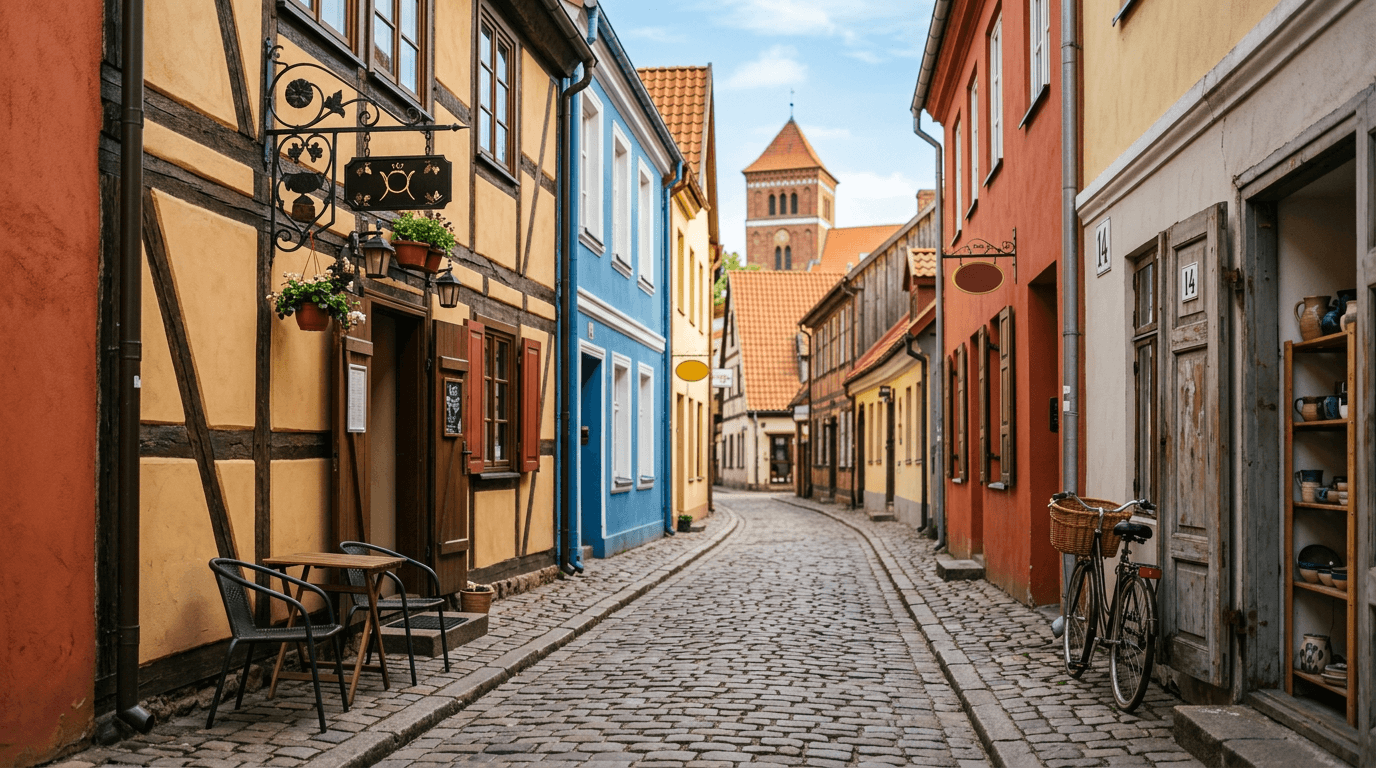
Klaipeda
🇱🇹 Lithuania
Klaipėda is a Baltic port city with sea air in your face, gulls screaming over the harbor and a pace that feels noticeably slower than Vilnius. It’s a good fit if you want a livable base with decent infrastructure, lower costs than most of Western Europe and easy weekend access to the Curonian Spit. It’s not flashy and that’s part of the appeal. The city feels practical, a little gray outside summer and refreshingly free of the big-capital grind.
Most nomads settle into the central areas because they’re walkable, close to cafés and close to the waterfront. Old Town or Senamiestis, has the most character, but rents are higher and apartments can be noisy or dated. The more balanced choice is usually the center and nearby Naujamiestis, where you can still get to transit, shops and coworking without paying Old Town premiums.
- Old Town: Best for short stays, cafés and atmosphere. Expect higher prices and less modern housing.
- Center and Naujamiestis: The safest default for remote workers. More practical, less charming, still walkable.
- Smiltynė: Great in summer if you want quick access to the spit. In winter, it can feel too detached.
- South residential districts: Quieter and often better value, but you’ll trade away nightlife and convenience.
Money goes farther here than in Vilnius, though 2025 rent increases have taken some of the shine off. A solo nomad can usually plan on €700 to €1,000 a month on a tight budget, €1,100 to €1,700 for a more comfortable setup and €1,800+ if you want a newer apartment and don’t want to compromise. A compact center studio often runs about €450 to €750, while neighborhood places can dip lower.
The city works well for remote work. Internet is solid, 5G coverage is strong and cafés often handle a laptop for a few hours without drama. Lighthouse Hub is the primary coworking option, while café-work spots like Musangas, Kavos architektai and 10 Tiltų are useful for lighter days.
Klaipėda’s social scene is thinner than Vilnius, so don’t expect constant events or a huge expat crowd. Still, the city has a pleasant, local feel, especially in summer when the waterfront fills up and the air smells like salt, grilled fish and sunscreen. For many nomads, that quieter rhythm is exactly the point.
Klaipėda is cheaper than Vilnius, but it’s not bargain-basement. The city works well for nomads who want sea air, a slower pace and a lower monthly burn than most Western European coastal cities, without giving up decent internet, walkability or basic urban comforts. It’s smaller, quieter and less international than Vilnius, so the tradeoff is a thinner social scene and fewer polished apartment options.
For a solo nomad, a practical monthly budget usually lands around €700 to €1,000 for bare-bones living, €1,100 to €1,700 for a comfortable setup and €1,800+ if you want a better apartment, regular café workdays and a few dinners out. Rent is the main swing factor. Prices have climbed and good places go fast in summer when the waterfront crowd pushes demand up.
- Studio or compact 1BR in the center: €450 to €750
- Smaller place in a quieter residential area: €350 to €600
- Newer or larger 1BR near the center or waterfront: €750 and up
- Typical difference vs. Vilnius: about 20% to 30% cheaper for comparable housing
Food stays reasonable by Eurozone standards. A casual lunch usually runs €7 to €12, a mid-range dinner is more like €15 to €30 per person and nicer places with drinks can climb past €35 fast. Grocery shopping won’t sting much unless you’re loading up on imported stuff, wine or convenience food.
Monthly transport costs are low. Buses are affordable, Bolt works well in the city and public transport remains a budget-friendly way to get around. Coworking is still affordable compared with bigger European hubs, with most hot desks landing around €120 to €250 a month depending on the space and how flexible you want the access to be.
- Old Town / Senamiestis: Best for short stays, cafés and character, but it’s noisier and pricier.
- Center / Naujamiestis-adjacent areas: The sweet spot for most nomads, close to transit, shops and work spaces.
- Smiltynė: Good for beach access and the Curonian Spit, less practical in winter.
- South residential districts: Quieter and better value, though you’ll give up some walkability.
Lighthouse Spot is the main nomad-friendly coworking name people mention and cafés like Musangas, Kavos architektai, 10 Tiltų and Coffee King can work for a few hours if you don’t mind the low hum of cups, chatter and espresso steam. For the best value, stay central, skip the waterfront premium unless you really want it and keep your winter budget realistic. Dark months drag here.
Klaipėda works best for people who want a calmer Baltic base, not a big-city rush. The city feels maritime and practical, with sea air, ferry access to the Curonian Spit and a center you can cross on foot without much effort.
Nomads
For most remote workers, the safest default is the center, especially Naujamiestis-adjacent streets. You’ll be close to cafés, buses and coworking spaces like Lighthouse Spot, Fabrique and Kultūros fabrikas, without paying Old Town prices for every square meter.
- Best for: daily work routines, easy errands and short walks to the waterfront
- Rent: about €450 to €750 for a compact studio or 1BR in the center
- Tradeoff: less polished than Vilnius, but quieter and usually cheaper
Old Town or Senamiestis, is better if you want character and don’t mind a bit of noise from bars, tourists and summer foot traffic. The cobblestones, older facades and café smell are part of the appeal, but some apartments are dated and can feel drafty in winter.
Expats
Expats who plan to stay a while usually do better outside the most touristy blocks. South residential areas, including stretches around Simonaitytės Street, tend to offer larger apartments, more parking and a more ordinary daily rhythm.
- Best for: longer leases, quieter streets and more space
- Rent: about €350 to €600 for a quieter-area 1BR
- Tradeoff: you’ll give up some walkability and nightlife
This is the part of town where life sounds more like buses braking, kids shouting in courtyards and neighbors dragging groceries up stairwells. It’s not glamorous and that’s the point if you want to avoid constant café-hopping and late-night noise.
Families
Families usually get the most value in the south and other residential districts. Apartments are more likely to have extra rooms and day-to-day life is easier if you’re not trying to navigate Old Town parking or weekend crowds.
- Best for: bigger layouts, quieter blocks and practical long stays
- Rent: usually above compact-city center units, especially for newer or renovated places
- Tradeoff: less atmosphere, fewer restaurants nearby
Solo travelers
Solo travelers and short-stay visitors should stick to Senamiestis or the center. You’ll be within easy reach of restaurants, cafés and the main bus routes and you won’t waste time on taxis every time the weather turns wet and gray.
- Best for: first-time stays, car-free trips and easy socializing
- Rent: higher than outer districts, but worth it for convenience
- Skip: port-side industrial edges, which are cheaper but dull and not very inviting
Smiltynė is the wildcard. It’s great in summer if you want dunes, pine trees and fast access to the Curonian Spit, but it’s far less practical once the wind gets sharp and the days turn short.
Klaipėda’s internet is good enough for real remote work, not just Slack checks and email. Lithuania has strong mobile coverage and solid fixed broadband, so video calls, large file uploads and long workdays are usually fine if you pick a decent apartment or coworking space. The weak spot is more mundane: in older flats, the Wi-Fi can be patchy, walls are thin and the heating can dry the air out like a radiator sauna.
For most nomads, the safest setup is to rent central and test the connection on day one. If the router looks ancient or the landlord shrugs when you ask about speed, move on.
Coworking spaces worth trying
- Lighthouse Hub: This coworking space has a strong community feel and is a popular place to meet other remote workers.
- Kultūros fabrikas: Good if you want a more cultural, less corporate setting. It’s practical, but not as polished as newer spaces.
Monthly hot desk rates vary depending on the space and what’s included. Day passes are handy if you just need a few focused hours, though Klaipėda’s coworking scene is smaller than Vilnius and you’ll feel that difference fast. There’s less of the constant buzz, fewer pop-up events and a narrower social pool.
Café-working works, but only for shorter sessions. The local coffee scene is usable but not built for all-day laptop squatting. Expect the usual café soundtrack, milk frothers, spoon clinks and low talk over espresso, then a hard stop if you linger too long.
Mobile data and practical setup
- Operators: Telia, Tele2 and Bite are the main choices.
- Best coverage: Telia and Tele2 are usually the safest bets.
- Plan for backups: Keep a mobile hotspot ready for apartment outages or bad weather days.
If you’re here in summer, the waterfront cafés and coworking commutes feel easy. In winter, the cold wind off the Baltic hits your face like a slap on the walk in, so a place close to home matters more than a pretty office. For long stays, most expats stick to the center, then use Bolt, buses or a bike to avoid wasting time on the city’s quieter edges.
Klaipėda feels calm by Baltic standards. Most days are fine for solo work, evening walks and late dinners in Senamiestis, though the port city can feel very empty once the summer crowd leaves and the wind starts cutting across the waterfront.
Safety-wise, the big risks are boring ones: petty theft, the odd drunk argument near bars and the usual carelessness that comes with a quieter city. Keep an eye on your bag in the center, don’t leave a laptop on a café table while you step out for a smoke and be a bit more cautious around isolated industrial edges after dark.
- Best default areas: Old Town, the center and nearby residential streets
- Less appealing: Port-adjacent industrial zones and very quiet outer streets at night
- Good habit: Use Bolt or a taxi late at night instead of walking long, empty stretches
Healthcare is straightforward for a European city of this size. Pharmacies are easy to find, staff usually know how to handle basic questions and the system works well enough for routine care, prescription refills and minor issues like infections, sprains or stomach bugs. For anything serious, don’t mess around, go straight to the emergency department at a major hospital and call 112 if you need urgent help.
Travel insurance still matters. Bring copies of prescriptions, keep medication in original packaging and don’t assume a local pharmacy can replace every foreign brand on the spot. If you need advice on a prescription, pharmacists are often the fastest first stop, but they’re not a substitute for a doctor when symptoms are getting worse.
- Emergency number: 112
- Pharmacies: Common in the center and easy to spot
- Best backup: Keep digital copies of prescriptions and insurance details
The practical side is better than the dramatic side. Klaipėda isn’t the sort of place where nomads spend a lot of time worrying about violent crime, but the darker months can feel a little grim, with wet pavement, cold wind off the harbor and streets that go quiet fast after dinner. If you want a city that feels safer and easier than most of Western Europe, this does the job, just don’t confuse “safe” with “carefree.”
Klaipėda is easy to live in without a car if you stay central. The core is walkable, buses cover most of the city and Bolt usually gets you across town fast enough, which matters when the wind is coming off the harbor and you don’t want to stand around outside waiting.
The city is small enough that you can think in neighborhoods, not in long commutes. Walking works well in Senamiestis and Naujamiestis and biking is pleasant in warmer months, especially along the waterfront and toward the ferry areas. Winter is a different story, though. Slush, cold pavement and that damp Baltic air make a 20-minute walk feel longer than it looks on a map.
- Best for daily life: Central Klaipėda, especially Senamiestis and nearby Naujamiestis, where you can reach cafés, coworking spaces and shops on foot.
- Best for short rides: Bolt is the easiest option when you’re tired, it’s raining or you’re heading out late.
- Best for biking: Spring through early autumn, when the routes are manageable and the sea air makes the ride feel better than it sounds.
For getting in and out of town, most travelers use Palanga Airport, then transfer to Klaipėda by taxi, Bolt, shuttle or bus depending on budget and timing. That trip is simple enough, but it’s still a transfer, so don’t plan on breezing straight from the gate into your apartment.
Intercity buses and trains are the better bet for moving around Lithuania. They’re practical, reasonably priced and good enough for weekend hops to Vilnius, Kaunas or Šiauliai, especially if you’re not in a rush and don’t mind a slower pace than the capital.
Local transit is affordable, and getting a monthly pass is a practical choice for longer stays. If you’re staying a month or more, it keeps day-to-day costs down and saves you from fiddling with single tickets.
For mobile internet, local sims from Telia, Tele2 and Bite are the usual choices. Telia and Tele2 tend to get the best coverage, so if you’re working from cafés, the ferry terminal or somewhere near the port, they’re the safer pick.
If you’re relying on ride-hailing, keep a backup app on your phone and don’t assume every driver will be fluent in English. The city’s fine for day-to-day movement, but once you head out of the center, language friction and patchier transit can show up fast.
Lithuanian is the main language in Klaipėda, but you won’t feel stranded if your English is decent. Younger locals usually speak it well and English works in coworking spaces, hotels, many cafés and tourist-facing businesses. Russian is still understood by some people too, though it’s not the default in everyday life.
The city feels easy to manage day to day. Ordering coffee, asking for directions or sorting a haircut usually isn’t a problem and people are generally patient if you’re speaking slowly. Still, a few Lithuanian words go a long way, especially in smaller shops or when you’re dealing with utilities, rentals or older residents.
- Labas: hi
- Ačiū: thank you
- Prašau: please, you’re welcome
- Kur yra...: where is...
- Sąskaita, prašau: the bill, please
Most nomads lean on Google Translate or DeepL for anything beyond basic chat. That’s especially true for apartment contracts, utility bills and official notices, which can turn into a headache fast if you try to wing it. Save screenshots, because some landlords and service desks still love sending information in clunky email threads or PDFs that are awkward to read on a phone.
In cafés and coworking spaces, English is usually enough. Coworking spaces and larger cafés tend to have staff used to foreigners, so the friction is low. The only time language really becomes annoying is in more bureaucratic situations, where forms, phone calls and fine print can drag.
For practical communication, messaging apps matter almost as much as speaking. Many locals use email for formal stuff and chat apps for quicker coordination and Bolt is handy because it cuts down on the need for back-and-forth with drivers. If you’re apartment hunting, ask straight away which language the lease is in and whether the landlord is comfortable handling issues in English.
One last thing, don’t assume everyone wants to switch to Russian just because you’re a foreigner. English is the safer first choice and a few words of Lithuanian usually get a warmer response than trying to improvise in another language. In Klaipėda, that small effort often gets you better service and fewer awkward pauses.
Klaipėda has a Baltic coastal climate, so expect cold, damp winters, a quick spring and a summer that finally makes the sea air feel pleasant instead of biting. The weather has real mood swings. One day you’ll get bright light and gulls over the harbor, the next you’re dealing with gritty wind, low cloud and rain tapping on window glass.
The city is at its best from June through August. Temperatures are mild to warm, the center feels alive and the waterfront actually makes sense as a place to linger instead of just pass through. Cafés spill onto sidewalks, the ferry to the Curonian Spit gets busy and you’ll notice more people out late, especially on clear evenings.
May and September are the sweet spot for many nomads. You still get decent daylight, cooler temperatures and fewer tourists, but you won’t be wrestling with the darker, wetter stretch that settles in later. May can feel fresh and breezy, while September often starts gently before the rain and gray creep back in.
- January to March: cold, gray and windy. Streets can feel empty and the Baltic air cuts straight through a coat.
- April to May: improving, but still cool. Good for quieter stays if you don’t mind a jacket most days.
- June to August: the liveliest stretch. Best for beach time, long walks and a more social city rhythm.
- September to October: still workable, then wetter and gloomier. October is usually one of the rainiest months.
- November to December: dark, damp and colder again. This is the roughest time for mood and outdoor comfort.
If you’re sensitive to low light, skip the deep winter months. The short days, wet pavements and heavy clouds can drag, especially if you’re working indoors all day. Summer has its own tradeoff, though, because more visitors mean higher prices for apartments and a busier waterfront.
For most remote workers, the practical answer is simple: come in late spring or early fall. You’ll get better weather, easier walks to cafés and coworking spaces and a city that still feels local instead of fully seasonal.
Klaipėda works best for nomads who want sea air, lower costs than Vilnius and a slower day-to-day rhythm. It’s smaller, quieter and less international than the capital, so if you need a big expat scene or constant buzz, this isn’t the place.
The city feels maritime and practical. You’ll hear ferry horns, gulls and the scrape of bike tires on old pavement near the center, then get hit by cold Baltic wind the moment you step closer to the water. Summer is the sweet spot, when the cafés fill up and the waterfront finally feels alive.
What to expect on a monthly budget
- Budget: €700 to €1,000 for a solo nomad, if you keep rent modest and cook often.
- Mid-range: €1,100 to €1,700, which usually means a decent apartment and a few meals out.
- Comfortable: €1,800+, especially if you want a newer flat near the center or waterfront.
Rent is the big swing factor. A compact studio or 1BR in the center usually runs about €450 to €750, while quieter residential areas can drop closer to €350 to €600. Food stays fairly manageable by Eurozone standards, with casual lunches around €7 to €12 and mid-range dinners around €15 to €30.
Where nomads usually base themselves
- Old Town / Senamiestis: Best for cafés, character and a short stay. It’s lively, but noisier and pricier.
- Center / Naujamiestis-adjacent areas: The safest default. You stay close to transit, services and coworking without paying full Old Town prices.
- Smiltynė: Great in summer if you want the Curonian Spit nearby. It’s inconvenient in winter and too quiet for most people.
Internet is solid and Lithuania’s coverage makes video calls pretty painless. For SIMs, Telia, Tele2 and Bite are the main options, with Telia and Tele2 usually the better bets if you care about coverage outside the center.
Lighthouse Spot on Liepų str. 83 is the most nomad-friendly coworking option and has the clearest community feel. Kultūros fabrikas, Fabrique and Tema also come up a lot. Café-working is easy enough for a few hours, with places like Musangas, Kavos architektai and 10 Tiltų good for a laptop and coffee, though the clatter of cups and low conversation gets old if you stay all day.
Klaipėda is generally safe, but use the usual city sense after dark. The center is walkable, Bolt works well and buses are cheap, so you don’t need a car unless you plan to live far out. For healthcare, 112 is the emergency number and pharmacies are easy to find.
Best months are June through August. May and September are a good compromise if you want milder weather and fewer tourists, though the wind can still cut through a jacket near the harbor.
Frequently asked questions
Is Klaipėda a good city for digital nomads?
How much does it cost to live in Klaipėda as a solo nomad?
Which neighborhood is best for remote workers in Klaipėda?
How good is the internet in Klaipėda for video calls and file uploads?
What are the main coworking spaces in Klaipėda?
Is Klaipėda safe for solo travelers and digital nomads?
How is healthcare in Klaipėda for nomads?
Need visa and immigration info for Lithuania?
🇱🇹 View Lithuania Country GuideEasy Landing
Settle in, no stress