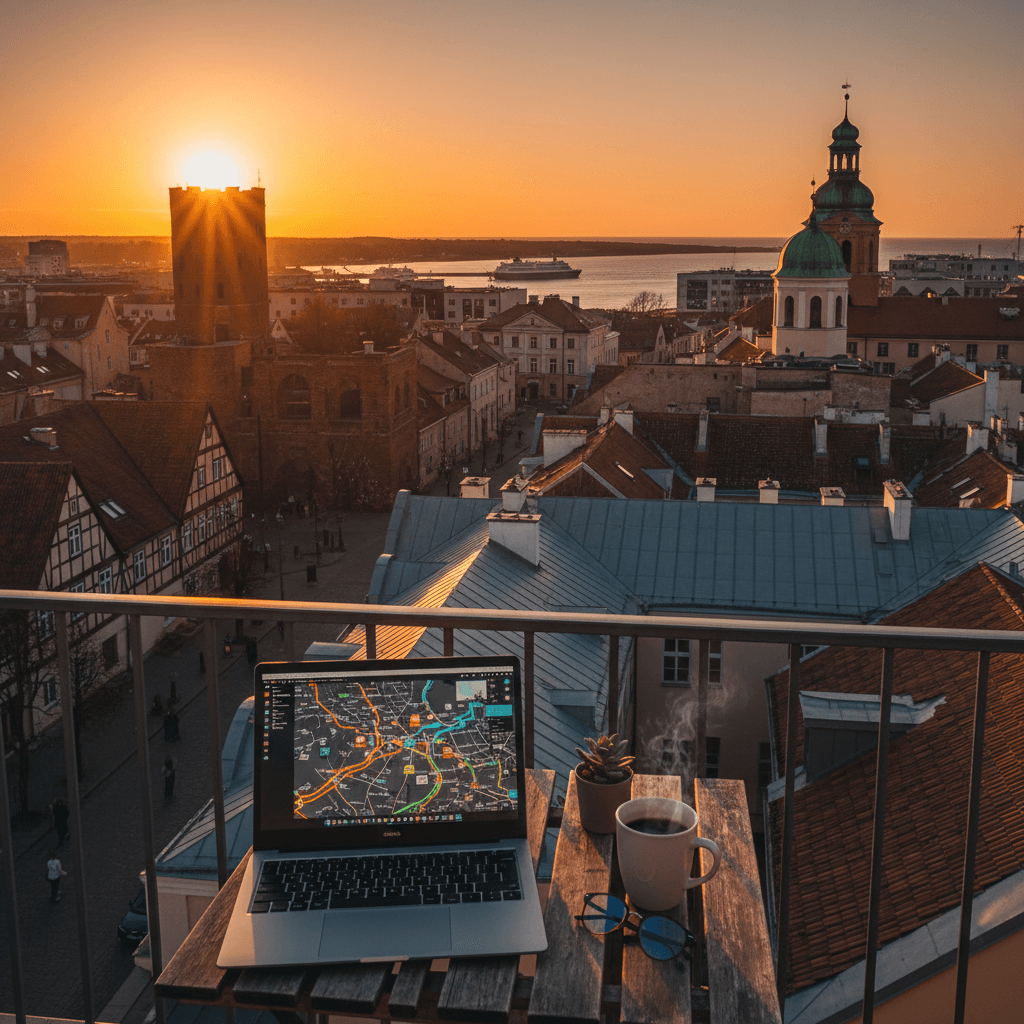
Klaipėda
🇱🇹 Lithuania
Klaipėda feels like a port city that never got the memo about rushing. The center is walkable, the air smells faintly of salt and diesel near the harbor and the whole place moves at a calmer clip than Vilnius or Kaunas, which, honestly, is exactly why a lot of remote workers like it.
Affordable is the big draw. A solo nomad can live on roughly €800 to €1,500 a month depending on rent and habits and a 1BR in a decent area still tends to land well below Vilnius prices, sometimes by about half, so you can work, eat out and take the ferry without feeling like every espresso is a bad financial decision.
The vibe is practical, not flashy. Locals can seem reserved at first, the nightlife is limited and summer is short enough to make you notice every warm day, but the tradeoff is real quiet, clean streets and a city where you can hear gulls, bus brakes and rain tapping on pavement instead of nightclub bass at 2 a.m.
Why nomads stay
- Work setup: Fast, reliable internet, cheap plans around €15 a month, plus coworking options like Light House Klaipeda and Kulturos Fabrikas at about €300 monthly.
- Daily rhythm: Cafes in Old Town work well for laptop time and the whole city feels built for focus rather than networking theater.
- Nature access: Giruliai Forest, the beach and the Curonian Spit are close enough for after-work walks, which turns out to be the city’s real luxury.
Best areas
- Old Town: Best for first-timers, cafes, museums and a bit of atmosphere, though rent gets pricier and the area can feel touristy in summer.
- Žvejybos Uostas: Cheaper and more local, with a rougher port-city edge, good if you want budget housing and don’t mind being less central.
- Alksnynė: Quiet, green and close to nature, better for people who’d rather hear wind in the trees than traffic outside the window.
Safety is another reason people settle in. Daytime feels comfortable, the city is generally clean and healthcare is solid, but night drinking zones can get messy, so don’t wander home half-asleep past the bars and expect the atmosphere to stay friendly.
Klaipėda isn’t trying to be a nomad capital. It’s smaller, slower and a bit blunt around the edges, but if you want sea air, decent infrastructure and a place where focused work actually feels possible, it’s one of the better bets on the Lithuanian coast.
Klaipėda is cheaper than Vilnius and you feel it fast. A single person usually lands around €1,004 a month with rent, though a more comfortable setup, honestly, pushes closer to €1,500+ if you want your own place and a few nicer meals out.
The city has that salty, windy port smell, diesel from the harbor and quiet streets that make it easy to work without getting dragged into noise and bad decisions. It’s a good fit if you want beach access, decent internet and a calmer routine, not if you need nightlife every night, because the social scene is thin compared with Vilnius or Kaunas.
What you’ll actually spend
- Studio or 1BR in the center: about $545, with normal-area rents often sitting around €353 to €545.
- Utilities: roughly $133 a month, which can sting a bit in winter when the Baltic cold sneaks through old windows.
- Transport: around $45 a month if you use buses and the e.Ticket app instead of hailing Bolt every day.
- Internet: about $15 for home service and speeds are usually solid enough for video calls and big uploads.
Food is pretty manageable. A street-food meal or fast food run costs about $7 to $12, lunch in a mid-range spot is around $11.90 and a nicer dinner for two can hit $63, which, surprisingly, still feels fair for a seaside city.
Groceries help keep things sane, so if you cook at home you’ll save real money, especially on basics like milk at about $1.43 a liter and beer around $1.74. The grocery bill, turns out, is where longer stays feel easy, because you’re not being punished for eating normally.
Budget ranges
- Budget: €800 to €1,000, usually shared housing and cheaper meals.
- Mid-range: €1,000 to €1,500, which gets you a 1BR in a central area and regular cafe lunches.
- Comfortable: €1,500+, for a nicer apartment, more taxis and the occasional splurge in Old Town.
Coworking isn’t massive here, but it works. Light House Klaipeda and Kulturos Fabrikas are both around €300 a month, while Regus can be as cheap as €5 a day for dedicated desk access or €29 for a day pass, which is handy if you only need a quiet desk now and then.
Old Town usually costs more, but it’s the best bet if you want cafes, walkability and a decent chance of bumping into another remote worker over coffee. Žvejybos Uostas is cheaper and more local, Alksnynė is quieter and greener and that tradeoff matters, because Klaipėda rewards people who’d rather hear gulls and tram brakes than club music at 2 a.m.
Nomads
Most nomads land in Old Town, because you can roll out of bed, grab coffee near the cobblestones and be working in a cafe before the ferry horns start up. It’s walkable, there’s decent WiFi and the vibe is relaxed, though rent gets pricier than the rest of Klaipėda and the streets can feel a bit touristy in summer.
Light House Klaipeda and Kulturos Fabrikas are the serious coworking picks, both around €300 a month and Regus gives you flexible day access if you’re only here for a short stretch. Honestly, that’s where the real remote-work crowd shows up, not in random apartments with patchy routers and a view of a parking lot.
Expats
Žvejybos Uostas makes sense if you want lower rents and a more local rhythm, with port air, older apartment blocks and fewer people staring at laptops in cafes. It’s cheaper and less polished than the center, but that’s the tradeoff and frankly most expats who pick it care more about value than postcard streets.
- Rent: Usually lower than Old Town, good for long stays
- Food: Easy access to cheap local spots and grocery stores
- Best for: People who want quiet, not buzz
If you want green space and a calmer pace, Alksnynė is the move, weirdly close to beaches yet far enough out that nights stay quiet and the air smells like pine instead of exhaust. You’ll need to plan your errands a bit better, because it’s not the kind of place where everything sits downstairs.
Families
Alksnynė is the strongest fit for families, because it’s peaceful, near forest and beach access and the noise level drops fast once you’re away from the center. Kids get room to breathe, adults get less traffic and less late-night mess and the whole area feels more practical than glamorous, which is usually the point.
Day-to-day life here is calmer, with buses, bikes and occasional Bolt rides doing most of the heavy lifting. The downside is obvious, you’re farther from the old town cafes and the easy social life, so if you want constant activity, this won’t be your spot.
Solo Travelers
Solo travelers usually do best in Old Town, because it’s easy to meet people over coffee, seafood dinners or a quiet beer at Café de Paris after work. The streets are compact and safe enough in daylight, though at night you should keep your wits about you around bars and late clubs, because that’s where things get sloppy.
- Best vibe: Central, walkable, easy to explore on foot
- Nightlife: Limited, but chill spots exist
- Transport: Bolt, city buses and bikes work fine
If you want a slower base and don’t mind fewer spontaneous hangouts, Žvejybos Uostas gives you a more lived-in feel, with markets, port sounds and fewer visitors dragging suitcases over the pavement. It’s not sexy, but it’s practical and that matters when you’re here for more than a weekend.
Klaipėda’s internet is solid, not flashy. Fixed broadband usually lands around 50 Mbps or better for about €15 a month and mobile plans from Telia, Tele2 or Bite can give you unlimited data for roughly €17, so working from a flat, a cafe or the waterfront usually just works.
The city feels calmer than Vilnius or Kaunas, which, honestly, is part of the appeal if you need to get actual work done. You’ll hear gulls, ferry horns and the odd truck grinding through the port, then walk ten minutes and find yourself in an almost quiet street with decent coffee and a plug socket.
Coworking Spaces
- Light House Klaipeda: About €300 a month, good for people who want a proper desk, stable WiFi and a more serious workday.
- Kulturos Fabrikas: Also around €300 a month, a creative space with a slightly more local feel and it’s handy if you like being near the Old Town side of things.
- Regus: Day access starts around €5, with fuller access closer to €29 a day, useful if you just need a polished place for calls and a few focused hours.
Most nomads don’t come here for a wild coworking scene, because there isn’t one. That said, the spaces that do exist are perfectly usable, the WiFi tends to be reliable and you’re not fighting for a table the way you might in a bigger Baltic capital.
Best Places to Work
- Old Town: Best for cafe hopping, especially if you want walkable streets, lunch spots and a bit of atmosphere between calls.
- Café de Paris: A common pick for laptop work, with the usual coffee-shop rhythm and enough comfort for a few hours.
- Waterfront cafes: Good on mild days, though the wind off the water can get annoying and your coffee goes cold fast.
If you’re staying longer, an apartment with decent fiber is usually the smartest setup. Frankly, that beats paying coworking rates every day and it gives you a quieter base when the rain starts hammering the windows in late autumn.
Practical Setup
- Local SIM: Grab Telia, Tele2 or Bite for backup data, especially if you work on calls.
- Monthly budget: Internet is cheap enough that it barely dents a mid-range budget.
- Work rhythm: The city suits deep work, not constant networking, so don’t expect much spontaneous nomad energy.
That’s the trade-off. Klaipėda won’t hand you a buzzing tech crowd, but it does give you clean air, decent connectivity and enough quiet to finish real work without the usual city noise chewing through your focus.
Klaipėda feels calm in a way bigger Lithuanian cities don’t and that calm helps with safety. The center is usually fine for daytime walking, with a low crime rate and clean streets, though nights can get a bit sketchy around alcohol-heavy bars and club exits. Don’t drift around drunk crowds after midnight.
Most nomads stick to Old Town, where you’ll hear cafe chatter, bike bells and the sea wind pushing through narrow streets and honestly that’s where the city feels easiest to read. Žvejybos Uostas is quieter and more local, while Alksnynė is best if you want trees, beaches and less noise, which, surprisingly, can make a big difference if you’re working long hours.
How Safe It Feels
- Daytime: Generally safe, especially in Old Town and around main bus routes.
- Night: Moderate risk near clubs, port-adjacent streets and late-night alcohol spots.
- Common sense: Keep your phone zipped away and don’t wander dim side streets alone.
Healthcare is solid for a city this size. Klaipėda University Hospital handles most standard needs well, pharmacies are easy to find and a basic doctor visit runs about €40, so small issues won’t wreck your budget. The system has gone more digital, which saves time, though paperwork can still feel annoyingly old-school once you’re there in person.
If you need medication, pharmacies are your friend and they’re everywhere, near supermarkets, on main roads, even tucked into shopping centers where you can duck in out of the cold rain. Emergency help across Lithuania is 112 and that’s the number to keep in your phone before anything goes wrong.
Healthcare Tips
- Hospital: Klaipėda University Hospital for larger issues and scans.
- Pharmacies: Widely available, often with English-friendly staff in central areas.
- Emergency: Call 112 anywhere in the EU.
One practical annoyance, honestly, is that the port air can feel gritty on windy days and in winter the cold hits hard through wet gloves and damp shoes. If you’ve got asthma, allergies or any chronic condition, pack your meds, know where the nearest pharmacy is and don’t assume you’ll find your exact brand every time.
For most travelers and remote workers, Klaipėda feels safe enough, clean and manageable, just don’t confuse “quiet” with “carefree.” Keep your nights sensible, use the main streets and the city stays easy to live in.
Klaipėda is easy to get around, honestly and that’s part of the appeal. The center is compact and walkable, the buses are cheap and if you’re staying near Old Town you can get most places on foot with a coffee in hand and the smell of the port drifting in now and then.
Public transport runs through the e.Ticket Klaipėda app and a single ride costs about €0.70 (electronic) or €1.50 (paper from driver) [2], with monthly passes around €28 [2]. That’s decent value, especially if you’re commuting between Old Town, the port side and residential areas, though the system can feel a little sleepy compared with bigger Lithuanian cities, so don’t expect constant rush-hour chaos.
- Best for walking: Senamiestis, Theatre Square, the riverfront, everything’s close and the sidewalks are straightforward.
- Best for buses: Reaching Žvejybos Uostas, Alksnynė and farther residential zones without paying for taxis.
- Best for quick trips: Bolt when it’s raining, windy or you’re carrying groceries.
Bikes and scooters are common in warm months and that works well because Klaipėda stays flat and manageable, with sea air that can be sharp on your face and a lot less traffic stress than you’d get in Vilnius. Bolt, Scoot911, Velobox and Baltic Bike Rental are the names people actually use and if you’re headed to Giruliai or the beach strip, a bike can make the trip feel simple instead of annoying.
Ride-hailing’s the fallback. Bolt is the one most travelers mention and it’s handy late at night or when the wind’s doing that cold Baltic thing that gets under your jacket, but short hops still add up faster than bus fares, so don’t treat it like everyday transport.
Getting to and from the city
- Palanga Airport: About 30 km away, usually a bus or taxi ride for around €12.
- Curonian Spit: Take the ferry, then keep going by bus, bike or taxi depending on your plans.
- Regional travel: Trains and buses connect you with the rest of Lithuania, though schedules can be a little bare-bones outside peak times.
If you’re living here for a while, a bike plus the bus app is the sweet spot. If you’re just passing through, walk the center, use Bolt when the weather turns mean and skip the car rental unless you’re planning bigger day trips, because parking and port traffic can be a headache that nobody needs.
Klaipėda’s everyday language mix is pretty straightforward: Lithuanian on signs, in offices and with older locals, plus a fair amount of Russian in casual conversation, especially around the port and in some shops. English gets you by in cafes, coworking spaces, hotels and most tourist-facing places, though don’t expect everyone to be fluent, honestly or eager to switch unless you start politely.
That said, the communication style here can feel a bit reserved at first. People aren’t rude, they’re just not overly chatty and that can throw newcomers off, especially if you’re used to nonstop small talk, so a simple hello and a calm tone go a long way.
What to say
- Labas, hello
- Labas rytas, good morning
- Ačiū, thanks
- Prašu, you’re welcome or please in some contexts
Use the basics early and often, because it softens even the dullest errand. If you’re asking for help in a pharmacy, at the bus station or in a bakery, a tiny bit of Lithuanian usually gets you a warmer response and weirdly, it can also speed things up when the place is busy and the air smells like coffee, wet coats and sea wind.
How communication feels day to day
- Public services: English varies, carry Google Translate
- Cafes and coworking: Usually comfortable in English
- Neighbors and landlords: Often reserved, keep messages clear and polite
Written communication matters here more than some newcomers expect. For apartments, repairs and bills, send short messages, include the date and address and don’t be vague, because people in Klaipėda tend to answer the exact question you asked, not the one you meant to ask.
Turns out, that directness can be helpful once you get used to it. You’ll also notice that local conversations are often calmer than in bigger cities, with less interruption and fewer big gestures, though in port areas you’ll still get the odd truck horn, gull screech and the steady slap of wind off the water.
If you’re staying longer, learn a few extra words for transport, food and directions, then lean on translation apps when needed. That mix works fine here and it keeps daily life smooth without pretending everyone speaks the same language perfectly.
Klaipėda has a proper Baltic mood, grey skies, salt in the air, gulls screaming over the port and a pace that suits people who actually want to get work done. It’s cheaper than Vilnius, usually quieter than Kaunas and the tradeoff is obvious, you get more room to think, but fewer nightlife options and a shorter warm season.
June through September is the sweet spot. Days feel long, the sea is usable and the city looks its best when café windows are open and people spill onto the pavements, though you’ll still get rain, so pack a shell and don’t trust any forecast too much.
Best Months
- June: Warm enough for beach days, but still comfortable for working in town.
- July to August: Peak summer, with highs around 72°F and the most reliable outdoor time, honestly the best window for Curonian Spit trips.
- September: My pick for many nomads, fewer crowds, decent weather and that softer end-of-summer light over the harbor.
Winter is another story. January and February are cold, damp and pretty spiky around the edges, with highs near freezing, slushy sidewalks and wind that cuts through your coat near the waterfront, so if you hate dark afternoons and wet boots, skip those months.
Rain shows up a lot in the cooler season, especially November through January and that’s when Klaipėda can feel a bit flat if you’re hoping for outdoor plans every weekend. Still, if you’re here for focused remote work, low rent and empty cafes, the off-season can be strangely good.
Seasonal Feel
- Spring: Chilly and inconsistent, but good value if you don’t mind layering up.
- Summer: Best for beaches, ferry days and long walks through Old Town after dinner.
- Autumn: Crisp, moody and practical, though the wind starts biting sooner than you’d like.
- Winter: Cold, damp and quiet, which works for some people, but it’s not the cheerful version of coastal living.
If you want the cleanest balance, come in late June or early September, when the city still feels alive but doesn’t get noisy or crowded. You’ll pay more for accommodation in summer, but not silly-money and the beach, the ferries and the outdoor cafés are finally worth the weather.
Klaipėda works best if you like a calmer base, not a scene. The city feels practical and a little salty around the edges, with ferry horns, gulls, wet pavement and that cold Baltic wind that gets under your jacket fast, especially once summer fades. It’s cheaper than Vilnius, the WiFi is solid and the pace is slow enough that you can actually get work done.
SIMs and internet are easy. Telia, Tele2 and Bite all have decent coverage and unlimited plans hover around €17 a month, which is fair for remote work. If you need a backup, grab a local eSIM before you arrive, because the airport and ferry areas can be patchy and you don’t want to be standing outside with your laptop bag while the rain blows sideways.
For coworking, Light House Klaipeda and Kulturos Fabrikas are the names to know, both around €300 a month for a proper desk, while Regus can work if you only need a day or two at €5 to €29. Cafes like Café de Paris are fine for a few hours, though honest advice, don’t treat every coffee shop like a full-time office, because some places are small, quiet and not thrilled by all-day laptop campers.
Money, housing and day-to-day costs
- Budget living: €800 to €1,000 a month, usually shared housing and cheap eats.
- Mid-range: €1,000 to €1,500, which gets you a one-bedroom and more comfortable meals.
- Comfortable: €1,500+, if you want a nicer apartment and regular dinners out.
- Transit: About €1.19 per bus ticket or €34 for a monthly pass.
- Groceries: Milk is about €1.43 a liter, beer around €1.74.
Old Town is the smart pick if you want walkable cafes, museums and a bit of atmosphere without much noise, though rents are higher and summer tourists do crowd the square. Žvejybos Uostas is cheaper and more local, a bit rougher around the edges frankly and Alksnynė is the peaceful choice if you’d rather hear trees than traffic. Apartments show up on Booking.com and local listing sites, but the good ones go fast.
Getting around is simple and that’s one reason nomads stay longer than planned. Use the e.Ticket Klaipėda app for buses and trains, Bolt for rides and bikes or scooters when the weather behaves, because walking in sleet gets old quickly. For a beach break, take the ferry or an excursion to the Curonian Spit and Palanga airport is only about 30 km away, so you’re not stranded here.
People are reserved, not unfriendly. Say hello, shake hands, take your shoes off indoors and don’t show up late, because punctuality matters here more than it does in some warmer places. English is decent in cafes and tourist areas, but a few words like Labas and Ačiū go a long way, weirdly enough, when you’re trying to get help with a rental or a bus stop.
Need visa and immigration info for Lithuania?
🇱🇹 View Lithuania Country GuideEasy Landing
Settle in, no stress