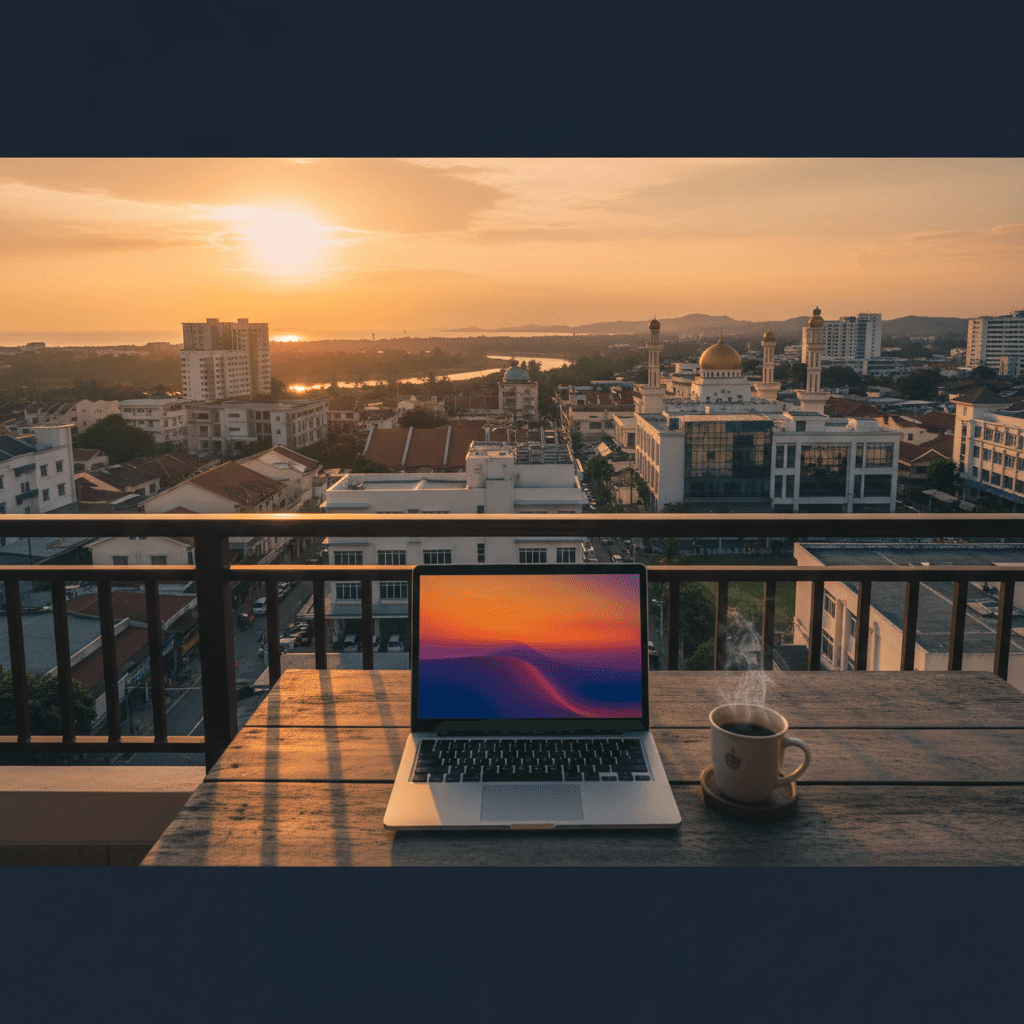
Kiulap
🇧🇳 Brunei
The Quiet Flow of Kiulap
If you're coming from the chaotic energy of Bangkok or the digital nomad bubbles of Bali, Kiulap will feel like a deep, quiet exhale. This is an upscale, polished suburb of Bandar Seri Begawan where the streets are clean, the infrastructure is pristine, and the pace of life follows the gentle rhythm of Malay Muslim traditions. It’s not a place for late night networking or bar hopping. Instead, it’s a sanctuary for deep work and safety.
The vibe here is defined by oil wealth and modesty. You’ll see gleaming SUVs parked outside modern apartment complexes and families gathering at the local malls. For a remote worker, the appeal lies in the lack of distractions. There is a sense of calm that’s hard to find elsewhere in Southeast Asia, though you have to trade the typical nomad "scene" for a more solitary, focused lifestyle. Most travelers find the local culture incredibly welcoming but deeply conservative. Respecting prayer times and dressing modestly isn't just a rule; it's the social fabric here.
Cost of Living Breakdown
Brunei is one of the pricier stops on the nomad trail. You can expect to spend around $1,562 per month as a baseline, and that's before you factor in a high end apartment. Here is how the budget usually breaks down in Kiulap:
- Budget Tier (BND 1,500): You'll be looking at shared housing and sticking to the incredible street food at night markets.
- Mid-Range Tier (BND 2,500): This covers a private one bedroom apartment, regular cafe visits, and a mix of local and international dining.
- Comfortable Tier (BND 4,000+): You’re living in a luxury condo at Kiulap Heights and dining at upscale spots like Rizq Kitchen.
For daily expenses, a Nasi Katok from a street stall will only set you back BND 2, while a mid range meal at a spot like Paya Melayu costs between BND 20 and BND 40. Rent for a decent studio near the shopping districts typically ranges from BND 800 to BND 1,500.
The Neighborhood Landscape
Kiulap is the primary choice for those who want modern amenities, but other pockets of the city offer different trade-offs.
Kiulap
- Best For: Expats and families who want convenience.
- Pros: Home to The Mall Kiulap and major supermarkets; very quiet and safe.
- Cons: Virtually zero nightlife and you'll definitely want a car.
Gadong
- Best For: Solo nomads and those who want to walk to dinner.
- Pros: The most "vibrant" area with night markets and more cafe options.
- Cons: Higher noise levels and frequent traffic jams.
Jerudong
- Best For: People who want to be near the coast.
- Pros: Close to beaches and luxury resorts.
- Cons: It’s a trek to get into the city and daily costs are higher.
Connectivity and Workspace
The internet in Brunei is surprisingly snappy. Nationwide speeds average around 87 Mbps, and fiber connections via providers like DST or Progresif are very reliable. While Kiulap doesn't have a dedicated coworking space of its own, options like Regus or CoCircle in the city center are the go-to for a professional setup, offering day passes for BND 20 or monthly access for BND 250.
Most nomads end up "cafe hopping" instead. The Starbucks in Kiulap and the Coffee Bean in Gadong are the most popular unofficial offices. They have reliable WiFi and a BND 10 coffee usually buys you a few hours of work time. For mobile data, grab a DST SIM at the airport for about BND 10 to BND 30 to get 4G or 5G coverage across the city.
Moving Around and Staying Safe
Brunei is exceptionally safe, with crime rates that are among the lowest in the world. You can walk around Kiulap at night without a second thought, though the heat usually makes people opt for wheels. Public buses are cheap at BND 1 to BND 2, but they aren't always frequent. The Grab app is your best friend here, with most rides around town costing between BND 5 and BND 15.
If you need medical care, the quality is high. RIPAS Hospital is the main public facility, and while it's free for locals, expats can expect to pay between BND 20 and BND 100 for a visit. For quick needs, Guardian pharmacies are found in almost every mall in Kiulap.
The Social Reality
The biggest hurdle for nomads is the social scene. There are no bars and a strict ban on public alcohol consumption. Socializing happens over food or coffee. Expats recommend joining Facebook groups like Expat Brunei or checking Internations to find meetups. Most of your "nightlife" will consist of wandering the Gadong Night Market or attending community events at the Yayasan Mosque. It’s a dry, quiet existence that suits some perfectly and leaves others feeling isolated after a week.
The Price of Peace in Kiulap
Living in Kiulap isn't cheap by Southeast Asian standards, but you're paying for a level of infrastructure and security that's hard to find elsewhere on Borneo. It's an upscale, suburban pocket where the oil wealth of Brunei is visible in the polished storefronts and modern apartment blocks. Most nomads find they need a baseline of $1,562 per month just to cover the basics, and that's before you factor in a dedicated office space or high-end housing.
The local currency is the Brunei Dollar (BND), which is pegged 1:1 to the Singapore Dollar. This makes the math easy but the lifestyle pricey. You won't find the $300 studio apartments common in Thailand here. In residential hubs like Kiulap Heights or the areas surrounding The Mall, expect to pay between BND 800 and BND 1,500 for a decent one-bedroom apartment. These usually come with parking and modern amenities, reflecting the family-oriented, affluent nature of the neighborhood.
Monthly Budget Tiers
- The Budget Nomad (BND 1,500): You're likely sharing a house or renting a room further out in areas like Seria. You'll eat primarily at night markets and use the bus system, which is reliable but limited.
- Mid-Range Professional (BND 2,500): This covers a private studio in Kiulap, frequent Grab rides, and a mix of home cooking and mid-range dining at spots like Paya Melayu.
- The Upscale Expat (BND 4,000+): You're looking at luxury condos, steak dinners at Rizq Kitchen, and perhaps a short-term car rental to explore the rainforests on weekends.
Daily Expenses and Lifestyle Costs
Food prices vary wildly depending on how "local" you're willing to go. A quick satay or a Nasi Katok from a street stall will only set you back BND 2 to BND 10. However, Kiulap is known for its cafe culture and international dining. A mid-range meal for two typically lands between BND 20 and BND 40. If you're craving a high-end experience, upscale spots can easily exceed BND 80 per person.
Transportation is another fixed cost to watch. While the buses are cheap at BND 1 or BND 2 per ride, the city is designed for cars. Most remote workers rely on the Grab app, with short hops around the city costing between BND 5 and BND 15. If you're arriving from the airport, a Grab to Kiulap takes about 20 minutes and costs roughly BND 20.
Staying Connected
The "work" part of being a nomad is actually quite easy here. Brunei boasts impressive internet speeds, averaging around 87 Mbps. If you're setting up a home office, fiber plans from DST or Progresif run between BND 50 and BND 100 per month. For those who prefer a communal vibe, Hub Coworking in Bandar is the go-to spot, charging about BND 250 for a monthly pass or BND 20 for a day visit.
Many travelers skip the formal office and camp out in cafes. The Starbucks in Kiulap and the Coffee Bean in Gadong are nomad staples. They offer reliable free WiFi, though you'll be expected to buy a BND 10 coffee every few hours. For mobile data, grab a DST SIM card for BND 10 to BND 30. It provides solid 4G and 5G coverage across the suburb.
The Social Trade-off
The biggest "cost" in Kiulap isn't financial; it's social. Due to strict Sharia-influenced laws, there is no public alcohol and virtually no nightlife. You won't find bars or loud clubs here. Most social life revolves around the Gadong Night Market or private gatherings. While the safety levels are world-class and the healthcare at RIPAS hospital is excellent, the lack of a traditional "backpacker" or "nomad" scene means you might feel a bit isolated. It's a location built for deep work and quiet living, not for those chasing the typical Southeast Asian party circuit.
Nomads and Remote Workers
If you are heading to Brunei for a deep work sprint, Gadong and central Bandar Seri Begawan are your best bets. While Kiulap is just a five minute drive away, Gadong is where you will find the most life. It is walkable by local standards, meaning you can hop between the Gadong Night Market for BND 1 satay and air conditioned cafes without needing a car for every single move.
Most nomads gravitate toward Hub Coworking in the capital, which charges about BND 250 a month. If you prefer the cafe circuit, Starbucks Kiulap and Coffee Bean Gadong are the unofficial offices of the city. You will get reliable 87 Mbps speeds, but keep in mind that the "vibe" is professional and quiet. You won't find the rowdy expat networking events common in Bali or Bangkok here.
- Rent: BND 900 to 1,400 for a decent serviced apartment.
- Internet: Fiber is standard; DST or Progresif SIM cards cost about BND 10 to 30 for data.
- Vibe: Focused, sober, and safe.
Expats and Long-Term Residents
Kiulap is the gold standard for expats who want a balance of modern luxury and convenience. It feels like an upscale suburb where everything is within reach. You have The Mall for shopping and a high concentration of international dining like Paya Melayu. It is a quiet, affluent area where the infrastructure is pristine, but you will absolutely need a car or the Grab app to get around, as public buses are infrequent and the heat makes walking long distances a challenge.
For those working in the energy sector, the oil towns of Seria and Kuala Belait offer a much lower cost of living. Housing is significantly cheaper there, though you trade away the cafe culture and proximity to the capital's amenities. It is a trade off that suits those looking to save money while enjoying a slower pace of life.
- Rent: BND 800 to 1,500 for modern condos in Kiulap Heights.
- Dining: Mid range meals at Rizq Kitchen run BND 20 to 40.
- Social: Most expats connect via Facebook groups or Internations since there are no bars to congregate in.
Families
Families usually find Jerudong to be the most attractive neighborhood. It is further from the city center but close to the coast, offering a resort like atmosphere. You are near Jerudong Park and several international schools, making it the preferred choice for those with children. The air is fresher, the plots are larger, and the environment is exceptionally safe.
Kiulap remains a strong second choice for families due to the sheer number of supermarkets and clinics, like the Guardian pharmacy and RIPAS hospital, which are easily accessible. The crime rate is virtually non existent, which is the biggest draw for parents moving to the region. Just remember that the country shuts down for Friday prayers, so plan your family outings accordingly.
- Healthcare: High quality; private visits cost between BND 20 and 100.
- Activities: Weekend trips to Ulu Temburong rainforest or Empire Brunei beaches.
- Safety: Extremely high; no specific areas to avoid.
Solo Travelers
If you are traveling solo, stick to the Water Village (Kampong Ayer) or the central Bandar Seri Begawan area. These spots offer the most "Brunei" experience without the isolation of the suburbs. Solo travelers often find Brunei a bit lonely because of the alcohol ban and limited nightlife, so staying where the street food is most active, like the Gadong Night Market, is key to staying entertained.
English is spoken by over 80 percent of the population in these areas, so you won't have trouble asking for directions or ordering Nasi Katok at a roadside stall for BND 2. It is a great place for a short, reflective trip, but most solo nomads find that two weeks is plenty of time before the lack of social scenes starts to bite.
- Transport: BND 1 to 2 for buses; BND 5 to 15 for most Grab rides.
- Food: Cheap and excellent; stick to the markets for the best local flavors.
- Culture: Modest dress is required; keep shoulders and knees covered to respect local norms.
Connectivity in the Suburbs
Brunei might not be the first name on a digital nomad's list, but Kiulap offers a surprisingly stable backbone for remote work. You aren't going to find a high energy tech scene here. Instead, you get reliability. The country boasts an average speed of over 85 Mbps for fixed broadband, and in an upscale pocket like Kiulap, the fiber connections are consistent. Most modern apartments in the Kiulap Heights area come pre-wired for high speed service through providers like DST or Progresif.
If you're setting up a home office, expect to pay between BND 50 and BND 100 per month for a solid home fiber plan. For mobile data, grab a DST SIM card at the airport or one of the local malls. A starter pack usually costs around BND 10, and you can easily top up for unlimited 4G or 5G data through their mobile app. Coverage is excellent throughout the suburb, so you won't have to worry about dropping off a Zoom call while grabbing lunch.
Coworking and Quiet Corners
Kiulap isn't swimming in dedicated coworking spaces. If you need a formal office environment with hot desks and networking events, you can look into CoCircle Kiulap or Regus in Bandar Seri Begawan. These options serve the region's small community of remote workers and offer a professional setting for those passing through the capital.
For those who prefer a "laptop and latte" approach, Kiulap has a decent selection of cafes that are friendly to remote workers. The Starbucks in Kiulap is a reliable standby with plenty of power outlets and free WiFi. Coffee Bean & Tea Leaf in nearby Gadong is another popular spot where the staff won't mind if you linger over a BND 10 cold brew for a few hours. Just keep in mind that Brunei is a conservative country; during Friday prayers, usually between 12:00 PM and 2:00 PM, almost every business shuts down, including cafes and coworking spaces.
Practical Realities for Remote Workers
Living and working in Kiulap is a lesson in slow living. The lack of a digital nomad visa means most people work here on standard tourist entries, which isn't ideal for the long term. Travelers often say the environment is perfect for "deep work" phases because there are zero distractions. There are no bars, the nightlife is non existent, and the social scene revolves around night markets and family dinners.
- Daily WiFi Speed: Over 85 Mbps for fixed broadband.
- Local SIM: DST or Progresif (BND 10-30 for data).
- Coffee Price: BND 7 to BND 12 for a specialty brew.
Expats recommend joining the Facebook Expat Brunei group or checking Internations to find social meetups. While the community is small, it's tight knit. If you're looking for a place to grind on a big project without the temptations of a party scene, Kiulap’s quiet streets and fast fiber make it a functional, if somewhat isolated, sanctuary.
A Haven of Stability
If your primary concern is finding a place where you can leave your laptop on a cafe table without a second thought, Kiulap is your spot. It is one of the safest neighborhoods in one of the safest countries on the planet. Crime is remarkably low, and the local culture is built on a foundation of mutual respect and strict legal adherence. You won't find "no-go" zones here; even late at night, the streets around The Mall and the surrounding apartment complexes are peaceful and secure.
Safety in Kiulap isn't just about low crime; it is about the environment. The suburb is upscale and well-lit, though you should remember that Brunei’s laws are conservative. Respecting local customs, especially around mosque zones and during prayer times, is the best way to ensure a smooth stay. Modest dress is expected, and public displays of affection are a no-go. For most nomads, the biggest "danger" is simply the strictness of the law, so keep the alcohol out of sight and follow the rules to avoid any unnecessary attention.
Medical Facilities and Care
Brunei’s oil wealth has funded a healthcare system that is surprisingly robust for a small nation. While Kiulap is a residential hub, it sits just a short 10-minute drive from the country’s primary medical facility, the Raja Isteri Pengiran Anak Saleha (RIPAS) Hospital. This is a massive public hospital that handles everything from minor ailments to specialist emergencies. While citizens get free care, expats and visitors pay a fee. You can expect to pay anywhere from BND 20 to BND 100 for a standard consultation, which is quite reasonable compared to Western private care.
For day-to-day health needs, Kiulap is packed with well-stocked pharmacies. Guardian is the main player here, with a large branch in the heart of the neighborhood where you can find familiar over-the-counter brands and high-end toiletries. If you need a quick check-up without the wait times of a major hospital, there are private clinics scattered throughout the commercial blocks near Rizq Kitchen that cater to the expat community.
Emergency Contacts and Practicalities
It is always smart to have the local emergency numbers saved before you settle into your Airbnb or condo. In Brunei, the numbers are short and easy to remember:
- Police: 993
- Ambulance: 991
- Fire and Rescue: 995
Most medical staff and pharmacists in Kiulap speak excellent English, so communicating your symptoms or needs won't be a struggle. If you have a specific prescription, bring the original paperwork with you, as Bruneian pharmacies can be strict about dispensing certain medications. Travelers often mention that while the pace of care can be slow, the quality is high and the facilities are modern and clean.
Staying Healthy in the Tropics
The heat is perhaps the biggest health hurdle you'll face. With temperatures hovering around 32°C (90°F) and high humidity, dehydration hits fast. Stick to bottled or filtered water; while the tap water in Kiulap is generally treated to a high standard, most long-term residents prefer to filter it or buy 5-liter jugs from the Hua Ho Supermarket to be safe. Since Kiulap is semi-walkable but lacks consistent shade, plan your outdoor errands for the early morning or after 5:00 PM to avoid heat exhaustion.
Mosquitoes can be a nuisance, especially during the rainy season from November to February. While malaria isn't a major concern in the urban areas of Bandar Seri Begawan, dengue fever pops up occasionally. Grab some repellent at the local pharmacy if you plan on visiting the nearby rainforests or even just sitting outside at a cafe near the water.
The Logistics of Getting Around
Movement in Kiulap is defined by a quiet, car-centric suburban design. While the neighborhood is physically compact, it isn't particularly designed for pedestrians. You'll find modern sidewalks near The Mall Kiulap and the Yayasan Complex, but the tropical heat and humidity usually make walking more than ten minutes a sweaty endeavor. Most local expats and long-term nomads rely heavily on ride-sharing apps to bridge the gap between their apartments and the city center.
Ride-Sharing and Taxis
The Dart or Grab app is your lifeline here. It is the most reliable way to get around without owning a vehicle. Expect to pay between BND 5 and BND 15 for most trips within the Kiulap and Gadong areas. If you're heading to the Brunei International Airport (BWN), a ride will typically cost around BND 20 and take about 20 minutes depending on the time of day. While traditional taxis exist, they're harder to flag down on the street; stick to the app for transparent pricing and faster pickups.
Public Buses
Brunei's public bus system is affordable but requires a bit of patience. The purple "Franchise" buses circle through Kiulap on their way to the main terminal in Bandar Seri Begawan.
- Fare: A flat rate of BND 1 or BND 2 per ride.
- Routes: Look for buses heading toward the city center or Gadong.
- Experience: It's a great way to see the city on a budget, though schedules can be unpredictable. Nomads usually find them better for leisurely exploring rather than making it to a meeting on time.
Driving and Rentals
If you're staying for more than a month, renting a car might be the most practical move. Brunei's infrastructure is pristine, and fuel is incredibly cheap due to government subsidies. You can find rental agencies near the airport or in the city center.
- Daily Rental: Roughly BND 50 to BND 80 for a standard sedan.
- Parking: Generally easy to find in Kiulap, though the lots around the main shopping blocks can get crowded during Friday prayers or weekend evenings.
- Cycling: Bicycles and scooters are rare sights on the road. The lack of dedicated lanes and the aggressive sun mean most people stay inside air-conditioned vehicles.
Practical Navigation Tips
Navigating Kiulap is straightforward because the neighborhood is anchored by recognizable landmarks like The Mall. Most services are clustered together, so once you're dropped off in a commercial block, you can finish your errands on foot. Just remember that everything stops for Friday prayers between 12:00 PM and 2:00 PM; businesses close, and public transport options become scarce during this window. Travelers often suggest planning your movement around these times to avoid being stranded at a cafe or supermarket.
Neighborhood Accessibility
While Kiulap is your home base, you'll likely want to visit nearby hubs. Here is what to expect for transit times from Kiulap:
- Gadong: A 5-minute ride. This is where you'll find the Gadong Night Market and most of the city's active street life.
- Bandar Seri Begawan (Downtown): About 10 minutes by car. This is the spot for the Omar Ali Saifuddien Mosque and the waterfront.
- Jerudong: A 20-minute drive. Head here if you want to visit the beach or the Jerudong Park playground.
The Linguistic Landscape
You won't have to struggle with a language barrier in Kiulap. While Bahasa Melayu (Malay) is the official language, English is the unofficial second language and is spoken with high proficiency. Most locals you'll encounter in the shops around The Mall or at the cafes in Kiulap Heights speak English fluently. It's the primary language for business, education, and government, so your interactions with landlords, bank tellers, or Grab drivers will be seamless.
The local dialect is known as Melayu Brunei. It has its own unique rhythm and vocabulary, but standard Malay is what you'll see on street signs and official documents. If you've spent time in Malaysia or Indonesia, you'll recognize many words, though the Bruneian accent is distinct. Most nomads find that they can get by for months without knowing a word of Malay, but learning a few basics goes a long way in building rapport with the community.
Essential Phrases for Your Kit
Dropping a few local words at the Gadong Night Market or your favorite Nasi Katok stall usually earns a smile. Here are the basics locals appreciate:
- Terima kasih: Thank you.
- Sama-sama: You're welcome.
- Berapa harga?: How much is this?
- Lurus: Straight (useful for giving directions if the GPS glitters out).
- Inda: No (the local version of "tidak").
Communication Norms and Etiquette
Communication in Brunei is deeply rooted in MIB (Melayu Islam Beraja), the national philosophy. This means the tone is generally soft, polite, and respectful. Raising your voice or showing outward frustration is considered poor form and rarely gets results. If you're dealing with a service issue at a telco shop like DST, staying calm and patient is the fastest way to get help.
Respect for the monarchy and religion is non-negotiable in conversation. Avoid debating politics or criticizing local customs in public spaces. Nomads often mention that while Bruneians are incredibly hospitable, they are also private. Conversations tend to stay on the lighter side until you've built a solid relationship. You'll also notice that during Friday prayers, usually between 12:00 PM and 2:00 PM, the entire city goes quiet and businesses close. It's a weekly rhythm you'll quickly adapt to.
Staying Connected
For your digital life, the infrastructure is surprisingly robust. DST and Progresif are the two main providers. You can grab a SIM card at the airport or at their branches in Kiulap for about BND 15. Data plans are reliable, with 4G and 5G coverage being the standard across the capital. Many nomads opt for unlimited data packages that cost between BND 30 and BND 100 per month depending on the speed tiers.
While public WiFi exists in places like Starbucks or The Coffee Bean & Tea Leaf, it isn't always the fastest for heavy uploads. Most remote workers rely on their own mobile hotspots or the fiber connections in their apartments, which average around 87 Mbps. If you're looking for a community vibe, the Hub Coworking space in the city center is your best bet for meeting other English speaking professionals, though the nomad scene remains small and tight knit.
Digital Tools
You won't need many specialized apps here. Google Translate handles Malay well if you're reading complex menus, though most menus are already bilingual. For getting around, the Grab app is your lifeline since public buses are infrequent. For banking, most expats use the Baiduri or BIBD apps, which are modern and easy to use for local transfers. You'll find that WhatsApp is the primary way everyone communicates, from booking a haircut to chatting with your landlord.
The Equatorial Reality
Brunei sits right on the edge of the equator, so your experience in Kiulap will be defined by two things: heat and humidity. Temperatures rarely budge from the 25°C to 32°C (77°F to 90°F) range. It stays tropical year round, meaning you can pack light, but you'll spend most of your working hours hunting for air conditioning. Most nomads find the climate predictable, if a bit intense for those not used to 80% humidity.
The rain here isn't just a drizzle; it's a tropical event. While it rains throughout the year, the heaviest downpours hit during the northeast monsoon from November to February. December and January are particularly wet, often leading to localized flooding in low lying areas. If you're planning on exploring the Ulu Temburong rainforest between your work sprints, these months might wash out your plans.
When to Book Your Stay
The best window to visit Kiulap is between March and October. This period avoids the peak monsoon rains, offering more blue sky days for walking between the cafes in Kiulap and the shopping centers in nearby Gadong. March and April are often cited by expats as the sweet spot, where the weather is slightly drier but the landscapes remain lush and green.
Keep the local calendar in mind when planning your arrival. Since Brunei is a devoutly Muslim nation, Ramadan significantly changes the pace of life. During this holy month, eating, drinking, or smoking in public during daylight hours is strictly prohibited. Many restaurants in Kiulap close their dining rooms until sunset, though some offer takeaway. If you're a nomad who relies on working from cafes like Starbucks or Coffee Bean during the day, this can be a major hurdle.
Seasonal Breakdown
- March to May (The Sweet Spot): This is the driest part of the year. It's the best time for outdoor activities and walking around the neighborhood without a high risk of a sudden soak.
- June to August (The Heat High): Temperatures peak slightly during these months. It's manageable if you're hopping between air conditioned malls and your apartment, but midday sun is brutal.
- September to October (The Transition): You'll see an increase in late afternoon thunderstorms. These are usually quick but very heavy, so always carry a sturdy umbrella.
- November to February (The Wet Season): Expect consistent, heavy rain. Travel to the interior can be difficult, and the high humidity makes it feel much hotter than the thermometer suggests.
Practical Transit and Comfort
Because of the heat, Kiulap isn't a place where people stroll for miles. Most locals and expats rely on the Dart app (Brunei’s version of Grab) to get around during the hotter hours. A ride from Kiulap to central Bandar Seri Begawan usually costs between BND 5 and BND 15. If you do choose to walk to the shops, stick to the early mornings or after 6:00 PM when the sun dips and the evening breeze kicks in.
If you're looking for a quieter, more focused work environment, the rainy season isn't actually a bad time to be here. Since Brunei lacks a party scene, the "indoor" lifestyle of the wet months fits the quiet, productive vibe that draws remote workers to Kiulap in the first place. Just make sure your accommodation has reliable cooling, as the 30°C average highs are relentless.
The Daily Reality
Kiulap isn't your typical digital nomad hotspot. You won't find beach clubs or rows of backpacker hostels here. Instead, it's a polished, upscale suburb where the pace of life slows down to a crawl. It is the kind of place you go when you need to finish a major project without the distractions of a party scene. The atmosphere is deeply influenced by Malay-Muslim traditions, meaning you should expect a quiet environment where respect for local customs is the baseline.
Most remote workers find the infrastructure impressive but the social scene a bit thin. English is spoken almost everywhere, making errands at the supermarket or bank a breeze. However, the lack of a dedicated nomad visa and the high cost of living means you'll mostly be rubbing shoulders with oil and gas expats rather than fellow travelers. If you value safety and fast fiber internet over nightlife, it's a solid trade-off.
Living Costs and Budgeting
Brunei is one of the pricier stops in Southeast Asia. You should budget at least $1,560 USD per month for a baseline existence. In Kiulap specifically, your money goes toward modern amenities and convenience.
- Housing: A decent studio or one-bedroom apartment in Kiulap Heights or near The Mall will run you between BND 800 and BND 1,500 per month.
- Dining: You can find BND 2 Nasi Katok at street stalls, but a mid-range meal at a spot like Paya Melayu costs BND 20 to BND 40. For a high-end steak at Rizq Kitchen, expect to pay BND 80 or more.
- Transport: Local buses are cheap at BND 1, but they aren't very reliable. Most nomads rely on the Grab app, with short hops around town costing BND 5 to BND 15.
Connectivity and Workspace
The internet in Kiulap is surprisingly snappy, averaging around 87 Mbps. Most modern apartments come with reliable fiber connections through DST or Progresif. If you need to get out of the house, the coworking scene is small. Hub Coworking in nearby Bandar is the main player, offering day passes for BND 20 or monthly desks for BND 250.
For a more casual vibe, the Starbucks in Kiulap is a reliable backup with decent WiFi. Local cafe culture is growing, though it's more about the coffee than the "work from cafe" lifestyle. Grab a local SIM card at the airport for about BND 10 to stay connected while you're exploring.
Safety and Local Etiquette
This is one of the safest places you will ever visit. Crime is nearly non-existent, and you can walk around Kiulap at night without a second thought. The trade-off for this security is a strict legal code. There is a total ban on the public sale and consumption of alcohol. If you're a non-Muslim, you can technically bring in a private stash, but public intoxication is a major no-go.
Dress modestly to respect the local culture, especially when you're near mosques. Shoulders and knees should be covered. Also, be aware that almost everything shuts down on Friday afternoons for prayer times, usually between 12:00 PM and 2:00 PM. It's a good time to schedule your own deep-work block or take a nap.
Getting Around and Logistics
Kiulap is semi-walkable if you're just moving between your apartment and the nearby malls, but the tropical heat and humidity usually make a car necessary. There aren't many bike or scooter rentals available, so the Grab app will be your best friend. The airport is only about 20 minutes away by car, costing roughly BND 20 for the trip.
For healthcare, the facilities are top-tier. RIPAS is the main public hospital, and while citizens get free care, expats can expect to pay between BND 20 and BND 100 for a consultation. There are plenty of well-stocked pharmacies like Guardian right in the heart of Kiulap for everyday needs.
Social Life and Weather
Don't expect a thriving nomad community. Most social interaction happens at the Gadong Night Market or through Facebook groups like "Expat Brunei." It takes a bit more effort to meet people here than in Bali or Chiang Mai. The weather stays hot and humid year-round, typically between 25°C and 32°C. The heaviest rains hit from November to February, so if you hate getting soaked, aim for the drier window between March and October.
Need visa and immigration info for Brunei?
🇧🇳 View Brunei Country GuideEasy Landing
Settle in, no stress