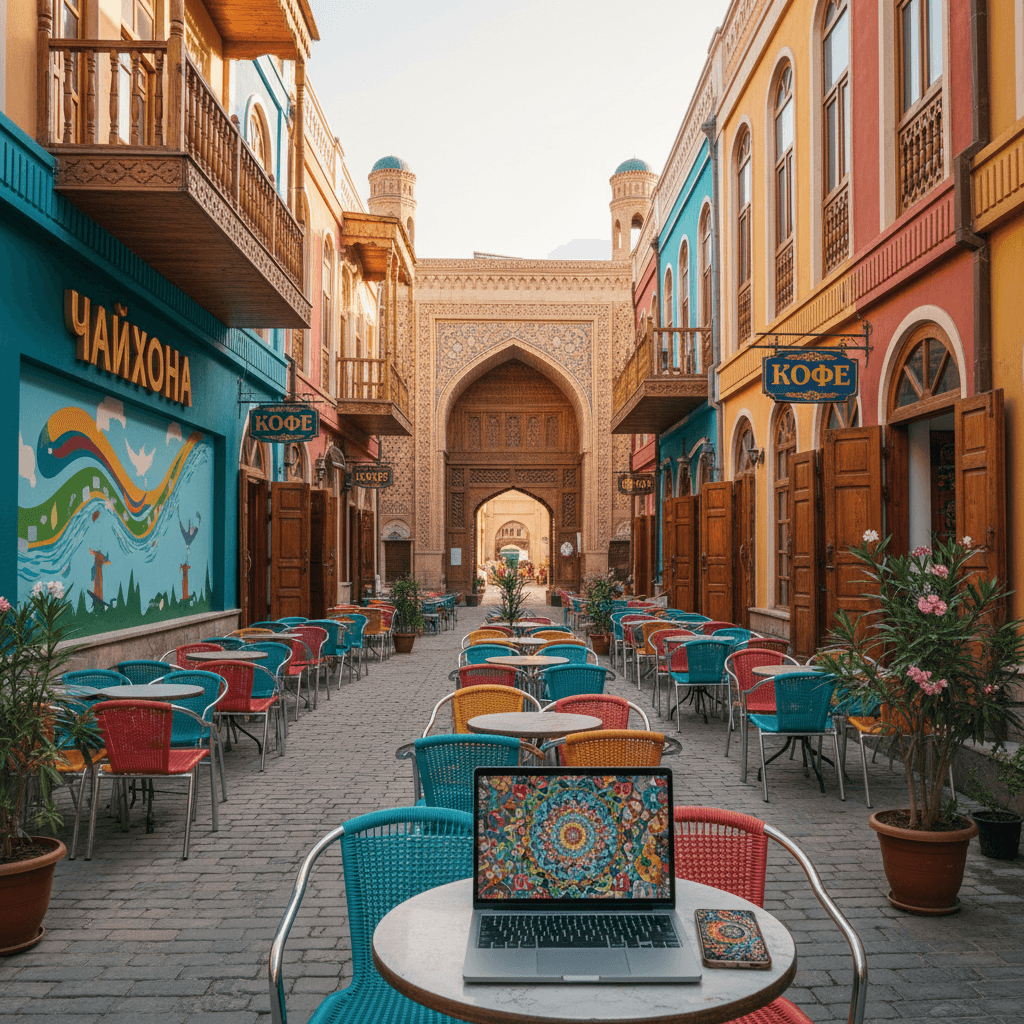
Khujand
🇹🇯 Tajikistan
The Ancient Heart of the North
Khujand doesn't try to impress you with glass skyscrapers or trendy avocado toast spots. Instead, it greets you with the smell of fresh non bread and the sight of the Syr Darya river flowing past 2,500 years of history. As Tajikistan's second city, it feels world's away from the political weight of Dushanbe. It's a place where the Silk Road isn't a museum concept but a daily reality lived out in the sprawling aisles of the Panjshanbe Bazaar.
For the remote worker, Khujand is a beautiful contradiction. You'll find some of the most genuine hospitality in Central Asia here, with vendors often pulling you aside for a photo or a free sample of dried apricots. However, that warmth is balanced by a digital infrastructure that can be described as agonizing. It's a city for the "slowmad" who wants to disconnect, or the traveler using it as a gateway to Uzbekistan, rather than someone with a week of heavy Zoom calls scheduled.
The Daily Vibe
Life here moves at a measured pace. You'll spend your mornings wandering the historical sites near the main square and your afternoons watching the sunset over the Arbob Palace. The city feels incredibly safe; crime is rarely a concern even in the thick of the crowds. The local culture is deeply traditional, so you'll want to dress modestly, covering shoulders and knees, to respect the local norms. It's the kind of place where a "Salom" and a hand over your heart go much further than a credit card.
Cost of Living
Your bank account will love Khujand even if your IT department doesn't. Tajikistan remains one of the most affordable corners of the globe. While the nomad infrastructure is thin, the sheer value is hard to beat.
- Budget Monthly Total: $400 to $600. This covers a basic studio for about $150 to $250 and plenty of street food.
- Mid-range Monthly Total: $700 to $1,000. This gets you a more modern apartment near the center for $300 to $400 and frequent dinners at the city's better restaurants.
- Daily Essentials: A ride on a marshrutka (minibus) is approximately $0.45-0.50, and a hearty local meal will rarely set you back more than $2 to $5.
The Neighborhood Situation
Khujand isn't divided into "expat enclaves" or "hipster districts" yet. Most visitors stick to the City Center, specifically the area surrounding the Panjshanbe Bazaar and the main square. This is the most walkable part of town and keeps you close to the action.
- City Center: The heartbeat of Khujand. Stay here if you want to be steps away from the best food and the most reliable transport. Somoni Hostel is the legendary hub for backpackers and the few nomads passing through, while Golden Apartments offers a bit more privacy for those staying a week or two.
- Syr Darya Riverside: A quieter alternative with better views and slightly more modern apartment blocks, though you'll be relying more on taxis to get to the bazaar.
The Connectivity Reality Check
If your job depends on high speed fiber, Khujand will test your patience. The internet is notoriously slow, with national averages hovering around 1 Mbps. There are no dedicated coworking spaces in the city. Most nomads end up working from their guesthouses or trying their luck in "fancy" cafes, but even these suffer from daily outages.
To survive here, you'll need a local SIM card from T-Cell. Go to their main office with your passport to get a data package. Even then, treat Khujand as a "maintenance" stop where you answer emails and do light tasks, rather than a place to upload 4K video. Most travelers recommend staying for 3 to 5 days before moving on to Dushanbe or across the border to Samarkand.
Getting Around and Staying Safe
The city is highly walkable, but when the summer heat hits 35°C (95°F), you'll want the marshrutkas. They are cheap and efficient once you figure out the routes. Taxis are plentiful for trips to the Khujand International Airport, usually costing between $5 and $10 for the 20 minute drive. For healthcare, stick to basic pharmacies for minor issues, but ensure you have robust travel insurance that covers medical evacuation for anything serious, as local facilities are limited.
The Price of Authenticity
Khujand is one of the most affordable corners of Central Asia, but it comes with a specific trade off. You aren't paying for high speed fiber or artisanal sourdough; you're paying for a seat at a 2,500 year old Silk Road crossroads where your dollar stretches incredibly far. It's a place where the cost of living is low enough to make your jaw drop, though the "cost" of doing business here often involves a frustrating battle with the local WiFi.
Most travelers find they can live comfortably on a fraction of what they'd spend in Almaty or even Dushanbe. If you're sticking to a tight budget, $400 to $600 a month covers the basics with ease. For those who want a bit more luxury, like a modern apartment and frequent dinners out, $1,200 makes you feel like royalty.
Monthly Budget Tiers
- Budget ($400 to $600): Ideal for backpackers or those staying in hostels like Somoni. You'll be eating largely from the Panjshanbe Bazaar and using public marshrutkas.
- Mid-range ($700 to $1,000): This gets you a private one bedroom apartment in the city center and plenty of meals at sit down restaurants.
- High-end ($1,200+): You'll stay in the best available apartments, like Golden Apartments, and rarely look at a price tag while dining.
Housing and Neighborhoods
The city is fairly compact, so most expats and nomads gravitate toward the City Center. Staying near the main square or the Panjshanbe Bazaar puts you within walking distance of almost everything. While there aren't distinct "expat enclaves" here, the central area offers the most reliable (relatively speaking) infrastructure.
- Central Studio Rent: Expect to pay between $250 and $350 per month for studio or basic apartments, as prices have increased recently.
- Modern 1BR Apartment: Nicer, renovated units in the city center usually run between $350 and $450 per month.
- Short term stays: Guesthouses and hostels remain the easiest way to land, as formal rental platforms for Khujand are nearly nonexistent.
Food and Daily Expenses
Eating is where you'll save the most. The Panjshanbe Bazaar is the heart of the city's food scene, where you can grab street snacks for $1 or $2. Even at a mid-range restaurant, a full meal rarely exceeds $10. If you're cooking for yourself, the fresh produce at the market is incredibly cheap and high quality.
- Street food meal: $1.50
- Mid-range dinner for two: $15 to $20
- Local beer: $1.50
- Marshrutka ride: $0.20
- Airport taxi: $5 to $10
The Connectivity Tax
While rent and food are cheap, the hidden cost in Khujand is the lack of productivity. Tajikistan's internet is notoriously slow, often ranking near the bottom of global indexes at around 1.05 Mbps. There are no dedicated coworking spaces in the city, so you'll be hopping between "fancy" cafes and hoping the power doesn't flicker.
Most nomads recommend picking up a T-Cell SIM card immediately upon arrival. It's the most reliable way to stay connected, but even then, don't expect to hop on high definition video calls without a struggle. Because of this, many remote workers treat Khujand as a "digital detox" stop or a short cultural detour rather than a long term base.
Practical Logistics
Cash is king here. While you'll find some ATMs in the center, they don't always play nice with international Visa or Mastercard. It's best to carry USD or EUR to exchange at local banks. You won't find ride hailing apps like Uber; instead, you'll rely on the network of shared taxis and minibuses that crisscross the city for pennies a ride. It's a traditional, manual way of living that rewards the patient traveler.
Solo Travelers and Short-Term Nomads
If you're heading to Khujand, you'll likely want to plant your feet in the City Center. This area revolves around the Panjshanbe Bazaar and the main square. It's the most walkable part of town, putting you within a few minutes of the city's historical heart and the best street food stalls. You won't find defined "expat districts" here; instead, you get a front-row seat to authentic Tajik life.
Most travelers gravitate toward Somoni Hostel or Golden Apartments. These spots are the unofficial hubs for meeting other foreigners. Living here is incredibly cheap, with local studio rentals often sitting between $150 and $250 per month. Expect to pay about $1 or $2 for a massive meal at the bazaar, where vendors are famous for handing out free samples of nuts and dried fruits to visitors.
- Pros: Total immersion in Silk Road history, easiest access to marshrutkas, and the lowest living costs.
- Cons: The internet is notoriously bad. Speeds often hover around 1 Mbps, and outages are a daily occurrence.
- Best for: People who want to soak up culture and don't mind being offline for hours at a time.
Digital Nomads and Remote Workers
Khujand is a tough sell for the long-term remote work crowd. There aren't any dedicated coworking spaces, so you'll be hopping between "fancy" cafes in the center hoping the WiFi holds up. Most nomads use it as a 2 to 3 day pitstop while crossing the border from Uzbekistan. If you must work, stick to the central area near the larger hotels where you might find a marginally more stable connection.
A mid-range lifestyle here costs between $700 and $1,000 a month. This covers a nicer one-bedroom apartment for about $350 and frequent dining at the better restaurants in town, where a meal costs $5 to $10. You'll want to grab a T-Cell SIM card immediately upon arrival, but even with a local data plan, don't expect to hop on seamless Zoom calls.
- Connectivity Tip: Download Google Translate for offline use and carry plenty of cash in Tajik Somoni. ATMs are unreliable and many don't accept international cards.
- Transport: Use the local marshrutkas. They cost roughly $0.20 per ride and go everywhere, though you'll need to learn a few Tajik phrases to navigate the routes.
Expats and Slow Travelers
For those staying longer than a week, the residential streets just south of the main square offer a quieter pace. This isn't a city of high-rises; it's a place of traditional courtyards and low-slung brick buildings. Life here is safe and slow. Crime is very low, even around the crowded bazaar, though you should always dress modestly to respect the local culture.
The social scene for expats is almost non-existent compared to Dushanbe. You won't find organized meetups or international bars. Instead, your social life will happen at the bazaar or over tea in local guesthouses. It's a "DIY" social environment where a simple "Salom" can lead to a two-hour conversation with a local family.
- Healthcare: Facilities are basic. Most expats keep comprehensive travel insurance and head to Dushanbe or Tashkent for anything more than a minor checkup.
- Weather: Aim for May through October. The summers are hot, reaching 35°C, but the winters are biting and can make the city feel quite isolated.
Families
Khujand is a very family-oriented society, but it lacks the modern infrastructure families might expect in more developed hubs. There aren't many playgrounds or kid-focused attractions outside of the Arbob Palace grounds and the parks near the Syr Darya river. The city is generally safe for kids, and locals are incredibly welcoming to families traveling with children.
If you're bringing a family, look for larger apartment rentals through local Facebook groups or by asking at the hostels. There isn't a formal rental market for expats, so word of mouth is your best tool. Stick to the areas near the river for more green space and slightly cooler air during the summer months.
- Safety: Very high. The local community is tight-knit and looks out for visitors.
- Education: International schooling options are virtually non-existent here; Dushanbe is the only real choice for expat families with school-aged children.
The Reality of Remote Work in Khujand
If your job depends on high speed video calls or uploading large files, Khujand is going to test your patience. This is one of the oldest cities in Central Asia and it feels like it. While the Silk Road history is incredible, the digital infrastructure hasn't quite caught up to the 21st century. Most nomads rank it near the bottom of global lists for a reason: the internet is notoriously slow and unreliable.
The country currently ranks 121st globally for fixed broadband speeds, placing it among the slower regions for connectivity. Even in the nicer hotels or supposedly fancy cafes, you should expect daily outages. It is the kind of place where you go to "unplug" rather than "grind," but if you must work, you will need a solid backup plan and a lot of flexibility.
Coworking and Cafe Culture
Don't go looking for dedicated coworking spaces with ergonomic chairs and community managers. They don't exist here yet. Your best bet for a "work" environment is a handful of cafes in the city center near the main bazaar or the larger hotels. However, the cafe working culture is still in its infancy. Locals mostly use these spots for socializing, not for camping out with a laptop for six hours.
- Golden Apartments: Often cited by travelers as having slightly more reliable WiFi than the budget hostels, though "reliable" is a relative term here.
- Somoni Hostel: The hub for the few nomads and backpackers who pass through. The connection is basic, but the communal vibe makes it easier to troubleshoot tech issues with others.
- City Center Cafes: You will find coffee spots around the main square. Always check the signal before you order your drink; many places have routers that struggle to handle more than five users at once.
Mobile Data and Connectivity Tips
Since hotel WiFi is a gamble, a local SIM card is mandatory. Do not rely on roaming; it is expensive and often fails. You should head to a branded shop with your passport as soon as you arrive. T-Cell is generally the most recommended provider for data coverage in this region.
Most travelers find that 4G signals are stronger than the DSL lines found in guest houses. If you have a critical deadline, your best strategy is to tether from your phone. Even then, expect speeds to dip during peak evening hours. If you are coming from Uzbekistan, the proximity to the border doesn't help the signal; once you cross over, you are firmly on the Tajik grid.
Practical Constraints for Nomads
The lack of a digital nomad community means you won't find the usual perks like networking events or specialized "workation" packages. Most people who work from here are just passing through for a few days to see the Arbob Palace or the bazaar. If you need a more robust setup, you are better off heading to Dushanbe, where the only viable coworking hubs in the country are located.
- Power Outages: While less frequent in the city center than in the Pamirs, occasional brownouts can happen. Keep your devices charged.
- VPN Necessity: Some sites and services can be slow or restricted. Having a high quality VPN installed before you arrive is a smart move.
- Language Barrier: English proficiency is very low. Setting up a local SIM or asking for a WiFi password usually requires a translation app or basic Russian/Tajik phrases.
Ultimately, Khujand is a place to enjoy the $1 to $2 street food and the authentic Tajik atmosphere. Use your time here to catch up on offline tasks, writing, or photo editing. If you have a high stakes Zoom presentation, you might want to save that for your next stop.
General Safety and Street Smarts
Khujand is remarkably safe. It’s the kind of place where you can wander through the central bazaar or the streets near the main square late at night without feeling on edge. Violent crime is rare; the city operates on traditional Tajik values where hospitality is a point of pride. You’ll likely find locals approaching you out of curiosity rather than malice, often asking for a photo or offering a sample of fruit at the market.
That said, it’s a conservative environment. While you won't face much physical danger, staying under the radar means dressing modestly. Most travelers recommend keeping shoulders and knees covered to avoid unwanted attention, especially near mosques or historical sites like the Sheikh Muslihiddin Mausoleum. Petty theft isn't a major issue, but keep your bag zipped in crowded spots like the Panjshanbe Bazaar. If you run into trouble, the emergency number is 112, though don't expect the dispatcher to speak English.
Healthcare and Medical Facilities
The healthcare situation in Khujand is basic. You’ll find plenty of small pharmacies (apteka) stocked with Russian and Turkish medications, but for anything beyond a cold or a minor stomach bug, options are limited. Public hospitals often lack modern equipment and western standards of hygiene. If you have a chronic condition, bring a full supply of your prescriptions with you.
Expats and long-term travelers usually head to Dushanbe for better clinics, or more often, fly to Istanbul or Tashkent for serious medical procedures. Because of these infrastructure gaps, comprehensive travel insurance that includes medical evacuation is a requirement, not a suggestion. If you need a doctor, ask the staff at Somoni Hostel or one of the larger hotels to help translate; English proficiency among medical staff is almost non-existent.
Staying Healthy on the Ground
The most common health hurdle here isn't crime or major disease; it's the water and the heat. Do not drink the tap water. Stick to bottled water, which is cheap and available at every street corner kiosk for about $0.30. When dining out, most nomads find that the food at the bazaar is fresh and safe, but it’s wise to stick to hot, cooked dishes if your stomach is sensitive.
- Sun Protection: Summer temperatures regularly hit 35°C (95°F). Carry water and wear a hat if you're walking between the city center and Arbob Palace.
- Air Quality: While better than Dushanbe, winter air can get dusty or smoky from local heating.
- Insurance: Ensure your policy covers "adventure" activities if you plan on heading into the nearby mountains.
Emergency Contacts and Practicalities
Keep a physical copy of your passport and visa on you. While random police checks aren't as common as they used to be, having your documents ready prevents any "misunderstandings" with local authorities. There aren't specific neighborhoods to avoid, but the areas near the Uzbekistan border can have a higher security presence. Just follow the local lead, stay respectful, and you'll find Khujand to be one of the most welcoming stops on the Silk Road.
The Logistics of Getting Around
Khujand is a city that moves at its own speed. It is a place where the ancient Silk Road spirit meets Soviet urban planning, meaning the layout is surprisingly logical even if the vehicles feel like relics. Most of your daily life will likely center around the main square and the Panjshanbe Bazaar. This area is highly walkable, and you can cover the primary historical sites and markets on foot without much trouble.
Public Transport: Marshrutkas and Shared Taxis
When you need to go further than a few blocks, you will be looking for a marshrutka. These are the yellow minibuses that serve as the city's circulatory system. They are incredibly cheap, usually costing around $0.45-$0.50 per ride. There are no posted schedules or English maps, so you will need to look at the number on the windshield or just ask the driver "Panjshanbe?" to see if they are heading toward the bazaar.
- Marshrutkas: These run fixed routes. You pay the driver directly in cash when you get on or off. Keep small change handy; somoni is the only way to pay. A single ride typically costs between $0.45 and $0.50.
- Shared Taxis: If a route is popular but doesn't have a bus, you will find cars acting as shared taxis. They leave when full and cost slightly more than the bus but offer a faster, more direct trip.
- Private Taxis: You can hail a private car on the street. Expect to negotiate before you get in. Since there are no major ride-hailing apps like Uber or Yandex operating reliably here, you will be relying on your bartering skills and a few Russian phrases.
Arriving and Departing
Khujand International Airport is the main gateway, located about 20 to 30 minutes from the city center. A taxi from the terminal to your apartment or a spot like Somoni Hostel should run you between $5 and $10. If you are feeling adventurous and traveling light, you can catch a marshrutka from the airport road for a fraction of that price.
Many travelers use Khujand as a transit point for Uzbekistan. The border is close, making it easy to hop over to Tashkent. Shared taxis to the border are frequent and leave from the northern outskirts of the city. It is a common route for nomads who need to reset their visa or find better internet for a few days.
Navigation Tips for Nomads
Do not expect to find bike rentals or electric scooters parked on the corners. This is a traditional city where people either walk or use the bus. The sidewalks can be uneven, so leave the fancy shoes at home. Because English proficiency is quite low, download an offline version of Google Maps and a translation app before you arrive. Most street signs are in Tajik or Russian, and having the Cyrillic alphabet saved on your phone will save you a lot of frustration.
Transport Costs at a Glance
- Local Marshrutka ride: $0.45-$0.50
- Airport Taxi to Center: $5 to $10
- Shared Taxi to Uzbekistan Border: $5 to $8
- Daily Transport Budget: Under $2 for most travelers
While the infrastructure is basic, the system works. It is rare to wait more than five minutes for a marshrutka on a main road. Just remember that everything is cash based. ATMs are few and far between, and they often run out of money, so keep enough somoni in your pocket to cover your rides for at least a couple of days.
The Linguistic Landscape
In Khujand, you're stepping into a world where Tajik, a beautiful Persian dialect written in the Cyrillic script, is the primary way people connect. It's a city that feels deeply traditional, and while it's the second largest in the country, it hasn't been polished for international tourism. You won't find much English spoken here, even in the center. Most shopkeepers at the Panjshanbe Bazaar or drivers in the city will look at you with blank stares if you stick strictly to English.
Russian is your strongest tool for navigation. Because of the Soviet history, almost everyone over the age of thirty is fluent, and younger generations still use it as a lingua franca for business and tech. If you have a basic grasp of Russian, you'll find life significantly easier. If not, you'll be relying heavily on gestures and translation apps to get by.
Staying Connected
Digital nomads usually find Khujand to be a tough nut to crack when it comes to connectivity. The internet here is notoriously unreliable and ranks among the slowest in the world. National averages hover around 1.05 Mbps, which is barely enough for emails, let alone video calls or uploading large files. Even the "fancy" cafes near the main square experience frequent outages that can last for hours.
Since there are no dedicated coworking spaces in Khujand, your best bet is to set up shop in a local cafe or your accommodation, but don't count on the WiFi being stable. Most experienced travelers recommend picking up a local SIM card immediately to use as a hotspot. It won't be lightning fast, but it's more dependable than hotel routers.
- T-Cell: Generally considered the most reliable provider for data coverage in the region. You can find their shops easily in the city center; just bring your passport for registration.
- Data Packages: Expect to pay roughly $7 to $15 for a decent amount of monthly data, though "decent" is relative given the speeds.
- Offline Maps: Download Google Maps and Google Translate for offline use before you arrive. You'll need them when the signal inevitably drops while you're trying to find a specific alleyway or translate a menu.
Communication Tips and Local Etiquette
While the language barrier is real, the people in Khujand are famously hospitable. At the bazaar, don't be surprised if vendors offer you free samples of dried fruit or nuts and then ask to take a photo with you. A few words of Tajik go a long way in building rapport. Start with "Salom" (Hello) instead of the Russian "Privyet," and use "Rahmat" (Thank you) frequently. If you're asking for a price, "Chand somoni?" is the phrase you'll need most.
Most communication happens face-to-face or via Telegram. If you're trying to arrange a longer stay at a place like Golden Apartments or Somoni Hostel, messaging them directly on social media or Telegram is often more effective than sending an email. For daily life, carry cash in the local currency, the Somoni, as digital payments and card readers are rare. ATMs are available but can be finicky with international cards, so keep some USD or EUR as a backup to exchange at local booths.
Key Phrases for Your Pocket
- Salom: Hello (Tajik)
- Rahmat: Thank you
- Chand somoni?: How much?
- Da: / Nyet: Yes / No (Russian)
- Khoroshok: Good / Okay (Russian)
When to Pack Your Bags
Khujand sits in the Fergana Valley, which means it dodges the brutal high altitude freezes of the Pamirs but still deals with a classic continental climate. Most travelers find the sweet spot between May and October. During these months, the city is accessible, the bazaars are overflowing with local produce, and the mountain passes leading south toward Dushanbe are reliably open.
If you arrive in July or August, prepare for some serious heat. Temperatures frequently climb to 30°C or 35°C (86°F to 95°F). It is a dry, dusty heat that makes the mid afternoon feel heavy. You will want to do your exploring at the Panjshanbe Bazaar early in the morning and retreat to air conditioning or the shade of the Syr Darya riverbanks until the sun dips.
Spring and autumn are the real winners here. May and June bring a burst of green to the surrounding landscape, while September and October offer mild, crisp afternoons and the best fruit you will ever taste. Rainfall is minimal throughout the year, so you rarely have to worry about a washout ruining your plans.
The Winter Reality
Winter in Northern Tajikistan is a different beast. From December through February, the mercury stays low, hovering between -5°C and 5°C (23°F to 41°F). While Khujand itself does not get buried in snow as deeply as the mountains, the damp cold can feel biting because many older buildings and guesthouses lack high quality insulation.
Nomads usually avoid Khujand in the winter for two reasons. First, the gray skies and cold make the city's Soviet architecture feel a bit bleak. Second, and more importantly, snow and ice can make the road travel to the capital or the Uzbek border unpredictable. If you are here for the Silk Road history and the outdoor atmosphere, stick to the warmer months.
A Quick Seasonal Cheat Sheet
- Peak Season (May to June, September to October): Perfect for walking tours and outdoor dining. Expect clear skies and comfortable 20°C to 25°C days.
- The Deep Heat (July to August): Best for those who don't mind 35°C afternoons. Nomads often find the heat makes the already spotty internet hardware even more temperamental.
- The Low Season (November to March): Cold, quiet, and occasionally icy. Many local sites have shorter hours, and the lack of central heating in budget spots like Somoni Hostel can be a challenge.
Practical Advice for Remote Workers
Regardless of when you visit, remember that Khujand is a place to soak up culture rather than grind through a heavy work week. Even in the best weather, the internet is famously unreliable. Most digital nomads treat this city as a 3 to 5 day cultural pitstop while transiting from Tashkent or Samarkand. Use the good weather to wander the fortress and the bazaar, and save your high bandwidth tasks for your next destination.
Pack layers if you are coming in the shoulder seasons. The desert climate means that even a hot 30°C day can drop significantly once the sun goes down. A light jacket is a must for evening walks along the river, even in the height of summer.
The Lowdown on Logistics
Khujand is one of those places that feels like a time capsule. It is one of the oldest cities in Central Asia, and while it lacks the polished veneer of Dushanbe, it makes up for it with raw authenticity. You are coming here for the Silk Road history and the legendary hospitality at the Panjshanbe Bazaar, not for a high tech lifestyle. If you are planning a stint here, think of it as a digital detox with occasional email access rather than a remote work hub.
Cost of Living
Your bank account will love Khujand. It is easily one of the most affordable stops in the region. Most nomads can live comfortably on $700 to $1,000 a month, while budget travelers can scrape by on $400 to $600 if they stick to guesthouses and local eats.
- Studio Apartment: $150 to $250 per month in the city center.
- One-Bedroom Apartment: $300 to $400 for something more modern.
- Local Meal: $1 to $2 for street food or a bazaar snack.
- Mid-range Dinner: $5 to $10 for a full sit-down meal.
- Transport: $0.45 to $0.50 for a single marshrutka ride.
Connectivity and Workspace
This is where things get tricky. Internet in Khujand is notoriously slow, often averaging around 1 Mbps. It is prone to daily outages, making video calls a gamble. There are no dedicated coworking spaces in the city, so you will be relying on hotel WiFi or cafes. Most nomads find the Golden Apartments or Somoni Hostel offer the most stable connections, but even those aren't foolproof. Pick up a local SIM from T-Cell as soon as you arrive; you will need your passport for the registration. It won't give you lightning speeds, but it's a necessary backup.
Getting Around
The city center is surprisingly walkable, especially around the main square and the bazaar. For longer distances, use the marshrutkas (minibuses) or shared taxis. There are no ride hailing apps like Uber here, so you will need to brush up on your herggling skills. A taxi from Khujand International Airport to the center should cost between $5 and $10 and takes about 20 to 30 minutes. If you are heading to the Uzbekistan border, shared taxis are the standard way to go.
Language and Culture
Tajik is the primary language, but Russian is the lingua franca for business and travel. English is rare, so download an offline translation app before you land. Learning a few basics will go a long way.
- Salom: Hello
- Rahmat: Thank you
- Chand somoni?: How much?
Local customs are traditional. Modest dress is expected, especially when visiting mosques or the bazaar. Always remove your shoes when entering someone's home. You will find the locals are incredibly friendly; don't be surprised if bazaar vendors offer you free samples or ask for a photo.
Health and Safety
Khujand is generally very safe with low crime rates. Use common sense in crowded areas like the bazaar to avoid pickpockets. Healthcare facilities are basic, so it is vital to have solid travel insurance that covers medical evacuation for anything serious. In an emergency, dial 112. For daily needs, pharmacies are well stocked with basic Russian and European medicines.
Money and Banking
Cash is king. The local currency is the Somoni, and you should carry plenty of it. ATMs are available but can be unreliable or run out of cash, and many do not accept international cards. Carry USD or EUR in crisp, new bills to exchange at local banks or booths. Credit cards are rarely accepted outside of the most expensive hotels.
When to Visit
The best window is May through October. Summers get hot, often hitting 35°C (95°F), but it is a dry heat. Winters are cold and biting, with temperatures dropping below freezing, which can make travel and infrastructure even more unpredictable. Spring and fall offer the most pleasant temperatures for exploring the Arbob Palace or the city's ancient fortifications.
Need visa and immigration info for Tajikistan?
🇹🇯 View Tajikistan Country GuideWild Card
Expect the unexpected