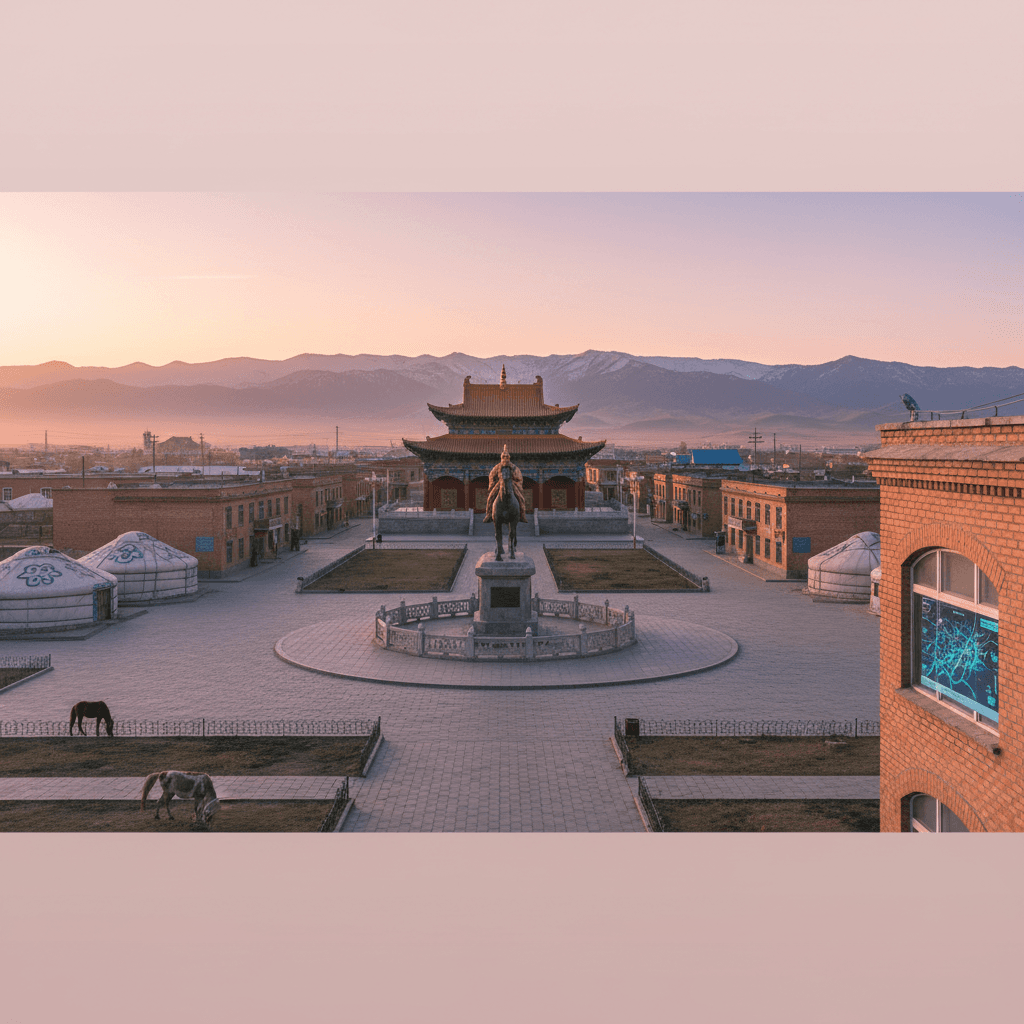
Khovd
🇲🇳 Mongolia
Khovd isn't your typical nomad hotspot. It's a rugged, windswept outpost in Western Mongolia that feels like the edge of the known world. If you're looking for sleek glass coworking spaces and high speed fiber, you're in the wrong province. But if you want to trade the digital grind for the shadow of the Altai Mountains and a culture where eagle hunting isn't a tourist performance but a way of life, Khovd delivers an experience that most travelers only see on National Geographic.
The vibe here is slow, intentional, and deeply rooted in the multi ethnic heritage of the Kazakh and Tuvan people. You'll hear several dialects in the local markets, and the air smells like woodsmoke and livestock. It's a place where the Khovd River dictates the pace of the day and the vast, treeless steppe stretches out from the city limits in every direction. It’s raw, dusty, and incredibly quiet.
The Nomad Reality Check
- Connectivity: Expect speeds around 5 Mbps on a good day. It's enough for emails and basic Slack, but heavy video calls will likely drop. Most nomads rely on Unitel or Mobicom SIM cards, which you can pick up for about 10,000 MNT ($3).
- Infrastructure: Power outages happen. The city uses 230V/50Hz plugs, but a solid power bank is your best friend here.
- Atmosphere: It's a frontier town. People are hospitable but reserved until you share a bowl of milk tea. You won't find nomad meetups, but you will find a profound sense of solitude.
Cost of Living Breakdown
Living here is remarkably cheap because there simply isn't much to spend money on. Your biggest expense will be organized treks into the mountains rather than daily life in the city.
- Budget Tier ($800 to $1,200/month): This covers a basic apartment or a shared ger on the outskirts, eating local mutton buuz for 5,000 MNT ($1.50), and using shared taxis.
- Mid-Range Tier ($1,200 to $2,000/month): You'll get a private one bedroom apartment near the center for roughly $250 to $300, eat at the few seated restaurants in town, and fund weekend trips to the Khar-Us Lake.
- Comfortable Tier ($2,000+): At this level, you’re basically the wealthiest person in town. This includes a high end private rental, hiring a personal driver for 2,000 MNT per ride, and frequent guided expeditions into the Altai peaks.
Where to Plant Your Laptop
There are no official coworking spaces in Khovd. You’ll be working from your guesthouse or the few cafes near the Khovd University area. The central market district is the most "connected" part of town, offering the easiest access to shops and pharmacies. If you move toward the outskirts, the city fades into ger districts where life is traditional and the internet is non existent.
Most expats and long term travelers recommend staying near the center for walkability. While there aren't named neighborhoods like you'd find in London or Tokyo, the area around the provincial administration buildings is the most reliable for basic services. For getting around, download UBCab, though in Khovd, you'll mostly be flagging down cars or walking the dusty main drags.
Survival and Seasons
The weather is the ultimate boss here. Summers from June to August are gorgeous, with temperatures hovering around 25°C (77°F). It’s the only time the mountains are truly accessible. Winters are brutal, with the mercury plummeting to -30°C (-22°F) between November and March. If you visit in October, you can catch the eagle festivals, which is the emotional peak of the region's calendar. Just bring the heaviest coat you own and a healthy dose of patience for the Mongolian "maybe" when it comes to transport schedules.
The Price of the Frontier
Living in Khovd is an exercise in extreme affordability, provided you can handle the logistical trade-offs. It is one of the cheapest places you will ever find to set up a base, but your money doesn't buy the same conveniences it would in Ulaanbaatar or Southeast Asia. Most travelers find that $1,200 a month buys a very comfortable lifestyle here, while those on a true budget can easily get by on $800.
The local currency is the Mongolian Tugrik (MNT), and while card payments are becoming more common at supermarkets, cash is still king at the open-air markets. You will want a local account at Khan Bank if you are staying long term, as international fintech apps like Wise have limited utility in the far west.
Monthly Budget Breakdowns
Your spending will fluctuate based on how much you lean into the local nomadic lifestyle versus trying to maintain "western" standards.
- The Budget Nomad ($800 - $1,200): This covers a basic apartment or a shared ger on the outskirts, plenty of street food like mutton buuz, and getting around via local shared taxis.
- The Mid-Range Resident ($1,200 - $2,000): This gets you a private one-bedroom apartment in the center, regular meals at the better cafes, and enough left over for weekend trips into the Altai Mountains.
- The High-End Explorer ($2,000+): At this level, you are paying for the best available housing, private drivers for expeditions, and perhaps a dedicated translator or guide to help manage daily life.
Housing and Rent
There aren't any formal rental platforms for Khovd. You won't find it on Airbnb. Instead, expats and long-termers usually rely on local Facebook groups or word-of-mouth. If you are looking for a standard apartment, stick to the Central Market area. It's dusty, but it puts you within walking distance of the few amenities the city offers.
- Studio or 1BR Apartment: Expect to pay between 500,000 and 1,000,000 MNT ($150 to $300) per month. These are often basic, Soviet-style units.
- Traditional Ger: Staying in a yurt on the outskirts is cheaper, often around $150, but comes with the reality of hauling water and managing a coal or wood stove.
Eating and Drinking
Food is incredibly cheap if you stick to the local diet of meat, flour, and dairy. A hearty plate of dumplings or noodles at a local eatery will set you back about 5,000 MNT ($1.50). If you head to one of the more established sit-down restaurants, a full meal with a drink usually lands between 15,000 and 25,000 MNT ($4 to $7).
Groceries are affordable but the selection is seasonal. Root vegetables and meat are staples, while imported fruits or specific "health foods" are rare and pricey. For coffee, don't expect a high-end cafe culture. Most nomads find they do their best work in hotel lobbies or by tethering from a Unitel or Mobicom SIM card, which costs about 10,000 MNT ($3) for a decent data starter pack.
Getting Around
Khovd is small enough to navigate on foot, but the harsh winds and dust often make a taxi necessary. There is no Uber here. You flag down a car and negotiate. A standard ride across town is usually 2,000 to 5,000 MNT. If you are heading to Khovd Airport (HVD), expect to pay around 10,000 MNT for the transfer.
For trips out to see the eagle hunters or the mountains, you'll need to hire a private 4x4. These tours are the biggest "hidden" cost of living in Khovd, often starting at $100 to $150 per day including a driver and fuel. Most residents find it's better to split these costs with other travelers met through local guesthouses.
The Central District (The Market Heart)
If you want to be within walking distance of the few amenities Khovd offers, the central area around the main market and administrative buildings is your best bet. This is where the city feels most like a town. You'll find the main banks, the Khan Bank ATMs, and the small grocery shops that stock basic imports. It's dusty and the architecture is a mix of Soviet style blocks and fenced enclosures, but it's the only place where you can realistically live without a vehicle.
- Rent: $150 to $300 for a basic one bedroom apartment.
- Vibe: Functional and authentic. It's the hub for shared taxis and the starting point for most local errands.
- Best for: Digital nomads who need to be near the strongest (though still temperamental) mobile signals.
The University Outskirts
Located slightly away from the main commercial drag, the area near the local university branches has a marginally younger, more academic energy. It's quieter than the market area but still offers a sense of community. You won't find coworking spaces here, or anywhere in Khovd for that matter, so most remote workers end up tethering to a Unitel or Mobicom SIM card from their living room. Expect to pay around 10,000 MNT for a decent starter data package.
- Rent: Slightly lower than the center, often around $150 to $200.
- Vibe: Low key and residential. It's a good spot if you want to avoid the constant noise of the market.
- Best for: Solo travelers and budget conscious expats who want a "local" experience without being completely isolated in the steppe.
The Ger Districts (Edge of Town)
For those seeking the quintessential Mongolian experience, the outskirts are dominated by traditional ger districts. These aren't neighborhoods in the Western sense, but collections of fenced plots where families live in felt tents or small wooden houses. Living here means hauling your own water and using pit latrines, which isn't for everyone. However, it's the only way to truly understand the nomadic rhythm of the Altai region.
- Cost: Very low, often under $100 if you're renting space in a shared yard.
- Vibe: Raw and traditional. You'll hear livestock in the mornings and smell coal or wood smoke in the evenings.
- Best for: Cultural purists and travelers who don't mind a complete lack of modern infrastructure for a few weeks.
Practical Tips for Choosing Your Base
Khovd doesn't have a formal rental market with apps or websites. Most expats find housing through Facebook groups or by asking around at the local hotels. If you're arriving for the first time, book a room at a local hotel for a few days and use UBCab to get around while you scout locations. Be aware that English is rare here. You'll need Google Translate to navigate conversations with landlords, and having a basic grasp of the Cyrillic alphabet is a massive advantage for reading street signs and shop names.
Safety is generally high in Khovd, much like other rural Mongolian hubs. The main risks are the extreme cold between November and March and the occasional aggressive stray dog in the unlit outskirts. Most travelers feel perfectly comfortable walking the central streets during the day, but it's wise to take a taxi, usually costing about 2,000 to 5,000 MNT, if you're moving around after dark.
Connectivity in the Altai Foothills
Working from Khovd is an exercise in patience and low expectations. While Ulaanbaatar is slowly modernizing, this far-western outpost remains a challenge for anyone who needs to be on Zoom calls all day. You won't find the fiber optic speeds of East Asia here. Instead, expect average speeds to hover around 5 Mbps on a good day, with frequent outages during the dusty spring months or heavy winter storms.
Most nomads who make it this far west rely heavily on mobile data rather than local Wi-Fi. The infrastructure is basic, and while the city has seen some improvements, it is still common for the internet to simply vanish for a few hours without warning. If your paycheck depends on a stable, high-speed connection, Khovd is better suited for a "deep work" retreat or a digital detox than a high-stakes remote job.
Coworking and Work-Friendly Spaces
There are no dedicated coworking spaces in Khovd. You won't find the ergonomic chairs or community managers typical of nomadic hubs. To get things done, you'll have to get creative with your setup. Most expats and travelers end up working from their hotel rooms or a handful of local cafes near the central market.
- Accommodation: Ask your guesthouse or hotel about the most reliable Wi-Fi spots in town, as specific venues change frequently. You should still have a backup plan.
- Central Cafes: There are a few small eateries near the provincial administration buildings. They don't mind if you sit with a laptop for an hour, but don't expect power outlets at every table. Always ask before plugging in.
- University Area: The local university occasionally has spots with decent connectivity, but it is hit-or-miss for outsiders.
SIM Cards and Mobile Data
Since public Wi-Fi is rare and often unsecured, getting a local SIM card is the first thing you should do after landing at Khovd Airport (HVD). The coverage within the city limits is surprisingly decent, often reaching 4G speeds, but it drops off immediately once you head into the steppes.
The main providers are Mobicom and Unitel. You can find their kiosks or authorized dealers in the central market area. A starter SIM with a healthy data package usually costs around 10,000 MNT (roughly $3). Unitel is often praised for having slightly better coverage in the rural regions of western Mongolia, which is helpful if you plan on visiting the eagle hunters or the Altai Mountains.
Practical Tech Tips
Power in Khovd runs at 230V/50Hz, using the standard European-style two-pin plugs. Power surges aren't uncommon, so a good surge protector is a smart investment if you're carrying expensive gear. Because the local language is a mix of Mongolian Cyrillic and Kazakh, Google Translate with the offline pack downloaded is a lifesaver for reading menus or troubleshooting tech issues with locals.
For navigation, don't rely on precise street addresses, as they barely exist here. Local drivers and nomads use the UBCab app in bigger cities, but in Khovd, you'll mostly be flagging down shared taxis. Use What3Words or dropped pins in Google Maps to communicate your location to others. If you're planning a long-term stay, consider bringing a high-gain antenna or a portable travel router to boost the weak signals in local guesthouses.
The Reality of Remote Work Here
Expats who have spent time in Khovd generally suggest front-loading your work before you arrive or saving tasks that can be done offline. The "nomadic vibe" here refers to the literal nomads living in gers, not the digital kind. If you can embrace the slow pace and the occasional blackout, the reward is an office view of the Altai Mountains that no skyscraper in the world can match. Just make sure your boss knows you might be "off the grid" more often than not.
Staying Safe in the Altai Foothills
Khovd feels worlds away from the frantic energy of Ulaanbaatar. It is a quiet, provincial capital where the biggest safety concern is more likely to be a loose dog or a deep pothole than a mugging. Most travelers find the city incredibly welcoming, largely because the local Kazakh and Tuvan cultures place a massive emphasis on hospitality. You can generally walk around at night without looking over your shoulder, though the lack of street lighting in certain residential pockets can make for a literal stumble in the dark.
While violent crime is rare, petty theft can happen at the central market, especially during the busy morning hours. Keep your phone and wallet in a zipped pocket when you are navigating the crowds near the administrative buildings. If you are heading out into the steppes or the nearby mountains, the "safety" conversation shifts from people to nature. The weather here is famously fickle. A sunny afternoon can turn into a freezing gale in twenty minutes, so never head out for a trek without a local guide or a very clear offline map.
For getting around safely, stick to the UBCab app if you have a local SIM. It lets you pin your location, which saves you from trying to explain directions in Mongolian or Kazakh. If you flag down a private car, which is the local "taxi" system, just agree on the price before you close the door. A ride across town should only cost you about 2,000 to 5,000 MNT.
Healthcare and Medical Realities
Healthcare in Khovd is functional but basic. The regional hospital can handle minor injuries, infections, or basic diagnostics, but it is not the place for complex procedures. Most expats and long term nomads follow a simple rule: if it is serious, get on a plane to Ulaanbaatar or Seoul. The local pharmacies are surprisingly well stocked with Russian and Chinese medications, but finding a pharmacist who speaks English is a gamble. Use Google Translate to show them the active ingredient you need rather than the brand name.
- Police: Dial 102
- Ambulance: Dial 103
- Fire: Dial 101
Air quality is a major plus here compared to the capital. While Ulaanbaatar chokes on coal smoke in the winter, Khovd stays relatively clear with an average AQI of around 70. It is crisp, dry, and generally easy on the lungs, though the dust during the spring windstorms can be irritating if you have asthma.
Practical Health Tips
The biggest hurdle for your stomach will be the diet. It is heavy on mutton, fat, and dairy. If you aren't used to "white foods" (traditional Mongolian dairy), take it slow at first to avoid digestive upset. Most nomads recommend sticking to bottled water, which you can find at any small grocery store for about 1,500 MNT, as the tap water in rural provinces can be hard on unaccustomed systems.
Make sure your vaccinations for Hepatitis A and Typhoid are up to date before arriving. If you plan on spending significant time in the countryside or near livestock, talk to a doctor about a Rabies series. It is better to have the peace of mind while you are out exploring the Altai peaks.
Medical Costs at a Glance
- Doctor Consultation: $10 to $25 at local clinics.
- Antibiotics: $5 to $15 depending on the brand.
- Emergency Evacuation Insurance: Highly recommended; a flight to UB can cost $200+ on short notice.
Getting Around Khovd
Khovd isn't a city of sprawling transit networks or subway lines. It's a compact, dusty provincial capital where the rhythm of life is dictated by the sun and the rugged terrain of the Altai. If you're staying near the town center, your own two feet are your best asset. Most of the administrative buildings, the local market, and the few reliable cafes are clustered together, making it easy to navigate the core on foot. Just be prepared for unpaved sections and plenty of dust during the dry months.
When you need to cover more ground, shared taxis are the local lifeline. Unlike the regulated fleets in Ulaanbaatar, these are often private cars. You can flag one down by simply holding out your hand. A standard ride within the town usually costs between 2,000 and 5,000 MNT. It's common for drivers to pick up other passengers along the route, so don't be surprised if you're sharing the backseat with a local family or someone heading to the market with sacks of flour.
Apps and Tech
While Khovd feels worlds away from the digital pulse of the capital, some Mongolian tech still works here. The UBCab app is the gold standard for ride-hailing in Mongolia. While it's most active in Ulaanbaatar, you'll find drivers using it here too. Since the interface is often in Cyrillic, nomads usually pin their locations on the map and use Google Translate to communicate with drivers. For inter-city travel, ask your hotel or guesthouse for current booking options, as transportation apps change frequently.
- Standard Taxi Fare: 2,000 to 5,000 MNT per ride
- Airport Transfer (HVD): Approximately 10,000 MNT
- Primary Apps: UBCab for local rides
Regional Travel and the Altai Frontier
Leaving the city limits requires a bit more planning. Most expats and travelers looking to explore the Altai Mountains or visit the Kazakh eagle hunters book a 4WD vehicle with a driver. This isn't just about luxury; the "roads" outside Khovd are often nothing more than tire tracks in the steppe. Expect to pay around $100 to $150 per day for a sturdy Russian van or a Toyota Land Cruiser, which usually includes the driver's expertise in navigating terrain where GPS often fails.
For those arriving from the capital, Khovd Airport (HVD) is your gateway. A taxi from the airport to the center takes about 10-15 minutes. If you're feeling adventurous and have plenty of time, long-distance buses run to Ulaanbaatar, but it's a grueling 24 to 30-hour journey across the country. Most nomads prefer the quick flight to save their sanity and their spine.
Practical Navigation Tips
Language is the biggest hurdle when getting around. Very few taxi drivers speak English, so having your destination written in Mongolian Cyrillic is a lifesaver. Travelers often take a photo of the business card of their hotel or a landmark near their apartment to show drivers. If you're staying in a ger on the outskirts, navigation becomes even more informal; you'll likely be giving directions based on landmarks like "the blue gate" or "near the river."
- Download offline maps for the entire Khovd province, as data drops frequently once you leave the central district.
- Keep small denominations of MNT cash on hand; drivers rarely have change for large bills.
- If you're heading out for a day trip, negotiate the price upfront and clarify if the "return" is included in the fare.
There are no bike-share programs or electric scooters here. The terrain is too rough and the wind can be too fierce for casual cycling. Stick to the shared taxis for speed or embrace the slow pace and walk. It's the best way to stumble upon the small local shops and hidden tea houses that don't show up on any digital map.
The Linguistic Landscape
Khovd isn't Ulaanbaatar. While the capital is slowly embracing English, Khovd remains a bastion of traditional dialects and Cyrillic script. You'll hear Mongolian as the primary language, but because of the town's unique location near the Altai Mountains, there's a heavy influence of Kazakh and Tuvan. This creates a fascinating cultural mix, though it adds a layer of complexity for those trying to pick up local phrases.
English proficiency is very low here. Outside of high end tour guides or the occasional younger student at the local university, you won't find many people who speak more than a few words. Most travelers find that communication requires a mix of patience, hand gestures, and a reliable offline translation tool. Don't expect restaurant menus or street signs to have English translations; everything is in Cyrillic.
Digital Tools for Survival
Since you can't rely on verbal English, your phone is your best friend. Google Translate is the gold standard here, specifically the camera feature that translates Cyrillic text in real time. Make sure you download the Mongolian language pack for offline use, as data signals can drop the moment you leave the town center. For those looking to dive deeper into linguistics, Pleco is popular among expats in Asia, though it's less effective for Mongolian than it is for Mandarin.
Ride-hailing apps like UBCab have very limited or no coverage in Khovd. Shared taxis and flagging down private cars are the primary transportation methods. If you don't speak the language, it's helpful to have a local at your guesthouse or cafe help you arrange a ride. Most nomads recommend having your destination written down in Cyrillic on a piece of paper or a saved screenshot to show taxi drivers.
Key Phrases to Know
Learning a few basics goes a long way with the locals, who are generally surprised and delighted when a foreigner makes the effort. Start with these:
- Sain baina uu? (Hello/How are you?)
- Bayarlalaa (Thank you)
- Zaa (Okay/Sure - you'll hear this constantly)
- Yamar unetei ve? (How much is this?)
- Bi oilgokhgui baina (I don't understand)
If you find yourself in the Kazakh dominated areas or visiting eagle hunters, a quick Rakhmet (Thank you in Kazakh) will earn you a lot of respect. It shows you recognize the specific ethnic heritage of the region.
Staying Connected
Communication isn't just about talking; it's about data. Internet in Khovd is notoriously finicky, averaging around 5 Mbps on a good day. For a reliable connection, skip the international roaming and grab a local SIM. Mobicom and Unitel are the two heavy hitters. You can find their kiosks near the central market or the main administrative buildings.
- Mobicom Starter Pack: Roughly 10,000 MNT ($3) for a basic data bundle.
- Unitel: Similar pricing, often cited by travelers as having slightly better coverage in the rural outskirts.
- Top ups: You can buy scratch cards at almost any small grocery store (khünshnii delgüür).
Expats suggest using WhatsApp or Telegram for coordinating with local guides. Many nomadic families and tour operators run their entire businesses through these apps. If you're staying in a ger camp or a local homestay, don't be surprised if the host asks for your phone number to communicate via text rather than email.
Social Etiquette and Non-Verbal Cues
In Khovd, what you do is often more important than what you say. If you're invited into a home or a ger, there are silent rules to follow. Always move in a clockwise direction. Never lean against the central support pillars of a ger. If someone offers you milk tea or a bowl of food, accept it with your right hand, or both hands, to show respect.
Travelers often note that Mongolians can seem stoic at first, but a simple smile and a Sain baina uu usually breaks the ice. Avoid pointing with a single finger; use an open palm instead. These small gestures bridge the gap when the language barrier feels insurmountable.
Survival of the Sharpest
Khovd isn't a place where you just "show up" without a plan for the mercury. Sitting in the rain shadow of the Altai Mountains, this is extreme continental weather at its most unforgiving. You're looking at a climate that swings from 30°C in the height of summer to a bone-chilling -40°C in the dead of winter. For anyone trying to keep a laptop battery alive or avoid frostbite while walking to the market, timing your arrival is everything.
Most travelers and the few nomads who venture this far west agree that the window for a comfortable stay is narrow. If you arrive outside the peak months, you aren't just visiting a city; you're testing your gear against the elements. The air is dry, the wind can be relentless, and the infrastructure in western Mongolia isn't always a match for the cold.
The Golden Window: June to August
Summer is the only time Khovd feels truly "open." During July, the average highs hover around 25°C, though it can spike higher. This is the period when the landscape turns a vibrant green and the surrounding peaks are accessible for trekking. It's the best time to set up a mobile workstation near a yurt camp, provided you have a satellite puck or a strong Unitel SIM card.
- June: Pleasant and dry. Great for beating the July crowds, though "crowds" in Khovd are still just a handful of people.
- July: The warmest month. Expect occasional rain, but it's usually short-lived. This is peak season for Naadam festivities.
- August: Still warm, but the nights start to get crisp. It's the most reliable month for stable weather before the autumn shift.
The Shoulder Seasons: May and September
If you enjoy solitude and don't mind wearing a heavy fleece indoors, the shoulder months are viable. September is particularly beautiful as the larch trees in the mountains turn gold, but the temperature drops fast once the sun goes down. Most nomads find the dust storms in May to be a dealbreaker; the wind kicks up grit from the plains that gets into every electronic port you own.
Expats who have spent time in the region suggest that September is the sweet spot for professional work. The summer heat has faded, the local markets are full of harvest produce, and the internet speeds don't suffer as much from the peak tourist load on the towers.
Winter: The "No-Go" Zone
Unless you're here specifically to document the lives of eagle hunters or experience the Eagle Festival, winter in Khovd is brutal. The Eagle Festival typically occurs in September-October in the surrounding Altai region (dates vary by year). Check current schedules before planning your visit. From November to March, the city enters a deep freeze. Average lows in January sit around -30°C, and the air quality often dips as households burn coal and wood to stay warm.
- November: The ground freezes solid. Many guesthouses and tourist services shut down for the year.
- December and January: Extreme cold. Logistics become a nightmare, and pipes frequently freeze.
- February: The tail end of the harshest cold, but often the windiest month.
Monthly Climate Quick-Look
- January: High -15°C / Low -30°C. Harsh winter, limited mobility.
- April: High 12°C / Low -2°C. Thawing out, but very dusty and windy.
- July: High 25°C / Low 12°C. Ideal weather, best for exploring the Altai.
- October: High 8°C / Low -5°C. Cold but manageable; the time for the Eagle Festivals.
For a digital nomad, the best strategy is to arrive in late June and depart by mid-September. This allows you to enjoy the best of the nomadic culture without having to worry about your equipment failing in the sub-zero temperatures that define the rest of the year.
Connectivity and Workspace
Working from Khovd is an exercise in patience and preparation. You won't find sleek coworking spaces with ergonomic chairs here. Most digital nomads who venture this far west rely on local hotel Wi-Fi or, more reliably, a beefy data plan. Mobicom and Unitel are the two big players; you can grab a SIM card at the central market for about 10,000 MNT ($3).
Speeds usually hover around 5 Mbps on a good day, which is fine for emails and Slack but might struggle with 4K video calls. If the internet cuts out, which happens during local power fluctuations, head to a larger hotel in the central area. Larger hotels in the central area typically have more stable connections than guesthouses. Keep Google Translate downloaded for offline use, as the local Cyrillic can be a puzzle and English isn't widely spoken outside the younger student population.
Cost of Living
Your dollar goes incredibly far here. Khovd is significantly cheaper than Ulaanbaatar, though your spending options are more limited. A comfortable monthly budget sits between $1,200 and $2,000, which covers a private apartment, eating out daily, and weekend trips into the Altai Mountains.
- Housing: A decent one bedroom apartment near the city center runs between 500,000 and 1,000,000 MNT ($150 to $300) per month. Most expats find these through local Facebook groups rather than formal rental sites.
- Dining: A hearty bowl of mutton buuz or tsuivan at a local eatery costs about 5,000 MNT ($1.50). A more formal dinner might hit 25,000 MNT ($7).
- Transportation: Shared taxis are the lifeblood of the city. A quick hop across town usually costs between 2,000 and 5,000 MNT.
Navigation and Safety
Khovd is a walkable town, especially if you stay near the central administrative buildings and the main market. For longer trips or when the dust picks up, use the UBCab app. It works similarly to Uber; just make sure you pin your location accurately. If you're heading to the Khovd Airport (HVD), a taxi should cost around 10,000 MNT.
Safety is rarely an issue in terms of crime. It's a tight knit community where people look out for one another. The real "danger" is the environment. The weather is extreme, with winter temperatures plummeting to -40°C between November and March. If you're heading out into the steppes or the mountains, never go alone. Always hire a local guide, which you can usually arrange via WhatsApp through contacts at your guesthouse.
Banking and Logistics
Cash is still king in western Mongolia. While you can use cards at larger supermarkets, you'll need Mongolian Tögrög (MNT) for the market, taxis, and smaller shops. Khan Bank has several ATMs in the center that reliably accept international cards. Don't count on using Wise or PayPal for local transactions; they just aren't integrated into the local economy yet.
If you're planning a long stay, the best time to arrive is between June and September. The weather is gorgeous, the Altai Mountains are accessible, and the local festivals are in full swing. If you're here in October, don't miss the eagle festivals in the surrounding region. It's a rare chance to see Kazakh traditions that have remained unchanged for centuries.
Need visa and immigration info for Mongolia?
🇲🇳 View Mongolia Country GuideWild Card
Expect the unexpected