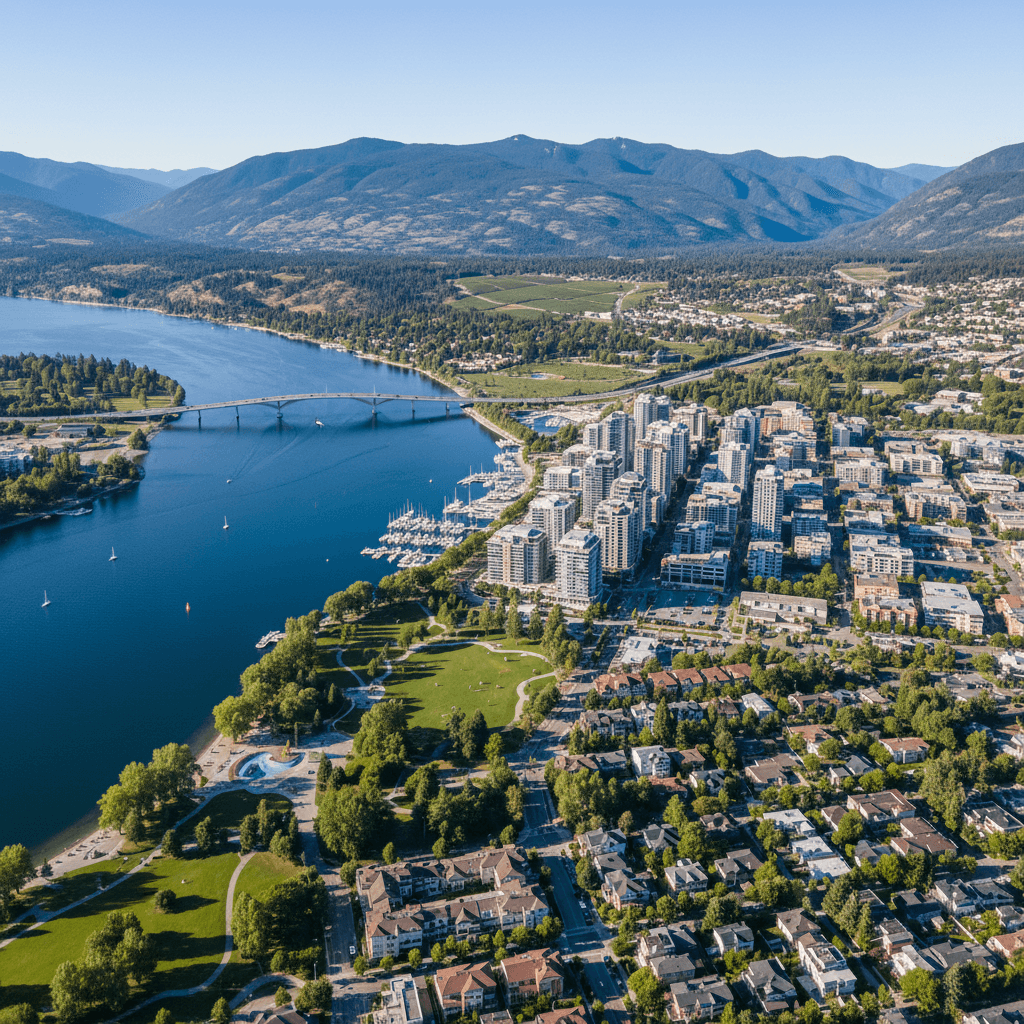
Kelowna
🇨🇦 Canada
Kelowna feels easy at first, then expensive. The lake, the vineyards and the dry summer heat give it a relaxed Okanagan rhythm, with mountain air in the morning and sunscreen by noon, but the bill for that lifestyle lands fast. A one-bedroom in the centre usually runs about CAD 1,750 to 1,800 and monthly life for a solo nomad often lands around CAD 3,451. Not cheap.
The vibe is outdoorsy, a little conservative and pretty English-speaking, so you won't spend much energy decoding daily life. Downtown has the most energy, with cafes, patios and people drifting between the lake and Bernard Avenue, though it can get noisy and pricey, while Lower Mission is calmer, with lake views and more car dependence and North Glenmore feels more practical for long stays. Honestly, if you want nightlife, Kelowna can feel sleepy fast.
What makes it different is the setting. You can hear boat engines on Okanagan Lake, smell pine dust and barbecue smoke in summer, then switch to ski hills and wet sidewalks in winter, which, surprisingly, keeps the place from feeling static even when the social scene slows down.
Where nomads usually base themselves
- Downtown: Best for walkability, cafes, events and solo stays, but expect higher rent and more noise.
- North Glenmore: Better for longer stays, parks, schools and a more residential feel.
- Lower Mission: Quiet, lakeside and pleasant, though you’ll probably want a car.
Working here is decent if you plan it. Internet averages around 200+ Mbps, Telus tends to get the best reliability and coworking options like co+lab, Spaces Innovation and Regus give you proper desks when your apartment Wi-Fi starts acting up, which it sometimes does. Cafes like Bean Scene and even Tim Hortons pull double duty for laptop time, though the coffee shop chatter and blender noise can get old.
People come for the lake and stay for the routines, hikes at dawn, winery lunches, groceries, then maybe a brewery night at BNA or a lazy dinner at Old Vines. The social scene takes effort, frankly, because making friends can be slower than you'd expect and the winters are cold, damp and a bit gloomy, but the city feels safe, clean and straightforward, so day-to-day life usually stays manageable.
Kelowna isn’t cheap. A single nomad usually lands around CAD 3,451 a month all in or roughly CAD 1,949 if you already know how to keep rent under control and that number climbs fast once you stop cooking at home and start paying downtown prices.
Rent does the damage first. A one-bedroom in the center typically runs CAD 1,750 to 1,800, while the outskirts are closer to CAD 982, which, surprisingly, still feels pricey when you’re staring at a beige apartment with thin walls and the steady hum of traffic outside.
Monthly Budget Tiers
- Budget: Around CAD 2,000 total, with about CAD 1,000 for rent, CAD 400 for food, CAD 50 for transport and CAD 200 for coworking or other basics.
- Mid-range: Around CAD 2,800 total, with CAD 1,200 rent, CAD 500 food, CAD 55 transport and about CAD 250 for workspace.
- Comfortable: Around CAD 4,000 total, with CAD 1,500 rent, CAD 600 food, CAD 100 transport and CAD 300-plus for coworking, nicer meals and a bit of breathing room.
Food prices are manageable if you’re disciplined, but eating out adds up quickly, honestly. A fast-food meal is around CAD 10.60, a mid-range lunch sits near CAD 16.50 and dinner for two at a nicer place can jump past CAD 58, especially in wine country spots where the view gets priced into the bill.
Downtown is the priciest area, but it’s also the most walkable, so many solo nomads pay more just to avoid car dependence and long bus rides. North Glenmore is better if you want schools, parks and a more lived-in feel, while Lower Mission is quieter and pretty, though you’ll probably want a car because the place spreads out fast.
Transport is one of the few sane expenses. BC Transit rides cost about CAD 2.50, monthly passes are around CAD 50 and taxis can still feel annoyingly expensive for short hops, so most people either bike, use Uber or Lyft or just plan their day around fewer trips.
Coworking, weirdly, isn’t outrageous by local standards, though it’s still another line item you’ll feel. Hot desks run about CAD 242 a month at places like Regus, while co+lab, Spaces Innovation and even Staples Studio give you options if you don’t want to work from a café with espresso machines hissing and hockey commentary in the background.
Kelowna’s neighborhoods split pretty cleanly by lifestyle, so pick the wrong one and you’ll feel it fast. Downtown is the obvious base for solo nomads, North Glenmore works better for families and long-stay expats and Lower Mission suits people who want quiet streets, lake air and less noise, though you’ll usually need a car. Not cheap.
Solo travelers and digital nomads
Downtown is where most nomads land first, because you can walk to coffee, restaurants, the lake and coworking without burning money on taxis. The tradeoff is real, though, with louder nights, pricier rent and the occasional siren or drunken shouting drifting up from the bar strip after midnight.
- Rent: about CAD 1,185 to 1,242 for a central 1BR
- Best for: walkability, events, short stays
- Watch out for: noise, higher prices, late-night trouble around bars
If you want a quieter workday, co+lab is the best coworking pick and Regus or Spaces Innovation are decent backups, honestly, especially if you just need a reliable desk and solid Wi-Fi. Bean Scene also works for laptop sessions, with espresso smell in the air and enough hum to keep you focused without feeling trapped.
Families and expats
North Glenmore is the practical choice for families, with schools, parks and a wider mix of housing that feels less cramped than the downtown core. It’s less central, which means more driving, but you get calmer streets, playground noise instead of nightlife noise and a daily rhythm that feels more livable.
- Rent: often a bit better value than downtown
- Best for: schools, recreation, longer stays
- Watch out for: being farther from the center
Lower Mission is the move if you want lake views and a slower pace and expats tend to like it for that reason. It’s prettier in a quiet, sun-on-the-water way, but weirdly car-dependent, so simple errands can turn into a drive when you’d rather just walk.
Families on a budget
Lower Mission and North Glenmore both make sense if you’ve got kids and don’t want downtown’s noise. North Glenmore usually wins for practicality, while Lower Mission wins for the scenery, though your grocery run can feel annoyingly spread out if you’re without a car.
Best overall pick
If you’re solo and want energy, pick downtown, just don’t expect cheap rent or quiet sleep. If you’re staying longer than a month or two with a family, North Glenmore is the safer bet and Lower Mission is the one you choose when lake access matters more than convenience.
Kelowna’s internet is decent, not dazzling. In most apartments and cafes, you’ll get 200+ Mbps, which is fine for calls, docs and normal uploads, but if you’re moving heavy files all day, you’ll feel the drag, honestly. Telus tends to be the safest bet for reliability, with Rogers and Bell also offering solid 50-plus Mbps plans for about CAD 66 a month.
The real issue isn’t speed, it’s value. Rent and utilities already bite hard here, so paying for a fancy connection can feel annoying when the coffee shop next door has a noisy grinder, chairs scraping concrete and surprisingly decent Wi-Fi for half the price.
Best Coworking Spots
- co+lab: Best overall. This is where most nomads land if they want a proper workspace, fewer distractions and a more serious work vibe.
- Spaces Innovation: Day passes start around CAD 39, good if you only need a desk now and then.
- Regus: Flexible, but pricey, with hot desks around CAD 242 a month or daily options from CAD 10 to 69.
- Staples Studio: Around CAD 40 a day, handy if you want something practical and don’t care about charm.
Most nomads end up mixing coworking with cafes. Bean Scene works well if you can tolerate espresso noise and a bit of chatter and Tim Hortons is, frankly, more about convenience than inspiration, though it’s fine for a few hours when you just need outlets and a table.
Where to Work
- Downtown: Best for walkability, lunch runs and meeting people, but it can get noisy and parking’s a pain.
- Lower Mission: Quieter, with lake air and fewer distractions, though you’ll likely need a car.
- North Glenmore: More residential, calmer and better if you’re staying longer and don’t want downtown traffic humming outside your window.
Mobile data is usable but expensive, around CAD 29 for 10GB, so don’t expect to live on hotspotting unless you enjoy watching your bill creep up. Weirdly, that’s one of the classic Kelowna tradeoffs, beautiful place, safe enough, but you pay for the privilege of sitting by the lake with your laptop open.
If you want a low-drama setup, get a Telus or Rogers home plan, then use co+lab or a cafe as backup when the apartment feels too quiet and the dishwasher starts clanking through a Zoom call. That combo works.
Kelowna feels safe enough to relax in and that matters when you’re walking home with a laptop bag after dinner or biking back from the lake. The city is generally clean, the air is decent and most people keep to themselves, though downtown gets rougher after dark and the bar strips can turn loud fast, with shouting, sirens and the occasional ugly scene.
Downtown and the entertainment blocks: fine in daylight, less fun late at night. Assorted drunks, petty theft and occasional assaults are the main complaints, so don’t wander around half-paying attention with your phone out. Honestly, that’s the part locals warn about most.
If you want a calmer base, North Glenmore and Lower Mission are easier to live with day to day. They’re quieter, more residential and less likely to dump you into the middle of some 2 a.m. mess, though Lower Mission is car-dependent and downtown noise can still drift up in summer.
Healthcare
Kelowna’s healthcare is decent for routine stuff, but expats do grumble about the system and frankly, that’s fair. Kelowna General Hospital is getting major upgrades, which should help, but if you’re expecting private-clinic speed or big-city hospital polish, you’ll probably be disappointed.
- Doctor visit: covered by MSP for residents; private ~CAD 130+
- Pharmacies: easy to find across town
- Hospital care: adequate for many cases, but not loved by everyone
- Emergency services: solid in town, slower once you’re outside the core
For small issues, pharmacies handle a lot and staff are usually straightforward if you explain what you need. For anything more serious, people often head to Kelowna General, then wait, because the system can be slow and the waiting room smell of disinfectant and stale coffee gets old quickly.
Practical safety habits
- Stick to lit streets: especially near bars after midnight
- Use ride apps: Uber and Lyft are handy when you’ve had a drink
- Keep copies of health records: it saves time at clinics
- Carry insurance info: hospital admin moves faster when you’ve got it ready
Most nomads do fine here if they keep their guard up a little. Don’t flash valuables, don’t treat every block like a postcard and don’t assume a friendly, quiet city can’t still have rough pockets, because it absolutely can. That’s the real tradeoff.
Kelowna’s easy to get around if you stay downtown and a pain if you spread out too far. The core is walkable, bikes fit in well and the lakefront paths make a pleasant shortcut, with the smell of sunscreen, dust and coffee hanging around on summer mornings. Outside the center, though, distances get annoying fast and you’ll feel that car-first Okanagan sprawl pretty quickly.
BC Transit is the cheapest non-car option, with rides at CAD 3 and monthly passes around CAD 80. Buses have bike racks, which helps, but service can feel thin once you leave the main corridors, so don’t expect Vancouver-style frequency or late-night convenience. Honestly, if you’re planning to live in North Glenmore or Lower Mission, you’ll probably end up checking the schedule a lot and still waiting in the cold.
Best ways to move around
- Walking: Best in Downtown, Bernard Avenue and the waterfront, where cafés, shops and coworking spots sit close together.
- Cycling: Handy on the city path network and rentals are an easy summer move, though some roads feel too busy for casual riders.
- Bus: Cheap and decent for basic commuting, but it can be slow if you’re crossing town.
- Rideshare and taxi: Uber and Lyft are available and a taxi is around CAD 16.50 for 8 km, so they’re fine for airport runs or late dinners.
Downtown is the easiest area to live car-free and most nomads find that a bike plus occasional rideshare covers 90 percent of errands. For errands, groceries and coworking, that setup works, though winter rain and those damp January mornings make everything feel a bit heavier, especially when your hands are cold on a handlebar.
If you’re flying in, YLW airport transfers are straightforward, use Uber, a taxi or the bus depending on your luggage and patience. Car rentals make sense if you want winery weekends, ski days or lake-hopping without checking timetables, because the best parts of Kelowna spread outward fast and public transit doesn’t really keep up.
Where it’s easiest without a car
- Downtown: Walkable, social and best for short trips on foot.
- North Glenmore: More livable than scenic, with practical errands but less direct transit.
- Lower Mission: Quiet and pretty, though you’ll feel car-dependent sooner.
For day-to-day life, I’d skip the idea that you can “just wing it” here, because Kelowna’s transit works for basics but gets frustrating if you’re rushing or staying out late. The system gets you around, sure, but it won’t save you from planning and that’s the real tradeoff.
English is the only language you really need in Kelowna and that makes day-to-day life easy, honestly almost suspiciously easy if you’re used to places where every errand turns into a translation job. Signs, menus, banking apps, rental ads, doctor’s offices, everything runs in English, so most nomads don’t bother with language apps unless they’re traveling deeper into the Okanagan.
Communication is generally relaxed and direct, with a polite Canadian edge. People are friendly enough, though not especially chatty with strangers and that can feel a little cold if you’re coming from a more social city, especially in winter when everyone seems wrapped up, hurrying past the frozen sidewalks and damp air off the lake.
Useful reality check: you won’t need survival phrases here. Google Translate is nice to have, but it’s mostly dead weight unless you’re helping a visitor or dealing with a very specific app or document.
What to expect day to day
- Language: English is universal.
- Paperwork: Banking, rentals and utilities are straightforward if you’ve got standard ID and a Canadian phone number.
- Customer service: Polite, often efficient, sometimes a bit dry.
- Social tone: Friendly but reserved, people usually warm up slowly.
For expats and remote workers, the real communication issue isn’t language, it’s access. Transit staff, baristas, coworking managers at co+lab or Regus and folks at Bean Scene or Tim Hortons all speak clear English, but if you’re trying to organize meetups or make local friends, Kelowna can feel cliquey and oddly quiet after work hours.
That said, the city does have decent community channels and those help a lot. Meetup groups, the Kelowna Newcomers Club and coworking spaces are usually better for meeting people than random nightlife, because the bar scene gets noisy fast and the conversation tends to die under the music and glass clatter.
Best approach: keep your communication simple, be polite and don’t overthink it. People here appreciate straight answers, a normal tone and a bit of patience, especially when you’re dealing with apartment hunting or service calls, which can drag on longer than they should.
Kelowna gets a lot easier to enjoy once you plan around the weather. Summer is the sweet spot, with warm, dry days and lake water that actually tempts you in, while winter can feel cold, damp and a bit gray for days at a time. Not cheap, either, if you’re booking last-minute in peak season.
Best months: May through September, when daytime highs usually sit around 20 to 28°C and the air feels dry enough for hiking, winery patios and long bike rides along the lake. July and August are the hottest months, with highs around 28°C and the sun can be relentless, so bring a hat and don’t assume every afternoon breeze will save you.
Spring and early fall are my pick. Honestly, they’re the nicest balance, fewer crowds, better room rates and less of that heavy summer heat bouncing off the pavement in downtown Kelowna.
Season by season
- May to June: Warm days, cooler nights, blossoms everywhere and the city still feels manageable before the summer rush.
- July to August: Peak lake season, busiest patios, higher prices and the best weather for beaches, boating and winery hopping.
- September to October: My favorite stretch, harvest season kicks in, the air turns crisp and the Okanagan light gets softer.
- November to February: Cold, damp and pretty quiet, with lows around -6°C in January, so you’ll feel that chill on wet sidewalks and in drafty apartments.
Winter isn’t a total write-off, though. Skiing and snow days are close enough to make sense, but if you hate slush, gloomy skies and the sound of rain tapping on windows all day, you’ll probably get irritated fast. The rainy season is mainly November through February and that’s when the cold settles into your clothes and stays there.
When nomads usually do best
- For outdoor work-life balance: Late May, June and September are the strongest bets.
- For the cheapest trip: Late fall and winter, though you’re trading savings for weather.
- For social energy: Summer, when patios, events and lake days make it easier to meet people.
If you’re staying longer, book accommodation early for summer, because Kelowna gets expensive fast and decent 1BR places don’t sit around. Outside peak season, prices soften a bit and weirdly, the city feels more local, fewer tourists, less traffic and more room to actually hear the leaves and gulls near the lake.
Kelowna runs on sunshine, lakes and a slightly slower pace than Vancouver. That sounds nice and it's, but the city also gets expensive fast, especially once you add rent, a car and the occasional winery lunch that somehow turns into a full afternoon.
Expect to pay up. A one-bedroom in the center usually lands around CAD 1,185 to 1,242, while the outskirts are a bit kinder at roughly CAD 982 and most single nomads end up spending about CAD 3,451 a month all in if they’re not being careful. Budget-wise, CAD 2,000 a month is tight, CAD 2,800 feels workable and CAD 4,000 gives you breathing room for better housing, coworking and the odd nice dinner.
Where to stay
- Downtown: Best if you want walkability, restaurants and a little energy, though it can get noisy at night and rent isn’t cheap.
- North Glenmore: Quieter, more residential, with parks and schools, which families and longer-stay expats seem to prefer.
- Lower Mission: Calm, lake-adjacent and pretty, but you’ll probably want a car because getting around without one gets old.
If you’re working remotely, the internet’s fine, not amazing. Telus tends to be the most reliable and a typical home plan runs around CAD 66 a month for 50+ Mbps, while mobile data packages like 10GB for CAD 29 are common enough, though you’ll still want to test speeds before signing anything. The coworking scene, turns out, is better than the city’s nightlife.
Best coworking picks: co+lab for the overall scene, Spaces Innovation if you want a day pass from about CAD 39, Regus for flexibility and Staples Studio when you just need a desk and decent Wi-Fi. Bean Scene is good for laptop work too and Tim Hortons is everywhere, which is handy, if a little soulless and faintly like burnt coffee.
Getting around without a car is possible, but honestly, it’s easier with one. BC Transit rides cost about CAD 2.50, bike racks are on buses and Uber, Lyft and taxis all exist, yet the city spreads out quickly once you leave downtown, so a simple grocery run can turn into a slog.
- Transit: Cheap, workable and good for downtown trips.
- Ride-hailing: Useful late at night, though it adds up.
- Biking: Great on the paths, less fun on busy roads in winter slush.
Food is easy, social life takes more effort. Tip 15 percent, cards are accepted almost everywhere and people are friendly enough, but the conservative vibe is real, so don’t expect instant friend groups, you’ll usually have to make the first move through Meetup or the Kelowna Newcomers Club.
For weekends, skip the generic tourist stuff and head for the wine routes near Lakeshore or Black Swift, then do a hike before the heat kicks in. Winter gets cold and damp, with that annoying chill that seeps into your shoes, so pack for rain, not just snow and keep a doctor visit or two in your budget because healthcare here isn’t flawless, even if Kelowna General is improving.
Need visa and immigration info for Canada?
🇨🇦 View Canada Country GuideHidden Gem
Worth the effort