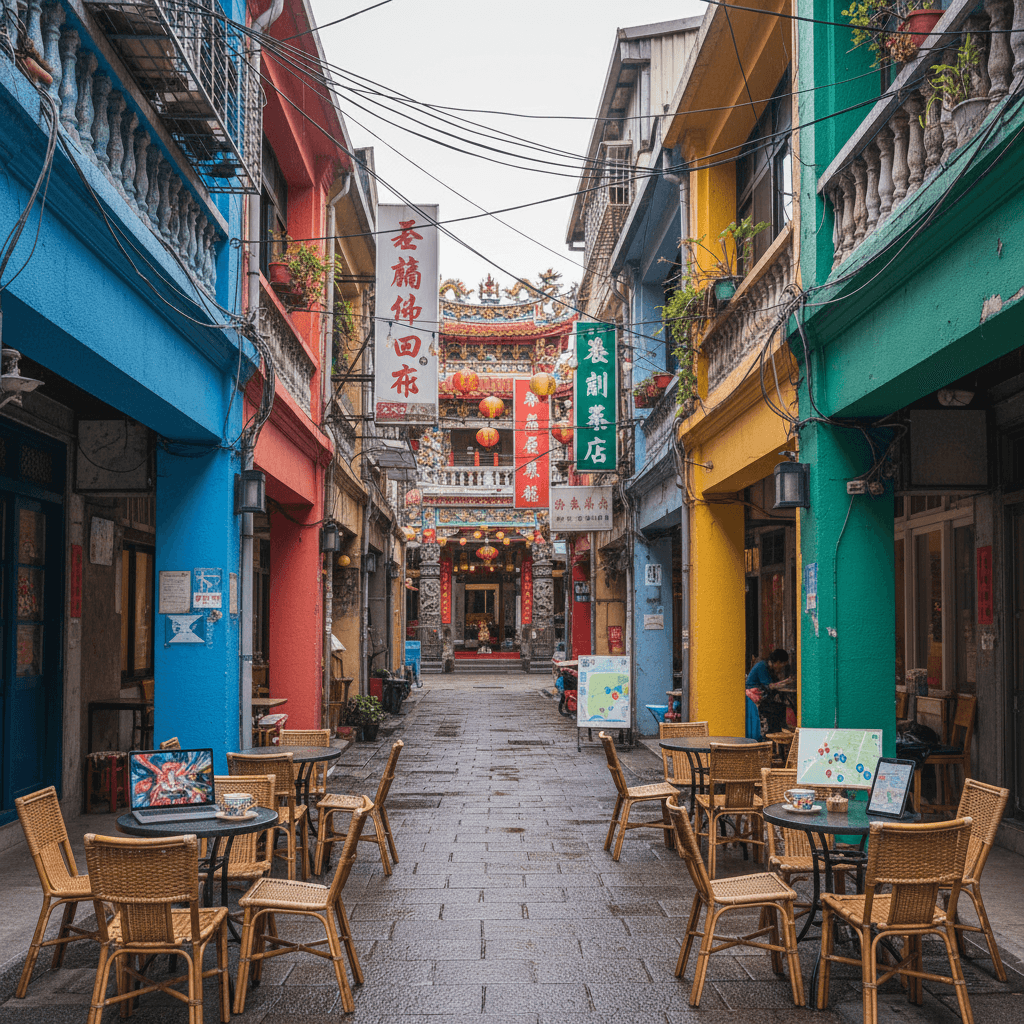
Keelung
🇹🇼 Taiwan
The Gritty, Misty Soul of the North
Keelung doesn't try to impress you with the polished skyscrapers of Taipei or the manicured parks of Taichung. Instead, it greets you with a face of weathered concrete, salty air, and a persistent mist that locals affectionately call the Keelung Blues. It is a working class port town through and through, where massive container ships glide past century old temples and neon lit night markets. For nomads who find Taipei a bit too sanitized, Keelung offers a raw, industrial charm that feels deeply authentic to Taiwan's maritime history.
The vibe here is slower and more resilient. You'll see it in the way residents navigate the hilly terrain under umbrellas or how they gather at the harbor to watch the hawks circle overhead. It is a city of rain and seafood, where the smell of grilled squid from Miaokou Night Market mingles with the damp scent of the Pacific. While it lacks the high end amenities of a global hub, it compensates with a soulful, unpretentious atmosphere that makes you feel like a local the moment you sit down at a sidewalk coffee stall.
Digital Nomad Reality Check
Living here means embracing the moisture. Keelung is one of the wettest cities in Asia, particularly during the summer typhoon season and the misty winter months. If you can handle the humidity, you'll find a city that is remarkably affordable and safe. Nomads often mention the "laptop test" here, you can leave your MacBook on a cafe table to grab a bathroom break without a second thought. Crime is practically non existent, and the locals are famously kind, even if English proficiency is lower than in the capital.
The work life balance leans heavily toward the outdoors and the culinary. Most nomads spend their mornings working from independent cafes like those found in the Ren'ai district, followed by an afternoon hike in the nearby mountains or a quick trip to Heping Island. While Taiwan does not have a dedicated digital nomad visa; long-term stays require other visa types like visitor visa extensions or work permits, Keelung remains a strategic base for those who want to stay long term without the Taipei price tag.
What You'll Spend
Your money goes significantly further here than in other Taiwanese hubs. Expect your total monthly costs to hover between NT$20,000 and NT$40,000 depending on your lifestyle. Rent is the biggest saver, often 20% to 30% lower than in Taipei.
- Housing: A basic studio in Ren'ai or Badai typically costs NT$8,000 to NT$12,000. If you want a harbor view or a modern serviced apartment like those near Yung Feng Hotel, expect to pay NT$20,000+.
- Food: You can eat like royalty on a budget. Street food skewers and oyster omelets at the night market run NT$50 to NT$150. A mid range seafood dinner will cost around NT$300 to NT$400.
- Connectivity: A local Chunghwa Telecom SIM or a Holafly eSIM with unlimited data is a must. Combined with a desk at a coworking spot like 返潮基地 (Back to the Tide) for about NT$5,000 a month, your office overhead remains low.
- Transport: Most of the core is walkable, but an EasyCard for buses and the TRA train to Taipei (about NT$40 each way) is essential.
The Neighborhood Breakdown
Keelung is compact, but each pocket has a distinct personality. Most nomads gravitate toward the center for convenience, while those staying longer might head toward the coast for better views.
Ren'ai (The Heart)
- Best For: First timers and solo nomads who want to be near the action.
- Pros: Short walk to the train station, home to Miaokou Night Market, and packed with cafes.
- Cons: It is loud, crowded on weekends, and the buildings show their age.
Zhongzheng / Badai
- Best For: Expats and families looking for a quieter, residential feel.
- Pros: Near the National Museum of Marine Science, better air quality, and stunning coastal views.
- Cons: Steep hills make walking a workout, and you'll rely more on buses or scooters.
Xinyi / Harbor District
- Best For: Adventurers who want easy access to diving and rail biking.
- Pros: Close to Just Live Inn and other budget friendly hostels; great maritime energy.
- Cons: Can feel industrial and lacks the polished nightlife of larger cities.
Ultimately, Keelung is for the nomad who wants to disappear into a real place. It is for the person who finds beauty in a rusty shipyard and prefers a NT$60 bowl of noodles over a NT$600 brunch. It is a city that doesn't put on a show for tourists, and that is exactly why people end up staying longer than they planned.
The Price of Port Life
If you're looking to stretch your budget without sacrificing the convenience of northern Taiwan, Keelung is a strategic win. It consistently runs about 20% to 30% cheaper than Taipei, particularly when it comes to housing. For most solo digital nomads, a monthly budget between NT$20,000 and NT$40,000 covers a comfortable lifestyle that includes plenty of harbor-side coffees and nightly seafood feasts.
The city's blue-collar roots keep prices grounded. While Taipei's gentrification has pushed basic costs up, Keelung remains a place where you can find a solid meal for the price of a subway fare. Expats living here often mention that the biggest "tax" isn't financial, it's the investment in high-quality rain gear for those persistent misty days.
Housing and Rent
Rent will be your biggest saving. While you won't find many massive luxury apartment complexes, the local market is accessible if you know where to look.
- Budget Tier (NT$8,000 to NT$12,000): This gets you a modest studio or a room in a shared house in areas like Ren'ai or Badai. Expect older buildings, walk-ups, and very authentic local vibes.
- Mid-Range (NT$12,000 to NT$18,000): This is the sweet spot for most nomads. You can snag a modernized studio near the central district or closer to the Just Live Inn area, often with better natural light and newer appliances.
- Comfortable (NT$20,000+): In this bracket, you're looking at premium studios or small apartments with harbor views, perhaps in buildings like the Yung Feng Hotel studios. Even at this price, you're paying significantly less than you would for a similar view in Taipei.
Food and Dining
Keelung is a food-obsessed city, and your wallet will love the Miaokou Night Market. You can eat like a king on a street-food budget, though sit-down seafood spots can add up if you're ordering the catch of the day.
- Street Food and Groceries: Budget around NT$5,000 to NT$8,000 a month if you're eating locally. Skewers, oyster omelets, and nutritious soups at the market usually run between NT$50 and NT$150.
- Mid-Range Dining: A nice dinner at a specialized seafood restaurant or a trendy cafe will cost between NT$200 and NT$400.
- The Coffee Factor: Most nomads find the cafe culture here incredibly fair. A NT$100 latte often buys you a seat for the afternoon with free Wi-Fi and power outlets.
Transportation and Connectivity
The city is compact and walkable, but you'll likely want an EasyCard for rainy days and trips to the capital.
- Public Transit: Budget NT$1,000 to NT$1,500 for local buses and the TRA train to Taipei. A one-way trip to Taipei is only about NT$41.
- Mobile Data: An unlimited data SIM or eSIM from providers like Chunghwa or Holafly typically costs between NT$500 and NT$1,000 per month.
- Coworking: If you need a dedicated desk rather than a cafe, spaces like the Keelung Workation bases offer day passes for NT$300 to NT$500, while monthly memberships hover around NT$5,000.
The Bottom Line
Living in Keelung means you can enjoy the perks of a major metropolitan area just 35 minutes away while paying small-town prices. Most travelers find that NT$30,000 is the "magic number" for a balanced life here, allowing for frequent dining out, a decent apartment, and enough left over for weekend diving trips or rail biking along the coast.
For Digital Nomads: Ren'ai (Central)
If you want to be in the thick of Keelung's gritty charm, Ren'ai is the place to plant your flag. It's the most walkable part of the city and puts you within striking distance of the main train station, making those 40-minute runs into Taipei effortless. Most nomads gravitate here because it's the only neighborhood where you can find a solid mix of affordable Airbnbs and the city's best "work from cafe" culture.
The logistics are hard to beat. You've got the Miaokou Night Market for dinner every night, and the Keelung Workation base, known as 返潮基地, provides a reliable desk when you need to get away from the humidity. Expect to pay between NT$12,000 and NT$18,000 for a decent studio or a room in a spot like Just Live Inn. The trade-off is the noise; between the scooters and the weekend crowds, it's rarely quiet, and the rain feels a bit more intense when you're navigating narrow, crowded sidewalks.
For Long-Term Expats: Badai and Zhongzheng
Expats looking for a more permanent, residential feel usually head east toward the Badai and Zhongzheng districts. These areas trade the neon lights of the night market for harbor views and a much slower pace of life. It’s where you'll find the city's better hospitals, like Keelung Chang Gung Memorial, and a more predictable local community. It feels less like a tourist transit hub and more like a maritime town.
Living here requires a bit more legwork. The terrain is hilly, so you'll likely want to rent a scooter for around NT$3,000 a month to avoid the steep climbs. Rents are slightly lower than the city center, often ranging from NT$8,000 to NT$12,000 for older apartments. It's the best choice if you value a view of the water over proximity to a late-night craft beer bar.
For Solo Adventurers: Harbor and Xinyi
If your priority is being near the water rather than a coworking space, the Harbor and Xinyi areas are your best bet. This is the gateway to Keelung’s outdoor scene, including diving spots and the Shen’ao Rail Bike. It's a bit more industrial and can sometimes smell like the deep-sea port it is, but it's perfect for those who want to spend their mornings hiking the coastal trails before logging on for work.
Accommodation here is often more "rough and ready," with plenty of hostels and budget-friendly hotels like Yung Feng. You'll find yourself relying on the EasyCard for frequent bus rides into Ren'ai for groceries or social meetups, but the trade-off is instant access to the coast and a lower cost of living that can sit comfortably around NT$20,000 a month total for a budget traveler.
For Families and Nature Lovers: Pingxi and Outskirts
While technically on the outskirts, the areas toward Pingxi are where families often end up if they want space and fresh air. It's a 20-minute bus ride from the city center, which means you're trading convenience for nature trails and a lack of urban grit. It's far less walkable than Ren'ai, so a car or scooter is basically mandatory here.
Families appreciate the safety and the proximity to the more famous Taiwan landscapes. You won't find many dedicated nomad amenities here, but the 5G coverage is still excellent, making it possible to work from a quiet balcony overlooking the mountains. It's the quietest version of Keelung you can find, away from the "Keelung blues" of the industrial harbor.
- Ren'ai: Best for walkability and night markets.
- Badai: Best for harbor views and local expat life.
- Xinyi: Best for coastal access and budget stays.
- Pingxi: Best for families and mountain air.
Connectivity and Speed
You won't have to worry about the internet in Keelung. Taiwan is a global tech hub, and that infrastructure extends directly into this port city. Taiwan's average fixed broadband is over 200 Mbps download, while mobile 4G/5G averages 100+ Mbps. Whether you're uploading large video files or jumping on a Zoom call, the connection is stable and fast enough for any remote role.
For your mobile setup, skip the hassle and grab an eSIM before you land. Holafly and Airalo are the go-to choices for immediate data. If you prefer a local physical SIM, head to any 7-Eleven or FamilyMart to pick up a Chunghwa Telecom or Taiwan Mobile card. A 10GB plan usually costs between NT$300 and NT$500. You can easily top these up using your EasyCard at any convenience store kiosk.
Coworking Spaces
While Keelung doesn't have the massive coworking hubs you'll find in Taipei, the local "workation" scene is growing. The city is positioning itself as a quieter alternative for nomads who want to escape the capital's frantic energy. Fan Chao Ji Di (返潮基地) is the primary spot for dedicated desk space. It's designed specifically for the digital nomad crowd, offering ergonomic setups and reliable high-speed Wi-Fi.
- Day Pass: Expect to pay between NT$300 and NT$500.
- Monthly Membership: Prices range from NT$5,000 to NT$10,000 depending on whether you need a hot desk or a dedicated station.
- Amenities: Most spaces include free coffee, printing services, and small meeting rooms for private calls.
The Cafe Work Culture
In Keelung, the local coffee shop is the unofficial office. The culture here is incredibly welcoming to remote workers. It's perfectly normal to buy one latte for NT$100 and park yourself at a table for four hours. Unlike in some Western cities, you won't get "the look" from staff for staying too long. Many independent cafes even provide power strips and dedicated "quiet zones" for laptops.
Safety is a massive perk here. Travelers often mention the "laptop test," where you can leave your MacBook on a table while you go to the restroom or order another drink without a second thought. Theft is remarkably rare, making the cafe-hopping lifestyle stress-free. Look for independent spots in the Ren'ai district near the harbor; they often have the best views and the most reliable Wi-Fi.
Public Wi-Fi and Practicalities
If you're caught between meetings, the city's public infrastructure has you covered. Free Wi-Fi is available at the Keelung Train Station and most major public buildings. While it's fine for checking emails or Google Maps, it's not robust enough for heavy heavy lifting. Most nomads find that a combination of a local SIM and a favorite neighborhood cafe is the most efficient way to stay productive.
- Best for calls: Coworking spaces like Fan Chao Ji Di.
- Best for focused deep work: Quiet cafes in the Zhongzheng residential area.
- Best for casual tasks: Harbor-side coffee shops near the Miaokou area.
One thing to keep in mind is the rain. Keelung is famous for its "misty" weather, so always carry a waterproof laptop sleeve or a dry bag. You'll likely spend more time working indoors than you would in southern Taiwan, but the cozy, industrial atmosphere of a harbor cafe on a rainy day is a vibe many nomads grow to love.
Living Without Worry
Keelung is incredibly safe, even by Taiwan's high standards. Most nomads find they can leave a laptop on a cafe table at a spot like Fika Fika to grab a refill without a second thought. Street crime and pickpocketing are virtually non existent, and you'll often see locals leaving scooters unlocked or bags unattended in public areas.
The city's working class port vibe might feel gritty at night, particularly around the industrial harbor edges, but it's more about aesthetic than actual danger. There aren't any specific "no go" zones to avoid. Your biggest safety concern will likely be the slippery sidewalks during the frequent rain or the aggressive driving style of local bus and scooter operators. Stick to marked crossings and keep an eye on the traffic, even when you have the light.
Healthcare Infrastructure
If you get sick, you're in good hands. Taiwan’s healthcare system is world class, and Keelung hosts several high quality facilities. Keelung Chang Gung Memorial Hospital is the primary choice for expats and nomads. It's a modern facility where many specialists speak fluent English, making it much easier to describe symptoms without a translator app.
For minor issues, you'll find pharmacies like Cosmed or Watson’s on almost every major corner in the Ren’ai district. These shops carry everything from basic cold medicine to high end skincare. If you need a specific prescription, look for local clinics marked with a blue and white "NHI" (National Health Insurance) sign; they are usually faster and cheaper than the main hospitals for routine checkups.
Emergency Information
In the event of a serious emergency, the numbers are easy to remember. Dial 119 for an ambulance or the fire department, and 110 for the police. Most dispatchers in a port city like Keelung will have someone on hand who speaks basic English, but having a translation app like Pleco or Google Translate ready for medical terms is a smart move.
- Hospital Recommendation: Keelung Chang Gung Memorial Hospital (Zhongzheng District)
- Pharmacy Chains: Cosmed, Watson’s, and Great Tree Pharmacy
- Emergency Numbers: 119 (Medical/Fire), 110 (Police)
- Cost of Walk-in Visit: Expect to pay between NT$600 and NT$1,500 for a non resident consultation at a hospital.
Long Term Coverage
If you're planning to stay for the long haul on the 180 day digital nomad visa, you may eventually become eligible for the National Health Insurance (NHI) program. This is widely considered one of the best insurance schemes in the world. Once enrolled, a doctor's visit often costs as little as NT$150 to NT$200, including the price of medication. Travelers staying for shorter stints should stick to a standard international travel policy like SafetyWing or World Nomads, as private clinics in Keelung are efficient but will require upfront payment.
Getting Around the Port City
Keelung is a dense, walkable harbor town that feels much more manageable than the sprawling grid of Taipei. The city center, particularly around the Ren'ai district, is where you'll spend most of your time. It is built for foot traffic, though the frequent rain means you will quickly learn the "arcade" routes, covered walkways under building overhangs that let you traverse entire blocks without popping an umbrella.
Public Transit and the EasyCard
The first thing you need is an EasyCard or iPass. You can grab these at any 7-Eleven or FamilyMart for NT$100 and load them with cash. This single card handles every bus, train, and even your morning coffee at convenience stores. Keelung's local bus system is reliable, with most rides costing a flat NT$18.
- TRA Trains: The Keelung Railway Station is your lifeline to the rest of the island. Train travel time is approximately 40 minutes for local trains to Taipei Main Station, which run every 15 to 20 minutes and cost about NT$41. It is an easy commute for nomads who want a taste of the big city without the Taipei rent prices.
- Intercity Buses: For a faster trip to Taipei districts like Xinyi or Neihu, look for the 2088 or 1579 express buses. They are often more comfortable than the train and take about 30 minutes outside of rush hour.
- Google Maps: This is the gold standard here. It accurately tracks bus arrival times and platform numbers for the trains.
Two Wheels or Four?
While the city center is walkable, reaching the scenic coastal spots like the Zhongzheng Park or the Heping Island colorful houses is easier with wheels. YouBike stations are scattered throughout the city. You will need a local phone number to register on the app, but once you're set, the first 30 minutes are incredibly cheap, usually around NT$5 to NT$10.
Scooter rentals are popular for exploring the coast toward Ruifang or Fulong. Expect to pay around NT$300 to NT$500 per day. Just be aware that Keelung's hilly terrain and wet pavement can be slick, so only rent one if you're confident in your riding skills. For a more relaxed experience, Uber is active and surprisingly affordable; a cross-town trip rarely exceeds NT$150 to NT$250.
Arrival and Departure
Getting here from Taoyuan International Airport (TPE) is straightforward. You can take the 1961 bus directly to Keelung for about NT$150, which takes roughly 90 minutes. If you prefer the train, take the Airport MRT to Taipei Main Station and switch to the northbound TRA line. Most travelers find the direct bus easier since you won't have to lug suitcases through the crowded Taipei station halls.
Local Navigation Tips
- T Express App: Use this for booking long-distance train tickets if you're planning a weekend trip to Hualien or Kaohsiung.
- Rainy Day Logic: Always carry a lightweight poncho or a sturdy umbrella. When the "Keelung blues" set in, the city's bus network becomes your best friend to avoid arriving at a cafe soaked through.
- Walking the Harbor: The wooden boardwalks around the harbor are great for a sunset stroll, but they can get slippery. Stick to the main paved paths when it's pouring.
The Local Linguistic Landscape
In Keelung, the linguistic atmosphere is a far cry from the bilingual bubble of Taipei. You're entering a gritty, authentic port city where Mandarin Chinese is the primary language, often seasoned with the melodic, nasal tones of Taiwanese Hokkien. While younger residents and university students usually have a basic grasp of English, the older generation and the bustling vendors at Miaokou Night Market generally don't. Expect English proficiency to hover around 20% to 30% once you step away from major hotel reception desks.
Most digital nomads find that while the language barrier is real, it's rarely a dealbreaker. The locals are incredibly patient and often go out of their way to help through a mix of pantomime and smiles. If you're staying for a few months, learning a handful of phrases like "Ni hao" (hello) and "Xie xie" (thank you) goes a long way in building rapport with your local barista or the auntie at the fruit stall.
Digital Survival Tools
Technology bridges the gap where vocabulary fails. You'll want to have a few specific apps downloaded before you even leave the train station. Most travelers and expats consider these non-negotiable for daily life:
- Google Translate: The camera feature is a lifesaver for deciphering menus that lack pictures. Be sure to download the Traditional Chinese pack for offline use, as Keelung's hilly terrain can occasionally create spotty signals in older buildings.
- Line: This is the universal communication tool in Taiwan. Whether you're coordinating with a landlord, booking a spot at Keelung Workation, or chatting with a new friend, people will ask for your Line ID before they ask for your phone number.
- Pleco: If you're serious about learning the characters, this is the gold standard dictionary app. It's much more accurate for local nuances than general translation tools.
Communication in Workspaces
The "workation" scene in Keelung is growing, and spaces like the 返潮基地 (Backflow Base) are becoming hubs for the remote work crowd. In these environments, you'll find a much higher density of English speakers. Most nomads report that staff at dedicated coworking spaces are comfortable handling technical requests or booking inquiries in English. However, in the city's beloved independent coffee shops, it's safer to point at the menu or use a translation app for specific dietary requests.
Practical Interactions
Navigating daily errands requires a bit of strategy. Here is what to expect in different scenarios:
- Transportation: Bus drivers rarely speak English, but the EasyCard system makes things seamless. Just tap on and off without needing to speak a word. Train station signage is bilingual, so getting back to Taipei is easy.
- Dining: Many local seafood spots use a "check-list" style menu where you mark what you want. If it's only in Chinese, use Google Lens. At the night market, pointing and holding up fingers for quantity is the standard operating procedure.
- Emergency and Healthcare: This is where English is most accessible. Major facilities like Keelung Chang Gung Memorial Hospital have doctors who studied abroad and speak excellent English, though the administrative staff might still require a translation app.
Ultimately, Keelung is a place where "survival Chinese" is helpful but not mandatory. The city’s safe, welcoming vibe means that even if you're struggling to find the right words, someone will likely step in to help you navigate the conversation.
Embrace the Mist: Understanding the Keelung Climate
Keelung is famously known as the "Rainy Port," and that reputation is well earned. You aren't just visiting a city; you're entering a landscape defined by its relationship with water. While the frequent drizzle creates a moody, noir aesthetic that photographers love, it’s a factor you’ll need to plan your work schedule around. The humidity is a constant companion, keeping the surrounding mountains lush but making the summer heat feel much more intense than the thermometer suggests.
The city experiences a subtropical climate with distinct shifts. Winter months from December to February are cool and damp, with temperatures hovering between 15°C and 20°C. It rarely gets "cold" by Northern Hemisphere standards, but the dampness can seep into your bones if your apartment doesn't have a dehumidifier. Most nomads find that a high quality waterproof shell is more important here than a heavy coat.
The Sweet Spot: When to Visit
If you want to maximize your time outdoors at places like the Shen'ao Rail Bike or the Heping Island Park, aim for the shoulder seasons. These windows offer the most reliable weather for digital nomads who want to balance deep work with coastal exploration.
- October to November: This is arguably the best window. The oppressive summer heat has faded, leaving behind pleasant temperatures between 22°C and 28°C. Rainfall is relatively lower compared to the rest of the year, making it the perfect time for hiking the nearby trails.
- March to May: Spring brings a similar temperature range of 20°C to 28°C. While you'll still see some rain, the "Keelung Blues" are less persistent, and the city feels fresh before the summer humidity kicks in.
The Challenges: Summer and Typhoons
From June through September, Keelung transforms. Temperatures often climb to 33°C or higher, and the humidity makes it feel like you're walking through a steam room. This is also typhoon season. While Taiwan’s infrastructure is world class and handles storms remarkably well, a typhoon can mean staying indoors for 24 to 48 hours. Travelers often use these rainy stretches to hunker down in cafes like Fika Fika or the Keelung Workation hubs to knock out big projects.
During the peak of summer, the rain often comes in short, violent afternoon bursts rather than the steady winter drizzle. If you’re here in July or August, keep an eye on the local weather apps and always carry a sturdy umbrella; the cheap ones won't survive the harbor winds.
Seasonal Planning at a Glance
- January to March: Cool and misty. Expect highs of 18°C to 22°C. This is a quiet time for the city, great for those who enjoy a melancholic, industrial vibe and empty seafood stalls.
- April to June: Warming up quickly. Rainfall begins to increase as the "Plum Rain" season hits in late spring. Highs reach 25°C to 30°C.
- July to September: Hot, humid, and wet. Highs of 30°C to 33°C. This is the peak of the seafood festival season, but be prepared for sudden tropical downpours.
- October to December: The nomad favorite. Temperatures drop back to a comfortable 22°C to 28°C, and the air feels significantly drier.
Expats who have lived here long term suggest that if you can handle the rain, the winter months offer a peaceful, authentic side of the city that tourists rarely see. Just ensure your accommodation has a "dry" setting on the air conditioner, or you'll find your clothes feeling damp within days. For everyone else, stick to the autumn months to see Keelung at its most vibrant and accessible.
Connectivity and Workspace
You won't have to hunt for a signal here. Taiwan's internet speeds are world class, and Keelung is no exception. Most nomads rely on Chunghwa Telecom for the best local coverage, but if you want to hit the ground running, an eSIM from Holafly or Airalo is the move. You can grab a local SIM at any 7-11 for about NT$300 to NT$500.
The work culture is refreshingly laid back. Unlike Taipei where some cafes have two hour limits, Keelung's coffee shops are generally happy to let you camp out all day. Locals recommend spots like Fika Fika or independent roasteries near the harbor. If you need a professional setup, Keelung Workation bases like Back to the Tide (返潮基地) offer day passes for NT$300 to NT$500. They provide stable desks and a chance to meet the small but growing community of digital professionals.
Money and Budgeting
Your money goes significantly further here than in Taipei. A solo nomad can live comfortably on NT$20,000 to NT$40,000 per month. Rent is the biggest saver, usually 20 to 30 percent cheaper than the capital. For daily spending, Wise is great for transfers, and almost every 7-11 has an ATM that accepts international cards for a small fee.
- Ren'ai (Central): Best for those who want to be near the action. Expect to pay NT$8,000 to NT$12,000 for a basic studio or NT$12,000 to NT$18,000 for something more modern like the Just Live Inn area.
- Zhongzheng: A bit quieter and more residential. Mid-range apartments with harbor views can go for NT$20,000+.
- Daily Food: You can eat well for NT$50 to NT$200 at the Miaokou Night Market. A coffee usually runs NT$50 to NT$100.
Getting Around
Keelung's core is incredibly walkable, though the hills will give your calves a workout. For everything else, the EasyCard is your best friend. It works on all local buses (NT$18 per ride) and the TRA trains that get you to Taipei in about 40 minutes for less than NT$50.
If you're heading further out to the coast for diving or the rail bike, Uber is reliable and affordable. For those staying longer, YouBike stations are everywhere. You'll just need the app and a local phone number to register. For airport runs, the bus or train to Taoyuan takes about 90 minutes and costs roughly NT$150 to NT$300.
Language and Local Life
English isn't as common here as it is in Taipei's Xinyi district. You'll find that perhaps 20 to 30 percent of people in shops speak some English. Download Google Translate for offline use and Pleco if you're serious about learning some Mandarin. Line is the universal app for everything from chatting with landlords to booking a hair appointment.
Safety is a non-issue. Taiwan consistently ranks as one of the safest places globally. It's common to see nomads leave their laptops on a cafe table while they grab a refill or use the restroom. Just keep your wits about you near the industrial harbor edges at night, mostly due to poor lighting rather than crime.
Weather Realities
The "Keelung Blues" are real. It rains a lot. The best window for visiting is March to May or October to November when it's drier and the temperature sits between 20°C and 28°C. Summer (June to September) is hot, humid, and brings the occasional typhoon. Always carry a sturdy umbrella; you'll notice the locals never leave home without one.
- Winter (Dec-Feb): Cool and misty, 15°C to 20°C.
- Summer (Jul-Sep): Hot and rainy, 30°C to 33°C.
- Healthcare: If you get sick, Keelung Chang Gung Memorial Hospital has modern facilities and English speaking staff.
Need visa and immigration info for Taiwan?
🇹🇼 View Taiwan Country GuideEasy Landing
Settle in, no stress