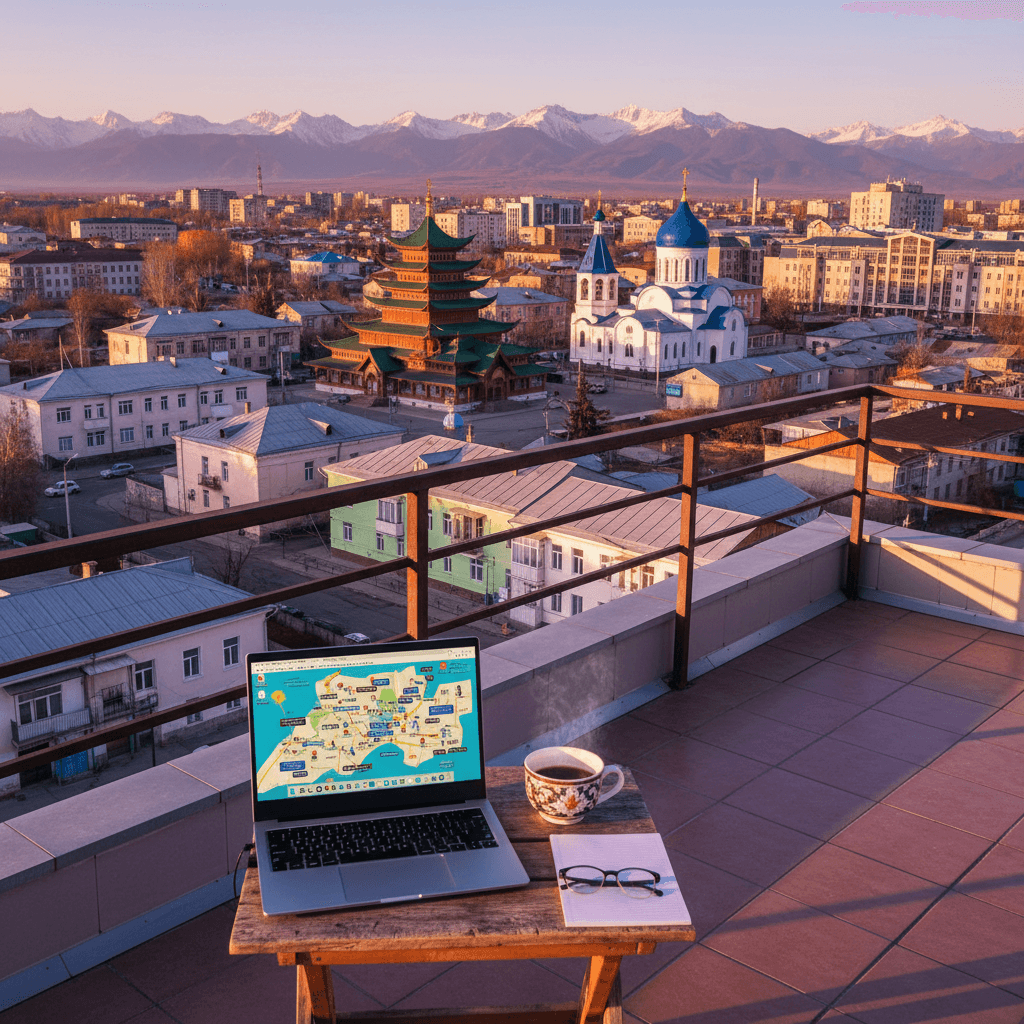
Karakol
🇰🇬 Kyrgyzstan
The Gateway to the Tien Shan
Karakol doesn't feel like a typical digital nomad hub, and that's exactly why people are starting to flock here. Situated on the eastern edge of Lake Issyk-Kul, it’s a rugged, low-slung mountain town where the air smells like woodsmoke and pine. While Bishkek is the urban center, Karakol is the basecamp. It’s the kind of place where you’ll see a 4x4 modified for deep-mountain expeditions parked next to a traditional horse-drawn cart.
The vibe is a unique blend of Russian colonial history, Kyrgyz nomadic tradition, and a growing international outdoor community. You’ll walk past century-old gingerbread-style wooden houses one minute and find a cozy cafe serving espresso the next. It’s quiet, functional, and deeply connected to the seasons. If you’re the type of nomad who works a few hours then heads into the backcountry, this is your paradise.
Life at the Edge of the Map
Living here means trading the convenience of a metropolis for the raw beauty of the Altyn Arashan Valley. Most nomads find that the pace of life slows down significantly. You aren't here for high-end shopping or nightlife; you're here for the $5.00 bowls of Ashlan-fu (the local spicy cold noodle specialty) and the ability to be at a 3,000-meter mountain pass by lunchtime.
The town serves as a crossroads for travelers heading toward the Chinese border or deep into the Pamirs. This creates a rotating cast of interesting characters in the local guesthouses. You'll meet researchers, mountaineers, and long-term overland travelers. It’s a social scene built on shared adventures rather than networking events.
Digital Infrastructure and Reality
Don't let the remote location fool you. The internet is surprisingly capable for a town of this size. With speeds reaching 50-80 mbps, you can handle video calls and heavy uploads without much stress. Most nomads rely on local SIM cards like MegaCom or O!, which are incredibly cheap. You can snag 20GB of data for about $3.60, making it easy to tether your laptop if the guesthouse Wi-Fi ever flickers.
The cost of living is another major draw. An average monthly budget for a nomad sits around $1,886, though you can live on much less if you opt for local guesthouses over hotels. Since English isn't widely spoken, you'll want to have the Yandex app ready for taxis and Google Translate (with Russian downloaded) for grocery runs. Learning the Cyrillic alphabet takes a weekend and makes navigating the local markets significantly easier.
What Makes It Different
Karakol is one of the few places left where the "adventure" part of being a digital nomad feels authentic. It hasn't been polished for tourists yet. You’ll experience power cuts occasionally in the winter, and the sidewalks can be uneven, but the hospitality is unmatched. It’s common for locals to invite you for tea or offer help if you look lost.
The emotional experience of being here is one of perspective. When you look up from your laptop and see the jagged, snow-capped peaks of the Central Tien Shan towering over the end of the street, your work stress tends to evaporate. It’s a place that rewards the self-sufficient and the curious. If you can handle a bit of grit and a lack of western-style malls, Karakol offers a lifestyle that feels like a well-kept secret.
- Best for: Hikers, skiers, and nomads who prefer mountains over malls.
- The "Aha!" Moment: Soaking in a natural hot spring in Altyn Arashan after a long week of deadlines.
- Local Must-Try: Dungan cuisine at the Sunday animal market for a truly local experience.
The Bottom Line
Karakol is one of those rare spots where your dollar stretches incredibly far, provided you aren't looking for five star luxury. Most digital nomads find they can live comfortably on about $1,886 per month. This figure covers a private apartment, eating out frequently, and plenty of weekend trips into the mountains. If you are living like a local and sticking to guesthouses, you could easily drop that number closer to $1,200.
Housing and Neighborhoods
The rental market here isn't as formalized as Bishkek. You won't find many high rise luxury condos, but you will find cozy guesthouses and private apartments. Most expats recommend staying near the City Center or the Church District. These areas keep you within walking distance of the best cafes and the main bazaar. Expect to pay between $100 to $200 for a one-bedroom apartment with reliable heating, which is a big deal during the Kyrgyz winters.
- Guesthouses: Many nomads start in a guesthouse like Riverside Karakol or Duet Hostel. These usually run $15 to $30 per night and often include a massive breakfast.
- Long term Rentals: These are harder to find online. Your best bet is checking local Telegram groups or asking at the Destination Karakol office. They are the local fixers and can usually point you toward a landlord.
Food and Groceries
Eating out is one of the best parts of living here. You can grab a massive bowl of Ashlan Fu (the local specialty cold noodle soup) for about $1.50 to $2.00. A mid range dinner with drinks at a place like Karakol Coffee or Dastorkon will usually set you back about $8 to $12. If you prefer cooking at home, the Ak Tilek Bazaar is where you'll get the best prices on fresh produce, local honey, and bread. A weekly grocery haul for one person rarely tops $30.
Connectivity and Utilities
Internet is surprisingly decent for a mountain town. You can get speeds around 54 mbps in most modern apartments. Mobile data is incredibly cheap, and you should grab a SIM card immediately at the airport or in town. Expats usually lean toward MegaCom or O! because their coverage is solid even when you're heading out to the trails.
- MegaCom 20GB Plan: Approximately $3.60.
- MegaCom 100GB Plan: Approximately $8.70.
- O! Weekly Deals: Often just $2 to $3 for unlimited data.
- Utilities: If your rent doesn't include them, expect to pay around $40 to $60 per month for electricity, water, and heating.
Transportation
Karakol is very walkable, but when it's snowing or you're carrying groceries, you'll want a ride. The Yandex Go app is your best friend here. It works just like Uber and prevents you from having to haggle over prices. Most trips around the center cost less than $2. For getting out of town to the ski base or trailheads, you can hire a private 4WD driver for roughly $20 to $40 depending on the distance and your negotiation skills.
For Digital Nomads: The Central District
Most nomads gravitate toward the grid of streets surrounding the Karakol City Park and the Central Mosque. This isn't a city of high rises or distinct luxury districts; it's a place where Soviet era apartments sit right next to traditional Russian gingerbread houses. Living here puts you within walking distance of the few spots with reliable fast internet and the best coffee in town.
- Pros: Best proximity to cafes like Karakol Coffee, easy access to grocery stores, and the highest concentration of English speakers.
- Cons: It can feel a bit dusty in the summer, and the Soviet style apartment blocks often have aging plumbing.
- Estimated Rent: Expect to pay around $400 to $600 for a decent, renovated one bedroom apartment.
For Long Term Expats: The Southern Residential Slopes
If you're planning to stay for a season or longer, look toward the southern edge of town as you head toward the mountains. Expats often prefer this area because the air is noticeably cleaner and the views of the Tien Shan peaks are unobstructed. It's quieter here, though you'll rely more heavily on the Yandex taxi app to get into the center for social events.
- Pros: Quiet nights, mountain views, and larger houses with gardens or yards.
- Cons: Further from the main markets, and sidewalks can be non existent or poorly lit at night.
- Local Tip: This area is perfect if you have your own transport or don't mind a 20 minute walk into the heart of town.
For Solo Travelers: The Guesthouse Hub (Near the Animal Market)
The northern part of the city, particularly the streets leading toward the famous Sunday Animal Market, is the heartbeat of the solo travel scene. This isn't about luxury; it's about community. You'll find a high density of hostels and family run guesthouses where the owners treat you like part of the clan. It's the best place to find hiking partners for a trek to Altyn Arashan.
- Pros: High social energy, easy to book tours, and very affordable.
- Cons: Can be noisy on Sunday mornings when the market traffic starts at dawn.
- Vibe: Very rustic and authentic. You'll likely be sharing stories over tea in a communal yurt or garden.
For Families: The Eastern Suburbs
Families often find the eastern side of Karakol, near the Regional Hospital and local schools, to be the most manageable. It feels more like a lived in neighborhood and less like a tourist base. There are small pockets of green space and the streets are generally wider and safer for kids to navigate. You're also closer to the road that leads directly out to the hot springs, making weekend trips a breeze.
- Pros: More "neighborhood" feel, less transient than the center, and closer to emergency services.
- Cons: Limited dining options, so you'll be doing most of your cooking at home.
- Daily Life: You'll see more locals going about their business here, giving you a better chance to practice your Russian or Kyrgyz with neighbors.
The Connectivity Reality
Karakol is a trekking hub first and a digital nomad hotspot second, but that doesn't mean you'll be disconnected. Most guesthouses and hotels in the city center provide surprisingly stable Wi-Fi. You can expect speeds around 54 mbps, which is plenty for Zoom calls or uploading your mountain photography. Just keep in mind that the further you head toward the outskirts or up into the valleys like Altyn Arashan, the faster that signal drops to zero.
Power stability is generally good within the town limits, though the grid can be temperamental during heavy winter snowfalls. If you're planning to work while others are out hiking, it's smart to have a solid power bank and a local data plan as a backup. Most nomads find that the local infrastructure handles daily remote work tasks without much drama.
Local SIM Cards and Data
Don't rely on your home roaming plan here. Picking up a local SIM is cheap, fast, and gives you better coverage in the foothills. You'll find three main providers: MegaCom, O!, and Beeline. You can grab a SIM at the small shops near the Ak-Tilek Market or at official service centers in the center of town. Expect to pay between $5 and $10 for the card and your first month of data.
- MegaCom: Often cited for the best coverage in rural areas. You can get 20GB for $3.60 or 100GB for $8.70.
- O!: Very popular for their weekly deals. You can often get unlimited data for just a few dollars a week, but you must register your passport at an official store within a few days of activation.
- Beeline: Reliable speeds within the city, with similar pricing to MegaCom.
Where to Work
Karakol doesn't have a dedicated, glass-walled coworking space yet. You won't find a WeWork here, but the cafe culture is starting to catch up with the needs of remote workers. The "office" for most nomads is either their guesthouse common room or one of the few laptop-friendly spots in town.
Karakol Coffee is the go-to for many. It has a cozy atmosphere, decent caffeine, and the staff won't mind if you linger with a laptop for a few hours. Another solid option is Sierra Coffee & Restaurant. If you need absolute silence, your best bet is booking a private room in a highly-rated guesthouse like Hillside Karakol or Hotel Amir, where the Wi-Fi is consistently stronger than in the budget hostels.
Digital Nomad Survival Tips
Since English isn't widely spoken, download the Yandex Go app before you arrive. It's the local version of Uber and works perfectly for getting around town without having to negotiate prices in broken Russian. For communication, Google Translate with the Russian offline pack is a lifesaver when you're trying to explain your Wi-Fi needs to a guesthouse owner.
If your work requires high-bandwidth stability, always ask for a speed test screenshot before booking a long-term stay. Most hosts are happy to oblige. Also, consider the "work-play" balance here; most people work early or late so they can spend the midday hours exploring the nearby trails or the Dungan Mosque.
Staying Safe in the Mountains
Karakol is generally a peaceful place where the biggest threats are more likely to be a twisted ankle on a trail than a run in with a local. The vibe is laid back, and most travelers feel comfortable walking the main streets after dark. You should still use common sense, especially around the Ak-Suu area or near the bazaar late at night, where things can get a bit rowdy. Pickpocketing isn't a massive issue, but keep your valuables tucked away when you're navigating the crowds at the Sunday Animal Market.
The real safety concerns are environmental. If you're heading out to Altyn Arashan or Ala-Kul, the weather can flip from sunny to a blizzard in twenty minutes. Always tell your guesthouse host where you're going and when you expect to be back. Most nomads find that hiring a local guide through the Destination Karakol office is the best way to stay safe if you aren't an experienced high altitude trekker.
Stray dogs are common around the outskirts of town. Most are indifferent to humans, but it's best not to try and pet them. If you're trekking, keep a trekking pole or a sturdy stick handy just in case a shepherd dog gets a bit too protective of its flock. If you do get bitten, treat it as an emergency and seek medical help immediately to start a rabies protocol.
Medical Care and Pharmacies
Healthcare in Karakol is basic. For minor issues like a stomach bug or a cold, you'll find plenty of Apteka (pharmacies) along Toktogul Street. These are usually well stocked with Russian and European medications, though you might need to use a translation app to explain your symptoms since English is rare among pharmacists. Look for the green cross signs.
If you need a doctor, the Issyk-Kul Regional Hospital is the primary facility in town. It's functional for emergencies, but it's not the place for elective procedures or complex diagnostics. Most expats and long term nomads head to Bishkek (about a 5 to 6 hour drive) for anything serious, as the private clinics there, like Neomed or Medical Center of the KGMA, offer a much higher standard of care and more English speaking staff.
- Emergency Number: Dial 103 for an ambulance. Don't expect the dispatcher to speak English; have a local friend or your host make the call if possible.
- Travel Insurance: Make sure your policy specifically covers high altitude trekking (often up to 4,000 meters) and medical evacuation. A helicopter rescue from the mountains can cost upwards of $3,000 if you aren't covered.
- Water Safety: Don't drink the tap water. Stick to bottled water or use a high quality filter like a Sawyer or Grayl, especially when you're out in the wild.
Staying Connected and Healthy
The altitude in Karakol is about 1,700 meters, which is high enough to cause mild headaches or shortness of breath for the first few days. Take it easy on the vodka and stay hydrated while you acclimate. If you're planning on heading higher, local pharmacies sell Diamox (Acetazolamide), but it's better to bring your own supply if you know you're prone to altitude sickness.
For day to day safety, download Yandex Go. It's the standard ride hailing app here and it takes the guesswork out of pricing. You won't have to haggle with drivers, and your trips are tracked via GPS, which adds a nice layer of security. Most rides around the city center cost between 70 and 120 KGS.
Navigating the Gateway to the Tian Shan
Karakol is a compact, grid like town where most of the action happens within a relatively small footprint. You can walk across the main center in about 20 to 30 minutes, but once the sun drops or the winter snow sets in, you will want a more efficient way to get around. The city doesn't have a subway or a complex train network; instead, it relies on a mix of Soviet era systems and modern apps that work surprisingly well.
The Go-To: Yandex Go
If you have used Uber or Bolt, you will feel right at home with Yandex Go. It is the gold standard for getting around Karakol without the headache of haggling over prices. Since English proficiency is quite low among local drivers, the app saves you from trying to explain your destination in broken Russian.
- Pricing: Short trips across town usually cost between 80 and 120 KGS ($0.90 to $1.40).
- Reliability: Cars usually arrive within 5 minutes in the city center.
- Payment: You can link your card in the app, but many nomads prefer keeping small cash bills on hand as a backup.
Marshrutkas: The Local Experience
For a few cents, you can hop on a marshrutka, which are the white minibuses you will see buzzing through every major artery of the city. They don't have a formal posted schedule, but they run frequently from dawn until about 8:00 PM or 9:00 PM. Look for the number on the front window to know where it's headed.
The standard fare is roughly 15 to 20 KGS (less than $0.25). You pay the driver directly when you board or as you get off. It is often crowded and loud, but it's the most authentic way to see how the locals move. If you are heading to the famous Sunday Animal Market, the marshrutka is the most practical way to join the crowds early in the morning.
Walking and Bikeability
Karakol is highly walkable during the late spring and summer. The streets are lined with silver poplar trees and old Russian gingerbread houses, making for a scenic stroll. However, the sidewalks can be uneven, so leave the fancy shoes at home.
Biking is gaining some traction, especially for those looking to reach the outskirts or the shores of Issyk-Kul. You can rent mountain bikes from local outfitters for around 800 to 1,000 KGS ($9 to $11) per day. Just be aware that drivers aren't always used to sharing the road with cyclists, so stay alert on the main roads.
Regional Travel and Taxis
To reach the trailheads for Altyn Arashan or the Jeti-Oguz rocks, you will need something sturdier than a standard sedan. Most nomads hire 4WD Delicas or UAZ jeeps through local guest houses or the tourism office. These are not cheap compared to city taxis, often costing 4,000 to 6,000 KGS ($45 to $68) for a drop off at remote trailheads, but they are necessary for the rugged terrain.
For long distance trips to Bishkek, shared taxis depart from the main regional bus station. A seat in a shared car usually costs around 800 to 1,000 KGS ($9 to $11) and takes about 5 to 6 hours. It is faster and more comfortable than the large public buses, though you will have to wait for the car to fill up with passengers before the driver starts the engine.
The Linguistic Landscape
Karakol is a place where you'll quickly realize that English isn't the default. While the younger crowd and those working in the trekking industry might speak a bit, you're going to rely heavily on non-verbal communication and a few key phrases to get by. Most locals are incredibly patient and used to charades, but having a translation app ready is a lifesaver.
The town operates on a bilingual system of Kyrgyz and Russian. Kyrgyz is the national language and a point of pride, but Russian remains the lingua franca for business and daily interaction. If you're looking to put in the effort to learn a bit of the local tongue, most expats recommend focusing on Russian. It’s generally considered more accessible for English speakers, and the grammar, while complex, follows more familiar patterns than the Turkic roots of Kyrgyz.
Mastering the Script
One of the biggest hurdles for newcomers is the Cyrillic alphabet. Since signs for grocery stores, pharmacies, and bus routes aren't usually transliterated into the Latin alphabet, spend an afternoon learning the characters before you arrive. Being able to sound out words like "Apteka" (pharmacy) or "Magazin" (shop) makes a world of difference when you're wandering the backstreets near the Russian Orthodox Church.
Digital Communication and Connectivity
Staying connected is surprisingly easy and very cheap. You'll want to pick up a local SIM card immediately upon arrival. You can find kiosks for the major providers all over town, particularly near the Big Bazaar area. Expect to pay between $5 and $10 for a SIM card and a solid chunk of data.
- MegaCom: A popular choice for nomads. You can get 20GB for about $3.60, or go big with 100GB for around $8.70.
- O!: Known for great weekly deals that cost just a few dollars. Just keep in mind that you usually need to register your phone at an official service center within a few days of activation to keep the service running.
- Beeline: Another reliable option with wide coverage, similar in pricing to MegaCom.
While the town feels remote, the internet is surprisingly punchy. Speeds often hit around 50-80 mbps depending on connection type, which is plenty for Zoom calls or uploading your trekking footage. Most guesthouses have decent Wi-Fi, but if you're planning on working from a yurt in the Altyn Arashan Valley, don't expect a signal. Those areas are for disconnecting, though some high altitude spots are starting to see spotty data coverage.
Must-Have Apps
Since you won't be haggling in fluent Russian for a ride, download Yandex Go. It’s the primary ride-hailing app used throughout Kyrgyzstan and works perfectly in Karakol. It eliminates the language barrier for directions and ensures you're paying a fair, preset price rather than the "tourist rate." For navigation, 2GIS is often more detailed than Google Maps for local businesses and specific building entrances.
For actual communication, WhatsApp is the king of messaging here. Almost every guesthouse owner, tour guide, and local business uses it. If you need to book a horse trek or check if a cafe is open, a quick message in English (which they can run through a translator) is the standard way to do business.
Timing Your Trip
Karakol is a high altitude basecamp that changes its personality completely with the seasons. Because it sits at the foot of the Tien Shan mountains, your timing depends entirely on whether you want to trek through alpine meadows or ski down some of the best powder in Central Asia. Most people aim for the sweet spot between July and August, when the mountain passes are clear of snow and the high altitude yurt camps are fully operational.
If you arrive in mid winter, specifically from December to March, you are looking at a frozen wonderland. Temperatures often hover around 4°C during the day but can plummet well below freezing at night. This is prime time for the Karakol Ski Base, which sits about 20 minutes from town. The air is crisp, the sky is often a piercing blue, and the town feels cozy, though you will definitely want a heavy down jacket and thermal layers.
Summer Trekking Season
For the digital nomad who wants to balance Zoom calls with mountain air, July and August are unbeatable. The weather in town is mild and pleasant, usually sitting in the low 20s°C (70s°F). This is the only time of year when the most famous treks, like the loop to Ala-Kul lake, are safely accessible without specialized mountaineering gear.
Even in the height of summer, the weather in the mountains is notoriously fickle. You can start a hike in a t-shirt and find yourself in a hail storm two hours later. Local guides always suggest the "onion method" of dressing. Layers are your best friend here. If you are planning to stay in a yurt in the Altyn Arashan Valley, remember that even if it is 25°C in Karakol, it can drop to near freezing at night once you gain elevation.
The Shoulder Seasons
Spring (May and June) and Autumn (September and October) are beautiful but unpredictable. May brings a burst of green to the valleys, but many of the higher trails remain blocked by snow until late June. September is a favorite for photographers because the larch trees turn a brilliant gold, and the summer crowds have thinned out. Prices for guesthouses often drop during these months, and you will have a much easier time finding a quiet spot to work.
What to Pack
Karakol is not a "dress to impress" kind of town. It is a functional mountain hub where utility wins every time. You will want to pack:
- A high quality power bank: While the town has decent infrastructure, power cuts can happen in the region, especially during storms.
- A headlamp: This is a staple for anyone staying in local guesthouses or trying out a yurt stay.
- Sturdy waterproof boots: Even if you aren't a hardcore hiker, the streets in Karakol can get muddy after a rain.
- Sun protection: The sun at this altitude is intense. You will burn much faster here than at sea level, even when it feels cool.
Most nomads find that the best way to handle the climate is to use Karakol as a base for 10 to 14 days. This gives you enough buffer room to wait out a rainy spell so you can hit the trails when the sky clears. Since the town is small and walkable, you won't spend much time battling the elements in transit, but having a reliable weather app like Windy is a local pro tip for tracking incoming mountain fronts.
Connectivity and Remote Work
Karakol is surprisingly well equipped for the digital nomad lifestyle, provided you set your expectations for a mountain town rather than a tech hub. You can expect internet speeds around 54 mbps, which handles video calls and cloud uploads without much fuss. While you won't find a massive selection of dedicated coworking spaces, the local cafe culture is welcoming to those with laptops. Most nomads tend to work from their guesthouses or find a quiet corner in places like Fat Cat Karakol, where the coffee is strong and the atmosphere is relaxed.
Staying connected on the move is cheap and straightforward. You have three main providers to choose from: MegaCom, O!, and Beeline. Local SIM cards usually cost between $5 and $10. If you need heavy data, MegaCom offers a 20GB monthly plan for about $3.60, or you can go all out with 100GB for roughly $8.70. If you choose O!, remember that you need to register your SIM at an official service center within a few days of purchase to keep the line active.
Getting Around and Logistics
Karakol is a walkable town, but for longer distances or reaching trailheads, you'll rely on the local transport ecosystem. Download the Yandex app before you arrive. It is the gold standard for taxis across Kyrgyzstan, giving you transparent pricing and saving you from negotiating fares in broken Russian. For a more local experience, the marshrutkas (minibuses) crisscross the town and surrounding villages for just a few cents.
Language is perhaps the biggest hurdle. English proficiency is quite low once you step away from the main trekking agencies. Most expats recommend learning the Cyrillic script; it only takes a few hours to master and makes reading street signs and menus significantly easier. While Kyrgyz is the national language, Russian is the lingua franca for business and daily life in town, and it is generally easier for English speakers to pick up the basics.
Power and Practicalities
The grid here uses standard European Type C and F plugs at 220V. If you are coming from the UK or North America, you will definitely need an adapter. While the town center is stable, power cuts can happen, especially during heavy snow or in the more rural outskirts. It is smart to keep a high capacity power bank charged and a headlamp nearby if you are staying in a smaller guesthouse or a yurt.
Budgeting for Karakol is manageable, with most nomads spending around $1,886 per month for a comfortable lifestyle that includes plenty of excursions. Cash is still king here, especially in the markets and smaller shops. While some hotels and larger restaurants take cards, you should always keep a stash of Som (the local currency) on you. Look for Demir Bank ATMs as they are usually the most reliable for international cards.
Seasonal Realities
The weather in Karakol is dictated by the peaks. Even in the shoulder seasons, temperatures can hover around 4°C and feel much colder with the wind chill. If you are planning to stay during the winter for the skiing or in the summer for the trekking, book your accommodation well in advance. The town is small, and the best guesthouses fill up months ahead of time during peak adventure seasons. For a unique experience, look for yurt stays on the outskirts where you can live alongside local families, though be prepared for very basic facilities in exchange for incredible hospitality.
- MegaCom 50GB Data: $5.80
- Local SIM Card: $5 to $10
- Average Monthly Spend: $1,886
- Electricity: 220V (Type C/F)
Need visa and immigration info for Kyrgyzstan?
🇰🇬 View Kyrgyzstan Country GuideHidden Gem
Worth the effort