Kandy
🇱🇰 Sri Lanka
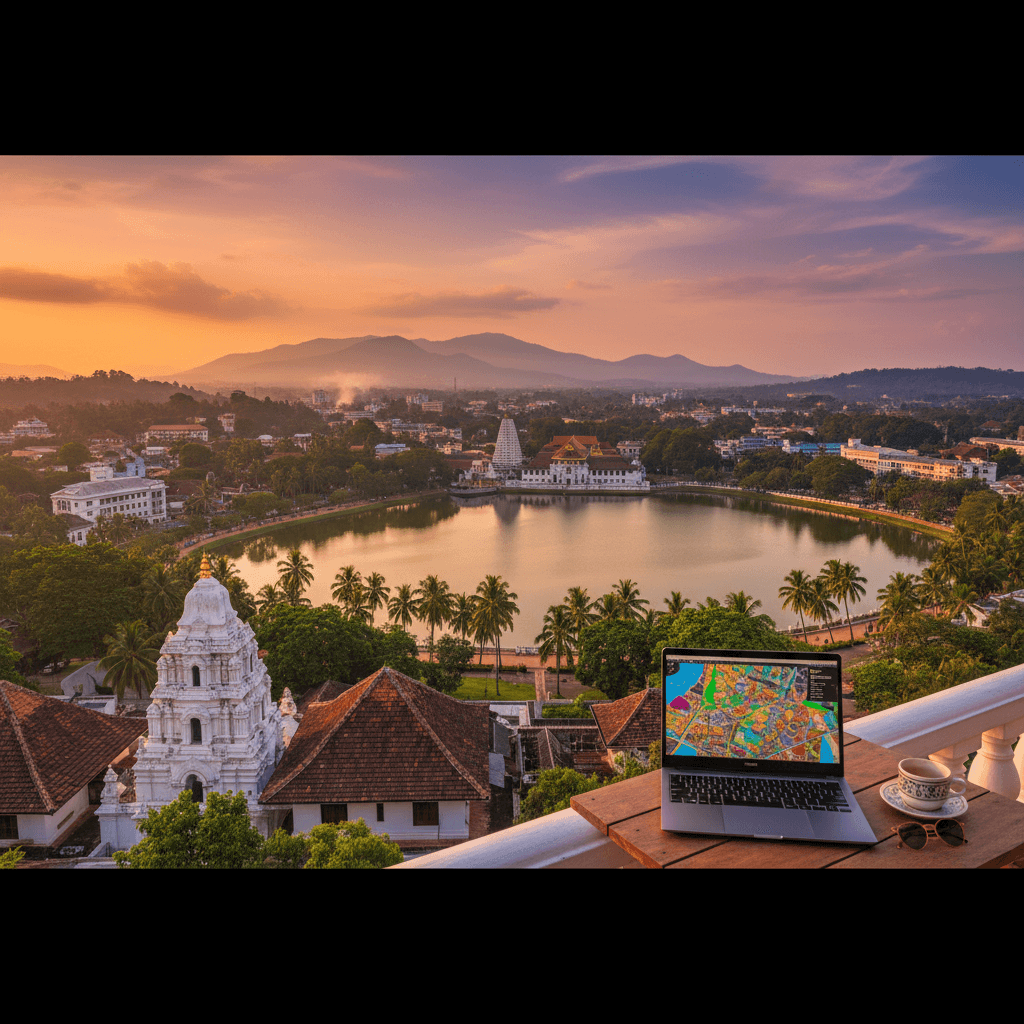
Kandy feels slower than Colombo in a way that’s obvious the second you arrive, with tuk-tuk horns echoing off the hills, incense drifting from the Temple of the Tooth and that damp mountain air sitting on your skin. It’s spiritual, a bit old-school and frankly less polished than the beach or capital-city alternatives, which is exactly why some nomads stick around. Not flashy. Not flat.
The city works best if you want a calm base with real character, plus enough coffee shops, guesthouses and ride-hailing to get through the week without losing your mind. Kandy Lake gives the center a quiet, reflective mood, while the Esala Perahera season can turn the whole place into a drum-heavy, torch-lit procession that feels intense, crowded and weirdly beautiful all at once.
Most nomads come for the low costs and the hill-country setting, but they stay for the mix of nature, food and easy day trips, especially if they want a break from hotter, louder cities. A decent one-bed can still land in the $270 to $400 range in the center, meals run cheap if you eat local and the internet is usually fine for normal work, though it can wobble when you least want it to.
Where people actually base themselves
- Kandy City Centre: Best for quick access to cafes, markets and transport, but it’s crowded and a bit noisy.
- Peradeniya: Quieter, greener and better for focus, with fewer nightlife options and an easy commute back in.
- Katugastota: More suburban and affordable, with a local feel and decent value for longer stays.
- Digana: Peaceful and scenic, though it’s farther out and feels less practical for day-to-day nomad life.
For work, Office One Kandy is the serious option and cafes like Natural Coffee are where people go when they just need a table, decent coffee and a few uninterrupted hours. The city’s biggest frustrations are pretty clear, honestly, English can be patchy outside tourist pockets, some business errands drag and healthcare gets mixed reviews even though the National Hospital Kandy is the main fallback.
If you’re social, Kandy can be fine, just don’t expect a wild scene. The nights are low-key, the air smells like fried kottu and exhaust after dark and the best rhythm here is usually a morning work session, an afternoon walk near the lake, then a quiet dinner instead of chasing parties that don’t really exist.
Kandy stays cheaper than Colombo, but it’s not dirt cheap once you add a decent apartment, rides and the occasional coffee shop day. A solo nomad can live on about $600 to $800 if they keep it simple, while $800 to $1,200 gets you a more comfortable setup with a proper one-bedroom and mixed dining. Above that, you’re paying for comfort, not survival.
Rent is where the numbers move fast. In the city center, studios and one-bedrooms usually run about $270 to $400 and places in Peradeniya or Katugastota often drop to $200 to $350, which sounds better until you realize you’ll spend more time on PickMe or tuk-tuks. The hum of traffic, the smell of curry leaves frying and the occasional temple bell make center living feel alive, but also a bit noisy and crowded.
Typical Monthly Costs
- Housing: $200 to $400 for most decent long-stay setups
- Food: Street food from $0.30 to $1, local meals $2 to $4, nicer dinners $10+
- Transport: About $20 to $50 a month if you’re using rideshares and buses
Food can be absurdly cheap, honestly, if you eat like a local. Kottu roti from a market stall might cost LKR 400 to 700, a rice and curry plate at a no-frills spot lands around LKR 500 to 1,200 and then there’s Vito or similar nicer places when you want a break from plastic chairs and ceiling fans. Coffee is usually affordable too, though good workspace cafes are worth paying a little extra for because laptop time in Kandy gets sticky fast.
Transport won’t hurt your budget unless you’re lazy about distance. PickMe rides often come in around $1 for short hops, buses are cheaper still and tuk-tuks are fine if you agree on the price first, because some drivers will try it on. Internet is, honestly, decent enough for most remote work, though it’s still wise to keep a Dialog or Mobitel SIM as backup when a cafe connection gets weirdly patchy.
What Different Budgets Feel Like
- Budget, $600 to $800: Shared place, market meals, local transport
- Mid-range, $800 to $1,200: One-bedroom, mixed eating out, regular rideshares
- Comfortable, $1,200+: Nicer apartment, more cafe work, better restaurants
The real trap is trying to live like you’re on holiday every day. That gets expensive fast, especially if you keep choosing imported food, tourist taxis and polished cafes with air conditioning blasting cold enough to make your wrists ache. Kandy rewards people who settle in, shop local and accept that a rainy afternoon with a cheap plate of rice and curry is usually better than a polished expat lifestyle anyway.
Kandy feels calm on the surface, then the horns start, temple drums roll through the afternoon and a scooter squeezes past with a wobble. It’s slower than Colombo, cooler too and most people base themselves around the lake, the city center or one of the quieter suburbs once they get tired of the traffic and the prayer bells.
Nomads
City Centre is the easiest base if you want cafes, tuk-tuks and quick access to the Temple of the Tooth and Kandy Lake. It’s pricier and noisier, frankly, but you’re paying for convenience and a lot of remote workers like the energy even when the WiFi dips at the worst possible moment.
- Kandy City Centre: Best for first-timers, walkability and café hopping, though the crowds and honking get old fast.
- Peradeniya: Quieter, greener and better for focus, with a cooler feel and easier workdays near the gardens.
Peradeniya tends to win for deep work because it feels less frantic and weirdly, that matters more than a trendy address when your laptop is your office. Office One Kandy is over in Katugastota, so some nomads split time between a calmer neighborhood and a proper desk when they need stable internet.
Expats
Katugastota is the practical choice if you want a suburban setup, lower rents and easier everyday life without living in the tourist core. You’ll find markets, local shops and enough services to get by, though English can be patchy and a few errands turn into a lot of gesturing, smiling and waiting.
- Katugastota: Good for long stays, cheaper apartments and a more local feel, with fewer tourist frills.
- Peradeniya: Also works well for expats, especially if you want greenery and a quieter rhythm.
Most expats I’d point here want space, lower monthly costs and less chaos than the center, not nightlife. That’s the tradeoff, of course, because once you move out of the middle, dinner delivery gets thinner and a simple trip can take longer than it should.
Families
Katugastota is the sanest family pick, because it’s more residential, cheaper and less intense than the lake area. Digana also works if you want peace, golf-resort surroundings and lots of open space, though it’s a longer haul back into town and you won’t have many conveniences at your door.
- Katugastota: Best mix of affordability, space and everyday practicality.
- Digana: Quiet, scenic and good for families who don’t mind being farther out.
Solo Travelers
If you’re in Kandy alone, stay in the City Centre or right by the lake, because that’s where the cafes, buses and people are. You’ll meet more travelers there and honestly, it’s easier to orient yourself before you branch out to quieter areas.
Skip the idea that every neighborhood needs nightlife, Kandy doesn’t work like that. The better move is simple, sleep near the center if you want easy days, then head to Peradeniya for quiet mornings and Digana when you want space, trees and a break from the city hum.
Kandy’s internet is decent, not dazzling. In the center, cafes and coworking spots usually hold up fine for calls and uploads, but the moment you drift into quieter hills or older guesthouses, speeds get patchy and honestly, you’ll want a backup SIM before you get smug about your setup.
Most nomads say the city sits around 20-25 Mbps on average, which works for email, docs, Slack and light Zoom, but it can wobble when it rains hard or when everyone piles into the same cafe at lunch and the line gets choked by noise, traffic and one suspiciously loud fan.
Office One Kandy, in Katugastota, is the main coworking bet. It’s clean, fairly quiet and set up for real work, not just laptop tourism, with hot desks around LKR 1,500 to 2,000 a day and monthly access starting near $167, so it’s cheaper than Colombo but still feels like a proper office.
Best Places to Work
- Office One Kandy: Best for steady workdays, fast wifi and fewer distractions.
- Natural Coffee: Good for a laptop hour or two, coffee’s cheap and the vibe is relaxed enough for writing or admin.
- Kandy City Centre cafes: Handy if you want quick access to shops, transport and lunch, though they get noisy fast.
- Peradeniya cafes: Quieter, greener and better if you need to think without tuk-tuk horns in your ear.
Mobile data is the real safety net. Dialog and Mobitel tourist SIMs are easy to grab at the airport or in town, usually costing LKR 1,400 to 3,200 for 20 to 100GB over 30 days and if you’d rather skip the queue, eSIMs work too, weirdly well for short stays.
Carry one anyway. Cafes can go from perfectly fine to frustratingly slow in the space of one power cut and Kandy does get those, so most long-stay nomads keep a second connection, a charged power bank and a little patience for the occasional dead zone.
If you’re based in Peradeniya or Katugastota, the setup can be easier than in the center, since you’re less likely to get stuck in traffic or spend half the morning hunting for a quieter seat, though you’ll miss the convenience of walking to lunch and meeting people after work.
Safety & Healthcare
Kandy feels pretty safe, especially around the lake, City Centre and the main temple strip. Pickpocketing and petty hassle do happen, though, so keep your bag zipped and your phone out of sight on crowded buses, markets and temple days when the air smells like incense, diesel and fried dough.
Protests are the real thing to watch. Stay well clear if crowds start building, because they can turn ugly fast, with tear gas, shouting and sudden road closures that make tuk-tuks stall for ages. No major no-go zones. Just use common sense.
Women generally report low petty crime here and many solo travelers move around fine after dark in the center, but quiet side streets can feel oddly empty and frankly that’s when Kandy gets a little too quiet. If you’re out late, take a PickMe or Uber back, it’s cheap enough to avoid the hassle.
Healthcare
National Hospital Kandy is the main public option and it handles a lot, including emergencies and tertiary care, but the feedback from nomads is mixed at best. The hospital system can feel slow, English support isn’t always great and if you’re expecting slick private-clinic service, you’ll probably be annoyed.
Pharmacies are easy to find across town, which helps a lot for basics, antibiotics and minor stomach issues. For anything more serious, most expats prefer to get checked early rather than wait, because the gap between a simple fix and a long, sweaty afternoon in a waiting room can be bigger than you’d like.
Honestly, carry insurance that covers evacuation, not just a basic policy that looks fine on paper. If you need urgent help, the tourist police can be reached at +94 11 242 1052 and locals will usually point you toward the nearest clinic without drama.
Practical safety notes
- Transport: Use PickMe or Uber at night, tuk-tuks are fine, but agree on price first.
- Crowds: Temple festivals and demos get packed, loud and slow, so keep valuables close.
- Health: Bring prescriptions, a small first-aid kit and any meds you rely on.
- Language: English works in tourist areas, but outside those pockets, it can get patchy fast.
If you’re staying a while, the combo of cheap rides, decent pharmacy access and a generally calm atmosphere makes daily life manageable. The hospitals aren’t a selling point, weirdly, but Kandy still feels safer and less frantic than Colombo and that counts for a lot when you’re trying to get work done and keep your blood pressure down.
Kandy’s easiest move is simple, stay near the center if you want to walk and leave the far hills for slower days. The Temple of the Tooth, Kandy Lake and the main cafes are close enough that you’ll hear tuk-tuk horns, temple drums and the odd dog barking before breakfast. It’s a small city, but hills change everything, so a 10 minute ride can feel longer than it looks on the map.
Walk when you can, because the City Centre and lake loop are genuinely manageable on foot. The pavement can be patchy, though and when the rain comes down hard, the roads get slick and the air turns heavy and damp, so don’t plan on polished city walking like Colombo. The best rule is to use your legs for the flat core, then switch to a ride when the road starts climbing.
Rideshares and tuk-tuks
- PickMe: Usually the easiest option and honestly the one most nomads end up using for short hops across town.
- Uber: Works too, though PickMe tends to feel more common in daily use.
- Tuk-tuks: Good for quick trips, but agree on the fare first or use an app, because the first quote can be inflated.
A short ride often runs around $1 and a tuk-tuk can feel cheap until you stack a few trips in a day, then the total starts to bite. If you’re heading to Peradeniya, Katugastota or Digana, rides are still doable, but the city’s hills and traffic make the trip slower than the distance suggests, with exhaust, wet pavement and that constant stop-start shuffle at junctions.
Public transport
- Buses: Dirt cheap, usually about $0.50 to $1.50 for short rides.
- Trains: Great for intercity travel, though local timing can be messy.
- Long transfers: Colombo to Kandy is often easiest by train or app-based car.
Buses are loud, crowded and sometimes confusing, but they’ll get you where you need to go without wrecking your budget. For longer trips, many travelers skip the hassle and book an app car for about $30 to $50 from Colombo, which is more comfortable when you’ve got luggage and don’t want to sweat through three transfers.
Bikes, scooters and airport runs
- Bike or scooter rental: Around $5 to $10 a day through some hotels or local providers.
- Airport transfer: App cars or trains both work, depending on your patience and luggage.
- Road feel: Generally safe, but watch for bends, buses and sudden tuk-tuk swerves.
Renting a scooter can make sense for a few days, especially if you’re based outside the center, but Kandy’s roads aren’t made for relaxed wandering, they’re narrow, busy and full of blind corners. For most people, the smartest setup is simple, walk in town, use PickMe for hills and keep a bus or train in your back pocket when you need to leave the city.
Kandy’s everyday language mix is Sinhala first, Tamil in some households and shops and English that’s, honestly, hit or miss once you leave the Temple of the Tooth area or a tourist-facing cafe. You’ll hear bus conductors shouting destinations, monks chatting softly near the lake, tuk-tuk horns and the odd burst of market banter that leaves newcomers guessing.
Most visitors get by fine with simple English, but don’t expect smooth conversations in pharmacies, on the phone with landlords or in smaller eateries. People are usually polite and they’ll try, still the back-and-forth can be slow enough to test your patience if you’re dealing with repairs, deliveries or paperwork.
Learn a few Sinhala phrases and you’ll get warmer reactions fast. Ayubowan for hello, Istuti for thank you, Kohomada? for how are you, Hari for okay and Mekē rasai for delicious all go a long way, which, surprisingly, can turn a cold interaction into a friendly one at a tea stall or fruit market.
- Best language app: Google Translate, especially for signs, menus and quick voice translation.
- Useful in practice: Type a sentence, show it on your phone, then speak slowly, that works better than repeating yourself louder.
- Local reality: In central Kandy, English is more common, but in Peradeniya, Katugastota and Digana you’ll lean on gestures and patience.
If you’re renting, opening a bank account or sorting out healthcare, bring extra patience and a phone with data, because those conversations can drag. The city’s service culture is friendly but loose, so confirmations get missed, messages go unanswered and you’ll often need to follow up twice, sometimes three times.
English-speaking coworking spaces and cafes make life easier. Office One Kandy has staff who can help without drama and cafes like Natural Coffee are decent if you just need WiFi, a coffee and a quiet corner with the smell of espresso and rain drifting in from the street.
Quick communication tips:
- Speak slowly: Not because people are rude, because accents and vocabulary vary a lot.
- Use cash and screenshots: Ride prices, apartment listings and SIM plans are easier to settle when you can show exact numbers.
- Skip slang: Plain English works better and honestly, everyone saves time.
Kandy feels cooler than Colombo and that alone changes the rhythm of the day. Mornings can start misty and soft, with temple bells, bus brakes and the smell of wet earth drifting off the hills, then by afternoon the humidity comes back and sticks to your skin. Not cold. Just easier.
The best months are February and March, when rain drops off and the city settles into a dry, comfortable stretch with easier train rides, happier walks around Kandy Lake and fewer afternoons ruined by a sudden downpour. If you want the sweet spot for working, exploring and not living under a gray sky, this is it, honestly.
Rain gets annoying fast in Kandy, because the weather can flip from bright sun to a hard, slanted shower in minutes and then you’re dodging puddles, tuk-tuks and slick sidewalks. May to July brings the southwest monsoon, while October through January gets wet too, so July and November are usually the grumpiest months.
- Best overall: February to March, dry, pleasant and easier for day trips.
- Wet stretch: May to July, with heavy rain and a green, soggy city feel.
- Second wet stretch: October to January, especially November, which can feel relentlessly damp.
- Heat factor: It stays mild by Sri Lankan standards, but the humidity still clings.
If you’re a digital nomad, the dry months make life simpler, because you’re less likely to get trapped in a café while thunder cracks over the hills and rain hammers the tin roofs next door. The internet doesn’t change with the weather much, though power cuts and patchy mobile data can feel more annoying during storms, so keep a SIM backup handy.
Festival season changes the vibe a lot. Esala Perahera fills the streets with drums, torch smoke and crowds, which is exciting if you want pageantry, but it can also mean noise, traffic and packed guesthouses, so book early or stay just outside the center.
My take: come in February or March if you want Kandy at its easiest. Come in the wet months if you don’t mind rain on your shoulders, fog hanging over the hills and a city that feels slower, greener and a bit more stubborn.
Kandy moves slower than Colombo and that’s part of the appeal. The air feels cooler up in the hills, temple bells cut through the morning hum and by late afternoon you’ll probably be sitting near Kandy Lake with sweat on your back and a plate of kottu in front of you. Not cheap. Not hard to enjoy.
Money: cash still rules in a lot of places, so keep rupees on hand. ATMs are easy to find, but they often cap withdrawals around LKR 100,000 and that gets annoying if you’re paying rent or settling a bigger bill, so apps like Wise help, though some landlords still want cash anyway.
SIMs: buy one at the airport or a proper shop, Dialog and Mobitel both work well enough for day-to-day use, with tourist bundles starting around LKR 1,400 to 1,800. Internet is, honestly, fine for calls and normal work, but it can wobble outside cafes and coworking spaces, so don’t trust hotel WiFi with anything important.
- Best areas: Kandy City Centre for convenience, Peradeniya if you want quieter streets and garden views, Katugastota for cheaper living, Digana if you don’t mind being farther out.
- Rent: expect about $270 to $400 for a central studio, less in Peradeniya or Katugastota.
- Coworking: Office One Kandy is the main serious option, day passes available (check site for current rates).
- Cafes: Natural Coffee is a decent fallback, assuming you’re happy with one coffee and a laptop all afternoon.
Transport is easy enough if you keep it simple. PickMe usually beats haggling with tuk-tuks, buses are cheap but crowded and loud and the road noise around the city center can be a grind, especially when horns start up and buses lurch past in a cloud of exhaust.
Health and safety: Kandy feels pretty safe in the center, though protests can turn ugly fast, so avoid crowds and keep an eye on local chatter. The National Hospital handles serious care, but frankly, expats complain about the system, so for anything routine, pharmacies are usually the smoother fix.
For day trips, go early. Peradeniya Gardens is easy, Sigiriya and Ella take more planning and the train rides are half the fun, with open windows, curry smells drifting in and the whole carriage rocking through tea country.
- Housing sites: ikman.lk, LankaPropertyWeb, Facebook expat groups and La Mudi listings.
- Etiquette: take off shoes and hats at temples, dress modestly and use your right hand for giving and receiving.
- Visa: Sri Lanka’s digital nomad visa is a cleaner long-stay option if you meet the income requirement.
Need visa and immigration info for Sri Lanka?
🇱🇰 View Sri Lanka Country GuideHidden Gem
Worth the effort
Monthly Budget Estimates
More cities in Sri Lanka
Negombo
🇱🇰 Sri Lanka
Hikkaduwa
🇱🇰 Sri Lanka
Galle
🇱🇰 Sri Lanka