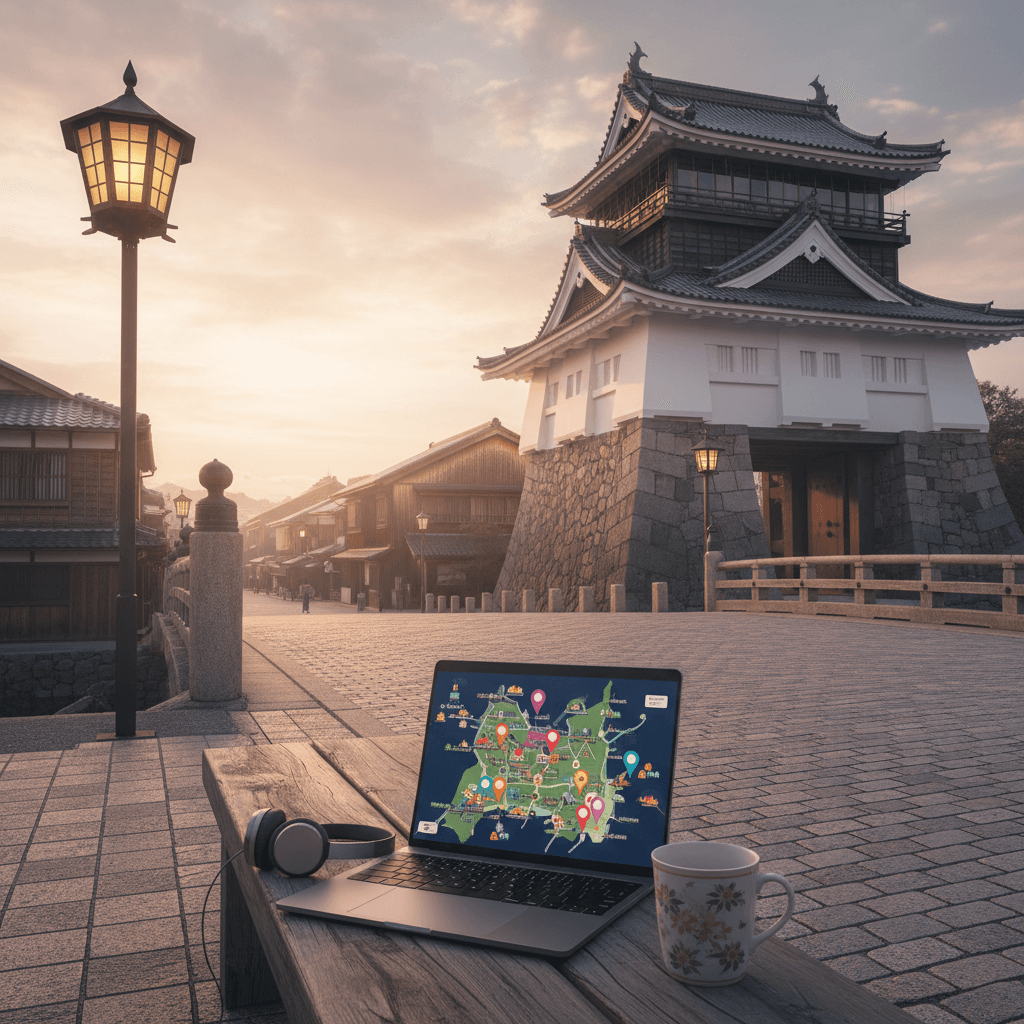
Kanazawa
🇯🇵 Japan
The Urban Retreat
Kanazawa is often called Little Kyoto, but update nickname doesn't quite capture the city's specific magic. While Kyoto feels like a living museum, Kanazawa feels like a living workshop. It is a place where you can spend your morning on a Zoom call and your afternoon learning to apply gold leaf to a lacquer bowl or meditating at Chokyuji Temple for about $10. It is the destination for nomads who want the aesthetics of old Japan without the suffocating crowds of the Tokaido corridor.
The city moves at a deliberate, rhythmic pace. You'll find yourself walking through the Nagamachi Samurai District, where earthen walls hide private gardens, or getting lost in the Higashi Chaya Geisha District. The vibe is sophisticated but grounded. It is less about neon lights and more about the texture of a handmade ceramic cup or the smell of fresh seafood at Omicho Market.
What Nomads Love (and Hate)
Most nomads find that Kanazawa offers a high quality of life for a mid-range budget, typically landing between $2,211 and $3,441 per month. You get the benefits of a modern Japanese city, like excellent 5G coverage and flawless public safety, paired with a deep sense of authenticity. It's a base that rewards those who stay longer than a weekend.
However, it isn't perfect. The English proficiency here is lower than in Tokyo or Osaka, so you'll be leaning heavily on Google Translate. The local nomad community is growing but still small, meaning you might feel a bit isolated if you don't seek out hubs like LINNAS Kanazawa. Also, while the city is tech-forward, some coworking spaces still stick to traditional weekend closures, which can be a headache for those on a Sunday deadline.
Where to Plant Your Flag
- Higashi Chaya District: This is the cultural heart. It's perfect if you want to walk out your door and see geisha houses and traditional tea shops. Rents are higher here, and it gets busy with tourists during the day, but the evenings are incredibly peaceful.
- Omicho Market Area: This is the central choice for foodies. You're right next to the best seafood in the region and within biking distance of the castle. It's a bit more crowded, but you're in the middle of the action.
- Nagamachi Samurai District: A favorite for expats and those staying long-term. It's quiet, residential, and feels very "old world." It's a bit further from the coworking hubs, but the atmosphere is unbeatable.
- Kanazawa Station: Best for short-term stays or those who need to travel frequently. It's modern, convenient, and has the best transport links, though it lacks the historic soul of the other districts.
The Digital Setup
You won't find 1Gbps speeds at every corner cafe, but the infrastructure is solid. Average download speeds around 200+ Mbps. For serious work, the IT Business Plaza is a standout; it's government-run, free to use, and open from 10:00 to 22:00. If you prefer a dedicated nomad environment, LINNAS Kanazawa has a great Discord community and hosts regular events to help you meet people.
For mobile data, skip the physical SIM cards at the airport and go with an eSIM like Airalo or Ubigi. It's cheaper and saves you the hassle of registration. If you're heading into the outskirts or the nearby mountains, a pocket WiFi rental from the station is a smart backup.
The Cost of Living
- Central Studio Rent: $800 to $1,200
- One-Bedroom Apartment: $1,000 to $1,500
- Market Meal: $5 to $10 for a fresh seafood bowl
- Mid-range Cafe Dinner: $15 to $25
- Monthly Transport: $50 to $100 via bus and e-bikes
When to Go
Timing your stay is everything in Kanazawa. April and May are the peak, thanks to the cherry blossoms, while October and November offer stunning autumn colors and crisp air. Avoid the height of summer if you can; July and August are notoriously humid and rainy, which can make the hilly walks through the samurai districts feel like a swampy trek. Winters are cold and dry, but seeing Kenrokuen Garden covered in snow is a bucket-list experience for many travelers.
Living Costs in the City of Gold
Kanazawa is often called Little Kyoto, but your wallet will find it much more forgiving than its famous cousin. It sits in that sweet spot for digital nomads: it is more expensive than the rural countryside but significantly cheaper than the relentless grind of Tokyo. Most people living here find a monthly budget between $2,211 and $3,441 covers a high quality of life without much sacrifice.
You are paying for a mix of Edo era atmosphere and modern convenience. While the city is famous for gold leaf and samurai history, the daily costs are grounded in the reality of the Sea of Japan coast. If you are coming from a major US or European hub, the food prices will feel like a bargain, though housing in the historic center carries a premium.
Monthly Budget Tiers
- The Budget Nomad ($2,000): You are likely staying in a shared house or a studio on the city outskirts. You eat mostly at Omicho Market stalls or local ramen shops and use a bicycle as your primary wheels.
- The Mid Range Professional ($2,500): This is the sweet spot. You can afford a nice one bedroom apartment, a few nights of sushi, and a dedicated desk at a space like LINNAS Kanazawa.
- The Comfortable Expat ($3,500): You are living in the heart of the action near Kenrokuen Garden. You probably don't cook much, opting for upscale omakase dinners and frequent weekend trips to Osaka or Tokyo.
Housing and Rent
Rent is your biggest variable. If you want to wake up in the Higashi Chaya Geisha District, be prepared to pay for the privilege. Most nomads recommend looking slightly further out or near the station for better value and more modern insulation, which you will definitely want during those cold January nights.
Central Areas (Near Kenrokuen Garden)
- Studio Apartment: $800 to $1,200
- One Bedroom: $1,000 to $1,500
Outer Neighborhoods
- Studio Apartment: $600 to $900
- Shared Housing/Guesthouses: $400 to $600
Dining and Groceries
Food is where Kanazawa shines. Omicho Market is the city's kitchen, where you can grab a world class seafood bowl for $5 to $10. If you are eating out at mid range cafes, expect to pay $10 to $20 per meal. For those special nights, a high end sushi omakase starts around $50 and goes up from there.
If you enjoy the social side of food, local workshops are popular but pricey. A sushi making class for two will run you about $400, while a simple Zen meditation session at Chokyuji Temple is a steal at $10. Most nomads find that a mix of market finds and local izakayas keeps the food budget around $600 to $800 a month.
Transport and Connectivity
The city center is highly walkable, so your transport costs stay low. A monthly pass for buses or occasional e-bike rentals usually totals $50 to $100. For digital work, the IT Business Plaza is a local favorite because it is actually free to use and stays open until 22:00. If you prefer a paid environment with more amenities, expect to pay about $7.70 for a day pass at local coworking hubs.
One thing to watch out for is the Japan Digital Nomad Visa, which is available for stays up to six months. You will need to prove a significant annual income to qualify, but it simplifies the logistics of staying long term in 2026. For daily spending, stick with apps like Wise or Revolut and keep some yen on hand for the smaller shops in the samurai districts.
The Culture Seekers: Higashi Chaya Geisha District
If you're coming to Kanazawa to soak up the Edo-period atmosphere, this is your spot. It's famous for its preserved wooden teahouses and gold leaf craft shops. Living here feels like stepping back in time, especially in the early mornings before the tour groups arrive.
- Best for: Solo travelers and history buffs who don't mind a bit of a tourist crowd during the day.
- Pros: Incredible walkability to Kenrokuen Garden and Kanazawa Castle. You'll find the best wagashi (traditional sweets) in the city right outside your door.
- Cons: Rents are on the higher side for a central studio. It gets very quiet after dark, so don't expect a wild nightlife scene.
The Remote Workers: Omicho Market & Central Kanazawa
Most nomads gravitate toward the area surrounding Omicho Market. It's the functional heart of the city where the food is world-class and the infrastructure is built for productivity. You're within walking distance of IT Business Plaza, a government-run coworking space that's actually free to use.
- Best for: Digital nomads and foodies who want to be near the action.
- Pros: Unbeatable access to seafood bowls and fresh produce. It's the most e-bike-friendly part of town, making it easy to zip across the city.
- Cons: It can be noisy during market hours, and the streets get packed on weekends.
The Long-Termers: Nagamachi Samurai District
For those planning to stay a few months or more, Nagamachi offers a more residential, peaceful pace. The neighborhood is defined by its earthen walls and narrow canals. It's tucked away from the main tourist thoroughfares but remains deeply historic.
- Best for: Expats and families seeking a quiet, authentic neighborhood feel.
- Pros: Very safe and close to several small neighborhood parks. It's a short walk to the D.T. Suzuki Museum for a quick meditation break.
- Cons: There are fewer dedicated nomad hubs or cafes designed for laptop work compared to the station area.
The Transit Hoppers: Near Kanazawa Station
If you're using Kanazawa as a base to explore the rest of the Hokuriku region or taking frequent trips to Tokyo via Shinkansen, stay near the station. The Motomachi and Hirooka sides of the station are modern, efficient, and filled with amenities like the Matsumoto Kiyoshi pharmacy and various grocery stores.
- Best for: Short-term travelers and those who value convenience over "old world" aesthetics.
- Pros: Excellent internet speeds and proximity to community hubs like LINNAS Kanazawa for meeting other travelers.
- Cons: It feels like a standard Japanese city hub and lacks the historic charm of the Chaya or Samurai districts.
- Transport: You're seconds away from the ¥1,150 airport bus to Komatsu Airport (~40 minutes).
The Budget Conscious: Outer Neighborhoods
If the central prices feel a bit steep, looking just 15 minutes away by bus or bike can save you a significant amount. Neighborhoods like Nishi-Kanazawa offer a much more localized experience where you'll rarely see another tourist.
- Best for: Budget-focused nomads and those on the Digital Nomad Visa.
- Pros: Authentic local izakayas and cheaper grocery prices.
- Cons: You'll definitely need a bike or a bus pass, and English proficiency in these areas is lower. Highly recommend having Google Translate downloaded for offline use.
Connectivity on the Sea of Japan
Kanazawa offers a reliable but slightly slower digital infrastructure than the hyper-speed hubs of Tokyo or Osaka. Most nomads find the citywide average speeds of 23 to 28 Mbps sufficient for video calls and standard remote work, though you might feel the lag if you're dealing with massive raw video files. The good news is that 5G coverage is nearly universal across the city center, so your hotspot will often be your best friend when the hotel WiFi gets spotty.
For mobile data, skip the physical SIM card hunt at the airport. Expats recommend pre-installing an eSIM like Airalo or Ubigi before you land. If you need a physical backup or a pocket WiFi device, you can find rentals at Kanazawa Station, though these are generally pricier than the eSIM route. Most local cafes and chains have free WiFi, but you'll usually need to register with an email address or social media account to get through the portal.
Top Coworking Spots
The coworking scene here is intimate and functional rather than flashy. It's a city that favors quiet productivity over the "hustle culture" aesthetic. You'll find a few standout spots where the local remote work community tends to congregate.
- IT Business Plaza: This is the gold standard for budget-conscious travelers. It's government-run and surprisingly free to use. It stays open from 10:00 to 22:00 daily, making it one of the few places where you can pull a late shift. It's a solid spot for networking with local Japanese entrepreneurs.
- LINNAS Kanazawa: More than just a place to sit, LINNAS is a lifestyle hub. They host regular nomad-focused events and maintain an active Discord community. It's the best place to find your "tribe" if you're feeling isolated by the language barrier.
- The Paid Hubs: There are several professional spaces near the station that charge around ~¥800-1,000 per day. These typically operate from 10:00 to 20:00 on weekdays and offer the perks you'd expect: external monitors for rent, private phone booths for sensitive calls, and a much quieter environment than a coffee shop.
The Cafe Culture
If you prefer the hum of a coffee shop, Kanazawa has plenty of options, though etiquette is key. In local spots, it's polite to buy a fresh drink every 90 minutes if you're hogging a table with a laptop. Most nomads stick to the reliable chains when they have a long to-do list.
- Starbucks and Doutor: You'll find these near the station and Omicho Market. They have the most reliable free WiFi and plenty of power outlets, though they get packed with students on weekend afternoons.
- Higashi Chaya Cafes: While beautiful, many traditional teahouses in the geisha district don't have WiFi and aren't laptop-friendly. Save these for your "off" hours and stick to the modern district for work.
The Weekend Catch
One thing travelers often complain about is the weekend closure of certain professional coworking spaces. Unlike Tokyo, where the city never sleeps, Kanazawa keeps a more traditional schedule. If you have a deadline on a Saturday or Sunday, check the IT Business Plaza first, or plan to work from a hotel lobby or a LINNAS community event. Having a Starlink backup is becoming more common for those staying in the mountainous outskirts, but for city living, a strong 5G signal is usually all the insurance you need.
A Haven of High Safety
Kanazawa is widely regarded as one of the safest urban environments in Japan. For nomads used to the hyper-vigilance required in major Western hubs, the atmosphere here is a breath of fresh air. You'll regularly see locals leave their bags unattended in cafes to use the restroom, and walking home alone after a late-night session at a bar in the Higashi Chaya district feels remarkably secure. The city maintains a low crime rate and excellent air quality, with AQI levels typically ranging between 18 and 89.
While physical safety is rarely a concern, cultural safety is about respecting local etiquette. To blend in and avoid friction, remember that eating while walking is generally frowned upon. Keeping your voice down in the historic samurai districts and geisha areas is also expected. Most travelers find that as long as they follow these basic social cues, they're treated with immense hospitality.
Healthcare Standards and Access
The quality of medical care in Kanazawa is world-class, though the language barrier can be a hurdle. The city is home to major facilities like Kanazawa University Hospital, which is the go-to for serious concerns or specialist consultations. For everyday issues, you'll find plenty of local clinics near Kanazawa Station and the central Omicho Market area.
- Pharmacies: Look for the Matsumoto Kiyoshi chain. They are ubiquitous and stock everything from basic cold meds to high-end skincare.
- Emergency Services: Dial 119 for an ambulance. While some dispatchers may speak limited English, it's best to have a translation app like Google Translate ready to communicate symptoms.
- English Support: Larger hospitals are your best bet for English-speaking staff, but many expats recommend using the Himawari search tool or local Facebook groups to find specific doctors who have practiced abroad.
Insurance and Practicalities
If you're entering on the Japan Digital Nomad Visa, you'll need to prove you have private health insurance that covers at least 10 million yen. Even if you're just on a standard tourist waiver, don't skip the coverage. Japanese healthcare is efficient, but costs for uninsured foreigners can stack up quickly if you need more than a simple prescription.
For minor ailments, many nomads find that Japanese pharmacists are incredibly helpful. They can often recommend over-the-counter solutions that save you a trip to the doctor. Just keep in mind that many Japanese medications are dosed lighter than those in the US or Europe, so you might need to check the active ingredients if you have a specific tolerance level.
Emergency Readiness
Like the rest of Japan, Kanazawa is prepared for natural events. Most modern apartments and coworking spaces like LINNAS Kanazawa are built to strict seismic codes. Take a moment when you check into your accommodation to locate the evacuation maps, which are usually posted on the back of doors. Local alerts will pop up on your phone automatically; having an eSIM with data is vital for receiving these real-time translations during a tremor or heavy rain season in June and July.
Getting Around Kanazawa
Kanazawa is a rare find in Japan because it's genuinely walkable. While Tokyo demands a complex dance of subway transfers, you can cross most of Kanazawa's historic core on foot. Walking from the Higashi Chaya Geisha District to the Kenrokuen Garden takes about 20 minutes, and the route is packed with enough craft shops and old-world architecture that you won't even notice the distance.
The Bus Network
When your legs give out or the rain starts, the local bus system is your best friend. The city is served by efficient loop buses that hit all the major nomad hubs and tourist sites. A single ride typically costs around $2. Most expats recommend getting a Suica or Pasmo card, or using the local digital equivalents, so you aren't fumbling for coins at the front of the bus. If you're staying near Kanazawa Station, you'll find it's the central nervous system for every route in the city.
Cycling and E-Bikes
Biking is arguably the most "local" way to see the city. The terrain is mostly flat, and the streets in the Nagamachi Samurai District are much easier to explore on two wheels than in a car. You can find e-bike rentals for about $50 for a half-day, which often includes guided routes to spots like the Ninja Temple. Many long-termers end up renting or buying a cheap "mamachari" bike to get between their apartment and the IT Business Plaza coworking space.
- Machi-Nori: This is the city's public bike-share scheme. It's affordable and has docking stations scattered near Omicho Market and the castle.
- E-Bike Tours: Great for your first week to get your bearings while learning the backstreets.
- Parking: Just remember to use designated bike parking areas; Japanese wardens are surprisingly efficient at impounding illegally parked cycles.
Taxis and Ride-Hailing
Don't expect to use Uber or Lyft here in the way you do in the States or Europe. Ride-hailing is limited. Instead, download the JapanTaxi or GO app. These apps allow you to hail licensed taxis and pay via your stored credit card. It's a lifesaver when you're caught in a downpour or heading home late from a dinner in the Katamachi nightlife district. Taxis are clean and safe, but they aren't cheap, so most nomads save them for emergencies or grocery hauls.
Regional Travel
For trips further afield, Kanazawa Station is your gateway to the rest of Japan. You can reach Tokyo or Osaka in under 3 hours via the Shinkansen. If you're flying in, Komatsu Airport is the closest hub. A low-cost shuttle bus connects the airport to the city center in about 37 minutes, making arrival and departure relatively painless. For weekend trips to the Noto Peninsula or nearby mountain villages, renting a car at the station is the way to go, though you'll need an International Driving Permit.
Practical Transport Tips
- Google Maps: It's incredibly accurate for bus schedules and platform numbers at the station.
- Walking: Stick to the Omicho Market area if you want to be within a 10-minute walk of everything important.
- Airport Shuttle: Costs are low, and the buses are timed to coincide with major flight arrivals.
- JR Pass: Useful if you're using Kanazawa as a base to explore the wider Hokuriku region, but not necessary for getting around the city itself.
The English Reality Check
If you're coming from Tokyo or Osaka, the drop in English proficiency in Kanazawa will hit you the moment you step off the Shinkansen. While the city is incredibly welcoming, it hasn't quite reached the level of international linguistic saturation found in the bigger hubs. Most nomads find that while station staff and high end hotel concierges speak decent English, your local izakaya chef or the person running the neighborhood laundry mat likely won't speak much at all.
Expats in the area often say that Kanazawa is a city of gestures and patience. You'll get by with a smile and a lot of pointing at menus, but don't expect deep philosophical debates in English at the local bar. It's an authentic slice of Japan, which is exactly why people love it, but it means the burden of communication is often on you.
Survival Phrases for the Street
You don't need to be fluent to live here, but memorizing a few basics will change how locals treat you. Using a little Japanese shows you're not just a tourist passing through, but someone trying to integrate into the rhythm of the city.
- Sumimasen: This is your Swiss Army knife word. It means "Excuse me" to get a waiter's attention, "I'm sorry" if you bump into someone, or even a soft "Thank you" when someone holds a door.
- Arigatou gozaimasu: The polite way to say thank you. Use the full version rather than just "Arigatou" to keep things respectful.
- Eigo ga hanasemasu ka?: "Do you speak English?" It's much better to ask this than to just start speaking English and hoping for the best.
- Kore o onegaishimasu: "This one, please." Incredibly useful at Omicho Market when you're pointing at a specific piece of fatty tuna.
- Okaikei o onegaishimasu: "The check, please." Essential for wrapping up dinner.
The Digital Nomad Toolkit
Since English is limited, your phone is your best friend. Most travelers and long term nomads rely heavily on Google Translate. Make sure you download the Japanese language pack for offline use; the camera feature is a lifesaver for translating kanji on grocery store labels or complex restaurant menus.
For more nuanced conversations, some expats recommend DeepL, which often handles Japanese grammar better than Google. If you're staying at a community hub like LINNAS Kanazawa, you'll find plenty of English speakers and a Discord community to help translate the more confusing parts of local life. For official matters, like visiting Kanazawa University Hospital, travelers often use translation apps to bridge the gap since medical English can be hit or miss.
Social Etiquette and Non-Verbal Cues
In Kanazawa, how you say something is often as important as what you say. The city takes its "Little Kyoto" reputation seriously, and there's a certain level of decorum expected, especially in the Higashi Chaya district. Keeping your voice down in public spaces and avoiding phone calls on the bus are unwritten rules that will help you blend in.
If you're looking for a community that speaks your language, head to the IT Business Plaza or join a nomad retreat. These spots act as English speaking islands where you can network and vent about your struggles with Japanese particles. Outside of these bubbles, embrace the quiet. Kanazawa is a place where communication happens through shared experiences, like a meditation session at Chokyuji Temple, where words aren't really the point anyway.
When to Pack Your Bags
Kanazawa is a city of distinct seasons, each bringing a different texture to the landscape. If you're looking for that postcard-perfect experience, aim for April and May. This is when the cherry blossoms transform the grounds of Kanazawa Castle and Kenrokuen Garden into a sea of soft pink. The air is crisp, the humidity hasn't kicked in yet, and it's easily the most comfortable time for long walks through the samurai districts.
Autumn is the other heavy hitter. From October through November, the city turns deep shades of orange and red. The temperatures hover around a pleasant 64-69°F, making it the favorite season for nomads who prefer working from outdoor cafes or taking weekend bike trips to the outskirts. These peak windows are popular, so expect slightly higher prices for short-term rentals and more foot traffic in the geisha districts.
The Lowdown on the Seasons
- Spring (March to May): Expect highs between 55°F and 65°F. It's the most social time of year, with plenty of outdoor festivals and flower viewing parties.
- Summer (June to August): It gets sticky. July and August often see temperatures hitting 77°F or higher with heavy humidity. June marks the start of the rainy season, so you'll want a sturdy umbrella and a reliable indoor coworking spot like IT Business Plaza.
- Autumn (September to November): The humidity breaks in late September. October is arguably the best month for productivity, as the weather is stable and the city feels energized but less crowded than spring.
- Winter (December to February): Kanazawa gets its fair share of "Sea of Japan" snow. January is the coldest month, with lows around 33°F. While it's chilly, the sight of the yukitsuri (traditional rope supports for pine trees) in Kenrokuen Garden is a unique winter aesthetic you won't find elsewhere in Japan.
The Nomad Perspective on Timing
Most expats recommend avoiding the peak of summer if you can help it. The combination of rain and heat makes the 20-minute walk between neighborhoods feel much longer than it is. If you're on a budget, the "shoulder" months like late February or early June can offer better deals on housing, though you'll have to trade off some sunshine.
For those planning to stay for a full six-month stint on Japan's Digital Nomad Visa, starting your journey in September is a smart move. You'll catch the best of the fall colors, settle in before the winter snow hits, and be perfectly positioned for the spring bloom before your visa wraps up. Just keep in mind that while the city is beautiful in the snow, some of the smaller craft workshops and outdoor markets might have shorter hours during the coldest weeks of January.
What to Bring
Because Kanazawa is known for being one of the rainier cities in Japan, a high-quality waterproof jacket is a better investment than a cheap convenience store umbrella. If you're visiting in winter, you'll want layers; the coastal wind can be biting even if the thermometer doesn't look too intimidating. In the summer, light linen fabrics are your best friend to combat the 77°F humidity while remaining respectful of the local dress code, which leans toward the conservative side in historic areas like Higashi Chaya.
Getting Around and Staying Connected
Kanazawa is remarkably walkable, especially if you're staying near the central districts. You can trek from the Higashi Chaya geisha area to Kenrokuen Garden in about 20 minutes. For longer distances, the local bus system is efficient and costs roughly $2 per ride. If you prefer two wheels, e-bike rentals are popular; expect to pay around $50 for a half day tour that usually hits spots like the Ninja Temple.
Internet speeds in the city hover between 23 and 28 Mbps. While that isn't lightning fast compared to Tokyo, 5G coverage is nearly universal. Most nomads rely on eSIMs like Airalo or Ubigi for mobile data, but you can also grab a physical pocket WiFi at the station. For banking, stick to 7-Eleven ATMs with a Wise or Revolut card to keep conversion fees low.
Coworking and Caffeine
The remote work scene here is small but welcoming. If you're on a budget, head to IT Business Plaza. It's government run, free to use, and open from 10:00 to 22:00 daily. It's a solid spot for networking with local entrepreneurs. For a more dedicated setup, there are paid spaces available for about $7.70 a day that offer phone booths and monitor rentals.
- LINNAS Kanazawa: This is the heartbeat of the local nomad community. They run a Discord group where people coordinate meetups and dinners.
- Chain Cafes: Places like Starbucks and Doutor are reliable fallbacks. Just remember the local etiquette; buy a coffee every few hours if you plan to linger.
- Hotel Lobbies: Many newer boutique hotels in the Omicho Market area have quiet lounge spaces perfect for a few hours of deep work.
Cost of Living Breakdown
Living here is cheaper than Tokyo but pricier than rural Japan. Most nomads find they need between $2,211 and $3,441 per month depending on their lifestyle. Rent will be your biggest variable.
Higashi Chaya District
- Rent: $1,000 to $1,500 for a one bedroom apartment.
- Vibe: Very historic and tourist heavy during the day, but incredibly peaceful at night.
- Pros: Close to traditional craft workshops and high end tea houses.
Near Kanazawa Station
- Rent: $800 to $1,200 for a studio.
- Vibe: Modern, fast paced, and convenient for travel.
- Pros: Best access to the Shinkansen and western style grocery stores.
Language and Social Life
Don't expect much English once you step away from the train station or major hotels. Proficiency is generally low, so keep Google Translate with the offline Japanese pack ready on your phone. Learning basic phrases like Sumimasen (excuse me) goes a long way with the locals.
Socializing often revolves around food and culture rather than late night clubbing. You'll find nomads meeting up for sushi classes, which run about $400 for two people, or 30 minute Zen meditation sessions at Chokyuji Temple for about $10. If you're looking for a crowd, keep an eye out for organized retreats; Coworkations often hosts themed events in the city during the summer months.
Safety and Health
Kanazawa is exceptionally safe, even late at night. There aren't any specific neighborhoods you need to avoid. If you get sick, Kanazawa University Hospital is the top choice for quality care, though you should use a translation app as English support can be hit or miss. For minor issues, look for the Matsumoto Kiyoshi pharmacy chain, which is everywhere.
The best time to visit is April for the cherry blossoms or October for the autumn colors. Avoid July and August if you can; the humidity is intense and the frequent rain makes exploring the outdoor gardens a bit of a slog.
Need visa and immigration info for Japan?
🇯🇵 View Japan Country GuideHidden Gem
Worth the effort