Kaliningrad
🇷🇺 Russia
The Prussian-Soviet Paradox
Kaliningrad is an anomaly, a geographical oddity that feels like a glitch in the map of Eastern Europe. It is a Russian exclave tucked between Poland and Lithuania, where red brick Prussian fortifications stand in the shadow of massive Soviet apartment blocks. For nomads and expats arriving in 2025 or 2026, the first thing you notice is this architectural tug of war. It is Russia's most European city, but make no mistake, it is deeply Russian at its core.
The vibe here is noticeably more relaxed than the frantic pace of Moscow. There is a maritime stillness to the air, fueled by the proximity to the Baltic Sea and the city's history as a major port. You will find yourself walking past 19th century German villas in the morning and drinking a 500 rouble craft beer in a modern industrial taproom by night. It is this specific blend of history and rebirth that earned it a spot as a top emerging destination for 2026.
The Living Experience
Living here requires a shift in mindset. Because it is an exclave, there is a sense of being on a well appointed island. The infrastructure is surprisingly solid; the city is easy to navigate, and the digital scene is growing, even if it remains under the radar for most Westerners. Most expats find the winter months particularly evocative. While the temperatures can be harsh, the sight of Central Park covered in thick snow, with kiosks selling hot tea and kiosks serving street snacks, creates a cinematic, "Old World" atmosphere.
The emotional experience of Kaliningrad is one of discovery. You are constantly stumbling upon remnants of the past, like old Nazi bunkers or Prussian forts, repurposed for a modern Russian audience. It lacks the pretension of more established nomad hubs. Instead, it offers a gritty, authentic charm that appeals to those tired of the sterilized "laptop and latte" culture of Bali or Lisbon.
Nomad Realities
The practical side of staying here involves some legwork. You will need a Russian visa, though the e-visa system has simplified things for many nationalities. Once you are on the ground, the Yandex GO app will be your best friend for getting around, as it works flawlessly even in the smaller surrounding towns. You will also need a reliable VPN to stay connected to Western platforms, a standard trade off for the high speed internet available in most cafes and apartments.
What makes Kaliningrad different is the lack of "tourist fatigue." Locals are often genuinely curious about why you have chosen their city. While Russian is the dominant language, the younger generation and those in the tourism sector are increasingly conversational in English. You won't find a Starbucks on every corner, but you will find a thriving beer culture and a community of expats who appreciate the city's unique, slightly isolated character.
- The Draw: A mix of European aesthetics and Russian soul at a fraction of the cost of Western Europe.
- The Challenge: The visa process and the geographical isolation from the rest of the Russian mainland.
- The Vibe: Historical, maritime, and unpretentious; perfect for the traveler who prefers "different" over "easy."
Whether you are exploring the frozen tundra of the Curonian Spit or working from a cafe in the shadow of the Königsberg Cathedral, Kaliningrad feels like a secret that the rest of the world hasn't quite figured out yet. It is a place for those who want to be ahead of the curve before the 2026 tourism surge truly takes hold.
The Price of the Exclave Life
Living in Kaliningrad offers a strange but welcome financial middle ground. Because it is physically separated from mainland Russia and shares borders with Poland and Lithuania, the local economy operates on its own wavelength. You will find that your budget goes significantly further here than in Moscow or Saint Petersburg, but the "exclave tax" can occasionally pop up on imported goods. Most nomads find that a monthly budget allows for a very comfortable, mid-range lifestyle, including a modern apartment and frequent dining out.
Housing and Utilities
Rent is the biggest variable, and the market is shifting as the city gains traction with remote workers. If you are looking for a renovated one bedroom apartment in the historic Amalienau district or near the Central Park area, expect to pay between 25,000 and 40,000 roubles per month. Prices drop if you head toward the more Soviet-style blocks on the periphery, but most expats prefer staying central to keep the Prussian architecture within walking distance.
- Modern 1-Bedroom (City Center): 25,000 to 40,000 roubles
- Utilities (Electricity, Heating, Water): 5,000 to 8,000 roubles, though this spikes during the harsh winters when the heating is cranked up.
- High-Speed Home Internet: 600 to 900 roubles for reliable fiber optics.
Food and Dining
Eating out is where Kaliningrad really shines for the budget-conscious traveler. You can grab a quick lunch at a kiosk in Central Park for a few hundred roubles, or sit down for a full meal at a mid-range restaurant for about 800 to 1,200 roubles. The city has a burgeoning craft beer and import scene, influenced by its proximity to Europe. You might pay 340 to 540 roubles for a premium 0.5L bottle of specialty Czech import like Primator Double 24 at a local pub. Grocery shopping is affordable if you stick to local Russian brands and seasonal produce, with a weekly shop for one person averaging around 3,500 to 5,000 roubles.
Transport and Connectivity
Getting around is remarkably cheap. The Yandex Go app is your best friend here; a ten minute taxi ride across the city center usually costs less than 300 roubles. Public transport is even more economical, though less convenient for those who do not speak Russian. For digital nomads, the cost of staying connected is negligible compared to Western Europe. Mobile data plans with generous limits typically cost around 600 to 800 roubles per month. Just remember that a high-quality VPN is a non-negotiable expense for accessing Western sites, so factor in an extra $5 to $10 a month for a reliable service.
Entertainment and Lifestyle
Kaliningrad offers plenty of low-cost ways to spend your downtime. Many of the city's best features, like the historic Prussian forts and the coastal walks, are either free or cost a nominal entry fee of around 200 to 500 roubles. If you are heading to the Baltic coast for a weekend, the train tickets are very affordable, usually under 150 roubles for a one-way trip to Svetlogorsk or Zelenogradsk. For those who like a structured workout, a monthly gym membership in a decent facility will run you about 2,500 to 4,000 roubles.
Summary of Monthly Expenses
- Total Estimated Budget: 90,000 to 130,000 roubles
- Daily Coffee: 180 to 250 roubles
- Mid-range Dinner for Two: 2,500 to 3,500 roubles
- Coworking Desk (Monthly): 10,000 to 15,000 roubles (though many nomads prefer the "cafe office" route for the price of a latte)
For Digital Nomads: Central Kaliningrad
If you need to be within walking distance of a decent flat white and a reliable Wi-Fi connection, the city center is your best bet. This area feels the most "European" of the Russian exclave, with a mix of modern infrastructure and Prussian history. Nomads gravitate here because it's the most walkable part of the city, making it easy to hop between your apartment and various cafes without needing a car.
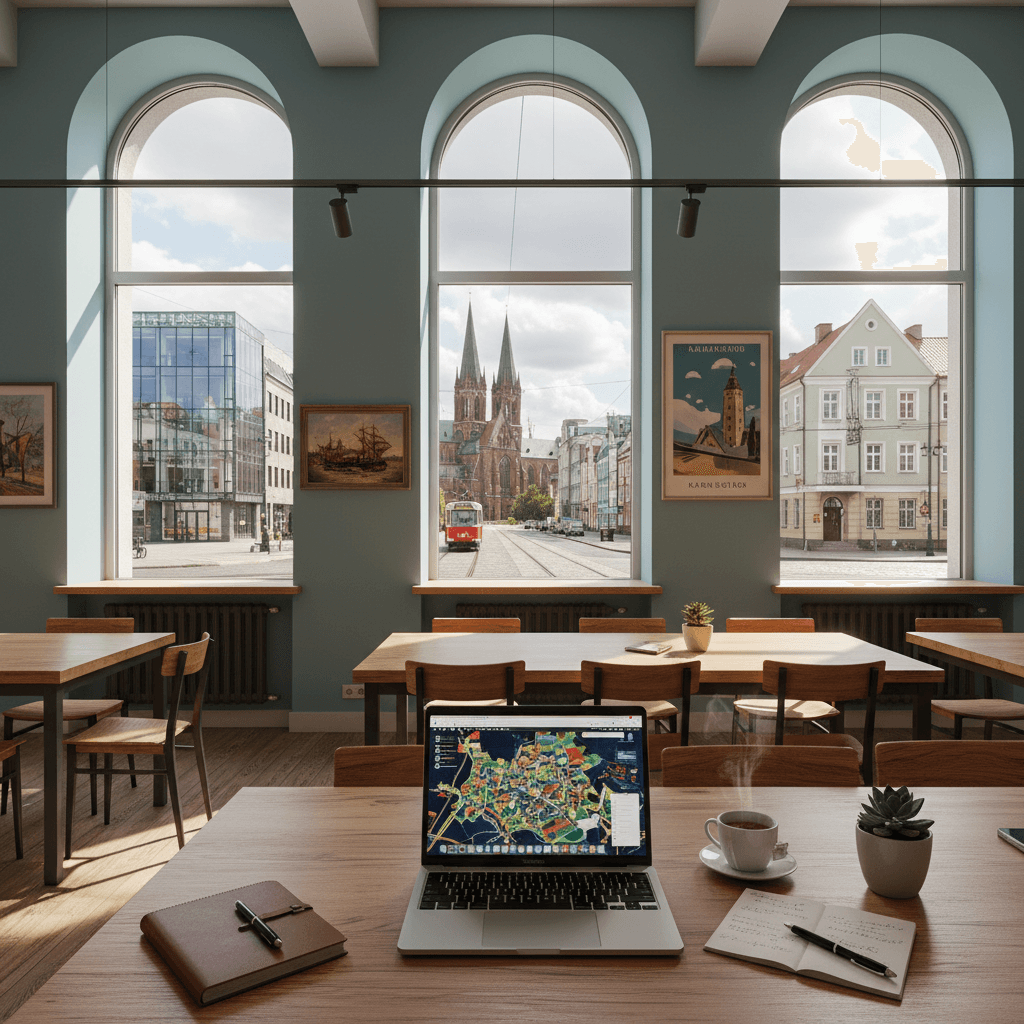
While dedicated coworking spaces are still a growing concept, the local cafe culture is robust. You'll find plenty of spots to open a laptop, though you must remember that a VPN is mandatory for accessing Western sites like Slack or Instagram. Navigation is straightforward using Yandex GO for quick taxi rides across the district. Rent in the center is higher than the outskirts, but still very affordable compared to Western European capitals.
- The Vibe: Accessible, historic, and convenient.
- Internet: Fast fiber in most apartments, but government filters are active.
- Best Perk: Proximity to the historical heart and the easiest access to English-speaking guides.
For Expats: Amalienau and the North-West
Expats looking for long-term stays often look toward the historic Amalienau district or the areas surrounding the leafy northern boulevards. This is where the old German villas survived the war, offering a more picturesque and quiet lifestyle than the Soviet-era blocks elsewhere. It's a neighborhood that feels like a lived-in museum, with cobblestone streets and vintage fire hydrants that look particularly striking under winter snow.
The social scene here is anchored by local pubs and specialty beer shops. You can find high-end imports like the Primator Double 24 for about 340 to 540 roubles. Expats appreciate the slower pace of life here, though the winter thaws can make the sidewalks a bit of a slushy mess. It's a great area for those who want to integrate into the local culture while enjoying the architectural heritage of the city.
- Housing: Beautifully renovated German apartments and quiet residential streets.
- Social: Strong community of locals and long-term foreigners in local craft beer spots.
- Logistics: Slightly further from the main hubs, but well-connected by public transport.
For Families: Central Park and Surrounds
Families usually find themselves drawn to the neighborhoods bordering Central Park. During the winter, the park transforms into a massive playground with slopes for sledding and kiosks selling hot tea and snacks. It's a safe, contained environment where kids can run around while parents grab a coffee from a nearby stand. The atmosphere is magical when the trees are covered in frost, though you'll want to invest in serious winter gear for the little ones.
The infrastructure in this part of town is well-developed, with wide sidewalks and easy access to pharmacies and grocery stores. The pace is relaxed, and the noise levels are much lower than the commercial heart of the city. Most families find the proximity to green space a major win for year-round living.
- Activities: Sledding in winter, strolling in summer, and plenty of kiosks for quick meals.
- Safety: Very high, with a community-focused atmosphere.
- Transport: Easy to navigate with strollers, and Yandex GO is always available for quick trips.
For Solo Travelers: The Island and Fishing Village
Solo travelers looking for the most iconic views often stay near Kant Island and the Fishing Village (Rybnaya Derevnya). While it's a bit more tourist-heavy, it's the most scenic part of Kaliningrad and puts you right next to the Cathedral. It's perfect for those who want to explore on foot and take in the Prussian forts and Nazi-era bunkers that dot the landscape. The area is safe for solo walking even late at night, and the lighting along the river makes for great evening strolls.
Solo visitors often use this as a base for day trips to the Baltic coast or the Curonian Spit. Since traveling solo can sometimes feel isolating in a Russian-speaking city, being in this high-traffic area makes it easier to meet other travelers or find English-speaking tours. The e-visa process has made this area much more accessible for weekend explorers from nearby countries.
- Vibe: Scenic, tourist-friendly, and photogenic.
- Budget: Mid-range, with many hotels and short-term rentals catering to visitors.
- Top Tip: Use the Aviasales app to check flight connections if you're planning to head back to mainland Russia.
Connectivity and Speed
Russia has long been a dark horse in the digital nomad world when it comes to infrastructure. You'll find that speeds in Kaliningrad are surprisingly snappy, often outperforming many Western European capitals. Fiber optic connections are standard in most modern apartment rentals, and the city is blanketed in 4G and 5G coverage that holds up well even when you're working from a park bench in the central districts.
Public WiFi is everywhere. You can expect free, reliable connections in almost every cafe, restaurant, and shopping mall. If you're coming from a place where you have to hunt for a password, the accessibility here will be a breath of fresh air. However, there is one major hurdle you need to prepare for before you land: the digital iron curtain. Because of local regulations and geopolitical blocks, a high-quality VPN is a requirement for your daily workflow. Without one, many Western social media platforms and communication tools will either crawl at a snail's pace or refuse to load entirely. Smart nomads set up at least two different VPN providers on their devices before crossing the border to ensure they aren't cut off from their clients.
Coworking Spaces and Where to Work
The coworking scene in Kaliningrad is evolving rapidly as the city leans into its status as a growing tech and tourism hub. While it doesn't have the massive "innovation hubs" you might see in Moscow, the local spots are intimate, professional, and significantly cheaper than what you'd pay in Poland or Lithuania. Many nomads gravitate toward the area around Central Park, where the infrastructure is most developed and the surroundings are picturesque, especially when the snow hits. For those looking for a long-term base, a Coworking Desk (Monthly) typically ranges from 8,000 to 12,000 roubles (check current rates as scene evolving).
- The Hub Culture: Most local remote workers prefer a mix of dedicated spaces and laptop-friendly cafes. You'll find a strong community of developers and designers who frequent spots in the city center.
- Cafe Working: The city's cafe culture is robust. It's perfectly acceptable to camp out for a few hours with a coffee. In the winter, the kiosks and small indoor cafes in Central Park become cozy refuges for those who need a change of scenery but don't want to commit to a full day pass at a desk.
- Availability: Most spaces operate on a walk-in basis, but it's always better to check their social media pages first as English-language websites can be outdated.
Mobile Data and SIM Cards
Getting connected on your phone is straightforward and very affordable. You'll want to pick up a local SIM card immediately to avoid astronomical roaming charges. The main providers offer generous data packages that usually cost between 500 and 800 roubles per month, which is roughly $5 to $9 USD. This usually includes more data than you could possibly use and often features unlimited social media usage.
To register a SIM, you'll need your passport and your visa or e-visa documentation. The process takes about ten minutes at any branded kiosk in a shopping mall. For those who want to skip the physical card, eSIM options are becoming more common, though the best rates are still found with physical local chips. Most expats recommend Yandex GO as your primary app for getting around, and having a local number makes using these types of services much smoother.
Practical Remote Work Tips
If you're planning to stay through the winter, keep in mind that the "magical" snow scenes come with a practical trade-off. Extreme cold can drain laptop batteries faster than usual if you're working near a drafty window or moving between locations. Always carry your charger and perhaps a portable power bank. Additionally, because Kaliningrad is an exclave, your connection to the outside world is remarkably stable, but your physical mail and hardware deliveries might take longer than expected. If you need a specific piece of tech or a replacement part, buy it before you arrive or be prepared for a long wait.
For payments, the landscape is a bit tricky. While domestic infrastructure is excellent, international cards are often hit-or-miss due to ongoing sanctions. Most nomads use a combination of cash and local fintech solutions to pay for their coworking memberships and coffee. If you're booking flights or long-term stays, Aviasales is the go-to platform that tends to be more flexible with different payment methods.
Staying Safe in the Exclave
Kaliningrad generally feels more like a quiet Baltic town than a gritty Russian metropolis. Most nomads find the city exceptionally safe, even after dark. The streets are well lit, and the local culture is more relaxed than the fast paced intensity of Moscow. You won't find many "no go" zones here, though keeping your wits about you in dimly lit industrial areas near the ports is just common sense.
The real safety hazards in Kaliningrad are often environmental. During the 2025-2026 winter season, the city transforms into a frozen landscape. Expats frequently warn about "frozen toes" and the surprisingly slippery sidewalks in Central Park. When the thaw begins, watch out for falling ice from the historic Prussian eaves and the slushy "tundra" that can make crossing the street a bit of a gamble. Stick to sturdy, waterproof boots and you'll be fine.
On the digital front, safety means preparation. Because of the current geopolitical climate, a reliable VPN is non negotiable if you want to access Western social media or banking apps. Without one, your connection will crawl or simply block your most used tools. For physical movement, stick to Yandex GO. It's the gold standard for secure, tracked rides, and it prevents any language barriers or price haggling with "gypsy" cabs.
Healthcare and Wellness
If you need medical attention, the infrastructure in Kaliningrad is developed and reliable. While the city doesn't have the massive private medical hubs of the capital, there are plenty of modern clinics and pharmacies (Apteka) dotted throughout the center. Most pharmacists won't speak fluent English, so having a translation app ready on your phone is a lifesaver for explaining symptoms.
For minor issues, pharmacies are everywhere and often open late. You can find basic staples and even some imported European brands easily. If you have a specific prescription from home, bring a large supply and a copy of the script, as sourcing exact matches for Western medications can be hit or miss due to import restrictions.
One of the city's biggest health draws is its legacy as a balneal resort hub. Many expats head to the nearby coastal towns like Svetlogorsk or Zelenogradsk for weekend wellness retreats. These areas are famous for their mineral waters and therapeutic muds, which locals swear by for everything from skin issues to stress. It's a very "European" approach to health that fits the city's Prussian roots.
Emergency Essentials
- Emergency Number: Dial 112 for all emergency services (police, fire, or ambulance). Operators may not always speak English, so try to have a local friend or your hotel reception assist if possible.
- Health Insurance: Ensure your policy specifically covers Russia and the Kaliningrad exclave. Standard European travel insurance often excludes this region now, so double check your fine print.
- Winter Gear: Don't underestimate the Baltic wind chill. High quality thermal layers are a health requirement here, not a fashion choice.
- Registration: Remember that your visa status is tied to your safety. Ensure your host or hotel registers your stay within 7 days of arrival to avoid any legal headaches with local authorities.
Overall, as long as you respect the local laws and dress for the sub zero temperatures, you'll find Kaliningrad to be a welcoming and secure base. The combination of Soviet era order and a modern, tourism focused mindset makes it a comfortable spot for a long term stay.
Navigating the Exclave
Moving around Kaliningrad feels like a hybrid experience. You have the efficiency of a modern Russian hub mixed with the compact, walkable footprint of an old Prussian city. Because it is an exclave, the infrastructure is self contained and surprisingly easy to master once you download the right apps.
Ride-Hailing and Taxis
If you only download one app before arriving, make it Yandex Go. It is the gold standard here for a reason. Most nomads find it much more reliable than trying to hail a car on the street or using smaller local fleets. The app works just like Uber or Bolt, allowing you to pin your location and see the price upfront.
You can summon a ride from almost anywhere, including smaller outlying towns or the airport. Even in the dead of winter when the snow is deep, these drivers are remarkably punctual. It’s also quite affordable compared to Western European standards; a ten minute taxi ride across the city center usually costs 250-400 roubles, making it the default choice for getting home after a late night at the pub.
Public Transit and the City Pulse
The city's public transit system is the backbone of daily life for locals. While Kaliningrad doesn't have a sprawling metro system like Moscow, its network of buses, minibuses (marshrutkas), and trams is extensive. The trams, in particular, add a nostalgic European touch to the city's character, though they can be slower than the buses during peak hours.
- Efficiency: Public transport is generally fast, clean, and safe. During the harsh winter months, these vehicles are kept well heated, providing a much needed reprieve from the Baltic wind.
- Payments: While cash is sometimes accepted on older routes, most travelers prefer using local transport cards or contactless options where available.
- Reliability: Buses run frequently, though schedules can get a bit unpredictable during heavy snow thaws or when the central streets get icy.
Walking and Micromobility
In the warmer months, Kaliningrad is a fantastic city for walking. The central areas, particularly around Central Park and the historic districts, are best explored on foot. You'll find the streets lined with old German architecture and unique details like historic fire hydrants that make for great photo ops.
Expats often warn about the "thaw" periods in late winter. When the snow starts to melt, the sidewalks can become a bit of a slushy mess, so bring waterproof boots. During the height of winter, the paths in the parks are often groomed for walkers, though you should keep an eye out for frozen patches. While bike and scooter rentals are common in the summer, they largely disappear once the first heavy frost hits in November.
Intercity and Regional Travel
If you are looking to head out to the coastal resorts or visit the historic Prussian forts on the outskirts, the train is your best bet. The local stations are straightforward, but it’s a good idea to check schedules in advance. For those planning to fly in or out of the exclave, Aviasales is the go to platform for checking flight schedules and making bookings, especially if you are navigating the complexities of using foreign cards in the current climate.
- Khrabrovo Airport (KGD): Located about 24 kilometers from the city center. Taxis via Yandex Go are the most convenient way to reach your accommodation.
- Regional Trains: These are reliable for reaching the Baltic Sea coast. They are a favorite for nomads looking to spend a weekend at the beach or exploring the dunes.
- Car Rentals: Possible, but usually unnecessary unless you are planning deep exploration of the rural countryside where bus frequencies drop off.
Practical Transit Tips
Navigating the city requires a bit of digital prep. Since many Western mapping services may not be perfectly updated for the exclave, many residents rely on local maps or 2GIS for the most accurate building entries and transit routes. Make sure your VPN is active if you need to access specific Western apps while on the go, as local networks may restrict certain sites. Generally, travelers find that once they have their bearings in the central district, the city feels manageable and surprisingly intuitive.
The Linguistic Landscape
In Kaliningrad, the primary language is Russian. While the city has a distinctly European aesthetic, don't expect the high levels of English proficiency you might find in Berlin or Warsaw. Most locals under 30 have a basic grasp of English, especially those working in the tech sector or higher-end hospitality, but the older generation and municipal workers often speak only Russian.
Expats living here find that learning the Cyrillic alphabet is the single most important task for survival. It only takes a few hours to master, and it makes identifying street signs, grocery items, and bus stops much easier. Once you can sound out words like "Аптека" (Pharmacy) or "Ресторан" (Restaurant), your stress levels will drop significantly.
Digital Communication Tools
Living in the exclave as a nomad requires a specific digital toolkit. Relying on Google Translate is fine for basic text, but Yandex Translate often handles the nuances of Russian grammar and local slang with better accuracy. Its offline mode is a lifesaver when you're exploring the more remote Prussian fort ruins where signal can be spotty.
- Yandex Go: This is the holy grail for getting around. You can set your destination and pay through the app, which completely removes the need to negotiate prices or explain directions in Russian to taxi drivers.
- Telegram: This is the heartbeat of the local community. Almost every expat group, neighborhood watch, and niche hobby club in Kaliningrad runs on Telegram. It's also where you'll find the most up to date info on border crossings and local events.
- Voice-to-Text: When you're at a pharmacy or a post office, using a real time voice translation app is standard practice. Locals are generally patient and used to the "phone shuffle" to get a point across.
Connecting with Locals
If you're looking to bridge the gap, hiring a local guide through platforms like ToursByLocals is a smart move for your first week. It isn't just about seeing the sights; it's about having a cultural fixer who can explain the social etiquette of the region. Many nomads use these sessions to ask about the best ways to handle bureaucracy or find long term housing.
The social vibe in Kaliningrad is paradoxically warmer than in Moscow. There is a sense of "exclave solidarity" here. If you make an effort to use basic Russian greetings like Privyet (Hi) or Spasibo (Thank you), you'll find people are much more willing to help you out. In the winter months, social life often moves into cozy spots like the kiosks in Central Park, where a shared cup of hot tea or a conversation about the weather can be a great icebreaker.
The VPN Factor
Communication isn't just about what you say, it's about how you access your world. Because of the current digital climate in Russia, a VPN is mandatory. Without one, you'll lose access to many Western social media platforms and news sites. Most digital nomads keep at least two different VPN providers active to ensure they stay connected to their clients and families back home. Speeds are generally excellent across the city, but the extra layer of encryption is what keeps your communication channels open.
Key Phrases for Your First Week
- Gde ostanovka? (Where is the bus stop?)
- Ya ne govoryu po-russki. (I don't speak Russian.)
- Mozhno oplatit' kartoy? (Can I pay by card? Note: Check local banking status first.)
- Schet, pozhaluysta. (The bill, please.)
While the language barrier can feel steep initially, the city’s infrastructure is surprisingly intuitive. Between the European city layout and the efficiency of local apps, you'll find that you can navigate Kaliningrad effectively even while your Russian is still at a "toddler" level.
The Baltic Seasons: What to Expect
Kaliningrad is a land of extremes where the weather dictates your entire social life. Because it's an exclave on the Baltic Sea, the climate is more temperate than Moscow, but it still packs a punch. You'll find a mix of maritime humidity and sharp continental winds that can make a -5°C day feel significantly colder.
The transition between seasons is often unpredictable. One day you're walking through a crisp, white wonderland, and the next, a sudden thaw turns the sidewalks into a slushy mess. Expats living here long-term suggest investing in high-quality waterproof boots before you arrive. You'll need them for those messy February weeks when the "frozen tundra" vibe starts to melt.
Winter: The Magical (and Harsh) Reality
If you're planning to visit between December and February, prepare for a serious winter experience. The city transforms into a picturesque scene straight out of a Russian fairy tale. Central Park becomes the heart of the city, where locals and nomads gather at kiosks for hot tea, coffee, and snacks to keep their hands warm. It's a dormant period for the city's greenery, but the crystalline trees and snow-covered Prussian forts create a unique atmosphere you won't find elsewhere in Europe.
The downside? The days are short and the "frozen toe" factor is real. Most nomads find themselves retreating to cozy cafes or spending more on Yandex GO rides to avoid the icy wind. While the snow games and sledding hills in the park are great for a weekend, the reality of working remotely in a city that's often shrouded in grey mist can be taxing. If you enjoy a moody, historical aesthetic and don't mind the cold, winter has a certain quiet charm.
Summer: Peak Baltic Life
From June to August, Kaliningrad completely flips its personality. This is widely considered the best time to visit, especially if you want to take advantage of the nearby coastal resorts. The temperatures are comfortable, rarely hitting the stifling heat found further south, making it ideal for exploring the old German neighborhoods or biking out to the Curonian Spit.
- Beach Culture: The Baltic Sea is refreshing (read: chilly), but the beaches are wide and the sun stays up late.
- Outdoor Dining: The beer gardens come alive, and you'll find expats sampling Czech imports like Primator Double 24 for about 340 to 540 roubles while enjoying the breeze.
- Tourism Peak: Expect higher prices for short-term rentals and more crowds at the historical sites like the Nazi bunkers and Prussian gates.
Shoulder Seasons: The Smart Choice
For digital nomads looking for a balance of decent weather and lower costs, May and September are the sweet spots. In May, the city's many parks burst into bloom, and the infrastructure is fully operational after the winter slumber. September offers "Indian Summer" vibes with golden foliage that looks incredible against the backdrop of red-brick Gothic architecture.
Rain is a constant companion in Kaliningrad regardless of the month. It's rarely a torrential downpour, but a persistent drizzle is common. Most locals don't let it stop them; they just grab a sturdy umbrella and head to the nearest kiosk. If you're planning a stay of three months or more, try to arrive in late spring to catch the best of the outdoors before the harsh winter sets in again by November.
Quick Seasonal Breakdown
- Best for Beach Days: July and August. Expect temperatures around 20°C to 25°C.
- Best for Photography: January and February. The "white landscape" is perfect for capturing the city's Prussian heritage.
- Worst for Mobility: March. The "thaw" season brings mud, slush, and unpredictable rain.
- Best for Budgeting: Late autumn. Tourism drops off, and you can find better deals on long-term stays before the holiday rush.
Connectivity and Digital Tools
Staying connected in the exclave requires a bit of foresight. While Russia generally boasts some of the fastest and cheapest internet in Europe, the digital landscape is unique. You'll want to download a reliable VPN before you arrive. Without one, many Western social media platforms and news sites simply won't load, or the speeds will crawl to a halt. Local cafes are usually happy to share their Wi-Fi, but for a stable connection, grab a local SIM card as soon as you land.
For getting around and managing daily life, Yandex GO is your best friend. It functions like Uber but is far more integrated, allowing you to hail taxis even in smaller outlying towns or order food. If you're looking for flights or travel out of the region, Aviasales is the go-to platform for checking schedules, and it often handles foreign cards better than other local portals.
Money and Visas
The visa situation is the biggest hurdle for most travelers. Most nationalities need a Russian visa to enter the exclave. The good news is that the e-visa system has made this significantly easier for many, though you should always check the latest eligibility for your specific passport. Once you're in, the cost of living is quite manageable. You can find specialty import beers like Primator Double 24 for between 340 and 540 roubles, which is roughly $3.50 to $5.50. Street snacks and hot teas from kiosks in Central Park are even cheaper, making it easy to spend a day out without breaking the bank.
- Visa Requirement: Russian E-visa or full Tourist Visa
- Primary Currency: Russian Rouble (RUB)
- Local Beer Price: 340 to 540 roubles per 0.5L
- Transport App: Yandex GO
Navigation and Transport
Kaliningrad is surprisingly easy to navigate. The city center is highly walkable, especially around the historic Prussian districts and Central Park. If you're visiting in the winter, be prepared for frozen paths and slushy thaws. The locals are used to it, and you'll often see them out with shovels keeping the sidewalks clear. Taxis are incredibly affordable, but if you want to feel like a local, the public transport system is clean, warm, and runs like clockwork.
For those looking to explore beyond the city limits, day trips to the Baltic coast or the Curonian Spit are a must. You can check train schedules at the main station or use ToursByLocals to find an English speaking guide who can navigate the logistics for you. These guides are especially helpful if your Russian is limited to "hello" and "thank you," as English isn't yet widely spoken outside of the main tourist hubs.
Seasonal Realities
The weather dictates the rhythm of life here. Winters are harsh but visually stunning, with the city turning into a white landscape of crystalline trees. It's a magical time for snow activities in the parks, but you'll need serious winter gear to avoid "frozen toes" as the expats call it. Summers are the polar opposite, with the city coming alive as people flock to the nearby beaches. Most nomads recommend visiting during the warmer months to get the full "European exclave" experience, though the winter has a quiet, cozy charm if you're prepared for the cold.
Social Life and Language
Russian is the dominant language, and while the city has a Western vibe, don't expect everyone to be fluent in English. Using translation apps is a standard part of the expat experience here. To meet people, look for active expat blogs or join local tours. The beer culture is a major social pillar; local pubs often serve as the main meeting points for the small but dedicated international community. If you're looking for a more structured way to meet locals, booking a specialized history tour is a great way to hear the stories behind the Prussian forts and Soviet monuments that define the city's skyline.
Need visa and immigration info for Russia?
🇷🇺 View Russia Country GuideEasy Landing
Settle in, no stress