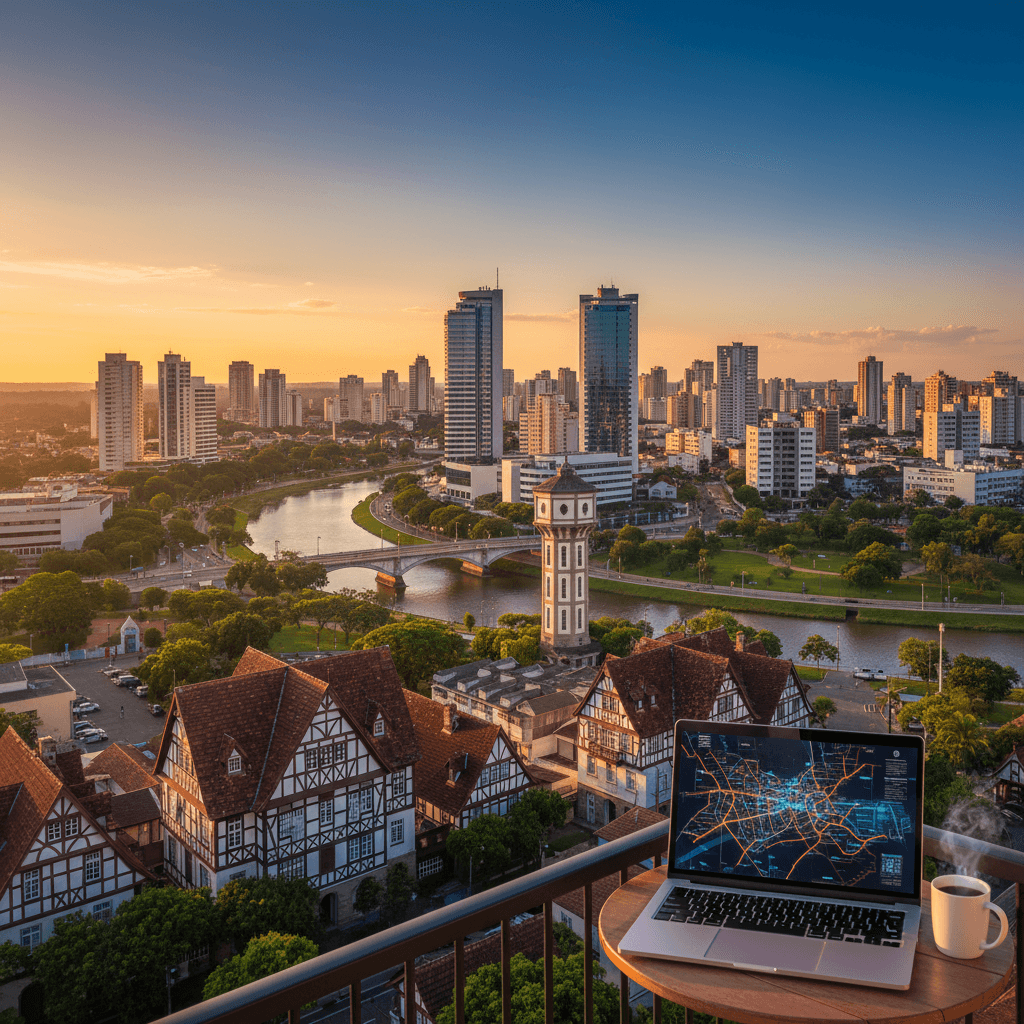
Joinville
🇧🇷 Brazil
The Industrial Heart with a German Soul
If you're expecting the chaotic energy of Rio or the endless concrete canyons of São Paulo, Joinville will surprise you. Located in the lush state of Santa Catarina, this city feels more like a disciplined European outpost that accidentally found itself in the tropics. It's known as the City of Princes and the Dance Capital of Brazil, but for the modern remote worker, it's essentially a high functioning productivity hub where the internet is fast and the streets are actually safe to walk at night.
The vibe here is industrious yet quiet. You'll see locals cycling to work and timber framed architecture that nods to the city's German heritage. It doesn't have the "vacation forever" energy of nearby Florianópolis, but that’s exactly why people like it. You can actually get things done here. Most nomads find that the city operates with a level of organization and efficiency that is rare in South America, making it a perfect base for those who need to grind during the week and explore nature on the weekends.
The Nomad Experience: Love it or Leave it
Expats usually fall into two camps regarding Joinville. Those who stay love the $700-$800 monthly cost of living and the fact that average 140 Mbps fiber internet is the standard, not the exception. They appreciate the proximity to the Serra do Mar mountains and the ability to drive to world class beaches in an hour without paying beach town rent prices. It’s a place where you can live a high quality, "normal" life on a modest budget.
On the flip side, if your nomad lifestyle revolves around nightly bar crawls and a massive international community, you might find Joinville a bit sleepy. The nightlife is mellow, centered around craft beer pubs rather than mega clubs. English isn't widely spoken outside of tech circles, so you'll need to get comfortable with Google Translate or brush up on your Portuguese basics to handle the day to day. It’s a city for builders and focused professionals, not necessarily for those looking to party through their 20s.
Living Costs at a Glance
Joinville is significantly more affordable than Brazil's coastal hotspots. Here is how your monthly budget might look:
- Budget Tier ($800 to $1,000): You'll likely stay in a basic studio in Boa Vista, eat plenty of $3 acai bowls and $2 coxinhas, and rely on the reliable $0.80 bus system.
- Mid-Range ($1,200): This is the sweet spot. You can snag a nice apartment in América for $500 to $700, work from dedicated desks at local coworking spaces for $150 a month, and take $5 Ubers everywhere.
- Comfortable ($1,800+): At this level, you're looking at upscale furnished rentals, frequent dinners at the city's top-rated eateries, and perhaps a monthly car rental for $200 to explore the coast.
Settling In
The city layout is somewhat car dependent if you live in the suburbs, so most nomads stick to the central neighborhoods to keep things walkable. Centro is the go to for short term stays because everything is at your doorstep, though it can feel a bit "business heavy" after dark. América is the preferred choice for a longer stay; it’s green, upscale, and feels incredibly safe. If you want something more residential and budget friendly, Boa Vista offers a great balance for remote work without the premium price tag.
One pro tip from travelers who've been here recently: don't bother with the headache of getting a local SIM card as a tourist, which usually requires a CPF (tax ID number). Use an eSIM via Jetpac instead. You can get 5GB for $14 or 10GB for $25 and have it running the second you land at Lauro Carneiro de Loyola Airport. It saves you the "CPF scam" at local kiosks and keeps you connected while you hunt for the best coffee in the city.
The Bottom Line
Joinville is one of those rare spots in Brazil where your dollar stretches surprisingly far without sacrificing infrastructure. Most nomads find they can live comfortably here on about $1,202 per month. It’s significantly cheaper than Florianópolis or Rio, making it a strategic base if you want Santa Catarina’s safety and 281 Mbps fiber internet without the "tourist tax" found in coastal hubs.
The city operates on an industrial clock, which keeps prices stable. You aren't competing with seasonal vacationers for housing, so your budget stays predictable year-round. While it isn't the place for a wild party scene, the trade-off is a high quality of life and a sense of organization that's hard to find elsewhere in the country.
Housing and Neighborhoods
Rent is your biggest variable, and where you land depends on whether you want walkability or a quiet suburban retreat. Most expats lean toward América because it's green and modern, though you'll pay a premium for it.
- América: The upscale choice. Expect to pay $800+ for a furnished, move-in-ready apartment. It’s safe, near the universities, and feels very European.
- Centro: Best for those who don't want a car. Basic apartments go for $300 to $400. It’s convenient for shops and transit, but it can get noisy during the day.
- Boa Vista: A favorite for long-term nomads. You can find solid one-bedroom spots for $500 to $700. It’s quiet and residential but still close enough to the action.
Eating and Drinking
Food costs in Joinville are a highlight, especially if you lean into the local German-Brazilian flavors. You can grab a quick pastel or acai bowl for $2 to $4 at a street stall. If you’re heading out for a proper sit-down meal, a mid-range churrascaria usually runs between $10 and $15 per person.
For a high-end night out, Restaurante Garoupe is the local legend for seafood, where you’ll likely spend $40 or more. Coffee culture is growing here too; a decent espresso in a laptop-friendly cafe will only set you back about $1 or $2.
Transport and Connectivity
Getting around is cheap if you stay central. The bus system is reliable and costs about $0.80 per ride, or you can grab a monthly pass for $40. Uber is the go-to for most nomads; a quick trip across town usually costs between $3 and $5. If you decide to live in the further suburbs like Saguacu, you might want a car rental, which averages around $200 a month.
For data, skip the headache of getting a local SIM card, which requires a CPF (tax ID). Most travelers now use Jetpac eSIMs. You can get 5GB for $14 or 10GB for $25, which is enough to keep you connected until you hit the WiFi at your apartment or a coworking spot.
Work and Productivity
If you need a professional environment outside your apartment, Joinville has a few solid options. Dedicated desks in local coworking spaces generally cost between $150 and $200 a month. If you just need a place for a few hours, many cafes in the América and Centro districts have reliable WiFi and don't mind you hovering over a laptop as long as you keep the coffee orders coming. Shared workspaces are even more affordable, often starting around $100 a month for basic access.
Lifestyle and Extras
Your "fun money" goes a long way here. Gym memberships are affordable, and many of the best activities, like hiking the nearby Serra do Mar or visiting local parks, are free. If you're looking to head to the beach in Balneário Camboriú for the weekend, the bus is only a few dollars. For those staying long-term on the Digital Nomad Visa, remember you'll need to prove a monthly income of $1,500, which is more than enough to live like royalty in Joinville.
For Solo Nomads: Centro (Downtown)
If you're landing in Joinville without a car and want to be in the thick of things, Centro is your best bet. It’s the most walkable part of the city, packed with shops, banks, and the main bus rapid transit terminals. Most solo travelers gravitate here because it’s easier to meet people in the local bars or while grabbing a coffee between deep-work sessions.
The vibe is more functional than flashy. You'll find plenty of basic, functional apartments that cater to a transient crowd. While it can get a bit noisy during the day and feels a little touristy around the main plazas, the convenience is hard to beat. You can expect to pay around $300 to $400 for a basic studio or one-bedroom apartment. For remote work, you'll find reliable fiber internet averaging 281 Mbps, and you're never more than a short walk from a cafe with decent WiFi.
For Expats and Professionals: América
América is widely considered the most prestigious neighborhood in the city. It’s where you'll find high-end grocery stores, upscale gyms, and plenty of green, tree-lined streets. Expats moving here for the tech scene or long-term stays usually choose América for its safety and modern infrastructure. It feels significantly more polished than the city center and stays quiet at night.
Living here comes with a higher price tag. A furnished one-bedroom apartment typically starts at $800, and larger homes go much higher. It’s close to the local universities and top-tier dining like Restaurante Garoupe, which is a favorite for seafood. Most residents here use Uber or drive, as it’s a bit more spread out than Centro. It’s the neighborhood that most closely mirrors the "high quality of life" that travelers often rave about when discussing Santa Catarina.
For Budget-Conscious Remote Workers: Boa Vista
Boa Vista is a favorite for nomads who want a "local" feel without the premium price of América. It’s a residential area that strikes a great balance between affordability and comfort. You’ll find plenty of quiet streets that are perfect for those who spend eight hours a day on Zoom calls. The neighborhood feels safe and established, with enough small markets and pharmacies to keep you from needing a trip downtown for every little thing.
Rent here is very reasonable, with many one-bedroom units going for about $400 to $500. While it lacks a pulse when it comes to nightlife, it’s ideal for deep focus. Travelers often recommend this area if you're planning to stay for several months and want to keep your total monthly spend around the $1,200 mark. Just keep in mind that you'll likely want an Uber or a bike to get into the city center for social events.
For Families and Long-Termers: Saguaçu
Saguaçu is a suburban retreat that appeals to families and anyone looking for a slower pace. It’s known for being calm, safe, and having good access to local schools and parks. The houses here often have more space and yards compared to the vertical living found in Centro. It’s a bit of a trek if you don't have your own wheels, usually requiring a 20 minute bus ride or a $5 Uber to reach the heart of the city.
The community here is welcoming but leans toward Portuguese speakers, so it’s a great place to immerse yourself if you're practicing the local language. Since English proficiency is generally low outside of the tech hubs, living in Saguaçu will force you to learn the basics quickly. It’s a solid choice if you want to swap the "nomad" life for a more authentic Brazilian lifestyle while still enjoying some of the fastest internet speeds in the country.
Neighborhood Comparison at a Glance
- Centro: Best for walkability and short stays. Rent: $300-$400. Vibe: Busy and central.
- América: Best for luxury and safety. Rent: $800+. Vibe: Upscale and green.
- Boa Vista: Best for value and quiet work. Rent: $400-$500. Vibe: Residential and calm.
- Saguaçu: Best for families and space. Rent: $500-$700. Vibe: Suburban and local.
Connectivity and Speeds
If you're worried about South American lag, Joinville will pleasantly surprise you. The city is a major industrial and tech hub, which means the infrastructure is significantly more robust than what you'll find in the coastal surf towns. Fiber optic connections are standard in most modern apartments in América and Centro, with download speeds reaching an average 140 Mbps.
Power outages are rare compared to Rio, but it's always smart to have a backup. Most nomads skip the headache of getting a local SIM card, which requires a Brazilian tax ID called a CPF that's notoriously difficult for tourists to obtain. Instead, expats recommend using an eSIM like Jetpac. You can grab 5GB for $14 or 10GB for $25 and activate it the second you land at the airport. It saves you from the "CPF scam" where shops charge extra to use a proxy ID to register your chip.
Coworking Spaces
Joinville doesn't have a WeWork on every corner, but the local scene is professional and focused. You'll find that the spaces here cater more to tech startups and local entrepreneurs than the "influencer" crowd, which makes for a great productivity vibe. Expect to pay around $100 to $150 per month for a hot desk, or up to $200 if you want a dedicated setup.
- Sebrae Joinville (new location, check for coworking): Well-connected to the local tech ecosystem and offers a professional environment.
- Shared Offices in Centro: You'll find several smaller, boutique hubs near the Cathedral. They're often cheaper, around $10 a day, and put you within walking distance of the best lunch spots.
Laptop-Friendly Cafes
The coffee culture in Joinville is heavily influenced by its German heritage, meaning you'll find plenty of bakeries and cafes where you can sit for a few hours. While "Starbucks-style" chains exist, the local spots have better pastries and more reliable Wi-Fi. Just remember that while the city is safe, you should still keep your gear within sight and avoid sitting right next to the street entrance with an expensive MacBook.
- Shopping Mueller: If you're in a pinch, the food court and cafes in this central mall have strong signals and plenty of power outlets, plus it's one of the safest spots to work late.
The Remote Work Lifestyle
Most nomads find that Joinville is a "deep work" city. Because the nightlife is quieter than Florianópolis, you'll likely get more done here during the week. The VITEM XIV digital nomad visa is a popular route for those staying long term, requiring proof of $1,500 monthly income. If you're staying in Boa Vista or Saguaçu, you'll definitely want to confirm the Wi-Fi specs with your host before booking, as some older residential buildings haven't upgraded to the latest fiber packages yet. Stick to newer builds or serviced apartments to ensure you're hitting high-speed connections.
A Breath of Fresh Air in Brazil
If you're used to the high-alert lifestyle of Rio or the frantic energy of São Paulo, Joinville will feel like a different country. It consistently ranks as one of the safest cities in Santa Catarina, which is widely considered Brazil's most secure state. Most nomads find they can breathe a bit easier here, enjoying a level of public order that's rare in South American industrial hubs.
While you still need to keep your wits about you, the vibe is overwhelmingly communal and industrious. Expats recommend sticking to the well-lit, central neighborhoods like América and Centro. These areas are walkable and generally safe for solo travelers during the day. As with any mid-sized city, the outskirts and peripheral favelas should be avoided after dark, but in the heart of the city, the "street smarts" requirement is significantly lower than in Brazil's coastal capitals.
Staying Healthy and Medical Care
The healthcare infrastructure in Joinville is modern and efficient, reflecting the city's status as a tech and manufacturing powerhouse. You'll find high-quality pharmacies on almost every corner, and most basic medications are easily accessible without a hassle. For more serious needs, the city is home to reputable facilities like Hospital São José in Bucarein.
Public healthcare through the SUS system is technically free for residents, but most nomads and expats opt for private care to skip the wait times. A typical private consultation will set you back about $50. If you're staying long-term, getting a local private insurance plan is a smart move. Healthcare professionals in the top-tier hospitals are excellent, though English proficiency can be hit-or-miss, so having a translation app ready is a lifesaver.
Emergency Contacts and Practical Safety
It's a good idea to keep local emergency numbers saved in your phone. Most people here are incredibly helpful, but in a pinch, these are the digits you'll need:
- 190: Military Police (for immediate security threats)
- 192: SAMU (Ambulance and medical emergencies)
- 193: Fire Department
For getting around safely at night, locals suggest using ride-hailing apps like Uber rather than walking long distances, even in "safe" neighborhoods. It's cheap, usually costing between $3 and $5 for a cross-town trip, and adds an extra layer of security. Travelers often say that the peace of mind is well worth the few extra Reais.
Neighborhood Safety Profiles
Where you choose to sleep matters as much as where you work. Here is how the top nomad spots stack up for safety and well-being:
América
- Safety Level: Highest in the city; very residential and upscale.
- Healthcare: Close to several private clinics and dental offices.
- Vibe: Quiet, green, and professional.
Centro
- Safety Level: Good during the day; stay alert on side streets at night.
- Healthcare: Proximity to major pharmacies and central medical services.
- Vibe: Convenient and walkable, but can feel a bit "empty" after business hours.
Boa Vista
- Safety Level: Generally safe and family-oriented.
- Healthcare: Local health centers available, but a short drive to major hospitals.
- Vibe: Balanced and residential; great for those who want a quiet home base.
Overall, Joinville is a place where you can focus on your work without the constant background noise of safety concerns. It's organized, the people are welcoming, and the medical facilities are some of the best in the region. Just stick to the standard rules of urban living, and you'll find it's a very comfortable place to call home for a few months.
Getting Around the City
Joinville is one of those rare Brazilian cities where things actually work on schedule. It’s laid out with a logical, industrial precision that reflects its German heritage, making it far less intimidating than the sprawling chaos of São Paulo. While the city center is quite walkable, you’ll likely find yourself relying on a mix of apps and the solid bus network to bridge the gap between neighborhoods like América and Boa Vista.
Public Transit and Apps
The backbone of local travel is the Bus Rapid Transit (BRT) system. It’s reliable, clean, and incredibly cheap at roughly $0.80 per ride. If you’re planning to stick around for a few months, grab a local transit card to bring your monthly commute costs to around $40. It’s the most authentic way to see the city, though the buses can get packed during the late afternoon rush when the factories and tech offices let out.
For most nomads, Uber is the default choice. It’s ubiquitous here and very affordable, with most short hops across the central districts costing between $3 and $5. It’s also the safest way to get home if you’ve been out late at a brewery in Centro. If Uber is surging, 99 is the local competitor app that often has better rates or more available drivers during rainstorms.
Cycling and Walking
If you’re staying in Centro or América, you can do a lot on foot. The streets are generally well maintained and safer than what you’d find in Rio. For a bit more speed, look for bike and scooter rentals through apps like Grin. It costs about $1 per hour to zip around. Joinville is relatively flat in the valley, so it’s bike friendly, though you should keep an eye out for the frequent afternoon rain showers that roll in from the Serra do Mar mountains.
Airports and Regional Travel
Getting in and out of the city requires a bit of strategy. Joinville-Lauro Carneiro de Loyola (JOI) is the local airport, located about 15 to 20 minutes from the center. An Uber there will set you back roughly $10. It’s convenient but small, mostly handling domestic hops.
For international flights or more frequent connections, many expats head to Florianópolis (FLN), which is about a 2 hour drive south. You can catch a comfortable long distance bus for a few dollars or rent a car if you’re planning a weekend at the beach. If you decide to keep a car in the city, expect to pay around $200 a month for a basic rental, which is only really necessary if you’re living in the further suburbs like Saguacu or want to explore the coastline frequently.
Key Transport Costs
- Single Bus Fare: $0.80
- Monthly Bus Pass: $40
- Short Uber Trip: $3 to $5
- Airport Transfer (Uber): $10
- Monthly Car Rental: $200
- Scooter Rental: $1 per hour
Most travelers find that they don't need a car if they stay central. The combination of a $1,202 monthly budget and cheap ride hailing means you can get almost anywhere in the city for the price of a cup of coffee. Just remember that while the city is safe, it’s best to stick to Ubers after dark if you’re moving between neighborhoods.
The Language Barrier is Real
If you're coming from Rio de Janeiro or São Paulo, the first thing you'll notice in Joinville is that English proficiency takes a significant dip. While the city has a strong tech scene and a history of German immigration, Portuguese remains the undisputed king of daily life. You'll find English speakers at high end hotels or within the tech hubs, but don't expect the barista at a local cafe in América or the driver on your Uber ride to follow a complex conversation in English.
Most nomads find that getting by requires a mix of patience and technology. Local expats recommend downloading the Portuguese offline pack on Google Translate before you land. It's a lifesaver when you're trying to explain a specific dietary restriction at a churrascaria or negotiating a lease for an apartment in Boa Vista. Travelers often say that even a "broken" attempt at Portuguese goes a long way with the locals, who are generally patient and welcoming.
The German Influence
Because of its heritage, you might hear older generations or families in certain pockets of the city speaking a dialect of German. While it's a cool cultural quirk, it won't help you much with administrative tasks or daily errands. Portuguese is what you need for the "real" Joinville experience. If you're planning to stay for more than a month, consider booking a few sessions with a local tutor or using an app like Duolingo to master the basics.
Survival Phrases for Nomads
- Olá / Tudo bem? (Hello / How are you?): The standard opener for every interaction.
- Quanto custa? (How much does it cost?): You'll use this constantly at the street markets.
- Obrigado / Obrigada (Thank you): Use the "o" ending if you're male and "a" if you're female.
- Você fala inglês? (Do you speak English?): Always ask this before launching into English.
- A conta, por favor (The bill, please): Essential for ending your meal at places like Restaurante Garoupe.
Connectivity and Digital Communication
Since you won't always be able to rely on verbal communication, having a rock solid data connection is your best tool for navigating the city. Getting a local physical SIM card in Brazil is notoriously difficult for foreigners because it usually requires a CPF (a Brazilian tax ID). Most nomads find this process a massive headache and a waste of an afternoon.
The workaround that actually works is using an eSIM. Expats frequently recommend Jetpac for Joinville. You can set it up before you even leave home and have data the second you touch down at Joinville-Lauro Carneiro de Loyola (JOI). Here’s what you can expect to pay for data:
- 5GB for 30 days: Around $14
- 10GB for 30 days: Around $25
Once you have data, WhatsApp is the only app that matters. In Joinville, everyone uses it. You'll use it to book a table at a restaurant, message your landlord, or even contact local businesses. If a business has a phone number listed, 99% of the time it's a WhatsApp account. Don't bother with SMS or calling; just send a message.
Social Etiquette
Communication in Joinville isn't just about the words you use. The culture here is a blend of German punctuality and Brazilian warmth. Unlike the more laid back "Carioca" vibe of Rio, people in Joinville tend to be more on time for meetings. When meeting someone for the first time, a friendly handshake is standard, but among friends, a single cheek kiss is common. It's a polite, industrious environment where a respectful "Bom dia" (Good morning) to your neighbor goes a long way in making you feel like part of the community.
The Subtropical Reality
Joinville sits in a subtropical zone, which means you're going to experience a lot of humidity and a fair amount of rain. Locals often joke that it's the "City of Rain," but don't let that scare you off. The average high temperature around 25°C makes it a comfortable base for anyone who hates the biting cold of northern winters.
The summer months from November to March are the wettest. You'll see heavy afternoon downpours that clear the air but can occasionally disrupt a walk to a cafe in Centro. During this peak summer, temperatures frequently hit 30°C or higher. It's sticky, so if you're sensitive to heat, make sure your apartment in América or Boa Vista has a solid AC unit.
When to Book Your Stay
If you want the best balance of sunshine and manageable temperatures, aim for the shoulder seasons. Most nomads find the windows between April and June or September and October to be the sweet spots. During these months, the mercury stays between 24°C and 28°C, and the rainfall is much less frequent.
- Spring (September to November): A favorite for many expats. The flowers are in bloom, the heavy humidity hasn't quite kicked in, and the city feels fresh.
- Autumn (March to May): This is arguably the most stable weather of the year. It's dry enough for weekend trips to Balneário Camboriú without worrying about a washout.
- Winter (June to August): It gets surprisingly crisp. Highs sit around 22°C, but nights can drop significantly. You won't see snow, but you'll definitely want a light jacket for evening Forró sessions or beers in the Centro bars.
Timing Your Trip for Events
While the weather is a big factor, Joinville's calendar might dictate your arrival date. If you're a fan of the arts, you'll want to be here in late July. That's when the Joinville Dance Festival takes over, which is one of the largest in the world. The city gets a massive boost in energy, though short term rentals become much harder to find and prices can spike.
What to Pack
Because of the humidity, travelers often recommend breathable fabrics like linen or moisture wicking cotton. Even in the dry season, a compact travel umbrella is a non negotiable item in your day bag. If you're planning on exploring the Serra do Mar mountains or hiking near the Serra do Rio do Rastro, bring a sturdy pair of boots and a waterproof shell. The weather in the mountains is even more unpredictable than in the city streets.
Most nomads find that a "layering" strategy works best here. You might start a morning at a coworking space in a t-shirt, but by the time you're heading home from dinner at Restaurante Garoupe, the coastal breeze or a sudden cold front can make you reach for a sweater.
Connectivity and the CPF Hurdle
Staying connected in Joinville is surprisingly smooth once you bypass the local bureaucracy. While the city boasts impressive fiber speeds averaging 281 Mbps, getting a local SIM card is a headache because Brazilian carriers usually require a CPF (tax ID). Skip the store queues and download the Jetpac eSIM before you land. You can grab 5GB for $14 or 10GB for $25, which keeps you online until you find a permanent spot.
For deep work, the cafe culture in América and Centro is your best bet. While dedicated coworking spaces exist for around $100 to $200 a month, many nomads prefer the flexibility of laptop friendly spots. Just keep in mind that English proficiency is lower here than in Rio or São Paulo. Have Google Translate downloaded for offline use; it is a lifesaver when explaining your coffee order or asking for the WiFi password.
Budgeting for the Southern Lifestyle
Joinville is significantly more affordable than Florianópolis or the big hubs up north. Most nomads live comfortably on about $1,202 per month. Here is a breakdown of what to expect for your monthly burn:
- Budget Tier ($800 to $1,000): Stick to local apartments in Boa Vista for $300 to $400, eat at street stalls like acai shops or pastelarias for $2 to $4, and use the bus system.
- Mid-Range ($1,200): A nice 1BR in América for $500 to $700, daily churrascaria lunches for $10 to $15, and frequent Ubers.
- High End ($1,800+): Modern, furnished lofts for $800+, fine dining at Restaurante Garoupe, and a rental car for weekend trips.
Getting Around and Staying Safe
The city is organized and lacks the chaotic energy of Brazil's coastal giants. Public buses are reliable and cheap at $0.80 per ride, but many expats find the city car dependent if they live outside the core. Uber is the gold standard for late night hauls, with most cross town trips costing between $3 and $5.
Safety is a major selling point here. Joinville is consistently ranked as one of the safest cities in the country. You should still use common sense and avoid peripheral neighborhoods after dark, but the general vibe in América and Saguaçu is relaxed. If you have an emergency, dial 192 for an ambulance or 190 for the police.
Timing Your Stay
The weather is subtropical, so expect plenty of humidity. The best months to visit are April through June or September and October. During these windows, temperatures hover between 24°C and 28°C without the oppressive rain of the summer. Avoid January and February if you can; it is hot, sticky, and the heavy afternoon downpours can put a dampener on your outdoor plans.
The Nomad Visa and Banking
If you want to stay long term, Brazil's Digital Nomad Visa (VITEM XIV) is relatively straightforward. You will need to prove a monthly income of $1,500. For daily finances, skip the traditional banks. Most nomads use Wise or Nubank to handle transfers and payments. Local shops are very card friendly, so you rarely need to carry large amounts of cash.
Local Customs
Joinville retains a bit of German punctuality, which is rare for Brazil. When meeting people socially, a cheek kiss is the standard greeting. Dress is generally casual, but people in América tend to polish up a bit for dinner. If you need a break from the screen, nomads often take the one hour bus ride to the beaches of Balneário Camboriú or head to the mountains for a weekend hike.
Need visa and immigration info for Brazil?
🇧🇷 View Brazil Country GuideHidden Gem
Worth the effort