Johannesburg
🇿🇦 South Africa
The Heartbeat of the Continent
Johannesburg is a city that doesn't care if you like it or not, and that is exactly why people fall in love with it. While Cape Town is the pretty face of South Africa, Jozi is the soul. It is a massive, high energy urban forest where the hustle is palpable and the ambition is infectious. Locals call it Joburg or Jozi, and they carry a grit and warmth you won't find anywhere else on the continent.
For a digital nomad, the appeal lies in the contrast. You can spend your morning in a slick, high tech boardroom in Sandton, the richest square mile in Africa, and your afternoon drinking a cold beer on a rooftop in Maboneng while jazz drifts up from the street below. It is a place of intense productivity and even more intense creativity.
The Local Rhythm
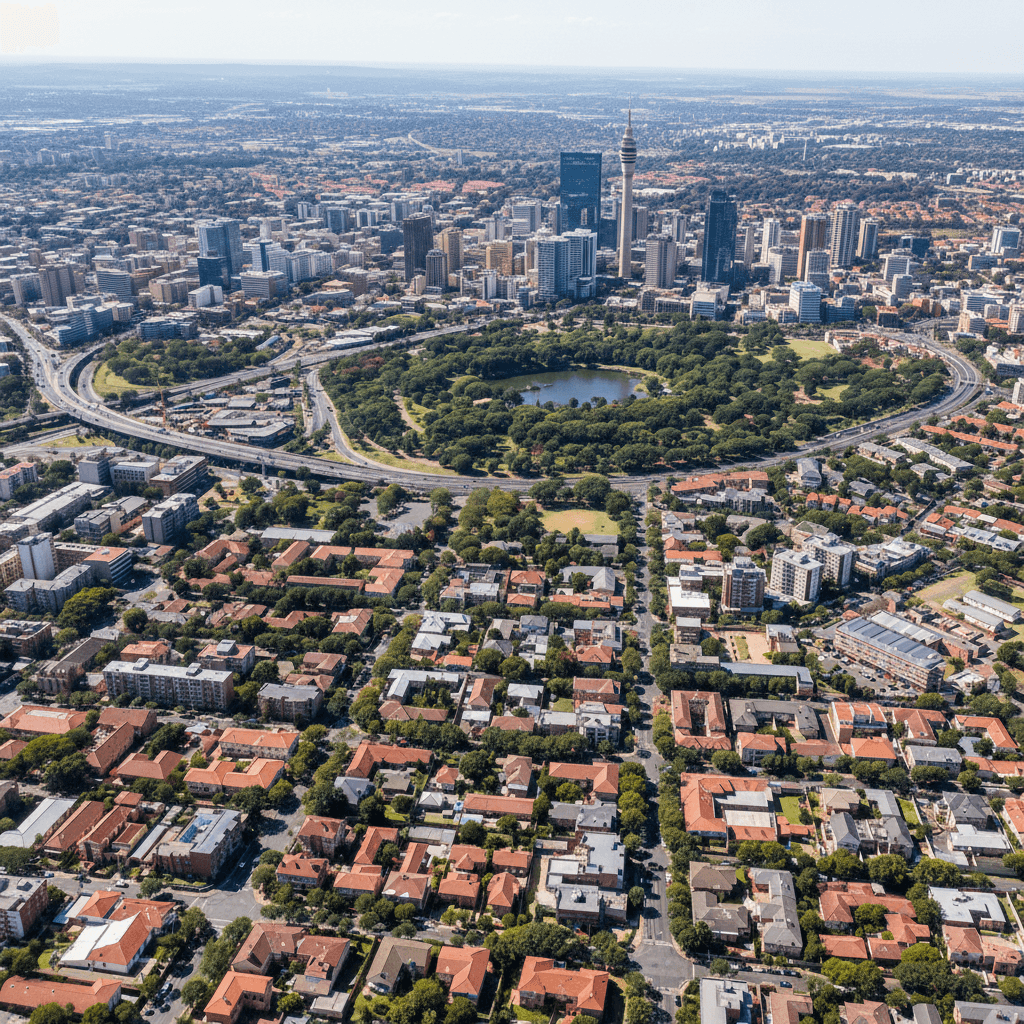
Life here moves fast. It is the country's economic engine, so the infrastructure is top tier. You get the fastest fiber internet in South Africa and a food scene that is arguably the most diverse in the country. The city is surprisingly green too; it is one of the largest man made urban forests in the world, so even in the middle of the concrete jungle, you are never far from a canopy of trees.
The vibe is less about "sights" and more about "scenes." You don't come here to check boxes; you come here to join the conversation. Whether it is the Sunday markets, the underground art galleries, or the legendary nightlife, Joburg is a city that demands your participation.
The Real Talk: Safety and Logistics
We have to talk about the elephant in the room. Joburg has a reputation for being tough, and if you wander into the wrong area like Hillbrow without a plan, it can be. However, the nomad experience usually centers around secure, walkable hubs like Rosebank and Sandton. These areas feel like any modern global city, with high end malls, safe streets, and plenty of security.
Most nomads find that once they learn the "rules" of the city (like using ride hailing apps after dark and staying aware of their surroundings), the anxiety fades and the excitement takes over. It is a city that rewards the savvy traveler with lower costs and a much more authentic South African experience than the tourist heavy coastal towns.
Why Nomads are Moving Here
The cost of living is a major draw. You can live a high end lifestyle here for around $1,608 per month. That gets you a modern apartment, frequent meals out, and access to some of the best weekend trips on earth. With the Digital Nomad Visa launched in October 2024, the legal path to staying long term is finally clear, provided you meet the income requirements and work for a foreign company.
It is also the ultimate launchpad. OR Tambo International Airport is the gateway to the rest of Africa. You can finish your work week on Friday and be in Pilanesberg for a safari or the Drakensberg mountains for a hike by dinner time. It is a city of infinite possibilities for those who have the energy to keep up with it.
Quick Cost Snapshot
- One bedroom apartment (secure northern suburbs): Approximately $550-$700
- High speed fiber (60 Mbps): Around $40 to $44
- Monthly budget (Mid-range): $1,600 to $2,200
- A beer at a local bar: Usually under $3
The Bottom Line on Jozi Spending
Johannesburg is a breath of fresh air for your bank account, especially if you're coming from Europe or North America. It is significantly more affordable than Cape Town, allowing you to live a high-end lifestyle for a fraction of what you'd pay in other global hubs. Most nomads find they can live comfortably on about $1,608 per month, though your choice of neighborhood and security preferences will be the biggest variables in your budget.
Monthly Budget Tiers
- The Bootstrapper ($1,200 to $1,500): You'll be looking at shared housing or a studio in slightly older buildings. You'll stick to local grocery stores, use public transport like the Gautrain, and keep the nights out to a minimum.
- The Mid-Range Nomad ($1,600 to $2,200): This is the sweet spot. You can afford a modern one bedroom apartment in a secure complex, eat out a few times a week, and keep a dedicated coworking membership.
- The High-Life ($2,400+): At this level, you're looking at luxury apartments in Sandton or Rosebank, frequent fine dining, private Ubers everywhere, and weekend escapes to safari lodges or the mountains.
Housing and Utilities
Rent is your biggest win here. A sleek one bedroom apartment in trendy Rosebank typically costs around $550-$700. If you need more space, a three bedroom place just outside the primary commercial hubs averages about $657. Keep in mind that "secure" complexes often come with a slight premium, but the peace of mind is worth it.
Basic utilities like electricity and water usually add another $72 to your monthly bill. For work, you'll need reliable fiber. Unlimited 60 Mbps home internet runs between $39 and $44. While many apartments include this, always double check the "load shedding" (power outage) setup; many nomads prioritize buildings with back-up generators to keep the WiFi running.
Food and Dining
The food scene in Jozi is world class and surprisingly cheap. If you're cooking at home, a couple can expect to spend between $250 and $500 on groceries depending on whether you shop at budget friendly stores or high end spots like Woolworths Food.
Eating out is where the city shines. You can grab a solid meal and a drink for a price that would barely cover an appetizer in London. Coffee culture is huge here, and a flat white at a nomad friendly cafe won't break the bank. Local beer and South African wine are famously affordable, making the social scene very accessible.
Getting Around
While a one way ticket on public transport is about $1.62, most expats and nomads rely heavily on ride hailing apps like Uber and Bolt for safety and convenience. These services are very active and affordable for short hops between neighborhoods. If you're commuting between the airport, Sandton, and Rosebank, the Gautrain is the gold standard for speed and safety.
Connectivity and Tech
Mobile data is reliable and easy to set up. You can grab a prepaid SIM from Vodacom, MTN, or Rain at the airport or any mall. It's a smart move to have a backup eSIM or a mobile hotspot if you plan on working from cafes, though most dedicated coworking spaces in Sandton and Rosebank offer the fastest internet in the country, with speeds reaching up to 1GB in some tech hubs.
For Digital Nomads & Remote Workers
If you need reliable fiber and a professional atmosphere, Rosebank is the gold standard. It is arguably the most walkable pocket of the city, centered around a massive mall and transit hub that makes life without a car actually possible. You will find plenty of other nomads working from the Starbucks or local cafes like Father Coffee. It feels modern, polished, and safe enough to walk between your apartment and the coworking spaces during the day.
Sandton is the neighboring business district, often called Africa's richest square mile. It is a forest of glass skyscrapers and high end hotels. While it lacks the "neighborhood" feel of Rosebank, it offers the best infrastructure in the country. If your job requires zero downtime and high speed 5G, this is where you stay. Expect to pay around $550-$700 for a decent one bedroom here, though luxury high rises will go much higher.
For Expats & Long-Term Residents
Expats who want a bit more space while staying close to the action usually gravitate toward the northern suburbs. Sandton remains a top choice for those working in finance or tech, but many prefer the leafy streets of Rosebank for its better balance of lifestyle and business. These areas have the best access to private security patrols, which is a standard part of life for most international residents here.
The infrastructure in these zones is built for convenience. You have access to high end grocery stores like Woolworths Food and quick links to the Gautrain, the city's high speed rail. A three bedroom home outside the immediate city center averages about $657, making it incredibly affordable for families or groups compared to European or American hubs.
For Cultural Explorers & Solo Travelers
If you are here to soak up history rather than just hit deadlines, Soweto is non-negotiable. It is a massive, storied township that served as the heart of the struggle against Apartheid. Staying here, even for a few nights, gives you a perspective on Jozi that you won't get in the glitzy northern suburbs. It is home to the Apartheid Museum and Vilakazi Street, the only street in the world to have housed two Nobel Peace Prize winners.
For those who want a grit-meets-glam vibe, Hillbrow and the inner city offer an intense, high energy experience. It is the city's cultural engine, though it requires a much higher level of street smarts and caution. Solo travelers should stick to guided tours in these areas until they know their way around. If you need a break from the concrete, Emmarentia is a fantastic alternative. It is famous for its botanical gardens and dam, providing a peaceful retreat where you can join locals for a weekend picnic or a run.
Neighborhood Comparison at a Glance
- Rosebank: Best for walkability and cafes. 1BR Rent: ~$415. Very safe by local standards.
- Sandton: Best for corporate nomads and luxury. 1BR Rent: ~$450+. Top tier infrastructure.
- Soweto: Best for history and local soul. Vibe: High energy and community focused.
- Emmarentia: Best for nature lovers. Vibe: Quiet, green, and residential.
Most nomads find that splitting their time between a secure base in Rosebank and weekend trips to Soweto or the nearby Pilanesberg National Park offers the perfect Johannesburg experience. Just remember that while public transport exists for $1.62 a ride, most expats and nomads rely on ride-hailing apps to get between these neighborhoods after dark.
Connectivity and Connection
Johannesburg is the undisputed king of South African bandwidth. While Cape Town gets the glory, Joburg gets the speed. Most expats find that the city boasts the fastest, most reliable fiber infrastructure in the country. You can easily find residential connections pushing 1GB, and the average speed across the city sits comfortably around 57 Mbps.
Most apartments in nomad-friendly hubs like Rosebank and Sandton come pre-wired with high-speed fiber. If you're staying in an Airbnb or a short-term rental, just double-check that they have a backup power solution for the router. South Africa deals with periodic power outages known as loadshedding, so a "mini-UPS" for your Wi-Fi is a lifesaver to keep you online when the lights go out.
Coworking Spaces
The coworking scene here is professional and corporate-leaning, reflecting the city's status as a financial powerhouse. You won't find as many "barefoot and beanbag" vibes as you might in Bali, but you will find world-class facilities with generator backups.
- Workshop17 (Rosebank & Sandton): This is the gold standard for nomads. The Firestation location in Rosebank is right across from the Gautrain station, making it incredibly accessible. It’s sleek, has great coffee, and the networking events are top-tier.
- The Business Exchange (Sandton): Ideal if you need a more formal environment for client meetings. It’s high-end, secure, and right in the heart of the "richest square mile in Africa."
- WeWork (Rosebank): Located at 155 West Street and Rosebank Link, these spaces offer the familiar global standard. It’s a reliable choice if you already have a global membership.
- Mesh Club (Rosebank): This is a curated "work and play" space. It’s a bit more exclusive, blending a private members' club vibe with high-end workspace, perfect for those who want to transition from emails to cocktails without leaving the building.
Mobile Data & SIM Cards
Don't rely solely on public Wi-Fi. It’s much better to grab a local SIM as soon as you land at OR Tambo. You'll need your passport for the RICA process, which is a mandatory government registration for all SIM cards. It only takes a few minutes at the airport kiosks.
- Vodacom & MTN: These are the big two. They have the best 4G and 5G coverage across the city. Expect to pay around $40 to $45 for a substantial monthly data package.
- Rain: If you're staying for a few months and have a 5G-enabled router, Rain offers unlimited data plans that are very popular with remote workers.
- eSIMs: For those who want to hit the ground running, Airalo works well in Joburg, but a local physical SIM usually offers better rates for heavy data usage.
The Café Office Culture
If you prefer the hum of a coffee shop, Joburgers are generally very relaxed about people working from cafés, provided you keep the orders coming. In Rosebank, Father Coffee is a cult favorite for a quick caffeine hit and some laptop time. Motherland Coffee is another staple with multiple locations, reliable Wi-Fi, and a very "hustle-heavy" atmosphere. Most nomads find that as long as they aren't taking loud Zoom calls for three hours on a single espresso, they're more than welcome.
Keeping Safe in Jozi
Johannesburg has a reputation that precedes it, but for most nomads, the reality of living here is about being "street smart" rather than living in fear. The city is a patchwork of safety levels. You can't just wander aimlessly between neighborhoods like you might in Lisbon or Taipei. Instead, life here revolves around specific hubs where security is tight and the vibe is relaxed.
Rosebank and Sandton are the gold standards for remote workers. These areas are heavily patrolled by private security and offer a "bubble" of safety where you can walk to the grocery store or a cafe during the day without a second thought. Melrose Arch is another highly secure, pedestrian friendly precinct that feels like a city within a city. Conversely, neighborhoods like Hillbrow or the CBD require a high level of caution and are generally best visited with a local guide or during organized tours.
Most nomads rely on a few simple rules to stay under the radar. Don't walk alone at night, even for short distances; use Uber or Bolt instead. Keep your phone out of sight when you're standing on a street corner, and never leave valuables visible in a car. If you're driving, "smash and grab" incidents can happen at busy intersections, so keep your doors locked and windows up. It sounds intense, but once you're in the rhythm of the city, these habits become second nature.
Healthcare and Medical Services
If you have a solid international insurance plan, you'll find the private healthcare in Johannesburg is world class. In many cases, it rivals or exceeds what you'd find in Europe or North America. The private hospital networks, specifically Netcare and Mediclinic, are the ones to look for. They are modern, efficient, and staffed by highly trained specialists.
- Morningside Mediclinic: Located in Sandton, this is a top choice for expats and travelers. It's known for high end facilities and excellent emergency services.
- Netcare Rosebank Hospital: A very convenient option if you're staying in the Rosebank nomad hub. It's smaller but highly professional.
- Pharmacies: You'll find Clicks and Dis-Chem in almost every mall. They are well stocked with international brands and have on site pharmacists who can help with minor ailments.
A standard consultation with a private GP will usually set you back between $35 and $60. If you need a specialist, expect to pay closer to $80 or $100 for an initial visit. It's worth noting that public hospitals are often overcrowded and underfunded, so sticking to the private sector is a must for anyone visiting the city.
Emergency Contacts
Keep these numbers saved in your phone as soon as you land. While you'll hopefully never need them, the response time from private security is often much faster than the national police line.
- General Emergencies (from mobile): 112
- SAPS (South African Police Service): 10111
- Private Ambulance (Netcare 911): 082 911
- ER24: 084 124
Most nomads also recommend joining local community WhatsApp groups or downloading the Namola app. It’s a free safety app that acts as a panic button, connecting you to the nearest emergency responders and sharing your GPS location instantly.
The Logistics of Jozi Life
Johannesburg is a sprawling metropolis where the car is king. Unlike more compact European hubs, you won't find yourself strolling from one neighborhood to another. The city is built on a massive scale, so your choice of transport will define your daily rhythm. While the infrastructure is some of the best on the continent, getting around requires a bit of strategy and a few specific apps on your phone.
Ride-Hailing: The Gold Standard
For most nomads and expats, ride-hailing is the primary way to move. It’s reliable, trackable, and relatively affordable compared to Western prices. You'll want to download both Uber and Bolt. Uber is generally considered the more premium and secure option, while Bolt often comes in slightly cheaper.
- Most short trips within hubs like Rosebank or Sandton cost between $3 and $6.
- Always check the license plate and driver photo before getting in.
- Avoid waiting on the street with your phone out; stay inside your cafe or lobby until the car arrives.
- For late-night trips, stick exclusively to Uber Black or Uber Comfort for that extra layer of peace of mind.
The Gautrain: Fast and Efficient
If you need to bypass Joburg's notorious rush hour traffic, the Gautrain is a lifesaver. This modern, high-speed rail network connects major hubs like OR Tambo International Airport, Sandton, Rosebank, and Pretoria. It is remarkably clean, safe, and punctual.
A one-way trip from the airport to Sandton costs roughly $10-$25 and takes about 15 minutes, beating the highway crawl every time. For local hops between Rosebank and Sandton, you'll pay around $1.50. You can buy a Gold Card at any station or simply tap your contactless bank card at the gantry. Just remember that the Gautrain doesn't run 24/7; the last trains usually depart around 8:30 PM or 9:00 PM.
Driving Yourself
If you plan on staying for more than a month, you might consider a long-term rental. The freedom to head out to the Lion and Safari Park or take a weekend trip to the Drakensberg mountains makes having your own wheels tempting. Rental cars are plentiful at the airport, and the highway system is excellent, though navigating the "Scurry" (the local name for hectic traffic) takes some getting used to.
- South Africans drive on the left side of the road.
- Expect to pay "car guards" a few Rand (usually $0.30 to $0.50) to watch your vehicle when you park on the street.
- Keep your doors locked and windows up at major intersections, especially at night.
What About Walking?
Johannesburg isn't a traditionally walkable city, but it has walkable pockets. Rosebank is the standout here; you can easily walk between your apartment, the mall, and dozens of coworking spaces and cafes. Sandton is also walkable in parts, though it’s dominated by high-rises and large malls. Outside of these specific commercial nodes, most residents advise against walking long distances, particularly after dark or in less familiar residential areas.
Airport Transfers
OR Tambo (JNB) is the busiest airport in Africa and serves as your main gateway. Beyond the Gautrain, you can grab an Uber from the designated ride-share pickup zone. Avoid the "private" drivers who approach you in the arrivals hall; stick to the official apps or the Gautrain for a hassle-free start to your stay. If you're heading to the northern suburbs like Sandton, expect the drive to take anywhere from 30 to 60 minutes depending on the legendary Joburg traffic.
The Linguistic Melting Pot
Johannesburg is arguably the most linguistically diverse spot on the continent. While South Africa recognizes 12 official languages, you'll mostly hear a rhythmic blend of English, Zulu, and Afrikaans echoing through the streets of Rosebank or Sandton. For nomads, the transition is seamless because English serves as the primary language of business, government, and tech. You won't need a translator to sign a lease or order a flat white at a cafe.
The local dialect is peppered with "Tsotsitaal," a street slang that evolved in townships like Soweto. It's a colorful mix of various indigenous languages and Afrikaans. Even in professional circles, South Africans have a unique way of speaking. You'll quickly learn that "now-now" doesn't actually mean right now; it usually means in a little while, or whenever they get around to it. If someone says "just now," prepare to wait even longer.
Staying Connected
The city's digital infrastructure is the best in the country, often outperforming Cape Town in terms of raw fiber speeds. Most modern apartments in the northern suburbs come pre-wired with fiber lines reaching up to 1Gbps. For mobile data, you'll want to grab a local SIM card immediately upon landing at OR Tambo. Vodacom and MTN are the heavy hitters with the best coverage, while Rain is a popular choice for affordable 5G data packages if you're staying in a fixed location.
- Vodacom: Best overall coverage and reliable for travel into rural areas or safari parks.
- MTN: Competitive pricing and excellent speeds in the Jozi suburbs.
- Rain: Great for 5G home routers if your Airbnb's WiFi is patchy.
Data isn't the cheapest in the world, so most expats rely on "bundles" purchased through provider apps. Expect to pay around $40 to $45 for a solid monthly unlimited fiber connection or roughly $10 to $15 for a decent chunk of mobile data to keep you going between meetings.
Communication Etiquette
People here are incredibly direct but warm. A handshake is the standard greeting in business, though you'll often see a more elaborate three-part handshake in social settings. It's common to be greeted with "How are you?" as a standard hello; the local expectation is a quick "Good, and you?" rather than a detailed medical history.
WhatsApp is the undisputed king of communication. From booking a table at a trendy spot in Maboneng to chatting with your landlord or joining local neighborhood watch groups, everything happens on WhatsApp. If you don't have it installed, you'll find yourself out of the loop very quickly. For navigating the city, Google Maps is reliable, but many locals prefer Waze to keep an eye on real-time traffic shifts and avoid specific areas during peak hours.
Useful Local Terms
- Lekker: Great, delicious, or nice. Used for everything from a good meal to a sunny day.
- Braai: A barbecue, but taken much more seriously. It's a cultural institution.
- Robot: This is what South Africans call traffic lights. If someone tells you to "turn left at the robot," don't look for a cyborg.
- Eish!: A versatile exclamation used to express surprise, annoyance, or sympathy.
- Howzit: The standard informal greeting. It's a contraction of "How is it going?"
While you can get by perfectly with just English, learning a few Zulu greetings like "Sawubona" (hello) will earn you plenty of smiles and respect from the locals. It shows you're not just passing through, but actually engaging with the heartbeat of the city.
The Highveld Climate
Johannesburg sits on a high plateau, which gives it a climate that most nomads find surprisingly perfect. It's often called the world's largest man made forest, and the weather plays a huge part in keeping those millions of trees green. You'll experience distinct seasons here, but the city avoids the extreme humidity or bone chilling dampness found in other global hubs.
Summer runs from October to February. These months are characterized by hot, sunny mornings followed by dramatic late afternoon thunderstorms. These storms are a Jozi staple; they roll in fast with heavy rain and lightning, then disappear just as quickly, leaving the air fresh and cool for the evening. Average highs sit around 26°C (79°F), though heatwaves can push things into the thirties.
Winter, from May to August, is bone dry and incredibly sunny. While the sun is out, it feels like a mild spring day with temperatures around 16°C to 20°C (60°F to 68°F). However, the high altitude means temperatures plummet the moment the sun goes down. Nighttime lows often hover near freezing, and because many older South African homes lack central heating, you will definitely want to pack a heavy fleece or a puffer jacket for those chilly evenings indoors.
Best Time to Visit
If you're looking for the sweet spot, aim for March to May or September to October. These shoulder seasons offer the most stable weather. The autumn months of March and April are particularly pleasant because the summer rains have tapered off, but the landscape is still lush and green. It's a great time for outdoor networking at the sidewalk cafés in Rosebank or weekend trips to the Cradle of Humankind.
September is another favorite for travelers. It marks the start of spring when the city's famous Jacaranda trees begin to bloom, turning entire neighborhoods like Houghton and Melville into a sea of purple. It's arguably the most photogenic time to be in the city.
The Safari Window
Many nomads use Joburg as a base for trips to Pilanesberg National Park or the Kruger. If wildlife is your priority, the dry winter months of June to August are actually the best time to go. The bush is thin, making it much easier to spot lions and leopards, and animals congregate around the remaining waterholes. Just be prepared for freezing early morning game drives.
Seasonal Considerations for Nomads
- December Holidays: From mid December to early January, the city "shuts down" as locals head to the coast. While it's quiet and traffic is non existent, some smaller boutiques and niche coworking spots might have limited hours.
- Lightning Awareness: Joburg has one of the highest rates of lightning strikes in the world. When those summer afternoon clouds turn black, it's best to head indoors and unplug sensitive electronics.
- Sun Protection: The high altitude means the sun is much stronger than it feels. Even on a cool winter day, you'll burn quickly if you're working from an outdoor terrace without SPF.
Overall, there isn't really a "bad" time to visit Jozi. Even in the dead of winter, you're almost guaranteed a clear blue sky and a dose of Vitamin D. Most expats agree that the moderate weather is one of the city's biggest selling points compared to the unpredictable wind and rain of Cape Town.
Staying Connected
You'll find that Jozi has some of the fastest internet in the country, with fiber speeds reaching up to 1GB in the northern suburbs. Most nomads rely on a combination of home fiber and a solid mobile backup. For your phone, grab a SIM card from Vodacom or MTN at the airport or any mall. Rain is another popular choice for affordable 5G data packages if you're planning to stay for a few months.
While many cafes in Rosebank and Parkhurst are laptop friendly, the city has a professional coworking scene that's perfect for deep work. You'll find plenty of spots in the Sandton and Rosebank hubs where daily rates are common. If you're working late, just remember that having a reliable power backup or staying in a building with a generator is helpful, as the local grid can sometimes be unpredictable.
Money and Budgeting
Johannesburg is surprisingly affordable, especially compared to Cape Town or European hubs. You can live a very comfortable lifestyle here for around $1,600 to $2,200 per month. If you're on a tighter budget, $1,200 is doable if you're smart about where you stay and eat.
- One bedroom apartment (City Centre): Around $412 per month.
- Three bedroom house (Suburbs): Roughly $657 per month.
- Monthly utilities: Budget about $72 for water and electricity.
- Unlimited Fiber (60 Mbps): Usually costs between $39 and $44.
- Weekly groceries for two: Expect to spend $60 to $125 depending on how much you like imported goods.
The Digital Nomad Visa
South Africa officially launched its Digital Nomad Visa in October 2024. It's a game changer for anyone wanting to stay longer than the standard 90 day tourist entry. To qualify, you need to prove you work for a company based outside of South Africa and meet the minimum annual income requirements. It's a straightforward way to trade your home office for a view of the Jacaranda trees in the Gauteng summer.
Getting Around
Jozi is a driving city. While there's a public bus system with tickets around $1.62, most expats and nomads rely heavily on ride hailing apps. Uber and Bolt are the standard here; they're affordable, reliable, and generally the safest way to get between neighborhoods at night. For longer distances, the Gautrain is a world class rail link that connects OR Tambo International Airport to Sandton, Rosebank, and Pretoria. It's fast, clean, and very safe.
Safety and Local Knowledge
Safety is the most common question people ask about Joburg. The reality is that it's a city of neighborhoods. Areas like Rosebank and Sandton are modern, highly secure, and very walkable during the day. Locals will tell you to stay aware of your surroundings, keep your car doors locked, and avoid walking alone in the city center at night. If you stick to the well known nomad hubs and use common sense, you'll find the city is far more welcoming than the headlines suggest.
Weekend Escapes
One of the best parts of living here is using the city as a base. OR Tambo is the busiest airport in Africa, making it easy to hop on a flight to anywhere on the continent. For a quick road trip, you can be at Pilanesberg National Park or the Lion and Safari Park in just a couple of hours. If you have a long weekend, the Drakensberg mountains offer some of the best hiking in the southern hemisphere.
Need visa and immigration info for South Africa?
🇿🇦 View South Africa Country GuideNomad Haven
Your home away from home
Monthly Budget Estimates
More cities in South Africa
Knysna
🇿🇦 South Africa
Stellenbosch
🇿🇦 South Africa
Durban
🇿🇦 South Africa