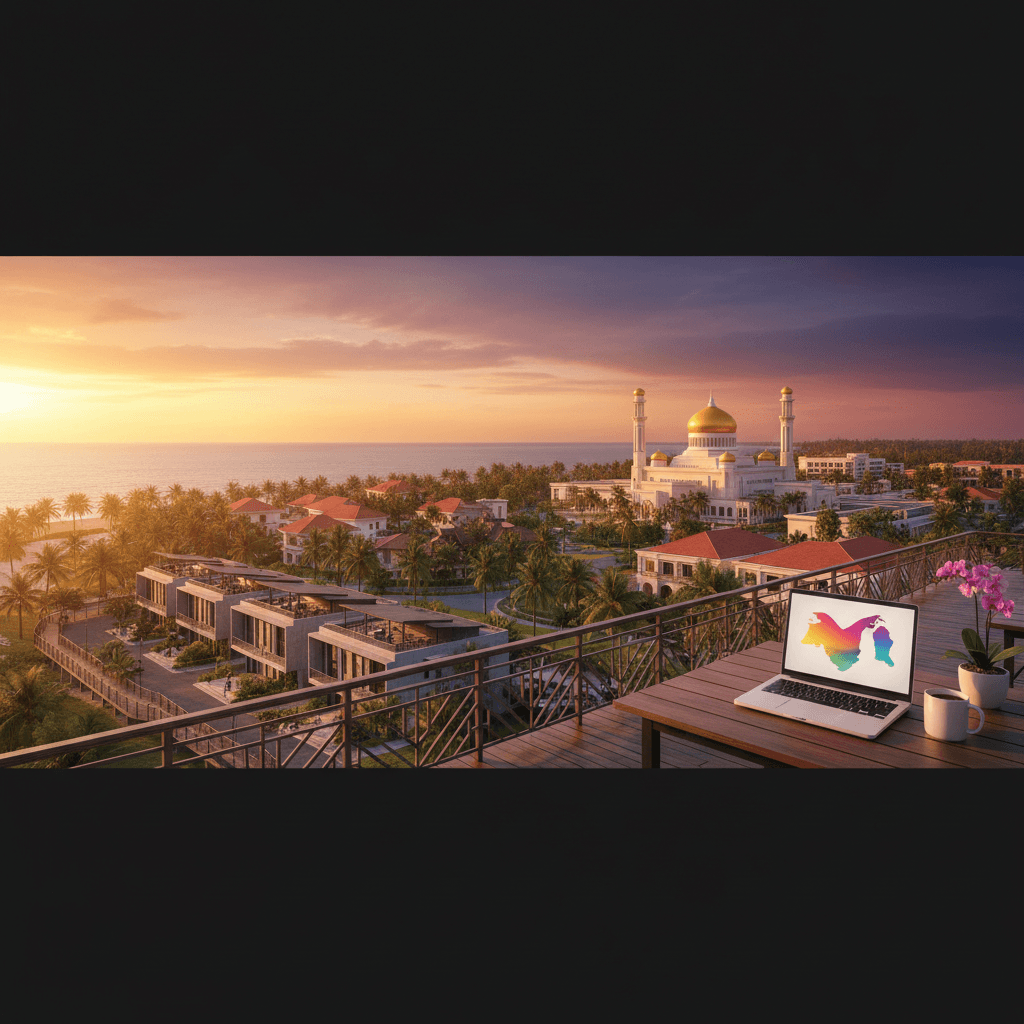
Jerudong
🇧🇳 Brunei
The Vibe: A Slow Burn in the Tropics
If you're looking for the high octane energy of Bangkok or the digital nomad crowds of Canggu, Jerudong will come as a shock to the system. This is a coastal retreat defined by its stillness. Life here moves at a glacial, intentional pace, dictated by the calls to prayer and the setting sun. It's a place where the rainforest literally meets the South China Sea, and you're more likely to spot a Proboscis monkey than a fellow remote worker.
The emotional experience of Jerudong is one of profound safety and quiet. There's no hustle here. Locals are exceptionally friendly and speak excellent English, but they aren't trying to sell you anything. For the nomad who's burnt out on "networking" and wants a month of deep work and empty beaches, it's a sanctuary. Just be prepared for the silence; the nightlife is non existent due to Sharia laws, so your evenings will likely involve sunset walks near the Empire Hotel rather than bar hopping.
Cost of Living Breakdown
Brunei isn't a budget destination. It's significantly pricier than its neighbors in Sarawak or Sabah, largely because of the high standard of living and imported goods. You should expect to spend around $1,500 to $1,600 USD per month to live comfortably.
- Housing: A studio on the outskirts of Jerudong runs BND 800 to 1,200. If you want to be central or near the coast, expect to pay BND 1,500 to 2,000. Beachfront luxury can easily top BND 2,500.
- Dining: You can eat cheaply at local stalls for BND 5 to 10, but a standard mid range meal costs BND 20 to 40. Upscale dining at the Empire Hotel will run you BND 50 to 100.
- Connectivity: A 10GB eSIM costs about BND 124, while local SIM cards from DST or Progresif are much more affordable at BND 10 to 30 for monthly data.
- Transport: Public buses are almost free at BND 1 but are notoriously unreliable. Most nomads rely on ride hailing at BND 10 to 20 per trip or rent a car for BND 100 a day.
The Neighborhood Scene
Jerudong is small, but where you park your laptop matters. Most nomads gravitate toward Jerudong Proper. This is the beachfront heart of the area, offering the best access to the coast and the famous Empire Hotel grounds. It's peaceful and scenic, though the rent reflects the view. You'll find the most stunning sunsets here, but very little in the way of walking distance amenities.
If you're staying longer or want to save a bit of cash, look at Berakas. It's a short drive inland and feels more like a lived in suburb. It's popular with expat families because the housing is more affordable and the supermarkets are better stocked. However, you'll feel the lack of a car much more acutely here.
For those who need a bit more "action," the Bandar Seri Begawan suburbs are only 15 minutes away. You lose the coastal breeze and the jungle quiet, but you gain proximity to the few coworking spaces and expat social groups that exist in the country.
The Practical Reality for Nomads
Working from Jerudong requires self discipline and a good data plan. Coworking spaces are nearly non existent in the immediate area; you'll mostly be working from your apartment or nursing a coffee in a beachside cafe. WiFi is generally stable but rarely "blazing fast." Most travelers recommend picking up a local Progresif SIM immediately at the airport to avoid relying on spotty cafe connections.
Getting around is the biggest hurdle. There's no Grab here, and the local bus system is a lesson in patience. Most expats recommend joining Facebook groups or InterNations to find community, as there aren't many organized nomad meetups. It's a DIY destination. You come here to disappear into your work and the nature, not to find a ready made community of influencers.
Finally, respect the local customs. Dress modestly, covering your shoulders and knees, and remember that Friday afternoons are extremely quiet for prayers. There is no dedicated digital nomad visa, so you'll likely be on a short term tourist entry. It’s a place for a "sprint" of productivity rather than a long term base.
The Price of Peace in Jerudong
Living in Jerudong means trading the frantic energy of Southeast Asian hubs like Bangkok or Ho Chi Minh City for a quiet, coastal pace. While Brunei is famously tax free for its citizens, that doesn't necessarily translate to a bargain for visitors. You'll find that Jerudong is one of the more expensive corners of the region, largely because it caters to a mix of upscale locals and expats attached to the nearby Empire Hotel or international schools.
A monthly budget for a solo nomad typically lands around $1,560 USD. If you're looking to keep costs down, you'll need to venture into the Jerudong outskirts or share a larger house with other expats. Most travelers find that while the sticker price of rent is high, the safety and tranquility offer a specific kind of value you won't find in busier capitals.
Monthly Expenses Breakdown
- Housing (Studio/1BR): Expect to pay BND 1,500 to BND 2,000 for a central spot in Jerudong. If you want those famous beachfront views, prices can easily climb past BND 2,500. Budget seekers often look toward the outskirts for options closer to BND 800.
- Dining out: Local street food and small Malay eateries are your best friend, with meals costing between BND 5 and BND 10. A mid-range dinner for two at a proper restaurant usually hits BND 40, while an upscale night at the Empire Hotel can exceed BND 100.
- Transportation: Public buses are cheap at BND 1 to BND 2 per trip but are notoriously infrequent. Most residents rely on ride-hailing services, which cost about BND 15 for a standard trip, or car rentals at BND 100 per day.
- Connectivity: A local SIM from DST or Progresif is the most economical choice, with unlimited plans ranging from BND 10 to BND 30. For those who prefer eSIMs, be prepared for a premium; a 10GB plan can run as high as BND 124.
Neighborhoods for Nomads
Choosing where to plant your flag depends on whether you're here for the beach or your bank account. Jerudong proper is the gold standard for nomads who want to walk to the sand. It's quiet, safe, and offers stunning sunsets, though you'll pay a premium for the privilege and deal with a lack of nightlife.
For those staying longer, Berakas is a solid inland alternative. It's more of a family-oriented suburb with better access to schools and slightly more affordable housing. It isn't very walkable, so you'll definitely need a car if you settle here. If you crave more amenities and expat social groups, the suburbs closer to Bandar Seri Begawan are only a 15 minute drive away, though you'll lose that "nature retreat" feeling.
The Connectivity Challenge
Jerudong isn't exactly a coworking mecca. Dedicated spaces are limited, and you'll often find yourself working from cafes like those near the beach. A desk in a shared space will set you back BND 200 to BND 400 per month, but the amenities are often basic compared to global standards. Most nomads recommend securing a solid data plan as a backup, as cafe WiFi can be hit or miss during peak hours.
Practical Considerations
Brunei operates under Sharia law, which means alcohol is not sold publicly and the social scene is focused on nature and food rather than parties. It's one of the safest places you'll ever visit, with almost zero crime. This makes it an incredible spot for focused work and decompression, provided you're okay with a dry lifestyle.
The visa situation is the biggest hurdle for long term stays. With no dedicated digital nomad visa, most visitors rely on short tourist entries. You'll need to plan for border runs or extensions if you want to stay beyond a few weeks. When you're here, carry BND 10 in cash for small purchases, but rest assured that cards and apps like Wise or Revolut work well at most established businesses and ATMs.
Digital Nomads and Remote Workers
If you're landing in Jerudong to work, Jerudong proper (beachfront) is the only place to be. It's the most scenic part of the district, characterized by low-rise houses and an incredibly quiet atmosphere. Most nomads gravitate here for the proximity to the coast and the iconic Empire Hotel, which serves as a makeshift hub for meetings or a high-end coffee break.
- Rent: Expect to pay between BND 1,500 and 2,000 for a mid-range spot near the center, or BND 2,500+ if you want to wake up to a sea view.
- Internet: Speeds are reliable enough for video calls, but the lack of dedicated coworking spaces means you'll likely be working from your rental or local cafes. For a mobile backup, an eSIM from eSIMstop or Airalo is a smart move, costing around BND 43 for 3GB.
- Social Life: It's low-key. You won't find a party scene here. Instead, you'll meet people at sunset spots or while grabbing a BND 5 plate of Nasi Katok at a local stall.
Expats and Long-Term Professionals
Expats who need a balance between Jerudong's tranquility and the capital's amenities usually settle in the Bandar Seri Begawan suburbs. These areas are just a 10 to 15 minute drive away, offering a more traditional neighborhood feel with better access to international grocery stores and social groups. It's a trade-off; you lose the immediate beach access but gain a more established community of fellow foreigners.
- Rent: Prices vary wildly, but quality 1BR apartments in these outskirts often start around BND 1,200.
- Transport: You'll definitely want a car here. Public buses are infrequent and cost BND 1 to 2, but they don't run on a strict schedule. A car rental will set you back about BND 100 per day, though long-term leases are much cheaper.
- Community: Check out InterNations or local Facebook groups to find the weekend social circles, which often revolve around home gatherings or nature hikes.
Families
For those moving with kids, Berakas is the top recommendation. Located slightly inland, it's more affordable than the Jerudong coastline and sits closer to the international schools and medical facilities like RIPAS Hospital. It's a stable, residential area where you'll find more spacious housing and a sense of security that's hard to beat.
- Housing: Larger family homes are more accessible here than in the tourist-heavy beachfront zones.
- Safety: Brunei is exceptionally safe, and Berakas is no different. There are no "bad" areas to worry about, making it ideal for kids to play outside.
- Healthcare: You're a short drive from the main pharmacies like Guardian and the country's best emergency services.
Solo Travelers and Budget Seekers
If you're flying solo and trying to keep costs down, look at the Jerudong outskirts. You can find shared housing or modest studios for BND 800 to 1,200. While it's less walkable than the core, it's a great base if you're comfortable using ride-hailing services for BND 10 to 20 per trip to get to the main sights.
- Dining: Stick to the local markets and street food. You can eat well for BND 5 to 10 per meal, especially if you focus on Malay and Chinese stalls.
- Activities: Solo travelers often spend their time at the beach or taking day trips to Ulu Temburong National Park. It's easy to meet people at these natural landmarks rather than in bars, which don't exist here due to local laws.
- Connectivity: Grab a local DST or Progresif SIM card at the airport for about BND 10 to stay connected while exploring the rainforest trails.
Connectivity and Speeds
Brunei isn't exactly a high speed hub like Singapore or Seoul, but Jerudong provides enough bandwidth for most remote work. You can expect moderate WiFi speeds that handle video calls and standard uploads without much drama. Most nomads find the local infrastructure reliable, though it lacks the blazing fast fiber optics you might find in more developed tech centers.
For a consistent backup, skip the hotel WiFi and grab a local SIM. DST and Progresif are the two main players. You can pick up a starter pack at the airport for about BND 10, and unlimited monthly data plans usually range between BND 10 and BND 30. If you prefer the convenience of an eSIM, services like Airalo or eSIMstop work well here, though they're significantly pricier. Expect to pay around $32 USD (BND 43) for a 3GB pack or up to $93 USD (BND 124) for 10GB.
Coworking Spaces and Where to Work
Jerudong is a quiet coastal retreat, so don't expect a massive selection of dedicated coworking hubs. The scene here is very basic. If you need a formal desk, you'll likely have to pay between BND 200 and BND 400 per month for a shared space, but these are few and far between. Most travelers find themselves working from their accommodation or leaning into the local cafe culture.
The vibe in Jerudong is slow, and the cafes reflect that. You can post up at a beachside spot for the price of a coffee, though power outlets aren't always guaranteed. The Empire Hotel area offers some of the more comfortable spots for a laptop session with a view, though the prices for food and drink are higher than the local average. If you need a more "office" feel, a short 15 minute drive into the Bandar Seri Begawan suburbs will give you access to more established business centers and expat friendly cafes.
The Digital Nomad Reality
Working from Jerudong requires a bit of self sufficiency. Since there isn't a bustling nomad community or a "main" coworking hub where everyone gathers, it can feel a bit isolating if you're used to the social atmosphere of places like Bali or Chiang Mai. Expats recommend setting up a solid home office in your rental, especially if you're staying in Jerudong proper near the beach.
- Local SIM (DST/Progresif): BND 10 to BND 30 for monthly data.
- eSIM (30 days): BND 43 for 3GB.
- Coworking Membership: BND 200 to BND 400 per month (limited options).
- Cafe Day Pass: Usually just the cost of a BND 5 to BND 10 meal or coffee.
Most nomads suggest using Baiduri Bank for local financial needs or sticking to Wise and Revolut for international transfers. ATMs are easy to find, but having a local data connection is vital for using banking apps and local taxi services. Keep in mind that while English is widely spoken and the internet is stable, the lack of a dedicated digital nomad visa means you'll likely be working on a standard tourist entry, which keeps stays relatively short.
A Haven of Security
If your priority is peace of mind, Jerudong is one of the most reassuring places you could land. Brunei consistently ranks as one of the safest countries globally, and Jerudong reflects that quiet stability. You won't find "no-go" zones or neighborhoods to avoid here. Crime is exceptionally low, and even as a solo traveler or nomad walking home after a late dinner at the Jerudong Food Court, the atmosphere remains calm and respectful.
The local culture is deeply rooted in Islamic values, which translates to a polite, law-abiding society. While there is no civil unrest to worry about, it's important to respect local customs to keep your experience smooth. This means dressing modestly and being mindful of the country's strict laws regarding alcohol and public conduct. Most nomads find that as long as they respect the local way of life, the level of safety is unparalleled compared to other Southeast Asian hubs.
Healthcare Standards and Access
Healthcare in Brunei is high-quality and efficient. For any major concerns, you'll likely head to Raja Isteri Pengiran Anak Saleha (RIPAS) Hospital. It's the primary public facility located in nearby Bandar Seri Begawan, roughly a 15 to 20 minute drive from Jerudong. It's well-equipped with modern technology and staffed by many English-speaking professionals, many of whom trained abroad.
For more immediate or minor needs, Jerudong has reliable local options:
- Jerudong Park Medical Centre (JPMC): A private hospital known for premium care and a more boutique experience, located right in the Jerudong area.
- Guardian Pharmacy: You'll find a branch in Jerudong for over-the-counter meds, sunscreen, and basic first aid.
- Local Clinics: Small private clinics are scattered throughout the district for quick consultations, usually costing between BND 30 and BND 60 for a visit.
Emergency Contacts and Practicalities
It's a good idea to keep the local emergency numbers saved in your phone. They are short and easy to remember. Dial 991 for the police and 995 for an ambulance. If you're staying at a larger property like the Empire Hotel, the staff can also facilitate medical assistance or private transport to a clinic instantly.
Expats recommend keeping a digital copy of your health insurance and passport on your phone, as private clinics will ask for identification before treatment. Most international travel insurance plans are accepted at private facilities like JPMC, but you'll likely need to pay upfront and claim the expenses back later. Pharmacies are well-stocked, but if you require specific prescription medication, bring an ample supply along with a doctor's note, as certain specialized brands might be harder to find locally.
Staying Healthy in the Tropics
The biggest health "risk" in Jerudong isn't crime or disease; it's the heat. With temperatures hovering around 32°C (90°F) and high humidity, dehydration and heat exhaustion are common for newcomers. Travelers often suggest carrying a reusable water bottle and sticking to air-conditioned cafes or shaded beach spots during the peak afternoon sun between 12 PM and 3 PM.
While tap water in Brunei is generally considered safe to drink by the government, most nomads and expats prefer to stick to filtered or bottled water for long-term stays to avoid any minor stomach upsets. You'll find large 5-liter water bottles at local grocery stores for about BND 2.00, making it an easy and affordable precaution to take.
The Mobility Reality
Jerudong isn't your typical Southeast Asian transport hub. You won't find a swarm of motorbikes or a metro system here. Most locals rely heavily on private cars, which means the infrastructure is built for driving rather than walking. If you're staying in the Jerudong core near the beach, you can manage on foot for short errands, but reaching the grocery store or a specific cafe often requires wheels.
The pace of movement matches the town's atmosphere: slow and deliberate. You won't be fighting through gridlock like in Jakarta or Bangkok, but you will need to plan your departures, especially if you're trying to time a sunset at the beach or a meeting in the capital.
Getting Around Town
- Ride-Hailing: Don't bother looking for Grab here. Brunei uses its own local services, though they can be hit or miss in terms of availability. Most nomads find it more reliable to book a taxi through their hotel or use local taxi services booked via WhatsApp or hotel. Expect to pay between BND 10 and BND 20 for a trip within the Jerudong and Berakas area.
- Public Buses: The "purple buses" are the most affordable way to travel, with fares usually costing just BND 1 to BND 2. They connect Jerudong to Bandar Seri Begawan, but they don't run on a strict, frequent schedule. It's a great way to see the scenery if you aren't in a rush, but it's rarely the choice for a time-sensitive nomad.
- Bike and Scooter Rentals: Near the beachfront and the Empire Hotel area, you can find rentals for roughly BND 20 to BND 50 per day. This is the best way to explore the coastline and the nearby rainforest trails without the hassle of parking a car.
Car Rentals and Driving
If you're planning to stay for more than a week, renting a car is the smartest move. It opens up the entire Brunei-Muara District and makes those 15 minute trips to the capital much more convenient. Most rentals will run you about BND 100 per day, though you can often negotiate better weekly rates with local agencies.
The roads are excellent and well-maintained. Just remember that they drive on the left side of the road here. Parking is rarely an issue in Jerudong, which is a massive relief compared to the tighter streets of Bandar Seri Begawan.
Airport Transfers
Brunei International Airport is about 15 kilometers away from the heart of Jerudong. Since there isn't a direct train or dedicated airport shuttle, a taxi or ride-hail is your best bet. The drive usually takes about 20 minutes and costs between BND 20 and BND 30. Most expats recommend arranging a pickup through your accommodation beforehand to avoid the premium rates sometimes charged at the arrivals curb.
Walkability and Logistics
Jerudong proper is quite pleasant for a stroll, especially as the sun goes down and the heat breaks. The beachfront area is designed for leisure, but as you move toward the outskirts or toward Berakas, the sidewalks disappear and the heat becomes a major factor. Between 11:00 AM and 3:00 PM, walking any significant distance is a recipe for heatstroke. Most nomads stick to indoor spaces or air-conditioned transport during these peak hours and save their walking for the cooler evening "golden hour."
Transport Cost Summary
- Public Bus: BND 1 to BND 2 per trip
- Ride-hail: BND 10 to BND 20 per trip
- Daily Car Rental: BND 100
- Bike Rental: BND 20 to BND 50 per day
- Airport Taxi: BND 20 to BND 30
The Linguistic Landscape
You won't have much trouble making yourself understood in Jerudong. While Malay is the official language, English is the unofficial second language of Brunei. It's taught in schools and used extensively in business and government. Most locals you'll meet in the shops around the Jerudong beachfront or at the Empire Hotel speak English with a high level of proficiency. You can easily order a BND 5 plate of nasi katok or negotiate a taxi fare without reaching for a translation app.
That said, the local dialect, Melayu Brunei, has its own distinct flair. If you head into the more residential parts of Berakas or chat with older vendors at the local markets, you might notice a softer, more rhythmic cadence than the standard Malay spoken in Kuala Lumpur. It's a friendly atmosphere where people appreciate any effort you make to learn a few words, even if they immediately switch to English to make things easier for you.
Staying Connected
Internet speeds in Jerudong are generally reliable for remote work, though they won't win any global races. Most cafes and mid-range rentals offer stable connections suitable for video calls and standard workflows. If you're planning a long-term stay, nomads often recommend getting a local SIM card rather than relying solely on hotel WiFi. DST and Progresif are the two main players. You can grab a starter pack at the airport or in town for about BND 10, and monthly unlimited data plans typically range between BND 10 and BND 30.
For those who prefer the convenience of an eSIM, options like Airalo or eSIMstop work well here, though they come at a premium. Expect to pay around BND 43 ($32 USD) for a 3GB plan or up to BND 124 ($93 USD) for 10GB. If you're heavy on data, the local physical SIM is definitely the more budget-friendly route.
Essential Phrases for Your Kit
While English gets you through the day, using a bit of Malay goes a long way in building rapport with the community. Here are the basics locals love to hear:
- Selamat pagi: Good morning
- Terima kasih: Thank you (You'll hear this constantly; it's the backbone of local politeness)
- Sama-sama: You're welcome
- Berapa harganya?: How much is this?
- Lurus: Correct or straight (Very useful when giving directions to a driver)
Digital Tools and Apps
Since there isn't a massive ride-sharing presence like Grab in Brunei, communication often happens through WhatsApp. Whether you're booking a car through a local service or inquiring about an apartment on a Facebook group, WhatsApp is the primary way to get things done. For those rare moments when you encounter a language barrier, Google Translate handles Malay quite well, especially for reading menus or signs in more traditional areas.
Expats in Jerudong suggest joining local Facebook groups or checking InterNations to connect with the community. Since the social scene is quiet and focused on nature and home life, these digital bridges are the best way to find out about weekend hikes or casual meetups at beachside cafes. Most communication in these groups is entirely in English, making it easy to hit the ground running as soon as you arrive.
The Tropical Rhythm
Jerudong sits in a classic equatorial sweet spot. You can expect it to be hot and humid pretty much every day of the year. Temperatures generally hover between 28°C and 32°C (82°F to 90°F), so your daily uniform will likely consist of light, breathable fabrics. The humidity is the real kicker here, often making a 30 degree day feel significantly more intense once you step away from the ocean breeze.
The rain here doesn't mess around. When it pours, it really pours, usually in short, dramatic bursts that clear up as quickly as they started. While you'll see rain throughout the year, the patterns are predictable enough that they won't usually ruin your plans if you've got a decent umbrella or a nearby cafe to duck into.
Best Time to Visit
If you want to maximize your time at Jerudong Beach or exploring the nearby rainforests, aim for the window between March and October. This is the drier season, where the skies are clearer and the humidity feels just a bit more manageable. March and April are particularly pleasant, offering the most consistent sunshine for those famous Jerudong sunsets.
Nomads who've spent time here often prefer the shoulder months like September or October. The crowds are non-existent, and while you might get an afternoon shower, the landscape is incredibly lush and green. It's the perfect time for photography or taking long walks near the Empire Hotel grounds without melting.
The Rainy Season Reality
The peak of the wet season hits between November and February. December and January are historically the wettest months, seeing upwards of 250mm of rainfall. During this time, the heavy monsoonal rains can lead to some localized flooding and make outdoor activities like hiking in Ulu Temburong a bit more of a gamble.
That said, visiting during the rainy season isn't a total washout. Since Jerudong is a quiet, nature focused retreat, many writers and developers actually enjoy the "low season" vibe. There's something peaceful about working from a beachside cafe while a tropical storm rolls over the South China Sea. Just be prepared for higher prices on indoor transport since walking becomes less practical when the skies open up.
Seasonal Planning Checklist
- March to May: Peak dry season. Best for outdoor enthusiasts and beach bums. Expect highs of 32°C.
- June to August: Consistently hot. Great for diving or boat trips, though humidity is at its peak.
- September to October: Transition months. Occasional rain, but fewer tourists and beautiful greenery.
- November to February: Heavy rain. Bring waterproof gear and expect some humidity-induced tech issues if you aren't in an air-conditioned space.
Practical Weather Tips
Local life revolves around the sun. You'll find that Jerudong is most active in the early mornings and late afternoons. Most expats recommend getting your outdoor exercise or errands done before 10:00 AM or after 4:00 PM to avoid the midday heat. If you're planning on working from a cafe, make sure it has strong air conditioning; fans alone won't always cut it during the July heat.
Keep an eye on the haze. Occasionally, regional agricultural burning can affect air quality across Borneo, usually between August and October. It doesn't happen every year, but it's worth checking local air quality apps if you have respiratory sensitivities. For the most part, though, you'll be breathing some of the freshest coastal air in Southeast Asia.
Getting Settled and Staying Connected
Setting up your home base in Jerudong is a bit different than the typical Southeast Asian nomad hubs. You won't find a massive digital nomad visa program here; most visitors rely on standard tourist entries, so you will need to keep a close eye on your passport stamps. For housing, skip the generic hotel sites and head to PropertyGuru or local Facebook groups. If you want to be near the coast, expect to pay between BND 1,500 and BND 2,000 for a central apartment. If you are on a tighter budget, looking toward the outskirts or nearby Berakas can drop your rent to around BND 800.
Internet speeds are reliable enough for video calls, though you should not expect lightning fast fiber in every cafe. Most nomads recommend grabbing a local SIM from DST or Progresif right at the airport. A starter pack usually costs about BND 10. If you prefer the convenience of an eSIM, eSIMstop or Airalo work well, though they are pricier, with 10GB packages running around BND 124. Dedicated coworking spaces are scarce in Jerudong, so you will likely find yourself working from quiet beach cafes or the lobby areas of larger hotels like the Empire.
Daily Costs and Budgeting
Brunei uses the Brunei Dollar (BND), which is pegged to the Singapore Dollar. It is one of the more expensive spots in the region, so your monthly burn rate will likely hover around $1,500 to $1,600 USD. Here is how those costs typically break down:
- Cheap Eats: BND 5 to BND 10 for halal street food or Chinese stalls.
- Mid-range Dining: BND 20 to BND 40 for a nice meal at a local eatery.
- Transport: BND 1 to BND 2 for the infrequent public bus, or BND 10 to BND 20 for a short ride-hail trip.
- Coffee: BND 5 to BND 8 at a decent workspace-friendly cafe.
For banking, Baiduri Bank ATMs are easy to find and generally play nice with international cards. It is still smart to keep a Wise or Revolut account active for better exchange rates when paying at larger establishments.
Navigating the Local Culture
Life in Jerudong moves at a deliberate, peaceful pace. The country follows Sharia law, which means the social scene is focused on nature and food rather than bars and clubs. There is no alcohol sold publicly, and most businesses close down or get very quiet during Friday prayers. Modest dress is the standard; keep your shoulders and knees covered when you are out in public areas to show respect for local customs.
English is widely spoken, especially in Jerudong and nearby Bandar Seri Begawan, so you won't have trouble ordering food or asking for directions. A simple "Terima kasih" (thank you) goes a long way with the locals, who are known for being incredibly welcoming. Safety is a huge perk here. It is one of the safest places you can live as a solo traveler; crime is very low and there are no specific neighborhoods you need to avoid for safety reasons.
Climate and Transport
The weather is tropical and humid year round, with temperatures consistently sitting between 28°C and 32°C. If you can, plan your stay between March and October to catch the drier window. The rainy season peaks in December and January, and when it rains here, it really pours. This can make the outskirts less walkable, so many expats choose to rent a car for around BND 100 a day or rely on local taxis booked through their accommodation, as major apps like Grab don't have a strong presence here.
For a change of pace, the Brunei International Airport is only about 15km away. A taxi there will cost you roughly BND 20 to BND 30 and takes about 20 minutes. Most nomads find that while the social life is quiet, the ease of access to rainforests and pristine beaches makes the logistics more than worth it.
Need visa and immigration info for Brunei?
🇧🇳 View Brunei Country GuideHidden Gem
Worth the effort