Jericó
🇨🇴 Colombia
The Vibe: Slow Coffee and Cloud Forests
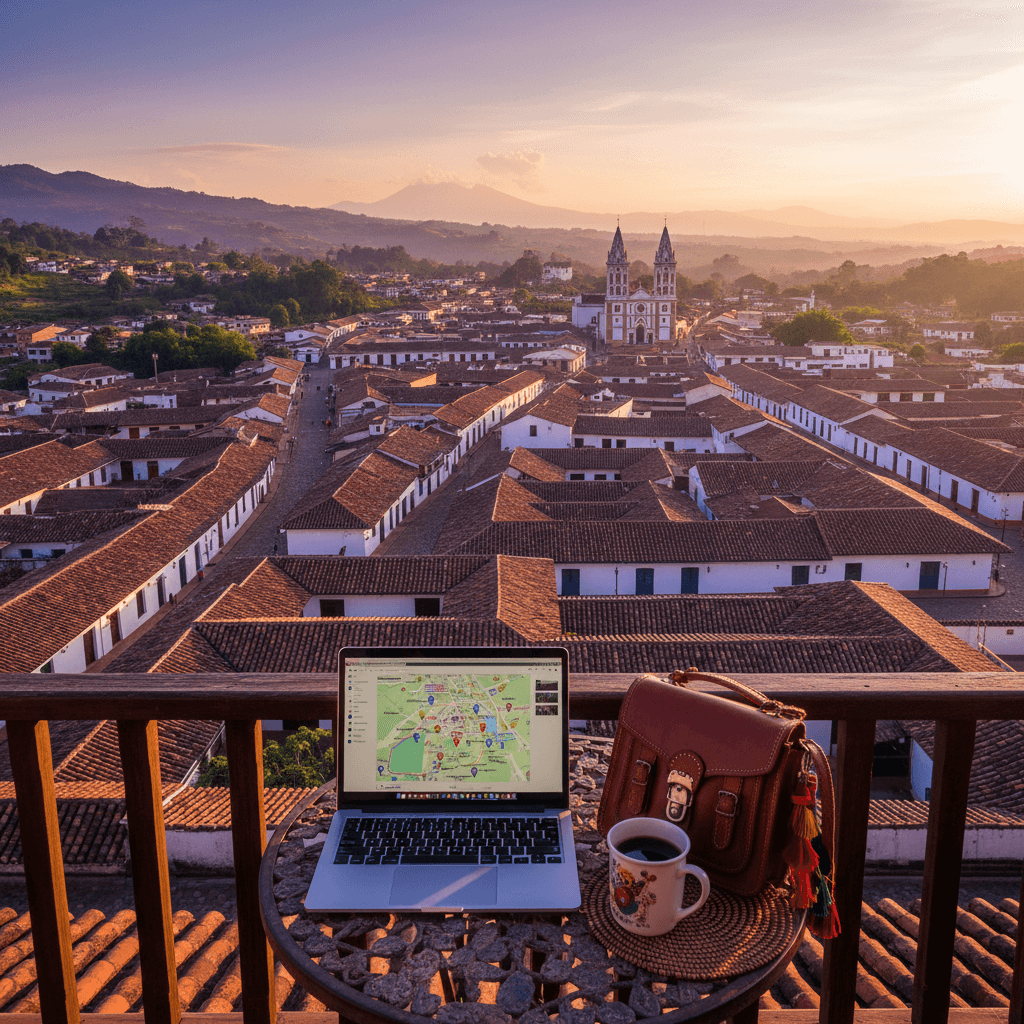
If Medellín is the high energy heart of Antioquia, Jericó is its deep, steady breath. Located about three hours south of the city, this mountain town feels like a secret the rest of the world hasn't quite stumbled upon yet. It is defined by its 360 degree mountain views and a pace of life that prioritizes a morning greeting over a morning deadline. You will find yourself trading the roar of traffic for the sound of distant waterfalls and the smell of roasting coffee beans.
The personality here is deeply traditional yet surprisingly welcoming to the remote work crowd. Locals are exceptionally friendly, often stopping to chat even if your Spanish is limited to the basics. It is the kind of place where you go for a quick walk and end up invited to see a family garden or a coffee finca. For nomads, the emotional draw is the tranquility. It is a mental health reset where the biggest stressor is deciding which trail to hike after your afternoon meetings.
Cost of Living: Rural Affordability
Living in Jericó is significantly cheaper than the major Colombian hubs. While specific data for this year is lean, you can expect your dollar to go much further here than in El Poblado or Laureles. Most nomads find that a mid range lifestyle is easily achievable on a modest budget.
- Budget Tier ($800 to $1,200 USD/month): This covers a room in a shared house or a modest local apartment, plenty of street food like 10,000 COP ($2.50) lunches, and a focus on free outdoor activities like hiking Las Nubes.
- Mid Range Tier ($1,500 to $2,000 USD/month): You will likely secure a private 1BR apartment in the center for 800,000 to 1,500,000 COP ($195 to $365 USD), eat at nicer restaurants regularly, and maintain a dedicated desk at a coworking space.
- Comfortable Tier ($2,500+ USD/month): This allows for the best private rentals available, frequent weekend trips, and high end dining without much thought to the bill.
The Layout: Compact and Walkable
Jericó is small enough that you don't really need to worry about neighborhoods in the traditional sense. Everything radiates out from the main plaza. Staying near the center is the move for most travelers because it keeps you within walking distance of the best coffee shops, the main coworking hub, and the trailheads.
- The Town Center: This is where you want to be. It is safe, walkable, and puts you right in the middle of the action. You will be steps away from the colorful balconies and the daily buzz of the plaza.
- The Outskirts: Great for those who want total silence and immersion in nature. However, you will have a longer walk for groceries and may feel a bit isolated if you are traveling solo.
Connectivity and Coworking
The infrastructure is surprisingly robust for a mountain village. There is a primary coworking space in town that nomads rave about, known for its massive desks, reliable outlets, and a 360 degree view of the surrounding peaks. It feels more like a creative sanctuary than an office. You can expect fiber optic speeds in the 100+ Mbps range, though it is always smart to have a backup.
For mobile data, grab a SIM card from Claro, Movistar, or Tigo. Coverage is generally strong within the town limits, but it will drop off quickly once you head deep into the coffee farms or up the mountain trails. Most nomads recommend using the dedicated coworking spaces for important calls rather than relying on cafe WiFi, which can be hit or miss.
Safety and Logistics
Jericó feels remarkably safe. It is one of the few places in Colombia where travelers often feel comfortable hiking alone or walking home late at night. That said, basic precautions still apply. Don't leave your laptop unattended in public areas and stick to well lit streets after dark. If you need medical care beyond a pharmacy, you will likely need to head back to Medellín, which is about 2.5 hours away by bus or private car.
To get here, most people fly into José María Córdova International Airport (MDE) in Rionegro and then take a bus or a pre arranged taxi. Once you are in town, your feet are your primary mode of transport. The terrain is hilly, so prepare for a daily calf workout, but the crisp mountain air makes every walk feel like a reward rather than a chore.
The Price of Peace in the Mountains
Living in Jericó feels like a well kept secret, especially when you compare the local prices to the skyrocketing costs in Medellín or Bogotá. Your money goes significantly further here, provided you're willing to swap high end shopping malls for local markets and craft workshops. You can comfortably enjoy a high quality of life for a fraction of what you'd spend in North America or Europe.
Most digital nomads find that a monthly budget of $1,500 to $2,000 USD allows for a very comfortable lifestyle. This covers a private apartment, eating out frequently, and plenty of weekend trips to nearby coffee farms. If you're on a tighter budget, you can get by on $800 to $1,200 USD by opting for shared housing and sticking to the local "menú del día" at traditional eateries.
Monthly Budget Breakdown
- Budget Tier: $800 to $1,200 USD (Shared rooms, street food, local transport)
- Mid-Range Tier: $1,500 to $2,000 USD (Private 1BR, frequent dining, coworking pass)
- Comfortable Tier: $2,500+ USD (Upscale private home, premium dining, private tours)
Housing and Utilities
Accommodation is your biggest variable. Since Jericó is small and walkable, you don't need to worry about "bad" neighborhoods, but the central area near the main plaza is where most of the action is. Rent for a decent one bedroom apartment or a studio in the town center typically ranges from 800,000 to 1,500,000 COP ($195 to $365 USD). These prices are often lower if you negotiate a long term stay directly with a local landlord rather than booking through international platforms.
Utilities are generally affordable, and many rentals include them in the price. If you're paying separately, expect to spend between 96,300 and 137,500 COP ($23 to $34 USD) for home internet. While the town is rural, the connection is surprisingly stable, though it's always smart to have a backup SIM card from Claro or Tigo for those occasional mountain weather flickers.
Food and Dining
Eating out is one of the highlights of living in Antioquia. You can grab street food like empanadas or arepas for around 10,000 COP ($2.50 USD). For a proper sit down meal, a mid range restaurant will cost you between 25,000 and 40,000 COP ($6 to $10 USD). Even the "upscale" spots in town rarely exceed 50,000 COP ($12 USD) for a main course.
Groceries are equally affordable if you shop at the local markets. Fresh produce is abundant and cheap, thanks to the surrounding farms. Most travelers recommend starting your day with the complimentary breakfasts often provided at coworking hubs or local guesthouses to save a few extra pesos.
Coworking and Connectivity
The primary coworking space in town offers stunning 360 degree mountain views and reliable Wi-Fi, which is a massive draw for the nomad community. A day pass usually costs between 20,000 and 50,000 COP ($5 to $12 USD). This is a small price to pay for a dedicated desk, plenty of outlets, and a community of like minded people in a town that lacks a traditional 24/7 urban infrastructure.
Transport and Extras
You'll spend very little on transportation within Jericó because the town is incredibly compact. Almost everything is reachable on foot. If you need to head back to Medellín for a weekend, the bus takes about 2 hours and is very budget friendly. For those arriving from the international airport in Rionegro, a taxi or private car will be your biggest one time expense, but it's a scenic drive that's worth the cost to reach this mountain sanctuary.
- Coffee: $1.50 to $3.00 USD
- Beer: $1.00 to $2.50 USD
- Gym Membership: $20 to $35 USD per month
- SIM Card: $5 to $10 USD for a generous data plan
The Central Plaza (El Centro)
Jericó isn't a sprawling metropolis with distinct districts. It's a compact, walkable mountain town where everything revolves around the main square. For almost every visitor, staying within a four or five block radius of the plaza is the move. You'll find the most reliable Wi-Fi here, alongside Riverside Ecoliving, the primary coworking space. This space is a favorite for its 360-degree mountain views, massive desks, and power outlets at every turn. It's the heartbeat of the local nomad scene, providing a sense of community in a town that otherwise moves at a very slow, traditional pace.
Living in the center means you can walk to the local market for fresh fruit, grab a coffee at a nearby farm-to-table cafe, and hit the trailhead for Las Nubes without ever needing a car. Rent for a decent one-bedroom apartment or a high-end private room in a heritage house typically ranges from $195 to $365 USD per month. While the outskirts offer more seclusion, most travelers stick to the center to avoid walking dark, unlit rural roads at night. It's a safe town, but standard rural precautions apply once you leave the main street lights behind.
For Digital Nomads
If you're working remotely, your priority is the "digital" part of the nomad equation. Jericó's central area is the only place where you'll find the infrastructure to support a 40-hour work week. While home internet averages around $23 to $34 USD a month, it can be spotty during heavy mountain rain. Most nomads rely on Riverside Ecoliving, where speeds often hit 100 Mbps.
- The Vibe: Focused, quiet, and incredibly scenic.
- Daily Costs: Coworking day passes run about $5 to $12 USD, and a mid-range dinner will set you back roughly $8 USD.
- Pro Tip: Buy a Claro or Movistar SIM card before arriving. You'll want the hotspot as a backup for those occasional rural power dips.
For Solo Travelers
Solo travelers usually prefer the streets immediately adjacent to the main plaza. Because Jericó doesn't have a massive "backpacker district," staying central is the only way to meet people. Most expats and digital nomads connect through informal meetups at Riverside Ecoliving, the primary coworking space, which features 360-degree mountain views and plenty of desk space. The social scene is mellow; don't expect late-night clubs. Instead, the "nightlife" usually involves a few beers at a local tienda or a group dinner with people you met at the coworking space. It's a great spot to decompress, but solo travelers might find it a bit too quiet for more than a few weeks.
- Safety: Very high during the day; solo hikers report feeling comfortable on the main trails.
- Social Hubs: The coworking office and the local coffee farms are your best bets for networking.
For Families
Families tend to gravitate toward the quieter, residential streets about three blocks uphill from the plaza. These areas feel like a botanical garden, with colorful doors and flower-filled balconies. The town is exceptionally safe for children, and the slow pace of life is a welcome break from the chaos of Medellín. The "lush and green" vibe isn't just marketing; there are parks and nature paths everywhere.
- Rent: Expect to pay around $400 USD for a larger, multi-bedroom traditional house.
- Activities: Horseback riding tours and visits to the local botanical garden are hits with kids.
- Healthcare: There are local pharmacies for the basics, but for anything serious, you're looking at a 2.5-hour drive back to Medellín.
For Expats
Long-term expats often look for "fincas" or small farms just on the edge of the town limits. These properties offer more space and incredible views of the Cauca Valley. It's a lifestyle choice for those who want to immerse themselves in Paisa culture. You'll need to brush up on your Spanish, as English proficiency is very low here. Expats typically budget between $1,500 and $2,000 USD a month to live a very comfortable, upper-middle-class lifestyle that includes private housing and frequent dining out.
- Transport: While the town is walkable, expats often use the local "chiva" buses or InDrive to get around more efficiently.
- Community: Most expats connect through Facebook groups or by simply becoming regulars at the local cafes.
Connectivity in the Clouds
Jericó isn't your typical high speed tech hub, but that's exactly why people are starting to flock here. While the town maintains a slow, traditional pace, the infrastructure has quietly kept up with the needs of remote workers. You can generally expect reliable fiber optic connections in most modern rentals and dedicated workspaces.
Most nomads find that speeds hover around 100 Mbps, which is plenty for video calls and heavy uploads. However, keep in mind that this is a mountain town. Heavy tropical storms can occasionally cause brief flickers in the grid, so having a backup plan is a smart move for anyone with back to back meetings. Most travelers recommend using a local SIM card as a hotspot to bridge any gaps.
- Claro: Generally offers the widest coverage in rural Antioquia.
- Movistar: A solid runner up with competitive data packages.
- Tigo: Good speeds within the town center but can be spotty as you head toward the coffee farms.
Coworking Spaces and Infrastructure
The coworking scene in Jericó is small but exceptionally high quality. Instead of the cramped, windowless offices you might find in Medellín, the primary workspace here leans into the town's natural beauty. The main hub features a massive open floor plan with desks positioned to take advantage of 360 degree mountain views. It's the kind of place where you'll find yourself staring at the clouds between emails.
Expect to pay between 20,000 and 50,000 COP ($5 to $12 USD) for a day pass. These spaces usually include perks like bottomless local coffee and communal breakfasts, which makes it easy to meet the small but growing community of international nomads. Outlets are plentiful, and the chairs are actually designed for eight hour shifts, a rarity in rural Colombia.
If you prefer a more casual vibe, there are several cafes around the main plaza where you can set up for an hour or two. Just be mindful of local etiquette. While the locals are incredibly friendly, these cafes are social hubs first and offices second. Avoid taking loud calls in public spaces and always buy more than just one espresso if you're planning to stay a while.
Remote Work Essentials
Living and working here requires a bit of a shift in mindset. You won't find 24 hour convenience stores or tech repair shops on every corner. If you need a specific dongle or a replacement charger, you'll likely have to wait until your next trip to Medellín, which is about three hours away by bus. Most expats recommend bringing a sturdy surge protector to protect your gear from those mountain power fluctuations.
- Daily Coworking Rate: 20,000 to 50,000 COP
- Monthly Home Internet: 96,300 to 137,500 COP
- Typical Speeds: 100 to 200 Mbps in town
- Power Reliability: Generally good, but carry a power bank for your phone
The real draw of working from Jericó is the mental health boost. When your "office" overlooks the Las Nubes trail and the air smells like roasting coffee, the usual work stress feels a lot more manageable. It's a place for deep work and focus, away from the distractions of the city.
A Peaceful Mountain Sanctuary
Jericó is a breath of fresh air for anyone burnt out by the frantic energy of Medellín. While the city has a reputation for "no dar papaya" (don't give anyone an easy opportunity to take advantage of you), this mountain town operates on a completely different frequency. It feels remarkably safe, even for solo travelers and digital nomads carrying gear.
Most nomads find they can walk the central streets with a sense of ease that's rare in larger Colombian hubs. The community is tight knit and locals are famously hospitable. You'll see people leaving their doors open and chatting on the sidewalk well into the evening. It's the kind of place where you can hike the Las Nubes trail alone during the day without much worry, though it's always smarter to head out with a friend if you're exploring more remote waterfalls.
Street Smarts and Security
Even in a peaceful pueblo, you shouldn't throw common sense out the window. Stick to these local habits to keep your stay stress free:
- Mind your tech: While the central coworking space is a secure sanctuary, avoid working on your laptop at outdoor tables on the main plaza. It's better to keep your expensive gear tucked away while you're in high traffic areas.
- Nighttime boundaries: Stick to the well lit central area after dark. The outskirts and rural paths are beautiful, but they can get pitch black and isolated once the sun goes down.
- Financial safety: Use the ATMs located inside or directly adjacent to banks near the main square. Travelers recommend carrying a mix of cash for small shops and a card like Wise or Revolut for larger expenses.
- Emergency contact: Memorize 123. This is the national emergency number for police, fire, and medical assistance in Colombia.
Healthcare and Medical Access
Healthcare in Jericó is sufficient for minor issues, but it's not a medical hub. You'll find several droguerías (pharmacies) around the plaza where pharmacists can help with basic ailments, stomach bugs, or altitude headaches. They are surprisingly knowledgeable and can often recommend over the counter treatments for common travel woes.
For anything serious, you'll need to head back to Medellín. The city is roughly 2 to 3 hours away by bus or private car and hosts some of the best hospitals in Latin America. Expats generally recommend having high quality international health insurance that covers medical evacuation or private transport if an emergency arises. If you're staying long term on a Digital Nomad Visa, you'll eventually need to look into the EPS (public health insurance) system, but for shorter stays, private travel insurance is the standard choice.
Staying Healthy in the Clouds
The biggest "health" challenge you'll likely face is the change in altitude and the steep terrain. Jericó sits high in the mountains, so give yourself a day or two to acclimate before tackling the big hikes. The tap water in Jericó is generally considered better than in many rural areas, but most nomads still prefer using a filtered bottle or buying large jugs of water to avoid any risk of "pueblo belly."
The pace of life here is a massive boost for mental health. The 360 degree mountain views and the lack of car horns do wonders for your cortisol levels. It's a place to trade the gym for mountain treks and trade the nightclub for a quiet coffee on a veranda. Just keep your Claro or Tigo SIM card topped up so you have GPS and communication if you're out exploring the coffee farms alone.
Foot Power and Mototaxis
Jericó is a town built for walking. The central grid is compact, and you can cross the heart of town in about 15 minutes. Most nomads choose to stay near the main plaza, where the majority of cafes and the primary coworking hub are located. The streets are steep and cobblestoned, so bring sturdy shoes with good grip. It's the kind of place where you'll get your daily cardio just by heading out for a morning tinto.
When your legs need a break or you're carrying groceries, look for the local mototaxis. These three wheeled tuk tuks are the lifeblood of local transit. They're cheap, usually costing between 5,000 and 10,000 COP ($1.25 to $2.50 USD) for a quick zip across town. Just flag one down on the street; they're almost always buzzing around the plaza.
Connecting to Medellín
Most travelers arrive via Medellín, which is roughly 3 hours by bus from Medellín. The journey is winding and incredibly scenic, but it can be a bit much if you're prone to motion sickness. You have two main options for the trip:
- Public Bus: Head to Medellín's Terminal del Sur. Companies like Transportes Jericó run frequent daily departures. A one way ticket usually costs around 35,000 to 45,000 COP ($8.50 to $11.00 USD).
- Private Car or Door-to-Door Service: For more comfort, you can hire a private driver or use a shared van service. These are often arranged through local hostels or WhatsApp groups and cost significantly more, but they save you the hassle of navigating the bus terminal.
Airport Logistics
The closest major hub is José María Córdova International Airport (MDE) in Rionegro. Since the airport is actually outside of Medellín on the way toward Jericó, you don't necessarily have to go into the city center first. A private taxi directly from the airport to Jericó will run you roughly 300,000 to 400,000 COP ($75 to $100 USD). The drive takes approximately 2-2.5 hours.
Apps and Ride Hailing
Don't expect to open Uber or Cabify here. While ride hailing apps dominate Medellín, they don't really exist in rural Jericó. If you need a ride to a specific trailhead or a distant coffee farm, your best bet is to ask the staff at your coworking space or accommodation for a "transporte privado" contact. Most locals use WhatsApp to coordinate rides with specific drivers they trust.
Exploring the Outskirts
If you're planning to visit the Las Nubes viewpoint or nearby waterfalls, you'll mostly be relying on your own two feet. The trailheads are accessible from the edge of town. For further excursions into the countryside, some nomads rent mountain bikes, though the terrain is challenging. There aren't formal scooter rental shops yet, so you'll mostly see locals on small motorbikes. If you're staying for a few months, some expats find it easier to buy a used bike and sell it before they leave.
Practical Transit Tips
- Cash is King: You cannot pay bus drivers or mototaxi operators with a card. Always keep small bills (2,000 and 5,000 COP notes) handy for local trips.
- The "Chiva" Experience: Occasionally, you'll see brightly painted Chiva buses. These are more for cargo and rural workers, but they're a fun, bumpy way to see the surrounding mountains if you aren't in a rush.
- Booking Ahead: For the bus back to Medellín on Sundays or holidays, buy your ticket at the station a day in advance. The town gets busy with domestic tourists, and seats sell out fast.
The Language Divide
In Jericó, English is a rarity. Unlike the bubble of El Poblado in Medellín, this is a traditional Antioquian town where Spanish is the only currency for communication. You won't find many menus with English translations or bilingual staff at the local pharmacies. Most nomads find that while the locals are incredibly patient and warm, your experience will be significantly limited if you can't get past a basic greeting.
The local accent, known as Paisa, is generally clear and melodic, making it one of the better places to practice Spanish. However, rural speakers often use local slang and idioms that can trip up even intermediate learners. If you're planning to stay for more than a week, expect to use translation apps daily to handle anything more complex than ordering a tinto.
Practical Tools for the Trail
Since cell service is reliable with providers like Claro or Tigo, you should lean heavily on technology while you find your footing. Expats recommend downloading the Spanish offline dictionary on Google Translate before you arrive, as you might lose signal while hiking the Las Nubes trail or visiting remote coffee farms.
- Google Translate: Use the camera feature for translating menus at the smaller fondas around the main plaza.
- WhatsApp: This is the primary way to communicate with landlords or book tours. Typing allows you to translate messages at your own pace.
- DeepL: Many long term travelers prefer this for more nuanced translations when negotiating rent or discussing technical issues at the coworking space.
Key Phrases for Daily Life
Politeness is a pillar of Colombian culture. You'll notice people greeting everyone they pass on the street. Skipping a "Buenos días" is often seen as cold or rude. Use these phrases to smooth over your daily interactions:
- "¿Qué más?": This is the standard Paisa "What's up?" or "How's it going?" It's used constantly in Jericó.
- "¿Cuánto cuesta?": Use this at the market or for bus fares. Street food usually runs around 10,000 COP, so knowing your numbers is vital.
- "Con gusto": You'll hear this instead of "de nada" after you say thank you. It means "with pleasure."
- "¿Me regala...?": Literally "Will you gift me...?" but it's the standard, polite way to ask for a coffee or the bill.
Social Integration
The social scene in Jericó is small and centered around the main plaza and the town's primary coworking hub. Because there aren't massive nomad meetups, your social life often depends on your ability to chat with the owners of the coffee fincas or the people sitting at the next desk. Travelers often say that even a "broken Spanish" effort goes a long way here; locals appreciate the respect shown by trying to speak their language.
If you're serious about staying, consider hiring a remote tutor or spending a few weeks in Medellín first to sharpen your skills. In a town this quiet and slow paced, being able to share a conversation over a 25,000 COP lunch is the difference between feeling like a tourist and feeling like a neighbor.
The Eternal Spring of the Andes
Jericó sits at an elevation that grants it a near perfect climate for deep work and outdoor exploration. You can expect daytime temperatures to hover between 18°C and 25°C (64°F to 77°F) throughout the year. It rarely gets sweltering like the coast or bone-chilling like Bogotá, making it a dream for nomads who want to skip the air conditioning and just leave the windows open.
The town stays incredibly lush and green because it gets its fair share of rain. The mornings are usually crisp and sunny, perfect for a hike up to the Las Nubes viewpoint before the clouds roll in. By mid afternoon, a light mist or a quick downpour often settles over the mountains, which is usually the best time to hunker down in a coworking space with a local coffee.
When to Plan Your Stay
While Jericó is a year round destination, the timing of your visit can change your experience significantly. Most nomads prefer the drier windows to make the most of the surrounding nature.
- December to March: This is arguably the prime window. The skies are generally clearer, and the trails to nearby waterfalls are easier to navigate. It coincides with the holiday season, so the main plaza feels especially lively with locals and returning families.
- June to September: A secondary dry season that offers great visibility for those 360 degree mountain views. It is a fantastic time for paragliding or visiting coffee farms during the harvest cycles.
- April to May and October to November: These are the peak rainy months. Expect more frequent afternoon storms and occasional mud on the rural trails. If you are coming specifically to write or grind on a project, the moody, misty atmosphere during these months is actually quite peaceful.
The Weekend Surge
One thing travelers often overlook is the weekend shift. Because Jericó is only about two to three hours from Medellín, it becomes a popular retreat for city dwellers on Saturdays and Sundays. If you prefer total silence, try to schedule your deep work sessions for Tuesday through Thursday. By Friday evening, the pace picks up, and the sounds of guasca music and socializing fill the air around the plaza.
Expats recommend packing in layers. Even though the days are temperate, the mountain air turns surprisingly cool once the sun drops behind the ridges. A light fleece or a windbreaker is a must for evening walks to dinner or late night sessions at the coworking hub. You will also want sturdy, waterproof footwear if you plan on exploring the Las Nubes trail, as the terrain can get slick even outside of the main rainy seasons.
Timing Your Arrival
If you have the flexibility, aim to arrive in mid January. The holiday crowds from Medellín have thinned out, the weather is at its most stable, and you will find it much easier to negotiate a monthly rate on a local apartment or a room with a view. Avoid arriving during "Puentes" (holiday Mondays), as transportation from the Medellín bus terminals can be packed and accommodation prices often spike for those three day windows.
Getting Connected
Staying online in the mountains of Antioquia is surprisingly reliable, but you need the right setup. Pick up a SIM card from Claro or Tigo as soon as you land at the airport in Rionegro; they have the best coverage in rural areas. While many rentals offer decent speeds, serious remote work happens at the local coworking hub near the main plaza. It's a massive space with 360-degree mountain views, plenty of outlets, and fiber optic speeds that often hit 100 Mbps.
For home internet, expect to pay between 96,300 and 137,500 COP ($23 to $34 USD) per month if you're setting up your own place. If you're just passing through, a day pass at the coworking space typically costs between 20,000 and 50,000 COP ($5 to $12 USD). Most nomads suggest avoiding working with your laptop out on the street or in open-air cafes; stick to the dedicated workspaces for better security and focus.
Cost of Living
Jericó is significantly more affordable than Medellín, though your choices for luxury are more limited. You can live well here on a range of budgets:
- Budget ($800 to $1,200 USD/month): Staying in shared housing, eating street food like 10,000 COP empanadas or arepas, and sticking to free hikes.
- Mid-range ($1,500 to $2,000 USD/month): A private one-bedroom apartment, dining out at mid-range spots for 25,000 to 40,000 COP per meal, and regular coworking access.
- Comfortable ($2,500+ USD/month): The best private villas available, upscale dining at 50,000+ COP per person, and private coffee farm tours.
Rent for a central studio or one-bedroom apartment usually falls between 800,000 and 1,500,000 COP ($195 to $365 USD). Because Airbnb listings are sparse, many expats find the best deals by asking around in person or checking local Facebook community groups.
Safety and Healthcare
The vibe in town is incredibly peaceful. Travelers often hike the Las Nubes trail alone without issue, and the locals are famously friendly. That said, don't get too complacent. Use common sense by not flashing expensive gear and avoid walking alone on the outskirts of town late at night. For any emergencies, dial 123.
Healthcare in town is limited to local pharmacies and a basic clinic. For anything serious, you'll need to head to the world-class hospitals in Medellín, which is about a two-hour drive away. Make sure your travel insurance covers medical evacuation just in case.
Navigating the Town
You won't need a car here. Central Jericó is highly walkable, and the narrow, colorful streets are best explored on foot. For longer trips, local buses are reliable and cheap. If you're coming from the José María Córdova International Airport, expect a 2.5-hour journey via taxi or a combination of airport bus and local transport. Within the town, there aren't many ride-hailing apps like Uber; you'll mostly rely on yellow cabs or simply walking.
Language and Culture
Spanish is the primary language, and English proficiency is quite low among the locals. You'll get much further with a few key phrases like "Buenos días" and "Cuánto cuesta?" Download Google Translate for offline use, as cell signals can dip when you're out exploring waterfalls or coffee farms. The pace of life is slow, so don't expect fast service in restaurants. Embrace the "pueblo" lifestyle, greet people you pass on the sidewalk, and respect the family-oriented traditions of the community.
Visa Requirements
Colombia makes it easy for remote workers with a Digital Nomad Visa that lasts up to two years. You can apply online through the Ministry of Foreign Affairs website. The application fee is roughly $52 USD, plus a second fee once approved. You'll need to show proof of remote employment and a minimum income, but the process is generally straightforward compared to other South American options.
Need visa and immigration info for Colombia?
🇨🇴 View Colombia Country GuideEasy Landing
Settle in, no stress