Jardín
🇨🇴 Colombia
The Authentic Pulse of the Andes
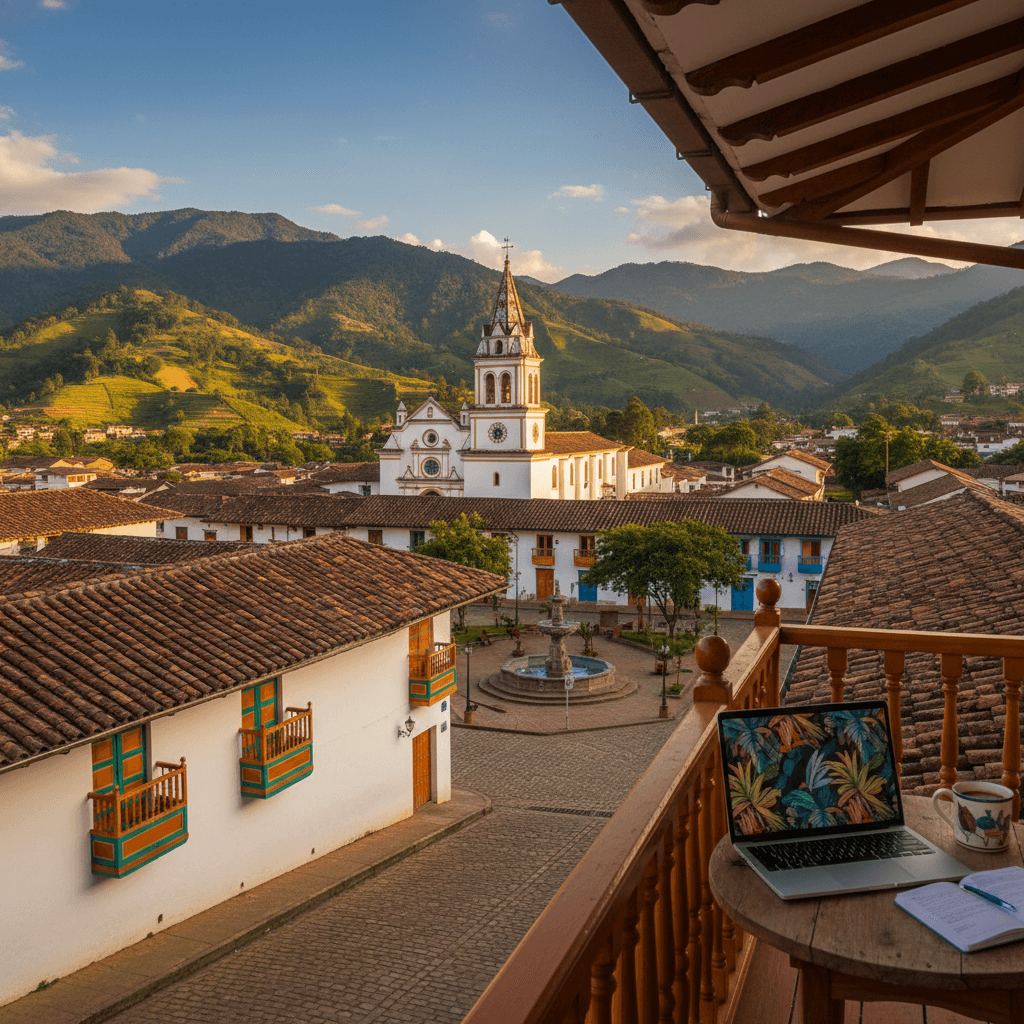
Jardín isn't just another stop on the Colombian coffee trail; it's a sensory reset. While Medellín offers high-octane energy and skyscraper views, Jardín provides a slower, more intentional rhythm. Life here revolves around the Parque Principal, a town square where the chairs are painted in bright primary colors and the smell of roasting beans hangs heavy in the mountain air. It’s the kind of place where you’ll find yourself working from a balcony as a horse and rider trot past on the cobblestones below.
Nomads often describe the vibe as "productive peace." You won't find the sleek, glass-walled coworking hubs of Bogota here. Instead, you'll find a community that values deep work in the mornings and rewarding hikes in the afternoons. It’s perfect if you're looking to escape the "digital nomad bubble" and actually integrate into a town where the locals still outnumber the expats five to one.
Cost of Living Breakdown
Jardín is remarkably affordable, even by Colombian standards. Most remote workers find they can live comfortably on $700 to $850 per month, though budget travelers can easily shave that down to $500.
- Rent: A private room or a central studio near the square typically runs between $200 and $400.
- Daily Meals: A traditional "almuerzo del día" (lunch of the day) at local spots like Bon Appetit costs about $3 to $5. Dinner at a mid-range spot like Restaurante El Jardín de Jardin averages $10.
- Transportation: The town is entirely walkable, but a tuk-tuk ride to the outskirts usually costs between $1 and $3.
Where to Base Yourself
Since the town is compact, your choice isn't about neighborhoods so much as it is about proximity to the square. Travelers usually choose between two distinct atmospheres:
The Central Square (Parque Principal)
- The Vibe: Social, colorful, and convenient. You’re steps away from every major café and the best people-watching in the department of Antioquia.
- Best For: Solo nomads who want to be near the action and the most reliable WiFi signals.
- Trade-off: It can get noisy during weekend festivals or Sunday morning mass.
The Outskirts (Near Hotel Kantarrana Urbana)
- The Vibe: Lush, quiet, and surrounded by banana trees and birdlife.
- Best For: Couples or families who need a silent environment for calls and don't mind a 10 minute walk or a quick tuk-tuk into town.
- Trade-off: You’ll rely more on your guesthouse WiFi since you aren't right next to the "laptop-friendly" cafés.
The Remote Work Reality
If your job requires 500 Mbps and a standing desk, Jardín might be a challenge. However, for most video calls and standard workflows, the infrastructure holds up well. There aren't any formal coworking spaces yet, so the local coffee shops serve as your office. El Café de los Andes and other local cafés are the unofficial headquarters for the laptop crowd. They offer stable connections and high-quality caffeine to keep you fueled.
For a backup, grab a local SIM card from Claro or Tigo for about $10. Mobile data is surprisingly consistent throughout the town center, giving you a safety net if your guesthouse router decides to take a siesta during a rainy afternoon. The weather is a steady 18 to 24°C (64 to 75°F), which means "outdoor office" days are possible almost year-round, though you should prepare for heavy rain in October and November.
Safety and Local Life
Jardín is one of the safest spots in Colombia. The community is tight-knit, and the "no dar papaya" rule (don't make yourself an easy target) is barely a concern here compared to the big cities. You can walk home from a late dinner with total peace of mind. Healthcare is basic, with local pharmacies handling most minor issues, but for anything serious, you'd need to head back to Medellín, which is a winding 3 to 5 hour drive away.
The social scene is low-key. You won't find thumping nightclubs, but you will find nomads gathering at the square for a beer or a coffee after the sun goes down. It’s a place for meaningful conversation rather than wild parties. If you need a break from the screen, the Cueva del Esplendor waterfall or a ride on the La Garrucha wooden cable car provides the perfect weekend adrenaline hit.
The Bottom Line
Living in Jardín is a lesson in slow living that won't break the bank. Most digital nomads find they can live comfortably here on a budget of $700 to $1,000 USD per month. It is significantly more affordable than Medellín, though you're trading high speed infrastructure for mountain views and a tight knit community vibe. Since the town is compact, you won't be spending much on transportation, and your biggest variable will be whether you choose a simple guesthouse or a boutique hotel like Hotel Jardín.
Monthly Budget Breakdown
- Budget Tier ($500 to $700): Best for those happy in a shared guesthouse, eating $3 to $5 street food or "menu del día" specials, and sticking to free hikes.
- Mid-Range Tier ($700 to $850): This covers a private room in a central guesthouse, regular meals at spots like Bon Appétit, and the occasional tuk-tuk ride to the outskirts.
- Comfortable Tier ($850 to $1,000+): Ideal for nomads wanting a top floor hotel suite, dinner at Café Europa or Restaurante El Jardín de Jardín, and weekly guided tours to waterfalls or coffee farms.
Housing and Neighborhoods
Jardín doesn't have distinct neighborhoods in the way a city does. Everything radiates out from the Parque Principal. Most nomads prefer staying within two or three blocks of the square to be close to the best WiFi and coffee. Expect to pay between $200 and $400 for a decent monthly setup. You can find these through platforms like Hotels.com, but for longer stays, travelers often recommend asking around locally once you arrive.
If you prefer silence over social vibes, look toward the outskirts near Hotel Kantarrana Urbana. It is quieter and offers better mountain views, though you'll be a 10 minute walk or a $2 tuk-tuk ride from the action. Families often choose these outer zones to avoid the noise of weekend festivals in the square.
Food and Dining Costs
Eating out is one of the highlights of life here. A standard local lunch usually runs between $7 and $12. If you're looking for a higher end experience with artisanal coffee, expect to spend $10 to $15. Tipping is straightforward; a 10% service charge is standard and often included on the bill.
- Local Eats: Bon Appétit is a favorite for affordable, filling meals.
- Mid-Range: Restaurante El Jardín de Jardín serves classic Colombian dishes in a beautiful setting.
- Coffee and Work: Café Europa and El Café de los Andes are the go-to spots for a caffeine fix and a few hours of laptop time.
Connectivity and Logistics
There are no dedicated coworking spaces in town yet. You'll be working from your accommodation or local cafés. While the internet is generally reliable enough for video calls, it isn't as robust as what you'll find in the big cities. For a backup, pick up a local SIM card from Claro or Tigo for about $5. Mobile data is stable and will save you if the town WiFi flickers during a rainstorm.
Getting around is cheap. Most of your daily life happens on foot. If you're heading to the La Garrucha cable car or a distant trailhead, a tuk-tuk will cost you between $1 and $3. For weekend adventures, you can rent a bike or scooter near the square for roughly $5 to $10 a day. Just remember that the road back to Medellín is a winding 3 to 5 hour journey, so factor in $20 to $50 for a bus or over $100 if you prefer a private car transfer.
Practical Expenses
- Internet and Utilities: Usually included in your rent, but budget $30 to $70 if you're managing your own.
- Health: Basic pharmacies are all over the main square. For anything serious, you'll need to head to Medellín, so keeping active travel insurance is a smart move.
- Cash: ATMs are available in the center, but they can run out of cash during busy holiday weekends. Use apps like Wise or Revolut to keep your conversion fees low.
The Central Hub (Parque Principal)
Jardín doesn't have sprawling suburbs or distinct districts like Medellín. Instead, life revolves around the Parque Principal. This is where you'll find the iconic white and red Basilica, rows of hand painted wooden chairs, and the town's best WiFi. Most nomads choose to stay within a three to five block radius of the square to keep commute times to the nearest espresso machine under two minutes.
Living here means you're in the thick of the action. You'll hear the clip-clop of horses on cobblestones and the morning chatter of locals over tinto. It's the most convenient area for anyone who needs to jump on a Zoom call at Café Europa or El Café de los Andes without worrying about a long trek home. While it gets lively during weekend festivals, the noise usually dies down by a reasonable hour on weekdays.
The Outskirts and Hotel Zones
If the central area feels too compact, the edges of town offer a more pastoral vibe. Areas near Hotel Kantarrana Urbana or the road leading toward the La Garrucha cable car provide more breathing room. You'll trade the immediate proximity of the square for mountain views and private gardens. These spots are roughly a 10 to 15 minute walk or a $1 to $3 tuk-tuk ride from the center. It's the right choice if you prioritize a quiet morning yoga session over being steps away from the bakery.
For Digital Nomads
The center is the undisputed winner for remote workers. Since Jardín lacks dedicated coworking spaces, your "office" will likely be a table at a local café. Staying central ensures you're close to the most reliable routers in town. Nomads often gravitate toward guesthouses like Hotel Jardín because they offer a mix of colonial charm and decent desk space.
- Rent: Expect to pay $200 to $400 per month for a private room or small studio.
- Vibe: Social, productive, and highly walkable.
- Best Spot: Anywhere within two blocks of Café Europa for easy access to fuel and fiber optics.
For Solo Travelers
If you're arriving alone, stick to the streets immediately surrounding the Parque Principal. The social scene in Jardín is informal; it happens over beers at the square or during shared tables at Bon Appetit. Being central makes it easy to meet people heading out for a hike to the Cueva del Esplendor or grabbing a late dinner at Restaurante El Jardín de Jardin. It's safe, well-lit, and you’ll never feel isolated.
- Rent: Budget around $15 to $25 per night for a quality guesthouse.
- Vibe: High energy and easy to navigate without a Spanish dictionary in hand.
- Safety: Very high; the town is famously welcoming, though sticking to central streets at night is standard practice.
For Families
Families usually find the outskirts more comfortable. The houses further from the square often come with small courtyards or better access to the nature trails like Cascada La Escalera. It’s quieter for kids' nap times and offers more privacy than the tightly packed colonial homes in the center. You’ll likely rely on tuk-tuks to get the kids into town for dinner, but the peace and quiet are worth the $2 fare.
- Rent: Larger multi-room rentals or hotels like Hotel Kantarrana Urbana range from $400 to $800 monthly.
- Vibe: Relaxed, green, and spacious.
- Practicality: Look for places with "finca" style layouts for more outdoor play area.
For Expats
Long-term residents often look for a middle ground. They tend to settle in the quieter residential streets about four blocks away from the square. This provides a buffer from the tourist foot traffic while keeping the local butcher and the Prepaid SIM shops within walking distance. Expats recommend inquiring locally for long-term stays, as the best deals aren't always listed on major booking platforms. Staying here allows you to integrate with the local community while keeping your monthly costs between $700 and $1,000 for a comfortable lifestyle.
- Rent: Long-term local leases can drop as low as $250 to $350 for those who know where to look.
- Vibe: Authentic and community-oriented.
- Top Tip: Use Wise or Revolut for local payments and keep plenty of cash for the markets.
Connectivity in the Coffee Mountains
Jardin isn't Medellin. If you are looking for high tech hubs with soundproof booths and ergonomic chairs, you won't find them here. What you will find is a surprisingly reliable infrastructure that supports a "work from anywhere" lifestyle, provided your "anywhere" is a colorful balcony or a wooden table in a historic plaza. Most nomads find the internet speeds perfectly adequate for Zoom calls and heavy uploads, though the occasional afternoon thunderstorm can cause brief flickers in the connection.
The town lacks formal coworking spaces, but the thriving cafe culture more than makes up for it. You'll be trading fluorescent lights for mountain views and the smell of roasting beans. The pace is slower, and nobody is going to rush you out of your seat if you stay for three hours on a single espresso.
Top Places to Work
Since there are no dedicated offices, your productivity will depend on finding the right atmosphere. Most remote workers gravitate toward the area around Parque Principal, where the WiFi signals are strongest and the people-watching is world-class.
- Café de los Andes: This is the unofficial headquarters for the town's nomad community. It sits right on the square and offers some of the most stable internet in town. It is a great spot to meet other travelers, especially in the late afternoon when the laptops close and the beers open.
- Hotel Kantarrana Urbana: Even if you aren't staying here, their common areas are often open to workers. It is located slightly away from the main noise of the square, making it a solid choice for important meetings where you need less background chatter.
- Restaurante El Jardín de Jardin: A good midday option if you want to combine a traditional Colombian lunch with an hour or two of emails. The WiFi is decent, and the garden setting is incredibly peaceful.
Data and Backup Plans
While the WiFi in guesthouses and cafes is generally good, having a local SIM card is a non-negotiable backup. Power outages are rare but do happen during the rainy seasons of April to May and October to November. A mobile hotspot will save your skin when the town's grid takes a breather.
- Local SIM Cards: You can pick up a prepaid SIM from small shops near the square. Claro generally has the best coverage in the mountains, followed by Movistar and Tigo. Expect to pay around $10 for a generous data package that lasts a month.
- Mobile Speeds: 4G is consistent throughout the town center. While it won't replace a fiber connection for massive file transfers, it is plenty for Slack and standard browsing.
- Reliability: Most rentals and hotels now use fiber optic lines. When booking your stay, specifically ask for a screenshot of a speed test to ensure your specific room isn't a dead zone.
The Nomad Experience
Living and working in Jardin is about balance. Expats often suggest front-loading your work week so you can take advantage of the clear mornings for hikes to the Cueva del Esplendor or the La Garrucha cable car. Because the town is so compact, you can leave your "office" at a cafe and be on a mountain trail within ten minutes.
The cost of staying connected is low. Between a $30 to $70 monthly budget for high-speed home internet and local data, your overhead is minimal. Most travelers find that the lack of distractions in Jardin actually makes them more productive than they were in the bigger cities. Just be prepared for the 123 emergency number and keep a portable power bank in your bag for those long sessions in the plaza.
A Peaceful Oasis in the Mountains
Jardín feels worlds away from the frantic energy of Medellín. Most nomads describe it as one of the safest spots in Colombia, where the biggest risk is usually a slightly uneven cobblestone street or a sudden afternoon downpour. The town operates on a foundation of trust and community; locals often leave their doors open, and the central square remains the heart of social life well into the evening.
You won't find "no-go" zones here. The compact nature of the town means you can walk almost anywhere at any hour without looking over your shoulder. That said, common sense still applies. While violent crime is remarkably low, it is best to stick to the well lit areas around Parque Principal if you are out late. Travelers often say the atmosphere feels more like a large family gathering than a tourist destination, which adds a layer of comfort for solo nomads.
Healthcare Essentials
For day to day health needs, Jardín is well equipped. You will find several farmacias (pharmacies) clustered around the main square and along the primary streets. These are excellent for picking up basic medications, first aid supplies, or treating a standard stomach bug. Pharmacists in Colombia are often highly trained and can provide advice on minor ailments without a doctor's visit.
However, medical infrastructure is limited. There is a small local hospital for basic triage and stabilization, but it is not built for complex procedures or specialized care. If you face a serious medical emergency, you will likely be transported to Medellín, which is a 3 to 5 hour drive depending on road conditions and mountain traffic. Because of this distance, having a solid insurance policy that covers emergency medical evacuation is a smart move.
Safety Tips for Your Stay
- Emergency Number: Dial 123 for national police and emergency services.
- Insurance: Always carry a digital and physical copy of your travel insurance policy.
- Night Safety: Stick to the town center after dark. While the outskirts are peaceful, they can be poorly lit and isolated.
- Road Conditions: If you are hiking or taking a tuk tuk to the waterfalls, be mindful of the weather. Rain can make the mountain paths slippery and cause delays on the main road to Medellín.
Practical Wellbeing
The water in Jardín is generally considered safe to drink by locals, but many expats and short term visitors prefer bottled or filtered water to avoid any digestive surprises. Most guesthouses like Hotel Kantarrana Urbana or Hotel Jardín will provide filtered water for guests. Small town life means pharmacies might close earlier than those in big cities, so if you rely on specific prescriptions, bring a sufficient supply from Medellín before you arrive.
Nomads who spend a few months here often mention that the biggest "danger" is the local aguardiente during a festival weekend. The town is incredibly welcoming, but remember that you are in a traditional community. Showing respect for local customs and keeping a low profile with expensive electronics in public spaces ensures that the town's high level of safety remains intact for everyone.
The Walkability Factor
Jardin is a dream for anyone who hates a commute. The town is incredibly compact; you can walk from one end to the other in about 15 minutes. Most of your daily life will revolve around the Parque Principal. This is where the action is, from the morning coffee rituals to the evening social hour. The streets are paved with cobblestones and lined with those iconic brightly painted doors, so leave the heels at home and stick to comfortable sneakers.
Most nomads choose to stay right in the center to be close to the cafes. If you decide to book a place on the outskirts near Hotel Kantarrana Urbana for a bit more peace, you'll still only be a short walk from the square. It's the kind of place where you'll start recognizing faces by your third day, making it feel more like a neighborhood than a transit hub.
Tuk-Tuks and Moto-Taxis
When your legs need a break or you're heading to a trailhead with a heavy pack, look for the colorful three-wheeled tuk-tuks. They're the primary mode of transport for anything beyond a few blocks. They're reliable, fun, and easy to flag down anywhere near the square.
- Short trips: Most rides within the town limits or to nearby hotels cost between $1 and $3.
- Availability: They run from early morning until the bars close around the square.
- Haggling: Prices are generally fixed for locals and tourists alike, but it never hurts to confirm the fare before you hop in.
Exploring on Two Wheels
If you want to explore the surrounding coffee plantations or head toward Cueva del Esplendor without a guide, renting a bike or scooter is a great move. You'll find rental shops tucked into the side streets near the main square. Expect to pay between $5 and $10 per day depending on the gear. Just be prepared for the terrain; Jardin is nestled in the mountains, so "flat" isn't really in the local vocabulary. The hills are steep, and the views are worth every bit of effort.
Getting to Jardin from Medellin
Since Jardin doesn't have its own airport, you'll likely be arriving from Medellin. The journey is a beautiful but winding 3 to 5 hour trek through the Andes. You have a few main options for the trip:
- Public Bus: Buses depart regularly from Medellin's Terminal del Sur. A ticket usually costs around $20 to $50. It's affordable and reliable, though the mountain curves can be a bit much if you're prone to motion sickness.
- Private Car: For more comfort or a faster trip, a private driver will cost $100 or more. This is a popular choice for groups or nomads carrying a lot of tech gear.
- Ride-Hailing: Apps like InDriver or Uber work well within Medellin, but they're hit-or-miss for long-distance trips to Jardin. You're better off booking a dedicated shuttle or taking the bus.
Practical Transit Tips
While Jardin feels like a world away, it's surprisingly easy to navigate once you're on the ground. There aren't any internal public buses or trains, and you won't need them. For day trips to the La Garrucha cable car or local waterfalls, your best bet is always a quick tuk-tuk or a brisk uphill hike. If you're planning to leave town during a festival or a major holiday, book your return bus ticket to Medellin a day or two in advance, as they sell out fast when the weekend crowds head home.
Language and Communication
In Jardín, Spanish isn't just the official language; it's the heartbeat of the town. Unlike the cosmopolitan hubs of Medellín or Bogotá, English is far from a given here. While you'll find staff at popular spots like El Café de los Andes who can manage the basics of a coffee order or a check-in, the vast majority of locals speak only Spanish. This is an authentic Colombian pueblo where communication happens over long chats in the Parque Principal, so expect to rely on your language skills or a translation app.
Most nomads find that a "survival" level of Spanish is necessary to get by. You'll need it for negotiating a $2 tuk-tuk ride to the outskirts or asking for the daily menu at Bon Appetit. Locals are incredibly patient and welcoming, often appreciating even the clumsiest attempts at their language. If you're planning a stay longer than a week, downloading Google Translate for offline use is a smart move, though Duolingo or a local tutor can help you move past the "pointing and nodding" phase.
Staying Connected
While the pace of life is slow, the internet usually keeps up. You won't find dedicated coworking spaces with ergonomic chairs and soundproof booths, so your "office" will likely be a wooden chair at a café overlooking the square. Most guesthouses and hotels, such as Hotel Kantarrana Urbana, provide reliable WiFi that handles video calls and standard remote work tasks without much fuss. However, mountain storms can occasionally cause brief outages, so it's best to have a backup plan.
Expats recommend setting up a local SIM card immediately upon arrival. You can pick one up at small shops near the center for about $10. The major players are:
- Claro: Generally offers the widest coverage if you plan on hiking to spots like Cueva del Esplendor.
- Tigo: Known for competitive data packages and solid speeds within the town limits.
- Movistar: A reliable alternative that often has good promotional rates for prepaid data.
Local Etiquette and Phrases
Communication in Jardín is deeply rooted in politeness. You'll notice everyone greets each other as they pass on the cobblestone streets. Dropping a simple "Buenas" (a shortened, versatile version of "good morning" or "good afternoon") goes a long way in building rapport with your neighbors. When you're paying for your $3 street food or a $12 meal at Restaurante El Jardín de Jardin, a polite "Gracias" is expected.
If you're looking to meet other remote workers, the social scene is informal. There aren't many organized nomad meetups, but you'll naturally run into the same faces at the coffee shops around the square. It's the kind of place where you strike up a conversation by asking about the WiFi password or the best trail for a sunset hike. For managing your finances while you're here, using Wise or Revolut helps keep conversion fees low, though you should always carry cash for smaller vendors who don't take cards.
Key Phrases for Your Stay
- ¿Dónde está...? (Where is...?): Useful for finding specific trailheads or pharmacies.
- La cuenta, por favor: (The check, please): Remember that a 10% tip is standard in sit-down restaurants.
- ¿Tienen WiFi?: (Do you have WiFi?): Always ask before you sit down to work at a new café.
- ¿Cuánto cuesta el pasaje?: (How much is the fare?): Use this for tuk-tuks to the outskirts, which usually cost between $1 and $3.
The Eternal Spring Vibe
Jardín sits at an elevation that keeps things remarkably consistent. You aren't going to find the sweltering heat of the coast or the biting chill of the high Andes here. Instead, expect a steady mountain climate that hovers between 18°C and 24°C (64°F to 75°F). It is the kind of weather where you can comfortably work from a balcony at noon and might want a light sweater once the sun dips behind the peaks.
Most nomads find the air quality a massive upgrade from Medellín. Because the town is surrounded by coffee plantations and cloud forests, the breeze is fresh and carries the scent of roasting beans. It is a productive environment where you don't need air conditioning, though you should prepare for the humidity that comes with mountain life.
Dry Season: December to March
If your priority is hiking to the Cueva del Esplendor or taking the La Garrucha cable car without getting soaked, aim for the window between December and March. This is the driest part of the year. The skies are clearer, which makes the views from the hilltop miradors much more reliable. It is also the peak time for social energy in the Parque Principal, as locals and travelers spend more time outdoors.
Keep in mind that while it is "dry," this is still a tropical mountain town. You will still see the occasional afternoon shower, but they are usually short-lived. This period is perfect for digital nomads who want to balance a morning deep-work session with an afternoon trek or a coffee farm tour.
Rainy Season: April to May and October to November
Jardín sees its heaviest rainfall during these two windows. October and November are traditionally the wettest months. While the rain turns the surrounding valley into a deep, lush green, it can complicate logistics. The winding roads connecting Jardín to Medellín are prone to delays during heavy downpours, occasionally turning a 3 hour trip into a 5 hour ordeal.
If you are planning a long stay during these months, make sure your accommodation has a covered workspace. Many nomads actually enjoy the rainy season for its forced focus; there is something uniquely cozy about working from a local café or El Café de los Andes while watching the rain hit the cobblestones. Just be aware that cloud cover can sometimes mess with satellite-based internet if your guesthouse doesn't have a solid fiber connection.
When to Visit for the Best Experience
- Best for Hitting the Trails: January and February. You will have the best chance of dry paths and blue skies for birdwatching or visiting waterfalls.
- Best for Value: Late April or September. These shoulder months see fewer tourists, making it easier to negotiate long-term stays at guesthouses like Hotel Kantarrana Urbana.
- Best for Atmosphere: Early December. The town goes all out with decorations, and the mild 20°C evenings are perfect for sipping coffee in the square.
Practical Packing Tips
Since the weather is so steady, you don't need a massive wardrobe, but you do need layers. A waterproof jacket is non-negotiable regardless of when you visit. Most expats recommend bringing sturdy boots if you plan on hiking, as the trails get muddy fast. For daily life, think "spring casual." You will fit right in with jeans and a t-shirt, but you will definitely want a fleece or light jacket for those nights when the mountain air cools down to 15°C.
Getting Settled and Staying Connected
Jardín is remarkably compact, so you won't find distinct neighborhoods like you would in Medellín. Most nomads aim for the area immediately surrounding the Parque Principal. It's the heartbeat of the town where you can hop between cafés and watch the world go by from a colorful wooden chair. If you prefer a quieter environment, look toward the outskirts near Hotel Kantarrana Urbana. You'll get better mountain views and less noise from weekend festivals, usually just a $2 or $3 tuk-tuk ride from the center.
While there aren't formal coworking spaces yet, the café culture is top-notch for remote work. Café Europa and El Café de los Andes are the local favorites for setting up a laptop. The WiFi is generally reliable enough for video calls, but mountain storms can occasionally cause flickers. For a backup, grab a local SIM card from Claro or Tigo at a shop near the square. A prepaid data package usually costs around $10 and provides a solid safety net if the town's fiber optic takes a breather.
Budgeting for the Nomad Life
Your money goes a long way here compared to the capital. Most digital nomads report spending between $500 and $1,000 per month depending on their lifestyle choices. Cash is still king for many local transactions, so keep a stash of pesos on hand. You'll find ATMs in the center, but using a fintech card like Wise or Revolut will help you dodge the worst of the exchange fees.
- Budget ($500 to $700): Staying in a guesthouse, eating $4 street food or local "menú del día" lunches at Bon Appetit, and mostly walking.
- Mid-range ($700 to $850): A private apartment or hotel room, regular dinners at places like Restaurante El Jardín de Jardin, and frequent tuk-tuk trips.
- Comfortable ($850 to $1,000+): Staying at Hotel Jardín, upscale dining, private coffee tours, and weekend excursions.
Navigation and Safety
Getting to Jardín is an adventure in itself. Most travelers take a bus or private car from Medellín's José María Córdova (MDE) airport. It's a 3 to 5 hour journey through winding mountain passes. Once you're in town, your feet are your best asset. For longer trips to waterfalls like Cueva del Esplendor or the La Garrucha cable car, you can hail a moto-taxi for a few dollars.
Safety is rarely an issue in this sleepy town. Locals are famously welcoming and the crime rate is very low. Standard common sense applies: don't leave your MacBook unattended in the square and stick to well-lit central streets after dark. If you have a medical emergency, there are pharmacies near the square for basics, but for anything serious, you'll likely need to head back to Medellín. Always have travel insurance that covers medical evacuation just in case.
Timing and Local Customs
The weather is a steady spring-like 18 to 24°C (64 to 75°F) year-round. The best months for hiking and clear views are December through March. If you visit during the rainy seasons in April, May, October, or November, be prepared for potential travel delays on the mountain roads due to mudslides.
Social life revolves around the Parque Principal in the evenings. It's not a clubbing town; it's a "sip coffee or beer while people-watching" town. Learning a few Spanish phrases like "buenas" for a general greeting or "¿Dónde está...?" for directions will earn you plenty of smiles. While English is spoken at the more popular nomad haunts, the town remains authentically Colombian, so keep Google Translate handy for deeper conversations with the local coffee farmers.
Need visa and immigration info for Colombia?
🇨🇴 View Colombia Country GuideHidden Gem
Worth the effort
Monthly Budget Estimates
More cities in Colombia

Cali
🇨🇴 Colombia
Palomino
🇨🇴 Colombia
Sabaneta
🇨🇴 Colombia