Jalal-Abad
🇰🇬 Kyrgyzstan
The Slow Lane of Central Asia
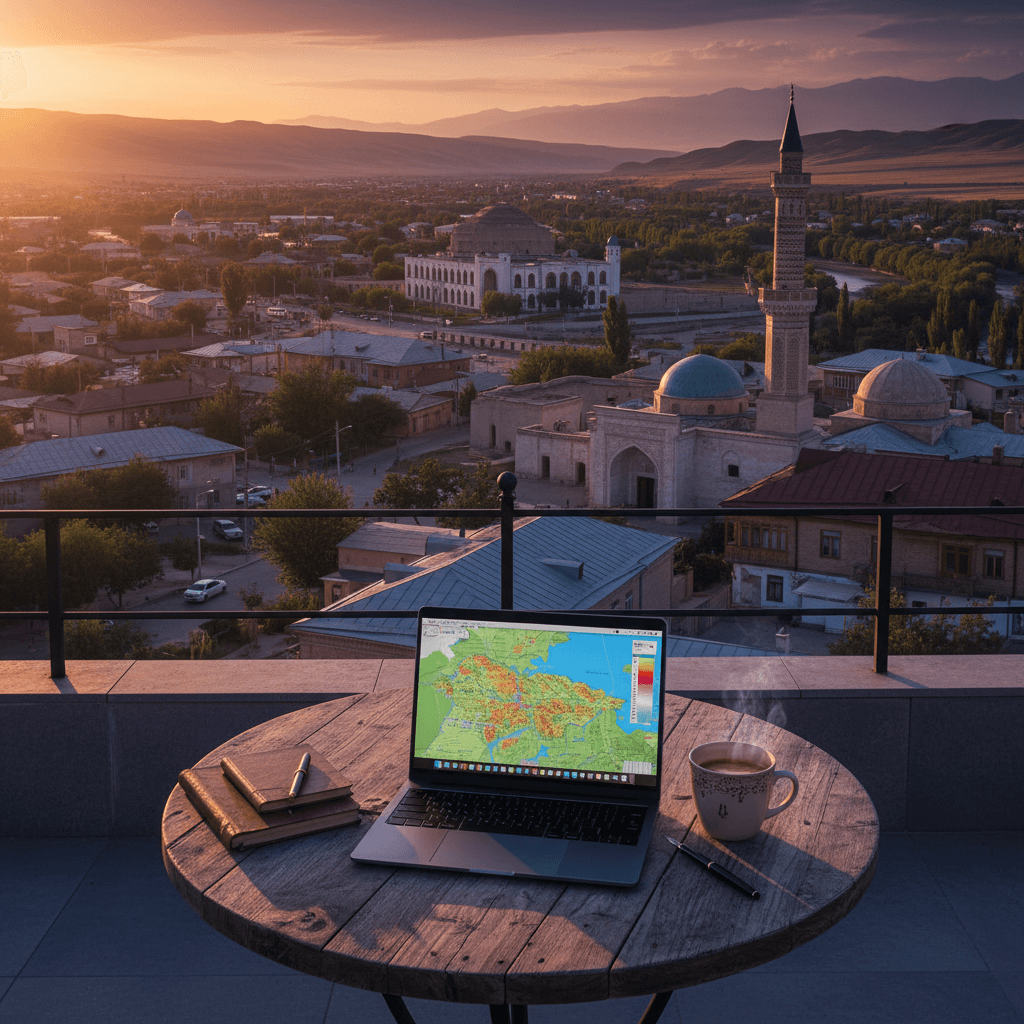
If Bishkek is the frantic heart of Kyrgyzstan and Osh is its historic soul, Manas is the city that finally lets you breathe. It doesn't try to impress you with high rises or a polished nomad scene. Instead, it offers a raw, honest slice of life where the pace is dictated by the afternoon tea culture and the seasonal rhythm of the nearby walnut forests. You won't find a line of laptops at a trendy cafe here; you'll find a community that hasn't been "discovered" yet, giving you the rare chance to be a pioneer rather than just another remote worker in a queue.
Living here feels like a retreat into a world of Soviet era parks, mineral water fountains, and the smell of fresh shashlik wafting through the streets. It is quieter, cheaper, and more intimate than the larger hubs. For the nomad who values deep focus over networking events, Manas is a sanctuary. You can spend your mornings working with reliable 50 to 70 Mbps internet and your afternoons soaking in the famous local hot springs at the Manas Sanatorium.
Cost of Living: Your Budget Goes Further
One of the biggest draws for the solo nomad is the sheer affordability. You can comfortably live here on $800 to $1,100 a month without feeling like you're pinching pennies. If you're willing to eat like a local and share a flat, you could even drop that to $600.
- Rent: A central studio or one bedroom apartment typically runs between $150 and $250. If you look toward the outskirts, prices can dip as low as $100.
- Food: Street food like plov or shashlik costs about $1 to $2. A sit down meal at a local cafe rarely exceeds $5.
- Transport: Marshrutkas (minibuses) are the local lifeline at $0.20 a ride, while a Yandex Go taxi across town usually costs under $3.
Where to Plant Your Flag
Manas isn't divided into neat expat enclaves, so your choice of neighborhood depends on how much "city" you want in your daily life.
City Center
- Best For: Walkability and convenience.
- The Vibe: You'll be near Lenin Street and the central park. Everything is within reach, from the local markets to the few cafes that have decent WiFi.
- Trade off: It can be a bit noisy with traffic, and the architecture is strictly functional Soviet style.
The Resort District
- Best For: Nature lovers and peace seekers.
- The Vibe: Located near the Manas Sanatorium, this area offers better air quality and mountain views. It feels more like a getaway than a city.
- Trade off: You'll rely heavily on taxis or the Yandex Go app to get into town for groceries or social life.
The Digital Nomad Edge
Kyrgyzstan's Digital Nomad Visa offers a pathway for remote workers looking to stay in the country. It exempts you from work permits and local registration requirements, making the paperwork side of your stay surprisingly painless. Most nomads find that while the local infrastructure is still developing, the government's welcoming stance makes up for the lack of formal coworking spaces.
Socially, you'll need to be proactive. There isn't a "nomad hub" here yet, so you'll be building your own network. You can find fellow expats through Facebook groups like "Expats in Kyrgyzstan," but your best interactions will likely be with locals. Learning a few phrases in Kyrgyz or Russian is a game changer. A simple "Rahmat" (thanks) goes a long way when you're navigating the bazaar or buying a $5 Beeline SIM card. It is a city that rewards the curious; those who are willing to trade the comforts of a Starbucks for the hospitality of a local teahouse will find Manas to be one of the most rewarding stops in Central Asia.
A High-Value, Low-Cost Haven
Jalal-Abad is one of those rare spots where your budget stretches so far it almost feels like a clerical error. While it lacks the polish of Bishkek, it offers a significant discount on an already affordable country. You can expect to live comfortably here for about 20% to 30% less than you would in the capital. For most digital nomads, this means a high quality of life for a fraction of what you would spend in Europe or Southeast Asia.
The city operates on a cash-heavy basis, though the Yandex Go app is a lifesaver for transparent taxi pricing. You will want to keep a stack of Kyrgyz Som on hand for the bazaars and smaller teahouses. Most nomads find that a monthly budget of $800 to $1,100 covers a private apartment, daily meals out, and plenty of weekend trips into the mountains.
Monthly Budget Tiers
- The Budget Backpacker ($500 to $700): This covers a basic room or a shared apartment, plenty of $1 street plov, and getting around via the local marshrutkas. It is a lean way to live, but perfectly doable if you are focused on deep work.
- The Mid-Range Nomad ($800 to $1,100): This is the sweet spot. You will get a private one-bedroom apartment in the city center, eat at local cafes daily, and have enough left over for private taxis and weekend excursions to the Arslanbob walnut forests.
- The High-End Resident ($1,200+): Since there is not much "luxury" infrastructure, this budget goes toward the best available hotel suites, frequent upscale dining at the few top-tier hotels, and hiring private drivers for regional travel.
Key Expenses and Neighborhoods
Rent is your biggest variable. In the City Center, near Lenin Street, a decent one-bedroom apartment typically runs between $150 and $250 per month. Living here puts you within walking distance of the central parks and the best cafes, which is vital since the city does not have dedicated coworking spaces yet.
If you prefer peace and quiet, the area near the Jalal-Abad Resort and the mineral springs offers a more retreat-like vibe. Rents here can drop as low as $100, but you will rely heavily on taxis to get into town for supplies. Travelers often recommend staying central to avoid the isolation of the outskirts, especially given the limited English proficiency in the residential suburbs.
Dining and Connectivity
Eating out is remarkably cheap. A hearty plate of shashlik or plov at a local bazaar will set you back about $2. Even at a more established cafe, a full meal rarely exceeds $5. For coffee, expect to pay around $1 for a standard cup, though "cafe culture" is still evolving and most spots are more focused on food than laptop work.
Internet is surprisingly reliable for a city of this size. Most modern apartments come with fiber connections reaching 50 to 70 Mbps. For mobile data, pick up a SIM card from Beeline or O! for about $5 to $10. This usually gets you around 20GB of data, which is more than enough for a month of tethering if the power flickers.
The Digital Nomad Status
Kyrgyzstan has made a major push to attract remote workers with their Digital Nomad Status. It is a straightforward online application that grants you a 60-day stay, which can be extended up to a full year. The best part is that it exempts you from the usual work permit requirements and the tedious local registration process. Most expats recommend applying online before you arrive to streamline your setup.
Digital Nomads and Remote Workers
If you're coming to Jalal-Abad to grind, the City Center near Lenin Street is your best bet. It's the only part of town where you can realistically hop between a cafe, a grocery store, and your apartment without needing a taxi. While you won't find dedicated coworking spaces like those on Chuy Avenue in Bishkek, the local teahouses and modern cafes along the main drag provide decent WiFi and a place to plug in for the price of a $1 coffee.
Most nomads aim for apartments within a few blocks of the Toktogul Park. It keeps you close to the action and the central marshrutka lines. Living here is incredibly affordable; you can snag a decent one bedroom for $150 to $250 a month. You'll deal with some traffic noise and the occasional Soviet era plumbing quirk, but the trade off is being able to walk to the local markets for $2 plates of plov. It’s a focused environment where you can get work done without the distractions of a massive nightlife scene.
- Rent: $150 to $250 per month
- Vibe: Practical, central, and surprisingly walkable
- Connectivity: Best area for stable home WiFi and 4G signals from Beeline or O!
Expats and Long Term Residents
For those planning to stay longer or looking for a bit more breathing room, the Outskirts near the Jalal-Abad Resort area are the move. This neighborhood sits on the slopes overlooking the city, famous for its mineral springs and proximity to the mountains. It feels more like a retreat than a provincial hub. Expats often prefer this area because the air is cleaner and the views of the surrounding hills are unbeatable.
The pace here is noticeably slower. You'll likely rely on the Yandex Go app to get into the center, which usually costs between $1 and $3. Rent is even cheaper than downtown, often dipping toward $100 to $200 for basic setups. It’s the kind of place where you can finish a work day and immediately head out for a hike or a soak in the hot springs. Just keep in mind that English speakers are rare here, so having Google Translate with the Kyrgyz and Russian offline packs is a necessity.
- Rent: $100 to $200 per month
- Pros: Quiet nights, mountain access, and affordable larger spaces
- Cons: Requires a taxi or marshrutka for almost everything
Solo Travelers and Culture Seekers
If you're in town for a short stint and want to be in the thick of Kyrgyz daily life, look for guesthouses near the Bazaar Area. This isn't a neighborhood for the faint of heart or those who need silence to sleep, but it’s the soul of the city. You’ll be steps away from the best shashlik in the region and the constant energy of the market. It’s perfect for solo travelers who want to save money and don't mind a bit of grit.
Safety is generally fine, though travelers suggest keeping your wits about you in the crowded market stalls to avoid petty theft. At night, stick to the lit paths. The main draw here is the cost; your daily food budget can easily stay under $5 if you eat like a local. You'll meet plenty of people, though the social scene is more about sharing tea with vendors than meeting other foreigners.
- Food: $1 to $2 for street meals
- Transport: Hub for all major marshrutka lines to places like Arslanbob
- Atmosphere: Intense, authentic, and budget friendly
Families and Slow Travelers
Families usually find the residential pockets just south of the City Center more manageable. These areas offer a middle ground between the chaos of the bazaar and the isolation of the resort hills. You'll find more traditional houses with courtyards here, which is great if you need extra space for kids to run around. It's a "build your own network" kind of place, as there aren't many international schools or expat clubs.
The local parks are the primary social hubs for families. While the infrastructure for strollers can be hit or miss, the culture is very welcoming to children. If you need medical care, the Jalal-Abad Regional Hospital is the local standard, though most foreigners head to Bishkek for anything beyond a basic checkup. For groceries, sticking to the smaller neighborhood shops or the central markets is the way to go, as large Western style supermarkets are few and far between.
- Rent: $200 to $300 for larger homes
- Safety: High, with a strong sense of community and "eyes on the street"
- Top Tip: Use the 2024 digital nomad status to extend your stay up to a year if you want to use the city as a base for exploring the south
Connectivity and Speeds
In Jalal-Abad, you won't find the lightning fast fiber optics of Seoul or Tallinn, but the infrastructure is surprisingly resilient. Most central apartments and mid range hotels offer stable Wi-Fi with speeds averaging between 50 and 70 Mbps. This is plenty for video calls and heavy uploads, though you might see a dip during the evening peak hours when the rest of the city logs on.
The golden rule here is to never rely solely on fixed line internet. Power fluctuations can happen, so a local SIM card is your best insurance policy. Most nomads pick up a SIM from O! or Beeline at a small kiosk or the central market. You can get a 20GB monthly plan for roughly $5 to $10. If you have the Digital Nomad status, which allows for a one year stay without a work permit, you can easily set up a more permanent home internet contract.
Coworking Realities
If you are looking for a dedicated coworking space with ergonomic chairs, community managers, and networking events, you will need to adjust your expectations. Jalal-Abad doesn't have a formal coworking hub yet. Most digital nomads who pass through here treat the city as a "deep work" destination, focusing on projects in their own apartments or local cafes.
For a change of scenery, head toward Lenin Street in the city center. While there aren't many "laptop friendly" signs, the local cafe culture is relaxed. You can grab a coffee for about $1 and stay for a few hours without being hassled. Just keep in mind that English isn't widely spoken. It's helpful to have Google Translate with the Kyrgyz and Russian offline packs downloaded before you head out.
Working from Cafes
Since there are no dedicated desks for rent, your best bet is to scout out teahouses or modern cafes near the Jalal-Abad Resort area. These spots are quieter and offer a bit more space than the crowded eateries near the central bazaar. Here is what to expect from the local "office" environment:
- Power Outlets: They are hit or miss. Always charge your devices fully before leaving your accommodation.
- Atmosphere: Local teahouses are social hubs. Expect some noise, the smell of fresh plov, and curious looks if you are the only one with a laptop.
- Cost: Extremely low. You can spend a full afternoon working for the price of a $3 to $5 meal.
Digital Nomad Logistics
Banking and payments are becoming more streamlined. While the city still runs heavily on cash, especially for the $1 to $2 street food meals, many shops and cafes now accept cards. Most nomads use Wise or Revolut for international transfers and withdraw local Som from ATMs scattered around the city center. If you plan on staying long term, the 2024 online platform for digital nomad applications makes the residency process much smoother than the old paper based systems.
If you find yourself craving a more social work environment, many travelers take a 1.5 hour taxi ride (costing about $20 to $30) to Osh or head up to Bishkek for a week to reconnect with the larger expat community. For Jalal-Abad, the draw is the solitude and the low cost of living, where a comfortable lifestyle rarely exceeds $1,100 a month. It is a place to get things done, not to attend networking mixers.
Staying Safe in the South
Jalal-Abad is generally a peaceful place for digital nomads. Violent crime is rare, and you'll mostly encounter friendly locals curious about why you've chosen their city over the more popular Bishkek. However, you should stay alert in crowded spots like the Central Bazaar. Petty theft and pickpocketing can happen where people are squeezed together, so keep your phone and wallet in a secure front pocket.
The city doesn't have specific "no-go" zones, but the outskirts can feel dark and isolated after sunset due to inconsistent street lighting. If you're heading home late, don't walk through unlit residential blocks alone. Most travelers recommend using Yandex Go to get door-to-door for just $1 to $3; it's safer and more reliable than flagging down a random car on the street.
For any urgent issues, you'll need to know the local emergency numbers:
- 102 for Police
- 103 for Ambulance
- 112 for general emergencies
Healthcare and Medical Facilities
Healthcare in Jalal-Abad is functional but basic. If you have a minor ailment, a cold, or need a routine prescription, the city is packed with small pharmacies. These are usually cheap and well-stocked with Slavic and European brands. For anything more serious, the Jalal-Abad Regional Hospital is the primary facility in town. While the doctors are capable, the equipment is often dated and English speakers are hard to find.
Expats usually suggest traveling to Osh or Bishkek for complex medical procedures or specialized care. If you have a chronic condition, it's smart to bring a full supply of your specific medications from home, as exact matches can be difficult to source in the southern provinces. Always ensure you have travel insurance that covers medical evacuation to a larger city or back to your home country.
A Wellness Alternative
It's worth mentioning the Jalal-Abad Resort, located just on the city's edge. While it's not a hospital, locals and nomads alike head there for the famous mineral springs and mud baths. It's a staple of the local culture and great for general wellness, though it feels more like a Soviet-era retreat than a modern spa. It’s a unique way to decompress after a long week of remote work.
Practical Tips for Nomads
The biggest safety hurdle isn't crime; it's the language barrier. Since English proficiency is low, around 10% to 20%, you'll want to download Google Translate with the offline Kyrgyz and Russian packs. Being able to communicate a medical need or a direction to a driver makes a massive difference in your personal security and comfort.
- Water Safety: Don't drink the tap water. Stick to bottled water or use a high-quality filter like a Grayl or Sawyer.
- Pedestrian Safety: Drivers in Jalal-Abad can be erratic. Even at marked crosswalks, don't assume a car will stop for you. Make eye contact and wait for a clear gap.
- Local Customs: Respecting local norms goes a long way. Dress modestly, especially near mosques or traditional neighborhoods, to avoid unwanted attention.
The Local Rhythm
Jalal-Abad isn't a city that rushes to meet you. It operates on a slower, more deliberate clock than Bishkek, and getting around requires a mix of tech-savviness and old-school patience. While the city center is manageable on foot, you'll eventually need wheels to reach the mineral springs or the regional transport hubs.
Yandex Go: Your Primary Tool
If you have the Yandex Go app installed, you've already won half the battle. It's the gold standard for ride-hailing across Kyrgyzstan and works reliably here. You won't have to haggle over prices or struggle with language barriers; just pin your location and wait. Most short trips across the city center cost between $1 and $3. It's affordable enough that many nomads use it as their primary mode of transport, especially when the summer heat hits 32°C.
The Marshrutka Experience
For a more authentic (and significantly cheaper) experience, hop on a marshrutka. These white minibuses are the lifeblood of the city. They don't have formal timetables, but they run frequently along major arteries like Lenin Street. A single ride typically costs between $0.20 and $0.50. You'll pay the driver directly in cash as you board or exit. It’s crowded and lacks air conditioning, but it’s the most efficient way to see how the locals move.
Walking and Infrastructure
The city center, particularly the area around the central park and the bazaar, is quite walkable. The sidewalks are functional, though you should keep an eye out for uneven pavement. Once you drift toward the outskirts near the Jalal-Abad Resort, the walkability drops off significantly. Street lighting can be sparse in residential pockets, so most travelers stick to taxis after dark. There isn't a formal bike-share or electric scooter program here yet, so don't count on finding a Lime or Bird on the corner.
Arriving and Departing
One quirk of staying in Jalal-Abad is that you likely won't fly directly into it. Most nomads land at Osh International Airport. From there, it's about a 1.5-hour drive to Jalal-Abad. You can negotiate a private taxi for roughly $20 to $30, or find a shared taxi at the Osh terminal for a fraction of that price. If you're heading further out to the Arslanbob walnut forests, expect a 2-hour journey by local bus or a hired driver.
Navigation Tips
- Download Offline Maps: Google Maps is decent, but 2GIS often has better detail for specific building entrances and local business listings in Central Asia.
- Carry Small Cash: While Yandex can link to your card, marshrutka drivers only take som. Keep 10 and 20 som notes handy.
- Learn the Landmark System: If you're giving directions to a driver, they often navigate by landmarks like the "Bazaar" or the "Resort" rather than specific street numbers.
Regional Connectivity
If you're planning to explore the wider region, the local bus station (avtovokzal) is your hub. This is where you'll find transport to Sary-Chelek or the mountain passes. It's a bit chaotic, but there’s always someone willing to point you toward the right van if you mention your destination. Just remember that long-distance marshrutkas usually don't leave until every seat is filled, so factor in some "waiting time" for your itinerary.
The Linguistic Landscape
In Jalal-Abad, your linguistic experience will be a mix of Kyrgyz and Russian. Kyrgyz is the primary tongue of the soul and the street, while Russian remains the lingua franca for business, administration, and older generations. Unlike the more international vibe of Bishkek, English proficiency here is quite low, generally hovering around 10 to 20 percent. It is mostly limited to younger students or the occasional hospitality worker at the Jalal-Abad Resort.
You won't find many English menus or signs once you step away from the main tourist sights. Most nomads find that a basic grasp of the Cyrillic alphabet is a lifesaver for reading bus signs and grocery labels. If you speak a bit of Russian, you'll get by comfortably; if you only have English, you'll be relying heavily on translation apps and a lot of friendly gesturing.
Digital Communication Tools
Since English isn't widespread, your phone is your most important communication tool. Download the Google Translate offline pack for both Kyrgyz and Russian before you arrive. The "Camera Translate" feature is particularly helpful for deciphering labels at the central bazaar or reading notices in apartment building stairwells.
For daily logistics, the Yandex Go app is non-negotiable. It allows you to pin your destination and see a fixed price in Kyrgyz Som (KGS), usually between $1 and $3 for a cross-town trip. This bypasses the need to negotiate fares in broken Russian with taxi drivers. For local messaging, WhatsApp is the king of communication. Whether you are chatting with a landlord on Lalafo.kg or booking a tour to the Arslanbob walnut forests, expect to do it through WhatsApp voice notes and messages.
Connecting with the Locals
The lack of a formal nomad community means your social life will likely revolve around local interactions. People in the south are famously hospitable but often shy about their English skills. A few words of Kyrgyz go a long way in breaking the ice. Start with Salom (Hello), Rahmat (Thank you), and Qancha? (How much?) when shopping. Travelers often say that showing even a tiny bit of effort to speak the local language opens doors to invitations for tea or extra help at the market.
If you are looking for an expat bubble, you might find it a bit lonely here. Most long-termers stay connected through the Expats in Kyrgyzstan Facebook group, though the focus is usually on the capital. In Jalal-Abad, your social "hub" is more likely to be the central park or a local teahouse (chaikhana) rather than a sleek coworking space. It is a place where you build your own network from the ground up.
Practical Connectivity
To stay connected, grab a local SIM card immediately. The main providers are O! and Beeline. You can find their kiosks at the airport in Osh or at small shops near the city center. A monthly plan with roughly 20GB of data typically costs between $5 and $10. Coverage is solid within the city limits, though it can get spotty if you head into the mountains for a weekend hike. Most apartments offer decent WiFi, often reaching speeds of 50 to 70 Mbps, which is plenty for video calls and remote work tasks.
The Seasonal Rhythm
Jalal-Abad follows a classic continental climate, which means you'll experience sharp shifts between the seasons. If you're coming from a temperate climate, the intensity of the summer sun and the bite of the winter wind might catch you off guard. Most nomads find that timing their arrival is the difference between a productive, nature filled stay and being stuck inside a drafty apartment waiting for a thaw.
The sweet spot for visiting is between June and August. This is when the city truly wakes up. While temperatures can climb to a daily high of 32°C (90°F), the heat is dry and manageable compared to the humidity of Southeast Asia. These months are perfect for weekend escapes to the Arslanbob walnut forests or hiking around Sary Chelek Lake. The evenings cool down to a comfortable 15°C (59°F), making it the best time to wander the local parks or grab shashlik at an outdoor cafe.
Shoulder Season Strategy
Late spring and early autumn offer a different kind of appeal. May and September are favorites for travelers who want to avoid the peak summer heat but still want enough daylight for exploring. You'll see more rain during these windows, particularly in May, but the landscape turns a vivid green that's hard to beat. Expect daytime temperatures to hover around 20°C to 25°C.
Expats often recommend October as a sleeper hit. The harvest is in full swing, the bazaars are overflowing with local produce at rock bottom prices, and the air stays crisp and clear. It's a great time for deep work sessions since the summer distractions have faded, but the mountain passes haven't yet been blocked by snow.
Surviving the Winter
Winter in Jalal-Abad, running from December through February, isn't for the faint of heart. Temperatures regularly dip to -5°C (23°F) at night and rarely climb much above freezing during the day. Snow is common, and the city’s infrastructure can feel a bit strained during heavy storms. This is the "worst" time to visit if you're looking for social activities or outdoor adventure.
However, if you're on a tight budget or have a massive project to finish, winter is incredibly quiet and even cheaper than usual. You can lean into the local spa culture; the Jalal-Abad Sanatorium remains open, offering hot mineral baths that are a lifesaver when it's grey and freezing outside. Just make sure your rental has reliable heating and double paned windows before signing a lease for January.
Month-by-Month Snapshot
- January to February: Deep winter. Expect 5°C highs and -5°C lows. Ideal for budget hermits and fans of hot springs.
- March to April: The thaw. Muddy and unpredictable, but you'll see the first signs of green.
- May to June: Peak freshness. Rain is common, but the temperatures are perfect for walking the city center.
- July to August: The heat of summer. Highs of 32°C. This is prime time for mountain treks and the best nomad experience.
- September to October: Golden autumn. Crisp air and the best local fruit you've ever tasted.
- November to December: Transition to cold. The city slows down significantly and the first snow usually hits.
Packing Essentials
Because of the temperature swings, layers are your best friend. Even in the height of summer, you'll want a light jacket for the cool evenings or for trips into the higher elevations. If you're planning a winter stay, bring high quality thermal base layers and sturdy boots. The sidewalks in the bazaar areas can get icy and treacherous, so leave the fashion sneakers at home during the colder months.
The Cost of Doing Business
Living in Jalal-Abad is significantly easier on the wallet than Bishkek or Osh. Most nomads find they can live comfortably on $800 to $1,100 per month, though budget-conscious travelers often scrape by on $600 if they stick to local teahouses and shared housing. If you are looking for a private one-bedroom apartment in a central area, expect to pay between $150 and $250. Prices drop even further on the outskirts, where $100 can get you a decent spot, though you will sacrifice walkability.
Daily expenses are where the savings really add up. A plate of plov or a few sticks of shashlik at a local bazaar will run you about $1 to $2. Even at the nicer cafes in the city center, a full meal rarely exceeds $5. If you are coming from Europe or North America, the local purchasing power feels like a massive upgrade.
Where to Set Up Base
Jalal-Abad does not have designated expat enclaves, so your choice depends on how much "local" you want your experience to be. Most nomads choose the City Center, specifically the area surrounding Lenin Street and the central park. It is the most walkable part of town, putting you within reach of the best cafes and the famous mineral springs. The trade-off is the traffic noise and the Soviet-style apartment blocks that lack modern insulation.
For those who prefer silence and mountain views, the area near the Jalal-Abad Resort is ideal. It is quieter and greener, though you will rely heavily on taxis to get anything done. If you are on a strict budget, the Bazaar Area offers the cheapest street food and rent, but it is crowded during the day and can feel a bit isolated after dark.
Connectivity and Workspace
Do not expect to find a shiny coworking space with ergonomic chairs and free-flowing kombucha here. You will be working from your apartment or local cafes. Internet speeds usually hover between 50 and 70 Mbps in the city, which is plenty for Zoom calls and uploading files. For a mobile backup, grab a SIM card from O! or Beeline at a street kiosk. You can get 20GB of data for roughly $5 to $10.
The cafe culture is welcoming, though you should be comfortable working in a Russian or Kyrgyz speaking environment. A cup of coffee usually costs around $1, and as long as you keep ordering the occasional tea or snack, most owners won't mind you staying for a few hours.
The Nomad Status and Logistics
Kyrgyzstan has become much more attractive thanks to the Digital Nomad Status launched through an online platform in 2024. This allows you to stay for up to one year without a work permit or the usual registration headaches. It is a game changer for anyone looking to stay longer than the standard 60-day visa-free entry. To get around town, download Yandex Go. It is the local version of Uber and works flawlessly, with short trips costing between $1 and $3.
- Healthcare: The Jalal-Abad Regional Hospital is fine for minor ailments, but for anything serious, you will want to head to Bishkek or have solid travel insurance that covers evacuation.
- Language: English proficiency is low, sitting around 10 to 20 percent. Download the offline Kyrgyz and Russian packs for Google Translate before you arrive.
- Banking: Once you have your nomad status, you can open a local bank account. Otherwise, Wise and Revolut cards work at most ATMs, though cash is still king at the bazaars.
- Best Time to Visit: Aim for June through August. The weather is hot but dry, and it is the perfect window for weekend trips to the Arslanbob walnut forests or Sary Chelek Lake.
Social Life and Local Etiquette
Socializing here requires effort. There isn't a pre-packaged nomad community, so you will need to join Facebook groups like "Expats in Kyrgyzstan" or hang out at the parks to meet people. Hospitality is a pillar of the culture. If you are invited for tea, it is polite to accept, and you should always remove your shoes before entering someone's home. It is a slow, respectful way of life that rewards those who take the time to learn a few phrases like "Rahmat" for thank you.
Need visa and immigration info for Kyrgyzstan?
🇰🇬 View Kyrgyzstan Country GuideHidden Gem
Worth the effort