Irkutsk
🇷🇺 Russia
The Gateway to the Great Lake
Irkutsk feels like a place that shouldn't be as cool as it is. Often dismissed as a mere pitstop on the Trans-Siberian Railway, this city is the undisputed cultural capital of Eastern Siberia. It has a gritty, frontier energy that balances out its surprisingly refined soul. You aren't coming here for a polished, Westernized experience like you might find in Moscow; you're coming for the raw, unpretentious charm of a city that has survived everything from czarist exiles to Soviet industrialization.
The vibe is dominated by the Angara River and the nearby presence of Lake Baikal. There is a specific kind of Siberian stoicism here, but it's paired with a deep hospitality that usually involves strong tea and even stronger conversation. Nomads who stick around for more than a few days find a city that moves at a slower pace than the European hubs, where the air is crisp and the history is literally carved into the wooden window frames of the old central districts.
A Distinct Visual Identity
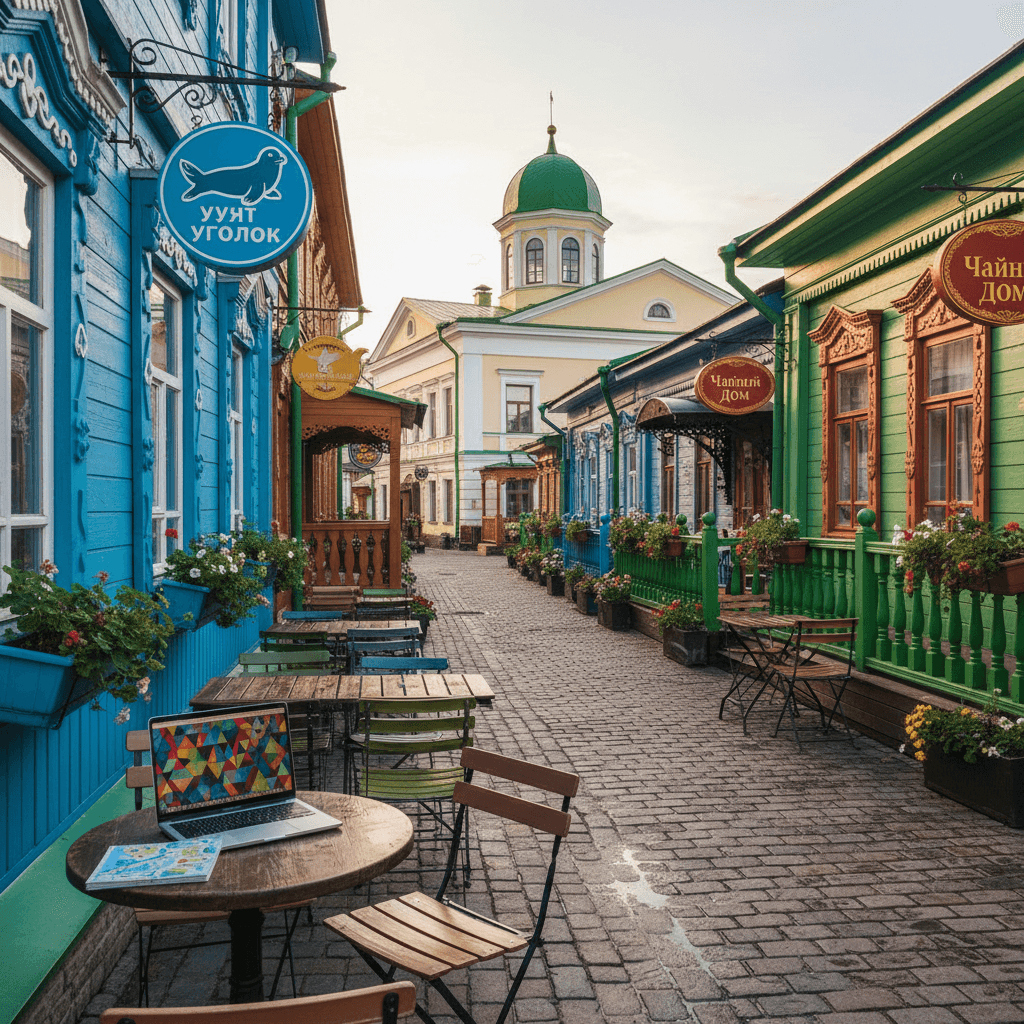
What sets Irkutsk apart from other Russian cities is its "Siberian Baroque" architecture. In the historic center, you'll see intricate, dark wood houses with hand-carved shutters standing right next to massive, brutalist concrete blocks. It is a jarring but beautiful contrast. The 130 Kvartal (the Irkutsk Sloboda) is the most recognizable area, a restored historical zone filled with cafes and shops that acts as the city's social heart.
Most nomads find the city surprisingly walkable, especially around the Kirov Square area. While the winters are notoriously brutal, the city is built for it. Life moves indoors to cozy, well-heated basement bars and modern cafes that could easily fit into a Brooklyn neighborhood. During the short, intense summers, the city explodes with greenery, and the riverfront becomes the primary workspace for anyone with a laptop and a hotspot.
The Nomad Infrastructure
The digital scene is smaller than in Saint Petersburg, but it is functional. You'll find that the internet is remarkably fast and cheap, often exceeding speeds found in much more expensive European capitals. You will absolutely need a reliable VPN to access your usual suite of Western apps and social media platforms, as local restrictions are a reality here.
For getting around, Yandex Go is your lifeline. It's the local version of Uber and works flawlessly for both rides and food delivery. Language can be a hurdle, as English isn't widely spoken outside of the younger student population, so having a translation app ready is a must. The expat community is small and tight-knit, mostly revolving around language exchanges and the few coworking spots in the city center.
Living Costs and Neighborhoods
Your money goes a long way here. Irkutsk is significantly more affordable than the federal cities in the west, making it an attractive spot for those looking to burn less cash while enjoying a high quality of life.
- Oktyabrsky District: This is the modern, trendy side of town. It is popular with young professionals and has the best selection of new apartments. You'll find plenty of grocery stores and gyms here.
- Pravoberezhny District: This is the historical core. It's where you want to be if you want to walk to the best coffee shops and see the old-world architecture every morning.
- Sverdlovsky District: Located on the other side of the river, it's more residential and quiet, offering lower rents but requiring a commute to reach the main social hubs.
Daily Life and Practicalities
Coworking spaces like InLermontov or the spots near the Polytechnic University offer a professional environment for around $250 to $300 a month for a dedicated desk. If you prefer the cafe route, the local coffee culture is thriving. Expect to pay about $2.50 to $4.00 for a high-quality latte at popular spots like DesignBar or Crow Family.
Safety is generally not a major concern for seasoned travelers. Like any industrial city, there are pockets to avoid at night, specifically around the outskirts and the far reaches of the Leninsky district. However, the central areas are well-lit and active. The biggest challenge is the climate; if you visit between November and March, you're looking at temperatures that regularly dip below -20 degrees Celsius. It's an experience that requires the right gear, but it's also when the city feels most authentic, huddled together against the Siberian cold.
The Siberian Price Advantage
Living in Irkutsk gives your budget a significant breather compared to the astronomical costs of Moscow or Saint Petersburg. It is a city where you can live a high quality life for a fraction of what you would spend in Western Europe or North America. Most nomads find they can live comfortably here on $1,200 to $1,500 per month, though those who prefer a more local lifestyle can easily get by on $900.
The local currency is the Russian Ruble, and while exchange rates fluctuate, your foreign currency generally goes a long way. You should keep in mind that international banking restrictions mean you will likely need to bring cash to exchange or use specialized fintech solutions to access your funds once you arrive.
Monthly Budget Breakdown
- One bedroom apartment (City Center): $450 to $650
- One bedroom apartment (Outside Center): $300 to $400
- Coworking hot desk: $120 to $180
- Monthly local transport pass: $15 to $20
- Dinner for two at a mid range restaurant: $35
- Draft beer (0.5L): $2.50
- Cappuccino: $2.20
Housing and Neighborhoods
Rent is your biggest variable. Most expats recommend looking for apartments in the Pravoberezhny District if you want to be within walking distance of the best cafes and the Angara River embankment. If you are looking for something more modern and quiet, the Oktyabrsky District offers newer builds with better insulation, which is a lifesaver during the Siberian winter.
Utilities are surprisingly cheap because heating and water are often subsidized. Expect to pay around $60 to $80 a month for electricity, heating, and water in a standard apartment. High speed fiber internet is standard and will only set you back about $10 a month, though you must factor in the cost of a high quality VPN to access your usual sites and services.
Eating and Socializing
Grocery shopping at local chains like Slata or KhlebSol is the best way to keep costs down. Fresh produce is affordable in the summer, though prices for imported greens spike when the snow hits. A bag of groceries usually costs around $20 to $30.
Dining out is one of the city's highlights. You can grab a hearty lunch special, known locally as a Business Lunch, at places like DesignBar or Prego for about $6 to $9. These three course meals are the best kept secret for nomads working through the day. For evening drinks, the bars along 130 Kvartal are popular, but they carry a slight premium for the atmosphere.
Transport and Tech
You won't need a car here. The city is well connected by trams and buses, but most nomads rely on Yandex Go. It is the local equivalent of Uber and it is incredibly cheap. A ten minute ride across town rarely costs more than $3 or $4. If you are heading out to Lake Baikal for the weekend, a shared minibus (marshrutka) from the central bus station to Listvyanka costs roughly $2.50.
For your workspace, InLermontov is a popular coworking hub where a dedicated desk runs about $150 a month. It provides the stable connection and professional environment you need if your apartment Wi-Fi ever flickers. Overall, Irkutsk offers a rare balance of low overhead and a high standard of urban amenities.
The Urban Core: For Digital Nomads
If you want to be within walking distance of a decent flat white and a reliable workspace, the Pravoberezhny District is where you'll spend most of your time. This is the historical heart of the city. Most nomads gravitate toward the area around 130 Kvartal, a restored historical zone filled with wooden architecture that houses modern cafes and shops. It feels a bit touristy, but it is the most walkable part of Irkutsk.
For deep work, check out Tochka Kipeniya or local hubs near the Irkutsk State University buildings. While dedicated coworking spaces can be hit or miss, the city has a strong coffee shop culture. Castro Cafe and Design Bar are popular spots where you can post up with a laptop for a few hours without getting side-eyed by staff. Expect to pay around $300 a month if you want a dedicated desk in a formal office, but most nomads just stick to high speed home Wi-Fi and cafe hopping.
- Average Rent: $450 to $650 for a modern studio in the center.
- Vibe: Historic, walkable, and surprisingly social.
- Top App: Yandex Go is your lifeline for getting around when it hits -20 degrees.
The Quiet Life: For Expats
Long term residents often migrate toward the Oktyabrsky District. It is less about the 19th-century wooden charm and more about functional, modern living. This area feels more residential and less chaotic than the immediate city center. You are closer to the airport here, but more importantly, you are near the Angara River embankment, which is the prime spot for evening walks or morning runs during the summer months.
Expats tend to prefer the newer apartment complexes near Verkhnyaya Naberezhnaya. You get better insulation, newer plumbing, and often a view of the river. It is a bit further from the main nightlife, but the trade-off is a quieter environment and easier access to larger supermarkets like Slata or Ok'ey where you can find more international goods.
- Average Rent: $400 to $600 for a spacious one-bedroom.
- Vibe: Local, residential, and scenic.
- Pro Tip: Look for apartments with an "evroremont" (European-style renovation) to ensure the heating and windows are up to modern standards.
Settling Down: For Families
Families usually find their rhythm in the Sverdlovsky District, specifically the Akademgorodok neighborhood. As the name suggests, this was built for the scientific community. It is heavily forested, which makes it feel like you are living in a park rather than a city. The air is noticeably cleaner here than in the industrial pockets of the city.
The neighborhood is self contained with schools, clinics, and small markets. It is safe, quiet, and has a very different pace of life than the Right Bank. While you are further from the "action," the proximity to the Ice Palace and various sports complexes makes it the practical choice for those with kids in tow. You are also on the right side of the river for a quicker escape toward Lake Baikal on the weekends.
- Average Rent: $350 to $550 for family-sized units.
- Vibe: Intellectual, green, and very safe.
- Food: Local spots like Real Food offer consistent, family friendly menus at lower prices than the city center.
The Transit Hub: For Solo Travelers
If you are only in town for a few weeks to explore Olkhon Island or the Great Baikal Trail, staying near the Irkutsk Passenger Station (Irkutsk-Passazhirsky) in the Glazkovo area is a strategic move. It is not the most glamorous part of town, but it saves you the headache of hauling gear across the bridge for early morning train departures.
Solo travelers usually find the best value here in guesthouses or smaller boutique hotels. You can easily hop on a tram to cross the river into the center for dinner at Rassolnik for some authentic Siberian cuisine, then retreat to the quieter, cheaper side of the water. It is a pragmatic base for people who are using Irkutsk as a launching pad rather than a permanent home.
- Average Rent: $25 to $40 per night for decent short-term stays.
- Vibe: Functional and transitional.
- Safety: Stick to the main streets at night, as lighting can be sparse in the older residential blocks.
Connectivity in the Gateway to Baikal
You might expect a city in the heart of Siberia to have spotty connection, but Irkutsk actually punches above its weight when it comes to speed. Most apartments and cafes in the center offer fiber optic speeds that easily handle video calls. Expect to pay around $10 to $15 per month for a home connection with speeds up to 100 Mbps.
Mobile data is where Russia really shines for nomads. You can pick up a local SIM from providers like MTS, Megafon, or Beeline for roughly $8 to $12 per month. These plans usually come with generous data caps or even unlimited social media usage. Just remember that you will need a VPN to access sites like Instagram, Facebook, or LinkedIn, as they are blocked locally. It is best to have two different VPN services installed before you arrive.
Coworking Spaces and Work Culture
The coworking scene in Irkutsk is small but functional, catering mostly to local tech startups and freelancers. You won't find the massive global chains here, which gives the local spots a more authentic, community focused feel. Most nomads gravitate toward the Oktyabrsky District or the historic center for the best setups.
Laptop Friendly Cafes
If you prefer the hum of a coffee shop, Irkutsk has a surprisingly sophisticated cafe culture. The 130th Kvartal (the Irkutsk Sloboda) is a reconstructed historical zone filled with wooden buildings that house modern interiors. It is the go to spot for a few hours of work with a view of traditional Siberian architecture.
Bolshe Kofe is a local favorite with reliable Wi-Fi and plenty of power outlets. A large cappuccino will cost you about $3. Another great option is Castro Cafe, which has a more modern, minimalist vibe and usually stays quiet enough for deep work during the morning hours. Most cafes expect you to order something every two hours if you are taking up a table with a laptop.
Digital Logistics and Navigation
Getting around between work sessions is cheap if you use the right apps. Forget about hailing a cab on the street. Download Yandex Go for ride hailing; a cross town trip rarely exceeds $5. For food delivery during long coding sessions, Kuper or Yandex Eats are the standard, though the interfaces are primarily in Russian.
While the internet is fast, power surges can occasionally happen during the heavy winter storms. Most modern coworking spaces have back up systems, but if you are working from an older apartment in the Pravoberezhny District, it is smart to keep your laptop battery charged. Most nomads find that as long as they have a solid VPN and a translation app, the digital infrastructure here is more than enough to run a remote business comfortably.
Staying Safe in the Siberian Capital
Irkutsk generally feels like a standard medium sized city where common sense goes a long way. Most nomads find the city center and the 130th District very walkable and safe even after the sun sets. You'll see plenty of students and families out late in the summer months when the daylight stretches past 10:00 PM. However, it is best to avoid the industrial outskirts and poorly lit areas around the central market late at night, as these spots can get a bit rowdy.
The most common issue travelers face isn't crime, it is the environment. If you are visiting between November and March, the ice is a genuine hazard. Sidewalks aren't always cleared perfectly, and a slip can end your trip early. Also, keep an eye out for "black ice" while driving or crossing streets. For getting around, stick to Yandex Go rather than hailing random cars. It provides a fixed price, tracks your route via GPS, and lets you share your ride status with friends.
Regarding the current political climate, most expats recommend keeping a low profile. Avoid political demonstrations or public commentary on sensitive local issues. While the police presence is visible, they rarely bother foreigners who are minding their own business. Always carry a digital copy of your passport and your migration card, as you might occasionally be asked for identification in transit hubs.
Healthcare and Medical Services
If you need medical attention, Irkutsk has a decent range of private clinics that offer a much faster and more comfortable experience than the state hospitals. Quality varies, but facilities like the Irkutsk Diagnostic Center are modern and well equipped. Most doctors in the public system won't speak English, so if your Russian is rusty, bring a local friend or use a translation app to explain your symptoms.
For routine issues or minor emergencies, nomads often head to Lineynaya Clinic or Expert. A standard consultation with a specialist usually costs between $20 and $40. Pharmacies, marked by a green illuminated cross, are everywhere. You can find most over the counter medications without a problem, but if you have specific prescriptions, bring an ample supply from home since local brand names will differ.
- Emergency Number: Dial 112 for general emergencies or 103 specifically for an ambulance.
- Travel Insurance: Make sure your policy specifically covers Russia and includes medical evacuation, especially if you plan on trekking around Lake Baikal.
- Tap Water: Do not drink the tap water in Irkutsk. While it comes from Baikal, the aging pipe infrastructure means it isn't safe for consumption. Stick to bottled water or high quality filters.
The Digital Safety Net
Since many Western websites and social media platforms are restricted, a reliable VPN is a mandatory part of your "safety" kit here. You'll want to set this up before you arrive in the country, as many VPN provider websites are also blocked. Expats usually suggest having at least two different services installed in case one gets throttled.
Cybersecurity is also something to watch. Avoid conducting banking business on public Wi-Fi in cafes without your VPN active. While the internet is fast, usually around 100 Mbps for a basic home connection, public networks are often targets for data scraping. Stick to your own mobile hotspot using a local SIM from MTS or MegaFon when you are working on the go.
Lake Baikal Precautions
If you're heading out to Listvyanka or Olkhon Island, the safety rules change. The weather on the lake is notoriously unpredictable. Even in summer, temperatures can drop 20 degrees in an hour. If you are hiking the Great Baikal Trail, tell someone your expected return time. Cell service is spotty once you leave the main villages, so downloading offline maps on Organic Maps or 2GIS is a smart move for any digital nomad venturing into the wild.
Navigating the Gateway to Siberia
Irkutsk is surprisingly walkable if you stick to the historical center, but you will definitely need a plan for the winter months when the temperature drops. The city layout follows a grid that fans out from the Angara River, and while it lacks a metro system, the combination of trams and apps makes getting from a riverside cafe to your apartment pretty seamless.
Ride Hailing and Apps
Forget Uber or Lyft here. Your lifeline for getting around is Yandex Go. It is the gold standard for reliability and safety in Irkutsk. You can see the price upfront, track your driver, and avoid any language barriers with the destination input. A typical ten minute ride across the center usually costs between 200 and 350 rubles, though prices spike during snowstorms or rush hour.
Most nomads find that Maxim is a solid backup app, often slightly cheaper for longer trips toward the outskirts. If you are heading out to the airport or the train station with heavy gear, always select the Comfort or Business class in Yandex; the price difference is usually less than 150 rubles, and the cars are significantly better maintained for the bumpy Siberian side streets.
The Tram and Bus Network
The tram system is the soul of Irkutsk. It is charming, loud, and incredibly cheap at around 30 rubles per ride. It is also a great way to avoid the traffic jams that plague the main arteries like Ulitsa Lenina during the evening commute. The number 1 and number 2 trams are particularly useful for loops around the central district.
- Marshrutkas: These are the white or yellow minibuses you will see darting through traffic. They follow set routes but do not always have official stops. You just wave them down. They are efficient but can feel cramped and chaotic if you do not speak basic Russian to ask for your stop.
- Buses and Trolleybuses: These cover the longer hauls to residential neighborhoods like Akademgorodok. They are modernizing quickly, and many now accept contactless credit cards or local transport cards.
- Walking: During the summer, the Green Line walking tour is a 5km marked path on the sidewalks that connects the main historical sights. It is the best way to get your bearings in your first week.
Connectivity on the Move
You cannot rely on public Wi-Fi while moving through the city. Most cafes have it, but it often requires a Russian phone number to authenticate. Expats recommend picking up a local SIM card from MTS or Megafon immediately. For about 600 to 800 rubles a month, you will get more data than you can actually use. Just remember that a VPN is mandatory if you need to access Slack, Instagram, or Western news sites while working from a park or a moving tram.
Getting to Lake Baikal
Since you are in Irkutsk, you will eventually head to Listvyanka or Olkhon Island. For Listvyanka, head to the Central Bus Station (Avtovokzal). Minibuses leave every 30 minutes and cost about 200 rubles. The trip takes about an hour. If you are going to Olkhon, it is a six hour journey. Most nomads prefer booking a private transfer through their accommodation for about 1500 to 2500 rubles to ensure a bit more legroom and a guaranteed spot on the ferry.
Practical Transport Costs
- Yandex Go (City Center): 250 rubles
- Public Tram/Bus Fare: 30 rubles
- Monthly Local SIM (Unlimited Data): 700 rubles
- Private Transfer to Baikal: 2000 rubles
- Airport Taxi: 400 rubles
One final tip for winter: do not trust the arrival times on digital boards at bus stops when it is below minus 20 degrees. Equipment freezes and delays are common. Stick to the Yandex Maps app, which shows the real time location of buses and trams moving on the map so you can stay inside a warm lobby until the very last second.
The Language Barrier in Siberia
Expect a steep learning curve when you land in Irkutsk. Unlike Moscow or Saint Petersburg where younger crowds often speak decent English, Irkutsk is a place where Russian is the undisputed king of daily life. You'll find that most shopkeepers, bus drivers, and older residents won't speak a word of English. It isn't a dealbreaker, but it means you'll be relying heavily on translation apps and a lot of gesturing during your first few weeks.
Most nomads find that learning the Cyrillic alphabet is the single most important thing you can do before arriving. Being able to read signs for "Pharmacy" (Аптека) or "Grocery" (Продукты) makes life significantly easier. Once you can sound out the letters, you'll realize many technical and modern words are actually cognates. If you're looking for a language school to get your feet under you, the International Center of Irkutsk State University offers courses that are popular with the small expat community here.
Digital Tools for Daily Survival
Technology is your best friend here. You won't survive long without Yandex Translate or Google Translate, specifically the camera feature that translates menus and labels in real time. For getting around, don't bother trying to explain your destination to a driver in broken Russian. Use Yandex Go for all your rides. It works exactly like Uber, allows you to pin your location, and shows the price upfront so there's no confusion or haggling involved.
For navigating the city streets, skip Google Maps. It often lacks the granular detail needed for Siberian cities. Locals and long term expats almost exclusively use 2GIS. This app is incredibly precise, showing you exactly which door to enter for a specific office or cafe, and even tracking the real time location of buses and trams. It works offline too, which is a lifesaver if your data drops out.
Connectivity and the Great Firewall
Internet speeds in Irkutsk are surprisingly good and very cheap. You can usually get a high speed fiber connection in a standard apartment for around $10 to $15 a month. If you're working from cafes like DesignBar or CrowFamily, the Wi-Fi is generally stable enough for video calls, though it's always smart to have a local SIM card as a backup.
Pick up a SIM from MTS, MegaFon, or Beeline as soon as you arrive. You'll need your passport to register the card. A monthly plan with plenty of data typically costs under $10. However, the most critical piece of your digital setup is a reliable VPN. Many Western social media platforms and news sites are restricted. Most nomads recommend having at least two different VPN providers installed on your laptop and phone before you cross the border, as some services get throttled or blocked periodically.
Social Etiquette and Communication Styles
Russian communication can feel blunt to newcomers. Don't mistake a lack of small talk or a stern face for rudeness. In Irkutsk, people tend to be direct and reserved with strangers but incredibly warm once you've been introduced. If you're working out of a space like the "Tochka Kipeniya" (Boiling Point) coworking space, don't be surprised if people keep to themselves. If you want to break the ice, asking for help with a Russian phrase is usually a great way to start a conversation.
- Key App: Telegram is the primary way everyone communicates, from landlord chats to local nomad meetups.
- Local Tip: Download the offline Russian language pack on your translator app so you aren't stranded without signal.
- Price Check: A 100 Mbps home internet connection costs roughly 600 to 900 Rubles per month.
The Seasonal Shift
Living in the Gateway to Baikal means embracing a climate of extremes. Irkutsk is the heart of Eastern Siberia, so you should expect a massive swing between the seasons. Most nomads aim for the window between June and August. During these months, the city sheds its icy coat and temperatures hover around a comfortable 20°C to 25°C (68°F to 77°F). It is the perfect time to work from a cafe patio in the 130 Kvartal district or take the Marshrutka (minibus) out to Listvyanka for a weekend by the lake.
The transition periods are short but distinct. May and September offer crisp air and fewer tourists, though you will need to pack layers. By late October, the first snow usually makes an appearance, and the city settles into a long, deep freeze that lasts until April. If you are coming for the legendary Siberian winter, February is your best bet. The ice on Lake Baikal is at its thickest and most transparent then, making it safe for driving, ice skating, and photography.
Winter Survival for Nomads
Siberian winters are no joke, with temperatures frequently dropping to -20°C (-4°F) or lower in January. While the dry air makes the cold feel less biting than the damp winters of Saint Petersburg, you still need serious gear. Locals swear by real wool and heavy down parkas. Most nomads find that while the outdoors is brutal, the indoors are kept incredibly warm. Russian central heating is intense, so you will likely be working in a t-shirt inside your apartment while it is -30°C outside.
One thing to keep in mind is the daylight. In the depths of December, you will only get about seven or eight hours of sun. This can be a productivity killer if you rely on natural light. On the flip side, the summer days are endless, giving you plenty of time to explore the Angara River embankments after your final Zoom call of the day.
When to Book
If you want to balance cost and comfort, consider these timing factors:
- Peak Season (July to August): Prices for short term rentals and Airbnbs spike. Expect to pay at least $600 to $800 for a decent central apartment.
- Ice Season (February to March): This is the second peak. Photographers flock here for the blue ice, so book your accommodation at least two months in advance.
- Shoulder Season (May or September): This is the sweet spot for budget travelers. You can often find monthly rentals for $400 and enjoy the city without the crowds.
Air Quality and Environment
Irkutsk generally has decent air, but during the height of summer, forest fires in the surrounding Taiga can occasionally cause smoky conditions. It does not happen every year, but it is worth checking local sensors if you have respiratory issues. In the winter, some neighborhoods rely on coal heating, which can lead to a bit of smog in the lower lying areas of the city. Sticking to higher floors in modern apartment blocks usually solves this.
Most expats recommend arriving in late May. You get to watch the city bloom, avoid the highest summer prices, and settle into a routine before the July heatwave hits. Plus, you will have first dibs on the best spots at local coworking spaces like InLermontov before the summer backpacker crowd arrives.
Getting Around and Staying Connected
Navigating Irkutsk is surprisingly straightforward once you download Yandex Go. It is the local equivalent of Uber and works flawlessly for calling taxis or ordering food. Most rides within the city center will only set you back about $3 to $5. If you want to go local, the trams and marshrutkas (minibuses) are incredibly cheap at around $0.40 per ride, though they can be a bit of a squeeze during rush hour.
Internet speeds in the city are generally excellent, often hitting 100 Mbps or more in modern apartments. However, you cannot work here effectively without a solid VPN. Many Western social media platforms and news sites are restricted, so set up your service before you land. For mobile data, pick up a local SIM from MTS or MegaFon. You can get a massive data plan for roughly $10 to $15 a month.
Money and Costs
The financial landscape is the trickiest part of living here right now. International Visa and Mastercard credit cards issued outside of Russia won't work at local shops or ATMs. Most nomads rely on cash or set up a local bank account through Tinkoff or Sberbank if they are staying long term. You might need to use peer to peer exchange services or specialized transfer apps to get your funds into the country.
- Monthly Rent (1-bedroom in center): $400 to $600
- Coworking Hot Desk: $150 to $200 per month
- Dinner for two at a nice spot: $30 to $45
- Local Beer: $2 to $4
Where to Work
If you prefer the cafe vibe, Design Bar and Castro Cafe are popular with the laptop crowd. They have great coffee, plenty of outlets, and staff who don't mind if you linger for a few hours over a project.
Health and Safety
Irkutsk is generally safe for foreigners, even at night, provided you stick to well lit areas like 130 Kvartal. The biggest physical threat is actually the winter weather. Temperatures can plummet to -30°C (-22°F) in January. You will need serious gear, including thermal layers and boots with good grip for the icy sidewalks. If you get sick, Irkutsk Regional Hospital is the standard, but for quicker service and English speaking staff, look for private clinics like Expert.
The Baikal Factor
You are likely here because of the lake. To get to Listvyanka, the closest town on Lake Baikal, take a minibus from the central bus station for about $2.50. The trip takes about an hour. If you want to visit Olkhon Island for a weekend of off grid thinking, the journey is closer to six hours. Most nomads recommend booking a private transfer for about $20 to save your sanity on the bumpy Siberian roads.
Language and Etiquette
Don't expect much English outside of the younger crowd and high end hotels. Learning the Cyrillic alphabet is a weekend project that will save you hours of confusion at the grocery store. Locals might seem reserved at first, but once you break the ice, they are incredibly hospitable. A small tip of 10% is standard in restaurants, though it is usually paid in cash rather than added to a card transaction.
Need visa and immigration info for Russia?
🇷🇺 View Russia Country GuideEasy Landing
Settle in, no stress