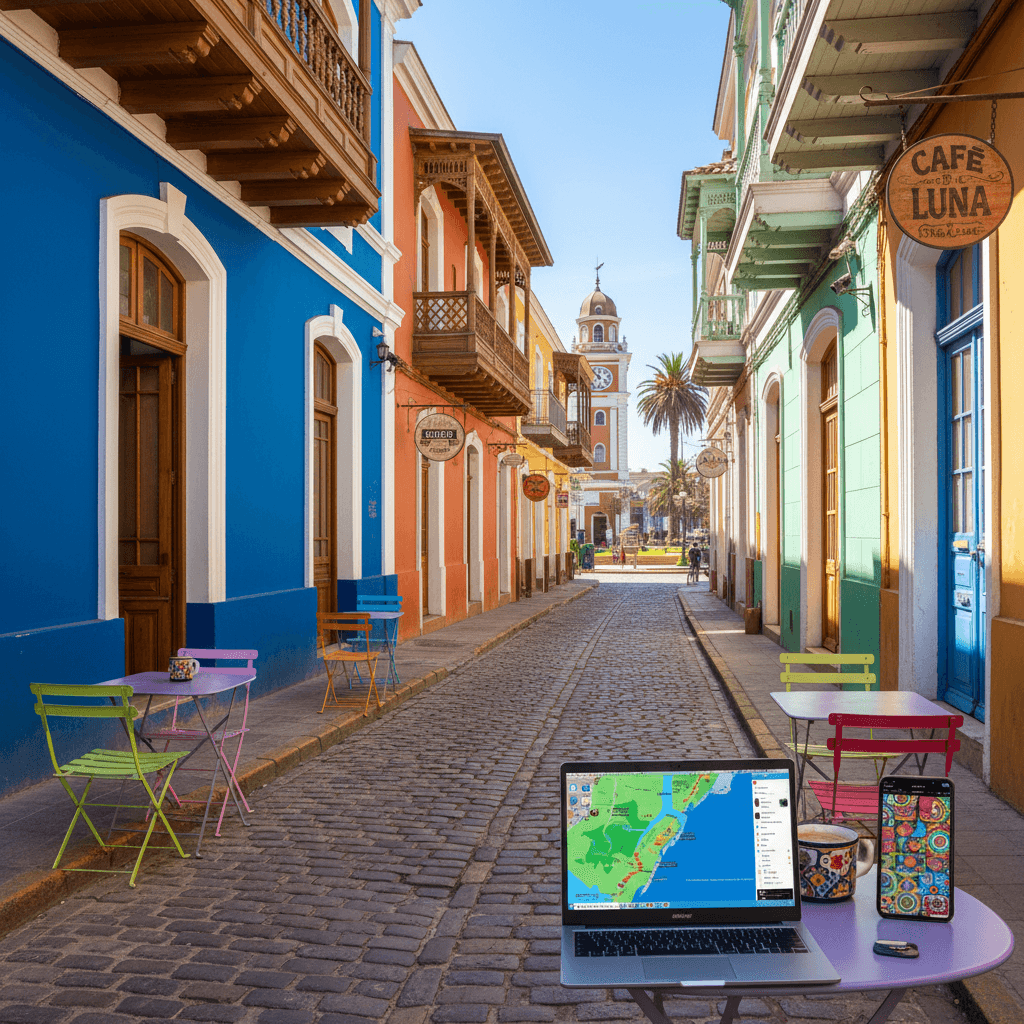
Iquique
🇨🇱 Chile
Where the Dunes Meet the Surf
Iquique isn't your typical Chilean city. It's a place where the towering, golden dunes of the Atacama Desert literally drop off into the Pacific Ocean. Imagine working on your laptop with a view of paragliders circling the Dragon Hill dune, then heading down for a sunset surf session. It’s a surreal, high contrast landscape that feels world's away from the moody forests of the south or the frantic pace of Santiago.
The city carries a distinct dual personality. On one hand, you have the Historic Center, a preserved relic of the 19th-century nitrate boom filled with Victorian-era timber architecture and UNESCO heritage sites. On the other, there's a modern, tax-free port city with high-rise apartments and some of the fastest internet in South America. For nomads, this means you get the charm of a storied coastal town without sacrificing the bandwidth needed for a Zoom call.
The Daily Flow
Life here moves at a coastal pace. Most nomads find that the weather is the biggest draw; it’s consistently mild and sunny year-round, meaning there’s no "off-season" to worry about. You'll likely start your morning with a walk along the Cavancha beach boardwalk before settling into a cafe. The vibe is decidedly laid-back, yet the city feels industrious thanks to the ZOFRI duty-free zone, which keeps the local economy humming and imported goods surprisingly affordable.
What makes Iquique stand out from other Chilean hubs is the sheer access to adventure. You aren't just living in a city; you're living in a playground for sandboarding, surfing, and paragliding. It’s common for expats to spend their weekends exploring the ghost towns of the desert or soaking in thermal springs in the nearby highlands.
What to Expect as a Nomad
While the infrastructure is top-tier, the community is still in its "early adopter" phase. You won't find the massive nomad meetups of Medellin or Lisbon here. Instead, you'll find a small, tight-knit group of remote workers and adventurous travelers who value the outdoors over a crowded club scene. It’s a city for those who want to be pioneers rather than followers.
- Connectivity: Expect average download speeds around 200-500 Mbps depending on provider. It’s one of the most reliable spots for remote work in the region.
- Affordability: Your dollar goes further here than in Santiago or Valparaíso, with a comfortable monthly budget around $1,800-$2,000.
- Economic Perk: The ZOFRI zone means electronics, perfumes, and various imports are significantly cheaper than in the rest of Chile.
- Isolation: Keep in mind that Iquique is a bit of an island in the desert. To get to other major hubs, you're looking at a long flight or a very ambitious road trip.
The trade-off for that isolation is a sense of peace and a unique cultural blend. You’ll hear the echoes of the city's mining history in the architecture, taste the influence of nearby Peru and Bolivia in the food, and feel the salt air of the Pacific every time you step outside. It’s a place that rewards those who prefer a surfboard and a sunset over a neon-lit bar crawl.
The Bottom Line on Budgets
Living in Iquique feels like getting a coastal discount compared to the steep prices of Santiago or Valparaíso. While Chile is generally one of the more expensive countries in South America, Iquique benefits from its status as a duty free port. Most digital nomads find they can live a very comfortable lifestyle here for around $2,067 USD per month. If you're disciplined with your spending, you can get by on $1,500 USD, while those looking for high end beachfront living should plan for $3,000 USD or more.
Housing and Accommodation
The rental market is fairly flexible, and landlords are increasingly used to remote workers. You'll find a mix of high rise apartments overlooking the Pacific and older, character filled homes in the center. Most nomads recommend searching on Airbnb first to get a feel for the neighborhoods, then looking for local property managers if you plan to stay longer than three months.
- Studio Apartment: Expect to pay between $400 and $600 USD. These are usually in modern buildings with reliable infrastructure.
- One Bedroom Apartment: These typically range from $600 to $900 USD, depending on how close you are to the water.
- Shared Housing: If you're on a tighter budget, a room in a shared house usually runs between $300 and $500 USD.
Eating and Drinking
Thanks to the ZOFRI (the duty free zone), certain imported goods are surprisingly cheap, but the real savings come from eating like a local. The city is famous for its seafood and empanadas, which are staples for anyone trying to keep their daily spend down.
- Casual Meals: A quick lunch at a market or a street side empanada will cost you between $3 and $8 USD.
- Mid Range Dining: A nice dinner with a glass of Chilean wine at a local bistro usually lands between $8 and $15 USD.
- Groceries: If you prefer to cook at home, a weekly trip to the supermarket or the traditional markets will cost about $40 to $70 USD for one person.
Connectivity and Remote Work
This is where Iquique really shines for the nomad crowd. The internet speeds are some of the best in South America, often hitting between 191 and 384 Mbps. You won't struggle with video calls or large uploads here. While the city doesn't have a massive list of dedicated coworking spaces yet, the cafe culture is strong. You'll find plenty of spots with solid WiFi and comfortable chairs where you can work for the price of a coffee.
Transportation and Getting Around
The city center is compact and very walkable, which is a huge plus for your wallet. For longer trips, the local bus network is comprehensive and very affordable. Taxis and ride sharing apps like Uber are the go to for late nights or getting to the further residential reaches. Since the city is squeezed between the mountains and the sea, it's hard to get truly lost; you just head toward the water.
Lifestyle Tiers
To help you plan your move, here is how the monthly math usually breaks down based on your lifestyle choices:
The Budget Traveler
- Estimated Monthly Spend: $1,500 to $2,000 USD
- Lifestyle: You're likely staying in a shared house or a modest studio in the Historic Center. You eat mostly at home or grab street food, use the public buses, and work from your apartment or free cafes.
The Mid Range Nomad
- Estimated Monthly Spend: $2,000 to $3,000 USD
- Lifestyle: You have your own one bedroom apartment. You mix home cooking with regular dinners out and perhaps pay for a part time coworking desk. You can afford the occasional weekend desert excursion or surf lesson.
The High End Resident
- Estimated Monthly Spend: $3,000 to $4,500 USD
- Lifestyle: You're living in a modern, multi bedroom apartment with ocean views. You eat out frequently at the better international restaurants, use private transport, and have a full time coworking membership.
For Digital Nomads: The Beach Front (Cavancha & Playa Brava)
If you are in Iquique to balance Zoom calls with surfing or sunset walks, the coastal strip is where you want to be. This area stretches along the Pacific and is the heartbeat of the city's modern lifestyle. Most nomads gravitate here because it feels less like a desert outpost and more like a Pacific resort town.
The infrastructure is the best in the city. You will find high rise apartments with reliable fiber optic internet, often reaching speeds between 191 and 384 Mbps. While specific coworking spaces are still popping up, the cafe culture here is strong. You will see plenty of people working from laptops in the coffee shops lining the promenade, where the WiFi is usually fast enough for video calls without lag.
- The Vibe: Active, breezy, and social. You are steps away from the sand and the best outdoor gyms.
- Housing: Expect to pay between $600 and $900 USD for a modern one bedroom apartment with an ocean view.
- Perks: Immediate access to surf schools, paragliding landing zones, and the most consistent year round weather in Chile.
For History Buffs and Budget Travelers: Centro Histórico
The Historic Center is perfect for those who want character over glitz. It is a UNESCO protected area filled with 19th century Victorian architecture, a remnant of the city's wealthy nitrate mining era. Living here feels like stepping back in time, with timber framed buildings and wide pedestrian streets like Baquedano.
It is the most walkable part of Iquique. You won't need a car or even a bus if you stay here, as the main markets, museums, and government offices are all within a ten minute stroll. However, keep in mind that these beautiful old buildings sometimes come with quirks. Expats often mention that plumbing and electrical systems in the historic zone can be temperamental compared to the newer builds south of the center.
- The Vibe: Gritty but soulful. It is where you find the most authentic local markets and traditional empanada shops.
- Housing: More affordable than the beach, with studios or rooms in shared houses ranging from $300 to $500 USD.
- Perks: Proximity to the port and the best "menú del día" spots where you can grab a full lunch for under $8 USD.
For Expats and Families: The Southern Residential Districts
As you move south away from the center, the city becomes much more residential and quiet. These neighborhoods are designed for long term stability. If you are moving with a family or planning to stay for a year or more, this is likely where you will end up. It is less about the "tourist experience" and more about daily convenience.
This area is home to the major shopping hubs, including the famous Mall Zofri. Since Iquique is a duty free zone, this is a massive draw for expats looking to furnish an apartment or buy electronics at a discount. The streets are wider, there are more green spaces and parks, and the healthcare clinics are easily accessible. It feels more like a standard Chilean suburb, which provides a sense of normalcy that the busy tourist areas lack.
- The Vibe: Quiet, safe, and suburban. It is the most "functional" part of the city.
- Housing: Family sized apartments or small houses typically run between $800 and $1,200 USD.
- Perks: Close to the best private schools, large supermarkets, and the Zofri shopping district for tax free goods.
For Solo Travelers and Adventure Seekers: Near the Dunes
Iquique is famous for the Dragon Hill (Cerro Dragón), a massive urban sand dune that looms over the city. Some travelers prefer staying in the pockets of the city that sit right at the base of the desert hills. This is the staging ground for sandboarding and paragliding, which are the two biggest draws for adrenaline junkies.
While these areas can feel a bit further from the "action" of the beach bars, they offer a unique perspective of the Atacama landscape. You'll find a mix of smaller guesthouses and local rentals here. It is a bit more isolated, so you will likely rely on the local bus system or ride sharing apps to get down to the water, but the views of the city lights against the desert backdrop are unbeatable.
- The Vibe: Adventurous and slightly rugged. Great for those who want to be the first on the dunes in the morning.
- Housing: Mid range prices, often around $500 to $700 USD for a decent furnished spot.
- Perks: Easy access to hiking trails and the best vantage points for photography.
Connectivity and Speeds
If you are coming from Santiago, you might expect a dip in performance, but Iquique actually holds its own with some of the fastest fiber in South America. Expect average download speeds of 200-500 Mbps. This makes it a top tier choice for nomads who deal with heavy video uploads or constant Zoom calls.
Most modern apartments in the residential towers near the beach come pre-wired for high speed fiber. When you are scouting Airbnbs, just ask the host for a speed test; usually, they are happy to oblige since they know it is a dealbreaker for remote workers. Mobile data is equally reliable, with providers like Entel, Movistar, and Claro offering 4G and 5G coverage that blankets the city and even remains stable while you are lounging on Cavancha Beach.
Coworking Spaces
The coworking scene here is smaller than what you will find in the capital, but it is growing as more people trade the smog of Santiago for the desert coast. While the city doesn't have dozens of branded hubs, the available spaces are affordable and generally less "corporate" than elsewhere. You can usually find a hot desk for a daily rate that won't eat your budget, and monthly memberships are available for those staying long term.
- Infrastructure: Most spaces provide ergonomic chairs, meeting rooms for private calls, and the all important backup generator or secondary ISP.
- Community: Since the nomad circle here is tight knit, these hubs are the best places to meet fellow expats and find out about weekend trips to the Altiplano or the Zofri.
- Availability: You typically won't need to book weeks in advance, but it is smart to message them on WhatsApp a day before you want to drop in.
The Cafe Office Culture
If you prefer the hum of a steamer over a quiet office, Iquique has a fantastic cafe culture. The city center and the waterfront are dotted with spots that are very "nomad friendly." It is common to see people tucked into corners with laptops for a few hours. Most owners are relaxed about it as long as you keep the coffee and empanadas flowing.
The better cafes offer stable WiFi that can handle basic tasks, though for heavy video conferencing, you might want to tether to your phone just in case. Look for spots in the Historic Center for a more vintage, high ceiling vibe, or head toward the modern residential areas for cafes with more power outlets and air conditioning, which is a lifesaver during the desert afternoons.
Mobile Data and SIM Cards
Picking up a SIM card is one of the first things you should do. You can grab one at the Mall Zofri or any small "tabaquería" in the center. Entel is generally cited by locals as having the best coverage if you plan on heading out into the desert for excursions, while WOM often has the cheapest data heavy plans for city use.
- Cost: Expect to pay around $10-20 USD for generous monthly data.
- Top Ups: You can recharge your balance at almost any pharmacy or supermarket using your "RUT" or a temporary ID number provided by the carrier.
- Registration: Chile has strict rules about registering foreign IMEI numbers. If you stay longer than 30 days, you must register your phone online to avoid it being blocked on local networks.
The Bottom Line for Work
Working from Iquique is surprisingly seamless. The combination of high-speed fiber and a lower cost of living than Santiago means you can maintain a high level of productivity without the big city stress. While you won't find a coworking space on every corner, the reliability of the home internet and the welcoming cafe scene more than make up for it.
Safety Overview
Iquique generally feels like a secure coastal city, but like any port town with a duty free zone, it requires a bit of common sense. Most nomads feel perfectly comfortable walking through the Historic Center or along the Cavancha beach boardwalk during the day. Locals will tell you to keep a closer eye on your belongings in the ZOFRI shopping area, where the high volume of crowds can attract opportunistic pickpockets.
Nighttime safety varies by neighborhood. While the beach areas remain active and well lit, some parts of the downtown core can get quiet and a bit sketchy after dark. Expats usually recommend sticking to ride sharing apps like Uber or Cabify when heading home from a late dinner, rather than walking through empty side streets. It is also a good idea to avoid the port area late at night, as it is more industrial and less patrolled.
Medical Services and Hospitals
The healthcare infrastructure in Iquique is modern and reliable for most needs. If you have a minor illness or need a prescription, you will find Farmacias Ahumada or Cruz Verde on almost every major corner in the city center. For more serious issues, the city is equipped with both public and private facilities.
- Hospital Regional de Iquique: This is the main public facility. It is capable but often crowded with long wait times. Most travelers only use this for major emergencies.
- Clínica Tarapacá: A reputable private option that offers specialized consultations and diagnostic services.
Most nomads find that out of pocket costs for a basic doctor visit are quite reasonable, often ranging between $40 and $70 USD. However, having a private health insurance policy or a digital nomad plan like SafetyWing or World Nomads is highly recommended to cover costs at the private clinics, which expect payment upfront or a guarantee from your insurer.
Health Tips for the Atacama Coast
The biggest health risk in Iquique isn't a tropical disease; it is the sun. Being at the edge of the Atacama Desert means the UV index is consistently extreme. Expats recommend buying high quality sunscreen locally and wearing a hat even on overcast days. The air can also be incredibly dry, so keeping a bottle of water on hand is a necessity to avoid dehydration while you are out exploring.
Tap water in Iquique is technically safe to drink, but it has a high mineral content that can be tough on your stomach if you aren't used to it. Most long term residents prefer to buy 5 liter water jugs from the supermarket or use a high quality filter at home to avoid the "heavy" taste and potential digestive upset.
Emergency Contacts
Keep these numbers saved in your phone just in case. Chile uses a simple three digit system for emergency services:
- 131: Ambulance (Ambulancia)
- 132: Fire Department (Bomberos)
- 133: Police (Carabineros)
If you need to report a stolen passport or a non urgent crime, it is best to go directly to the PDI (Policía de Investigaciones) office. They handle most matters involving foreigners and are generally professional and efficient with paperwork.
The Basics: Public Transit and Foot Traffic
Iquique is a city of two halves. If you're staying in the historic center, you'll find it incredibly walkable. The grid layout and flat terrain make it easy to hop between a morning coffee meeting and a historic site without ever needing a set of wheels. However, as you move toward the newer residential zones or the far reaches of the beach, the desert heat and distance will make you reach for a transit card.
The local bus network, known as micros, is the backbone of the city. These buses are cheap and run frequently, connecting the downtown core with the suburbs and the ZOFRI duty free zone. While they don't always follow a strict digital schedule, they are reliable enough for daily commuting. Most nomads find them the best way to save money while getting a feel for the local rhythm.
Ride-Sharing and Taxis
For those times when you're carrying groceries or heading out for dinner, ride-sharing apps are the go to choice. Uber and Cabify both operate here, and they're generally safer and more transparent than hailing a random car on the street. Expect to pay between $3 and $8 USD for most trips within the city limits.
Traditional taxis and colectivos (shared taxis that follow set routes) are also everywhere. Colectivos are a uniquely Chilean experience; they look like regular taxis but have a sign on the roof indicating their route. They're slightly more expensive than a bus but much faster, and they're a great middle ground for getting around quickly without paying for a private ride.
Cycling and Micro-Mobility
The city has been investing in bike lanes, particularly along the coastal areas where the views are best. If you're living near the beach, a bicycle is one of the smartest investments you can make. It's often faster than sitting in traffic during peak hours, and the sea breeze keeps the desert sun from feeling too intense. While there isn't a massive city wide bike sharing program like you might see in Santiago, many long term expats simply buy a used bike or use smaller local rental shops for weekend rides.
Getting to and from the Airport
Diego Aracena International Airport is about 40 km (~25 miles) south of the city center. It's a bit of a trek, so you'll want to plan ahead. You have three main options:
- Airport Shuttles: These are shared vans that drop you right at your door. They're the most popular choice for nomads because they balance cost and convenience.
- Taxis and Apps: A private ride will be the fastest way to your apartment, but it will cost significantly more than the shuttle.
- Pre-arranged Transfers: Many hosts or property managers can set this up for you, which is a relief if you're arriving late at night with heavy gear.
Navigation Tips for Nomads
Don't rely solely on Google Maps for bus timings. While the map is great for walking directions, the local bus routes are better understood by asking your neighbors or checking local transit apps like Moovit if they have updated data for the region. Most travelers find that after a week of exploring, the city's compact nature makes it very easy to navigate without a map at all.
The Linguistic Landscape
In Iquique, Spanish isn't just the primary language; it's the only one you'll hear in most daily interactions. While the city is a hub for international trade thanks to the Zofri duty-free zone, don't expect English to be the default. You might find English speakers at high-end hotels or specialized tour agencies, but at the local feria or when chatting with a taxi driver, you're going to need at least a baseline of Spanish to get by.
Expats living here long-term suggest that while you can survive with translation apps, your social life will be severely limited without some language skills. The local community is welcoming, but they won't always have the patience or ability to bridge a total language gap. If you're planning to stay for more than a month, enrolling in a local language exchange or hiring a tutor is a smart move.
Decoding the "Chileno" Accent
Chilean Spanish is famous throughout Latin America for being a unique beast. It's fast, rhythmic, and filled with "Chilenismos" (local slang) that can confuse even fluent Spanish speakers from other countries. In Iquique, this northern dialect is slightly softer than the rapid-fire speech of Santiago, but it still follows the classic Chilean rules.
- The S-Drop: You'll notice locals often drop the "s" at the end of words. "Gracias" becomes "Gracia," and "Iquiqueños" becomes "Iquiqueño."
- The "Po": You'll hear this tacked onto the end of almost every sentence. "Sí, po" or "No, po" is essentially just for emphasis, similar to "yeah, man" or "obviously."
- Cachái?: This is the most common filler word you'll encounter. It means "Do you understand?" or "You get it?" and it's used constantly in casual conversation.
- Fome: If someone describes a situation or a bar as "fome," it means it's boring or lame.
Staying Connected: SIM Cards and Data
Reliable communication starts with a local SIM card. While your home roaming plan might work, it'll cost you a fortune and often won't give you the speeds needed for remote work. Most nomads recommend picking up a SIM from Entel, Movistar, or Wom. Entel generally has the best coverage if you plan on heading out into the desert or up into the altiplano, while Wom offers some of the most aggressive data pricing for city dwellers.
You can buy a "prepago" (prepaid) SIM card at most convenience stores or the official carrier kiosks in Mall Zofri. Expect to pay around $5-15 USD for SIM and initial data bundle. To top up, you can use the "Recarga" machines found in supermarkets or use the carrier's app if you have a way to pay with a Chilean "Cuenta RUT" or a friendly local's card, as international credit cards can be hit or miss on local apps.
Digital Communication and Apps
In Iquique, WhatsApp is the king of communication. You won't just use it for texting friends; you'll use it to book hair appointments, order delivery from local restaurants, and communicate with your landlord. If a business has a phone number listed, they almost certainly have a WhatsApp business account tied to it.
For getting around, Uber and Cabify are the standard apps. They provide a layer of safety and price transparency that helps if your Spanish isn't quite ready for negotiating a fare with a street taxi. For food, PedidosYa is the most common delivery service in the city, offering everything from sushi to groceries delivered to your apartment door.
Practical Tips for Non-Spanish Speakers
- Download the Spanish offline dictionary on Google Translate. Cell service can be spotty when you're exploring the historic nitrate works or desert dunes outside the city.
- Use the "Camera" feature on your translation app to read menus in the Historic Center, as many traditional spots don't have English versions.
- Learn the numbers 1 to 100 immediately. It makes the "Zofri" shopping experience much smoother when you can understand the prices being shouted in the busy stalls.
- When in doubt, a friendly "Hola" and a smile go a long way. The people in Iquique are generally more relaxed and "costeño" (coastal) in their attitude than people in the capital.
The Eternal Spring Vibe
Iquique is one of those rare places where you can pretty much delete the weather app from your phone. Because the city sits where the Atacama Desert meets the Pacific, it enjoys a desert climate that stays mild and dry throughout the year. Most nomads find the consistency a massive relief, there are no seasonal disruptions or monsoon rains to ruin your work week. You can expect daytime temperatures to hover between 18°C and 25°C (64°F to 77°F) almost regardless of the month.
The city is famous for its "eternal spring" feel. You won't deal with the sweltering humidity of tropical beaches or the bone chilling winters found further south in Santiago or Patagonia. It is arguably the most predictable climate in South America, making it a reliable base for anyone who hates packing a heavy winter coat.
High Season: Summer (December to February)
If you want the city at its most energetic, arrive during the Chilean summer. This is when the beaches, specifically Playa Cavancha, truly come alive. Temperatures peak around 25°C to 27°C (77°F to 81°F). While that sounds modest, the desert sun is intense, so high SPF is mandatory if you're working from a terrace.
- Crowds: This is the busiest time. Expect higher prices for short term rentals and more noise in the beach neighborhoods.
- Atmosphere: The surf is great, the paragliders are constantly in the air, and the outdoor cafes stay full late into the evening.
- Events: You'll find more local festivals and outdoor concerts during these months.
The Sweet Spot: Autumn and Spring (March to May & September to November)
Expats often recommend the shoulder seasons as the absolute best time to live here. The summer crowds head home in March, but the water remains warm enough for a swim. During these months, the air is crisp, the sky is a deep desert blue, and the temperature sits at a perfect 21°C (70°F).
For digital nomads, this is the most productive window. The cafes are quieter, the internet bandwidth isn't being stressed by thousands of tourists, and you can usually negotiate better monthly rates on apartments in the modern residential areas. It is the ideal balance of "beach life" and "focus time."
Winter: The Camanchaca Months (June to August)
Winter in Iquique isn't really winter by global standards. Daytime highs rarely drop below 17°C (63°F). However, this is the season of the Camanchaca, a thick sea mist that rolls in from the Pacific and blankets the city in the mornings. It usually burns off by noon, but it can make the early hours feel damp and grey.
- What to expect: You'll want a light jacket for the evenings when the desert air cools down quickly.
- The Perk: This is the cheapest time to be in Iquique. If you're on a budget, you can find great deals in the Historic Center.
- Surfing: For serious surfers, winter brings some of the most consistent swells to the coast.
The Verdict
If you want the full social experience and don't mind paying a premium, January and February are your best bet. If you prefer a quiet, focused environment with perfect "t-shirt weather" every day, aim for October or November. Just keep in mind that rain is almost non-existent here, so whenever you choose to visit, you're unlikely to get wet unless you're jumping in the ocean.
Connectivity and Digital Infrastructure
Iquique is a sleeper hit for remote work because the internet speeds are legitimately world class. You can expect average speeds between 191 and 384 Mbps, which is faster than what you'll find in many European capitals. Fiber optics are the standard in most modern apartments, so video calls and heavy uploads won't be an issue.
For mobile data, grab a SIM card from Entel or Movistar. They have the most reliable coverage across the Tarapacá region. You can pick these up at the Mall Zofri or any small kiosk downtown. Most nomads find that even the prepaid plans offer plenty of data for hotspotting if you decide to work from a beach chair for the afternoon.
While the coworking scene is smaller than Santiago's, it's growing. You won't find a dozen massive hubs, but there are dedicated spaces catering to the laptop crowd. If you prefer the cafe route, the Historic Center and the areas near Playa Cavancha are your best bets. Look for spots with "WiFi" signs; most baristas are used to people staying for a couple of hours as long as you keep the coffee orders coming.
Money and Budgeting
Living here is noticeably cheaper than in the capital, but you should still budget around $2,067 USD per month for a comfortable nomad lifestyle. Because Iquique is a duty free zone (Zofri), electronics, perfumes, and certain imported goods are significantly cheaper than elsewhere in Chile. It's the best place in the country to replace a laptop or buy gear.
- Budget Lifestyle: $1,500 to $2,000. This covers a room in a shared house, plenty of street food like empanadas for $3 to $8, and using the local bus system.
- Mid-Range Lifestyle: $2,000 to $3,000. You'll get a private 1-bedroom apartment for $600 to $900, eat out at decent restaurants, and have a dedicated desk space.
- High-End Lifestyle: $3,000 to $4,500+. This gets you a modern high rise near the beach, frequent fine dining, and enough left over for weekend trips into the Altiplano.
Getting Around the City
The city is a long, narrow strip tucked between the Giant Dragon dune and the ocean. The Historic Center is very walkable, and you can cross most of it on foot in 20 minutes. For anything further, the local buses (micros) are cheap and run frequently, connecting the residential south to the commercial north.
Taxis and ride-sharing apps are the go-to for most expats after dark or when heading to the Zofri. They're affordable and easy to hail. If you're coming from the airport, it's a bit of a trek. It’s about 40 kilometers south of the city, so expect to pay for a shuttle or a pre-arranged transfer. Most travelers recommend booking these through your accommodation to avoid the "tourist tax" at the curb.
Health and Safety
Iquique feels like a functional, modern city. Healthcare is reliable, with several private clinics and pharmacies on almost every major corner. Expats usually prefer private facilities for faster service and more English-speaking staff. It's wise to have your own international health insurance, as private costs can add up if you're paying out of pocket.
Safety is generally good, especially in the Modern Residential Areas and the tourist zones near the beach. Like any port city, the area around the docks and certain parts of the center can get a bit sketchy late at night. Stick to well-lit streets and use ride-sharing apps instead of walking home alone at 2:00 AM. Most nomads find the city perfectly comfortable as long as they use the same common sense they would in any mid-sized urban area.
Language and Community
Don't expect everyone to speak English. While the tourism and mining sectors have English speakers, your day-to-day life at the grocery store or the bank will be in Spanish. Learning the basics is a must. The expat community is smaller than in Santiago, so you'll likely find yourself hanging out with locals or people working in the mining and shipping industries. It’s a friendly, laid-back vibe, but you might have to be more proactive about joining local sports clubs or meetups to build a social circle.
Need visa and immigration info for Chile?
🇨🇱 View Chile Country GuideEasy Landing
Settle in, no stress